
Not Enough Salt? The Hidden Impact on Your Loaf

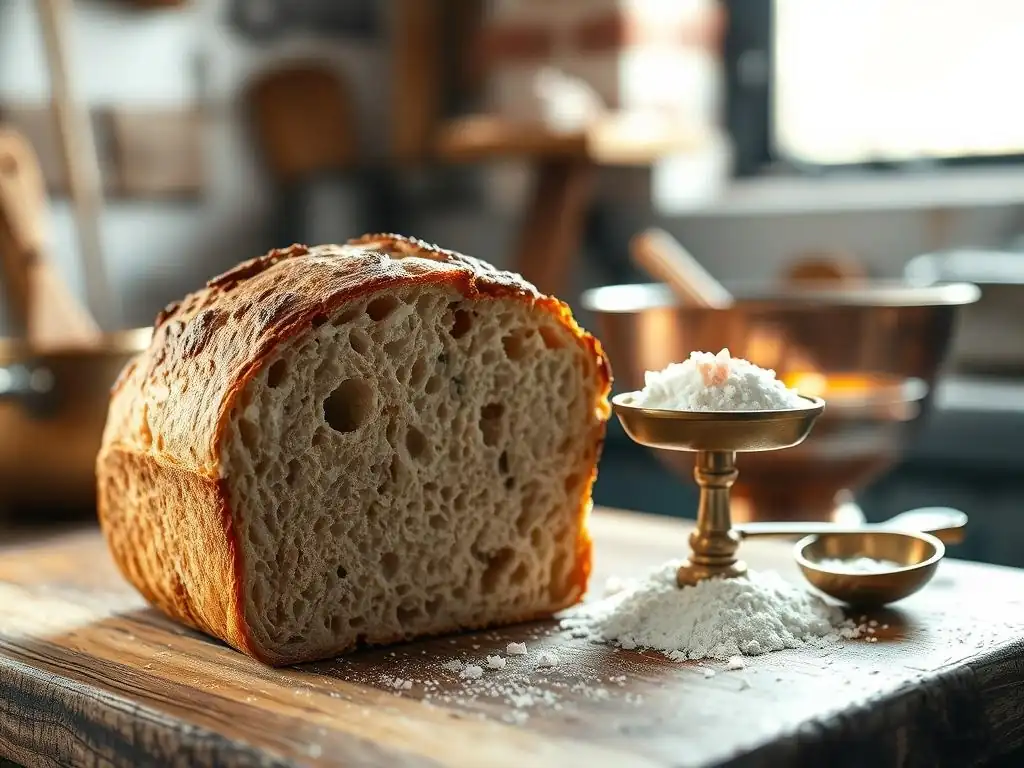
Welcome to BakeWithEase, your trusted guide to the delightful world of baking! Ever wondered how a seemingly simple mistake like too much salt can completely derail your bread? Dive into our latest article, "Not Enough Salt? The Hidden Impact on Your Loaf," where we unravel the secrets to achieving baking perfection, and, more importantly, how to fix salty bread. Discover the science behind the salt and prepare to elevate your bread baking game. Let's get started!
- The Silent Baker's Foe: Understanding Hyponatremia's Impact on Bread
- The Unexpected Role of Sodium Chloride in Bread Baking
- Understanding the Consequences of Insufficient Salt in Bread
- Identifying Salt Deficiency in Your Bread
- How to Fix Undersalted Bread: Rescue Techniques and Prevention
- Mastering Salt Usage: A BakeWithEase.com Guide
- Troubleshooting Common Salt-Related Bread Baking Problems
- Achieving Baking Perfection: Salt as a Key Ingredient
-
Frequently Asked Questions
- How does salt impact bread baking besides just flavor?
- What happens if I accidentally add too much salt to my bread dough?
- Is there any way to actually fix bread dough that already has too much salt in it?
- Can too much salt affect the crust of my bread?
- What's the best way to prevent adding too much salt to my bread in the first place?
- Final Reflection: The Unsung Hero (and Villain) of Baking
- Unlock Your Bread's Full Potential!
The Silent Baker's Foe: Understanding Hyponatremia's Impact on Bread
The Unexpected Role of Sodium Chloride in Bread Baking
Why Salt is Essential for Perfect Bread
Salt, chemically known as sodium chloride, is far more than just a flavor enhancer in bread baking; it's a critical structural and control agent. Its primary role is to regulate yeast activity. Without salt, yeast ferments uncontrollably, leading to rapid, unmanageable dough rise and potentially over-proofing before the desired gluten structure is fully developed. This control is vital for achieving the correct fermentation time and allowing flavors to deepen.
Beyond its impact on yeast, salt plays a significant part in the physical properties of the dough. It strengthens the gluten network by tightening the protein strands. This results in dough that is more elastic and easier to handle, capable of trapping gases produced during fermentation. A typical bread recipe calls for salt in the range of 1.8% to 2.2% of the total flour weight, a small but impactful amount that significantly influences the final loaf's volume and texture.
BakeWithEase.com's Guide to Salt's Importance in Bread
At BakeWithEase.com, we emphasize that mastering salt usage is fundamental to baking great bread. For beginners, getting the salt measurement right is as crucial as measuring flour or yeast. Undersalting is a common issue that can lead to a disappointing loaf despite following other steps correctly. It affects not only the taste but also the handling of the dough and the final crumb structure.
Consider a simple lean dough, like a classic French baguette. The minimalist ingredients – flour, water, yeast, and salt – mean each component's role is magnified. If the salt percentage is off by even 0.5%, the difference in dough behavior and final texture is noticeable. BakeWithEase.com recipes are carefully calibrated, often using weight measurements for salt to ensure accuracy, as volume measurements can vary greatly depending on the type and grind of salt used.
Understanding the Consequences of Insufficient Salt in Bread
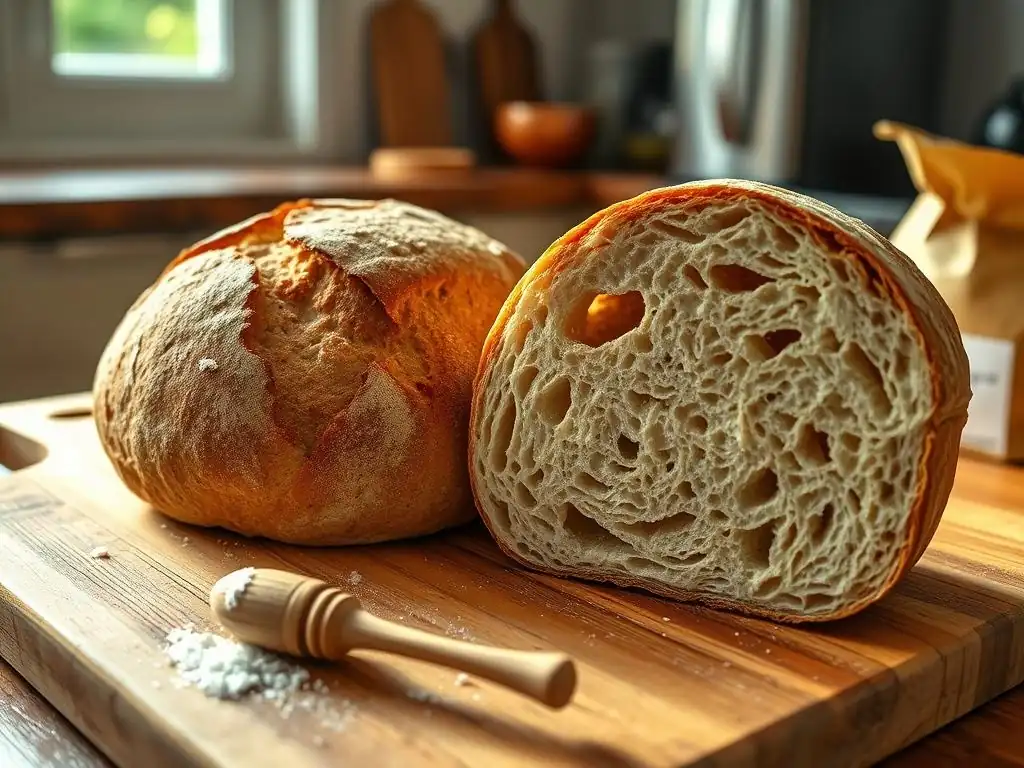
The Impact on Bread Texture: Weakened Gluten Structure and Coarse Crumb
When bread dough lacks sufficient salt, the gluten network develops less effectively. Salt helps to tighten the gluten strands during kneading, creating a strong, elastic framework that can hold the gases produced by yeast. Without this tightening effect, the gluten remains weak and slack.
This weakened structure cannot adequately support the dough's expansion during proofing and baking. The result is often a loaf with poor volume and a coarse, irregular crumb structure. Instead of the desired network of small, evenly distributed air pockets, you might find large, cavernous holes or a dense, heavy texture, lacking the pleasant chewiness characteristic of well-developed bread.
Flavor Profile Alterations: How Little Salt Changes the Taste of Bread
Salt is a fundamental flavor enhancer, and its absence or deficiency in bread is immediately apparent on the palate. Undersalted bread tastes bland, flat, and often has an unpleasantly strong, raw-flour or yeasty flavor. Salt balances the sweetness produced during fermentation and fermentation, preventing the bread from tasting one-dimensionally sweet or sour.
Think of it like cooking savory food without salt – the other flavors don't pop. In bread, salt brings out the subtle nutty notes of the flour, the tang from fermentation, and the slight sweetness from sugar conversion. Without salt, these complex flavors are muted, leaving only the dominant, often harsh, taste of under-fermented or raw ingredients.
Dough Development Issues: Salt's Role in Gluten Strength
Salt's influence on dough development is profound, primarily through its interaction with gluten proteins. During mixing and kneading, salt helps the glutenin and gliadin proteins link together more effectively, forming a stronger, more extensible network. This is why dough with salt feels firmer and less sticky than dough without it, assuming the same hydration level.
Furthermore, salt has an osmotic effect on yeast, drawing water out of the yeast cells and slowing down their activity. This controlled fermentation allows more time for the dough to be kneaded and for the gluten network to fully develop before the dough becomes over-proofed. Insufficient salt leads to overly rapid fermentation and dough that is difficult to handle – often sticky, slack, and prone to tearing, hindering proper shaping and development.
Identifying Salt Deficiency in Your Bread
Signs of Undersalted Dough: What to Look For
Identifying undersalted dough is possible even before it hits the oven if you know what to look for. During mixing, the dough might feel excessively sticky or slack, lacking the structure you'd expect based on the hydration level. As you knead, it may not develop the smooth, elastic quality as readily as salted dough.
During proofing, undersalted dough often rises much faster than expected. Yeast activity is unchecked, leading to rapid expansion. While a fast rise might seem desirable, it often means the gluten hasn't had enough time to strengthen properly, and fermentation flavors haven't fully developed. The dough might also feel overly gassy and fragile.
Visual Cues: Pale Crust, Excessive Oven Spring, and Irregular Shape
After baking, several visual cues can indicate insufficient salt. One common sign is a pale crust. Salt enhances the Maillard reaction, the complex chemical process responsible for browning and flavor development in the crust. Without enough salt, this reaction is less effective, resulting in a lacklustre, pale appearance.
Another indicator is excessive and uncontrolled oven spring. While some oven spring is desired, undersalted loaves can puff up dramatically and unpredictably in the oven due to unchecked gas production and a weak structure that can't contain it properly. This often leads to the loaf collapsing slightly upon cooling or developing large, irregular voids inside. The weak structure can also result in an irregular, often flattened or oddly shaped loaf rather than a well-rounded, symmetrical one.
Taste Test: Recognizing the Blandness of Undersalted Bread
The most definitive way to confirm salt deficiency is, of course, the taste test. Undersalted bread will taste noticeably bland, flat, and lacking complexity. The flavors are muted, and you might detect a dominant, sometimes unpleasant, raw or overly yeasty taste that hasn't been balanced by salt.
Compared to a properly salted loaf, the difference is stark. The bread won't have the satisfying depth of flavor that salt provides, which enhances the natural sweetness of the flour and the subtle tang from fermentation. If your bread looks okay but tastes like something is fundamentally missing, lack of salt is a primary suspect.
How to Fix Undersalted Bread: Rescue Techniques and Prevention
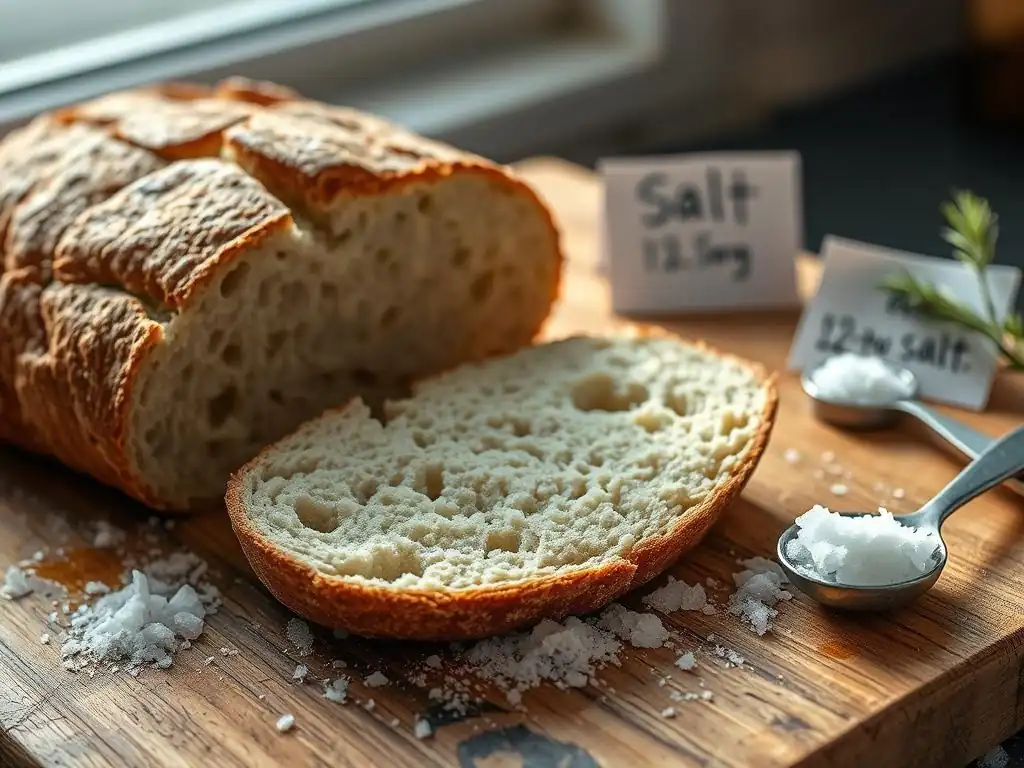
Adjusting Future Batches: Calculating the Correct Baker's Percentage of Salt
The best way to "fix" undersalted bread is to prevent it from happening in the first place. This starts with accurate measurement and understanding baker's percentages. Salt is typically added at 1.8% to 2.2% of the flour weight. To calculate this, multiply the weight of your flour by the desired salt percentage (e.g., 500g flour x 0.02 = 10g salt).
Using a digital scale for all ingredients, especially salt, is crucial. Volume measurements for salt are notoriously inaccurate because different types of salt (fine table salt, kosher salt, sea salt) have vastly different densities. A teaspoon of fine table salt weighs significantly more than a teaspoon of coarse kosher salt. Consistent results rely on weighing your salt accurately for every batch.
Can You Add Salt After Kneading? Difficult, but Possible with Lamination Techniques
Attempting to incorporate salt into dough after it has been kneaded and fermentation has begun is challenging and generally not recommended for typical home baking. The salt needs to be evenly distributed throughout the gluten network to exert its effects properly. Simply kneading salt into developed dough can damage the structure and result in uneven pockets of saltiness.
An advanced technique like lamination, where the dough is stretched into a thin rectangle, sprinkled with salt, and then folded multiple times, can allow for some late incorporation. However, this requires a specific dough consistency and handling skills. For most bakers, if you realize the dough is undersalted after the initial mix, the most practical approach is to accept the compromise or, if very early in the process, gently try to work in a salt paste, though success is limited.
Reviving an Undersalted Loaf: Toasted with Flavored Butter or Savory Toppings
While you can't add salt back into a baked loaf, you can certainly make undersalted bread more palatable. One effective method is toasting it. Toasting enhances flavor and texture, making the lack of salt less pronounced. Serve toasted slices with generously salted butter, garlic butter, or other flavorful spreads.
Undersalted bread also makes an excellent base for savory dishes where toppings provide the necessary saltiness. Consider making bruschetta, crostini, or using slices for open-faced sandwiches with ingredients like cured meats, cheese, olives, or seasoned vegetables. You could also cube the bread and turn it into croutons, seasoning them generously during the baking process. Learning how to fix salty bread (when you've added too much) is much harder than making adjustments to an undersalted loaf after baking.
Mastering Salt Usage: A BakeWithEase.com Guide
Different Types of Salt for Baking: Fine Sea Salt, Kosher Salt, and Iodized Salt
The type of salt you use can impact your baking, primarily due to crystal size and the presence of additives. Fine sea salt and table salt (often iodized) have small crystals that dissolve quickly and pack densely, meaning a teaspoon will weigh more than a teaspoon of coarser salt. Iodized salt contains iodine, which can sometimes impart a slight off-flavor, though many bakers don't notice it.
Kosher salt has a larger, flakier crystal structure. It dissolves more slowly but is often preferred by bakers because it is typically non-iodized and easier to measure by pinch (though weighing is always more accurate). Flaky sea salts like Maldon are beautiful finishing salts but less practical for incorporating into dough due to their large, irregular crystals and cost. For consistent baking results, choose one or two types you like and always measure by weight.
Measuring Salt Accurately: Weight is Key for Consistent Results
As emphasized earlier, measuring salt by weight is the gold standard in baking. A digital kitchen scale is an invaluable tool for any serious baker. Even a slight variation in salt quantity can affect yeast activity, dough handling, and flavor. For instance, 1 teaspoon of fine table salt weighs about 6 grams, while 1 teaspoon of Diamond Crystal kosher salt weighs only about 2.8 grams – a huge difference!
Using weight ensures that whether you're using fine sea salt or kosher salt, you're adding the exact amount of sodium chloride specified in the recipe relative to the flour weight. This eliminates variability and is crucial for replicating successful bakes consistently. Always zero out your scale before adding salt directly to the bowl or a small container.
Storing Salt Properly: In an Airtight Container to Prevent Clumping
Salt is hygroscopic, meaning it attracts and absorbs moisture from the air. While this doesn't necessarily ruin the salt, it can cause it to clump together, making it difficult to measure accurately, especially if you are relying on volume. Clumped salt also doesn't disperse as evenly in the dough.
To maintain your salt's quality and ease of use, store it in a cool, dry place in an airtight container. Glass jars with tight-fitting lids or plastic containers with secure seals work well. Proper storage ensures your salt remains free-flowing and ready for accurate measurement whenever you're ready to bake your next loaf.
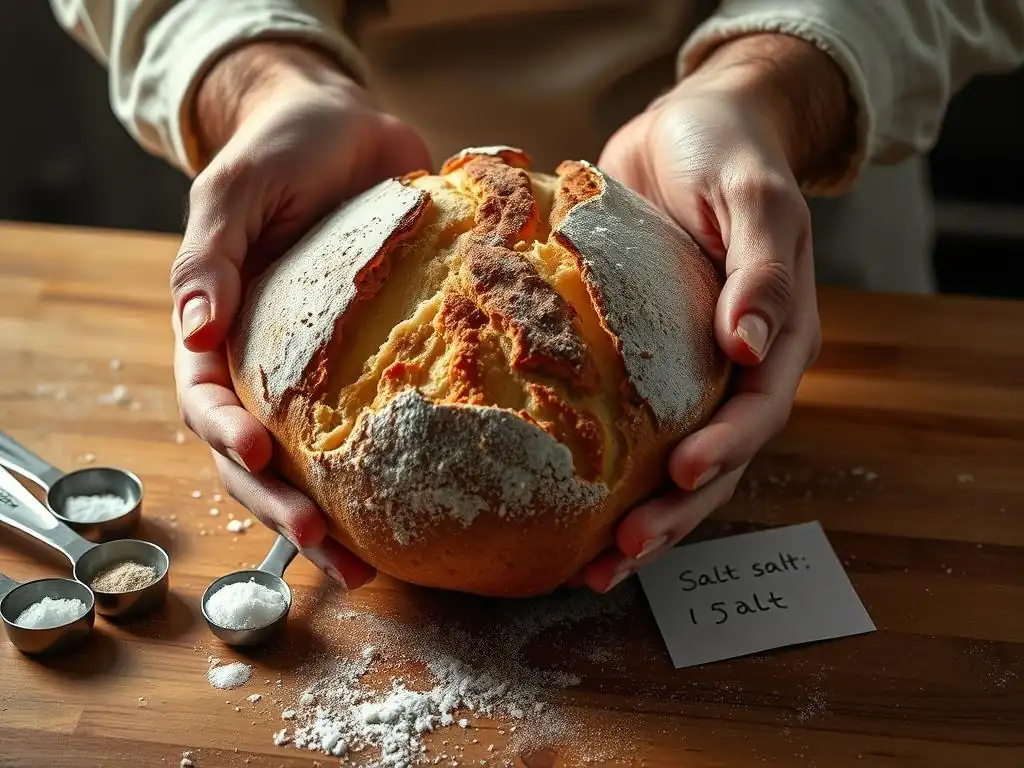
Too Much Salt: Balancing Flavors and Correcting Mistakes
While this article focuses on too little salt, understanding the opposite problem is also crucial. Too much salt is arguably harder to fix than too little. Excess salt significantly slows down yeast activity, leading to a very slow or even non-existent rise. The resulting bread will be dense, heavy, and have an overwhelmingly salty, unpleasant flavor.
If you realize you've added too much salt to the dough before baking, there are limited options. You could try doubling the recipe (adding more flour, water, and yeast but no more salt) to dilute the salt concentration, though this requires more ingredients and yields a larger batch.
Once baked, an overly salty loaf is difficult to salvage; it might be repurposed into breadcrumbs or croutons with minimal additional seasoning, but the harsh saltiness will likely persist. This underscores why accurate measurement is paramount – preventing the issue is key, as learning how to fix salty bread after baking is often impossible.
Uneven Salt Distribution: Ensuring Consistent Flavor
Uneven salt distribution is another common issue that can lead to pockets of intense saltiness and areas of blandness within the same loaf. This typically happens when salt is not properly mixed into the dough before or during the initial stages of kneading. Simply adding salt on top of the flour or wet ingredients and hoping it incorporates fully is risky.
The best practice is to dissolve salt in the water before adding it to the dry ingredients, or, more commonly, whisk the salt thoroughly into the flour before adding any liquid. This ensures the salt crystals are evenly dispersed among the flour particles from the start, leading to uniform distribution throughout the dough as it is mixed and kneaded.
Salt and Yeast Interaction: Understanding the Relationship
The relationship between salt and yeast is a delicate balance. Yeast thrives on sugar and moisture, producing carbon dioxide and alcohol through fermentation. Salt, through osmosis, draws water out of the yeast cells, effectively slowing down their metabolic activity.
Too little salt allows yeast to ferment too quickly, leading to underdeveloped flavors and structure. Too much salt can inhibit yeast almost entirely, resulting in little to no rise. The correct amount of salt provides controlled fermentation, allowing for optimal flavor development, gluten strengthening, and proper dough rise over the intended proofing period. Understanding this interaction is key to troubleshooting many fermentation issues.
Achieving Baking Perfection: Salt as a Key Ingredient
BakeWithEase.com's Recommended Salt Levels for Different Bread Types
At BakeWithEase.com, we recommend starting with a salt percentage between 1.8% and 2.2% of the total flour weight for most bread recipes. For lean doughs (like baguettes or rustic loaves) with minimal ingredients, sticking closer to 2% or even 2.2% often enhances the flavor profile significantly.
For enriched doughs containing sugar, fat (like butter or oil), and dairy (like milk or eggs), a slightly lower percentage, perhaps 1.8% to 2%, might be sufficient as other ingredients contribute to flavor and texture. Always refer to the specific BakeWithEase.com recipe, as these percentages are carefully chosen for optimal results for that particular bread type.
Experimenting with Salt: Finding Your Ideal Flavor Profile
Once you are comfortable with accurate salt measurement, don't be afraid to experiment slightly to find your personal preference. Some bakers prefer a slightly saltier loaf, while others like less. Try adjusting the salt percentage by 0.1% or 0.2% in future batches of a trusted recipe and note the difference in flavor and dough handling.
Keep detailed notes of your experiments. Record the flour weight, salt weight, calculated percentage, and your observations on dough behavior, rise time, and final taste. Over time, this will help you understand how small adjustments impact the final product and allow you to tailor recipes to your specific taste preferences.
The Art of Salty Bread: Mastering Salt for Baking Success
Mastering the use of salt is a crucial step on the path to baking truly excellent bread. It's not just about adding flavor; it's about controlling fermentation, developing gluten structure, and influencing the final texture and appearance of your loaf. While undersalting can lead to disappointing results, the good news is that identifying the issue and adjusting future batches is straightforward.
By understanding salt's multifaceted role, measuring accurately by weight, and paying attention to your dough's behavior and the final loaf's characteristics, you can avoid the pitfalls of insufficient salt. This attention to detail ensures that every loaf you bake is not only visually appealing but also perfectly balanced in flavor and texture, bringing you closer to baking perfection.
Frequently Asked Questions
How does salt impact bread baking besides just flavor?
Salt plays a crucial role in controlling yeast activity. It also strengthens the gluten structure, which affects the bread's texture.
What happens if I accidentally add too much salt to my bread dough?
Too much salt can inhibit yeast fermentation, resulting in a dense and flat loaf. It can also make the bread taste unpleasantly salty and dry.
Is there any way to actually fix bread dough that already has too much salt in it?
Unfortunately, there's no perfect fix once too much salt is added. You can try adding more unsalted dough to dilute the salt concentration, but it's often difficult to achieve a good balance.
Can too much salt affect the crust of my bread?
Yes, excessive salt can affect the crust. It can lead to a harder, denser crust and might impact the browning process, making it brown too quickly or unevenly.
What's the best way to prevent adding too much salt to my bread in the first place?
Always measure your ingredients accurately using a kitchen scale. Double-check the recipe and use the correct type of salt.
Final Reflection: The Unsung Hero (and Villain) of Baking
The perfect loaf isn't just about flour and water; it's a delicate dance with salt, a crucial ingredient often underestimated in its power to elevate—or ruin—your baking. A seemingly minor adjustment in salt can drastically alter the texture, flavor, and overall success of your bread, highlighting the importance of precision and understanding in the culinary arts. Ignoring this subtle yet significant factor can lead to disappointing results, proving that even the smallest details hold immense weight.
The journey of mastering bread baking, for me, has been a constant lesson in patience and attention to detail. Salt's role, initially overlooked, has become a fascinating study in balance and nuance. The best bread is made with love, and a pinch of salt.
This simple statement encapsulates the profound impact of this often-underappreciated ingredient. It's not just about taste; salt influences gluten development, yeast activity, and even the final crumb structure, showcasing its multifaceted influence on the baking process.
So, the next time you find yourself wrestling with a salty or bland loaf, remember this reflection. Don't be discouraged; instead, view it as an opportunity to deepen your understanding of baking's intricate chemistry. Take the time to experiment, to adjust your salt measurements carefully, and to truly appreciate the subtle yet powerful role this humble ingredient plays in transforming simple flour and water into something truly extraordinary. The perfect loaf awaits – it's just a matter of finding the right balance.
Unlock Your Bread's Full Potential!
Thanks for taking the time to explore the often-overlooked world of salt in baking! You've now got the knowledge to elevate your bread game significantly. Ready to put your newfound expertise to the test?
- Experiment with different salt types: Try substituting sea salt, kosher salt, or even Himalayan pink salt in your next loaf and notice the subtle flavor differences. This is your chance to become a true bread artisan!
- Share your baking journey: Post a picture of your perfectly salted masterpiece on social media and tag us – we'd love to see your creations!
- Dive deeper into bread science: Explore our other articles on BakeWithEase.com to unlock even more baking secrets. Let's create a community of bread enthusiasts together!
What unique salt will you try in your next bake? Let us know in the comments below!