
Mastering the French Baguette at Home: Your Easy Guide

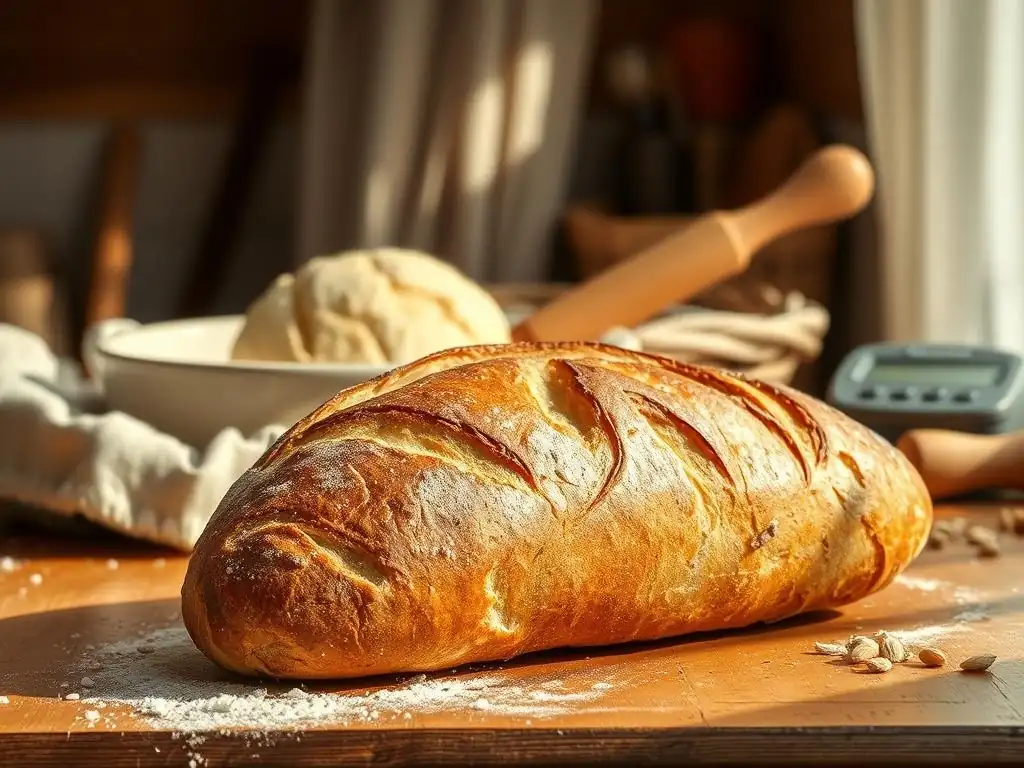
Welcome to BakeWithEase, where the aroma of freshly baked goods fills the air! Ready to conquer the seemingly complex world of French bread? Discover the secrets to crafting an authentic and delicious baguette in your very own kitchen with our easy homemade French baguette recipe. Intrigued? Let's unlock the secrets to that perfect crust and airy crumb, transforming you into a confident bread baker. Get ready to bake!
- Mastering the French Baguette at Home: Your Easy Guide | BakeWithEase
- Introduction: The Allure of the Homemade French Baguette
- Understanding the Essential Ingredients for Authentic Baguettes
-
Step-by-Step: Your Easy Homemade French Baguette Recipe
- Step 1: Preparing the Dough - The Initial Mix
- Step 2: The First Rise - Bulk Fermentation Explained
- Step 3: Shaping the Baguettes - Techniques for the Classic Form
- Step 4: The Second Rise - Proofing for a Light and Airy Texture
- Step 5: Scoring the Baguettes - Creating Oven Spring
- Step 6: Baking Your Baguettes - Oven Temperature and Timing
- Tips and Tricks for the Perfect French Baguette
- Serving and Storing Your Homemade Baguettes
- Conclusion: Your Journey to Baguette Mastery Begins Now
-
Frequently Asked Questions
- How difficult is this Easy Homemade French Baguette Recipe for a beginner baker?
- What are the key ingredients needed for this Easy Homemade French Baguette Recipe?
- How long does it take to make this Easy Homemade French Baguette Recipe from start to finish?
- What kind of flour is best for this Easy Homemade French Baguette Recipe?
- How do I achieve the perfect crust on my homemade French baguette using this Easy Homemade French Baguette Recipe?
- Final Reflection: The Humble Baguette, A Testament to Patience and Passion
- Unleash Your Inner Boulanger: Bake Your Dream Baguette!
Mastering the French Baguette at Home: Your Easy Guide | BakeWithEase
Introduction: The Allure of the Homemade French Baguette
BakeWithEase Welcomes You to Baguette Perfection
Welcome, fellow baking enthusiasts, to BakeWithEase! Today, we embark on a delightful journey to master one of the most iconic breads in the world: the French baguette. Imagine pulling a warm, crusty baguette from your own oven, its aroma filling your kitchen. It's a uniquely satisfying experience, and we're here to show you just how achievable it is, even if you're new to bread baking. With our easy homemade French baguette recipe and step-by-step guidance, that dream can become a reality.
Baguettes, with their signature long shape, impossibly crisp crust, and airy interior, might seem intimidating, but the fundamentals are surprisingly simple. This guide is designed to demystify the process, breaking it down into manageable steps. We'll cover everything from understanding the essential ingredients to shaping and baking, ensuring your first attempt at a homemade baguette is a success. Let's get ready to fill your home with the wonderful smell of freshly baked bread!
Why Make Your Own Baguette? Freshness and Flavor Await
There's simply no comparison to a baguette baked moments ago. The crust is at its absolute peak crispness, shattering slightly as you slice into it, and the interior crumb is soft, airy, and full of complex flavor developed through fermentation. While store-bought baguettes can be decent, they often lack the vibrant freshness and depth of taste that comes from baking one yourself. Creating your own easy homemade French baguette recipe means you control the ingredients and the process, resulting in a superior product.
Beyond the incredible taste and texture, baking your own baguette is a rewarding experience. It connects you to a centuries-old tradition and gives you a tangible result of your efforts. Sharing a warm, homemade baguette with family and friends is a simple pleasure that store-bought bread just can't replicate. Plus, mastering an easy homemade French baguette recipe opens the door to exploring other traditional European breads.
Understanding the Essential Ingredients for Authentic Baguettes
Flour Power: Choosing the Right Flour for Your Baguette
The foundation of any great baguette is the flour. For an authentic texture and structure in your easy homemade French baguette recipe, bread flour is typically recommended. Bread flour has a higher protein content, usually around 12-14%, compared to all-purpose flour which is closer to 10-12%. This higher protein allows for better gluten development, which is crucial for creating the open, airy crumb structure characteristic of a classic baguette.
While French bakers traditionally use T55 flour, which is a specific type of soft wheat flour with a moderate protein content, domestic bread flour works beautifully and is much easier to find. If you only have all-purpose flour, you can still make a good baguette, but the crumb might be slightly denser, and the crust perhaps a touch less crisp. For the best results with an easy homemade French baguette recipe, reach for that bag of bread flour.
Water: The Key to Hydration and a Chewy Crust
Water isn't just about hydrating the flour; it plays a critical role in the texture of your baguette. Baguette dough is often made with a relatively high hydration level, meaning the ratio of water to flour is quite high, sometimes ranging from 65% to 75% or even more. This high hydration contributes significantly to the open, irregular crumb structure and helps create that wonderfully chewy interior contrasted by a thin, crispy crust.
Using filtered water is a good practice, especially if your tap water has a strong chlorine taste, as this can affect the flavor of your bread and potentially inhibit yeast activity. The temperature of the water is also important, particularly when activating active dry yeast (more on that below). For an easy homemade French baguette recipe, getting the water ratio right is key – too little, and the dough will be stiff and the crumb dense; too much, and it will be difficult to handle, though often yielding a more open crumb if managed correctly.
Yeast: Activating Flavor and Creating the Perfect Rise
Yeast is the living organism responsible for making your baguette dough rise and developing complex flavors during fermentation. For an easy homemade French baguette recipe, you'll typically use either active dry yeast or instant yeast. Active dry yeast needs to be proofed in warm water (usually around 105-115°F or 40-46°C) for about 5-10 minutes until it becomes foamy, indicating it's alive and active.
Instant yeast, on the other hand, can usually be mixed directly into the dry ingredients. It's a bit more convenient and often rises slightly faster. The amount of yeast used can vary, but it's typically a small percentage of the flour weight, perhaps 1-2%. Using a smaller amount of yeast and allowing a longer, slower fermentation (like an overnight cold proof) can develop even more nuanced flavors in your homemade baguette.
Salt: Enhancing Taste and Controlling Fermentation
Salt is a small but mighty ingredient in your easy homemade French baguette recipe. Its primary role is to enhance the flavor of the bread, bringing out the subtle sweetness of the fermented dough and balancing the overall taste. Without salt, bread can taste bland and flat.
Beyond flavor, salt also plays a crucial role in controlling the rate of yeast fermentation. It slows down the yeast activity, which allows the dough to develop more structure and flavor over a longer period. It also strengthens the gluten network, contributing to the dough's elasticity and the final crumb structure. Typically, salt is added at about 2% of the flour weight. Adding it too early directly to the yeast can sometimes inhibit its activity, so it's often mixed with the flour before adding the wet ingredients, or added a few minutes into the initial mixing.
Step-by-Step: Your Easy Homemade French Baguette Recipe
Step 1: Preparing the Dough - The Initial Mix
The first step in your easy homemade French baguette recipe is bringing the ingredients together. Start by combining your chosen flour and salt in a large mixing bowl. If using active dry yeast, first dissolve it in the specified amount of warm water and let it bloom for about 5-10 minutes until frothy. If using instant yeast, you can add it directly to the flour. Pour the water (with activated yeast, if applicable) into the dry ingredients.
Mix everything together with a spoon, spatula, or your hands until a shaggy, wet dough forms and there are no dry pockets of flour remaining. This initial mix doesn't require extensive kneading; the goal is just to hydrate all the flour.
The dough will likely be quite sticky due to the high hydration, which is perfectly normal and desired for an open crumb. Cover the bowl and let the dough rest for 20-30 minutes – this resting period, called autolyse (if just flour and water) or a simple rest, allows the flour to fully hydrate and gluten development to begin naturally.
Step 2: The First Rise - Bulk Fermentation Explained
Bulk fermentation is where the magic truly happens in your easy homemade French baguette recipe. After the initial mix and rest, the dough needs time to rise and develop strength and flavor. This stage typically lasts anywhere from 1.5 to 3 hours at room temperature (around 70-75°F or 21-24°C), though it can be extended significantly in a cooler environment or with less yeast. During this time, the dough should roughly double in size.
To build strength in the dough without intensive kneading, we use a technique called "stretch and folds." Every 30-45 minutes during the bulk fermentation, gently stretch and fold the dough over onto itself in the bowl. Do this 3-4 times around the bowl. This action aligns the gluten strands, builds structure, and degasses the dough slightly. After 3-4 sets of folds over the fermentation period, the dough should feel smoother, more elastic, and less sticky.
Step 3: Shaping the Baguettes - Techniques for the Classic Form
Once your dough has completed its bulk fermentation and significantly increased in volume, it's time to transform it into the iconic baguette shape. This stage involves dividing the dough, pre-shaping, and then the final shaping. Proper technique here is key to achieving both the look and the desired crumb structure of your easy homemade French baguette recipe.
Dividing the Dough for Even Baguettes
Turn the dough gently out onto a lightly floured surface. Be careful not to deflate it too much. Using a bench scraper or knife, divide the dough into equal portions. The size of your portions will depend on how long you want your baguettes to be, but a typical weight for a standard baguette is between 250g and 350g. Aim for consistency so your baguettes bake evenly.
Pre-Shaping: Creating a Round Shape
After dividing, gently shape each piece of dough into a loose round or ball. This helps to create some initial surface tension and makes the final shaping easier. Don't worry about making them perfect spheres. Cover the rounds with a damp cloth or plastic wrap and let them rest for 15-20 minutes. This short rest allows the gluten to relax, making the dough pliable enough for the final shaping without tearing.
Final Shaping: Achieving the Baguette's Iconic Look
Now for the signature shape of your easy homemade French baguette recipe! Take one rested round and gently flatten it into a rectangle. Fold the top edge down to the center and press to seal. Then, fold the bottom edge up over the fold and seal firmly.
Finally, fold the dough in half lengthwise and seal the seam tightly with the heel of your hand. Roll the dough back and forth gently from the center outwards, tapering the ends, to achieve the desired baguette length (typically 15-20 inches or 38-50 cm). The goal is to create tension on the surface while keeping the interior relatively airy.
Step 4: The Second Rise - Proofing for a Light and Airy Texture
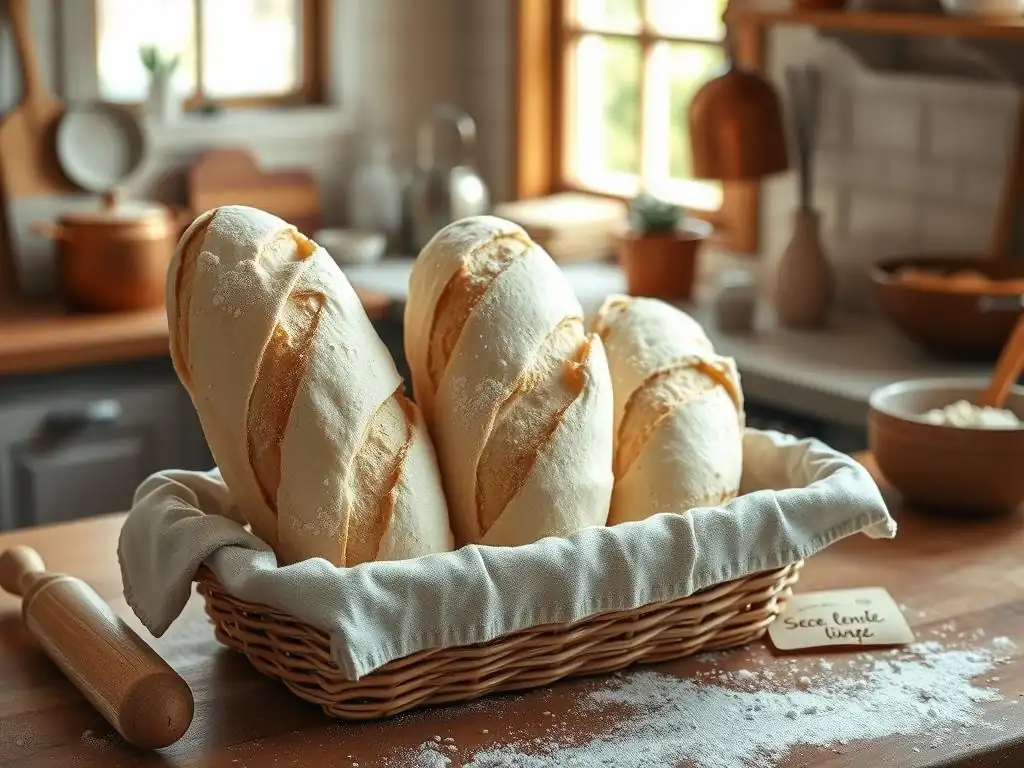
After shaping, the baguettes need a final rise, known as proofing, before baking. This second rise is crucial for developing a light and airy texture. Traditionally, baguettes are proofed on a baker's couche, which is a piece of linen fabric dusted heavily with flour. The couche supports the dough, preventing it from spreading sideways and helping it hold its shape as it rises. You can mimic this by placing the shaped baguettes on parchment paper and creating folds in the paper between them to act as support, or by using a baguette pan.
Cover the proofing baguettes loosely with plastic wrap or a light towel to prevent them from drying out. Proofing time can vary greatly depending on the temperature of your kitchen, but it typically takes 45 to 90 minutes. The dough should look visibly puffy and increase in size, but it shouldn't quite double. A good test is the "poke test": gently poke the dough with a floured finger; if the indentation springs back slowly but not completely, it's ready to bake. If it springs back immediately, it needs more time; if it stays completely indented, it's over-proofed.
Step 5: Scoring the Baguettes - Creating Oven Spring
Just before baking your easy homemade French baguette recipe, you need to score the surface. Scoring involves making shallow cuts in the dough with a sharp blade. This step is absolutely essential for a successful baguette and serves a crucial purpose during the baking process.
Why Scoring is Crucial for Baguette Success
Scoring provides controlled places for the dough to expand rapidly in the hot oven. Without scores, the crust would quickly set, and the internal pressure from the rising dough would cause it to burst unpredictably, often along the sides or bottom, resulting in an uneven shape and a less attractive loaf. The cuts guide the "oven spring," which is the final burst of rising that happens in the first few minutes of baking. Proper scoring allows the baguette to achieve its maximum volume and contributes to the characteristic shape and open crumb.
Scoring Techniques: Achieving Professional Results
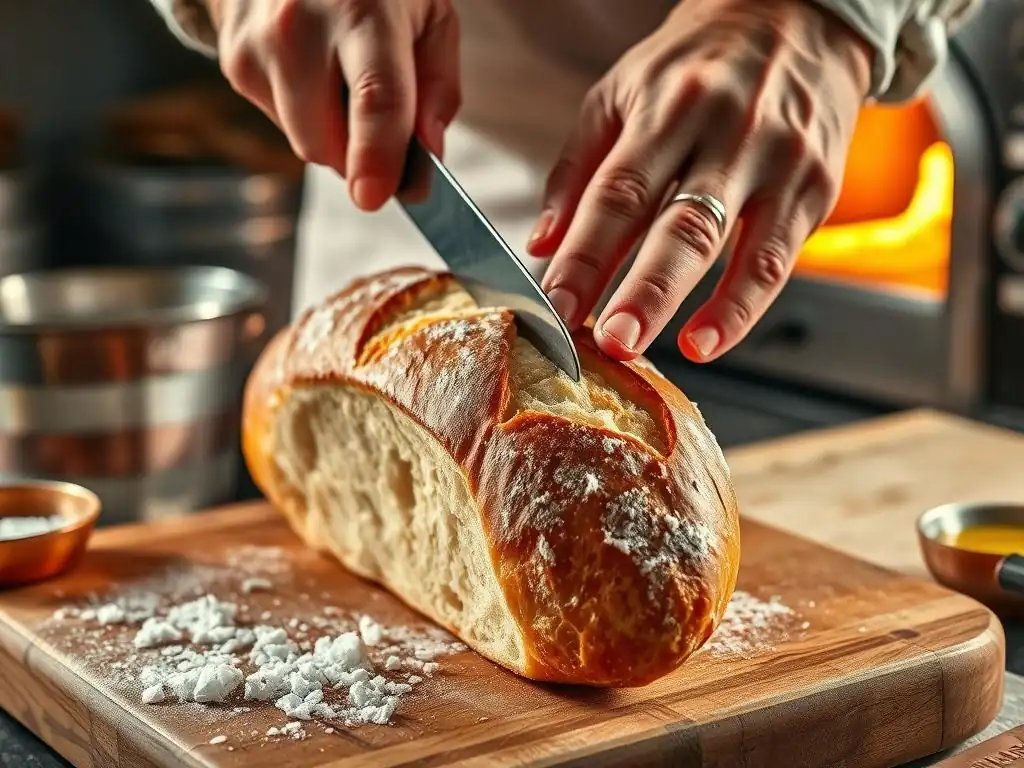
To score your baguettes like a pro, you'll need a very sharp blade, ideally a lame (a specialized razor blade holder for scoring bread) or a sharp razor blade. The cuts should be about 1/2 inch (1-1.5 cm) deep and made quickly and confidently. For a classic baguette, make several diagonal cuts running along the length of the loaf, overlapping each cut slightly.
The angle of the blade is important; hold it at about a 45-degree angle to the surface of the dough, rather than straight down. This angle helps create a "lip" or "ear" as the dough expands, which is a desirable characteristic of a well-baked baguette. Aim for 4-6 even scores on a standard-length baguette.
Step 6: Baking Your Baguettes - Oven Temperature and Timing
Baking is the final step where your easy homemade French baguette recipe comes to life! High heat and steam are critical for developing that signature thin, crispy crust and maximizing oven spring. Preheat your oven to a high temperature, typically between 450°F and 475°F (230-245°C). If you have a baking stone or steel, place it in the oven while it preheats for at least 30-60 minutes; this provides intense heat to the bottom of the loaf, promoting excellent oven spring.
Creating Steam for a Crispy Crust
Steam in the oven prevents the crust from setting too quickly, allowing the dough to expand fully before the crust hardens. It also gelatinizes the starch on the surface, contributing to a thin, shiny, and crispy crust. There are several ways to create steam:
- Place a metal tray on the bottom rack of your oven while it preheats. Just after loading the baguettes, carefully pour a cup of hot water or ice cubes into the hot tray.
- Use a Dutch oven or cloche, though this is more common for boules than baguettes due to their length.
- Mist the oven walls with a spray bottle (be careful not to spray the light or element).
Bake with steam for the first 10-15 minutes, then remove the steam source (or open the oven door briefly to let steam escape) and continue baking in a dry environment.
Monitoring the Baking Process for Golden Perfection
After the initial steaming period, continue baking the baguettes for another 10-15 minutes, or until they are a deep golden brown color and sound hollow when tapped on the bottom. The total baking time for an easy homemade French baguette recipe is usually between 20 and 30 minutes, depending on your oven and the size of your baguettes. Don't be afraid of a dark crust; a good baguette should have a rich, caramelized color for the best flavor and texture. Use a metal spatula to carefully transfer the hot baguettes to a wire rack to cool completely before slicing.
Tips and Tricks for the Perfect French Baguette
Achieving the Ideal Crust: Color and Texture
The crust is arguably the most defining feature of a French baguette. It should be thin, incredibly crispy, and have a beautiful deep golden to reddish-brown color. This color isn't just for looks; it indicates proper caramelization of sugars in the dough, which contributes significantly to the flavor. Baking at high temperatures (450-475°F / 230-245°C) and ensuring adequate steam in the first part of the bake are the most critical factors for achieving this.
If your crust is pale and soft, increase your oven temperature slightly next time and ensure you are generating enough steam. Baking on a preheated stone or steel also helps achieve a crisp bottom crust. Don't cut into your baguettes until they have cooled for at least 20-30 minutes on a wire rack; cutting too early traps steam inside, resulting in a gummy crumb and a less crispy crust.
Troubleshooting Common Baguette Baking Problems
Even with an easy homemade French baguette recipe, you might encounter a few hurdles along the way. Here are solutions to some common issues:
Baguette Dough Too Sticky?
High-hydration doughs are naturally sticky, but if it's unmanageably so, you might have added too much water or not developed enough gluten strength. Try reducing the water slightly in your next batch. During bulk fermentation, ensure you are doing enough stretch and folds (at least 3-4 sets) to build structure. When shaping, use minimal flour on your surface – just enough to prevent sticking – and focus on creating tension on the surface.
Baguette Not Rising Enough?
Lack of rise can be due to inactive yeast, insufficient proofing time, or a cold kitchen. Check your yeast's expiration date and ensure your water temperature is correct if activating active dry yeast (around 105-115°F / 40-46°C). Give your dough sufficient time for both bulk fermentation and proofing, ensuring your kitchen isn't too cold (ideally 70-75°F / 21-24°C). Over-proofing can also lead to dough collapsing in the oven; the poke test is your friend here.
Baguette Crust Too Hard?
A crust that's too thick or hard might indicate insufficient steam during the initial bake, or perhaps baking at too low a temperature for too long. Ensure your oven is properly preheated to a high temperature. Use a reliable method for generating steam (like a steam tray or ice cubes on a hot pan) for the first 10-15 minutes of baking. Removing the steam source after this time allows the crust to crisp up without becoming rock hard.
Variations on the Classic Baguette Recipe
Once you've mastered the basic easy homemade French baguette recipe, feel free to experiment!
Adding Herbs or Seeds for Extra Flavor
You can easily add flavor to your baguettes. Try incorporating a few tablespoons of finely chopped fresh rosemary or thyme into the dough during the initial mix. Alternatively, you can brush the proofed baguettes with water just before baking and sprinkle sesame seeds, poppy seeds, or a mix of seeds over the surface. This adds both flavor and texture.
Experimenting with Different Flour Types
While bread flour is standard, you can play with incorporating small amounts of other flours. Substituting 10-20% of the bread flour with whole wheat flour will add a nuttier flavor and denser texture. You could also experiment with specialty flours like spelt or rye, keeping in mind they absorb water differently and will change the dough handling and final result. Always start with small percentages when experimenting with new flours in your easy homemade French baguette recipe variations.
Serving and Storing Your Homemade Baguettes
Best Ways to Enjoy Your Freshly Baked Baguettes
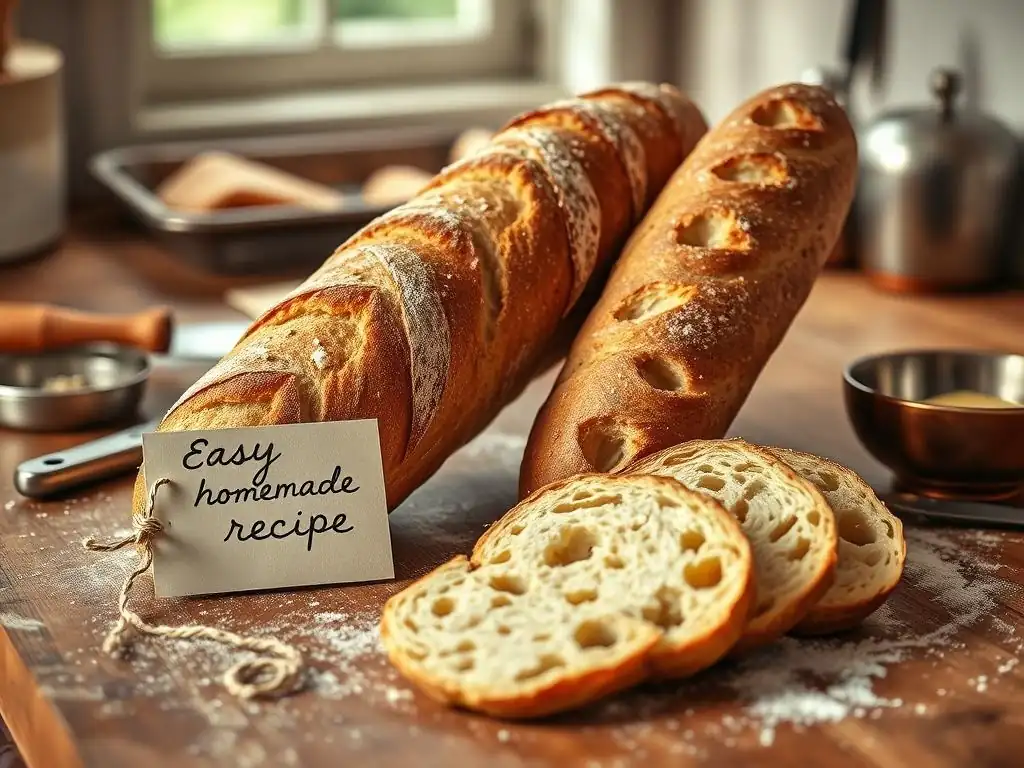
The absolute best way to enjoy your easy homemade French baguette recipe is fresh out of the oven, after it has cooled for about 20-30 minutes. Slice it and serve it simply with good quality butter. It's also perfect for dipping in olive oil, accompanying soups or salads, or making open-faced sandwiches (tartines). A warm baguette is also the foundation for classic French sandwiches like ham and cheese (jambon-beurre).
Consider serving it alongside a cheese board, using slices to mop up delicious sauces, or simply tearing off pieces to savor the incredible texture and flavor you created. The simple pleasure of a fresh, warm baguette is unparalleled.
Proper Storage to Maintain Freshness
Baguettes are best eaten the day they are baked. Their thin, crispy crust is ephemeral. However, if you need to store them, avoid airtight containers or plastic bags, as these will trap moisture and turn the crust soft and chewy. The best way to store a baguette is in a paper bag at room temperature. This allows some airflow while protecting it from drying out too quickly.
Stored this way, a baguette will keep reasonably well for a day or two, though the crust will lose some of its crispness. To revive a day-old baguette, lightly mist it with water and reheat it in a hot oven (around 375°F / 190°C) for 5-10 minutes until the crust is crispy again. For longer storage, you can slice the cooled baguette and freeze the slices in a freezer bag, or freeze whole baguettes tightly wrapped. Thaw at room temperature and refresh in the oven.
Conclusion: Your Journey to Baguette Mastery Begins Now
Embrace the Art of Homemade Baguettes with BakeWithEase
Congratulations! You've walked through the steps of creating a truly special bread with our easy homemade French baguette recipe guide. Baking a baguette at home is a rewarding experience that brings a taste of France directly to your kitchen. It requires a little patience and practice, but the results – a warm loaf with a shattering crust and airy interior – are well worth the effort.
Remember that baking is an art and a science, and every attempt is a learning opportunity. Don't be discouraged if your first baguette isn't perfect. Pay attention to the feel of the dough, the signs of fermentation, and the nuances of your oven. Each bake will bring you closer to mastering the craft and perfecting your easy homemade French baguette recipe.
Enjoy the Taste of France, Baked in Your Own Kitchen
Now, go forth and bake! Gather your ingredients, follow these steps, and experience the simple joy of pulling a beautiful, fragrant baguette from your oven. Share it with loved ones, savor it with your favorite toppings, and take pride in the fact that you created this classic bread yourself. The journey to mastering the easy homemade French baguette recipe is an enjoyable one, and BakeWithEase is here to support you every step of the way. Happy baking!
Frequently Asked Questions
How difficult is this Easy Homemade French Baguette Recipe for a beginner baker?
This recipe is designed to be beginner-friendly, with clear instructions and easy-to-find ingredients. The guide provides step-by-step guidance to ensure success.
What are the key ingredients needed for this Easy Homemade French Baguette Recipe?
The key ingredients are flour, water, salt, and yeast. The recipe focuses on using simple, readily available ingredients for ease.
How long does it take to make this Easy Homemade French Baguette Recipe from start to finish?
The total time, including proofing, is approximately 3-4 hours. Although it requires time, the steps are straightforward.
What kind of flour is best for this Easy Homemade French Baguette Recipe?
Bread flour is recommended for its high gluten content. This helps to create the characteristic chewiness of a French baguette.
How do I achieve the perfect crust on my homemade French baguette using this Easy Homemade French Baguette Recipe?
Creating steam in the oven during baking is crucial. You can achieve this by placing a pan of water on the bottom rack, resulting in a crispy, golden crust.
Final Reflection: The Humble Baguette, A Testament to Patience and Passion
The pursuit of the perfect homemade French baguette is more than just a recipe; it's a journey of discovery, a testament to the power of simple ingredients transformed by time and technique. The seemingly effortless elegance of a perfectly crisp, airy baguette belies the dedication required to master its creation. This guide has aimed to demystify the process, making this culinary challenge accessible to home bakers of all levels.
The enduring appeal of the baguette lies not only in its delicious taste, but also in its cultural significance. It's a symbol of French tradition, a daily staple that connects generations and evokes a sense of place. Bread is the staff of life,
a simple saying, yet it perfectly encapsulates the profound role bread, and specifically the baguette, plays in our lives. Its creation, from mixing the flour to the final satisfying crust, is a meditative process, a connection to something larger than ourselves. This journey of baking has allowed me to appreciate the artistry and patience required to create something so seemingly simple, yet so deeply rewarding.
Now, I invite you to embark on your own baguette adventure. Don't be intimidated by the seemingly complex steps; embrace the process, savor the aroma of rising dough, and revel in the satisfaction of creating something beautiful and delicious with your own hands. The perfect baguette might not be achieved on the first try, but the journey itself, filled with floury hands and the promise of crusty perfection, is a reward in itself. So, gather your ingredients, preheat your oven, and let the magic begin. Your own perfect baguette awaits.
Unleash Your Inner Boulanger: Bake Your Dream Baguette!
Thanks for taking the time to explore the art of baguette baking with us! We hope you now feel empowered to tackle this classic bread. Ready to take your skills to the next level?
- Try our recipe today! Let us know how it turns out – we'd love to see your beautiful loaves!
- Share your baking journey on social media using #BakeWithEaseBaguette and tag us! Let's inspire each other.
- Explore other exciting bread recipes on BakeWithEase.com – discover your next culinary adventure!
What unique ingredient will you experiment with in your next baguette creation?