
Scaling Sourdough Rye Recipes for Different Sizes

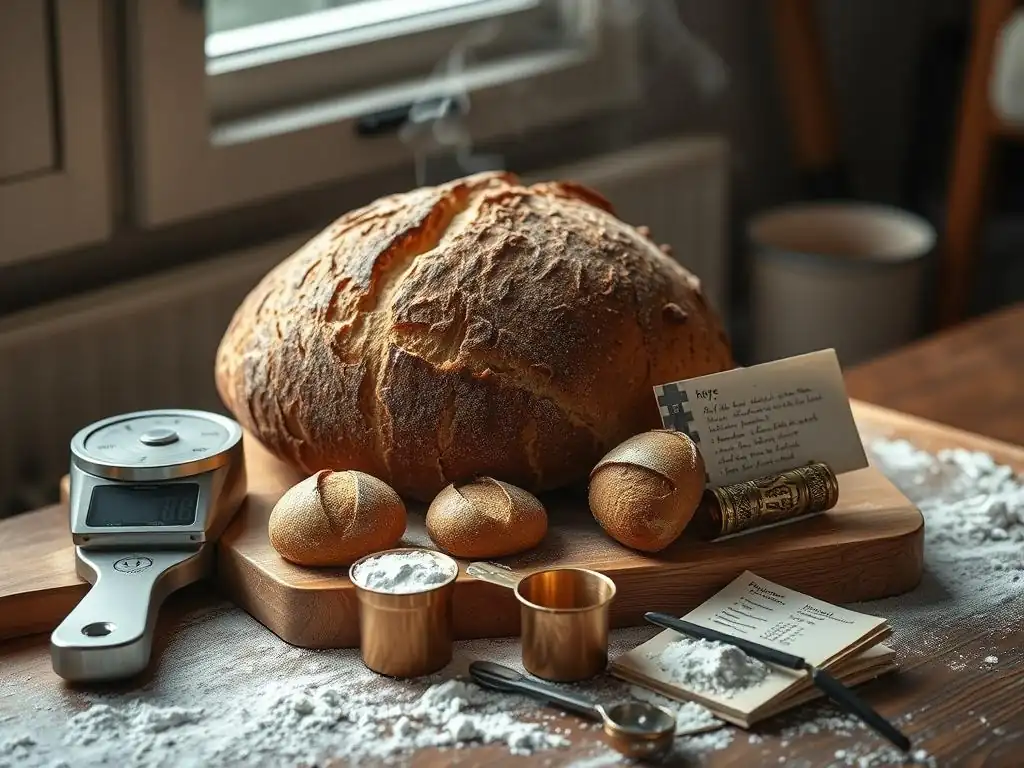
Welcome to BakeWithEase, where the joy of baking meets effortless execution! Ever wondered how to precisely adjust your sourdough rye recipe to perfectly fit your needs? This guide unlocks the secrets to scaling your recipes, ensuring consistent and delicious results every time. Read on to discover the simple math and practical tips you need to confidently bake any size loaf.
- Scaling Sourdough Rye Recipes for Different Sizes: A Baker's Guide
- Understanding Sourdough Rye Scaling for Baking Success
- Mastering the Sourdough Rye Scaling Formula
- Step-by-Step Guide to Scaling Your Sourdough Rye Recipe
- Tips for Successful Sourdough Rye Scaling
- Troubleshooting Common Sourdough Rye Scaling Issues
- Example: Scaling a 70% Rye Sourdough Recipe
- Advanced Techniques for Scaling Sourdough Rye Bread
- Conclusion: Embrace the Art of Scaling Sourdough Rye
-
Frequently Asked Questions
- How do I calculate the scaling factor for my sourdough rye recipe?
- Why is it important to scale sourdough rye recipes accurately?
- What's the best way to measure ingredients when scaling a sourdough rye recipe?
- What adjustments might be needed after scaling a sourdough rye recipe?
- Can I scale sourdough rye recipes up or down indefinitely?
- Final Reflection: The Ever-Expanding World of Sourdough Rye
- Unleash Your Rye Baking Potential!
Scaling Sourdough Rye Recipes for Different Sizes: A Baker's Guide
Understanding Sourdough Rye Scaling for Baking Success
Why Scaling Sourdough Rye Recipes is Essential
Scaling sourdough rye recipes is a fundamental skill for any baker looking to bake larger loaves for family gatherings or smaller ones for individual enjoyment without compromising quality. When you simply guess ingredient amounts, you risk throwing off the delicate balance required for a successful sourdough bake, especially with challenging flours like rye. Precise scaling ensures that the hydration, fermentation, and overall structure remain consistent, delivering the same delicious, tangy result whether you're baking a small 500g loaf or a large 1.5kg centerpiece. Mastering the sourdough rye scaling recipe process is key to repeatable success.
Think about a standard recipe designed for a 1kg loaf using 300g of rye flour. If you need to bake two such loaves for a party, simply doubling all ingredients is the most straightforward approach to scaling. However, if you only need a small 500g loaf, you'll need to halve the ingredients. This deliberate adjustment, rather than estimation, prevents common issues like dough being too wet to handle or too dry to develop properly, which can easily happen with rye's unique absorption properties. A well-executed sourdough rye scaling recipe guarantees predictable outcomes, saving time and ingredients.
Challenges in Scaling Sourdough Rye Bread
Scaling sourdough rye bread presents unique challenges primarily due to the nature of rye flour and the sourdough starter itself. Unlike wheat flour, rye contains very little gluten-forming protein. This means the structure of rye bread relies more heavily on the pentosans (a type of carbohydrate) and the balance of acids produced by the sourdough starter. Simply multiplying ingredient weights can sometimes disrupt this delicate structural network, leading to dense or gummy loaves. For instance, doubling a recipe might require slight adjustments to hydration or fermentation time that aren't immediately obvious from a simple calculation.
Another hurdle in scaling sourdough rye recipes is the sourdough starter's activity. While you scale the weight of the starter, its microbial activity doesn't necessarily scale linearly in terms of its effect on larger or smaller dough masses. A larger dough mass retains heat differently than a smaller one, impacting fermentation speed.
For example, a 2kg dough might proof faster than four 500g doughs in the same environment due to thermal mass. Successfully implementing a sourdough rye scaling recipe requires understanding these nuances and being prepared to make minor adjustments during the process based on dough behavior, not just the initial calculations.
Mastering the Sourdough Rye Scaling Formula
Key Ingredients and Their Impact on Scaling
Understanding Rye Flour and its Properties
Rye flour is the cornerstone of sourdough rye bread and behaves quite differently from wheat flour, significantly impacting the scaling process. Rye flour absorbs water more slowly but retains it more effectively due to its high pentosan content.
When scaling a sourdough rye recipe, it's crucial to recognize that while you scale the weight of the flour, the dough's consistency might feel different at different batch sizes. A recipe designed for 75% hydration with 500g of rye might feel perfect, but scaling it up to 1kg of rye at the exact same hydration might result in a dough that feels slightly wetter or stickier initially, requiring careful handling.
Furthermore, the type of rye flour (light, medium, dark, or whole) affects water absorption. Darker flours, containing more of the bran, absorb more water. When scaling a sourdough rye scaling recipe, ensure you are using the same type of rye flour as specified in the original recipe.
Mixing types or substituting without adjustment can significantly alter the dough's hydration and structure, leading to unpredictable results. For example, substituting 100g of light rye with 100g of whole rye in a scaled recipe might necessitate adding an extra 10-20g of water to achieve the desired consistency, a detail that simple weight scaling might overlook.
The Role of Sourdough Starter in Scaling
The sourdough starter is the leavening agent and a major flavor contributor in sourdough rye bread. When scaling a sourdough rye recipe, you scale the amount of starter by weight, just like other ingredients. However, the proportion of starter relative to the flour (often expressed as a percentage of the total flour weight) is critical and should remain consistent regardless of the batch size. A recipe using 20% starter relative to the flour weight (e.g., 100g starter for 500g flour) should maintain that 20% ratio when scaled (e.g., 200g starter for 1000g flour).
The activity level of your starter is paramount when scaling. A sluggish starter will affect fermentation times more noticeably in a larger batch than a smaller one. It's vital to use a vigorous, recently fed starter for any scaled sourdough rye scaling recipe.
If your starter isn't very active, consider slightly increasing the percentage of starter in your scaled recipe or allowing for longer bulk fermentation and proofing times. For example, if a recipe calls for 150g of 100% hydration starter for 500g of flour (30% starter), scaling to 1500g of flour would require 450g of starter. Ensuring this larger amount of starter is bubbly and active is crucial for consistent leavening across the larger dough mass.
Water and Hydration Considerations
Water is a critical component in sourdough rye bread, impacting dough consistency, fermentation, and the final crumb. Hydration is typically expressed as a percentage of the total flour weight. When scaling a sourdough rye recipe, maintaining the original hydration percentage is usually the starting point. For instance, if a recipe uses 400g water for 500g flour (80% hydration), scaling to 1000g flour would require 800g water to keep the hydration consistent.
However, as mentioned earlier, rye flour's unique absorption and the dough's thermal mass can mean that the feel of the dough might change slightly when scaled significantly. Sometimes, bakers find they need to slightly adjust the hydration in very large or very small batches after the initial calculation.
For example, a very large dough might feel slightly looser than expected at the calculated hydration due to slower cooling, while a very small dough might feel slightly tighter. Monitoring the dough's consistency during mixing is key, and don't be afraid to add a tiny bit more water (a few grams at a time) if the dough feels too stiff, even if your sourdough rye scaling recipe calculations are correct.
Basic Formula for Scaling Sourdough Rye
Calculating Total Dough Weight
The first step in scaling any baking recipe, including a sourdough rye scaling recipe, is to determine the total weight of the original dough and your desired target dough weight. Sum up the weights of all ingredients in the original recipe: flour(s), water, starter, salt, and any additions like seeds or spices. For example, if an original recipe uses 500g rye flour, 400g water, 150g starter, and 10g salt, the total dough weight is 500 + 400 + 150 + 10 = 1060g. This 1060g represents the yield of the original recipe.
Now, decide what total dough weight you want to achieve. Perhaps you want a smaller loaf weighing 700g total, or a much larger batch yielding 3000g of dough. This target weight is crucial for the next step in your sourdough rye scaling recipe calculation. Having the original total weight and the desired total weight allows you to calculate the scaling factor needed to adjust each ingredient proportionately.
Determining Ingredient Ratios
Once you have the original total dough weight and your target total dough weight, you can determine the scaling factor. This factor is simply the target weight divided by the original weight. Using the previous example, if the original recipe yields 1060g and you want to make 3000g of dough, the scaling factor is 3000g / 1060g ≈ 2.83. This factor tells you how many times larger your new recipe needs to be.
To scale each ingredient for your sourdough rye scaling recipe, multiply the original weight of that ingredient by the scaling factor. Using the factor of 2.83:
- Rye flour: 500g * 2.83 ≈ 1415g
- Water: 400g * 2.83 ≈ 1132g
- Starter: 150g * 2.83 ≈ 425g
- Salt: 10g * 2.83 ≈ 28.3g (round to 28g or 29g)
Summing these scaled amounts (1415 + 1132 + 425 + 28) gives approximately 3000g, confirming the calculation is correct for your desired total dough weight. This proportional adjustment is the core of a successful sourdough rye scaling recipe.
Step-by-Step Guide to Scaling Your Sourdough Rye Recipe
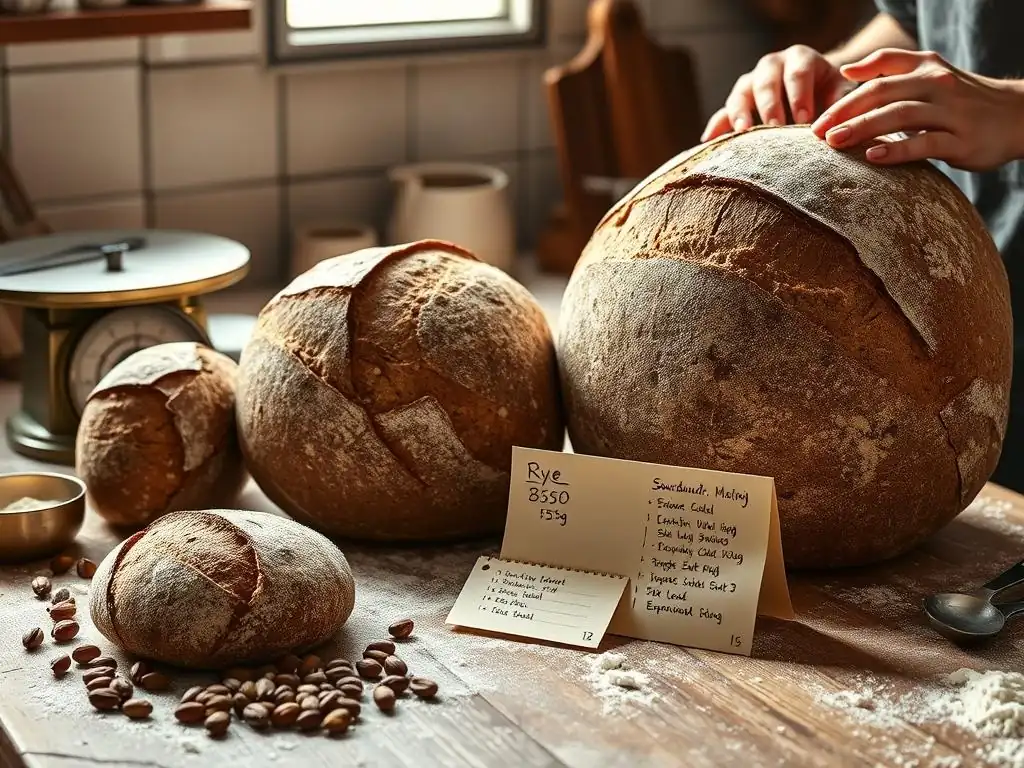
Step 1: Identify Your Target Dough Size
The first practical step in applying a sourdough rye scaling recipe is to clearly define the final amount of dough you want to make. Are you aiming for a single, larger loaf (e.g., 1.5 kg total dough weight instead of the original 1 kg)? Or perhaps you need several smaller loaves (e.g., two 750g loaves instead of one 1.5 kg loaf)? Knowing the desired total dough weight is the foundation for all subsequent calculations. Consider your baking vessel sizes and the number of people you plan to serve when deciding on the target dough size.
For example, a common home baking recipe might yield around 1 kg of dough, suitable for a medium-sized loaf baked in a Dutch oven. If you want to bake two such loaves simultaneously in two Dutch ovens, your target dough size would be approximately 2 kg. Conversely, if you only want a small test loaf or a loaf for a single person, you might aim for a total dough weight of 500g. Clearly stating this target weight helps avoid confusion and ensures accuracy in the following steps of your sourdough rye scaling recipe.
Step 2: Calculate the Scaling Factor
Once you have your target total dough weight from Step 1 and the original total dough weight (calculated as the sum of all original ingredient weights), you can calculate the scaling factor. The formula is simple: Scaling Factor = Target Total Dough Weight / Original Total Dough Weight. Using the example from the previous section, if the original recipe yields 1060g and your target is 3000g, the scaling factor is 3000g / 1060g ≈ 2.83.
This scaling factor is the multiplier you will use for every single ingredient in the original recipe. It represents how much larger or smaller your new batch will be relative to the original. For instance, a scaling factor of 2 means you are doubling the recipe, while a factor of 0.5 means you are halving it. Calculate this factor precisely, using a calculator, and keep it handy for the next step in executing your sourdough rye scaling recipe.
Step 3: Adjust Ingredient Amounts Accordingly
Now, take your calculated scaling factor and apply it to the weight of each individual ingredient in the original recipe. Multiply the original weight of each ingredient (flour, water, starter, salt, seeds, etc.) by the scaling factor to get the new, scaled weight for that ingredient. It's best to use a kitchen scale capable of measuring in grams for accuracy, especially for smaller amounts like salt or starter.
For instance, if your original recipe called for 500g rye flour and your scaling factor is 2.83, your new recipe will require 500g * 2.83 ≈ 1415g of rye flour. If the original recipe used 150g of starter, the scaled recipe needs 150g * 2.83 ≈ 425g of starter. Repeat this multiplication for every ingredient listed in the original sourdough rye scaling recipe. Using a spreadsheet or a dedicated scaling calculator can help manage these calculations efficiently and minimize errors.
Step 4: Fine-Tuning the Recipe After Scaling
While the mathematical scaling provides a solid starting point, baking, especially with sourdough rye, often requires some intuition and adjustment. After mixing your scaled dough, observe its consistency. Does it feel significantly different from how the original dough felt? Rye dough can be tricky, and slight variations in flour absorption or environmental humidity can become more apparent in larger batches.
Be prepared to make minor adjustments, primarily to the water content, during the initial mixing. If the dough feels too stiff or dry for the expected hydration level, add water a few grams at a time until it reaches the desired consistency.
Conversely, if it feels too wet or slack, a tiny sprinkle of extra flour might be needed, though be cautious not to add too much flour as it will change the hydration percentage. This fine-tuning step is where experience comes in, ensuring your scaled sourdough rye scaling recipe performs optimally, even if the calculated weights were slightly off due to real-world variables.
Tips for Successful Sourdough Rye Scaling
Maintaining the Right Hydration Level in Scaled Recipes
Ensuring the correct hydration level is paramount when scaling a sourdough rye recipe, as rye flour's water absorption is less forgiving than wheat. While the scaled calculation provides the target water amount, always assess the dough's feel during mixing. Rye dough, even at higher hydrations, often feels stickier than wheat dough. Aim for the consistency described in the original recipe or the consistency you are familiar with for that particular rye percentage.
If scaling up significantly, say from 500g total flour to 2kg total flour, you might find the dough feels slightly looser than expected at the calculated hydration. This could be due to minor inconsistencies in flour absorption across larger batches or the slower cooling of a larger dough mass. Conversely, scaling down significantly might make the dough feel slightly tighter. Have a small amount of extra water and flour on hand to make tiny adjustments if needed, adding water by the teaspoon or flour by the pinch, until the scaled sourdough rye scaling recipe dough feels just right.
Adjusting Proofing Times After Scaling
Scaling a sourdough rye recipe impacts proofing times because the total mass of the dough affects its temperature and fermentation speed. A larger dough mass will ferment more quickly than a smaller one if all other conditions (ambient temperature, starter activity) are equal, as it retains metabolic heat better. Conversely, a smaller dough will ferment slower. Therefore, strictly following the original proofing times after scaling might lead to over-proofed or under-proofed dough.
Instead of relying solely on the clock, learn to read the signs of fermentation in your scaled dough. Look for visual cues like increased volume (though rye doesn't double like wheat), a domed surface with some bubbles, and a lighter, airier feel. A typical 1kg rye dough might bulk ferment for 3-4 hours at room temperature, but a 2kg dough might reach the same stage in 2.5-3.5 hours. For smaller doughs, like 500g, it might take 3.5-4.5 hours. Be observant and adjust fermentation times based on the dough's progress, not just the original sourdough rye scaling recipe timing.
Monitoring Dough Consistency
Consistently monitoring the dough's consistency throughout the process is vital for successful sourdough rye scaling. From the initial mix through bulk fermentation and shaping, pay attention to how the dough feels. Is it overly sticky? Too stiff? Does it have the expected elasticity (limited in rye, but still present)? Rye dough can be less structured than wheat, so understanding its typical feel at different hydration levels is crucial.
If you notice the scaled dough consistency is off early on (e.g., much stickier or drier than anticipated after the initial mix), make small, immediate adjustments to water or flour. During bulk fermentation, observe how the dough develops. If it seems to be fermenting too quickly or too slowly, adjust the ambient temperature or subsequent proofing times. This continuous evaluation helps compensate for variables not accounted for in the initial sourdough rye scaling recipe calculation, such as slight differences in flour batches or ambient temperature fluctuations.
Temperature Control for Scaled Sourdough Rye
Temperature plays a significant role in fermentation speed, and scaling a sourdough rye recipe can affect the dough's temperature. As mentioned, a larger dough mass will generate and retain more heat during fermentation than a smaller one. This can accelerate fermentation, potentially leading to over-proofing if not monitored. Conversely, smaller doughs are more susceptible to ambient temperature changes and might ferment slower in a cool environment.
To manage this, pay close attention to the ambient temperature and the dough's temperature itself. If scaling up, consider using cooler water in the mix or fermenting in a slightly cooler spot to slow things down. If scaling down, warmer water or a warmer proofing environment might be beneficial. Using a probe thermometer to check the dough's internal temperature can provide valuable insight into its fermentation progress, helping you adjust timings for your scaled sourdough rye scaling recipe effectively. Aim for consistent dough temperatures, typically between 24-26°C (75-79°F), during bulk fermentation.
Troubleshooting Common Sourdough Rye Scaling Issues
Dough Too Wet or Too Dry
One of the most frequent issues when scaling a sourdough rye recipe is ending up with dough that is too wet or too dry, even after careful calculation. This usually stems from variations in flour absorption, which can differ slightly between batches of flour or even brands. Rye flour is particularly prone to this variability. If your scaled dough feels significantly wetter than expected at the calculated hydration, it might be because the specific batch of flour used absorbs slightly less water than the flour the original recipe was developed with.
To fix dough that is too wet after scaling, add a small amount of rye flour, a tablespoon at a time, mixing it in thoroughly until the desired consistency is reached. Be careful not to add too much, as this will lower the overall hydration. If the dough is too dry, add water, a teaspoon at a time, incorporating it fully. It's much easier to add more liquid or flour than to take it away, so make these adjustments gradually. This hands-on adjustment is a crucial part of successfully implementing a sourdough rye scaling recipe.
Inconsistent Rise After Scaling
Experiencing an inconsistent rise (either too little or too much) after scaling a sourdough rye recipe can be frustrating. Too little rise might indicate an underactive starter (perhaps the larger quantity wasn't fully active), insufficient fermentation time for the scaled mass (especially if scaling down), or the dough temperature was too low. Too much rise, often leading to collapse, suggests over-proofing, likely because the fermentation time wasn't reduced enough when scaling up, or the dough temperature was too high.
Address inconsistent rise by first ensuring your starter is vigorous before mixing the scaled batch. Then, pay close attention to fermentation and proofing times, adjusting based on the dough's visual cues and feel rather than strictly adhering to the original recipe's timing. If scaling up, anticipate shorter times; if scaling down, allow longer times. Monitor the dough temperature and adjust the proofing environment as needed to maintain a consistent fermentation rate for your scaled sourdough rye scaling recipe.
Flavor Changes in Scaled Recipes
Sometimes, scaling a sourdough rye recipe can subtly alter the final flavor of the bread. This isn't usually due to incorrect ingredient ratios if scaled properly, but rather changes in fermentation dynamics that affect the balance of acids produced by the starter. A larger dough mass, fermenting faster and potentially reaching higher internal temperatures, might develop a different profile of lactic and acetic acids compared to a smaller batch.
While hard to control perfectly, being mindful of fermentation speed and temperature can help maintain flavor consistency. If your scaled bread tastes significantly more or less sour, note the fermentation conditions (time and temperature) and adjust future scaled batches. For instance, if scaling up resulted in a less sour loaf, try fermenting at a slightly lower temperature or for a slightly longer time to encourage more acetic acid production. Conversely, if scaling down resulted in excessive sourness, a warmer, faster fermentation might be preferred for your sourdough rye scaling recipe.
Example: Scaling a 70% Rye Sourdough Recipe
Original Recipe: 70% Rye Sourdough with Caraway
This example demonstrates scaling a popular sourdough rye scaling recipe based on 70% rye flour.
Ingredients (Original)
- Whole Rye Flour: 350g
- Strong Bread Flour (Wheat): 150g
- Water: 400g (80% hydration based on total flour)
- Active Sourdough Starter (100% hydration): 100g (20% based on total flour)
- Salt: 10g (2% based on total flour)
- Caraway Seeds: 15g (Optional)
Total Dough Weight (Original): 350g + 150g + 400g + 100g + 10g + 15g = 1035g
Instructions (Original)
- Mix flours, water, and starter until just combined. Rest for 30 minutes (autolyse).
- Add salt and caraway seeds. Mix until incorporated, about 5-7 minutes. Dough will be sticky.
- Bulk fermentation: 3-4 hours at 24-26°C (75-79°F), performing 1-2 sets of folds in the first hour.
- Shape the dough (it will be slack) and place seam-side up in a floured proofing basket.
- Cold proof in the refrigerator for 10-16 hours.
- Preheat oven with Dutch oven to 250°C (480°F).
- Bake covered for 20 minutes, then uncovered at 220°C (430°F) for 25-30 minutes.
- Cool completely before slicing.
Scaled Recipe (Doubled)
Let's scale the original recipe to make a larger batch, aiming for roughly double the dough weight. Target Total Dough Weight: Approx. 2070g (double of 1035g)
Scaling Factor: Target Weight / Original Weight = 2070g / 1035g = 2
Ingredients (Scaled)
Multiply each original ingredient weight by the scaling factor (2):
- Whole Rye Flour: 350g * 2 = 700g
- Strong Bread Flour (Wheat): 150g * 2 = 300g
- Water: 400g * 2 = 800g
- Active Sourdough Starter (100% hydration): 100g * 2 = 200g
- Salt: 10g * 2 = 20g
- Caraway Seeds: 15g * 2 = 30g
Total Dough Weight (Scaled): 700g + 300g + 800g + 200g + 20g + 30g = 2050g (Slight difference due to rounding total weight, but scaling each ingredient individually is more accurate).
Instructions (Scaled)
The instructions for the scaled sourdough rye scaling recipe are largely the same, but be mindful of potential adjustments:
- Mix flours, water, and starter until just combined. Rest for 30 minutes (autolyse). Ensure all ingredients are fully incorporated in the larger batch.
- Add salt and caraway seeds. Mix until incorporated, about 7-10 minutes. The larger dough mass might require slightly longer mixing. Observe dough consistency.
- Bulk fermentation: Monitor closely. Expect fermentation to potentially be slightly faster (e.g., 2.5-3.5 hours) due to the larger mass retaining heat. Perform 1-2 sets of folds in the first hour.
- Shape the dough (you might divide it into two loaves if desired, each around 1025g) and place seam-side up in floured proofing basket(s).
- Cold proof in the refrigerator for 10-16 hours. Larger loaves might benefit from the full 16 hours.
- Preheat oven with Dutch oven(s) to 250°C (480°F). Ensure oven is fully preheated if baking multiple loaves.
- Bake covered for 20-25 minutes (slightly longer for larger loaves), then uncovered at 220°C (430°F) for 30-35 minutes. Baking time may increase for larger or multiple loaves.
- Cool completely before slicing.
Advanced Techniques for Scaling Sourdough Rye Bread
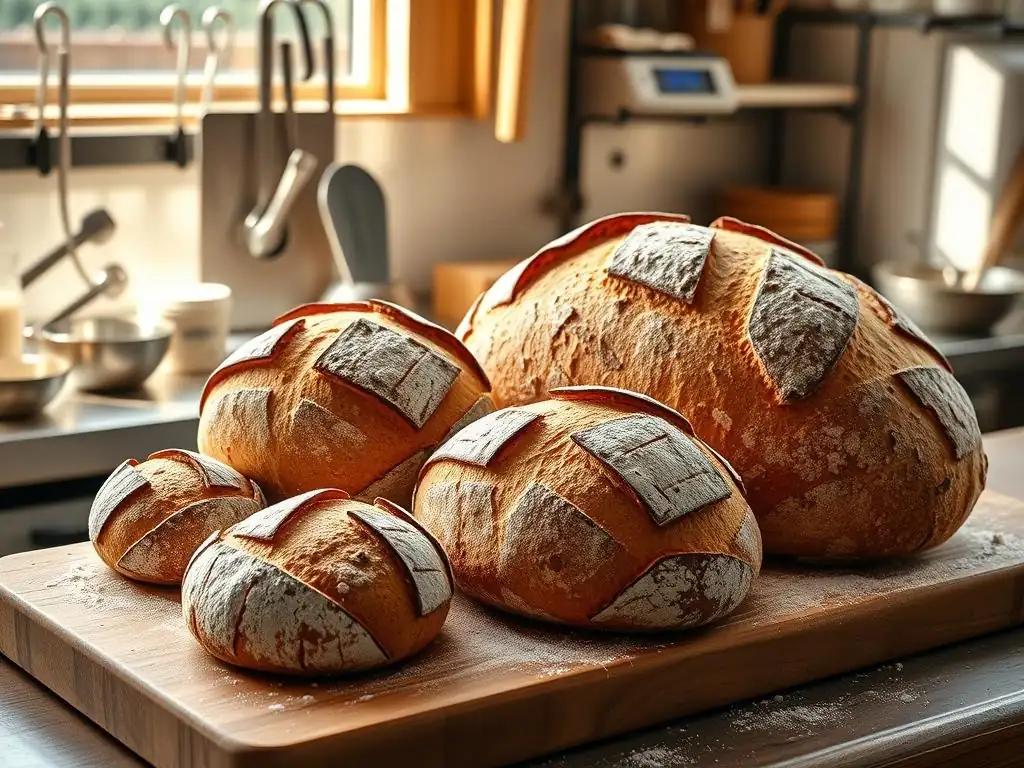
Baker's Percentage and its Application to Scaling
Baker's percentage is an invaluable tool for scaling any bread recipe, including complex sourdough rye scaling recipes. In baker's percentage, each ingredient's weight is expressed as a percentage of the total flour weight (which is always 100%). This makes scaling incredibly simple because the percentages remain constant regardless of the batch size. You only need to decide on the total flour weight you want to use, and then calculate the weight of each other ingredient based on its percentage.
Using the original recipe example (350g rye + 150g wheat = 500g total flour):
- Rye Flour: (350g / 500g) * 100% = 70%
- Wheat Flour: (150g / 500g) * 100% = 30%
- Water: (400g / 500g) * 100% = 80%
- Starter: (100g / 500g) * 100% = 20%
- Salt: (10g / 500g) * 100% = 2%
- Caraway Seeds: (15g / 500g) * 100% = 3%
Total Percentage (excluding seeds): 70 + 30 + 80 + 20 + 2 = 202%. This means the total dough weight (excluding optional additions) is 202% of the total flour weight. To scale using baker's percentage, decide on your new total flour weight (e.g., 1000g total flour). Then calculate ingredient weights: Rye (700g), Wheat (300g), Water (800g), Starter (200g), Salt (20g), Caraway (30g). This method makes scaling sourdough rye scaling recipes based on desired flour amount very straightforward.
Using Online Sourdough Scaling Calculators
For those who prefer not to do manual calculations or use spreadsheets, online sourdough scaling calculators can be incredibly helpful tools for scaling sourdough rye recipes. Many baking websites and apps offer calculators where you input the original recipe's ingredient weights (or percentages) and the desired total dough weight or total flour weight, and it automatically provides the scaled ingredient amounts.
These calculators can save time and reduce the risk of mathematical errors, especially when dealing with multiple ingredients or complex percentages. Some advanced calculators even allow you to adjust hydration or starter percentages on the fly. While a calculator simplifies the math for your sourdough rye scaling recipe, remember that you still need to use your judgment during the actual baking process to account for variables like flour absorption and fermentation speed, as discussed in the troubleshooting section. Always double-check the calculator's output against your understanding of the recipe.
Adapting Recipes for Different Baking Pans
Scaling a sourdough rye recipe also involves considering the baking vessel or pan you'll be using, especially if you're changing the size or shape of the loaf. A recipe designed for a round Dutch oven might need slight adjustments if scaled for a long Pullman pan or free-form loaves. The shape and size of the pan affect how the dough proofs and how heat is transferred during baking.
For example, scaling a recipe designed for a single 1kg round loaf to make two 1kg loaves might require two Dutch ovens or baking on a stone, potentially affecting oven spring and crust development compared to baking a single large loaf. If scaling for a Pullman pan, you might need to adjust the total dough weight to perfectly fit the pan's volume (typically filling it about 2/3 to 3/4 full before the final rise).
Consider the thermal mass of your scaled dough and how your chosen pan will conduct heat, potentially requiring minor adjustments to baking time or temperature when implementing your scaled sourdough rye scaling recipe.
Conclusion: Embrace the Art of Scaling Sourdough Rye
Scaling sourdough rye recipes might seem daunting at first due to rye's unique properties and the living nature of sourdough starter. However, by understanding the basic principles of proportional scaling, paying close attention to ingredient properties (especially rye flour and water), and being prepared to observe and adjust the dough during the process, you can successfully adapt your favorite recipes to any size. From calculating the scaling factor based on target dough weight to fine-tuning hydration and fermentation times, each step contributes to achieving consistent, delicious results.
Achieving Consistent Results with Sourdough Rye
The key to achieving consistent results when scaling a sourdough rye scaling recipe lies not just in the initial calculations but in developing a feel for the dough at different sizes and conditions. Use accurate measurements, preferably with a digital scale, and leverage tools like baker's percentages or online calculators to simplify the math. Most importantly, be patient and observant throughout the bulk fermentation, shaping, and proofing stages.
By monitoring the dough's behavior and making subtle adjustments based on feel and visual cues, you can confidently scale your sourdough rye bread recipes to bake perfect loaves, big or small, every time. Embrace the learning process, and enjoy the rewarding experience of mastering the sourdough rye scaling recipe technique.
Frequently Asked Questions
How do I calculate the scaling factor for my sourdough rye recipe?
To determine the scaling factor, divide the desired total dough weight by the original recipe's total dough weight. This number is then used to multiply each ingredient's weight.
Why is it important to scale sourdough rye recipes accurately?
Accuracy is crucial because sourdough rye relies on precise ratios of ingredients, especially considering the rye flour's unique properties. Inaccurate scaling can affect dough hydration and fermentation.
What's the best way to measure ingredients when scaling a sourdough rye recipe?
Using a digital kitchen scale for all ingredients is highly recommended. This ensures accurate measurements, especially when dealing with small quantities of ingredients.
What adjustments might be needed after scaling a sourdough rye recipe?
You might need to adjust hydration slightly, as scaled recipes can behave differently. Also, fermentation times may vary based on the new dough mass.
Can I scale sourdough rye recipes up or down indefinitely?
While scaling is useful, extreme changes can impact the final result. Large batches might require longer bulk fermentation, while smaller batches might dry out faster.
Final Reflection: The Ever-Expanding World of Sourdough Rye
Mastering sourdough rye bread isn't just about baking; it's about understanding the intricate dance between flour, water, and time. This understanding, once achieved, unlocks a world of culinary possibilities, allowing you to confidently scale your recipes from a small loaf for a cozy evening to a larger batch for a celebratory gathering. The ability to accurately scale your sourdough rye recipe is crucial for consistent results, no matter the size of your bake.
The journey of perfecting sourdough rye, with its unique challenges and rewarding outcomes, has deeply impacted my own baking practice. It's a testament to the patience and precision required in this craft, a process that mirrors the slow, deliberate growth of the sourdough starter itself. The best things in life are worth waiting for,
a sentiment that rings particularly true when working with this complex and rewarding bread. The subtle nuances in flavor and texture that emerge from a perfectly scaled recipe are a constant source of fascination and inspiration, pushing me to refine my technique and explore new variations.
Now, it's your turn. Consider the recipes you've perfected and the ones you're still working on. What adjustments have you made to scale your own baking projects? Don't be afraid to experiment, to embrace the occasional failure, and to learn from each loaf you bake. The journey of mastering sourdough rye, like any culinary pursuit, is a continuous process of learning, adapting, and ultimately, finding joy in the creation of something delicious and deeply satisfying. Embrace the challenge, and the rewards will be well worth the effort.
Unleash Your Rye Baking Potential!
Thanks for joining us on this sourdough rye journey! We hope you gained valuable insights into scaling your recipes for perfect loaves every time. Now it's time to put your new knowledge into action.
- Bake that perfect loaf: Try scaling your favorite rye recipe using the techniques we've outlined. Don't be afraid to experiment – even small adjustments can make a big difference!
- Share your baking triumphs (and challenges!): Tell us about your experience scaling your rye recipe in the comments below. We'd love to hear your story!
- Explore our other sourdough resources: Discover more tips and recipes to elevate your baking skills on our website.
What unique twist will you add to your next sourdough rye creation?