
The Science Behind Baking 100% Whole Wheat


Welcome to BakeWithEase, your companion on a delicious baking journey!
Ever wondered what transforms humble whole wheat flour into a light and airy loaf? This isn't just about ingredients; it's about understanding the science. Dive into our exploration of Whole Wheat Baking Science and unlock the secrets to creating incredible, healthy breads right in your own kitchen. Prepare to be amazed at how a little knowledge can revolutionize your baking! Let's get started...
- The Science Behind Baking 100% Whole Wheat Bread
- Understanding Whole Wheat Flour for Baking
- The Role of Gluten in 100% Whole Wheat Bread
- Mastering the Art of Hydration in Whole Wheat Dough
- Yeast Fermentation and Flavor Development in Whole Wheat Bread
- The Importance of Kneading Whole Wheat Dough
- Baking Temperature and Time for 100% Whole Wheat Bread
- Cooling and Storing 100% Whole Wheat Bread
- Improving the Texture of 100% Whole Wheat Bread: Scientific Approaches
- Troubleshooting Common Problems in 100% Whole Wheat Baking
- Advanced Whole Wheat Baking Techniques
-
Frequently Asked Questions
- How does whole wheat flour differ from all-purpose flour in baking?
- What challenges are commonly encountered when baking with 100% whole wheat flour?
- What are some techniques to improve the texture of baked goods made with 100% whole wheat?
- How does the protein content of whole wheat flour impact the final baked product?
- Why is hydration crucial when baking with 100% whole wheat flour?
- Final Reflection: Unlocking the Secrets of Whole Wheat Baking
- Unleash Your Inner Wheat Wizard!
The Science Behind Baking 100% Whole Wheat Bread
Understanding Whole Wheat Flour for Baking
Baking with 100% whole wheat flour presents unique challenges and rewards compared to using refined white flour. The science behind whole wheat baking lies in understanding the components of the grain and how they interact during the baking process. Embracing the nuances of whole wheat flour is key to achieving delicious, nutritious loaves.
Composition of Whole Wheat Flour: Bran, Germ, and Endosperm
Whole wheat flour is milled from the entire wheat kernel, meaning it includes all three main parts: the bran, the germ, and the endosperm. This complete inclusion is what gives whole wheat its distinctive color, flavor, and nutritional profile, but it also significantly impacts its baking properties. The endosperm, making up about 80-85% of the kernel's weight, is primarily starch and protein (including gluten-forming proteins).
The bran, roughly 12-15% of the kernel, is the hard, outer layer rich in fiber, minerals, and B vitamins. The germ, about 2-3% of the kernel, is the embryo of the wheat plant, containing fats, vitamins, minerals, and antioxidants. While these components contribute immense nutritional value, the sharp edges of the bran particles can cut through gluten strands, and the fats in the germ can interfere with gluten development, both critical aspects of successful whole wheat baking science.
The Impact of Bran on Gluten Development in Whole Wheat Dough
One of the primary challenges in whole wheat baking is the presence of bran. The bran particles are sharp and abrasive. As you mix and knead the dough, these particles physically slice through the developing network of gluten proteins. This disruption weakens the gluten structure, making it harder for the dough to trap the gases produced by yeast fermentation.
Consequently, a dough made with 100% whole wheat flour typically has a weaker gluten network than a dough made with refined white flour. This impacts the dough's ability to rise and hold its shape, often resulting in a denser loaf. Understanding this interaction is fundamental to the science behind whole wheat baking and guides techniques aimed at mitigating bran's effects.
Whole Wheat Flour Varieties: Protein Content and Baking Applications
Not all whole wheat flour is created equal. Different wheat varieties result in flours with varying protein content and characteristics, crucial factors in whole wheat baking science. Hard red winter wheat and hard red spring wheat, for instance, are high in protein (often 13-15% or higher) and produce flours well-suited for bread baking due to their strong gluten potential. Hard white wheat is also high in protein but has a milder flavor and lighter color.
Softer wheat varieties, like soft white or soft red winter wheat, have lower protein content (typically 8-10%) and are better suited for cakes, pastries, and cookies where a tender, less structured crumb is desired. When selecting flour for 100% whole wheat bread, opting for a high-protein, hard wheat variety is essential to give your dough the best chance at developing a sufficiently strong gluten network despite the challenges posed by the bran and germ.
The Role of Gluten in 100% Whole Wheat Bread
Gluten is the structural backbone of most bread, providing elasticity, extensibility, and the ability to trap gases, leading to a well-risen loaf. In whole wheat baking science, managing gluten development is paramount due to the interference from the bran and germ.
Gluten Formation in Whole Wheat Dough: Challenges and Solutions
Gluten forms when two proteins found in wheat flour, glutenin and gliadin, are hydrated with water and agitated (through mixing and kneading). These proteins link together to create a complex, elastic network. In whole wheat dough, the bran particles physically disrupt this network as it forms, while the fats in the germ can coat the proteins, hindering their ability to bond effectively.
To counteract these challenges, bakers often employ specific techniques. Increased hydration allows the bran to soften and become less abrasive. Longer mixing or kneading times can help develop the gluten network despite the interruptions. Autolysing, a technique where flour and water are mixed and rested before adding yeast and salt, allows gluten to begin developing without the stress of kneading, helping to build strength early on.
Enhancing Gluten Strength in Whole Wheat Baking: Techniques and Tips
Building a strong gluten network in 100% whole wheat dough requires patience and specific methods. One common approach is the addition of vital wheat gluten, a concentrated form of dried gluten protein, which can boost the overall protein content and strengthen the dough's structure. Using about 1-2 tablespoons per cup of whole wheat flour is a typical guideline, though this can vary based on the flour used.
Another effective technique is stretch and folds during the bulk fermentation. Instead of continuous kneading, allowing the dough to rest and then gently stretching and folding it at intervals encourages gluten alignment and strength without the harsh mechanical action that can further damage the fragile network in whole wheat dough. This gentler approach is a cornerstone of modern whole wheat baking science.
Understanding Gluten's Impact on Whole Wheat Bread Texture
The strength and development of the gluten network directly influence the final texture of your whole wheat bread. A well-developed gluten structure allows the dough to trap carbon dioxide produced by yeast, resulting in a lighter, airier crumb with larger, more open cells. Conversely, a weak gluten network, common in poorly handled whole wheat dough, leads to a dense, heavy loaf with a tight crumb structure.
While 100% whole wheat bread will naturally be denser than white bread due to the presence of bran and germ, proper gluten development is crucial for achieving the best possible texture. It provides the necessary support to prevent the loaf from collapsing during baking and cooling. Mastering this aspect is fundamental to elevating your whole wheat baking science skills.
Mastering the Art of Hydration in Whole Wheat Dough
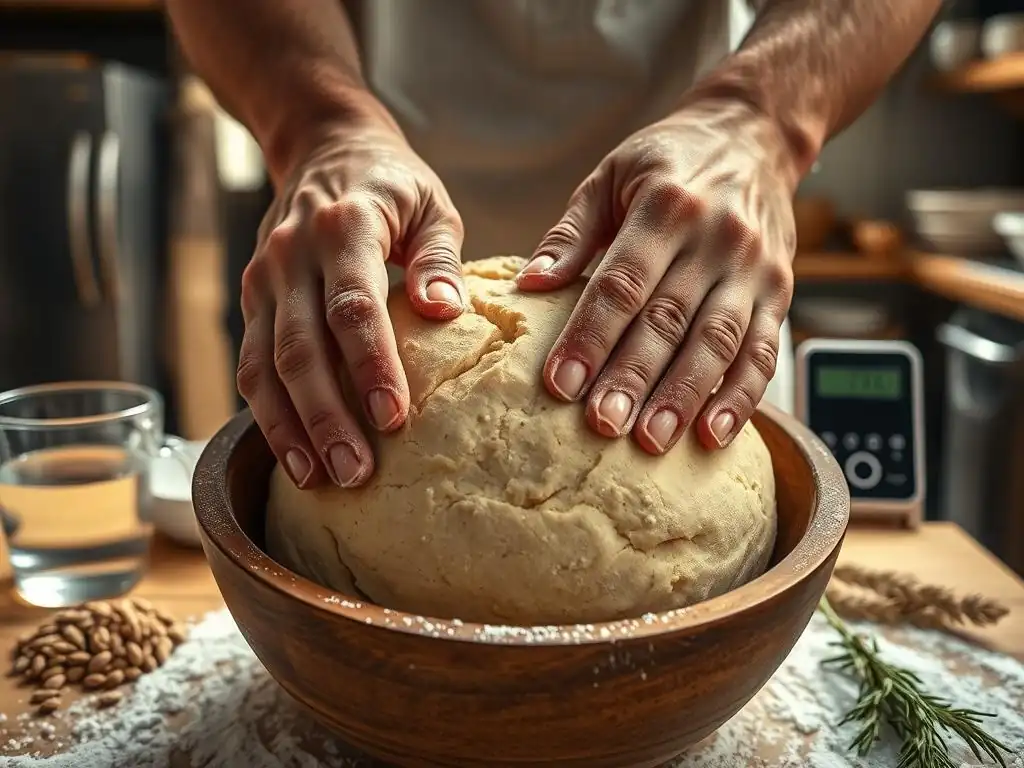
Hydration, the ratio of water to flour, is a critical factor in any bread baking, but it takes on special importance in whole wheat baking science. Whole wheat flour absorbs significantly more water than white flour due to the presence of the thirsty bran and germ.
Water Absorption in Whole Wheat Flour: A Scientific Perspective
The bran and germ layers in whole wheat flour are rich in fiber and other components that are highly absorbent. Compared to the endosperm (primarily starch), which absorbs roughly its weight in water, bran can absorb two to three times its weight, and the germ also contributes to higher absorption. This means that for the same weight of flour, 100% whole wheat requires substantially more water to achieve a similar dough consistency as white flour.
Insufficient hydration in whole wheat dough results in a stiff, difficult-to-work dough that is prone to cracking and yields a dense, dry loaf. Providing adequate hydration is essential not only for dough handling but also for allowing enzymes to work effectively and for proper gluten development, as gluten proteins need sufficient water to form their network. This higher absorption is a key principle in whole wheat baking science.
Calculating Optimal Hydration Levels for 100% Whole Wheat Bread
Optimal hydration for 100% whole wheat bread is typically much higher than for white bread. While white bread might use 60-70% hydration (water weight divided by flour weight), whole wheat often requires 75-85% hydration or even higher. The exact percentage depends on the specific flour's absorption capabilities, which can vary by variety and milling process.
It's often best to start with a known good recipe's hydration level as a baseline and adjust based on the feel of the dough. A properly hydrated whole wheat dough will still be somewhat sticky, but it should hold its shape and develop elasticity as you mix or knead. Adding water gradually after the initial mix can help you assess the dough's needs in real-time.
Hydration Techniques for Improved Whole Wheat Dough Handling
Given the high hydration often required, whole wheat dough can be quite sticky and challenging to handle. Techniques like the autolyse mentioned earlier help improve manageability. By allowing the flour to fully hydrate before adding salt (which tightens gluten) and yeast, the dough becomes less shaggy and easier to work with.
Using wet hands or a dough scraper during stretch and folds can also prevent sticking. Some bakers prefer using the slap and fold technique or simply relying on long, slow bulk fermentation with periodic stretch and folds in a lightly oiled container, minimizing direct contact with the sticky dough. These strategies improve dough handling while promoting good structure, essential for effective whole wheat baking science.
Yeast Fermentation and Flavor Development in Whole Wheat Bread
Yeast fermentation is the engine that makes bread rise, converting sugars into carbon dioxide gas and alcohol. In whole wheat baking, the fermentation process also plays a crucial role in developing complex flavors and improving the dough's structure.
The Science of Yeast Activation in Whole Wheat Dough
Yeast, whether active dry, instant, or fresh, needs moisture and a suitable temperature to become active. In whole wheat dough, the high hydration provides ample water. Yeast feeds on simple sugars. While flour contains complex carbohydrates (starches), enzymes in the flour (amylase) break these down into simpler sugars that the yeast can consume.
The presence of bran and germ in whole wheat flour can slightly alter enzyme activity and nutrient availability for the yeast compared to white flour. However, providing a warm environment (typically 70-80°F or 21-27°C) and ensuring the yeast is properly dissolved or dispersed in the dough are the primary factors for successful activation and initial fermentation.
Factors Affecting Fermentation Speed in Whole Wheat Baking
Several factors influence how quickly yeast ferments whole wheat dough. Temperature is key: warmer temperatures accelerate fermentation, while cooler temperatures slow it down. Recipe variables like the amount of yeast used, the percentage of prefermented flour (like in a levain or poolish), and the presence of sugar (which yeast consumes quickly) also play significant roles.
The pH of the dough also matters. As fermentation progresses, organic acids are produced, lowering the pH. This acidity can affect enzyme activity and yeast performance over time. Longer, cooler fermentations, often used in whole wheat baking science, allow for slower gas production but contribute significantly to flavor complexity and improved dough handling characteristics by allowing the bran to soften further.
Developing Complex Flavors in 100% Whole Wheat Bread Through Fermentation
Beyond leavening, fermentation is crucial for flavor development. Yeast produces various aromatic compounds, and the slow breakdown of starches and proteins by enzymes in the flour contributes nutty, sweet, and complex notes characteristic of good whole wheat bread. The bran and germ themselves also contribute unique flavors.
Long, slow fermentation, particularly cold fermentation in the refrigerator for 12-48 hours, is a popular technique for enhancing flavor. This extended period allows enzymes more time to break down starches into flavorful sugars and encourages the production of organic acids, which contribute a pleasant tang and depth of flavor. Understanding this aspect of whole wheat baking science allows you to manipulate fermentation for superior taste.
The Importance of Kneading Whole Wheat Dough
Kneading is the process of developing the gluten network in dough. While some high-hydration doughs use minimal kneading and rely on time and stretch-and-folds, traditional whole wheat baking often benefits from kneading to build sufficient structure.
Developing Strength and Structure: The Science of Kneading
Kneading aligns the gluten proteins into a strong, elastic network capable of trapping fermentation gases. This process involves stretching and folding the dough repeatedly. In whole wheat dough, kneading helps to organize the gluten strands despite the interference of the bran. It transforms a shaggy, sticky mass into a smooth, extensible dough.
Proper kneading is essential for developing the structure needed for a good oven spring – the final burst of rising in the hot oven. A well-kneaded whole wheat dough will feel elastic and pass the "windowpane test," where a small piece can be gently stretched thin enough to see light through without tearing easily. This indicates the gluten network is sufficiently developed.
Kneading Techniques for 100% Whole Wheat Bread Dough
Whole wheat dough can be kneaded by hand or with a stand mixer. Hand kneading involves folding the dough onto itself, pushing it away with the heels of your hands, and rotating it repeatedly. This can take 15-20 minutes or more for whole wheat dough.
Using a stand mixer with a dough hook is often more efficient for whole wheat dough, as it provides consistent, vigorous action. Kneading in a mixer might take 8-12 minutes on medium speed. It's important to watch the dough, not just the clock. The dough should pull away from the sides of the bowl and become smooth and elastic. Some bakers also use intermittent kneading, allowing the dough to rest for 5-10 minutes between short kneading bursts, which can help gluten relax and develop more easily.
Avoiding Over-Kneading: Signs and Consequences in Whole Wheat Baking
While under-kneading leads to poor structure and a dense loaf, over-kneading can also be detrimental, particularly with whole wheat flour. Over-kneaded dough becomes tight, loses elasticity, and may even start to tear. The gluten structure breaks down, and the dough loses its ability to rise properly.
Signs of over-kneading include a dough that feels very stiff, resistant to stretching, and potentially greasy or wet as the damaged gluten releases moisture. An over-kneaded loaf might have a very tight, even crumb or collapse during baking. Paying attention to the dough's feel and appearance during kneading is crucial for optimal results in whole wheat baking science.
Baking Temperature and Time for 100% Whole Wheat Bread
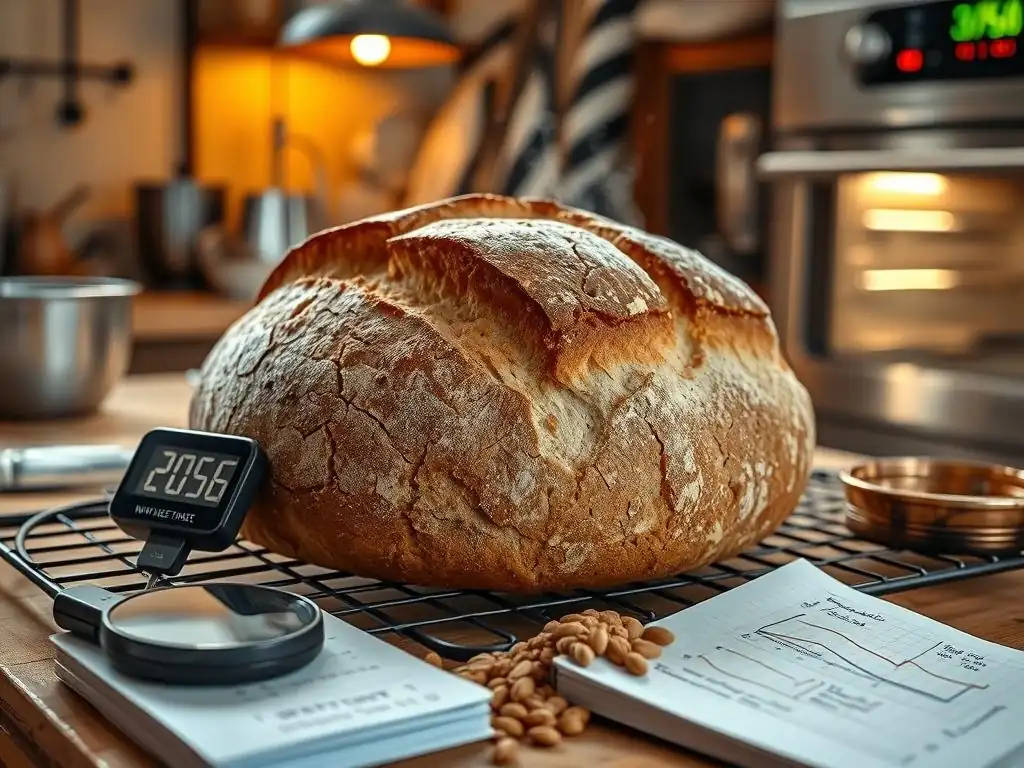
The transformation from dough to bread happens in the oven. Baking temperature and time are critical factors that influence crust formation, oven spring, and the internal structure of your 100% whole wheat loaf.
The Science Behind Baking Temperatures and Crust Formation
High initial baking temperatures are often used to promote a good oven spring. When the dough hits a hot oven (typically 450-500°F or 230-260°C), the yeast activity increases rapidly, producing a final burst of gas. Simultaneously, the water in the dough turns to steam, expanding and pushing the dough outwards. This rapid expansion creates lift before the crust sets.
The Maillard reaction and caramelization occur on the surface of the bread at temperatures above 300°F (150°C), creating the brown crust and contributing significant flavor. Whole wheat bread often benefits from baking in a Dutch oven or with steam in the oven during the initial phase. The steam keeps the crust moist and pliable longer, allowing for maximum expansion before the crust hardens. After the initial rise, the temperature is often reduced (to 400-450°F or 200-230°C) to allow the interior to bake through without the crust burning.
Optimal Baking Time for Different Loaf Sizes of Whole Wheat Bread
Baking time varies significantly based on the size and shape of the loaf. A standard 1.5 to 2-pound loaf of whole wheat bread might take anywhere from 35 to 50 minutes to bake. Smaller rolls or baguettes will require less time, perhaps 20-30 minutes, while a large hearth loaf could take 50-60 minutes or longer.
The best way to determine if a loaf is done is by its internal temperature. Whole wheat bread is typically fully baked when the internal temperature reaches 200-210°F (93-99°C). Another indicator is tapping the bottom of the loaf; it should sound hollow. Baking time is a guideline; temperature is the true indicator of doneness in whole wheat baking science.
Troubleshooting Baking Issues: Temperature and Time Adjustments
Common baking issues include a pale crust (too low temperature or too short time), a burnt crust (too high temperature or too long time, or lack of steam), and a gummy interior (underbaked, needs more time). If your crust is browning too quickly, you can loosely tent the loaf with foil for the remainder of the baking time.
If the loaf seems done on the outside but not on the inside (check internal temperature), you might need to reduce the oven temperature slightly and extend the baking time. Conversely, if the loaf is taking too long to brown, increasing the temperature towards the end of baking can help. Consistent oven calibration is also key, as oven temperatures can vary significantly from the setting.
Cooling and Storing 100% Whole Wheat Bread
The baking process doesn't end when the bread comes out of the oven. Proper cooling and storage are essential steps in whole wheat baking science to ensure the best texture and flavor and minimize staling.
The Science of Cooling: Preventing Soggy Bread
Bread continues to cook slightly and undergo chemical changes as it cools. Moisture redistributes from the interior to the crust, which helps the crust firm up and prevents the interior from becoming gummy or soggy. Slicing hot bread is a common mistake; the steam trapped inside will condense, making the crumb wet and dense.
Always cool whole wheat bread completely on a wire rack, allowing air circulation around all sides. For a standard loaf, this can take 2-3 hours or even longer. Patience during this cooling phase is rewarded with better texture and flavor. The internal structure sets, and the flavors meld as the bread cools.
Proper Storage Techniques for Maintaining Freshness
Once completely cool, whole wheat bread should be stored properly to maintain freshness. The best method depends on how quickly you plan to eat it. For consumption within a day or two, simply storing it cut-side down on a cutting board or loosely wrapped in a linen bag works well to preserve the crust.
For longer storage (up to 4-5 days), an airtight container or plastic bag is often used to prevent drying out, although this can soften the crust. If you won't finish the loaf within a few days, slicing it and freezing it in an airtight bag or container is the most effective way to preserve its quality. Thaw slices as needed.
Understanding Staling in Whole Wheat Bread and How to Minimize It
Staling is a complex process primarily caused by the retrogradation of starch molecules, not simply drying out. As bread cools and ages, the starch molecules in the crumb recrystallize, making the bread firm and seemingly dry. Whole wheat bread, with its higher fiber content, can sometimes seem to stale faster than white bread.
Freezing effectively halts the staling process. Reheating stale bread (like toasting) can temporarily reverse staling by remelting the starch crystals, but once it cools again, it will stale even faster. Storing bread in the refrigerator actually accelerates staling, so it should generally be avoided unless the climate is very hot and humid and mold is a concern. Focusing on proper cooling and freezing are key whole wheat baking science strategies to combat staling.
Improving the Texture of 100% Whole Wheat Bread: Scientific Approaches
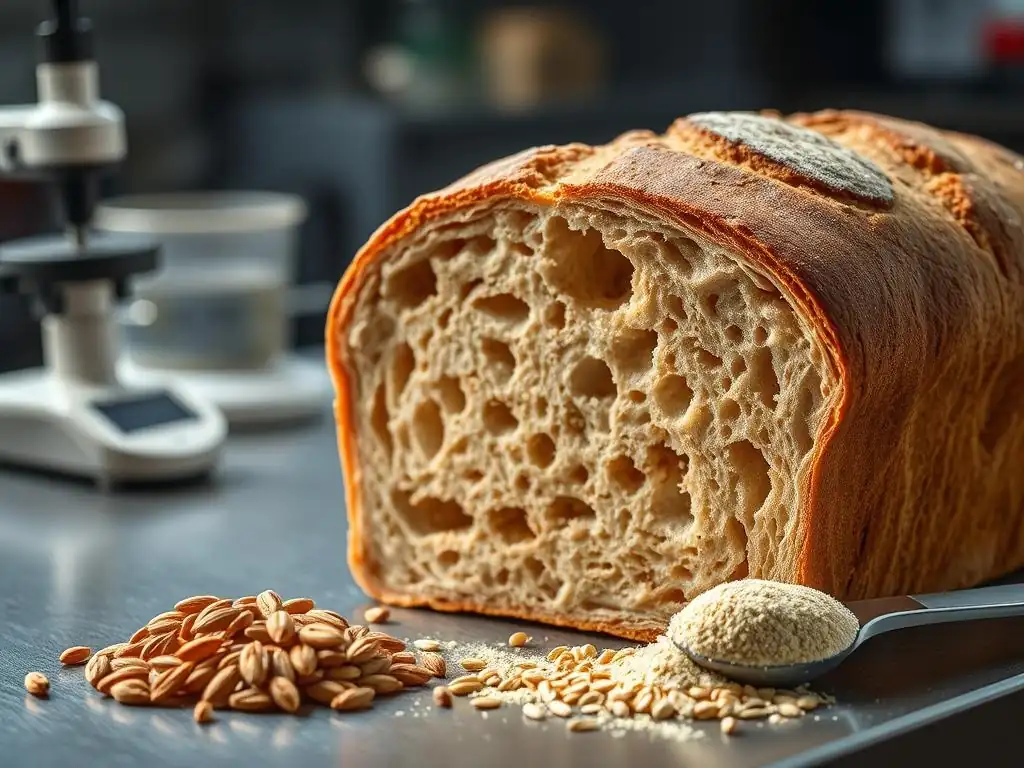
Achieving a light, airy texture in 100% whole wheat bread while retaining its nutritional benefits can be challenging. However, several scientific approaches can help improve crumb structure and softness.
Using Additives to Enhance Texture: Vital Wheat Gluten and Ascorbic Acid
As mentioned earlier, vital wheat gluten is a common additive to strengthen the gluten network in whole wheat dough, contributing to better volume and a less dense crumb. It directly increases the amount of gluten-forming proteins available.
Ascorbic acid (Vitamin C) is another beneficial additive in whole wheat baking science. A tiny amount (often just a pinch or a fraction of a gram per loaf) acts as an oxidant. This helps strengthen the disulfide bonds within the gluten network, making it more robust and elastic. Ascorbic acid improves dough handling, oven spring, and crumb structure, leading to a lighter texture. It is widely used in commercial whole wheat baking.
Techniques to Soften the Bran in Whole Wheat Dough: Soaking and Autolysing
Softening the sharp bran particles is crucial for minimizing their disruptive effect on gluten and improving texture. Techniques like soaking the bran or using a tangzhong/yudane method effectively hydrate and soften the bran before the main mixing and kneading phase.
An autolyse (mixing flour and water and resting) hydrates the bran, making it less abrasive. Soaking a portion of the whole wheat flour or just the bran itself in hot water or milk for several hours or overnight is another method. This pre-hydration softens the bran significantly, resulting in a smoother dough and a less harsh impact on gluten development. This is a prime example of applying whole wheat baking science principles for practical results.
Achieving a Lighter and Airier Whole Wheat Bread: Advanced Techniques
Beyond hydration and gluten development, other techniques contribute to a lighter whole wheat loaf. Using a preferment (like a poolish, biga, or levain) adds flavor and strength. The extended fermentation in a preferment helps break down some components of the flour, making the dough easier to handle and contributing to better structure.
Incorporating a tangzhong or yudane (a cooked flour paste) into the dough increases hydration in a way that is bound by gelatinized starch, leading to an exceptionally soft crumb and improved keeping quality. While traditionally used in Asian milk breads, this technique works remarkably well with whole wheat flour to combat dryness and density. These advanced methods demonstrate how deep understanding of whole wheat baking science leads to superior results.
Troubleshooting Common Problems in 100% Whole Wheat Baking
Even with a good recipe, whole wheat baking can present challenges. Understanding the science behind common issues helps diagnose and fix them, improving your whole wheat baking science skills.
Dense and Heavy Bread: Causes and Solutions
Density is perhaps the most common complaint about whole wheat bread. Primary causes include:
- Under-developed gluten: The network wasn't strong enough to trap gas.
- Insufficient hydration: Dough was too stiff.
- Poor fermentation: Yeast wasn't active enough or didn't have enough time.
- Bran disruption: Bran cut through the gluten too much.
Solutions involve ensuring adequate hydration (75-85%+), proper kneading or stretch-and-folds to develop gluten, checking yeast activity, and potentially using techniques like autolyse, soaking bran, or adding vital wheat gluten to mitigate bran's effects. A long, cool fermentation can also help develop structure slowly.
Bitter Taste in Whole Wheat Bread: Understanding the Source and Mitigation
Sometimes whole wheat bread can have a slightly bitter or "wheaty" off-flavor. This is often attributed to the germ component of the flour, which contains fats that can oxidize over time, leading to rancidity or off-flavors. The tannins in the bran can also contribute a slightly bitter note.
Using fresh whole wheat flour is crucial. Flour that has been sitting on the shelf for a long time is more likely to develop off-flavors from fat oxidation. Storing whole wheat flour in the refrigerator or freezer extends its shelf life significantly. Long, slow fermentation can also help mellow some of the harsher flavors associated with whole wheat, allowing more pleasant flavors to develop.
Poor Rise and Lack of Oven Spring: Identifying the Root Cause and Fixing It
A loaf that doesn't rise well in proofing or collapses in the oven is frustrating. Common causes include:
- Inactive yeast: Check expiration dates and proof yeast separately if unsure.
- Under-proofed or over-proofed dough: Dough needs just the right amount of time to ferment.
- Weak gluten structure: Cannot hold the gas.
- Insufficient oven temperature or steam: Crust sets too early, preventing spring.
To fix this, ensure your yeast is active. Learn to recognize the signs of a properly proofed whole wheat dough (puffy but still has some structure). Focus on developing gluten through proper technique. Preheat your oven thoroughly, use a baking stone or steel, and incorporate steam during the initial bake phase to encourage maximum oven spring, applying sound whole wheat baking science principles.
Advanced Whole Wheat Baking Techniques
Once you've mastered the basics of whole wheat baking science, you can explore more advanced techniques that add complexity, nutrition, and unique characteristics to your bread.
Sourdough Whole Wheat Bread: The Science of Wild Yeast Fermentation
Baking 100% whole wheat sourdough bread utilizes wild yeast and bacteria present in a sourdough starter (levain) for leavening and flavor. The fermentation process is slower and produces organic acids (lactic and acetic acid), which contribute a characteristic tang and also help tenderize the bran and strengthen the gluten network.
Working with whole wheat sourdough involves maintaining an active, robust starter and understanding its fermentation patterns, which can differ slightly from white flour starters. The acidity helps mitigate the negative effects of bran on gluten, often resulting in a more manageable dough and a lighter crumb compared to commercial yeast whole wheat bread, a testament to the intricate whole wheat baking science involved.
Sprouted Whole Wheat Flour: Benefits and Baking Considerations
Sprouted whole wheat flour is made from wheat kernels that have been allowed to sprout slightly before being dried and milled. This process activates enzymes that begin to break down starches and proteins, making nutrients more available and potentially easier to digest. Sprouting also alters the flavor profile, often making it sweeter and less bitter than regular whole wheat.
From a baking perspective, sprouted whole wheat flour can behave differently. The enzymatic activity can weaken the gluten slightly, so recipes may require adjustments to hydration or technique. However, the pre-broken-down starches can contribute to a softer crumb and improved moisture retention. Baking with sprouted whole wheat flour adds another layer to the fascinating world of whole wheat baking science.
Using Other Whole Grains in Combination with Whole Wheat for Enhanced Flavor and Nutrition
While this article focuses on 100% whole wheat, incorporating other whole grains (like rye, spelt, or oats) or seeds (flax, chia, sunflower) can enhance flavor, texture, and nutritional value. These additions bring their own unique characteristics to the dough.
For example, adding rye flour affects gluten development (rye has less gluten-forming protein) but adds a distinct flavor and moisture retention. Adding cooked grains or seeds often requires increasing hydration. Understanding how these different components interact with the whole wheat base flour is part of expanding your whole wheat baking science knowledge and creating even more diverse and delicious whole grain breads.
Frequently Asked Questions
How does whole wheat flour differ from all-purpose flour in baking?
Whole wheat flour contains the bran and germ, which are removed in all-purpose flour. These components affect gluten development, resulting in a denser, less elastic dough.
What challenges are commonly encountered when baking with 100% whole wheat flour?
The primary challenge is achieving a light and airy texture. Whole wheat flour's bran interferes with gluten development, leading to a coarser crumb and potentially a dry final product.
What are some techniques to improve the texture of baked goods made with 100% whole wheat?
Techniques include using a higher hydration level (more liquid), incorporating gluten-boosting ingredients like vital wheat gluten, and employing a longer fermentation time to soften the bran.
How does the protein content of whole wheat flour impact the final baked product?
Whole wheat flour generally has a higher protein content than all-purpose flour. However, the presence of bran interferes with gluten formation, reducing its effectiveness in creating structure.
Why is hydration crucial when baking with 100% whole wheat flour?
Adequate hydration is vital because the bran in whole wheat flour absorbs more liquid than refined flour. This ensures the final product isn't dry and helps to soften the bran, improving texture.
Final Reflection: Unlocking the Secrets of Whole Wheat Baking
The science behind baking 100% whole wheat bread isn't just about following a recipe; it's about understanding the inherent complexities of the flour itself and mastering the techniques to unlock its full potential. This understanding is more relevant than ever, as consumers increasingly seek healthier, more nutritious alternatives to refined flour products. The journey from a dense, gummy loaf to a light and airy masterpiece is a testament to the power of scientific knowledge applied to culinary artistry.
This exploration into the world of whole wheat baking has profoundly impacted my own approach to cooking. It's not simply about achieving a perfect rise; it's about appreciating the intricate interplay of protein, starch, and hydration that determines the final product. The best bread is made with love and understanding,
a wise baker once told me, and I now understand that sentiment on a deeper level. The nuances of gluten development, the importance of proper fermentation, and the impact of different hydration levels are all crucial elements that contribute to the final texture and flavor.
Now, it's your turn to experiment! Don't be afraid to delve into the science behind your baking. Try adjusting hydration levels, experimenting with different types of whole wheat flour, and meticulously observe the changes in your dough. Each loaf you bake will be a lesson learned, a step closer to mastering the art of 100% whole wheat baking. Embrace the challenge, and you'll be rewarded with the satisfaction of creating truly exceptional, nutritious bread.
Unleash Your Inner Wheat Wizard!
Thanks for diving into the science of baking with 100% whole wheat! We hope you now feel empowered to tackle those nutty, complex flavors with confidence. Ready to put your newfound knowledge into practice?
- Bake your first whole wheat masterpiece! Try one of the recipes mentioned in the article, or experiment with your own. We'd love to see what you create!
- Share your baking journey: Tag us on social media with your creations and use #BakeWithEaseWholeWheat. Let’s inspire each other!
- Dive deeper into the world of whole grains: Explore different types of whole wheat flour and experiment with their unique characteristics. What surprising flavor profiles can you discover?
What amazing whole wheat creation will you bake first?