
Sourdough or Yeast? Choosing the Right Leaven for Your Loaf

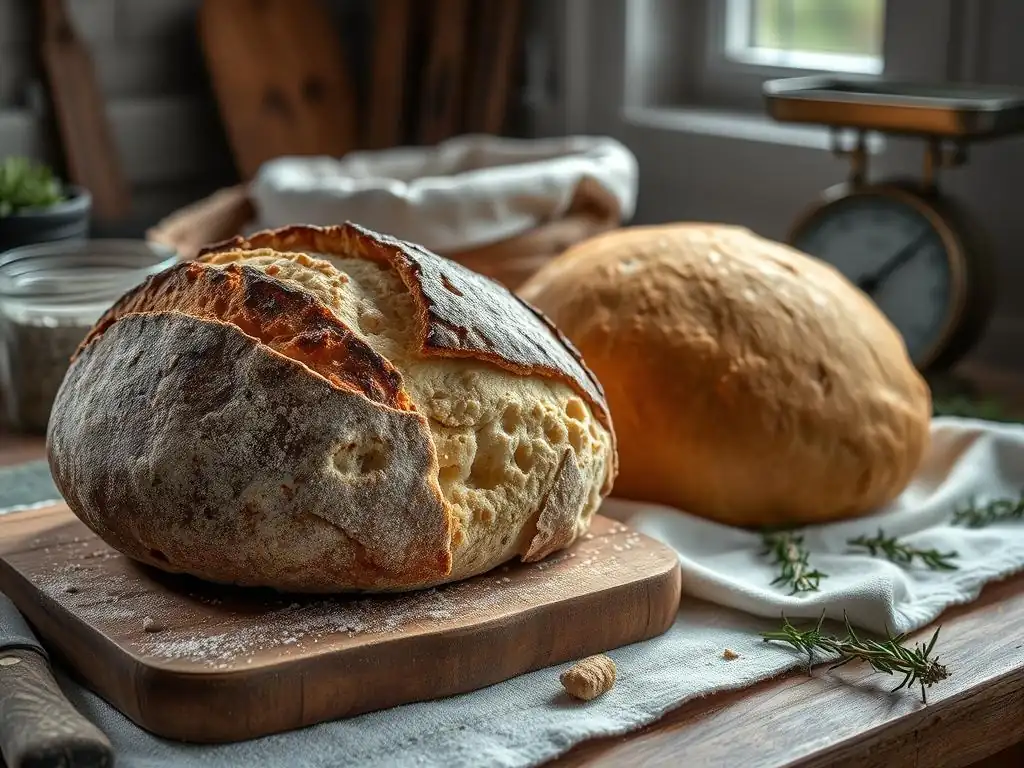
Welcome to BakeWithEase, your kitchen companion for all things baking! Ever wondered whether sourdough or yeast is the secret to unlocking the perfect loaf? Dive into our latest article where we explore the nuances of each leavening agent, and discover essential sourdough starter maintenance tips that will revolutionize your bread-making journey. Ready to elevate your baking game? Let's get started!
- Sourdough Starter Maintenance Tips for Optimal Baking
-
Frequently Asked Questions
- What is the main difference between sourdough and yeast-based breads?
- What are some key benefits of using a sourdough starter?
- Why is sourdough starter maintenance important?
- What are some essential "Sourdough starter maintenance tips"?
- Is sourdough baking more difficult than using commercial yeast?
- Final Reflection: The Humble Leaven, A Baker's Journey
- Unleash Your Inner Baker: Craft the Perfect Loaf!
Sourdough Starter Maintenance Tips for Optimal Baking
Keeping your sourdough starter healthy and active is fundamental to successful sourdough baking. Think of your starter as a living culture, a community of wild yeasts and bacteria that requires consistent care to thrive. Proper sourdough starter maintenance tips are the secret to unlocking that beautiful rise, tangy flavor, and chewy texture you're seeking in your ciabatta and rustic bread loaves. Neglecting your starter can lead to sluggish activity, off-flavors, and baking failures, making these maintenance practices non-negotiable for serious sourdough enthusiasts.
Regular feeding, appropriate storage, and attentive observation are the pillars of effective sourdough starter maintenance. Whether you bake daily or only occasionally, understanding these basic principles will ensure your starter is always ready to perform when you need it. It's a rewarding part of the sourdough journey, connecting you directly to the living ingredients that make this bread so special.
Essential Sourdough Starter Maintenance
The most crucial aspect of keeping your sourdough starter vibrant is consistent feeding. A starter, typically a mixture of flour and water, contains wild yeasts and lactic acid bacteria that consume the starches in the flour and produce carbon dioxide (which makes bread rise) and organic acids (which provide flavor). When you feed your starter, you're providing fresh 'food' for these microorganisms, allowing them to continue their metabolic processes. Without regular feeding, they run out of food, become dormant, or undesirable organisms can take over.
Beyond feeding, good sourdough starter maintenance involves keeping your starter in a clean environment and observing its activity. Store it in a clean jar, preferably glass, with a loose-fitting lid or cover that allows gases to escape but keeps contaminants out. Marking the level of the starter after feeding helps you visually track its rise and fall, which is a key indicator of its health and readiness for baking. A healthy starter will typically double or triple in volume within a few hours after feeding at room temperature.
Feeding Your Sourdough: Ratios and Schedules
Feeding involves discarding a portion of the old starter and mixing the remainder with fresh flour and water. The ratio of old starter to fresh flour and water is critical. A common ratio for a starter kept at room temperature and fed daily is 1:1:1 (by weight) – for example, 50 grams of old starter, 50 grams of fresh flour, and 50 grams of water. This ratio provides enough food for the microorganisms to become active and then subside before the next feeding, maintaining a balanced ecosystem.
For starters stored in the refrigerator, you can use larger ratios like 1:2:2 or even 1:5:5 when you take it out to feed before baking. This provides a larger buffer of food, allowing the starter to become very active over several hours or even a full day before it peaks. The feeding schedule depends heavily on temperature: at warm room temperature (around 70-78°F or 21-26°C), a starter typically needs feeding every 12-24 hours.
In the refrigerator (around 38-45°F or 3-7°C), metabolic activity slows dramatically, and feeding once a week is usually sufficient. Consistency, whatever your chosen schedule and ratio, is key to reliable sourdough starter maintenance.
Sourdough Starter Storage: Refrigerator vs. Room Temperature
Choosing where to store your sourdough starter depends primarily on how often you plan to bake. Keeping a starter at room temperature requires daily feeding, sometimes even twice a day if it's very warm. This is ideal if you bake frequently, perhaps every day or two, as your starter will always be active and ready. The consistent room temperature environment encourages vigorous fermentation, leading to a robust starter perfect for quick use. However, it also means more frequent discarding, which can lead to flour waste if you're not baking or using the discard.
Storing your starter in the refrigerator is a great option for less frequent bakers. The cold temperature significantly slows down the fermentation process, meaning you only need to feed it about once a week.
When you want to bake, you take the starter out, let it warm up, and feed it one or more times until it becomes active and bubbly again – this can take anywhere from 4 hours to 24 hours depending on the starter's dormancy and the ambient temperature. This method minimizes the amount of flour needed for sourdough starter maintenance but requires planning ahead for baking days.
Troubleshooting Common Sourdough Starter Problems: Inactivity and Acidity

Sometimes, despite your best efforts with sourdough starter maintenance tips, your starter might seem sluggish or develop off-putting smells. Inactivity is a common issue, often caused by infrequent feeding, too-cold temperatures, or using chlorinated water. If your starter isn't doubling or tripling within the expected timeframe after feeding, try moving it to a warmer spot (like near a window or on top of a warm appliance), ensuring your water is filtered, and perhaps switching to feeding it more frequently (e.g., every 12 hours instead of 24) with a 1:1:1 ratio for a few days to boost its activity.
Another frequent problem is excessive acidity, often indicated by a strong acetone or vinegar smell. This happens when the bacteria have produced a lot of acid, and the yeasts have run out of food, leading to an imbalance. To fix this, increase the feeding ratio (e.g., 1:2:2 or 1:5:5) and feed more frequently. Discarding a larger portion of the old, acidic starter before feeding helps dilute the acidity.
Sometimes, a thin layer of dark liquid (hooch) forms on top; this is a sign the starter is hungry. You can pour it off or stir it in before feeding, though pouring it off can help reduce acidity. Mold is usually a sign the starter is contaminated, and it's often best to discard it and start fresh.
Maintaining a Healthy Sourdough Culture: Signs of a Thriving Starter
Recognizing the signs of a healthy, active sourdough culture is key to effective sourdough starter maintenance. A thriving starter, when fed, will become visibly bubbly and increase significantly in volume, typically doubling or even tripling within 4 to 12 hours at room temperature, depending on its maturity and the ambient temperature. You'll see bubbles rising to the surface and throughout the culture.
Beyond visual cues, a healthy starter has a pleasant, tangy aroma, often described as slightly yogurty or mildly acidic, not overpoweringly sharp or vinegary. The texture should be light and airy after it peaks. A common test for readiness is the "float test": drop a small spoonful of the peaked starter into a bowl of water; if it floats, it means it's full of trapped gas and ready for baking. Consistent observation of these signs will tell you if your sourdough starter maintenance tips are working and if your starter is ready to create that perfect loaf.
Frequently Asked Questions
What is the main difference between sourdough and yeast-based breads?
The main difference lies in the leavening agent. Sourdough relies on a sourdough starter, a culture of wild yeasts and bacteria, while yeast breads use commercial yeast.
What are some key benefits of using a sourdough starter?
Sourdough offers a tangy flavor and a longer shelf life due to the natural acids produced during fermentation. It also improves the digestibility of the bread.
Why is sourdough starter maintenance important?
Proper maintenance ensures a healthy and active starter, which is crucial for consistent and reliable bread baking. Neglecting maintenance can lead to a weak or inactive starter.
What are some essential "Sourdough starter maintenance tips"?
Regular feeding with flour and water, maintaining the correct hydration ratio, and storing it at the right temperature are vital. Discarding some of the starter before feeding is also crucial.
Is sourdough baking more difficult than using commercial yeast?
Sourdough baking can be more time-consuming and requires more attention to detail, especially regarding the starter. However, the unique flavor and texture make it rewarding.
Final Reflection: The Humble Leaven, A Baker's Journey
The quest for the perfect loaf transcends mere recipe following; it's a journey of understanding the very heart of bread making – the leaven. Choosing between sourdough and commercial yeast isn't simply a matter of convenience; it's a decision that profoundly impacts the flavor, texture, and overall experience of baking. This exploration into sourdough starter maintenance, in particular, highlights the dedication and patience required to cultivate this living organism.
The enduring appeal of sourdough lies not only in its unique tangy flavor but also in its connection to a rich baking history. It's a testament to the enduring human relationship with food, a living culture passed down through generations. Bread is the staff of life.
This simple statement encapsulates the profound significance of bread, and the sourdough starter, with its demanding yet rewarding care, elevates this significance to a new level. The process itself becomes a meditative practice, a daily ritual connecting us to something larger than ourselves.
Now, consider your own baking journey. Will you embrace the challenge of nurturing a sourdough starter, patiently tending to its needs, reaping the rewards of its unique character? Or will you opt for the immediate gratification of commercial yeast? The choice is yours, but remember this: the journey, regardless of your chosen leaven, is what truly shapes the baker and the bread. Embrace the process, learn from each loaf, and discover the joy of creating something truly special with your own hands.
Unleash Your Inner Baker: Craft the Perfect Loaf!
Thanks for taking the time to explore the fascinating world of sourdough and yeast! You've now gained valuable insights into choosing the right leaven for your baking journey. Ready to put your new knowledge into practice?
- Bake your first artisan loaf: Choose your preferred leaven (sourdough or yeast) and follow a simple recipe – the internet is full of great options tailored to each! This is your chance to experience the unique qualities of each bread-making approach.
- Share your baking adventures: Post a picture of your freshly baked creation on social media and tag #BakeWithEase – we'd love to see your results!
- Join our baking community: Leave a comment below sharing your thoughts on sourdough vs. yeast – what challenges did you face, and what were your favorite aspects of the process?
What unique flavor profile are you most excited to experiment with in your next baking endeavor?