
Using Fat for a Tender Basic White Bread Crumb

Welcome to BakeWithEase, your trusted guide to baking bliss! Ever wonder how to achieve that perfectly tender white bread crumb everyone raves about? This article unlocks the secrets to creating irresistibly soft and airy bread, one ingredient at a time. Discover the transformative power of fat and prepare to elevate your bread baking skills – the journey to that perfect loaf starts now!
- Achieving a Tender White Bread Crumb with Fat: A Guide
- Introduction: Unlocking Softness in Your White Bread
- Understanding the Role of Fat in White Bread Baking
- Types of Fat for a Tender White Bread Crumb
- Choosing the Right Fat for Your White Bread Recipe
- Techniques for Incorporating Fat into White Bread Dough
- Troubleshooting: Common Issues and Solutions for White Bread Crumb
- Tips for Maximizing Tenderness in Your White Bread
- Elevate Your White Bread: Beyond Basic Tenderness
- Conclusion: Baking the Perfect Tender White Bread Crumb with Confidence
-
Frequently Asked Questions
- How does fat contribute to a tender white bread crumb?
- What types of fats are best for achieving a tender white bread crumb?
- How much fat should I add to my white bread recipe?
- Can I substitute one type of fat for another in a white bread recipe?
- What happens if I don't add enough fat to my white bread?
- Final Reflection: The Unexpected Alchemy of a Tender Crumb
- Unlock the Secret to Perfectly Tender Crumbs!
Achieving a Tender White Bread Crumb with Fat: A Guide
Introduction: Unlocking Softness in Your White Bread
Baking a perfect loaf of white bread is a rewarding experience, and one of the most sought-after qualities is a soft, tender crumb. While many factors contribute to the final texture, including kneading, proofing, and baking temperature, the addition of fat plays a uniquely significant role in achieving that desirable tender white bread crumb. Understanding how different fats interact with your dough can elevate your baking from good to truly exceptional.
This guide will explore the fundamental ways fat influences the structure and feel of your white bread. We'll delve into the science behind why fat is crucial for softness, compare common types of fat used in bread making, and offer practical tips and techniques to help you consistently achieve a moist and tender white bread crumb in every loaf you bake. Get ready to unlock the secret to remarkably soft homemade white bread!
Why Fat Matters for a Tender Crumb in White Bread
Fat is a key ingredient often added to white bread recipes specifically to improve the softness and tenderness of the final product. Unlike lean breads like baguettes, which rely solely on flour, water, yeast, and salt for a chewy texture, enriched breads incorporate fat (along with sometimes sugar or eggs) to create a softer structure. The presence of fat directly impacts the development of the gluten network, which is the protein structure responsible for the bread's elasticity and chewiness.
When fat is added to dough, it coats the individual flour particles and gluten strands. This coating effect inhibits the gluten proteins from forming a strong, tight network. Think of gluten development like building a microscopic scaffolding; without fat, the connections are strong and rigid.
With fat, these connections are weakened and shortened, resulting in a less elastic dough and, crucially, a finished loaf with a softer, more tender white bread crumb. Even a small amount of fat, often starting around 3-5% of the flour weight in a recipe, can make a noticeable difference in achieving a softer texture compared to a fat-free recipe.
Achieving Perfectly Soft White Bread
Creating a perfectly soft white bread involves a delicate balance of ingredients and techniques, with fat being a central player in texture development. Beyond just adding fat, the type of fat, the amount used, and how it's incorporated into the dough all contribute to the desired tender white bread crumb. A recipe aiming for extreme softness, like a Japanese milk bread or brioche, might use fat percentages upwards of 10-20% or even more relative to the flour weight, often combined with sugar and milk, which further contribute to tenderness and richness.
However, even in a basic white bread recipe, optimizing the use of fat can significantly improve the crumb. For instance, ensuring the fat is evenly distributed throughout the dough prevents pockets of toughness and promotes uniform softness.
Combining the right amount of fat with proper kneading (developing enough gluten for structure but not too much for toughness) and correct proofing (allowing the dough to rise sufficiently) works synergistically. This holistic approach ensures that the fat can effectively perform its role in shortening gluten strands and contributing to moisture retention, leading to that wonderfully soft and tender white bread crumb that's perfect for sandwiches or toast.
Understanding the Role of Fat in White Bread Baking
Fat isn't just about richness; it's a functional ingredient in bread dough that actively influences the final texture and keeping quality. Its primary impact on achieving a tender white bread crumb stems from its interaction with gluten and its contribution to the dough's overall moisture balance. Understanding these roles helps bakers make informed decisions about which fat to use and how much.
The way fat is incorporated, whether melted, softened, or solid, also affects its function. For example, solid fats like butter or shortening tend to create layers within the dough during rolling or folding, contributing to flakiness (though this is less common in simple white bread). Liquid fats like oil spread more easily and coat gluten strands more uniformly. Both types, however, work towards the common goal of inhibiting excessive gluten development, a crucial step in creating a soft, tender white bread crumb.
How Fat Impacts Gluten Development for a Tender Crumb
The interaction between fat and gluten proteins is the cornerstone of fat's role in creating a tender white bread crumb. Gluten forms when two proteins in flour, glutenin and gliadin, combine with water and are developed through mixing or kneading. This network traps gases produced by yeast, allowing the bread to rise. In lean doughs, this network becomes strong and elastic, resulting in a chewy texture.
When fat is present, its non-polar molecules are attracted to the non-polar parts of the gluten proteins. The fat effectively surrounds and lubricates the gluten strands, preventing them from linking together as tightly or forming as extensive a network as they would in a fat-free dough.
This "shortening" effect, as it's sometimes called, results in a dough that is less elastic and more extensible (it can be stretched further before breaking) but ultimately produces a loaf with a finer grain and a softer, more tender white bread crumb. The higher the fat content, generally the greater the inhibition of gluten development and the softer the crumb, provided other factors like kneading and proofing are managed correctly.
Fat's Contribution to Moisture and Softness in White Bread
Beyond its impact on gluten, fat also plays a vital role in the moisture profile of white bread, contributing significantly to its softness and extending its shelf life. While water is essential for hydration and gluten development, fat helps retain that moisture during baking and storage. Fat molecules are hydrophobic, meaning they repel water, which helps prevent water from evaporating too quickly from the crumb during the baking process.
Furthermore, fat remains solid or semi-solid at room temperature (depending on the type), providing a lubricating effect within the crumb structure even after baking. This lubrication makes the crumb feel moist and soft to the touch and mouth. Breads made with fat tend to stay soft for longer compared to lean breads, which can dry out and become stale relatively quickly.
For instance, a white bread made with 5-8% fat (based on flour weight) might stay soft for 3-4 days, whereas a fat-free loaf might start feeling dry after just one day. This moisture retention is a key factor in achieving and maintaining a desirable tender white bread crumb.
Types of Fat for a Tender White Bread Crumb
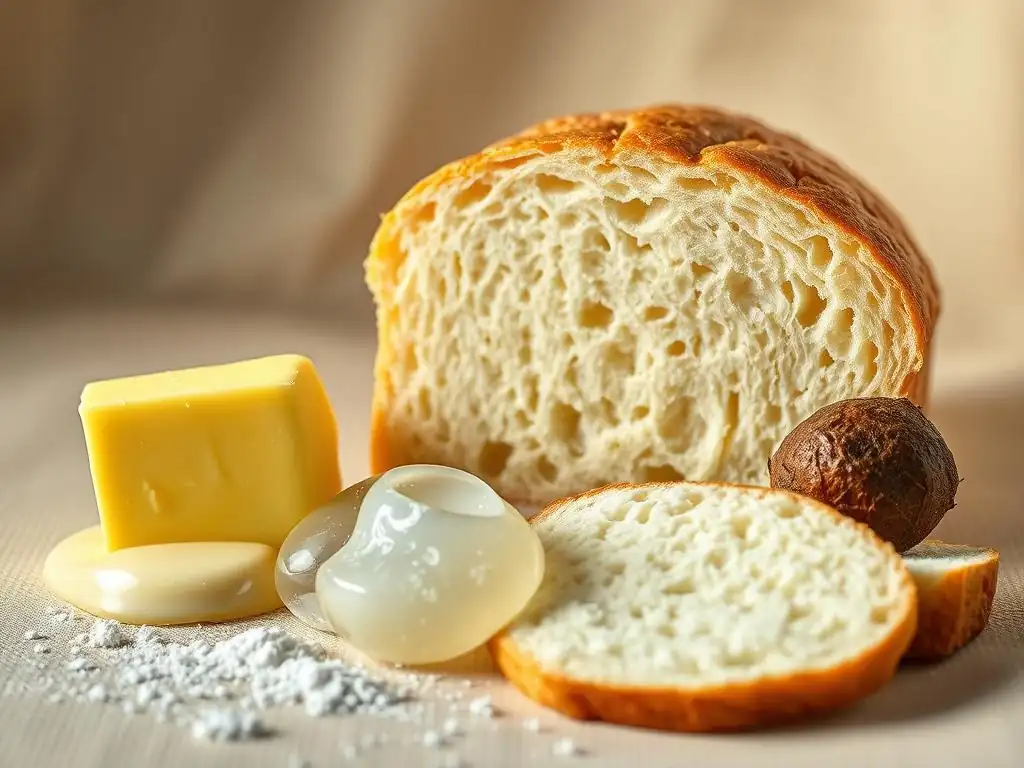
The type of fat you choose can influence not only the tenderness but also the flavor and overall character of your white bread. Common fats used include butter, shortening, and various oils. Each has unique properties that affect the dough and the final tender white bread crumb differently.
Selecting the right fat depends on the desired outcome: rich flavor, consistent softness, or a lighter texture. Often, recipes will specify a particular type, but understanding the distinctions allows for informed substitutions or recipe adjustments.
Butter: Adding Flavor and Tenderness to White Bread
Butter is a popular choice for white bread because it contributes a rich, desirable flavor that other fats often lack. It's an emulsion of fat, water, and milk solids, typically around 80-82% fat, 16-18% water, and 1-2% milk solids. The milk solids contribute to browning, adding a lovely golden crust color during baking.
When used in dough, butter's fat content works to tenderize the crumb by interfering with gluten development, as discussed earlier. The water content in butter also adds hydration to the dough, though less pure fat is added per gram compared to shortening or oil.
For a truly tender white bread crumb with a classic rich taste, butter is an excellent choice, especially when used in amounts around 5-10% of the flour weight. However, butter's relatively low melting point compared to shortening means it behaves differently during mixing and baking, potentially leading to a slightly less consistent crumb structure than shortening might provide in some recipes, though the flavor payoff is often worth it.
Shortening: The Secret to a Consistent and Tender Crumb
Vegetable shortening, often hydrogenated or partially hydrogenated vegetable oil, is a highly effective fat for achieving a consistently soft and tender white bread crumb. It is typically 100% fat, meaning it adds pure fat without any water content, providing maximum interference with gluten development per gram used. Shortening also has a high melting point, which means it remains solid at higher temperatures during the initial stages of baking.
This high melting point allows shortening to create tiny pockets within the dough structure that expand as the bread bakes, contributing to a fine, even crumb and a very soft texture. Because it's 100% fat and has no water or milk solids, it doesn't contribute flavor in the way butter does, making it ideal when you want the focus to be purely on texture. For reliable softness and a uniform tender white bread crumb, particularly in commercially produced or classic American-style white breads, shortening is often the preferred fat, commonly used at levels between 4-8% of the flour weight.
Oil: Achieving a Soft Crumb with a Lighter Texture
Liquid oils, such as vegetable oil, canola oil, or olive oil, are another option for adding fat to white bread dough. Unlike solid or semi-solid fats, oils are liquid at room temperature and distribute very easily and uniformly throughout the dough. This uniform coating of gluten strands is highly effective at inhibiting gluten development, resulting in a very soft and tender white bread crumb.
Oils tend to produce a white bread with a lighter, sometimes almost airy, texture compared to those made with butter or shortening. They contribute moisture and help retain softness similarly to other fats. While neutral oils like vegetable or canola oil contribute very little flavor, olive oil can impart a distinct taste, which might be desirable depending on the intended use of the bread. Using oil is often simpler as it doesn't require softening or melting before adding to the dough. Typical oil percentages for white bread range from 3-7% of the flour weight for a noticeable softening effect.
Comparison Table: Fat Types for White Bread
Here's a quick comparison of common fat types used for creating a tender white bread crumb:
| Feature | Butter | Shortening | Oil |
|---|---|---|---|
| Texture Impact | Tender, slightly rich crumb | Very tender, consistent, fine crumb | Soft, lighter, sometimes airy crumb |
| Flavor | Rich, buttery flavor | Neutral or very mild | Neutral (vegetable/canola) or Distinct (olive) |
| Fat Content | ~80-82% Fat | ~100% Fat | ~100% Fat |
| Moisture | Contains ~16-18% water | No water | No water |
| Melting Point | Relatively low | High | Liquid at room temperature |
| Gluten Effect | Inhibits development, adds richness | Highly effective at inhibiting gluten | Highly effective at inhibiting gluten |
| Common Use | Enriched breads, flavor focus | Standard soft white bread, consistency | Lighter texture, ease of use |
Choosing the Right Fat for Your White Bread Recipe
Selecting the appropriate fat is a crucial step in achieving your desired tender white bread crumb. It's not just about adding fat; it's about choosing the fat that best complements the other ingredients and the intended outcome of your loaf. Factors like flavor preference, desired texture consistency, and ease of handling all play a role in this decision.
Consider what you want your white bread to be. Do you want a classic, slightly rich flavor? Butter is likely your best bet. Is ultimate softness and a uniform texture the priority, perhaps for slicing? Shortening might be the way to go. Or do you prefer simplicity and a lighter feel? Oil could be ideal. Many recipes will specify a fat, but understanding their differences allows for informed choices or adjustments.
Considering Flavor Profiles When Selecting Fat
While the primary goal of adding fat for a tender white bread crumb is textural, the flavor contribution of the fat, or lack thereof, is a significant consideration. Butter, with its dairy components, imparts a distinct, appealing richness and aroma that is instantly recognizable in the final loaf. This makes it a popular choice for breads where flavor is paramount, such as dinner rolls or slightly enriched sandwich loaves. The subtle sweetness from the milk solids in butter also enhances the overall taste.
Shortening, being 100% fat derived from vegetable sources, is prized for its neutral flavor profile. This makes it an excellent choice when you want the flavor of the flour or other added ingredients (like herbs or cheese, if using) to be the focus, or simply when you want a pure, unadulterated tender white bread crumb texture without any competing fat flavor.
Similarly, neutral oils like canola or sunflower oil add softness without adding flavor, whereas olive oil introduces its own characteristic fruity or peppery notes, making it suitable for specific bread styles like Focaccia or certain rustic loaves, even if used in a basic white bread structure.
Understanding the Impact of Fat Content on White Bread Texture
The amount of fat used in a white bread recipe has a direct and proportional impact on the tenderness of the crumb. Generally speaking, the higher the percentage of fat relative to the flour weight, the softer and more tender the white bread crumb will be. Lean doughs, like those for French bread, contain virtually no added fat and result in a chewy texture and open crumb. Standard white bread recipes typically include fat ranging from 3% to 10% of the flour weight.
At the lower end (3-5%), fat provides a noticeable but not extreme softening effect, resulting in a loaf that is softer than a lean bread but still has some structure and chew. As the fat content increases (6-10%), the crumb becomes progressively softer, finer, and more cake-like. Recipes with very high fat content (15% or more), like brioche or challah, produce exceptionally rich and tender white bread crumbs that are almost pastry-like. Experimenting with fat percentages within this range in your favorite basic white bread recipe is a great way to dial in your preferred level of tenderness.
Recipe: Using Butter for a Rich, Tender White Bread
When aiming for a tender white bread crumb with a luxurious flavor, butter is the go-to fat. A typical recipe might use around 6-8% butter based on the flour weight. For example, if using 500g of flour, you might incorporate 30-40g of softened butter. This amount provides enough fat to significantly soften the gluten network without making the dough too rich or difficult to handle for a standard loaf.
Incorporating softened butter involves creaming it slightly with sugar (if the recipe includes it) or adding it gradually to the dough after the initial mixing of flour, water, yeast, and salt. Kneading the butter in ensures it's evenly distributed, coating the gluten strands effectively from the start. The result is a loaf with a beautiful golden crust (thanks to the milk solids) and a wonderfully soft, rich, tender white bread crumb that's perfect for slicing and enjoying fresh or toasted.
Recipe: Using Olive Oil for a Soft and Flavorful White Bread
For a white bread with a soft crumb and a hint of Mediterranean flavor, olive oil is an excellent choice. Using olive oil at around 4-6% of the flour weight (e.g., 20-30g or roughly 2-3 tablespoons for 500g flour) provides ample fat for tenderizing the crumb while adding a subtle, pleasant aroma and taste. Unlike solid fats, olive oil is liquid and integrates into the dough very easily.
Often, olive oil can be added along with the water at the beginning of the mixing process. Its liquid nature allows it to quickly disperse and coat the gluten proteins, contributing to a tender white bread crumb with a slightly more open structure than breads made with shortening. This type of white bread is fantastic served with savory dishes, dipped in olive oil, or used for sandwiches where the subtle olive oil flavor is welcome. The ease of use and the distinct flavor profile make olive oil a great alternative for achieving a soft crumb.
Techniques for Incorporating Fat into White Bread Dough
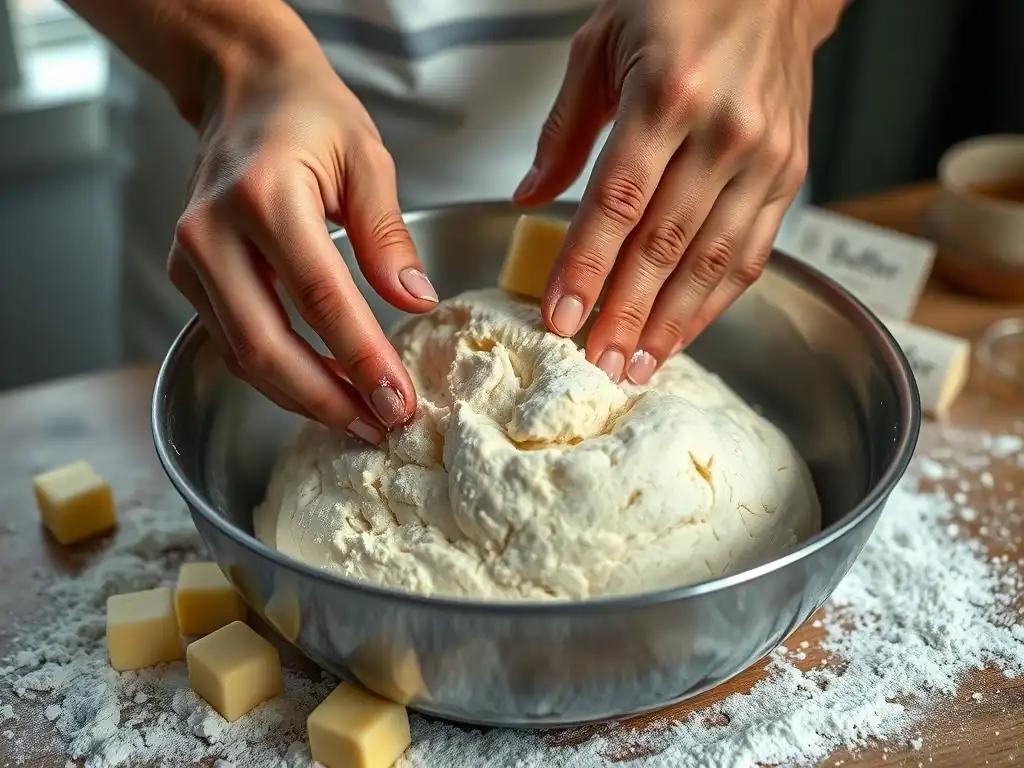
The method you use to add fat to your white bread dough can influence how effectively it contributes to a tender white bread crumb. Whether the fat is solid, softened, or melted impacts its initial distribution and interaction with the flour and water. Proper incorporation ensures the fat is evenly dispersed throughout the dough, maximizing its ability to interfere with gluten development and contribute to softness.
Different recipes call for different techniques based on the fat type and the desired outcome. Understanding these methods helps ensure you get the most out of the fat you're using to achieve that coveted tender white bread crumb.
Melting the Fat: Ensuring Even Distribution and Moisture
Melting solid fats like butter or shortening before adding them to the dough is a common technique, particularly in recipes where the fat is added along with the liquid ingredients. Melting the fat makes it liquid, similar to oil, allowing it to disperse very easily and evenly throughout the dough during the initial mixing phase. This uniform distribution ensures that fat molecules are present throughout the mixture from the start, effectively coating flour particles and inhibiting the initial formation of strong gluten bonds.
Adding melted fat also contributes to the overall hydration of the dough (though melted butter contains water, melted shortening/oil does not). Ensure the melted fat isn't too hot when added, as excessive heat can harm the yeast. Once incorporated, the dough might feel slightly greasy initially, but with kneading, the fat is fully integrated. This method is particularly effective for ensuring every part of the dough benefits from the fat's tenderizing effect, leading to a uniformly soft and tender white bread crumb.
Adding Softened Fat: Blending for a Smooth and Tender Crumb
Adding softened, but not melted, butter or shortening is another popular technique, especially in enriched doughs where the fat is often added gradually after some initial gluten development has occurred. Softened fat, at room temperature but still solid, can be creamed with sugar or added piece by piece to the dough while kneading. This method requires more time during kneading to fully incorporate the fat compared to using melted fat or oil.
As the softened fat is kneaded into the dough, it gradually breaks down and disperses, creating a very smooth and pliable dough. This technique can help create a finer, more uniform crumb structure. The fat integrates into the developing gluten network, effectively "shortening" the strands and contributing to a very smooth and tender white bread crumb. This method is often used in recipes aiming for a close-grained, soft texture, as it allows for controlled development of gluten alongside the fat's tenderizing action.
Troubleshooting: Common Issues and Solutions for White Bread Crumb
Even with the right recipe and fat, sometimes the white bread crumb doesn't turn out as soft and tender as expected. Common issues include a dry, dense, or uneven crumb. Identifying the root cause is the first step to correcting the problem and achieving that perfect texture in future bakes.
Understanding how ingredients and techniques influence the crumb structure is key. Often, issues relate back to the balance of ingredients, the kneading process, or the proofing and baking stages.
Dry Crumb: Identifying and Correcting the Cause
A dry white bread crumb is often a sign of insufficient moisture in the dough or excessive moisture loss during baking. While fat helps retain moisture, it cannot compensate for a dough that was too dry to begin with. Possible causes include inaccurate measurement of liquids (water or milk), not enough fat in the recipe, or overbaking the loaf.
To correct a dry crumb, ensure you are accurately measuring all ingredients, especially liquids and fat. Weighing ingredients is far more precise than using volume measurements. You might also consider slightly increasing the liquid content in your recipe by a few percentage points relative to the flour, or adding a bit more fat (within reason, typically up to 8-10% of flour weight for a standard white bread).
Baking for the correct duration at the right temperature is also crucial; overbaking will inevitably dry out the crumb, making it less tender. Using an internal thermometer to check for doneness (around 190-200°F or 88-93°C for enriched loaves) helps prevent overbaking.
Dense Crumb: Achieving the Right Balance of Ingredients
A dense white bread crumb can result from several factors, often related to under-proofing, insufficient kneading, or too little liquid or fat. If the dough doesn't rise enough (under-proofing), the gluten network hasn't had sufficient time to expand and trap gases, leading to a heavy, dense texture rather than a light, tender white bread crumb. Similarly, if the dough wasn't kneaded enough, the gluten network might not be developed enough to support a proper rise and structure.
Ensure you are kneading your dough sufficiently to develop a smooth, elastic gluten network (the "windowpane test" is a good indicator). Allow your dough to proof fully in a warm environment until it has roughly doubled in size during the first rise and is significantly puffy during the second rise (the "poke test" can indicate readiness).
Check your recipe's liquid and fat percentages; a dough that is too stiff (too little liquid) or too lean (too little fat) can result in a denser crumb. Adjusting hydration or adding a bit more fat can help achieve a lighter, more tender white bread crumb.
Uneven Crumb: Ensuring Proper Mixing and Kneading
An uneven white bread crumb, characterized by large, irregular holes mixed with dense areas, can often be traced back to improper mixing or kneading. If the ingredients, particularly the fat and liquid, are not fully and evenly incorporated into the dough, some areas might be too dry, too wet, or have localized concentrations of fat, leading to inconsistent gluten development and gas distribution.
Ensure all ingredients are thoroughly combined during the initial mixing stage. If adding softened fat, take the time to knead it in completely until the dough is smooth and uniform. Insufficient kneading can leave areas of undeveloped gluten, while over-kneading can tighten the gluten too much. Developing a smooth, elastic dough indicates that the gluten network is uniform and ready to support an even rise and a consistent, tender white bread crumb. Proper shaping also helps distribute gas bubbles evenly before the final proof and bake.
Tips for Maximizing Tenderness in Your White Bread
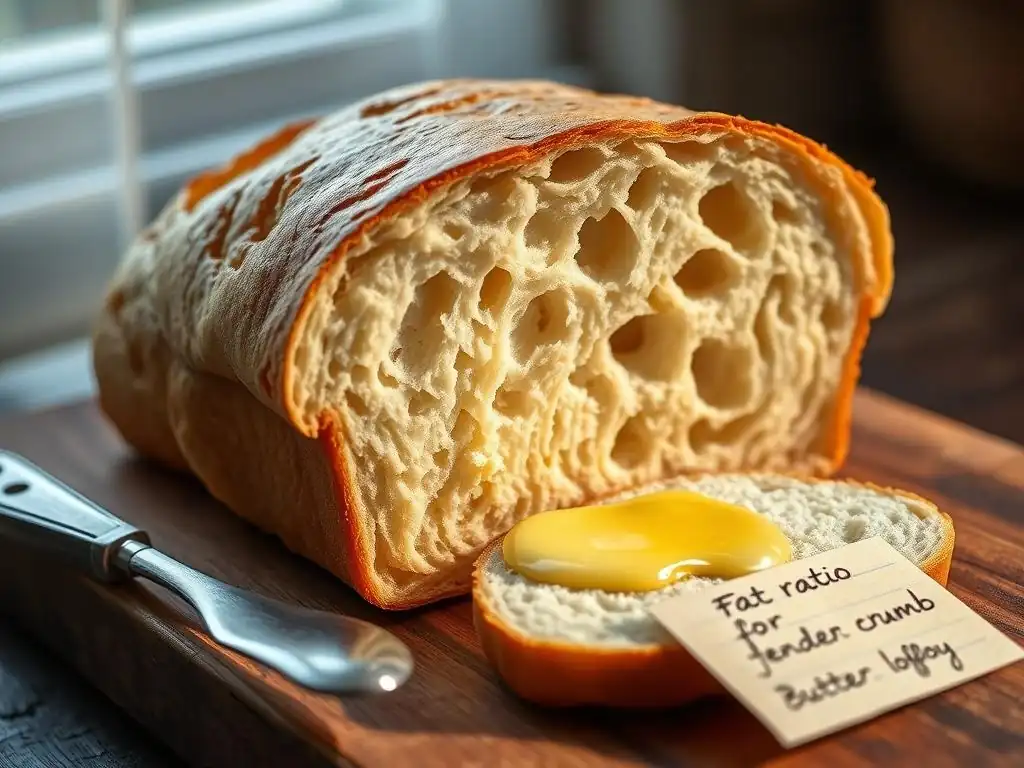
Beyond the type and amount of fat, several other techniques contribute significantly to achieving a soft and tender white bread crumb. These include proper dough handling, allowing sufficient time for fermentation and proofing, and controlling the baking environment. Mastering these steps complements the role of fat, ensuring a truly excellent final product.
Focusing on the entire process, from mixing to cooling, provides the best chance for a wonderfully soft loaf. Each stage plays a part in developing the structure and texture that define a tender white bread crumb.
The Importance of Proper Kneading for Gluten Development
Proper kneading is essential for developing the gluten network that gives bread its structure, but for a tender white bread crumb, the goal is not maximum chewiness but just enough structure to support the rise. Kneading aligns the gluten proteins and creates a network that can trap the carbon dioxide produced by the yeast. For soft white bread, adequate kneading results in a smooth, elastic dough that can expand nicely during proofing and baking.
Insufficient kneading leads to a weak structure and a dense crumb. Over-kneading, however, can make the dough tough and the resulting crumb rubbery, counteracting the tenderizing effect of fat. The ideal is to knead until the dough is smooth, supple, and passes the windowpane test (stretching a small piece thin enough to see light through without tearing). This indicates a well-developed but not overly tight gluten network, ready to yield a lovely tender white bread crumb.
The Role of Resting and Proofing for a Light and Airy Crumb
Resting and proofing are critical stages for developing both flavor and texture, contributing significantly to a light and tender white bread crumb. During the first rise (bulk fermentation), the yeast produces gases, and the gluten network relaxes and expands. This relaxation is crucial, especially in doughs with fat, allowing the fat to further integrate and the gluten to become more pliable.
The second rise (proofing) after shaping is perhaps even more critical for tenderness. This is when the loaf gains its final volume and the internal structure sets before baking. An under-proofed loaf will be dense and heavy, while a properly proofed loaf will be light, airy, and soft. Over-proofing can cause the structure to collapse. A well-proofed loaf, combined with the tenderizing effect of fat, results in an exceptionally light and tender white bread crumb. Aim for the dough to be significantly puffed and spring back slowly when gently poked.
Maintaining the Ideal Oven Temperature for Baking White Bread
Baking temperature and time play a final, crucial role in setting the structure and ensuring a moist, tender white bread crumb. Baking at the correct temperature ensures that the yeast is quickly killed (setting the structure), the gases expand (final oven spring), and the crust browns properly, while the interior cooks through without drying out.
For most standard white bread loaves, a baking temperature between 350°F and 400°F (175°C to 200°C) is common. Baking at too low a temperature can result in a pale crust and a dry interior as it takes longer to cook. Baking at too high a temperature might burn the crust before the interior is fully cooked, or cause the crumb to be unevenly set.
Using an oven thermometer to verify your oven's actual temperature is highly recommended, as many ovens are inaccurate. Baking until the internal temperature reaches the target range (190-200°F or 88-93°C for enriched white bread) ensures the loaf is fully cooked while preserving internal moisture for a soft, tender white bread crumb.
Elevate Your White Bread: Beyond Basic Tenderness
Once you've mastered the art of achieving a consistently tender white bread crumb using fat, you can explore ways to add complexity, visual appeal, and even greater levels of softness to your loaves. Basic white bread serves as a fantastic canvas for experimentation, allowing you to build upon your foundational skills.
Adding extra ingredients, trying new shaping methods, or incorporating advanced techniques can transform a simple loaf into something truly special. These steps allow you to personalize your baking and continually refine your skills.
Adding Flavor Enhancements: Herbs, Cheese, and More
Adding flavor enhancements is a simple yet effective way to elevate your tender white bread crumb. Ingredients like fresh or dried herbs (rosemary, thyme, chives), grated cheese (cheddar, parmesan), garlic powder, or even finely chopped sautéed onions can be folded into the dough after the initial kneading phase.
The fat in the dough helps distribute these additions evenly and keeps the crumb soft around them. For example, adding 50-100g of grated sharp cheddar cheese and a tablespoon of dried chives to a recipe using 500g flour and 40g butter creates a savory loaf with a soft, cheesy tender white bread crumb. Ensure additions are not excessively wet or oily, as this can negatively impact the dough structure.
Exploring Different Shaping Techniques for Visual Appeal
While the standard loaf shape is practical, experimenting with different shaping techniques can add visual interest to your tender white bread crumb. Simple variations like braiding, rolling into knots, or creating pull-apart rolls transform the look of the bread without changing the core recipe.
Shaping isn't just aesthetic; it can slightly influence the crumb structure, particularly near the edges. A braided loaf might have a slightly different crust-to-crumb ratio in the strands, while rolls offer more individual soft portions. Regardless of the shape, the underlying principles of using fat for a tender white bread crumb remain the same, ensuring the interior is soft and inviting no matter how it looks on the outside. Practice shaping techniques on your reliable soft white bread dough.
Advanced Techniques: Tangzhong Method for Extreme Softness
For those seeking the ultimate in soft, fluffy, and tender white bread crumb, exploring advanced techniques like the Tangzhong or Yudane method is highly recommended. These Asian baking techniques involve cooking a small portion of the flour with liquid (water or milk) to create a paste or slurry before adding it to the main dough.
This cooked flour mixture, or 'starter,' gelatinizes the starch, allowing it to hold significantly more liquid than raw flour. When this super-hydrated starter is added to the dough, it introduces extra moisture without making the dough excessively wet or sticky. This additional moisture is locked within the starch structure during baking, resulting in an incredibly moist, light, and exceptionally tender white bread crumb that stays soft for many days. Combining the Tangzhong method with fat in the main dough creates a synergistic effect, yielding white bread with unparalleled softness.
Conclusion: Baking the Perfect Tender White Bread Crumb with Confidence
Mastering the art of baking white bread with a tender white bread crumb is a rewarding goal that is well within reach for any home baker. By understanding the crucial role fat plays in dough structure and moisture retention, you gain valuable insight into controlling your loaf's texture. Whether you choose butter for richness, shortening for consistency, or oil for lightness, using fat effectively is a cornerstone of achieving that sought-after softness.
Remember that fat works in harmony with other elements: accurate measurements, proper kneading, sufficient proofing, and correct baking. Each step contributes to the final outcome, ensuring your efforts result in a delicious and satisfying loaf. Don't be afraid to experiment with different fats and percentages within your favorite recipes to discover what works best for your palate and desired texture.
Mastering the Art of White Bread Baking
Baking white bread isn't just following a recipe; it's about understanding the interactions between ingredients and the impact of various techniques. Developing a feel for the dough, recognizing when it's properly kneaded, and knowing when it's perfectly proofed are skills that come with practice. Paying attention to the nuances, like how different fats behave and how they influence the tender white bread crumb, elevates your baking expertise.
With each loaf you bake, you learn more about how small adjustments can lead to significant improvements. Whether you're aiming for a simple sandwich loaf or exploring enriched doughs, the principles of using fat to achieve a tender white bread crumb remain fundamental. Embrace the process, learn from each bake, and build your confidence in creating consistently soft and delicious white bread.
Your Journey to Deliciously Tender White Bread Starts Now!
Armed with the knowledge of how fat contributes to a tender white bread crumb and the techniques to incorporate it effectively, you are ready to bake your best white bread yet. Select a recipe, choose your fat, and pay attention to the details of mixing, kneading, proofing, and baking.
The satisfaction of slicing into a homemade loaf with a perfect, soft crumb is immense. Enjoy the process, share your delicious creations, and continue to explore the wonderful world of bread baking. Your journey to consistently producing wonderfully soft and tender white bread crumb begins with your next bake!
Frequently Asked Questions
How does fat contribute to a tender white bread crumb?
Fat interferes with gluten development, preventing a tough, chewy texture. It also helps to create a softer, more moist crumb by coating the flour particles.
What types of fats are best for achieving a tender white bread crumb?
Options like butter, shortening, and oil can all work well. Butter adds flavor, while shortening and oil provide a neutral taste and contribute to tenderness.
How much fat should I add to my white bread recipe?
The ideal amount depends on the recipe, but generally, aim for around 2-4% fat relative to the flour weight. Too much can hinder gluten development.
Can I substitute one type of fat for another in a white bread recipe?
Yes, but be mindful of flavor differences. For example, replacing butter with oil will impact the taste. Adjust the recipe accordingly, if needed.
What happens if I don't add enough fat to my white bread?
Without enough fat, the bread will likely be drier and tougher, with a less tender crumb. The gluten will overdevelop, leading to a less desirable texture.
Final Reflection: The Unexpected Alchemy of a Tender Crumb
The pursuit of the perfect tender white bread crumb is more than just a culinary quest; it's a testament to the power of understanding fundamental ingredients. Achieving that delicate, melt-in-your-mouth texture requires a deep appreciation for the role of fat, often overlooked in simpler recipes. This seemingly small detail dramatically impacts the final product, proving that even the most basic recipes hold hidden depths of complexity.
The journey to mastering this technique has been a fascinating exploration of texture and flavor, highlighting the subtle yet significant influence of seemingly insignificant elements. It's a reminder that even in the simplest of recipes, there's always room for experimentation and refinement. The best bread is made with love, and a little bit of fat.
This isn't a direct quote, but it encapsulates the spirit of this exploration – the understanding that seemingly simple acts, when approached with care and attention, can yield extraordinary results.
Now, consider your own baking endeavors. What seemingly small detail have you overlooked? What seemingly insignificant ingredient might hold the key to unlocking a new level of flavor or texture in your creations? I encourage you to embrace the spirit of experimentation, to delve deeper into the fundamentals of your craft, and to discover the unexpected alchemy that awaits within the seemingly simple. The pursuit of the perfect tender white bread crumb is just the beginning; the possibilities are endless.
Unlock the Secret to Perfectly Tender Crumbs!
Thanks for taking the time to explore the magic of fat in bread baking! You've just learned how a simple addition can dramatically improve your bread's texture. Ready to put this knowledge to the test?
- Bake your dream loaf: Try our recipe (found on bakewithease.com) using the fat-enriched method – you'll be amazed by the results! This is your primary next step!
- Share your success: Post a picture of your perfectly tender crumb on social media and tag us! We'd love to see your creation.
- Explore other fat-based recipes: Dive deeper into our collection of enriched breads and pastries on bakewithease.com for even more delightful baking adventures.
What unique flavor will you infuse into your next perfectly tender loaf?