
Achieving Uniform Thickness When Rolling Puff Pastry Dough

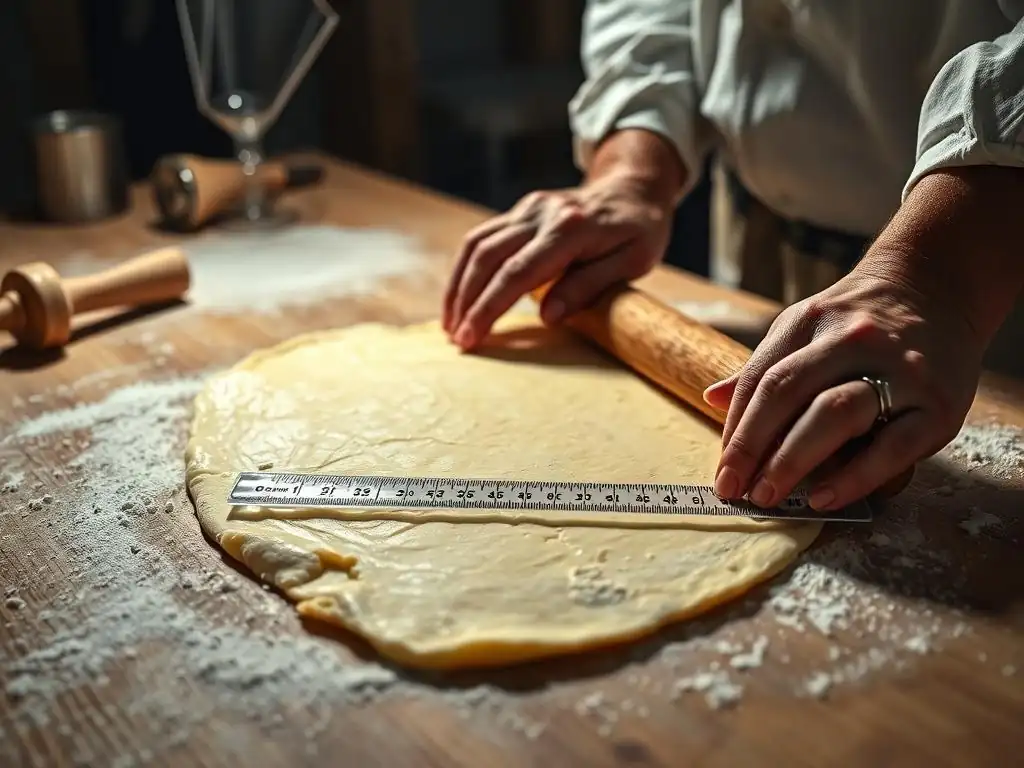
Welcome to BakeWithEase, your companion in the wonderful world of baking! Ever wondered how to achieve that perfectly flaky, evenly risen puff pastry? This article dives deep into a crucial technique often overlooked: achieving uniform puff pastry rolling thickness. Unlock the secrets to consistent results and say goodbye to uneven bakes. Intrigued? Let's get rolling!
- Introduction to Consistent Puff Pastry Thickness
- Why Uniform Puff Pastry Rolling Thickness Matters
- Essential Tools for Achieving Uniform Puff Pastry Rolling Thickness
- Step-by-Step Guide to Rolling Puff Pastry to a Consistent Thickness
- Troubleshooting Common Problems in Puff Pastry Rolling
- Advanced Techniques for Achieving Precise Puff Pastry Thickness
- Tips and Tricks for Perfect Puff Pastry Thickness
- Conclusion: Mastering Uniform Puff Pastry Rolling
-
Frequently Asked Questions
- How important is uniform thickness when rolling puff pastry?
- What's the best tool for achieving uniform puff pastry rolling thickness?
- What's a common mistake that leads to uneven puff pastry thickness?
- How can I tell if my puff pastry is rolled to the correct thickness?
- What happens if my puff pastry is too thin or too thick?
- Final Reflection: Mastering the Art of Even Puff Pastry
- Master the Art of Even Puff Pastry: Your Next Bake Awaits!
Introduction to Consistent Puff Pastry Thickness
Rolling puff pastry is a foundational skill in baking, crucial for achieving those coveted light, airy layers. However, simply rolling it out isn't enough; achieving a consistent, uniform thickness across the entire sheet of dough is paramount. This uniformity is the unsung hero behind perfectly baked goods, from delicate palmiers to classic vol-au-vents. Without it, you risk uneven baking, inconsistent rise, and ultimately, a less-than-ideal texture.
Mastering uniform puff pastry rolling thickness is a skill that develops with practice and attention to detail. It involves understanding the dough's properties, using the right tools effectively, and employing proper technique. This article will guide you through the essential steps and tips needed to roll your puff pastry dough to an even thickness every time, ensuring your baked creations are consistently flaky and beautiful.
Why Uniform Puff Pastry Rolling Thickness Matters
The Impact of Uneven Thickness on Puff Pastry
Uneven puff pastry thickness can lead to a multitude of problems during baking. When one part of your dough sheet is significantly thicker than another, it bakes at a different rate. The thinner sections will cook faster, potentially becoming dry, tough, or even burnt, while the thicker sections remain underbaked, dense, or raw in the center. This disparity prevents the even expansion of layers that is characteristic of well-made puff pastry.
Consider a sheet rolled with sections varying by just a few millimeters – say, from 3mm to 6mm (approx. 1/8 inch to 1/4 inch). The thinner areas will develop their structure and brown much quicker than the thicker ones. This leads to an inconsistent rise, with flatter spots where the dough was thin and potentially dense spots where it was thick. The overall texture and visual appeal of your final product are significantly compromised, making uniform puff pastry rolling thickness a critical goal.
Achieving Optimal Flakiness with Consistent Dough Thickness
The signature flakiness of puff pastry relies on the steam created by the melting butter layers causing the dough layers to separate and expand. For this expansion to happen evenly and create numerous distinct layers, the thickness of the dough sheet must be uniform. When the thickness is consistent, the heat penetrates the dough evenly, the butter melts uniformly, and the steam is generated at a similar rate across the entire sheet.
This uniformity ensures that each layer has the correct amount of dough and butter to puff up properly. If the thickness varies, the ratio of dough to butter layers changes locally. Thinner areas might have less potential for rise, while thicker areas might not heat through efficiently enough for optimal steam production and layer separation. Achieving uniform puff pastry rolling thickness directly contributes to a reliable, high-rising, and exquisitely flaky result throughout your entire pastry.
Essential Tools for Achieving Uniform Puff Pastry Rolling Thickness
The Importance of a Rolling Pin
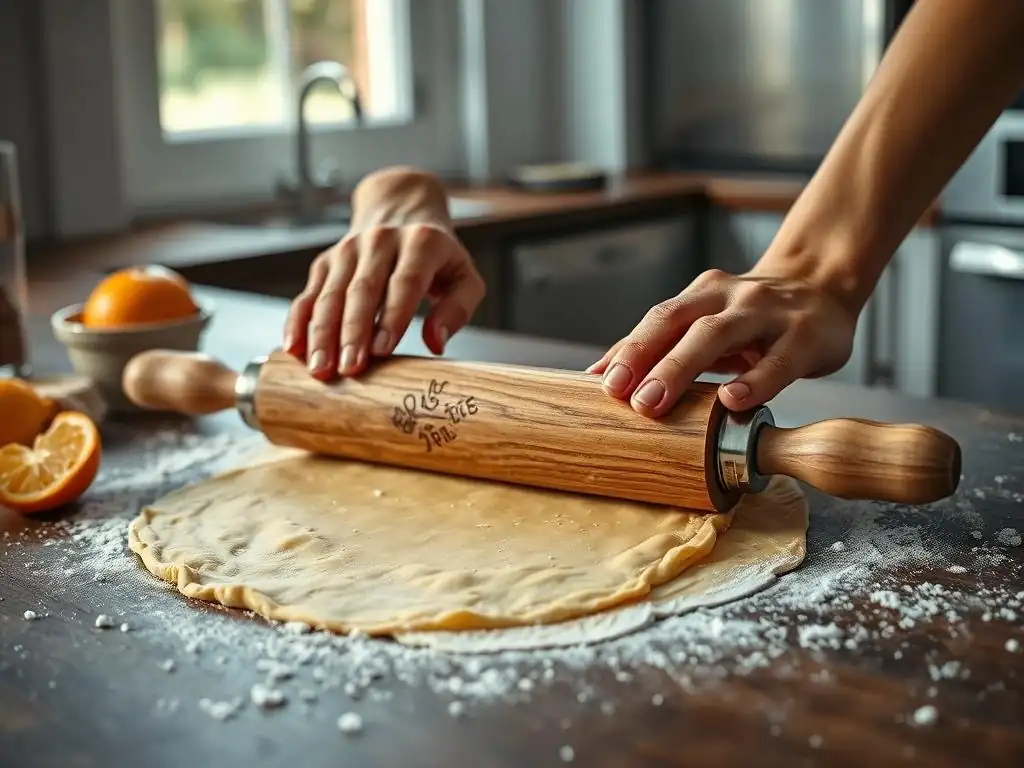
The rolling pin is your primary tool for achieving uniform puff pastry rolling thickness. While many types exist, a heavy, smooth rolling pin is generally preferred as its weight helps with even pressure. A straight-barrel French rolling pin or a traditional American rolling pin with handles can both work well. The key is to find one you are comfortable using and that allows you to feel the dough beneath it, helping you gauge the thickness.
Using the rolling pin effectively involves more than just pushing the dough. It's about applying consistent pressure from the center outwards, rotating the dough frequently, and checking the thickness regularly. A good rolling pin, combined with mindful technique, is indispensable for achieving that desired uniform puff pastry rolling thickness.
Using Dough Guides and Thickness Rulers
For guaranteed precision in achieving uniform puff pastry rolling thickness, dough guides or thickness rulers are incredibly helpful, especially for beginners or when a specific thickness is crucial for a recipe. These are typically strips of wood, plastic, or metal placed parallel to each other on either side of the dough. The rolling pin rests on these guides as you roll, preventing the dough from becoming thinner than the height of the guides.
Common thickness guides come in standard measurements like 1/8 inch (approx. 3mm), 1/4 inch (approx. 6mm), and sometimes even thinner or thicker options. By choosing the appropriate guide, you create a physical barrier that ensures the entire sheet of dough, once rolled to the height of the guides, has achieved uniform thickness. This takes much of the guesswork out of the process and significantly improves the consistency of your uniform puff pastry rolling thickness.
The Role of a Properly Floured Surface
A properly floured surface is essential to prevent the delicate puff pastry dough from sticking, which can tear the layers and disrupt the uniformity as you roll. However, over-flouring can be just as detrimental. Excess flour gets incorporated into the dough layers, making the pastry tough and preventing a clean rise. The goal is a light, even dusting.
Use just enough flour to prevent sticking, and brush off any excess flour from the dough's surface periodically as you roll. A non-stick pastry mat can also help reduce the need for excessive flour. Maintaining a surface that allows the dough to move freely without sticking is fundamental to achieving a smooth, even roll and ensuring uniform puff pastry rolling thickness without incorporating extra dry flour.
Step-by-Step Guide to Rolling Puff Pastry to a Consistent Thickness
Preparing the Puff Pastry Dough
Before you even pick up your rolling pin, proper dough preparation is key to successful uniform puff pastry rolling thickness. Ensure your dough is well-chilled – typically having rested in the refrigerator for at least 30 minutes after the last fold, or longer if needed to firm up. Cold dough is less sticky and easier to handle, reducing the risk of layers smearing or tearing during rolling.
Place the chilled dough on your lightly floured surface. If it's very stiff, let it sit at room temperature for just a minute or two to become slightly pliable, but it should still be cold to the touch. A slightly cold dough is less likely to spring back excessively, making it easier to roll and maintain uniform puff pastry rolling thickness.
The Initial Roll: Establishing the Dough's Shape
Start your rolling process by gently pressing down on the dough with your rolling pin to slightly flatten it. Then, begin rolling from the center outwards in one direction, lifting the pin as you reach the edge. Rotate the dough 90 degrees and repeat. This helps to square off the dough and begin establishing a roughly rectangular or square shape, depending on your final use.
This initial stage is about gently coaxing the dough into a workable shape while starting to reduce its thickness. Avoid rolling back and forth aggressively. Focus on applying even pressure across the width of the dough with each pass. This careful start sets the foundation for achieving uniform puff pastry rolling thickness throughout the rest of the process.
The Importance of Even Pressure Distribution
Distributing pressure evenly across the width of your rolling pin as you roll is perhaps the most critical technique for achieving uniform puff pastry rolling thickness. If you press harder on one side than the other, that side will become thinner. Pay attention to how the dough feels under the pin and try to maintain consistent pressure from the center of the pin outwards to both edges.
Think of your rolling pin like a seesaw – if one end goes down harder, the other end goes up. Similarly, uneven pressure on the rolling pin translates directly to uneven thickness in the dough. Practice feeling the resistance of the dough and adjusting your hand pressure to ensure the pin is pressing down uniformly along its contact point with the dough, aiding in consistent uniform puff pastry rolling thickness.
Rolling Techniques for Maintaining Uniform Thickness
Once you've established a shape, continue rolling, always working from the center outwards. Roll in one direction, then lift the pin. Rotate the dough frequently – after every few rolls is ideal. This helps prevent the dough from sticking, allows it to relax slightly, and ensures you are rolling evenly in all directions, promoting uniform puff pastry rolling thickness.
If you notice a thicker spot, focus your rolling efforts on that area, rolling gently outwards from its center until it matches the surrounding thickness. Use your hands or a ruler to check the thickness periodically across the entire sheet. Aim for smooth, controlled movements rather than forceful, quick rolling, which can lead to unevenness and potentially tear the delicate layers, hindering your goal of uniform puff pastry rolling thickness.
Troubleshooting Common Problems in Puff Pastry Rolling
Dealing with Dough That Sticks to the Surface
Dough sticking is a common frustration and a major impediment to achieving uniform puff pastry rolling thickness. It usually indicates either insufficient flour on the surface or dough that is too warm. If the dough starts to stick, immediately stop rolling.
Gently lift the dough using a pastry scraper or your hands, and lightly re-flour the surface underneath and the top of the dough. If the dough feels warm and soft, pop it back into the refrigerator for 10-15 minutes to firm up before attempting to roll again. A chilled dough on a properly, but lightly, floured surface is key to preventing sticking and allowing for smooth, uniform puff pastry rolling thickness.
Correcting Uneven Thickness During Rolling
Spotting uneven thickness early is crucial for correction. If you notice a section is thicker than the rest, focus your rolling on that specific area. Roll gently outwards from the center of the thick spot towards the edges until its thickness visually and tactilely matches the surrounding dough.
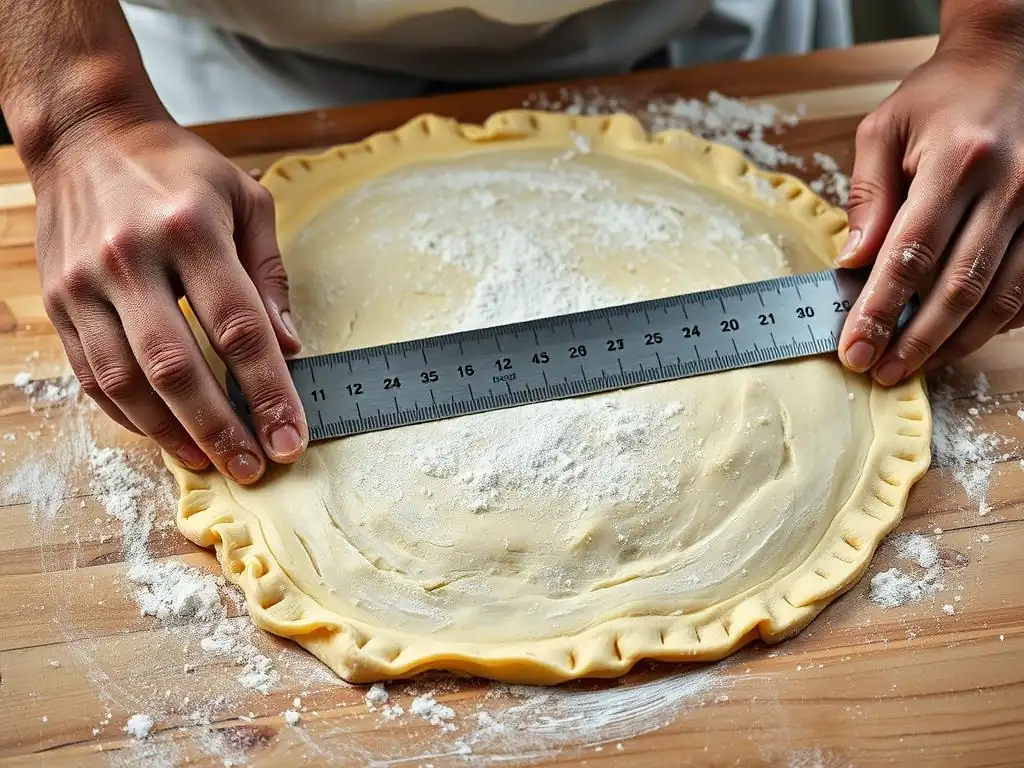
Conversely, if an area is too thin, there's unfortunately no way to make it thicker by rolling. In such cases, you may need to trim off the excessively thin part if it's on an edge, or accept a slight variation if it's in the center and not too severe. Regular checking with your fingers or a ruler as you roll helps identify variations early, allowing for targeted rolling to correct thicker spots and maintain overall uniform puff pastry rolling thickness.
Avoiding Overworking the Dough
Overworking puff pastry dough by rolling it too forcefully or for too long can develop the gluten too much, resulting in a tough, chewy pastry instead of a light, flaky one. It can also warm the dough and butter unnecessarily, leading to smearing of the layers. The goal is to roll the dough just enough to reach the desired uniform puff pastry rolling thickness without excessive handling.
Roll with firm but not crushing pressure. If the dough resists and springs back excessively, cover it and let it rest in the refrigerator for 10-15 minutes before continuing. This allows the gluten to relax, making the dough more pliable and easier to roll to a uniform thickness without force. Knowing when to stop and chill is a vital part of achieving both uniform puff pastry rolling thickness and optimal texture.
Advanced Techniques for Achieving Precise Puff Pastry Thickness
Using Thickness Rings on a Rolling Pin
For home bakers seeking guaranteed precision in uniform puff pastry rolling thickness, adjustable thickness rings that fit onto the ends of your rolling pin are an excellent tool. These rings come in various sizes (e.g., 2mm, 3mm, 6mm) and serve the same purpose as dough guides, but are attached directly to the pin.
As you roll, the rings contact the surface you're working on, preventing the pin from pressing the dough thinner than the height of the rings. This provides a consistent physical limit to how thin you can roll, ensuring that once the pin rolls smoothly across the entire surface with the rings touching, you have achieved a perfectly uniform puff pastry rolling thickness equal to the ring size.
Employing a Dough Sheeter
In professional bakeries, or for serious home bakers making large quantities of puff pastry, a dough sheeter is the ultimate tool for achieving perfectly uniform puff pastry rolling thickness. This machine consists of two rollers with an adjustable gap between them. Dough is fed through the rollers, and the gap is gradually narrowed with each pass, reducing the dough's thickness incrementally and uniformly.
Dough sheeters provide unparalleled precision and consistency, producing sheets of dough with exact, uniform thickness from edge to edge. While a significant investment, for those requiring absolute uniformity and efficiency, a dough sheeter simplifies the process of achieving uniform puff pastry rolling thickness dramatically compared to manual rolling.
Tips and Tricks for Perfect Puff Pastry Thickness
The Importance of Chilling the Dough Between Rolls
One of the most crucial tips for achieving and maintaining uniform puff pastry rolling thickness is frequent chilling. Puff pastry dough is temperature-sensitive. As you roll, the butter warms and softens, and the dough's gluten develops tension. Rolling warm, relaxed dough leads to sticking, tearing, and unevenness.
After every few rolls or if the dough starts to feel soft or difficult to handle, fold it, wrap it, and return it to the refrigerator for 15-30 minutes. This re-chills the butter, relaxes the gluten, and makes the dough firm and much easier to roll evenly without sticking or tearing. This intermittent chilling is key to successful uniform puff pastry rolling thickness.
Visual Cues for Judging Dough Thickness
While tools like rulers or guides are helpful, developing the ability to judge dough thickness by eye and feel is a valuable skill. As you roll, periodically lift a corner or gently press the dough with your finger. Learn how a section that is, say, 4mm (approx. 1/6 inch) thick feels and looks compared to one that is 6mm (approx. 1/4 inch).
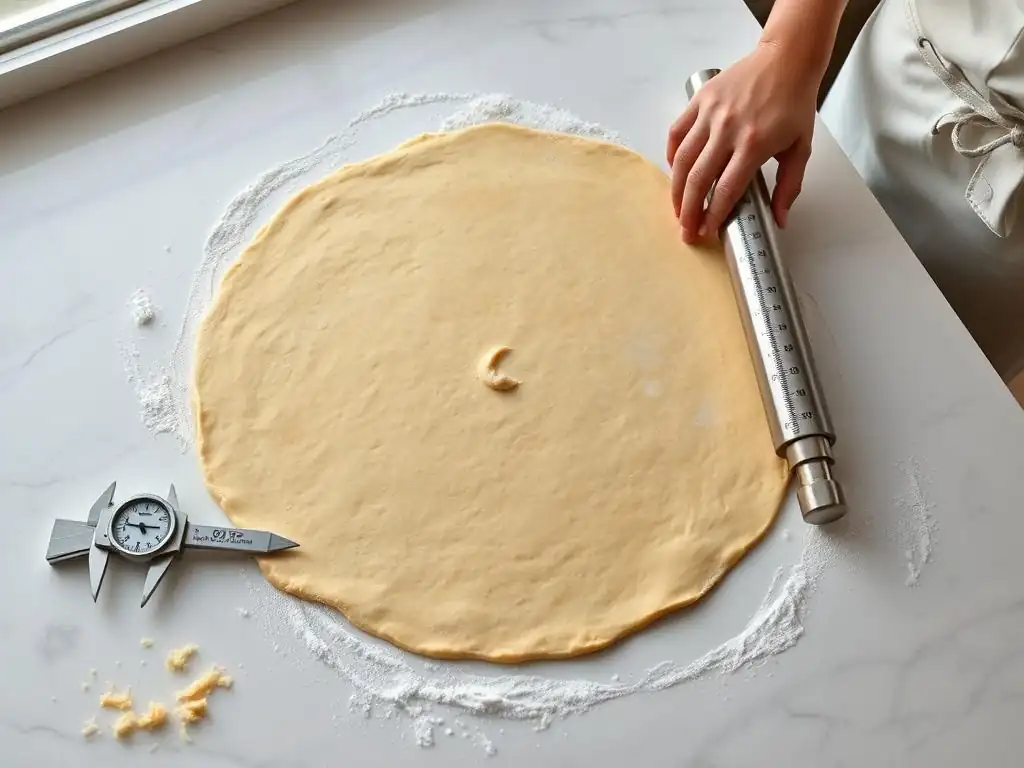
Hold your ruler or thickness guide next to the dough occasionally to calibrate your visual judgment. With practice, you'll be able to spot thicker or thinner areas simply by looking at the dough sheet against your work surface and feeling its resistance under the rolling pin. This develops your intuition for achieving uniform puff pastry rolling thickness.
Practice Makes Perfect
Like any baking technique, mastering uniform puff pastry rolling thickness takes practice. Your first few attempts might not be perfect, and that's okay! Each time you roll puff pastry, you'll learn more about how the dough behaves based on its temperature, hydration, and how you handle it.
Don't be discouraged by initial inconsistencies. Pay attention to what works and what doesn't. Try using guides, experiment with different rolling pins, and focus on even pressure and frequent chilling. The more you practice rolling puff pastry, the better you'll become at achieving that desired uniform thickness consistently, leading to more successful and beautiful baked goods.
Conclusion: Mastering Uniform Puff Pastry Rolling
Achieving uniform puff pastry rolling thickness is a fundamental skill that significantly impacts the quality of your baked goods. It ensures even baking, optimal rise, and that signature flaky texture we all love. While it might seem challenging at first, understanding the "why" behind uniformity, utilizing the right tools, employing proper techniques like even pressure and frequent chilling, and learning to troubleshoot common issues will set you on the path to success. With patience and practice, you will master the art of rolling puff pastry to a consistent thickness, elevating your baking results from good to truly exceptional.
Frequently Asked Questions
How important is uniform thickness when rolling puff pastry?
Uniform thickness is crucial for even baking and consistent rise. Inconsistent thickness leads to some areas overcooking while others remain doughy and undercooked, resulting in a poorly puffed pastry.
What's the best tool for achieving uniform puff pastry rolling thickness?
While a standard rolling pin works, a rolling pin with adjustable thickness rings is highly recommended. These rings ensure a consistent gap between the pin and the surface, yielding a perfectly even sheet of dough.
What's a common mistake that leads to uneven puff pastry thickness?
Applying uneven pressure during rolling is a frequent culprit. Focus on consistent pressure and smooth, even strokes to prevent some areas from becoming thinner than others, avoiding overworking the dough.
How can I tell if my puff pastry is rolled to the correct thickness?
Use a ruler or a dough scraper with thickness markings to measure the dough. Generally, puff pastry should be rolled to a thickness of about 3-4 millimeters (1/8 inch) for optimal puffing.
What happens if my puff pastry is too thin or too thick?
If too thin, the butter layers may melt too quickly, preventing proper puffing. If too thick, the pastry may not fully cook through, resulting in a dense and doughy texture, impacting the final result negatively.
Final Reflection: Mastering the Art of Even Puff Pastry
Achieving uniform thickness in puff pastry is not merely a technical detail; it's the cornerstone of flaky, light, and airy perfection. A millimeter's difference can dramatically impact the final product, transforming a culinary masterpiece into a dense, disappointing failure. This pursuit of evenness, therefore, transcends simple technique and speaks to the heart of pastry artistry.
The quest for uniform puff pastry dough has shaped my own baking journey profoundly. It's a constant reminder of the importance of patience, precision, and attention to detail. The difference between ordinary and extraordinary is that little extra.
This quote, though not specifically about baking, perfectly encapsulates the subtle yet significant impact of consistent rolling technique on the final outcome. The pursuit of this seemingly small detail has broadened my understanding of the delicate balance required in baking, highlighting the interconnectedness of each step in the process.
Now, it's your turn. Consider the lessons learned here – the importance of proper chilling, the gentle yet firm touch required, and the value of consistent measurement. Don't just strive for uniform puff pastry; strive for a deeper understanding of the process, allowing you to confidently tackle any baking challenge with precision and grace. The next time you roll out your dough, remember the pursuit of perfection isn't about achieving flawlessness, but about embracing the journey and celebrating the delicious results.
Master the Art of Even Puff Pastry: Your Next Bake Awaits!
Thanks for taking the time to perfect your puff pastry technique! You've now unlocked the secret to flawlessly layered, golden-brown pastries. Ready to put your newfound knowledge into action?
- Bake a show-stopping masterpiece: Use your newly honed skills to create the puff pastry recipe you’ve always dreamed of. Challenge yourself to achieve uniform thickness throughout!
- Share your success: Post a picture of your perfectly layered creation on social media and tag us @BakeWithEase – we'd love to see your results!
- Discover more baking secrets: Explore other helpful articles on BakeWithEase.com for more tips and tricks to elevate your baking game.
What delicious puff pastry creation will you conquer next?