
Docking Dough: The Right Way to Prick Your Puff Pastry

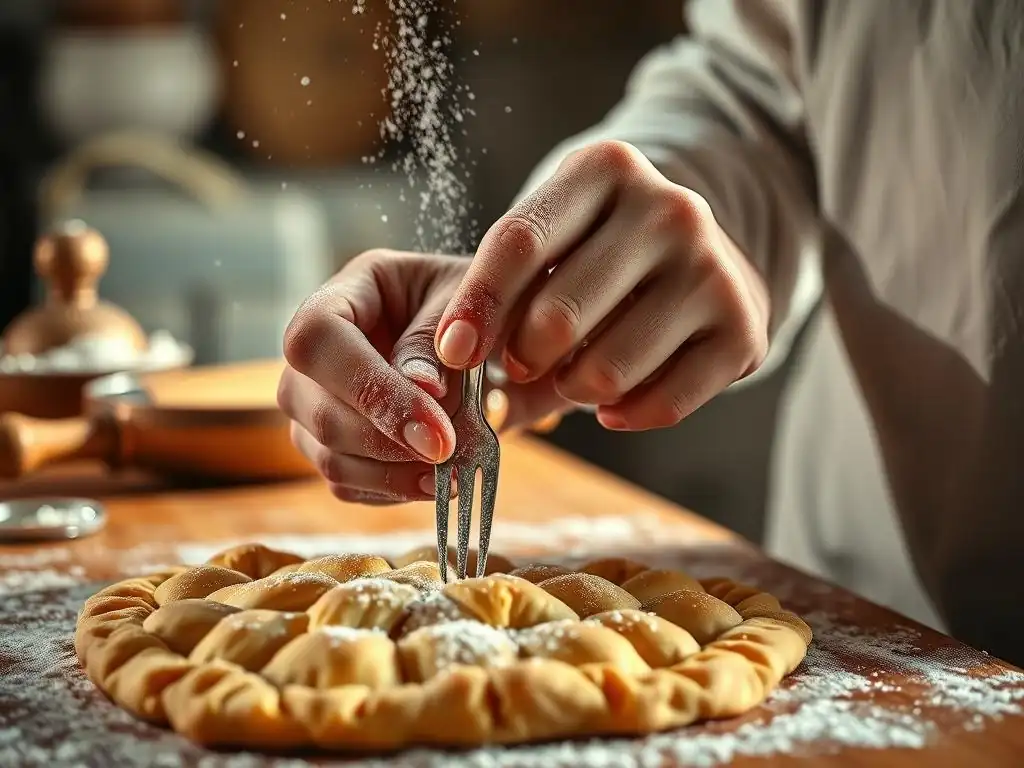
Welcome to BakeWithEase, your trusted guide to unlocking baking brilliance! Ever wondered why your puff pastry doesn't quite achieve that perfect, even rise? It all boils down to a crucial, often overlooked technique: docking. This article dives deep into how to prick puff pastry the right way, ensuring flaky layers and preventing unwanted bubbles. Discover the secrets to achieving professional-looking results and elevate your pastry game. Ready to transform your baking? Let's get started!
- Introduction to Puff Pastry Docking: Why It's Essential
- Mastering the Technique: How to Prick Puff Pastry Correctly
- Puff Pastry Docking: Troubleshooting and Tips
- Different Puff Pastry Applications and Docking Needs
- Puff Pastry Baking: What Happens After Docking?
- Conclusion: Perfect Puff Pastry Through Proper Docking
- Frequently Asked Questions
- Final Reflection: Mastering the Art of the Prick – Beyond the Puff
- Unlock Your Puff Pastry Potential!
Introduction to Puff Pastry Docking: Why It's Essential
Understanding the Purpose of Docking Puff Pastry
When you're working with delicate puff pastry, achieving that perfect balance between flaky layers and a stable base for your fillings is key. This is where docking comes in. Docking is simply the process of pricking small holes throughout the dough before baking.
The primary purpose is to allow steam to escape during baking, preventing the dough from puffing up too much in unwanted areas, particularly in the center of tarts or quiches where a flat surface is desired. Without proper docking, a puff pastry shell for a tart might dome excessively in the middle, leaving little room for filling and potentially cracking as it bakes.
Furthermore, docking helps ensure even baking across the entire surface of the pastry. By controlling the rise, steam is directed out through the small holes, leading to a more consistent texture and color. For instance, a large rectangular sheet of puff pastry intended for savory bites or a base for a fruit tart requires significant docking to remain relatively flat.
A common issue encountered by bakers is an uneven rise, resulting in some parts being thick and uncooked while others are thin and crisp. Docking minimizes this risk, guiding the pastry to bake into a stable, uniform layer that's ready to hold delicious fillings.
The Science Behind Puff Pastry Inflation and Docking
Puff pastry's incredible rise is a marvel of baking science, primarily driven by steam. It's made by folding layers of dough and butter repeatedly. During baking in a hot oven, the butter melts and creates steam between the layers of dough. This steam is trapped initially, forcing the thin layers of dough apart and causing the pastry to "puff." A well-made puff pastry can expand to eight times its original height or more, creating hundreds of delicate, flaky layers.
Docking works directly against this steam build-up in specific areas. By creating small vents, you provide controlled exit points for the steam. Imagine a balloon – without a small hole, it expands until it pops. Docking is like creating tiny, deliberate pinholes to let air (steam) escape gradually.
This controlled release prevents the pastry from forming large, uncontrolled bubbles or domes. For example, when baking a 9-inch puff pastry tart shell at 400°F (200°C), steam is rapidly produced. Docking every inch or so across the base provides enough vents to keep the bottom relatively flat while still allowing the edges, which are often less heavily docked or cut, to achieve some desirable lift and flakiness. Understanding how to prick puff pastry effectively is understanding how to harness this steam power.
Mastering the Technique: How to Prick Puff Pastry Correctly
Tools You'll Need for Effective Puff Pastry Docking
Selecting the right tool is crucial for efficient and effective puff pastry docking. While a simple fork is the most common and readily available tool, specialized pastry dockers offer speed and uniformity, especially when dealing with larger sheets of dough. Having a few options on hand allows you to choose the best tool for the specific application and size of your puff pastry. The goal is to create consistent holes without tearing the dough excessively.
Here are some standard tools used for docking:
-
Docking with a Fork: A Classic Method
The tines of a standard dinner fork are perfect for creating individual holes. It's best for smaller pieces or detailed work around edges. Simply press the tines straight down into the dough.
-
Using a Pastry Docker: Achieving Even Pricking
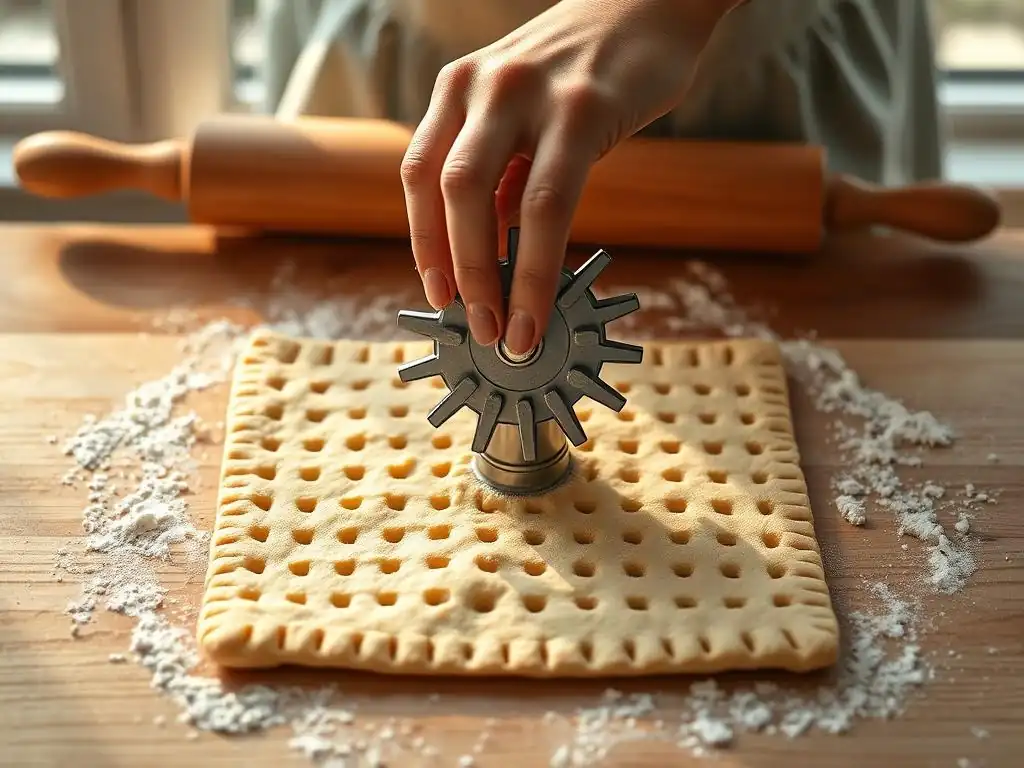
A pastry docker is a roller fitted with numerous pins or spikes. Rolling it across the dough quickly creates a pattern of evenly spaced holes. This is ideal for large sheets of puff pastry destined for tarts or sheet pan applications.
-
Alternative Docking Tools: Rolling Pin Docker and Pizza Cutter
Some rolling pins come with docking attachments, or you can use a pizza cutter to make small, controlled slits if a fork or docker isn't available. These methods require careful execution to ensure consistency.
Step-by-Step Guide: Pricking Puff Pastry for Perfect Results
Successfully docking puff pastry is a straightforward process, but paying attention to detail makes all the difference in the final baked result. The technique involves more than just randomly poking holes; it requires preparing the dough properly, understanding the correct depth and spacing for your specific use, and being mindful of potential pitfalls. Follow these steps for reliable results every time you prick your puff pastry.
Here is a simple guide on how to prick puff pastry:
-
[ ] #### Preparing Your Puff Pastry for Docking
Ensure your puff pastry is cold but pliable enough to work with. If it's too warm, it will become sticky and difficult to dock cleanly. If it's frozen, thaw it according to package directions, typically in the refrigerator overnight. Roll out the dough on a lightly floured surface to the desired thickness, often around 1/8 to 1/4 inch (3-6 mm), depending on the recipe.
-
[ ] #### The Correct Depth and Spacing for Pricking
The depth should be just enough to pierce through the top layers of the dough, reaching about halfway or slightly more, but not completely through to the bottom surface unless specified by the recipe (e.g., for cracker-like pastry). For spacing, a general rule for tart shells is to prick holes about every 1/2 to 1 inch (1-2.5 cm) across the entire area you want to keep flat. Use a fork or docker to create this pattern.
-
[ ] #### Avoiding Common Mistakes When Docking
One common mistake is not docking enough, leading to excessive doming. Another is pressing too hard, which can tear the dough and potentially fuse layers together, hindering the puff. Ensure your tool is clean to prevent sticking. If using a fork, lift it straight up after each press to avoid dragging the dough. Practice makes perfect when learning how to prick puff pastry effectively.
Puff Pastry Docking: Troubleshooting and Tips
Dealing with Sticky Dough During Docking
Working with dough that is too warm can quickly become a sticky situation, making clean docking difficult. Puff pastry, with its high butter content, is particularly susceptible to warming up from handling or a warm kitchen environment. When the dough becomes sticky, the docking tool, whether a fork or a docker, can pull and tear the dough rather than creating clean holes. This not only makes the process frustrating but can also negatively impact the final texture and appearance of the baked pastry.
The best way to handle sticky dough is to pause and chill it down. Place the dough on a baking sheet lined with parchment paper and refrigerate it for 10-15 minutes, or until it feels firm but not hard. Lightly dusting your docking tool and the surface of the dough with flour can also help prevent sticking, but use flour sparingly. Too much flour can dry out the dough or leave white marks on the finished product. If using a pastry docker, occasionally cleaning the pins can also prevent dough build-up.
How to Fix Uneven Docking
Uneven docking can result in a pastry that bakes with some areas puffing excessively while others remain flat, creating an undesirable wavy or lumpy surface. This often happens when using a fork and not maintaining consistent pressure and spacing, or when rolling a docker unevenly across the surface. Identifying unevenly docked areas before baking is key to correcting the issue and ensuring a uniform bake.
If you notice areas that have been missed or appear less heavily docked than others, gently go back over them with your docking tool. For fork docking, simply add more pricks in the sparse areas, trying to match the depth and spacing of the surrounding pricks. If using a docker, lightly roll over the sparse sections again, ensuring you apply even pressure. Be careful not to overwork the dough or press too hard, as this can damage the layers. A quick visual inspection before the pastry goes into the oven can save you from an unevenly baked result.
Preventing Over-Pricking: Maintaining Flakiness
While adequate docking is essential for controlling puff, over-pricking can be detrimental to the pastry's signature flakiness. Creating too many holes, or making them too large or deep, allows too much steam to escape. This can prevent the layers from separating properly, resulting in a dense, tough, or cracker-like texture instead of light, airy flakes. The goal is controlled rise, not no rise at all (unless making something like puff pastry crackers, which is a different technique).
To prevent over-pricking, be mindful of the spacing recommendations, typically 1/2 to 1 inch apart for areas you want to keep flat. Use a tool that creates relatively small holes, like a fork or a standard pastry docker. Avoid using skewers or chopsticks, which create larger holes.
Pay attention to the depth – you only need to pierce through the top few layers, not the entire thickness of the dough. For instance, when preparing a 10-inch tart shell, pricking every inch with a fork is usually sufficient; pricking every quarter inch would likely lead to a flatter, less flaky result. Learning how to prick puff pastry correctly involves finding this balance.
Different Puff Pastry Applications and Docking Needs
Docking Puff Pastry for Tarts and Quiches
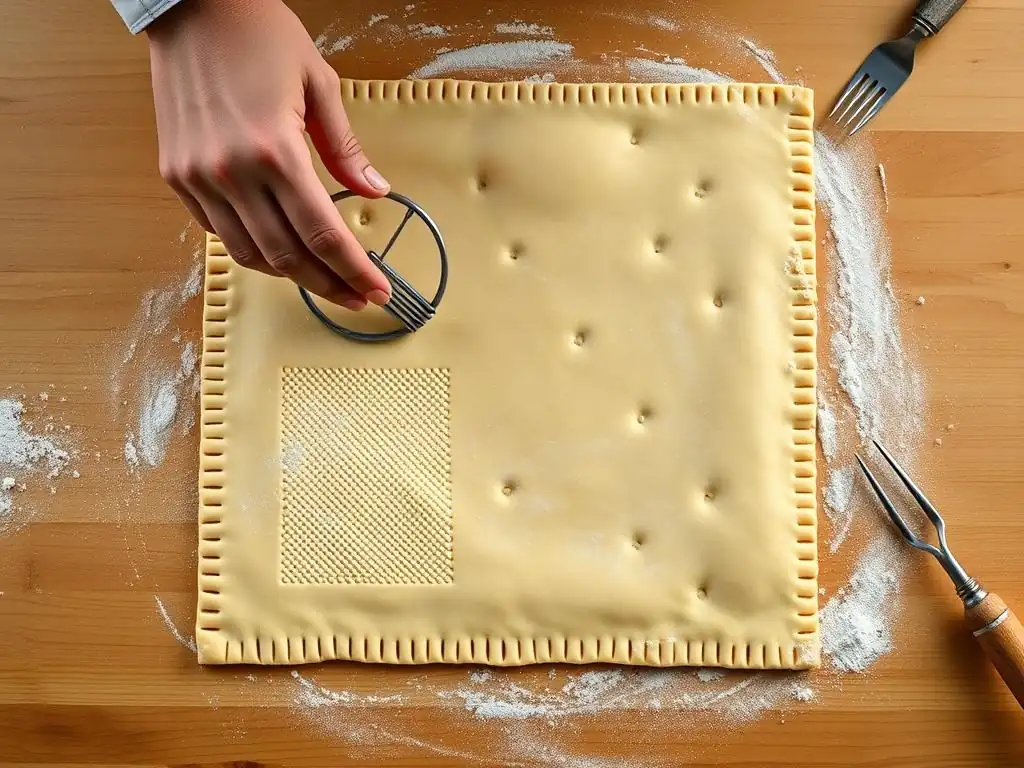
When preparing bases for tarts or quiches using puff pastry, significant docking is usually required. The aim here is to create a relatively flat, stable platform that can hold a filling without the center of the pastry rising excessively and pushing the filling out or creating an uneven surface. The edges are often left less docked or undocked to allow them to puff up slightly, creating a beautiful frame for the tart. For a standard 9-inch tart shell, you would typically dock the entire base surface thoroughly, leaving perhaps the outer 1/2 inch or 1 inch undocked.
The density of docking depends on the filling. For a heavy quiche filling, a well-docked base is crucial to prevent the pastry from lifting underneath the filling. For a fruit tart where a slight rise in the base might be acceptable, you might dock slightly less. A pastry docker is particularly useful here for quickly and evenly pricking the large surface area of a tart shell. Remember, you are learning how to prick puff pastry specifically for these applications to manage the steam and ensure a functional base.
Docking Puff Pastry for Vol-au-Vents and Palmiers
In contrast to tarts, applications like vol-au-vents or palmiers rely heavily on the pastry's ability to puff dramatically. Vol-au-vents are small hollow cases made from puff pastry, specifically designed to fill with savory or sweet mixtures. Palmiers (also known as elephant ears) are sweet, crispy pastries made by folding and rolling puff pastry, which then expands into a distinctive shape when baked. For these items, docking is either minimal or, more often, completely omitted.
For vol-au-vents, you cut out shapes, and the layers are encouraged to rise high to form the case. Docking the center disk that is removed from the top layer is common, but the main ring of pastry is left undocked to maximize puff. Palmiers require no docking at all; the layers must expand fully to create the characteristic flaky, caramelized structure. Understanding when and when not to prick your puff pastry is as important as knowing the technique itself.
Adjusting Docking Based on Recipe Requirements: Thickness and Filling Considerations
The optimal level of docking often depends on the specific recipe and the desired outcome, taking into account the thickness of the rolled-out dough and the nature of the filling. A thicker sheet of puff pastry, say 1/4 inch, will generate more steam than a thinner sheet rolled to 1/8 inch. Therefore, a thicker pastry base intended to stay relatively flat might require slightly more frequent or deeper pricking to manage the increased steam pressure.
Furthermore, the weight and moisture content of the filling play a role. A very wet or heavy filling, like a custard or a dense meat mixture for a savory pie, will put pressure on the pastry base and can exacerbate uneven puffing if not properly docked. In these cases, ensure the base is thoroughly and evenly pricked.
For lighter fillings or applications where some base puff is acceptable, like a simple fruit galette, you might dock less aggressively or only in specific areas. Always consult your specific recipe instructions, but knowing how to prick puff pastry can give you the flexibility to adapt the technique.
Puff Pastry Baking: What Happens After Docking?
The Importance of Oven Temperature After Docking
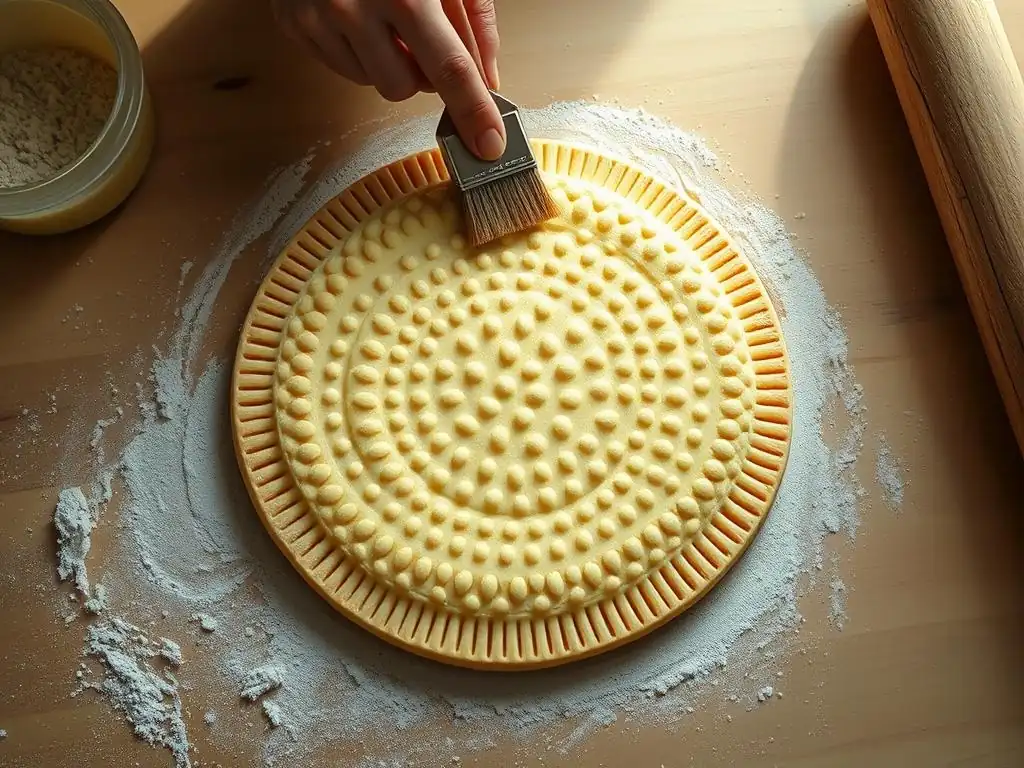
Once your puff pastry is expertly docked and ready, the oven temperature becomes the next critical factor in achieving a successful bake. Puff pastry relies on high heat to create steam quickly and lift the layers before the fat melts completely. A typical baking temperature for puff pastry is around 400°F to 425°F (200°C to 220°C). This intense initial heat is what transforms the solid butter within the dough into steam, causing rapid expansion.
Docking, as we've discussed, controls where this steam goes. Baking at the correct high temperature after docking ensures that the steam is generated efficiently and escapes through the intended holes, preventing large bubbles while still allowing the undocked edges (if any) to achieve lift. If the oven temperature is too low, the butter melts before sufficient steam is produced, resulting in a greasy, flat pastry with poor layer separation. Conversely, an oven that's too hot might brown the exterior too quickly before the interior layers are fully cooked and separated.
Monitoring Puff Pastry During Baking
Baking puff pastry after docking requires vigilant monitoring. The pastry can go from pale to perfectly golden, or even burnt, quite rapidly, often within 15-25 minutes depending on the size and thickness. Keep a close eye on the pastry as it bakes. You should observe it puffing up around the edges (if undocked) and the docked areas remaining relatively flat or rising only slightly.
Look for even browning across the surface. If one side is browning faster than the other, rotate the baking sheet halfway through the baking time. If the edges are browning too quickly while the center is still pale, you might gently shield the edges with foil strips, though this is less common with properly docked pastry designed to stay flat in the center. Monitoring ensures that the controlled puffing achieved by knowing how to prick puff pastry correctly is maintained throughout the baking process.
Achieving Golden Brown Perfection After Docking
The final stage of baking is achieving that desirable golden brown color and crisp texture. This browning is a result of the Maillard reaction and caramelization occurring on the surface of the dough as it's exposed to dry heat. A well-baked puff pastry should be deeply golden brown, indicating that it is fully cooked, crisp, and flavorful. Pale pastry is often underbaked and can be doughy.
Continue baking until the entire surface is evenly colored, including the docked areas. For items like tart shells, you might need to bake until the base, visible through the docking holes, also looks cooked and slightly golden. If the top is perfectly browned but the bottom seems underdone, you can sometimes carefully remove the pastry from its pan (if applicable) and place it directly on the oven rack for a few extra minutes, or finish it on the bottom rack. Proper docking contributes to even heat distribution, helping the entire piece of pastry reach golden brown perfection simultaneously.
Conclusion: Perfect Puff Pastry Through Proper Docking
Recap: Key Takeaways for Successful Puff Pastry Docking
Mastering the art of puff pastry involves understanding several key techniques, and knowing how to prick puff pastry correctly is undoubtedly one of the most fundamental. We've explored that docking is the strategic creation of small holes in the dough to allow steam to escape, preventing excessive and uneven puffing in areas where a flat base is desired, such as for tarts or quiches. This process is essential for achieving uniform thickness, even baking, and a stable foundation for fillings.
Remember the importance of using the right tools, from simple forks for small jobs to pastry dockers for larger sheets, and executing the technique with the correct depth and spacing – typically piercing halfway through the dough every 1/2 to 1 inch for flat bases. Avoiding common errors like under-docking (leading to domes) or over-docking (resulting in dense pastry) is crucial. By paying attention to these details and understanding the science of steam and layers, you significantly increase your chances of baking beautiful, flaky puff pastry every time.
Perfecting puff pastry is a journey with many rewarding steps. Now that you've mastered how to prick puff pastry for optimal results, there are many other techniques and recipes to explore on BakeWithEase.com. Understanding docking is just one piece of the puzzle; proper rolling, folding, and chilling are equally vital for achieving those coveted flaky layers.
We have a wealth of resources available to help you continue your baking education. Consider exploring articles on topics such as "The Science of Puff Pastry Layers," "Folding Techniques for Perfect Puff Pastry," or step-by-step guides for specific recipes like "Classic Apple Tart with Puff Pastry" or "Savory Puff Pastry Bites." Each article provides detailed instructions and tips to help you build your skills and confidence in handling this versatile and delicious dough. Keep practicing, keep exploring, and enjoy the wonderful world of baking with BakeWithEase.
Frequently Asked Questions
How important is it to prick puff pastry before baking?
Pricking, or "docking," puff pastry is absolutely crucial. It prevents the pastry from puffing up unevenly or forming large air pockets during baking. This ensures a flat, even surface perfect for fillings or toppings.
What tool is best to use for pricking puff pastry?
While a fork is the most common tool, a pastry docker is often preferred for larger sheets. Both effectively create holes, allowing steam to escape and preventing excessive puffing.
How deep should I prick the puff pastry?
The goal is to create holes that penetrate most of the layers but not all. Aim to prick through most of the dough thickness without completely piercing the bottom layer. This allows steam to escape without ruining the structure.
What happens if I don't prick my puff pastry enough?
Insufficient pricking can lead to uneven rising, resulting in bubbles or a domed pastry. This can make it difficult to add fillings or toppings evenly.
Can I prick puff pastry that's already been filled?
Generally, it's best to prick puff pastry before adding fillings. However, if you must, be very careful not to puncture the filling layer and cause it to leak.
Final Reflection: Mastering the Art of the Prick – Beyond the Puff
The seemingly simple act of pricking puff pastry holds the key to baking perfection, a detail often overlooked but crucial to achieving flawlessly risen, golden-brown pastries. Ignoring this seemingly minor step can lead to disastrous results – from soggy bottoms to explosive eruptions of butter in your oven. Mastering this technique isn't just about avoiding culinary catastrophes; it's about understanding the fundamental principles of pastry baking.
The impact of proper pastry technique extends far beyond the individual bake. It speaks to a broader appreciation for detail and precision in cooking, a respect for the ingredients and the process. The difference between something good and something great is attention to detail.
This quote, often attributed to various sources, perfectly encapsulates the essence of mastering puff pastry. The seemingly insignificant prick becomes a symbol of mindful cooking, a testament to the power of understanding the "why" behind the "how."
Now, consider your own baking journey. What other seemingly small details have you overlooked? What seemingly insignificant steps could elevate your culinary creations from good to truly exceptional? I encourage you to take this newfound knowledge and apply it not only to puff pastry, but to all your cooking endeavors. Embrace the details, appreciate the process, and discover the joy of mastering the art of the prick – and so much more.
Unlock Your Puff Pastry Potential!
Thanks for taking the time to explore the art of perfectly pricked puff pastry! We hope you gained valuable insights into achieving that coveted golden-brown, flaky masterpiece. Now it's time to put your new knowledge into practice.
- Master the Prick: Try the techniques discussed today on your next puff pastry creation. Note your results and see which method works best for your oven and pastry.
- Share Your Success (or Challenges!): We'd love to see your results – share a picture of your perfectly pricked puff pastry on social media using #BakeWithEasePrickPerfection.
- Dive Deeper into Puff Pastry: Explore our other articles on BakeWithEase.com for more tips and tricks on mastering this versatile dough.
Ready to transform your baking game? What’s your favorite puff pastry recipe, and how will you put these pricking techniques to the test?