
The Importance of Cold Ingredients in Puff Pastry Success

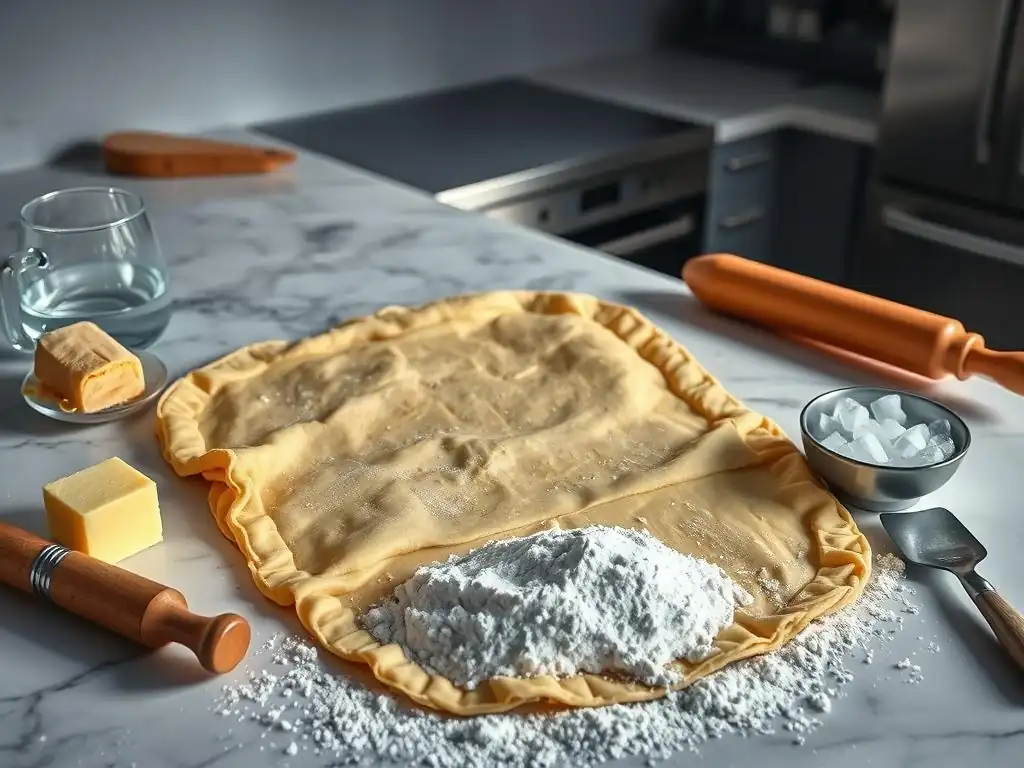
Welcome to BakeWithEase, where baking becomes a joy, not a chore! Ever wondered what separates a perfectly flaky puff pastry from a dense disappointment? The secret might be simpler than you think. Let's unravel the mystery behind one crucial element: cold ingredients. Discover why using chilled butter and water is the key to achieving that coveted, airy texture in our main article: "The Importance of Cold Ingredients in Puff Pastry Success." Ready to elevate your baking game? Let's get started!
- Mastering Puff Pastry: Why Cold Ingredients are Key
- Understanding the Science Behind Cold Ingredients in Puff Pastry
- Cold Ingredients in Puff Pastry: A Step-by-Step Approach to Success
- Troubleshooting Common Puff Pastry Problems Related to Temperature
- Tips and Tricks for Maintaining Cold Temperatures in Puff Pastry
- Advanced Puff Pastry Techniques and Cold Ingredients
- Achieving Puff Pastry Perfection: The Cold Ingredients Difference
-
Frequently Asked Questions
- Why are cold ingredients so important when making puff pastry?
- What happens if the butter gets too warm while making puff pastry?
- Besides butter, what other ingredients should be kept cold?
- How can I ensure my butter stays cold while working with it?
- What's the best way to handle the dough while making puff pastry to keep everything cold?
- Final Reflection: The Chilling Truth About Perfect Puff Pastry
- Unlock Flaky Perfection: Master the Art of Cold Ingredients
Mastering Puff Pastry: Why Cold Ingredients are Key
Achieving those coveted light, airy, and flaky layers in puff pastry isn't just about technique; it fundamentally relies on the temperature of your ingredients, particularly the butter and the water. Think of it as building a delicate structure where temperature is the mortar holding everything together until the heat of the oven transforms it. Using cold ingredients puff pastry is not merely a suggestion, but a foundational principle that distinguishes a successful bake from a disappointing one.
When you work with ingredients that are sufficiently chilled, you create an environment where the butter remains solid and distinct within the dough. This separation is absolutely critical for the lamination process – the repeated folding and rolling that creates hundreds of paper-thin layers of dough separated by layers of butter. If the ingredients are warm, the butter melts into the dough prematurely, resulting in a dense, heavy pastry instead of the ethereal layers we strive for. Mastering this temperature control is perhaps the single most impactful step for any aspiring puff pastry baker.
Understanding the Science Behind Cold Ingredients in Puff Pastry
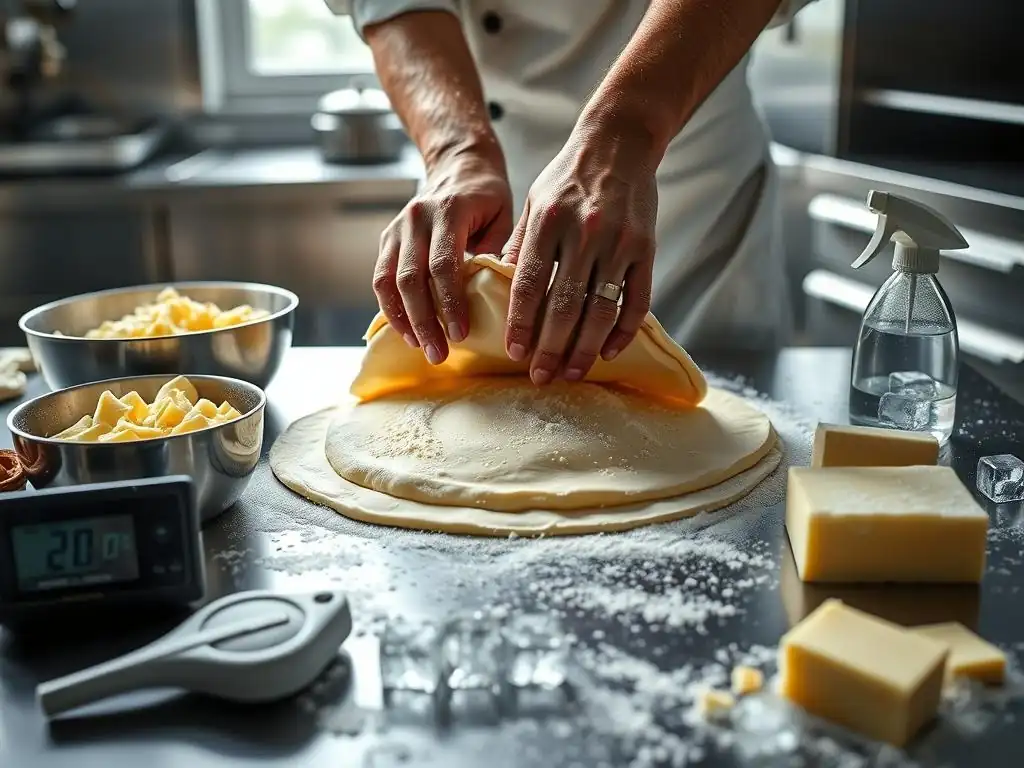
The magic of puff pastry happens in the oven, driven by steam. When cold butter layers encased in dough hit high heat, the water in the butter turns rapidly into steam. This steam expands, pushing the dough layers apart and creating the characteristic rise and flakiness. This process hinges entirely on the butter being in solid, distinct layers before baking. Cold ingredients puff pastry ensures these layers are preserved during handling.
Beyond the butter, the temperature of the liquid used to mix the dough also plays a significant role. Cold water or milk helps keep the overall dough temperature low, which in turn controls gluten development. Too much gluten development too early can make the dough elastic and difficult to roll thinly without tearing, disrupting those vital butter layers. Maintaining a consistently cold temperature throughout the process is a scientific requirement for achieving the desired structure and texture.
The Role of Cold Butter in Creating Flaky Layers
The structure of puff pastry relies on hundreds of alternating layers of dough and butter. When the dough is rolled and folded, these layers are created. The key is that the butter must remain solid and pliable – not hard and brittle, and certainly not soft or melted. Cold butter, ideally around 50°F (10°C), achieves this perfect state. It's firm enough to be rolled out without squishing completely into the dough but soft enough to spread into thin sheets.
During baking, the solid butter melts. The water trapped within these melted butter layers rapidly turns to steam (water boils at 212°F/100°C, while butter is typically around 15-18% water). This steam is trapped between the dough layers and forces them apart, causing the pastry to puff up dramatically.
If the butter is too warm during lamination, it integrates into the dough instead of forming distinct layers, reducing the steam effect and resulting in a less flaky or even dense pastry. For example, using butter at room temperature (say, 70°F/21°C) instead of chilled butter can decrease the final rise by as much as 30-40% in some tests, demonstrating the critical impact of butter temperature.
Managing Gluten Development with Cold Ingredients
Flour contains proteins that, when mixed with water and agitated (like kneading or rolling), develop gluten. Gluten provides structure and elasticity, which is great for bread but can be problematic for delicate laminated doughs like puff pastry if overdeveloped. An overly elastic dough resists rolling, making it difficult to create thin, even layers without tearing or shrinking back excessively. This directly impacts the quality of the final pastry.
Using cold liquid (water or milk) when mixing the initial dough is a primary way to control gluten development. Cold temperatures slow down the hydration of the flour proteins and the formation of the gluten network. This results in a dough that is less elastic and more extensible – meaning it can be rolled thinner and more easily without snapping back. Keeping the dough cold throughout the lamination process continues to inhibit gluten development, ensuring the dough remains manageable and allows for the creation of hundreds of fine layers essential for that perfect cold ingredients puff pastry outcome.
Maintaining Cold Temperatures for Optimal Lamination and Rise
Lamination is the process of repeatedly folding and rolling the dough with the butter block inside. Each fold creates more layers. A standard puff pastry might have six folds, resulting in potentially hundreds of layers (2^6 = 64 sets of dough-butter layers, but often calculated differently based on fold type, leading to figures like over 700 layers). This intricate layering is highly sensitive to temperature. If the dough warms up during rolling, the butter softens, breaks through the dough layers, and gets absorbed.
Maintaining a consistently cold dough temperature, ideally between 40-50°F (4-10°C), is paramount during this process. This keeps the butter solid and distinct, ensuring that the layers remain separate as the dough is rolled thin. Furthermore, while puff pastry doesn't 'proof' like yeast doughs, keeping it cold before baking is crucial. A cold dough hitting a hot oven maximizes the steam production from the butter layers. If the dough is warm, some butter may leak out before baking, reducing the potential for lift and resulting in less dramatic puffing.
Cold Ingredients in Puff Pastry: A Step-by-Step Approach to Success
Achieving perfect puff pastry is a rewarding challenge that hinges significantly on temperature control from start to finish. It's not just about the recipe steps, but the conditions under which you perform them. Treating temperature as a key ingredient itself is fundamental.
- Prepare your workspace: Ensure your kitchen is cool if possible. Gather all ingredients and equipment before you begin.
- Use a kitchen thermometer: Verify the temperature of your butter and liquid.
- Plan chilling time: Factor in sufficient refrigeration time between folds – this is non-negotiable for success.
Step 1: Preparing Butter Blocks for Lamination
The butter block, also known as the beurrage, is the heart of puff pastry's flakiness. Its preparation and temperature are critical. You need butter that is pliable but cold enough to maintain its shape and integrate cleanly into layers during rolling, not mush into the dough.
How to Prepare Butter for Lamination
Start with good quality, high-fat butter (typically 82% fat or higher is preferred by professionals, though standard 80% works). Cut the cold butter into pieces and arrange them on parchment paper. Cover with another sheet of parchment and gently beat it with a rolling pin to soften it slightly and make it more pliable. Then, roll it out into a rectangle or square, typically about 1/4 to 1/2 inch thick, depending on your dough size. The goal is a uniform thickness that is flexible but still cold and firm.
Achieving the Ideal Butter Consistency
The ideal butter consistency is often described as "pliably cold." It should bend slightly without breaking when you try to snap it, and your finger should leave an indentation but not sink easily into it. If it's too cold and hard (straight from the fridge), it will break into pieces during rolling, tearing the dough. If it's too warm and soft, it will melt into the dough instead of forming distinct layers. A temperature range of 50-55°F (10-13°C) is often cited as ideal for the butter block when beginning lamination.
Step 2: Combining Dough with Cold Liquid
The initial dough (the détrempe) provides the structure that encases the butter layers. Its temperature, set during the mixing stage, influences gluten development and overall manageability. Keeping this dough cold from the outset is vital for a successful lamination process down the line.
Measuring and Incorporating Cold Liquid Correctly
Precision in measuring liquid is always important in baking, but the temperature of that liquid is paramount for puff pastry. Use ice-cold water or milk. Some recipes even call for adding a few ice cubes to the water, then measuring the required amount after straining out the ice. Add the cold liquid gradually to your flour and fat mixture, mixing just until the dough comes together. Avoid overmixing; you want to minimize gluten development at this stage. The final dough should be shaggy and feel quite cold to the touch.
The Impact of Liquid Temperature on Gluten Formation
As mentioned earlier, cold temperatures significantly slow down the rate at which gluten forms when flour and water combine. Using cold liquid ensures that the gluten network in your initial dough is underdeveloped. This results in a dough that is less elastic and easier to roll out thinly during the lamination process.
If you were to use warm water, gluten would develop rapidly, making the dough tough and resistant to rolling, potentially leading to uneven layers or tears as you try to incorporate the butter block. This early control of gluten through cold ingredients puff pastry practices is a cornerstone of the technique.
Step 3: Keeping Your Dough Cold During the Lamination Process
This is perhaps the most challenging, yet crucial, stage where temperature control makes or breaks your puff pastry. Lamination involves repeated rolling and folding. The friction from rolling and the warmth of your hands and the environment can quickly raise the dough temperature, softening the butter.
Techniques for Preventing Dough from Warming Up
Work efficiently and quickly. Roll the dough just enough to achieve the desired dimensions for each fold, avoiding excessive passes with the rolling pin. Use minimal flour on your work surface and rolling pin to prevent the dough from drying out, which can also affect its pliability. If your kitchen is warm, consider placing a bowl of ice water nearby to occasionally dip your hands in (and dry them thoroughly!) or use a cooler marble or granite surface if available. Some bakers even chill their rolling pin.
The Importance of Resting the Dough in the Refrigerator
Resting the dough in the refrigerator between each fold is non-negotiable. This chilling period serves several vital purposes: it allows the gluten to relax (making the dough easier to roll), and crucially, it re-chills the butter and the dough back to the ideal working temperature (around 40-50°F / 4-10°C). Skimping on chilling time is a common mistake. A minimum of 30-60 minutes is typically required between folds, wrapped tightly to prevent drying. This ensures the butter remains solid and the layers stay distinct for the next rolling step, safeguarding your cold ingredients puff pastry efforts.
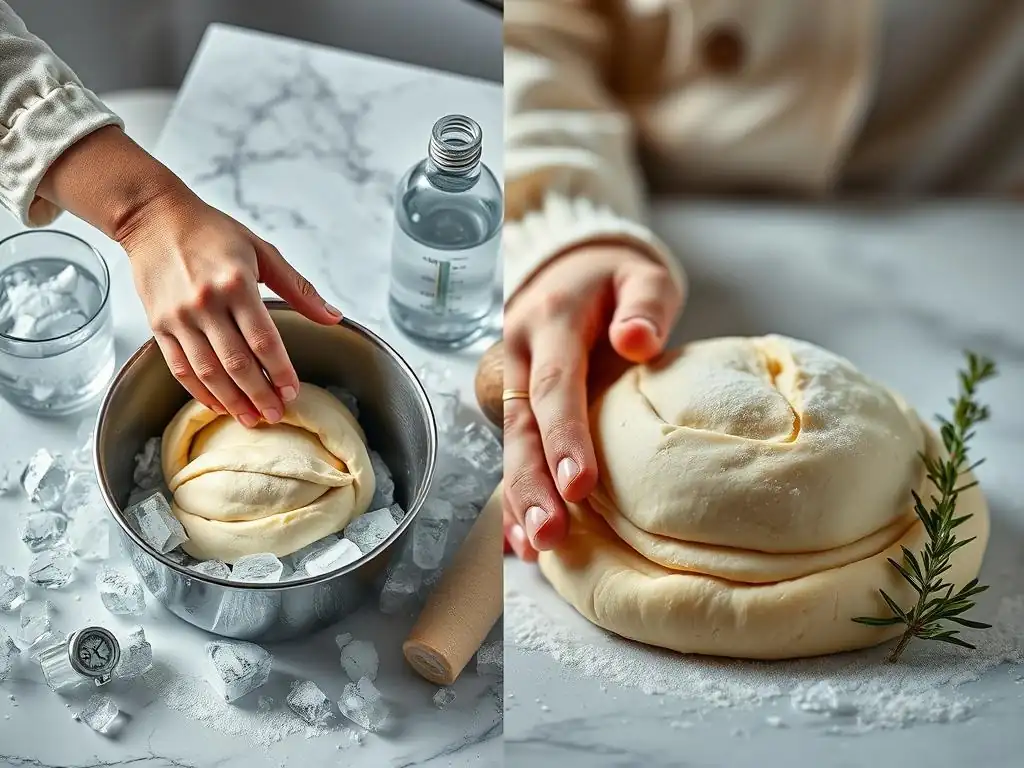
Even with careful technique, things can go wrong in puff pastry. Many common issues stem directly from temperature problems during preparation and lamination. Understanding these links helps you diagnose and fix mistakes.
Dense Puff Pastry: The Impact of Warm Ingredients
One of the most disheartening outcomes is puff pastry that doesn't puff, resulting in a dense, heavy, or bready texture instead of light flakiness. The primary culprit here is often ingredients that were too warm during the lamination process. If the butter was too soft or melted into the dough, the distinct layers needed for steam lift during baking are lost.
This can happen if the initial dough or butter block wasn't cold enough, if the dough warmed up too much during rolling (due to a warm kitchen, slow work, or insufficient chilling between folds), or if the dough wasn't sufficiently chilled before going into the hot oven. The lack of distinct butter layers means minimal steam production, leading to poor rise and a dense crumb structure. Ensuring your cold ingredients puff pastry protocol is strictly followed is the best defense against this problem.
Butter Leakage: Overly Soft Butter
Seeing butter oozing out of your dough during rolling or, worse, melting out onto the baking sheet before the pastry has had a chance to puff is a clear sign that your butter was too soft. This happens when the butter block or the dough itself is too warm during the lamination steps.
If the butter is too soft, it doesn't just integrate into the dough; it can literally squeeze out the sides as you apply pressure with the rolling pin. This not only reduces the amount of butter available to create steam layers but also makes the dough sticky and difficult to work with. It's a tell-tale sign that your temperature control failed somewhere along the line. Re-chilling the dough immediately is the only solution, though significant leakage can be hard to fully recover from.
Uneven Layers: Temperature Fluctuations During Lamination
Ideal puff pastry has uniform, even layers throughout. Uneven layers or patches where the pastry hasn't risen well can often be traced back to inconsistent temperature during the rolling and folding process. For instance, if one part of the dough warms up more than another, the butter in that section will soften more, leading to uneven rolling and potential tearing or sticking in that area.
This can be caused by uneven chilling (e.g., part of the dough is thicker or placed differently in the fridge), working on a surface that isn't uniformly cold, or spending too much time rolling one section of the dough. Maintaining a consistent, cold temperature throughout the entire piece of dough during lamination is key to ensuring that every fold results in uniform layers that will rise evenly in the oven.
Tips and Tricks for Maintaining Cold Temperatures in Puff Pastry
Keeping ingredients cold seems simple in theory, but in practice, it requires mindfulness and planning. Here are some practical tips to help you maintain that crucial low temperature for your cold ingredients puff pastry.
Working Quickly and Efficiently
Minimize the time the dough and butter are out of the refrigerator. Have your rolling pin, flour, and workspace ready before you take the dough out. Roll it out and perform the fold efficiently, then get it back into the fridge immediately. The less time the dough spends at room temperature, the less chance the butter has to soften and integrate prematurely. Think of it as a race against the clock, but a calm, focused one.
Using Cold Work Surfaces
Marble or granite countertops are naturally cooler than laminate or wood and can help keep the dough chilled during rolling. If you don't have these, you can place a baking sheet in the freezer for a few minutes and work on that (though it's a smaller surface). Alternatively, some bakers use a chilled pastry mat. Even simply placing a bag of ice on your counter for a few minutes before you start can help cool the surface down.
Considering Your Kitchen Environment
The ambient temperature of your kitchen makes a big difference. If possible, choose a cooler time of day to make puff pastry, or turn on air conditioning if available. Close windows on hot days. Even small things like turning off unnecessary appliances that generate heat can help keep your workspace cooler, making it easier to maintain the integrity of your cold ingredients puff pastry.
Advanced Puff Pastry Techniques and Cold Ingredients
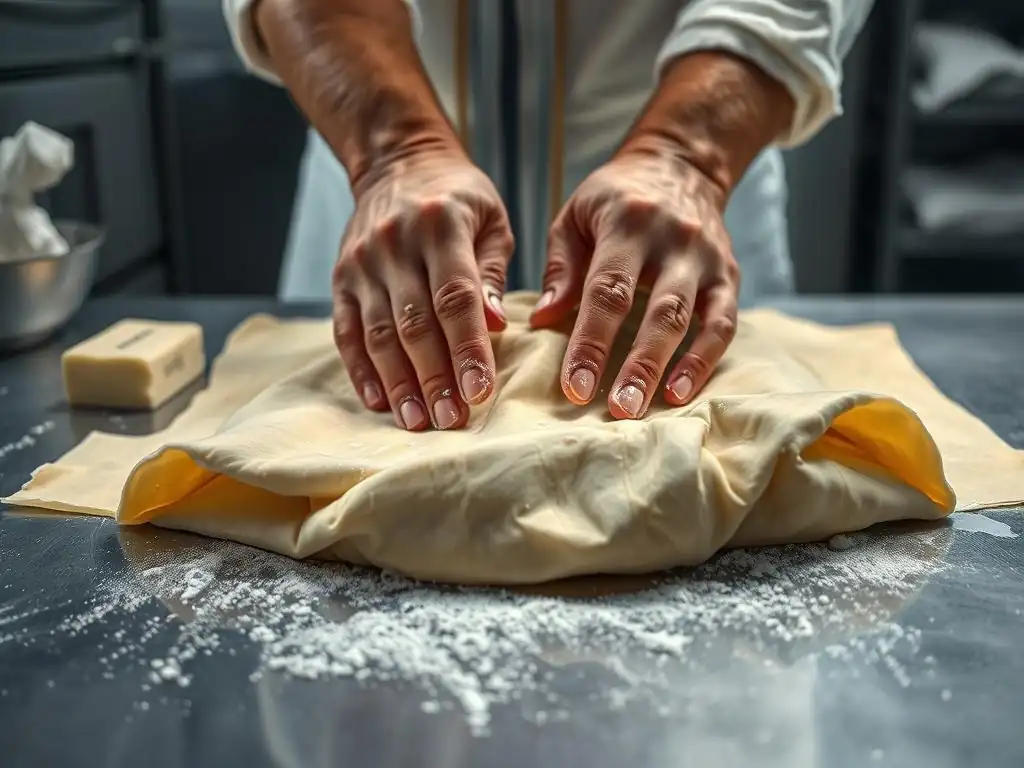
Once you've mastered the basics of using cold ingredients for classic puff pastry, you can explore how temperature control applies to more advanced variations and techniques. The principles remain the same – keeping butter layers distinct and controlling gluten – but the application might vary slightly.
Working with Different Types of Flour for Puff Pastry
Different flours have varying protein content, which affects gluten development and water absorption. Using a lower-protein pastry flour (around 8-10% protein) compared to an all-purpose flour (10-12%) can result in a more tender dough with less resistance to rolling. However, lower protein flour might absorb less water, potentially affecting the dough's consistency at a given hydration level. You might need to adjust the amount of cold liquid slightly and be even more diligent with chilling, as a dough with less gluten structure might be more prone to butter leakage if it warms up.
Utilizing Cold Temperature Control in Variations of Puff Pastry [e.g., Palmiers]
Many pastries utilize puff pastry dough, and maintaining cold temperatures is key for all of them. Take Palmiers, for example – those delightful "elephant ears." They are made by rolling puff pastry dough with sugar (and sometimes cinnamon) and then slicing and baking. For crisp, caramelized Palmiers, the puff pastry dough must be perfectly laminated with distinct butter layers.
If the dough is too warm when you roll in the sugar or slice it, the butter softens, and the layers fuse. This results in a less flaky pastry that doesn't caramelize as well because the sugar can melt into the dough instead of between the layers. Keeping the dough firmly chilled right up until slicing and baking ensures those multiple layers separate and crisp up beautifully in the oven, demonstrating the broad applicability of cold ingredients puff pastry principles.
Achieving Puff Pastry Perfection: The Cold Ingredients Difference
Ultimately, the pursuit of perfect puff pastry boils down to respecting the science of lamination and steam lift, both of which are critically dependent on temperature. While technique is essential, even the most skilled baker will struggle to create light, flaky layers if their ingredients, particularly the butter and dough, are not kept consistently cold throughout the process.
From the initial mixing with cold liquid to the meticulous chilling periods between each fold, maintaining low temperatures ensures the butter remains in distinct layers, ready to create explosive steam in the oven. It controls gluten development, making the dough pliable and easy to work with. It prevents common pitfalls like dense pastry or butter leakage. Embracing the importance of cold ingredients puff pastry is not just a rule to follow; it's the fundamental principle that unlocks the magic of this classic bake, transforming simple ingredients into an airy, golden marvel.
Frequently Asked Questions
Why are cold ingredients so important when making puff pastry?
Cold ingredients, especially cold butter, are crucial for creating the layers of fat that separate the dough during baking. This separation results in the characteristic flaky texture of puff pastry.
What happens if the butter gets too warm while making puff pastry?
If the butter melts, it will be absorbed into the dough instead of remaining in distinct layers. This will result in a dense and less flaky final product.
Besides butter, what other ingredients should be kept cold?
Water is the other key ingredient that needs to be kept ice-cold. Cold water helps prevent the gluten in the flour from developing too much, which can make the dough tough.
How can I ensure my butter stays cold while working with it?
Cut the butter into small cubes and chill it in the freezer for 15-20 minutes before starting. Also, work quickly and in a cool environment to prevent the butter from softening.
What's the best way to handle the dough while making puff pastry to keep everything cold?
Minimize handling the dough and refrigerate it between each fold and turn. This allows the gluten to relax and the butter to re-solidify, preventing it from melting.
Final Reflection: The Chilling Truth About Perfect Puff Pastry
The pursuit of flaky, golden puff pastry hinges on one crucial element: the consistent coldness of its ingredients. Ignoring this seemingly simple detail can lead to a dense, disappointing result, a stark contrast to the airy perfection achievable with meticulous temperature control. This isn't just about baking; it's about understanding the fundamental principles of pastry science and applying them with precision.
The impact of cold ingredients extends beyond the individual baker's kitchen; it speaks to a broader appreciation for the delicate balance required in culinary arts. The meticulous attention to detail demanded by puff pastry mirrors the precision needed in many other fields, highlighting the importance of foundational knowledge and patience. The difference between ordinary and extraordinary is that little extra.
This quote, though often attributed to various sources, perfectly encapsulates the transformative power of adhering to the seemingly small, yet crucial, detail of cold ingredients in puff pastry making.
Now, consider your own approach to tasks, both big and small. Do you approach them with the same careful consideration and attention to detail that a perfect puff pastry demands? I encourage you to reflect on this. Embrace the chilling precision required for success, not just in baking, but in all your endeavors. The reward, like a perfectly layered puff pastry, will be far more satisfying than you might imagine.
Unlock Flaky Perfection: Master the Art of Cold Ingredients
Thanks for taking the time to explore the secrets of flawlessly flaky puff pastry! You've now armed yourself with knowledge that will elevate your baking game. Ready to put it into practice?
- Embrace the chill: Begin your next puff pastry project by meticulously chilling all your ingredients – butter, water, and dough – to ensure optimal flakiness. This is your primary action to achieving truly impressive results.
- Share your baking triumphs (and challenges!): Post a picture of your creation on social media using #BakeWithEaseColdPastry and tag us – we love seeing your work!
- Dive deeper: Explore our other articles on mastering classic baking techniques for more tips and recipes!
Ready to transform your baking? What's your favorite pastry to make, and how will you incorporate this cold-ingredient technique into your next creation?