
Kouign Amann Made Easier: A StepbyStep Intermediate Recipe

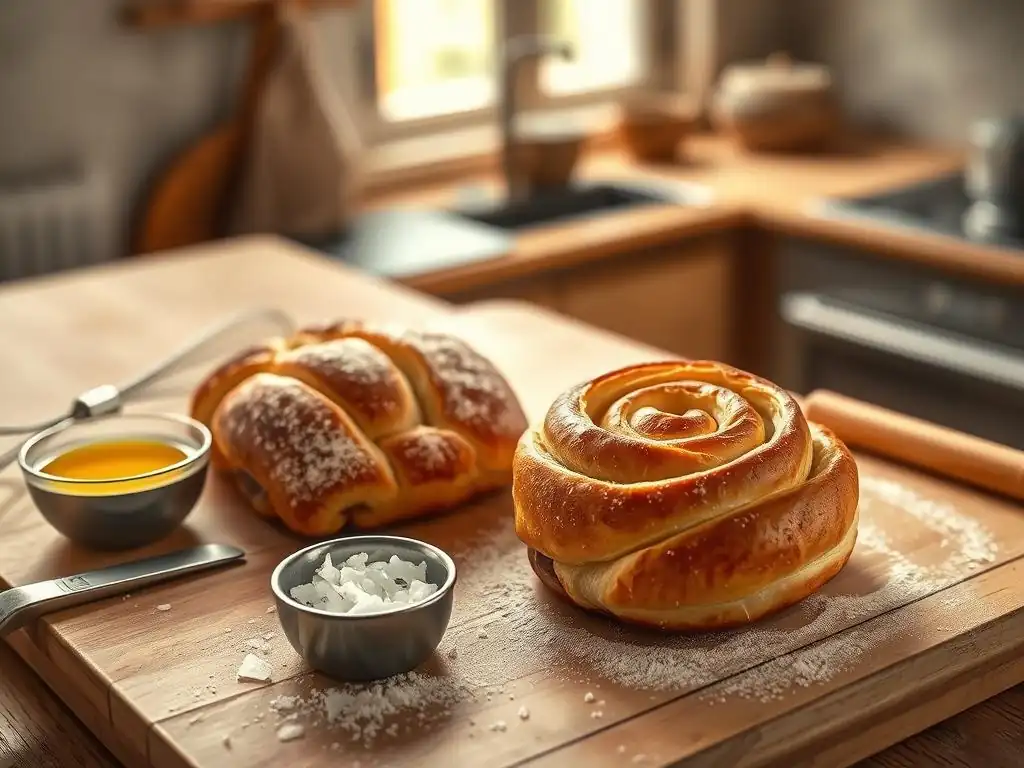
Welcome to BakeWithEase, your haven for all things baking! Intrigued by the flaky, buttery layers of a Kouign Amann but intimidated by the perceived difficulty? You're in the right place. This isn't just another recipe; it's your gateway to mastering this Breton pastry. Discover our Kouign Amann beginner recipe and unlock the secrets to creating bakery-worthy treats in your own kitchen. Ready to embark on this delicious adventure? Let's get baking!
- Kouign Amann: An Intermediate Recipe for the Home Baker
- Introduction to Kouign Amann
- Ingredients and Equipment
- Step-by-Step Guide
- Tips and Tricks for Success
- Storing and Reheating
- Expanding Your Viennoiserie Skills
- Frequently Asked Questions
- Final Reflection: The Sweet Symphony of Simplicity
- Unlock Your Inner Pastry Chef: Master the Kouign Amann Today!
Kouign Amann: An Intermediate Recipe for the Home Baker
Introduction to Kouign Amann
Understanding Kouign Amann: A Buttery Breton Cake
Kouign Amann, pronounced "queen a-mon," originates from the Brittany region of France and translates literally to "butter cake." It's a pastry known for its rich, buttery flavor, caramelized sugar crust, and layers of flaky dough. Unlike a typical cake, Kouign Amann is a type of laminated dough, similar in technique to croissants, but with sugar incorporated into the layers and often baked in individual molds, resulting in a sticky, sweet bottom and a crisp, shattering top. The high ratio of butter and sugar is key to its unique texture and taste.
Historically, Kouign Amann was said to have been created by accident in the 1860s by a baker in Douarnenez, Brittany, who was short on time and folded butter and sugar into his bread dough. While the exact origins are debated, the combination proved incredibly popular. Traditional recipes use a bread dough base, which provides structure, layered with significant amounts of butter and sugar. This lamination process, combined with the sugar melting and caramelizing during baking, creates the distinct pockets of sticky sweetness and the characteristic crispness that defines this delightful pastry.
Streamlined Approach for Home Baking
Making Kouign Amann at home might seem daunting due to the lamination process, but this recipe offers a streamlined approach, making it more accessible for intermediate bakers. We'll simplify some steps while still ensuring you achieve that signature buttery, caramelized result. This isn't quite a Kouign Amann beginner recipe, as it still requires some comfort with dough handling and lamination, but it breaks down the process into manageable stages.
Our streamlined method focuses on techniques that reduce the complexity often found in professional recipes, such as fewer folds than a traditional croissant dough and specific chilling times tailored for home refrigerators. For instance, instead of the multiple double or single turns, we'll utilize a specific sequence of folds designed to build sufficient layers for flakiness without overworking the dough or making the process overly long. The goal is to empower home bakers to create delicious Kouign Amann without needing specialized equipment or years of experience, bridging the gap towards mastering Viennoiserie.
Ingredients and Equipment
Dough Ingredients: Flour, Yeast, Water, and Salt
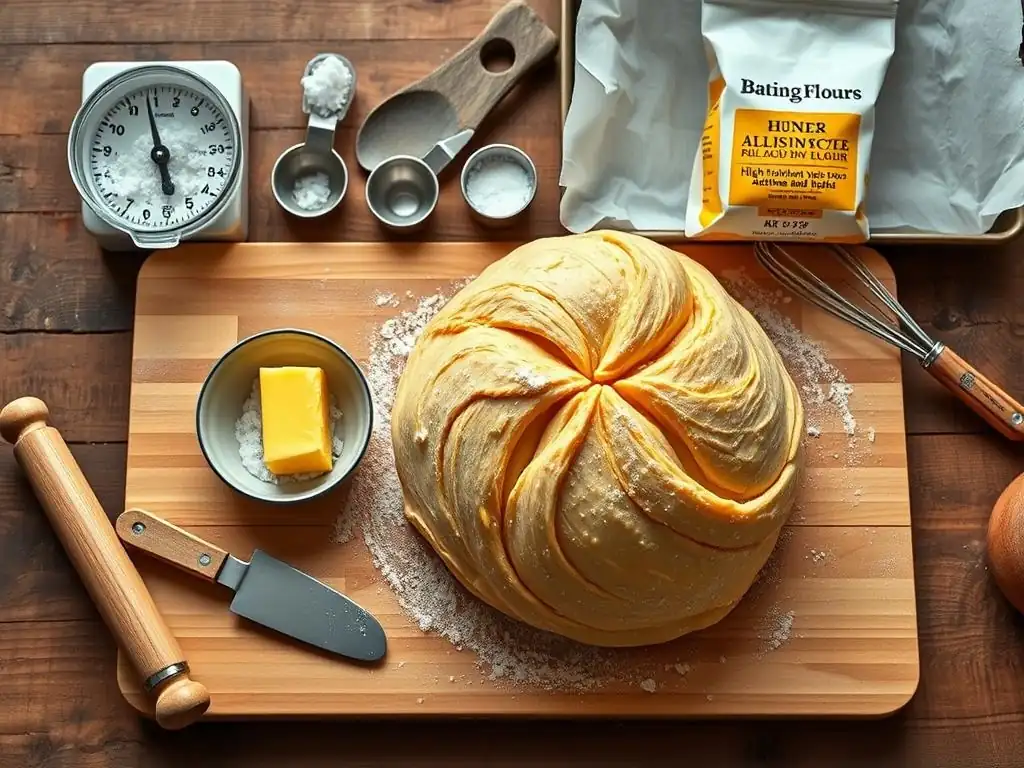
The base dough for Kouign Amann is relatively simple, typically consisting of strong bread flour, yeast (either active dry or instant), water, and salt. Bread flour is preferred because its higher protein content (around 12-14%) helps develop strong gluten networks, providing the structure needed to support the layers of butter and sugar during lamination and baking. The hydration level (ratio of water to flour) is usually around 55-65%, creating a dough that is firm enough to handle but still pliable.
Yeast acts as the leavening agent, producing carbon dioxide that creates air pockets in the dough, contributing to the pastry's texture. Salt is crucial not only for flavor but also for controlling yeast activity and strengthening the gluten structure. Using filtered water can be beneficial, as chlorine in tap water can sometimes negatively affect yeast performance. The quality of these basic ingredients significantly impacts the final texture and flavor of your Kouign Amann.
Butter Block Ingredients: High-Fat European-Style Butter
The heart of Kouign Amann's richness and flakiness lies in the butter block. It is absolutely essential to use a high-quality, high-fat European-style butter for this recipe. These butters typically have a fat content of 82% or higher, compared to standard American butter which is usually around 80%. The higher fat content means less water, which is critical for creating distinct, clean layers during lamination. Butter with too much water can integrate into the dough rather than staying separate, resulting in a bready rather than flaky texture.
The butter should be cold but pliable – not rock hard, but firm enough to roll without breaking. Achieving the correct temperature and consistency of the butter block, often around 40°F (4°C), is paramount for successful lamination. Some bakers even lightly flour the butter block itself before encasing it in the dough to help prevent sticking and ensure smoother rolling. The significant amount of butter used, often a ratio of 1:1 or even more butter to flour by weight in the final laminated dough, is what gives Kouign Amann its characteristic decadence.
Equipment Checklist: Stand Mixer, Rolling Pin, and Baking Sheet
Having the right tools makes the Kouign Amann process much smoother. A stand mixer with a dough hook attachment is highly recommended for the initial dough mixing, as it ensures proper gluten development without extensive manual kneading. While possible by hand, a mixer provides consistent results and saves time and effort. For instance, mixing dough in a stand mixer for 8-10 minutes on medium speed often achieves the same gluten development as 15-20 minutes of vigorous hand kneading.
A sturdy rolling pin is indispensable for rolling out both the dough and the butter block evenly and thinly. A standard wooden or marble rolling pin works well. You will also need a large baking sheet, preferably lined with parchment paper or a silicone baking mat, to bake the pastries.
Individual muffin tins are traditionally used for shaping and baking Kouign Amann; using these helps the pastries hold their shape and encourages the sugar to caramelize and pool underneath. Other helpful items include plastic wrap for chilling, a sharp knife or pizza cutter for portioning, and a pastry brush for applying egg wash (optional but recommended for color).
Step-by-Step Guide
Step 1: Dough Preparation
Combining Ingredients and Initial Mixing
Begin by combining the dry ingredients – bread flour, yeast, and salt – in the bowl of your stand mixer. If using active dry yeast, you may need to proof it first in a small amount of the warm water (around 105-115°F or 40-46°C) with a pinch of sugar for 5-10 minutes until foamy. If using instant yeast, you can typically add it directly to the dry ingredients. Add the water to the dry ingredients and mix on low speed with the dough hook until a shaggy dough forms.
Increase the speed to medium and continue mixing for 8-12 minutes, or until the dough is smooth, elastic, and pulls away from the sides of the bowl. The dough should pass the windowpane test – you should be able to stretch a small piece thinly enough to see light through it without it tearing. Aim for a final dough temperature between 75-78°F (24-26°C) for optimal initial fermentation. Avoid overmixing, which can make the dough tough.
First Rise: Bulk Fermentation
Once mixed, shape the dough into a ball and place it in a lightly oiled bowl. Cover the bowl tightly with plastic wrap or a damp cloth to prevent a skin from forming. Allow the dough to undergo its first rise, known as bulk fermentation, in a warm place (around 75°F or 24°C) for about 1 to 1.5 hours, or until it has nearly doubled in size. This initial fermentation develops flavor and makes the dough more extensible for rolling.
After the bulk fermentation, gently deflate the dough and shape it into a rough rectangle. Wrap the rectangle tightly in plastic wrap and place it in the refrigerator for at least 2-3 hours, or preferably overnight. Chilling the dough is crucial; it slows down yeast activity, develops more complex flavors, and, most importantly, firms up the dough to match the consistency of the chilled butter block, which is essential for successful lamination in the subsequent steps of this Kouign Amann beginner recipe adaptation.
Step 2: Butter Block Creation
Shaping and Preparing the Butter
Take your cold, high-fat butter (ensure it's around 82%+ fat) and place it between two sheets of parchment paper. Using a rolling pin, gently but firmly pound the butter to soften it slightly and make it pliable. Roll the butter into a rectangle, aiming for a thickness of about 1/4 to 1/2 inch (0.6 to 1.2 cm). The exact dimensions will depend on the size of your dough rectangle, but a common target is around 6x8 inches (15x20 cm) for a typical batch made with 2-3 cups of flour.
Ensure the corners are relatively square and the thickness is uniform across the entire block. This uniformity is key; uneven butter will lead to uneven layers and potentially cause butter to leak during rolling. If the butter becomes too soft during this process, pop it back into the refrigerator for a few minutes to firm up. Precision here sets the stage for clean lamination.
Chilling for Optimal Lamination
Once shaped, keep the butter block wrapped in parchment paper. Place it in the refrigerator to chill thoroughly for at least 30-60 minutes, or until it is firm but still slightly pliable. The ideal temperature for the butter block is around 40°F (4°C). It should be firm enough that it doesn't ooze when rolled, but not so hard that it cracks when you try to fold the dough around it.
Having the butter and the dough at similar temperatures and consistencies is paramount for successful lamination. If the dough is too cold and the butter too warm, the butter will melt into the dough. If the butter is too hard and the dough too soft, the butter will break into pieces within the dough. Proper chilling ensures the butter remains a distinct layer throughout the rolling and folding process, which is essential for creating those flaky layers in your homemade Kouign Amann.
Step 3: Lamination Process
First Single Fold: Encasing the Butter
Take your chilled dough rectangle from the refrigerator. On a lightly floured surface, roll the dough into a rectangle roughly twice the size of your butter block, about 12x8 inches (30x20 cm) if your butter is 6x8 inches. The dough should be about 1/4 inch (0.6 cm) thick. Place the chilled butter block on one half of the dough rectangle, leaving a small border around the edges.
Fold the other half of the dough over the butter block, carefully aligning the edges and pinching them together to completely seal the butter inside. Ensure there are no gaps or air pockets trapped inside. This is the first step in creating layers, encasing the butter within the dough envelope. This technique is fundamental to all laminated pastries, including croissants and Pain au Chocolat, and is the core of creating a successful Kouign Amann beginner recipe adaptation.
Subsequent Folds: Developing Layers
Rotate the dough packet so the seam is facing you. Gently roll the dough out into a long rectangle, about 1/4 inch (0.6 cm) thick. Aim for a length approximately three times its width. Brush off any excess flour. Perform a single fold: fold one-third of the dough up from the bottom, then fold the top third down over it, like folding a letter into thirds. You now have three layers of dough and two layers of butter.
Wrap the folded dough tightly in plastic wrap and refrigerate for at least 30-60 minutes to allow the gluten to relax and the butter to firm up again. Repeat this roll, fold (single fold), and chill process two more times, for a total of three single folds. Each fold increases the number of layers exponentially (starting with 3 layers of dough/2 of butter after the first fold, then 9/8 after the second fold, and 27/26 after the third). This builds the structure for the incredible flakiness characteristic of Kouign Amann.
Final Rest: Relaxing the Dough
After the final single fold and rolling, wrap the dough securely in plastic wrap. Place it back in the refrigerator for a final rest of at least 1-2 hours, or even overnight. This extended chilling period is crucial for allowing the gluten structure to fully relax, making the dough much easier to roll out thinly without snapping or tearing in the next step. It also ensures the butter is firm enough to maintain distinct layers during shaping.
This final rest is particularly important before incorporating the sugar into the dough layers, as the sugar can make the dough more delicate. A well-rested dough will roll out more evenly, resulting in pastries with consistent layers and shape. Skipping or shortening this rest can lead to tough dough that resists rolling, potentially tearing and causing butter leakage during shaping and baking, compromising the final Kouign Amann texture.
Step 4: Shaping the Pastries
Cutting and Pre-Shaping
Remove the dough from the refrigerator. On a lightly floured surface, roll the dough into a large rectangle, about 1/8 inch (0.3 cm) thick. Brush off any excess flour. Now, generously sprinkle the entire surface of the dough with granulated sugar. The amount of sugar is significant – often 1/2 to 3/4 cup (100-150g) for a standard batch. Gently press the sugar into the dough with your rolling pin.
Cut the dough rectangle into squares, typically 4-5 inches (10-12 cm) per side. A pizza cutter provides clean cuts. For example, a 20x16 inch (50x40 cm) rectangle might yield 16 squares. The size of the squares determines the final size of your Kouign Amann. Work relatively quickly here, as the sugar can start to dissolve and make the dough sticky.
Final Shaping and Placement
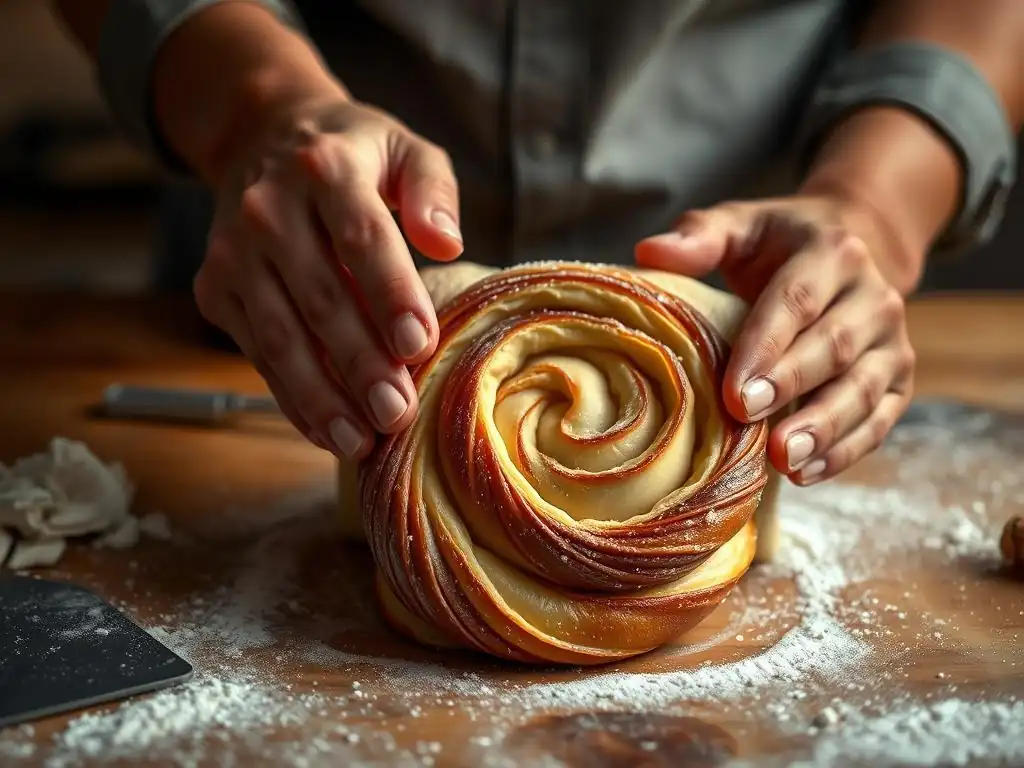
For the classic Kouign Amann shape, take one sugar-coated square and fold the four corners into the center, overlapping slightly. Then, fold the four resulting corners into the center again, creating a small, compact packet. Some recipes simply fold the corners into the center once. The key is to create a shape that encourages the sugar to pool and caramelize at the bottom while the layers puff up.
Place each shaped pastry, seam-side down, into greased muffin tins. Using muffin tins helps the pastries hold their shape and allows the melted sugar to collect and caramelize around the bottom edges, forming the signature sticky base. Leave some space between the pastries in the tin if possible, as they will expand. Allow the shaped pastries to rest at room temperature for 20-30 minutes while your oven preheats. They won't double in size like bread rolls, but this short rest allows the dough to relax slightly before baking.
Step 5: Baking Instructions
Temperature and Time for Caramelization
Preheat your oven to a relatively high temperature, typically between 375°F and 400°F (190°C and 200°C). The high heat is essential for rapid puffing of the layers and, crucially, for melting and caramelizing the sugar coating. Place the muffin tin containing the shaped Kouign Amann in the preheated oven.
Bake for 25-35 minutes. The exact time will vary depending on your oven and the size of your pastries. During the first 15-20 minutes, the pastries will puff significantly. The sugar will melt and bubble around the edges. The goal is to bake them until they are deeply golden brown on top and the sugar syrup around them is a rich amber color, indicating caramelization. Be vigilant during the last 5-10 minutes, as caramelization can happen quickly and burn easily.
Achieving the Signature Crispy Crust
The key to the signature crispy, caramelized crust of Kouign Amann is the interaction of the high heat, the sugar, and the butter. As the butter melts, it helps fry the dough layers from within, while the sugar melts and caramelizes into a hard candy-like shell around the base and edges. This process requires sufficient baking time at the correct temperature.
Look for visual cues: the tops should be a deep, rich brown, and the sugar bubbling around the edges should have turned from clear or light gold to a deep amber. If they are pale, they won't have the desired crispness or caramelized flavor. If you are unsure, gently lift one out of the tin (careful, the sugar is molten and extremely hot!) to check the bottom; it should be sticky and deeply caramelized. Baking until the internal temperature reaches around 200-210°F (93-99°C) also helps ensure the dough is fully cooked through.
Step 6: Cooling and Serving
Proper Cooling Techniques
Once baked, immediately remove the muffin tin from the oven. This is perhaps the most critical step for preventing the Kouign Amann from welding themselves permanently to the tin via the caramelized sugar. While still very hot, carefully remove each Kouign Amann from its muffin cup using a small offset spatula or knife to loosen the edges if necessary.
Place the hot pastries on a wire rack set over a baking sheet lined with parchment paper. The baking sheet will catch any residual dripping sugar. Allowing them to cool on a wire rack ensures air circulation around the entire pastry, helping the caramelized sugar to harden and become crisp as it cools. Do not let them cool in the muffin tin for too long, as the sugar will solidify and make removal difficult or impossible without damaging the pastry.
Serving Suggestions: Coffee or Tea
Kouign Amann is best enjoyed slightly warm or at room temperature. The warm temperature enhances the buttery aroma and keeps the caramelized base slightly yielding before it fully hardens upon cooling. Serve them as a decadent breakfast pastry, a luxurious afternoon treat, or a special dessert.
They pair beautifully with a hot beverage. A strong cup of coffee provides a nice contrast to the sweetness, while a classic black tea complements the buttery richness without overpowering it. Because of their richness, one Kouign Amann is often a satisfying portion. Enjoy the interplay of the flaky, buttery layers with the sweet, crispy, caramelized bottom.
Tips and Tricks for Success
Troubleshooting Common Issues
- Butter Leaking: This often happens if the butter block was too soft during lamination, the dough wasn't chilled enough between folds, or the dough tore during rolling. Ensure dough and butter are at similar, cold temperatures (around 40°F/4°C) and handle the dough gently. If a small tear occurs, patch it with a piece of dough before folding.
- Lack of Layers: Insufficient chilling between folds, butter being too soft and integrating into the dough, or not performing enough folds can result in a bready texture instead of flaky layers. Proper chilling and careful folding are key for this Kouign Amann beginner recipe adaptation.
- Sugar Burning: The sugar caramelizes quickly at high temperatures. If the tops are browning too fast but the sugar isn't caramelized, try reducing the oven temperature slightly or loosely tenting the pastries with foil for the last few minutes of baking. Conversely, if the sugar isn't caramelizing, the oven temperature might be too low or they need more time.
- Sticking to the Tin: Always grease your muffin tins well. Removing the pastries immediately after they come out of the oven while the sugar is still molten is crucial to prevent sticking. Work quickly and carefully!
Maximizing Caramelization and Flavor
To achieve that perfect deep caramelization and rich flavor, ensure you use enough sugar on the dough surface before shaping. Don't be shy! The sugar is what creates that sticky, crunchy base. Also, make sure your oven is accurately preheated and hot enough (375-400°F or 190-200°C). The heat helps the sugar reach the necessary temperature for caramelization.
Baking them until they are a deep golden brown on top, bordering on appearing slightly burnt in the sugar areas, is often necessary to get proper caramelization on the bottom. The Maillard reaction, responsible for browning and complex flavors, occurs in the dough layers, while the caramelization of the sugar creates the distinct sweetness and slight bitterness of the base. Using high-quality butter also contributes significantly to the overall richness and flavor profile of your homemade Kouign Amann.
Variations: Salted Caramel or Apple Filling
While the classic Kouign Amann is simple and perfect as is, you can experiment with variations. A popular twist is to add a pinch of flaky sea salt over the sugar just before shaping. This creates a delightful salted caramel effect as the sugar bakes, balancing the sweetness with a hint of saltiness.
Another delicious variation involves adding a small amount of fruit filling, such as finely diced apples mixed with cinnamon and a little sugar. Place a small spoonful of filling in the center of the dough square before performing the final folds. Be careful not to overfill, as this can cause the pastry to leak excessively during baking. These simple additions can offer a new dimension to your Kouign Amann beginner recipe explorations.
Storing and Reheating
Optimal Storage Methods
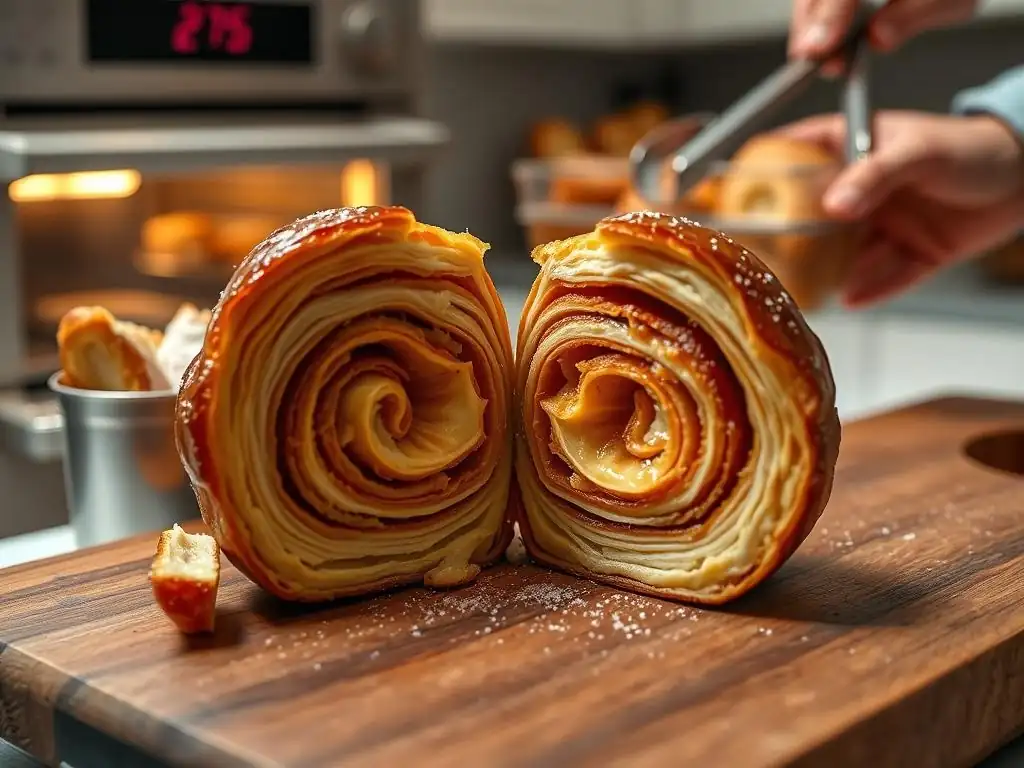
Kouign Amann is best enjoyed fresh on the day it is baked for maximum crispness. However, they can be stored. Once completely cooled, store them in an airtight container at room temperature for 1-2 days. Stacking them is fine once cooled, but be aware that the caramelized bottoms can be sticky.
To maintain the best texture, avoid refrigerating Kouign Amann, as this can make the dough and the caramelized sugar tough and chewy. If you need to store them for longer, they can be frozen. Place cooled pastries on a baking sheet and freeze until solid, then transfer to a freezer bag or airtight container for up to 1 month. Thaw at room temperature.
Reheating for Best Texture
To revive the crispness and warmth of leftover Kouign Amann, reheating is highly recommended. The best method is to use an oven or a toaster oven. Place the pastries on a baking sheet and reheat in a preheated oven at 350°F (175°C) for 5-10 minutes, or until warmed through and the caramelized base is slightly softened and sticky again.
Avoid using a microwave, as this will steam the pastry, making it soft and chewy rather than crispy. Reheating helps to re-melt the sugar and crisp up the layers, bringing them closer to their freshly baked state. This simple step makes enjoying leftover homemade Kouign Amann almost as good as eating them straight from the oven.
Expanding Your Viennoiserie Skills
Next Steps: Croissants or Pain au Chocolat
Mastering Kouign Amann is a fantastic step towards tackling other classic laminated pastries. The techniques you've practiced – dough preparation, butter block creation, and lamination (rolling and folding) – are directly transferable to making croissants and Pain au Chocolat. Croissants require similar lamination but use a slightly different dough formula and shaping method to achieve their iconic crescent shape and airy interior.
Pain au Chocolat, or chocolate croissants, build upon the basic croissant dough by adding chocolate batons before shaping. The lamination process for both is typically more rigorous than for Kouign Amann, often involving four or more folds, sometimes including a double fold. Successfully making Kouign Amann gives you a solid foundation and confidence to attempt these next-level Viennoiseries.
Resources for Further Learning
To continue your journey into the world of laminated doughs and Viennoiseries, explore resources like detailed baking books that focus on French patisserie techniques. Many online baking communities and reputable baking blogs offer in-depth guides, videos, and forums where you can ask questions and share your experiences.
Look for information specifically on dough hydration percentages, yeast activity control, butter plasticity, and the science behind lamination and caramelization. Practice is key; don't be discouraged by initial imperfections. Each batch you make, whether it's Kouign Amann or croissants, will teach you something new about dough behavior and temperature control, refining your skills with every attempt.
Frequently Asked Questions
What exactly is Kouign Amann?
Kouign Amann is a delicious pastry that originated in Brittany, France. It's known for its layers of buttery, flaky dough and caramelized sugar. Think of it as a caramelized croissant.
Is Kouign Amann difficult to make at home?
Traditionally, Kouign Amann can be quite challenging. However, this recipe from BakeWithEase aims to simplify the process, making it more approachable for intermediate bakers. The recipe provides step-by-step guidance to help you succeed.
What are the key ingredients needed for this Kouign Amann recipe?
The essential ingredients include high-quality butter, flour, sugar, water, and yeast. The quality of the butter is crucial for achieving the desired flaky texture and rich flavor.
What makes BakeWithEase's Kouign Amann recipe different from others?
This recipe focuses on simplified techniques and easy-to-find ingredients to make the process less intimidating. The guide provides clear instructions tailored for intermediate bakers, ensuring a successful outcome.
How can I ensure my Kouign Amann has a perfectly caramelized crust?
The key to a caramelized crust is using enough sugar and baking at the correct temperature. This recipe specifies a high baking temperature and generous sugar coating to achieve that signature caramelized flavor.
Final Reflection: The Sweet Symphony of Simplicity
Mastering the kouign amann, once a daunting pastry feat, is now within reach. This step-by-step guide demystifies the process, proving that even seemingly complex recipes can be broken down into manageable, achievable steps. The joy of baking, particularly with such a rewarding outcome, is accessible to everyone willing to try.
The kouign amann's journey from a Breton specialty to a global phenomenon speaks volumes about our collective desire for delicious, handcrafted treats. It's a testament to the power of simple ingredients transformed by skillful technique. The caramelized crust, the airy interior – these are not just textures, but experiences. They evoke memories, spark conversations, and create connections. The best things in life are simple.
This holds true for baking, and the kouign amann is a perfect example.
Now, it's your turn. Don't let the perceived complexity of this beautiful pastry intimidate you. Gather your ingredients, follow the steps, and embrace the process. The satisfaction of creating your own perfect kouign amann, the delight of sharing it with loved ones – these are rewards far sweeter than the pastry itself. So, roll up your sleeves, preheat your oven, and let the sweet symphony of simplicity begin.
Unlock Your Inner Pastry Chef: Master the Kouign Amann Today!
Thanks for taking the time to explore the world of Kouign Amann with us! We hope you gained confidence in tackling this seemingly complex pastry. Now, it's time to put your newfound skills to the test.
- Bake your own masterpiece! Use the recipe as a springboard—experiment with different sugars or add-ins to create your signature Kouign Amann. Don't be afraid to get creative!
- Share your creation! Post a picture of your baked delight on social media and tag us @BakeWithEase – we'd love to see your stunning results.
- Challenge a friend: Why not share this recipe with a fellow baking enthusiast and make it a collaborative baking project?
What unique twist will you add to your Kouign Amann to make it truly your own?