
The Science Behind the Puff: Understanding Lamination Layers

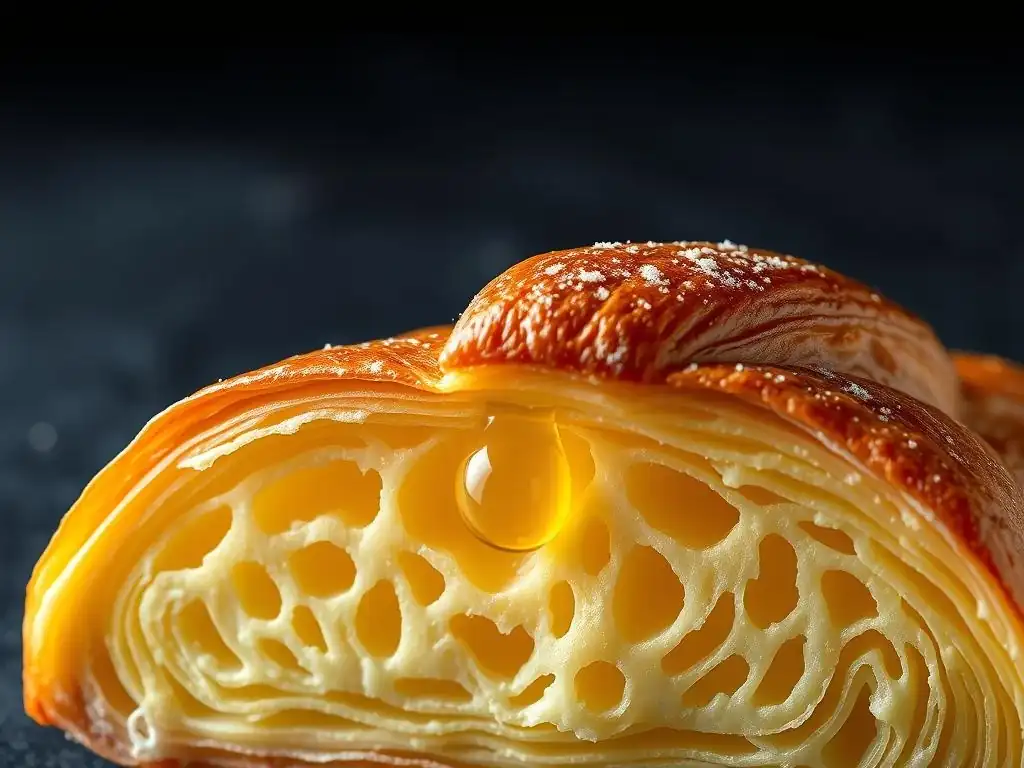
Welcome to BakeWithEase, your partner in creating delicious baked goods! Ever wondered what makes a croissant so flaky, or a puff pastry so light? We're diving deep into the fascinating world of lamination pastry dough layers, exploring the science behind those ethereal puffs and crisp textures. Get ready to unravel the secrets and elevate your baking game – are you ready to discover how to achieve perfect lamination every time?
- The Science Behind the Puff: Understanding Lamination Layers in Pastry Dough
- Introduction to Lamination in Pastry: Achieving the Perfect Puff
- The Key Ingredients for Successful Lamination Pastry Dough
- The Lamination Process: Step-by-Step Guide to Creating Layers
- The Science of Puffing: How Lamination Layers Create Flakiness
- Troubleshooting Lamination Issues: Common Problems and Solutions
- Advanced Lamination Techniques for Expert Bakers
- Mastering Lamination: Tips and Tricks
- Conclusion: Elevate Your Baking with Perfect Lamination
-
Frequently Asked Questions
- What exactly is lamination in pastry dough?
- Why is cold butter so important for successful lamination?
- How many folds are generally recommended for achieving good lamination?
- What role does resting the dough play in the lamination process?
- What are some common mistakes people make when laminating dough?
- Final Reflection: The Enduring Allure of the Perfect Layer
- Unleash Your Inner Pastry Chef: Master the Puff!
The Science Behind the Puff: Understanding Lamination Layers in Pastry Dough
Introduction to Lamination in Pastry: Achieving the Perfect Puff
What is Lamination and Why is it Crucial for Puff Pastry?
Lamination is a fundamental technique in pastry making that involves repeatedly folding and rolling a dough with a layer of fat sandwiched between the dough layers. This process creates alternating layers of dough and fat, which are essential for achieving the characteristic flaky, airy texture of pastries like puff pastry, croissants, and danishes. Without proper lamination, the dough would bake into a dense, bread-like consistency rather than expanding into hundreds of delicate layers.
The success of pastries like classic puff pastry relies entirely on the precise arrangement of these lamination pastry dough layers. During baking, the fat melts, and the water in the dough turns to steam. This steam is trapped between the individual dough layers by the surrounding fat, forcing the layers apart and causing the pastry to rise dramatically. A well-laminated dough can expand significantly, sometimes reaching 8 times its original height, resulting in a light, crisp texture that is the hallmark of a truly great puff pastry.
The Importance of Layering in Baking: Beyond Just Aesthetics
While the visual appeal of countless flaky layers is undeniable, the importance of lamination extends far beyond aesthetics. Each layer of dough and fat contributes to the final texture and mouthfeel of the baked good. The fat prevents the dough layers from sticking together during baking, allowing the steam to work effectively as a leavening agent. This separation creates distinct, crisp layers that shatter when bitten into.
Consider the difference between a simple shortcrust pastry and a puff pastry. A shortcrust has fat cut into the flour, creating a tender but more uniform texture. Lamination, however, physically separates the dough into thin sheets, ensuring that as the fat melts, it lubricates these sheets, allowing them to slide and expand independently. This results in a light, airy interior structure and a crisp, flaky exterior, which is the desired outcome for puff pastry and other laminated doughs. The structure of the lamination pastry dough layers directly dictates the final product's delicate crumb and impressive rise.
The Key Ingredients for Successful Lamination Pastry Dough
The Role of Flour in Creating Strong Dough Layers
The type of flour used is critical when creating lamination pastry dough layers. A medium-protein flour, typically all-purpose flour with a protein content between 10% and 12%, is often recommended. This protein develops into gluten when hydrated and kneaded. A strong gluten network is necessary to provide structure and elasticity to the dough layers, allowing them to stretch thinly without tearing during the rolling and folding process.
If the flour has too low a protein content (like cake flour, around 7-9%), the dough might be too weak to hold its structure during lamination and baking, leading to less defined layers and minimal puff. Conversely, using a high-protein bread flour (13-14%) can make the dough too elastic and difficult to roll thinly, resulting in tough pastry. The goal is a balance: enough gluten for structure, but not so much that the dough fights against being rolled into thin sheets required for successful lamination pastry dough layers.
Understanding the Importance of Fat: Butter vs. Shortening in Lamination
The fat component is arguably the most critical element in achieving distinct lamination pastry dough layers. It serves as the barrier between dough sheets and contributes significantly to the flavor and texture. The choice between butter and shortening (or a blend) impacts the handling characteristics of the dough and the final baked result.
-
Butter: Flavor and Flakiness in Laminated Dough
Butter, particularly unsalted butter with a high fat content (around 80-82%), is the traditional choice for lamination. Its relatively low melting point (around 90-95°F or 32-35°C) is key. During baking, butter melts and releases steam from its water content (typically 16-18%), further aiding in layer separation and puff.
The melting butter also coats the gluten structure, contributing to tenderness and the desirable flaky texture. Beyond texture, butter imparts a rich, incomparable flavor and golden color to the pastry. However, butter's lower melting point makes the dough more challenging to work with in warm environments, requiring careful temperature control to prevent the butter from melting into the dough prematurely.
-
Shortening: Stability and Texture for Puff Pastry
Shortening, such as vegetable shortening, has a higher melting point than butter (often above 115°F or 46°C) and contains little to no water. This higher melting point makes the lamination process more forgiving, especially for beginners or in warmer kitchens, as the fat is less likely to melt into the dough during rolling and folding. Shortening can produce a very high puff and a crisp, almost crumbly flakiness.
However, it lacks the rich flavor and color that butter provides. Some recipes use a blend of butter and shortening to combine the flavor benefits of butter with the handling ease and stability of shortening for creating robust lamination pastry dough layers.
Water's Impact on Gluten Development and Dough Consistency
Water (or milk) is essential in lamination pastry dough for hydrating the flour and enabling gluten development. The amount of water used affects the dough's consistency – too little water results in a dry, stiff dough that is difficult to roll and prone to cracking, while too much water makes the dough sticky and hard to handle, potentially leading to the fat bleeding into the dough layers. The water content also directly influences the amount of steam generated during baking, which is the primary leavening force in puff pastry.
The temperature of the water is also important. Using cold water helps keep the overall dough temperature low, which is crucial for maintaining the solidity of the fat block during lamination. As the flour absorbs the cold water, the gluten proteins begin to form a network. The goal is to develop just enough gluten for structure and elasticity without making the dough overly tough or resistant to rolling, ensuring the delicate lamination pastry dough layers can form correctly.
The Lamination Process: Step-by-Step Guide to Creating Layers
Preparing the Détrempe: The Foundation of Your Laminated Dough
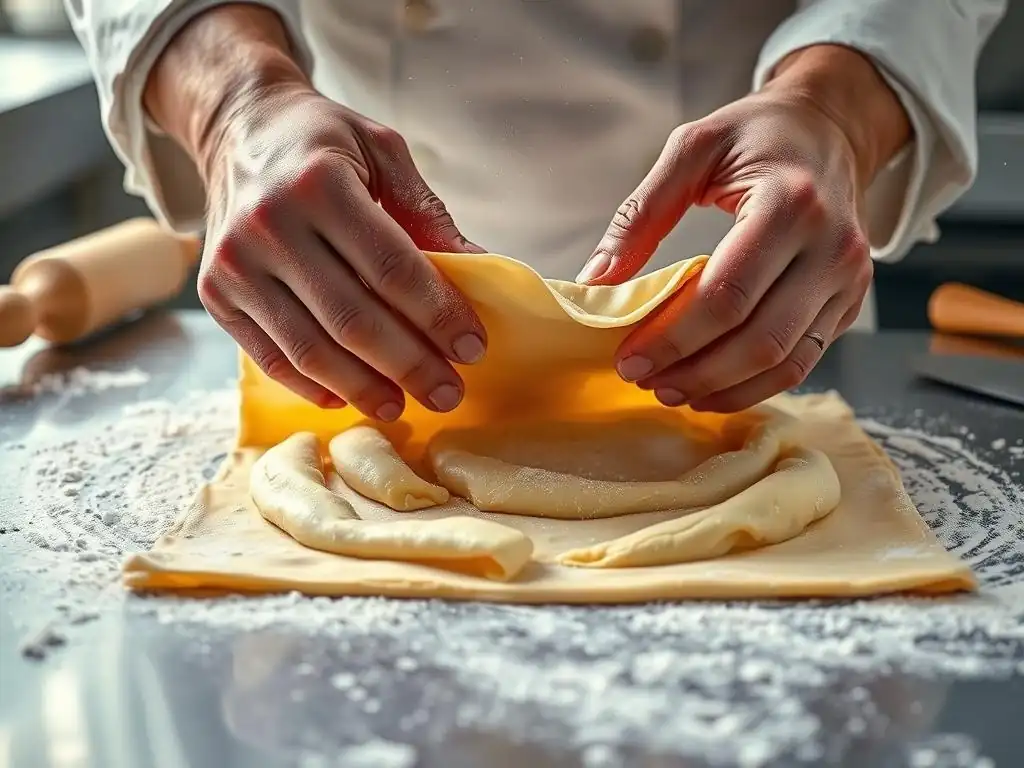
The détrempe, meaning "detemper" or "soaking," is the initial dough base for laminated pastries. It's typically a simple mixture of flour, cold water, salt, and sometimes a small amount of fat or vinegar. The key is to mix it minimally, just until the ingredients are combined and a shaggy dough forms. Over-mixing can develop too much gluten too early, making the dough difficult to roll later.
After mixing, the détrempe is usually kneaded briefly to bring it together, then shaped into a rectangle or square, wrapped, and chilled thoroughly. This chilling period is vital; it allows the gluten to relax and the dough to firm up, making it easier to handle and roll without tearing during the subsequent steps of incorporating the fat and performing the turns. A well-rested détrempe is the non-negotiable starting point for developing distinct lamination pastry dough layers.
Incorporating the Butter Block: The Key to Layer Formation
The fat, usually in the form of a chilled, pliable block, is then enclosed within the détrempe. The butter block should be roughly one-half to two-thirds the size of the rolled-out détrempe rectangle. The détrempe is rolled out to a size that allows it to fully encase the butter block, like an envelope.
The edges of the détrempe are folded over the butter block, sealing it completely. It's crucial that the butter and the dough are at similar temperatures and consistencies – cold but pliable – to ensure they roll out evenly together without the butter breaking into pieces or melting into the dough.
This step is where the magic of lamination begins. By enclosing the fat within the dough, you create the first two lamination pastry dough layers: a layer of dough, a layer of fat, and another layer of dough. This initial sandwich is the foundation upon which hundreds of subsequent layers will be built through the folding and rolling process.
Executing the Turns: Simple vs. Double Turns Explained
Turns are the repetitive folding and rolling steps that multiply the layers of dough and fat. Each turn increases the number of layers exponentially. There are two primary types of turns: simple (or single) turns and double (or book) turns.
-
Simple Turns: Achieving Uniform Lamination
A simple turn involves rolling the laminated dough into a rectangle and then folding it into three equal sections, like folding a letter. Imagine the rectangle is divided visually into thirds; fold one end section over the middle, and then fold the other end section over the folded part. This action triples the number of layers with each turn. For example, starting with 3 layers (dough/fat/dough), one simple turn creates 3 * 3 = 9 layers.
A second simple turn results in 9 * 3 = 27 layers, and so on. A typical puff pastry recipe might call for 6 simple turns, resulting in a theoretical 3 * 3 * 3 * 3 * 3 * 3 = 729 layers. Simple turns are often favored for creating very uniform, thin layers, which can result in a higher puff.
-
Double Turns: Maximizing Layers for Extra Puff
A double turn involves rolling the dough into a rectangle and folding both ends towards the center seam, then folding the dough in half along that seam, like closing a book. This action quadruples the number of layers with each turn. Starting with 3 layers (dough/fat/dough), one double turn creates 3 * 4 = 12 layers. A second double turn results in 12 * 4 = 48 layers.
A recipe calling for 4 double turns would yield a theoretical 3 * 4 * 4 * 4 * 4 = 768 layers. Double turns build layers more quickly than simple turns, potentially leading to a very high rise. However, they can sometimes result in slightly thicker layers compared to simple turns. Both methods are effective for building the essential lamination pastry dough layers.
Resting the Dough: Why it's Essential for Gluten Relaxation and Fat Solidification
Resting the dough between turns is just as important as the turns themselves. Typically, the dough is wrapped tightly and refrigerated for at least 30-60 minutes between each turn. This resting period serves two critical purposes:
First, it allows the gluten network, which was stretched and tightened during rolling, to relax. A relaxed dough is less elastic and easier to roll out thinly for the next turn without tearing or shrinking excessively. Attempting to roll a tense dough can lead to uneven layers and potential breakage.
Second, chilling the dough allows the fat layer to solidify again. If the fat becomes too soft or warm during rolling, it can merge with the dough layers, destroying the distinct separation needed for puffing. Proper chilling ensures the fat remains a solid barrier between the lamination pastry dough layers, ready for the next round of folding and rolling.
The Science of Puffing: How Lamination Layers Create Flakiness
Steam Generation: The Driving Force Behind Puff Pastry's Rise
The dramatic rise of puff pastry during baking is primarily driven by steam generation. Both the dough and the butter contain water. As the pastry is heated rapidly in a hot oven (often 400-425°F or 200-220°C), the water within the dough layers quickly turns into steam. This steam, confined between the impermeable fat layers, exerts pressure.
This pressure forces the thin dough layers apart, causing the pastry to expand upwards and outwards. The high oven temperature ensures that the steam is produced rapidly before the fat has completely melted and been absorbed by the dough. This quick conversion of water to steam is the fundamental scientific principle behind the impressive volume increase in baked lamination pastry dough layers.
Gluten Network's Role in Trapping Steam
While steam provides the lifting force, the gluten network in the dough layers plays a crucial supporting role. The gluten creates a flexible yet strong structure that can stretch and expand under the pressure of the steam. As the steam pushes the layers apart, the elastic gluten network stretches like tiny balloons, holding the steam within the expanding pockets.
If the gluten network is too weak (due to low-protein flour or insufficient development), the layers might tear, allowing steam to escape and resulting in less puff. If the gluten is too strong and not properly relaxed, the dough resists expansion, leading to uneven puff or shrinkage. The balanced gluten structure in well-made lamination pastry dough layers is essential for capturing and containing the steam, maximizing the rise and creating the characteristic airy interior.
Fat Melting and Separation: Creating Distinct Layers
As the oven heats, the fat between the dough layers melts. However, because of the rapid steam production and the high oven temperature, the fat melts and is absorbed by the dough layers after the steam has already begun pushing them apart. The melted fat then coats the interior surfaces of the expanded dough layers.
This melting and subsequent coating serve two purposes: First, it prevents the dough layers from sticking back together as they expand, maintaining their distinct separation. Second, the fat contributes to the tenderness and crispness of the baked layers. As the pastry cools, the fat solidifies within the porous structure, contributing to the flaky, delicate texture that defines well-laminated pastries. The success hinges on the fat remaining distinct from the dough until the steam has done its work separating the lamination pastry dough layers.
Troubleshooting Lamination Issues: Common Problems and Solutions
Dough Too Warm: Preventing Butter from Melting
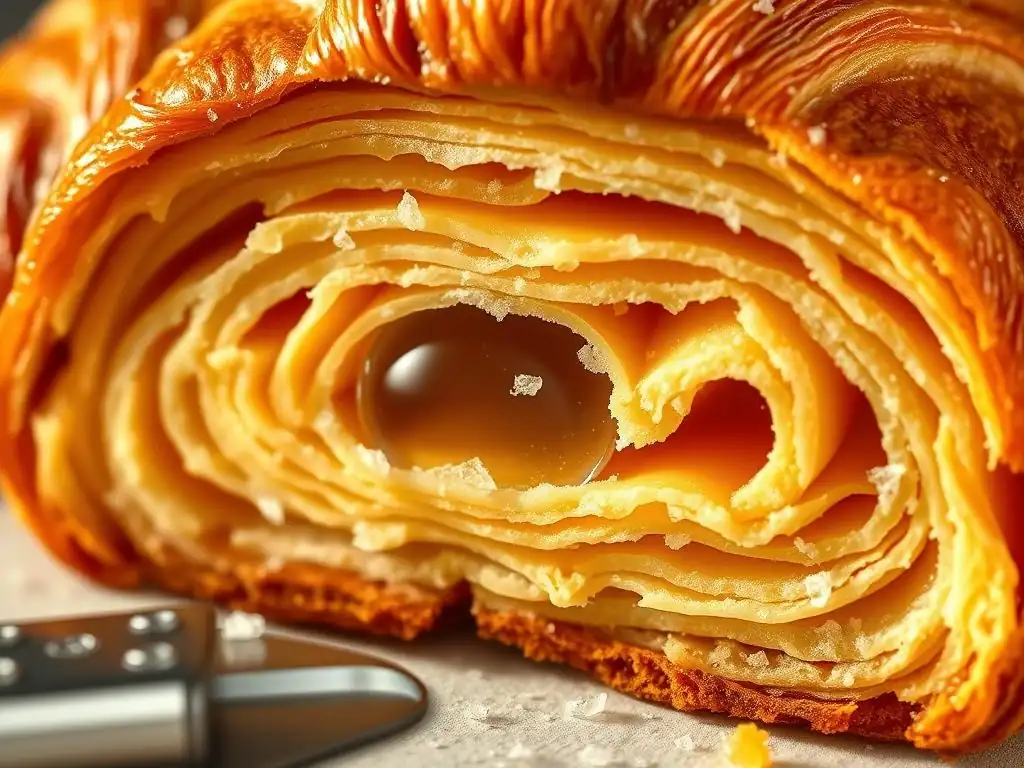
One of the most common issues when working with lamination pastry dough layers is the dough becoming too warm. If the butter block softens or melts into the dough during rolling and folding, the distinct layers are lost. The result is a greasy, dense pastry with minimal puff. This often happens in warm kitchens or if the dough isn't chilled adequately between turns.
Solution: Always work in the coolest part of your kitchen. Keep ingredients chilled. If the dough feels soft or the butter seems to be oozing, stop immediately, wrap the dough, and refrigerate it for at least 30-60 minutes, or even freeze it for 15-20 minutes, until it is firm but still pliable. Using a marble surface or chilled rolling pin can also help maintain a low temperature.
Dough Too Cold: Avoiding Cracking and Tearing
Conversely, if the dough or butter block is too cold and stiff, it becomes brittle. When you try to roll it, the dough or butter can crack and break into pieces, disrupting the continuous layers needed for lamination pastry dough layers. This makes it impossible to create smooth, even sheets.
Solution: Allow the chilled dough and butter block to sit at room temperature for a few minutes before rolling, just until they are pliable enough to bend without breaking. The butter should feel firm but slightly flexible, like a cold stick of modeling clay. Roll gently at first, gradually increasing pressure as the dough warms slightly and becomes more cooperative. If cracking occurs, try gently pressing the dough back together and letting it rest briefly before continuing.
Uneven Layers: Techniques for Consistent Lamination
Uneven layers can result in a pastry that puffs unevenly, with some sections dense and others overly airy. This is often caused by inconsistent rolling (thicker in some spots than others) or improper folding during the turns. If the edges aren't squared or the folds aren't precise, the layers won't stack neatly.
Solution: Aim for consistent pressure and thickness when rolling the dough rectangle before each turn. Use a ruler if necessary to ensure the rectangle is uniform. When folding, be precise with your measurements and folds, ensuring the edges align neatly. Trim uneven edges before folding if needed. Starting with a well-shaped détrempe and butter block helps maintain uniformity throughout the process of creating lamination pastry dough layers.
Shrinkage During Baking: Relaxing the Dough Properly
If puff pastry shrinks significantly when it hits the hot oven, it's usually a sign that the gluten network is too tense. This tension builds up during rolling and folding, and if the dough isn't adequately rested before baking, the gluten retracts in the heat, causing the pastry to pull back.
Solution: Ensure you rest the dough sufficiently between turns (at least 30 minutes in the refrigerator). Crucially, after the final turn and shaping, the dough must be given a final, longer rest in the refrigerator for at least 1-2 hours, or even overnight. This allows the gluten to fully relax before baking. Scoring the dough gently before baking can also help direct the puff and minimize uncontrolled shrinkage. Proper resting is paramount for achieving beautifully risen lamination pastry dough layers.
Advanced Lamination Techniques for Expert Bakers
Inverted Puff Pastry (Pâte Brisée Inversée): A Deeper Dive
Inverted puff pastry, or pâte brisée inversée, is a technique where the fat block actually encases the détrempe, rather than the other way around. A butter-flour mixture (known as the beurrage) is prepared and rolled into a rectangle, and the détrempe is placed on top and enclosed. The subsequent turns are performed with the butter mixture on the outside.
This method is often considered more challenging but can yield a pastry with exceptional flakiness and a slightly different texture. Because the fat is on the exterior, it tends to melt and crisp up the outer layers of the dough more effectively during baking. It requires precise temperature control and careful handling, as the outer fat layer is more susceptible to melting during rolling. Mastering inverted lamination adds another dimension to creating intricate lamination pastry dough layers.
Using Lamination for Croissants and Other Viennoiserie
While puff pastry is the classic example of lamination, the technique is also fundamental to creating croissants, danishes, and other viennoiserie. The lamination process is similar, involving folding dough and fat, but the dough itself is different. Viennoiserie dough is enriched with milk, sugar, yeast, and often eggs, making it a fermented dough.
The presence of yeast introduces biological leavening in addition to the steam leavening from the fat. The yeast produces carbon dioxide gas, which also helps lift the lamination pastry dough layers during proofing and the initial stages of baking. This combination of yeast leavening and steam leavening results in the unique airy, honeycomb structure characteristic of croissants. The lamination technique provides the framework for this structure, ensuring distinct layers that the gases can expand within.
Exploring Different Fat Ratios for Varying Textures
The ratio of fat to flour significantly impacts the final texture and puff of laminated pastry. Traditional puff pastry recipes often use a 1:1 ratio of fat to flour by weight (e.g., 1 kg flour to 1 kg butter). This high fat content contributes to maximum flakiness and puff.
However, varying this ratio can produce different results. Using slightly less fat (e.g., 800g butter to 1kg flour) might result in a pastry with a slightly firmer texture and less dramatic puff, but it can sometimes be easier to handle. Using more fat (e.g., 1.2kg butter to 1kg flour) can potentially yield an even flakier, richer pastry, but it increases the risk of the fat melting out during baking or being too difficult to manage during lamination. Experimenting with fat ratios allows bakers to fine-tune the lamination pastry dough layers for specific applications or desired outcomes.
Mastering Lamination: Tips and Tricks
Accurate Ingredient Measurement
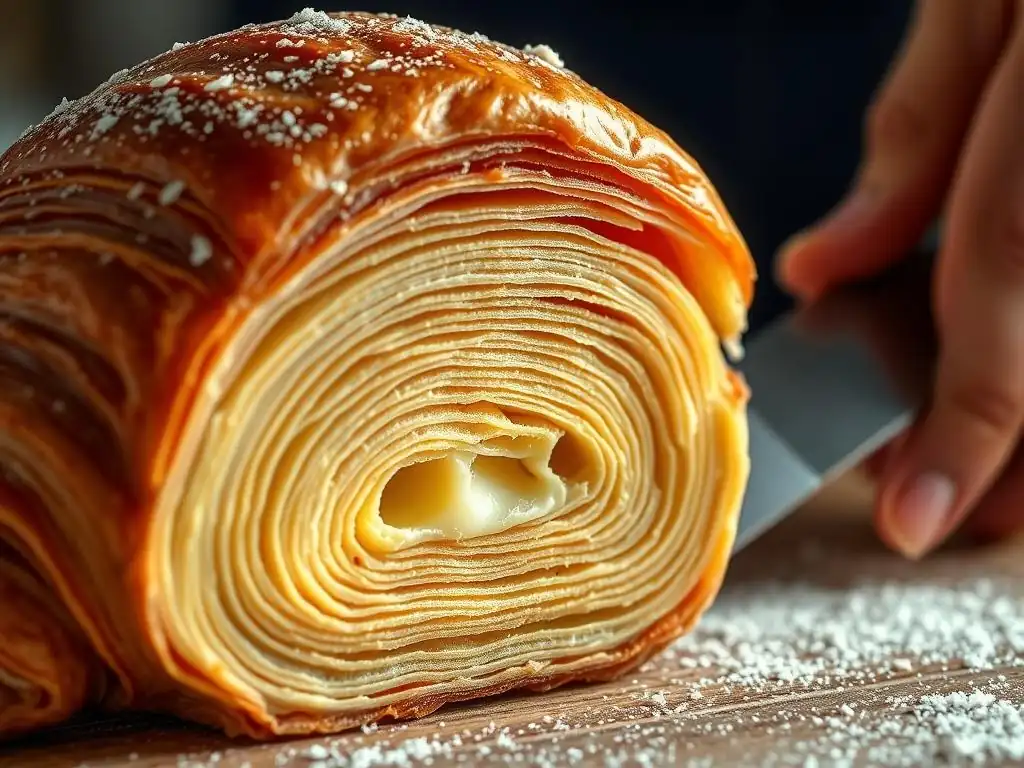
Precision is paramount in lamination. Unlike some rustic baking, small variations in ingredient ratios can significantly impact the dough's consistency and the success of the lamination pastry dough layers. Using a digital scale to weigh all ingredients, especially flour and fat, is highly recommended.
For instance, a recipe calling for 500g flour and 500g butter requires exact measurements to ensure the fat-to-dough ratio is correct for the intended number of layers and puff. Using volume measurements (cups) can lead to inconsistencies due to variations in how ingredients are packed, potentially resulting in a dough that is too wet, too dry, or has an incorrect fat distribution. Accurate measurement is the first step to predictable results.
Maintaining Consistent Temperatures
Temperature control is perhaps the single most important factor in successful lamination. The dough and fat must be kept cold throughout the process, except for brief periods of rolling. The ideal temperature range for the dough and butter block is typically between 40°F and 55°F (4°C and 13°C). Below this, they are too hard; above this, the butter is too soft.
Working quickly, using cold surfaces, and ensuring adequate chilling time between turns are essential practices. If your kitchen is warm, consider doing your lamination in stages, returning the dough to the refrigerator frequently. A consistent cold temperature ensures the fat remains solid and distinct from the dough, preserving the integrity of the lamination pastry dough layers until they hit the hot oven.
Gentle Dough Handling
Laminated dough, despite its potential for dramatic puff, is surprisingly delicate during the creation process. Excessive force or rough handling can tear the thin dough layers or break the fat layer, destroying the structure necessary for lamination pastry dough layers.
When rolling, use firm but even pressure, working from the center outwards. Avoid stretching or pulling the dough. If the dough resists rolling, it's a sign that the gluten is tense or it's too cold; stop and let it rest. Lift and move the dough carefully to avoid distorting the layers. Gentle handling ensures that the hundreds of delicate layers remain intact and properly aligned, ready to expand beautifully in the oven.
Conclusion: Elevate Your Baking with Perfect Lamination
Recap of Key Principles for Successful Lamination Pastry Dough Layers
Mastering lamination is a rewarding journey that transforms simple ingredients into culinary marvels. The core principles revolve around creating and preserving distinct, alternating layers of dough and fat. This requires careful attention to ingredient ratios, particularly the balance of flour, water, and fat.
Temperature control is paramount, ensuring the fat remains solid during folding but melts appropriately during baking. Precise rolling and folding techniques build the hundreds of layers, while adequate resting periods relax the dough and solidify the fat. Finally, the science of steam generation within these layers, supported by a strong gluten network and melting fat, provides the incredible lift and flakiness that defines perfect lamination pastry dough layers.
Further Exploration: Recipes and Tutorials
Understanding the science behind lamination empowers you to tackle recipes with confidence and troubleshoot issues as they arise. From classic puff pastry used for vol-au-vents and palmiers to enriched doughs for flaky croissants and danishes, the technique of creating lamination pastry dough layers is versatile and fundamental to many beloved baked goods. Continue your baking journey by exploring specific recipes tailored to different laminated pastries.
Look for detailed tutorials that visually guide you through each step of preparing the détrempe, incorporating the fat, executing the turns, and achieving that glorious puff. Practice and patience are key; with each attempt, your understanding and skill in creating perfect lamination pastry dough layers will grow.
Frequently Asked Questions
What exactly is lamination in pastry dough?
Lamination is the process of creating thin, alternating layers of dough and fat (usually butter) that, when baked, result in a light and flaky texture. The layers separate during baking due to the steam released from the moisture in the butter.
Why is cold butter so important for successful lamination?
Cold butter is crucial because it needs to remain in solid layers during the early stages of baking. If the butter melts too quickly, it will be absorbed into the dough, preventing the distinct layer formation that's essential for puff pastry.
How many folds are generally recommended for achieving good lamination?
The optimal number of folds varies depending on the recipe, but typically 4-6 single or double folds are recommended. This creates enough layers to achieve the desired puff and flakiness without overworking the dough.
What role does resting the dough play in the lamination process?
Resting the dough in the refrigerator between folds allows the gluten to relax, preventing it from becoming too tough. It also helps to re-solidify the butter, ensuring it doesn't melt during subsequent rolling and folding. This is critical for even lamination.
What are some common mistakes people make when laminating dough?
Common mistakes include using butter that is too soft, not resting the dough sufficiently, and overworking the dough. These errors can lead to poor lamination and a dense, rather than flaky, final product.
Final Reflection: The Enduring Allure of the Perfect Layer
The pursuit of the flawlessly laminated pastry, with its delicate, melt-in-your-mouth layers, is more than just a culinary quest; it's a testament to the power of precision and patience in achieving culinary artistry. Understanding the science behind lamination—the careful folding and rolling that creates those iconic layers—unlocks a deeper appreciation for the artistry involved in creating pastries like croissants, pain au chocolat, and mille-feuille. This understanding allows for greater control and ultimately, more delicious results.
The impact of lamination techniques extends far beyond the pastry itself. It represents a fascinating intersection of science and art, where precise measurements and meticulous technique translate into a sensory experience that delights the palate and captivates the eye. The beauty of a well-laminated pastry lies not only in its taste, but in the visual spectacle of its layers, a testament to the baker's skill and dedication.
This dedication to mastering a complex process resonates with a broader cultural appreciation for craftsmanship and the pursuit of excellence, reminding us of the value in taking the time to perfect our skills, whatever they may be.
Consider the next time you encounter a perfectly layered pastry, the dedication and understanding that went into its creation. You now possess the knowledge to appreciate the science and artistry behind each delicate flake. Take that knowledge, experiment with your own baking, and discover the joy of creating something beautiful and delicious through the precise application of scientific principles. Embrace the challenge, refine your technique, and experience the profound satisfaction of mastering the art of lamination.
Here's a Call to Action (CTA) tailored for the article "The Science Behind the Puff: Understanding Lamination Layers" on BakeWithEase.com:
Unleash Your Inner Pastry Chef: Master the Puff!
Thanks for diving deep into the science of puff pastry! You've now unlocked the secrets to creating flawlessly layered, golden-brown treats. Ready to put your newfound knowledge into practice?
- Bake your masterpiece: Try a recipe that challenges your lamination skills – maybe croissants, palmiers, or even a sophisticated mille-feuille. The possibilities are endless!
- Share your puff pastry journey: Post a picture of your creation on social media and tag us @BakeWithEase! We love seeing your baking triumphs.
- Explore advanced techniques: Delve into our archives for more expert tips and tricks on perfecting your pastry game.
What unique flavor combination will you explore in your next puff pastry adventure? Let's discuss in the comments below!