
Understanding Piping Tip Numbers: What Do They Mean?

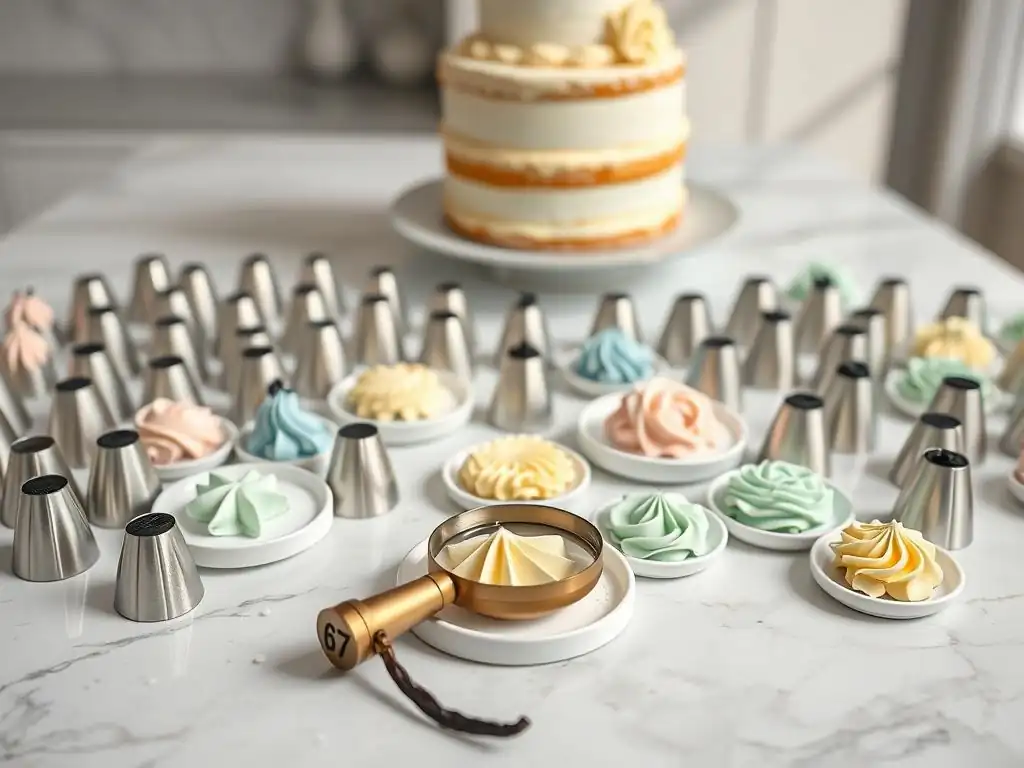
Welcome to BakeWithEase, your partner in creating delectable baked goods! Ever wondered what those tiny numbers on your piping tips actually mean? Unlock the secrets behind perfect decorations with our comprehensive piping tip size guide and elevate your baking from simple to stunning. Discover how understanding these numbers can transform your pastries, cakes, and cookies, and get ready to create edible masterpieces. Let's decode the world of piping!
- Mastering Cake Decorating: A Guide to Piping Tips
- Introduction to Piping Tips and Numbering
- Decoding Piping Tip Numbers: A Detailed Explanation
- Exploring Piping Tip Types and Applications
- Piping Tip Selection: Choosing the Right Tip for Your Project
- Piping Techniques with Different Tip Sizes
- Cleaning and Maintaining Piping Tips
- Conclusion: Unleashing Creativity with Piping Tips
- Frequently Asked Questions
- Final Reflection: Mastering the Art of Piping – One Tip at a Time
- Unleash Your Inner Pastry Chef: Master Piping Techniques!
Mastering Cake Decorating: A Guide to Piping Tips
Cake decorating is an art form, and like any art, having the right tools is crucial. Piping tips, also known as decorating tips or nozzles, are fundamental instruments in a baker's toolkit. They are the tiny metal or plastic cones that attach to a piping bag, allowing you to create a vast array of textures, lines, borders, and shapes with frosting, ganache, or even meringue. Understanding the different types and, importantly, the numbering system used to identify them is the first step towards mastering intricate and beautiful cake designs.
This guide will walk you through the world of piping tips, demystifying the numbers and showing you how to choose the perfect tip for your next baking project. Whether you're aiming for delicate lettering, bold swags, or realistic floral arrangements, knowing your tips will elevate your decorating skills from basic to breathtaking.
Introduction to Piping Tips and Numbering
Why Piping Tip Knowledge Enhances Cake Decorating
Knowing your piping tips is like a painter knowing their brushes; it unlocks a world of creative possibilities and precision. Each tip, identified by a unique number, is designed to produce a specific shape or effect. A small round tip, for instance, is perfect for fine details or writing messages, while a large star tip can quickly create dramatic swirls or borders. Without this knowledge, you might select a tip that produces a result completely different from your intention, leading to frustration and a less-than-perfect finish.
Furthermore, understanding the different tip types allows you to replicate professional techniques seen in bakeries and online tutorials. You can confidently choose the right tool to pipe intricate lacework, build sturdy shell borders, or craft delicate buttercream roses. This knowledge empowers you to execute complex designs accurately and efficiently, significantly enhancing the overall appearance and artistry of your baked goods.
A Guide to Understanding Piping Tip Numbers
Piping tips are typically identified by numbers stamped onto the tip itself. While these numbers often correspond to a specific shape and size, the numbering system is not universally standardized across all manufacturers. Different companies, such as Wilton, Ateco, and PME, have their own unique numbering sequences, although there is some overlap and similarity for common tip types. This is why a Wilton #1M tip might be called something slightly different by Ateco, even if they produce a similar effect.
Learning the general categories of tips (round, star, petal, etc.) and the typical number ranges associated with their sizes is key. For example, smaller numbers within a category usually indicate a smaller opening, producing finer details, while larger numbers indicate a larger opening for bolder designs or faster coverage. Consulting a reliable piping tip size guide from a specific manufacturer is often the most accurate way to understand their particular numbering convention.
Decoding Piping Tip Numbers: A Detailed Explanation
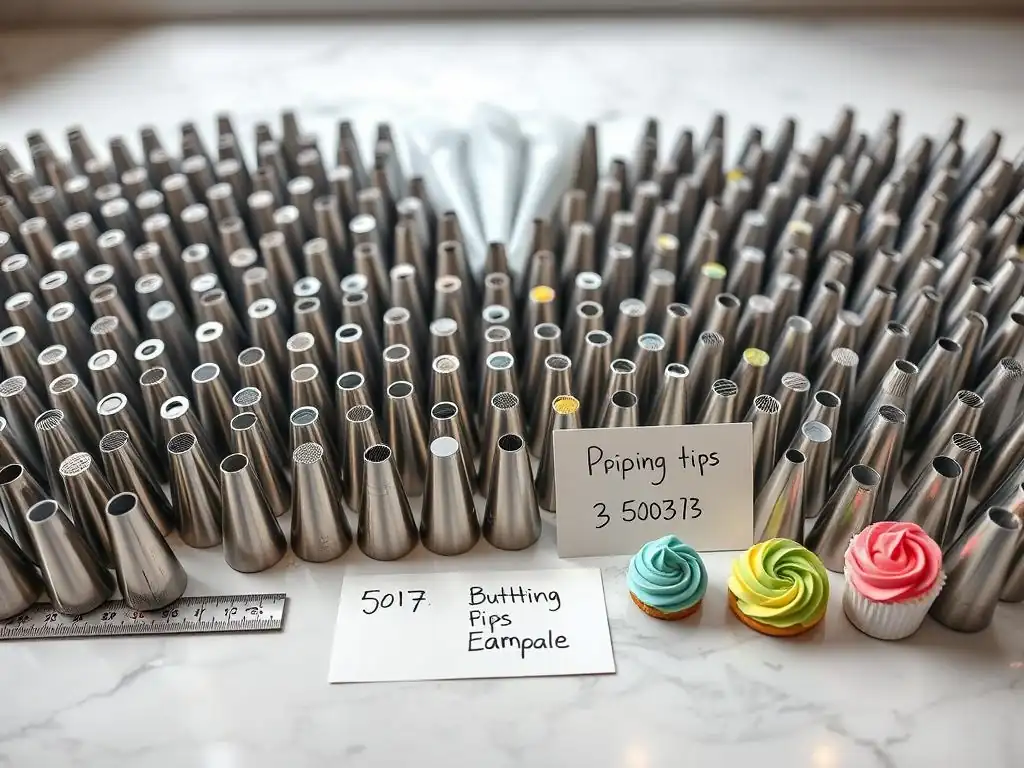
Piping Tip Anatomy: Key Features
Understanding the basic anatomy of a piping tip helps in recognizing its purpose and how its number relates to its function. Every tip has a wide base that fits into the piping bag (or coupler) and a narrow opening or nozzle at the other end where the icing is extruded. The shape and size of this opening determine the pattern of the icing. For instance, a round tip has a simple circular opening, while a star tip has multiple points around the opening.
The size of the tip is often indicated by its number. Generally, smaller numbers like #1, #2, or #3 for round tips denote very fine openings suitable for detail work or writing. As the numbers increase, such as #10, #12, or #1A, the opening gets larger, designed for outlining, filling, or creating thicker lines and dots. Specialty tips, like those for petals or leaves, have uniquely shaped openings that dictate the specific design they create, and their numbers fall into different ranges depending on the manufacturer.
Piping Tip Numbering Systems: By Manufacturer
The numbering systems used by different piping tip manufacturers can be a source of confusion for bakers. While many tips produce similar effects across brands, their identifying numbers often differ. This means a "size 21" star tip from one company might not be the exact equivalent of a "size 21" star tip from another, although they will likely both be open star tips within a similar size range. It's helpful to become familiar with the major players in the piping tip market and their typical numbering conventions.
Recognizing the general patterns within a manufacturer's system is more useful than memorizing every single tip number across all brands. For example, understanding that Wilton's single-digit numbers often represent very small round tips, while numbers in the 100s might indicate petal tips, provides a framework. Similarly, knowing that Ateco uses different ranges for different tip types helps in navigating their catalog. When following a recipe or tutorial that specifies a tip number, it's always best to clarify which manufacturer's system is being used.
Wilton Piping Tip Numbers: A Breakdown
Wilton is one of the most widely recognized names in cake decorating, and their piping tip numbering system is familiar to many bakers. Their tips are typically numbered from single digits up to the 400s, with different ranges corresponding to different tip types. For instance, very small round tips are often numbered 1-3, medium round tips 4-12, and large round tips 1A, 2A, 12, etc. Star tips might range from 13-22 (small to medium open star), 32-36 (closed star), and larger sizes like 1M, 2D, or 4B.
Petal tips, used for flowers and ruffles, often fall into the 59-104 range, while leaf tips are typically numbered in the 65-74 range. Basketweave tips are commonly found in the 44-48 range, and specialty tips like shell or drop flower tips have their own specific numbers, such as 100s or 200s. This structured approach makes it relatively easy to identify the type and approximate size of a Wilton tip based on its number, aiding bakers in selecting the right tip for their desired effect. A detailed Wilton piping tip size guide can provide precise specifications for each number.
Ateco Piping Tip Numbers: A Breakdown
Ateco (August Thomsen Corporation) is another prominent manufacturer of professional-grade baking tools, including piping tips. Their numbering system is distinct from Wilton's, although some numbers might appear similar. Ateco's tips are often numbered in the single digits up to the 800s. Round tips, for instance, range from tiny #000 to larger sizes like #12 or #808. Star tips can be found in ranges like the 130s (open star) or 200s (closed star), with larger sizes like #826 or #829.
Ateco also has specific ranges for petal tips (e.g., 101-104, 124-127), leaf tips (e.g., 65-70), and specialty tips like basketweave (e.g., 44-48) or ruffle tips (e.g., 860-869). While the specific numbers differ from Wilton, the types of tips available are often comparable. Bakers often develop a preference for one brand over another based on feel, durability, or the exact nuances of the shapes produced. Consulting an Ateco piping tip size guide is essential if you are working with their tools.
PME Piping Tip Numbers: A Breakdown
PME (Precision Model Engineering) is known for high-quality seamless piping tips, particularly favored for intricate sugarcraft and royal icing work. Their numbering system also has its own logic. PME tips are often numbered from single digits up to the hundreds, with different series indicating different tip types. For example, their plain (round) tips are typically numbered from #00 (very fine) up to #12.
Star tips are often found in series like ST (Star Tips), with numbers ranging from ST41 to ST53. Petal tips might be in the PT series (Petal Tips), and specialty tips like ruffle or leaf tips have their own designations. PME's tips are often praised for their precision and seamless construction, which can lead to smoother piping. Like other brands, referring to a specific PME piping tip size guide is the best way to understand the exact dimensions and effects of their tips.
Exploring Piping Tip Types and Applications
Round Piping Tips: Versatility in Design
Round piping tips, also known as plain tips, are arguably the most versatile type of piping tip available. They have a simple circular opening and are used for a wide range of techniques, from creating smooth lines and dots to filling large areas or piping macarons. The effect produced by a round tip depends entirely on the size of the opening and the pressure applied to the piping bag. A small tip with light pressure creates fine lines, while a large tip with firm pressure produces thick, bold strokes or large dots.
Their simplicity makes them essential for both beginners and experienced decorators. They are perfect for outlining designs, writing messages on cakes, creating borders of various sizes, piping consistent dots, or even building up textures like scales or beads. Round tips are a foundational element in any comprehensive piping tip size guide and are indispensable for countless decorating tasks.
Small Round Tips: Fine Lines and Detailing
Small round tips, typically numbered #1, #2, #3, or #4 (in systems like Wilton's or PME's), have very fine openings, often less than 2mm in diameter. These tips are specifically designed for intricate detail work and delicate applications. They are the go-to choice for writing messages on cakes, adding fine outlines to piped designs, creating small dots, or piping delicate lacework patterns.
Using a small round tip requires a steady hand and consistent pressure to achieve smooth, even lines. They are ideal for adding pupils to fondant eyes, piping tiny details onto cookies, or creating fine filigree designs with royal icing. While they require patience, the precision offered by small round tips allows for truly professional-looking details that are impossible with larger tips.
Medium Round Tips: Outlines and Lettering
Medium round tips, such as #5, #6, #7, #8, #10, or #12, offer a balance between fine detail and bolder application. Their openings range from approximately 2mm to 6mm. These tips are excellent for outlining larger shapes on cakes or cookies, piping medium-sized dots, creating consistent bead borders, and writing more prominent messages than possible with smaller tips.
They are also frequently used for filling in small areas with icing before smoothing. A #12 tip, for example, is often recommended in a piping tip size guide for piping the base circles for macarons or for outlining and flooding cookie designs with royal icing. Their moderate size makes them versatile for many common decorating tasks.
Large Round Tips: Filling and Bold Statements
Large round tips, often numbered #1A, #2A, #12, #808, or #809, have openings ranging from approximately 7mm upwards, some exceeding 1cm in diameter. These tips are designed for piping large dots, covering large areas quickly, creating bold borders, or piping substantial dollops of frosting onto cupcakes. A popular example is the #1A or #12 tip used for piping large, smooth mounds of buttercream onto cupcakes or for creating large, consistent dots around the base of a cake.
They are also useful for filling piping bags with frosting or batter. While they don't offer the precision of smaller tips, large round tips are essential for speed and creating dramatic, impactful designs. When referring to a comprehensive piping tip size guide, the largest round tips are often highlighted for their ability to handle thick icings and cover significant surface area efficiently.
Star Piping Tips: Creating Textured Effects
Star piping tips are easily recognizable by their serrated openings, which can have varying numbers of points (typically 5 to 24). These tips are used to create a wide range of textured effects, from classic star shapes and rosettes to shell borders and swirls. The specific effect depends on whether the tip is an open star or a closed star, the number of points, and the size of the tip. Star tips are fundamental tools for adding texture and visual interest to cakes and cupcakes.
They are indispensable for creating popular cupcake swirls, piping decorative borders around cakes, or adding textured fillings to pastries. A good piping tip size guide will categorize star tips by their type (open vs. closed) and size, as even small differences in the tip's structure can produce distinct results.
Open Star Tips: Classic Starbursts and Swirls
Open star tips have points that flare outwards from the center. When piped, they produce shapes with distinct ridges and pointed edges, resembling classic stars or bursts. Popular open star tips include numbers like #16, #18, #21, #32, and the very popular #1M. The #1M tip, a large open star, is famous for creating the iconic cupcake swirl and large, defined rosettes.
Smaller open star tips are used for creating small stars, zig-zag lines, or small shell borders. The more points an open star tip has, the more detailed and ridged the piped shape will be. Open star tips are versatile and widely used for borders, filling in areas with texture, and creating decorative elements on cakes and cupcakes.
Closed Star Tips: Shell Borders and Detailed Edges
Closed star tips have points that curve inwards towards the center, creating a more defined, often deeper groove in the piped icing compared to open star tips. When piped with a simple press and release, they produce shapes that are more closed and often have a more pronounced texture. Popular closed star tips include numbers like #2D, #30, #33, and tips in the 199-211 range. The #2D tip, a large closed star, is excellent for creating ruffled effects, large rosettes with deep ridges, or swirled cupcake tops with a different texture than the #1M.
Closed star tips are particularly favored for creating detailed shell borders, ropes, and textured swirls. The inward-curving points create a unique texture that adds depth and elegance to decorations. Comparing the results of an open star tip versus a closed star tip of a similar size, as shown in a detailed piping tip size guide, clearly illustrates the difference in texture and definition.
Specialty Piping Tips: Unique Decorations
Beyond the basic round and star tips, there is a wide array of specialty piping tips designed to create specific, unique decorations. These tips allow bakers to add realistic floral elements, woven textures, or intricate patterns that are difficult or impossible to achieve with standard tips. While they might be used less frequently than round or star tips, specialty tips are invaluable for adding professional flair and specific decorative motifs to cakes and pastries.
Examples include petal tips for flowers, leaf tips for foliage, basketweave tips for woven patterns, ruffle tips for frilly borders, and multi-opening tips for piping multiple lines or dots simultaneously. Mastering the use of specialty tips opens up advanced decorating techniques and allows for greater creativity in design.
Petal Tips: Realistic Flower Petals
Petal tips are specifically designed to create realistic flower petals, ruffles, and swags. They have a narrow opening at one end and a wider opening at the other, often slightly curved. By holding the tip with the narrow end pointing outwards or inwards and varying the pressure and movement of the piping bag, you can create different types of petals, from delicate rose petals to ruffled borders. Common petal tip numbers include #101, #102, #104, #124, and #127.
Creating realistic buttercream flowers, like roses or peonies, heavily relies on the skillful use of petal tips. The angle at which the tip is held and the consistency of the icing are critical for achieving lifelike results. A comprehensive piping tip size guide often includes detailed instructions or diagrams on how to use various petal tips to form different flowers.
Basketweave Tips: Woven Designs
Basketweave tips have a flat, ribbon-like opening, often with one side serrated and the other smooth. These tips are used to create woven patterns, mimicking the look of a basket. By piping alternating horizontal and vertical stripes, you can build up a textured basketweave design around the side of a cake. Common basketweave tip numbers include #44, #45, #46, and #48.
The technique involves piping a long vertical strip, then piping short horizontal strips over it, alternating sides, and finally piping another vertical strip to cover the ends of the horizontal ones. The serrated edge of the tip can be used to create a ridged texture, while the smooth side creates a flat ribbon. Basketweave tips offer a unique way to add texture and visual interest to the sides of a cake.
Leaf Tips: Creating Realistic Leaves
Leaf tips are designed to create realistic leaves and foliage to complement piped flowers. They have a V-shaped opening. By applying pressure, piping a short stroke, and then quickly pulling away while releasing pressure, you can create a leaf shape with a distinct central vein (formed by the tip's opening). Common leaf tip numbers include #67, #68, #69, #70, and #352.
Varying the pressure and the angle of the tip allows you to create leaves of different sizes and shapes. Leaf tips are essential for adding natural-looking greenery to floral arrangements piped onto cakes or cupcakes, bringing buttercream flowers to life. A good piping tip size guide for floral work will always include a selection of leaf tips.
Piping Tip Selection: Choosing the Right Tip for Your Project
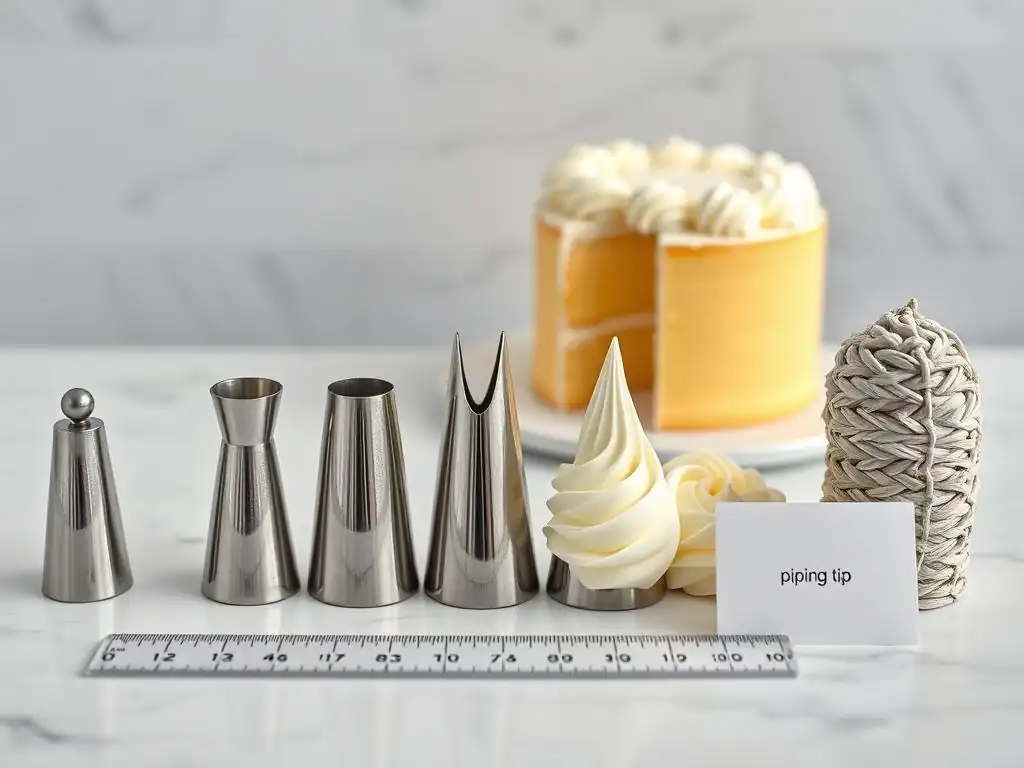
Choosing the correct piping tip is crucial for achieving your desired decorating outcome. The "right" tip depends on several factors related to your design, the type of icing you're using, and the size and shape of the baked good you are decorating. Taking a moment to consider these elements before you start piping can save you time and frustration and lead to a much more successful result.
Don't be afraid to experiment with different tips on a piece of parchment paper before applying icing to your final product. This practice allows you to see how the icing behaves with a specific tip and adjust your pressure or technique as needed. Consulting a piping tip size guide can help narrow down your choices, but practice is key to mastering tip selection.
Key Considerations for Piping Tip Selection
Several factors should influence your choice of piping tip for any given project. Thinking through these considerations will help you select the most appropriate tool for the job, ensuring your decorations look their best. The goal is to match the tip's capabilities with your design vision and the practicalities of your ingredients and canvas.
Choosing the right tip is not just about the shape it produces, but also about its size, how it interacts with your icing, and how it fits the scale of your baked good. A piping tip size guide is a valuable reference, but understanding the underlying principles of selection is even more important for making informed decisions.
Design Goals and Textural Elements
The most important consideration is the specific design you want to create. Are you aiming for fine, delicate lines or thick, bold strokes? Do you want a smooth finish or a textured effect? Are you piping intricate details, borders, flowers, or filling large areas? Your design goals will immediately narrow down the type of tip you need – round for smooth lines, star for texture, petal for ruffles, etc.
Once you've identified the tip type, consider the size required. A piping tip size guide will show that a tiny round tip (#1) is for writing, while a large one (#1A) is for covering cupcakes. Similarly, a small open star (#18) creates small stars, while a large one (#1M) creates substantial swirls. Matching the tip size to the scale and detail level of your design is essential for a professional finish.
Icing Consistency and Type
The type and consistency of your icing significantly impact how it pipes through different tips. Stiff royal icing works well with very small tips for fine details, while a softer buttercream is better suited for larger tips used for swirls and borders. A very thin icing might spread and lose definition when piped through a large, open tip.
Conversely, a very thick icing might be difficult to push through a small tip, potentially causing the piping bag to burst. Ensure your icing consistency is appropriate for the tip size and type you plan to use. For example, a stable buttercream is ideal for piping flowers with petal tips, while a slightly softer consistency might be better for smooth lines with a round tip.
Baked Good Size and Shape
The size and shape of the cake, cupcake, or cookie you are decorating should also influence your tip choice. A small cookie might look overwhelmed by a large, bold border piped with a #1M tip, whereas a large cake requires larger tips to cover significant surface area efficiently and create decorations that are proportionate to its size.
Consider the scale of your work. If you are decorating mini cupcakes, you'll likely use smaller tips than if you are decorating a multi-tiered wedding cake. A piping tip size guide can help you visualize the scale of the output from different tips, allowing you to choose sizes that are appropriate for your specific baked good.
Piping Tip Size Guide: Common Uses
Understanding the common uses associated with different tip sizes is incredibly helpful when selecting the right tool. While a comprehensive piping tip size guide provides exact dimensions, knowing the typical applications for popular tips offers practical guidance.
Here's a simplified look at common uses based on tip type and general size:
- Small Round Tips (#1 - #4): Fine writing, outlines, dots, filigree, detail work.
- Medium Round Tips (#5 - #12): Writing, outlining, bead borders, filling small areas, piping macaron shells (#12).
- Large Round Tips (#1A, #2A, #12, etc.): Cupcake mounds, large dots, filling large areas, bold outlines.
- Small Open Star Tips (#16, #18, #21): Small stars, zig-zags, small shell borders, filling small areas with texture.
- Large Open Star Tips (#1M, #4B): Cupcake swirls, large rosettes, large shell borders, textured filling.
- Closed Star Tips (#2D, #30, #33): Deeply ridged stars, rosettes, ruffled effects, detailed shell borders.
- Petal Tips (#101, #104, #124): Flower petals (roses, ruffles), swags, ribbon effects.
- Leaf Tips (#67, #70, #352): Realistic leaves, foliage.
- Basketweave Tips (#44, #48): Woven patterns on cake sides.
This is just a brief overview; many tips can be used for multiple purposes depending on technique.
Piping Techniques with Different Tip Sizes
Using piping tips effectively requires more than just selecting the right one; it also involves mastering various piping techniques. The way you hold the bag, the angle of the tip, the pressure you apply, and the movement of your hand all contribute to the final piped shape. Different tip sizes and types lend themselves to specific techniques, and practicing these fundamental movements is key to achieving clean, consistent, and professional-looking decorations.
From basic lines and dots to complex flowers and borders, each technique utilizes the tip's unique opening shape to transform icing into decorative elements. Familiarity with these techniques, combined with knowledge from a piping tip size guide, empowers you to execute a wide range of designs.
Basic Piping Exercises for Skill Development
Developing consistent piping skills requires practice. Starting with basic exercises using different tip sizes can significantly improve your control and confidence. Simple drills like piping straight lines, wavy lines, dots of consistent size, and basic stars or rosettes are fundamental. Use parchment paper taped to a surface for practice, allowing you to scrape off the icing and reuse it.
Begin with a medium round tip (#10 or #12) to practice consistent pressure for lines and dots. Then move to a medium open star tip (#21) to practice stars and simple rosettes. As you gain control, experiment with smaller tips for detail and larger tips for coverage. Practice helps you understand how pressure affects the flow and shape of the icing with each specific tip size.
Troubleshooting Common Piping Issues
Even with the right tip, you might encounter common piping issues. These often relate to icing consistency, air bubbles in the bag, or inconsistent pressure. If your lines are broken or bumpy, you might have an air bubble; squeeze it out. If your icing is spreading and losing shape, it might be too soft; chill it slightly or add a bit more powdered sugar. If it's too hard to pipe, it might be too stiff; add a tiny amount of liquid (milk, water, or corn syrup) and mix well.
Inconsistent pressure leads to uneven lines or stars. Practice applying steady pressure to maintain a uniform flow of icing. If your shell borders are not forming correctly with a star tip, adjust the angle of the tip or your pulling motion. Referencing a piping tip size guide can help confirm you're using the recommended tip for a technique, but troubleshooting often comes down to managing icing consistency and practicing consistent pressure and movement.
Tips for Consistent and Professional Piping
Achieving consistent and professional piping results involves several best practices. Always start with a well-prepared piping bag filled without large air pockets. Twist the top of the bag securely to maintain pressure. Hold the bag comfortably, usually with your dominant hand controlling the pressure and your other hand guiding the tip.
Maintain a consistent angle relative to your surface (often 90 degrees for dots, 45 degrees for borders). Apply steady, even pressure as you pipe. For continuous lines or borders, avoid stopping and starting if possible. Practice makes perfect; the more you pipe, the better your muscle memory and control will become. Using a piping tip size guide to understand the expected output from each tip helps set realistic goals and refine your technique.
Cleaning and Maintaining Piping Tips
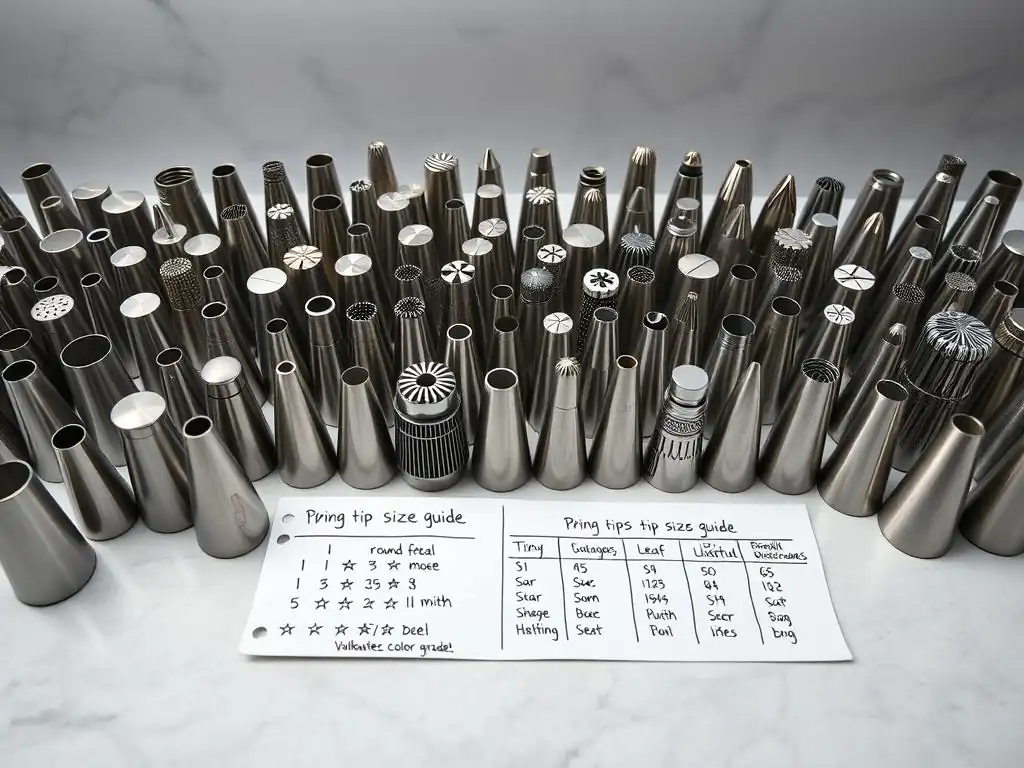
Proper cleaning and storage are essential for keeping your piping tips in good condition and ensuring they are ready for your next decorating project. Icing, especially buttercream with butter, can harden inside the tips, making them difficult to use if not cleaned promptly and thoroughly. Regular maintenance extends the life of your tips and prevents cross-contamination or residue buildup that could affect future piping.
Taking care of your tools is an important part of the baking process. A few simple steps after each use will keep your collection of tips clean, organized, and performing their best, allowing you to utilize your piping tip size guide effectively for years to come.
Proper Cleaning Procedures for Different Tip Materials
Most piping tips are made of stainless steel, which is durable and easy to clean. Plastic tips are also common, especially for larger or more complex shapes. For both materials, the best practice is to rinse the tips immediately after use to remove as much icing residue as possible before it hardens. Use warm, soapy water and a small brush (like a bottle brush or a dedicated tip brush) to scrub the inside and outside of the tip, ensuring no icing is left in the crevices or the opening.
For stubborn, hardened icing, soaking the tips in hot, soapy water for a few minutes can help loosen the residue. You can also use a toothpick or skewer to carefully push out any blockage in the tip opening. Ensure tips are thoroughly rinsed to remove all soap residue and dried completely before storage to prevent rust (on steel tips) or mildew. Dishwashers can clean tips, but handwashing is often more effective for ensuring all residue is removed, especially from small or intricate tips.
Storage Solutions for Piping Tip Longevity
Proper storage prevents damage and keeps your piping tips organized, making it easy to find the size and type you need, perhaps with the help of your piping tip size guide. Tips can easily get lost or scratched if stored loosely in a drawer. Dedicated storage containers are available, featuring compartments or pegs to hold tips upright and separate. These containers often have clear lids, allowing you to see your collection at a glance.
Another popular method is storing tips in small plastic containers or tackle boxes. If you have tips that came with a set, the original case is often suitable for storage. Ensure tips are completely dry before storing to avoid moisture buildup, which can lead to rust or unpleasant odors. Storing them properly protects the tips from damage and keeps your workspace tidy.
Conclusion: Unleashing Creativity with Piping Tips
Elevating Cake Decorating with Precision
Mastering the art of cake decorating is an ongoing journey, and understanding piping tips is a significant step in that process. By learning what the different tip numbers mean, exploring the various types available, and practicing fundamental piping techniques, you gain the precision and control needed to bring your creative visions to life. From delicate written messages to elaborate floral displays and textured borders, the humble piping tip is a powerful tool that allows you to transform simple baked goods into edible works of art.
The confidence that comes with knowing how to choose and use the right tip for any design is invaluable. No longer will you be limited by basic swirls; instead, you can tackle intricate patterns, realistic elements, and sophisticated finishes. Embrace the learning process, experiment with different tips and techniques, and watch as your cake decorating skills reach new heights.
Resources for Advanced Piping Techniques
Once you've mastered the basics of piping tip selection and fundamental techniques, a world of advanced decorating possibilities opens up. Techniques like piping complex buttercream flowers directly onto cakes, creating elaborate lace overlays with royal icing, or executing intricate brush embroidery require practice and often utilize specific specialty tips.
Many resources are available for those looking to advance their piping skills. Online tutorials and classes offer step-by-step guidance for specific techniques and tip usage. Books dedicated to cake decorating often provide detailed instructions and visual guides. Practicing regularly with your collection of tips, perhaps referencing a comprehensive piping tip size guide for ideas, is the most effective way to refine your skills and explore the full creative potential of piping.
Frequently Asked Questions
What is a piping tip size guide and why is it useful?
A piping tip size guide is a reference chart or resource that helps bakers understand the different sizes of piping tips and their corresponding numbers. It's useful because it allows for consistent and predictable results when decorating.
How do piping tip numbers generally correlate to size?
Piping tip numbers generally increase with size, but not always linearly. Higher numbers often indicate a larger opening or more intricate design, but there can be exceptions depending on the brand and type of tip.
Where can I find a reliable piping tip size guide?
Many online resources offer piping tip size guides, including BakeWithEase.com. Also, check the manufacturer's website or reputable baking supply stores for accurate and detailed information.
Are all piping tip numbers universal across different brands?
No, piping tip numbers are not entirely universal. While some numbers might be similar across brands, subtle differences in size and shape can exist. Always compare guides if using multiple brands.
What are the most common piping tip sizes beginners should start with?
Beginners should start with a few basic tips like a round tip (sizes 2-5) for writing and outlining, a star tip (sizes 16-21) for simple rosettes, and a leaf tip (sizes 67-70) for basic leaf designs.
Final Reflection: Mastering the Art of Piping – One Tip at a Time
Understanding piping tip numbers is more than just a technical skill; it's the key to unlocking a world of creative possibilities in baking and cake decorating. The seemingly simple numerical system on piping tips actually dictates the entire aesthetic of your final product, from delicate swirls to bold rosettes. This knowledge, once grasped, transforms the seemingly daunting task of cake decorating into an enjoyable and expressive art form.
The impact of understanding piping tip sizes extends far beyond the individual baker. It's a fundamental element in the broader culinary arts, influencing trends in cake design and impacting the professional success of countless pastry chefs. The precision and control afforded by this knowledge allow for intricate designs and personalized touches, elevating the simple act of baking into a truly personalized experience. The details are not the details. They make the design.
– Charles Eames. This quote perfectly encapsulates the importance of understanding even the smallest aspects of cake decorating, like piping tip numbers, to achieve a truly stunning final product.
Now, it's your turn to explore the world of piping tips. Don't be intimidated by the numbers; instead, see them as a guide to unlocking your creativity. Experiment with different sizes and shapes, practice your techniques, and most importantly, have fun! The journey of mastering piping is a rewarding one, filled with delicious creations and the satisfaction of transforming simple ingredients into works of art. So grab your favorite bag, choose your tip, and let your imagination run wild.
Unleash Your Inner Pastry Chef: Master Piping Techniques!
Thanks for taking the time to explore the world of piping tips with us! We hope you now feel more confident in understanding those mysterious numbers and their corresponding shapes. Ready to put your newfound knowledge into practice?
- Master a new piping technique today! Try creating a simple rosette or swirl using the tip number you've learned about. Share your creation on social media—we'd love to see it!
- Experiment with different textures and fillings. See how the same piping tip creates unique results with different consistencies. What surprising designs can you discover?
- Share this article with a fellow baking enthusiast! Help them decode the world of piping tips and unlock their creative potential.
So, what delicious creation will you pipe next?