
Understanding Puff Pastry vs Viennoiserie Dough for Baking

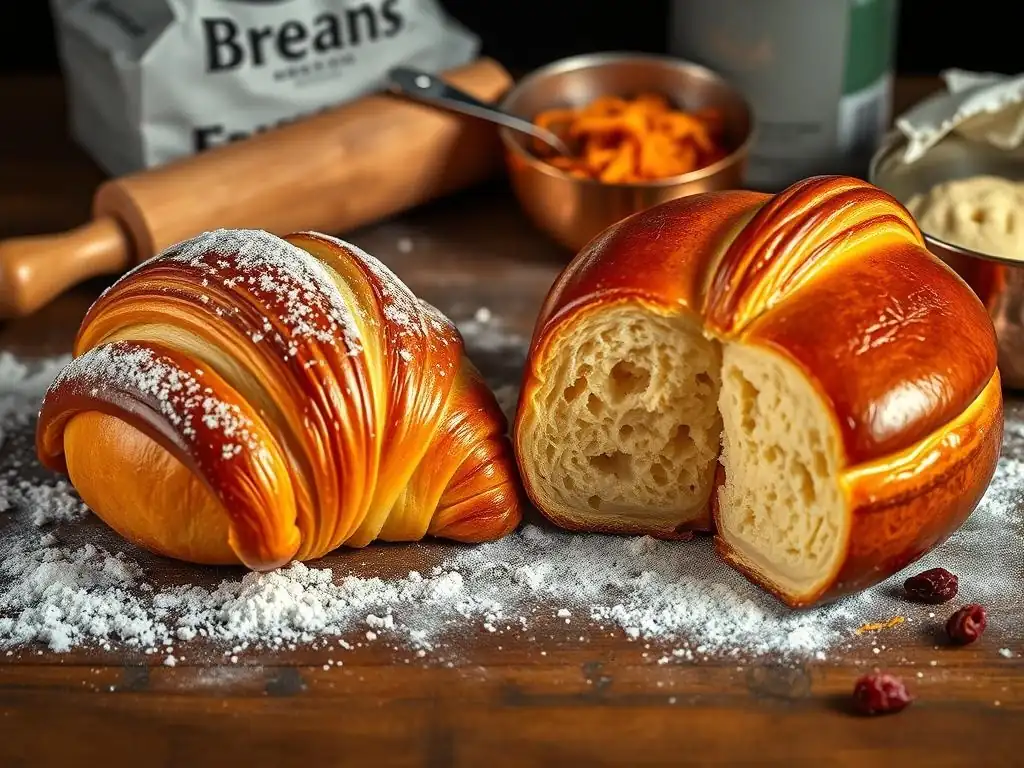
Welcome to BakeWithEase, where baking becomes a joy! Ever wondered about the subtle yet crucial differences between puff pastry and viennoiserie dough? Unraveling these secrets is key to elevating your baking game. Dive in to discover the nuances that separate these flaky delights and unlock a world of delicious possibilities. Let's explore the intricacies of puff pastry vs viennoiserie dough and transform your baking from good to unforgettable!
- Introduction: Exploring the World of Laminated Doughs
- What is Puff Pastry? A Baker's Introduction
- What is Viennoiserie Dough? Understanding the Sweet Side of Lamination
- Puff Pastry vs Viennoiserie Dough: A Detailed Comparison
- Puff Pastry: Strengths, Weaknesses, and Ideal Uses
- Viennoiserie Dough: Strengths, Weaknesses, and Ideal Uses
- Achieving Perfect Lamination: Tips for Both Doughs
- Troubleshooting Common Issues with Laminated Doughs
- Advanced Baking with Puff Pastry and Viennoiserie
- Conclusion: Choosing the Right Dough for Your Baking Needs
-
Frequently Asked Questions
- What is the main difference between puff pastry and viennoiserie dough?
- Does viennoiserie dough always contain yeast?
- Can I substitute puff pastry for viennoiserie dough in a recipe?
- Is viennoiserie dough more difficult to make than puff pastry?
- What are some common examples of items made with viennoiserie dough?
- Final Reflection: The Art of the Airy Layer – Puff Pastry vs. Viennoiserie
- Unleash Your Inner Pastry Chef!
Introduction: Exploring the World of Laminated Doughs
Welcome to the fascinating world of laminated doughs! These are the foundations of many beloved pastries, known for their incredible flakiness, rich flavor, and delicate texture. Lamination is a technique where layers of dough and butter are repeatedly folded and rolled, creating hundreds or even thousands of alternating layers. When baked, the butter melts and releases steam, which pushes the dough layers apart, resulting in that signature airy structure.
Understanding the nuances of laminated doughs is key to mastering classic pastries like croissants, pain au chocolat, and even savory tarts. While the process can seem intimidating at first, breaking it down reveals the simple principles behind these complex creations. By learning about the core components and techniques, you'll be well on your way to creating flaky, buttery delights right in your own kitchen.
Laminated Doughs: A Baker's Foundation
Laminated doughs are fundamental to a wide array of pastries found in bakeries worldwide. The basic principle involves enclosing a block of butter within a dough and then performing a series of 'turns' – rolling and folding – to create numerous thin layers. This process, while requiring patience and precision, is what distinguishes laminated pastries from simpler doughs like brioche or shortcrust.
Think of it like building a microscopic skyscraper of dough and butter. Each fold adds more layers, exponentially increasing the potential for flakiness. A typical recipe might call for 3 or 4 'single' turns (folding in thirds) or 'double' turns (folding like a book), resulting in hundreds or even over a thousand layers. The final result is a structure that shatters beautifully when bitten into, offering a delightful contrast of crispness and tender interior.
What is Puff Pastry? A Baker's Introduction
Puff pastry, or pâte feuilletée in French, is arguably the purest form of laminated dough. It consists of just a few core ingredients – flour, water, salt, and a significant amount of butter. Its magic lies entirely in the lamination process, which creates countless thin layers that puff up dramatically when baked, hence the name.
This dough is incredibly versatile, lending itself equally well to both sweet and savory applications. From delicate tart shells to impressive vol-au-vents, puff pastry provides a light, crisp, and buttery base that elevates any filling. Mastering puff pastry is a cornerstone skill for any baker looking to expand their repertoire beyond basic cakes and cookies.
Defining Puff Pastry: Layers of Butter and Dough
At its heart, puff pastry is a lean dough (meaning no sugar or fat added directly to the dough itself) wrapped around a large block of cold butter. The dough is typically made from flour, cold water, and a pinch of salt. The butter, often a high-fat European-style butter (around 82% fat content is ideal), needs to be pliable but cold enough to maintain its structure during rolling.
The defining technique is the series of folds, known as 'turns'. A common method involves a 'single' turn, where the dough is rolled out and folded into three, like a letter. Repeating this process, usually 4 to 6 times with resting periods in between, creates the characteristic layers. For example, after 6 single turns, you would have created approximately 3^6 = 729 layers of dough separated by butter. This intricate layering is what allows puff pastry to achieve such remarkable lift and flakiness during baking.
Key Characteristics of Classic Puff Pastry
Classic puff pastry is characterized by its incredible rise and distinct, separated layers when baked. It should be light, airy, and shatteringly crisp. The flavor is primarily that of butter, clean and rich, without any sweetness in the dough itself. Its texture is extremely flaky, often leaving behind delicate crumbs.
Another key characteristic is its simplicity of ingredients. Unlike other doughs, puff pastry relies solely on the steam generated by the melting butter between the dough layers for its lift. There are no leavening agents like yeast or baking powder involved in the dough itself. This reliance on physical separation through lamination and steam is what gives puff pastry its unique, expansive rise.
Uses of Puff Pastry in Baking: Savory and Sweet Applications
Puff pastry's neutral flavor and incredible texture make it suitable for a vast range of recipes. On the savory side, it's the traditional choice for Beef Wellington, where it encases tender beef and duxelles, or for making classic French appetizers like vol-au-vents (small hollow cases) filled with creamy mixtures. It's also used for quiches, sausage rolls, and tart bases, providing a flaky counterpoint to rich fillings.
For sweet dishes, puff pastry shines in pastries like palmiers (elephant ears), mille-feuille (Napoleon), and turnovers filled with fruit or cream. Its ability to puff dramatically creates impressive height in pastries like the classic French galette des rois, where it surrounds an almond cream filling. A simple sheet of puff pastry can be baked, dusted with sugar, and served as a light, crispy dessert component.
What is Viennoiserie Dough? Understanding the Sweet Side of Lamination
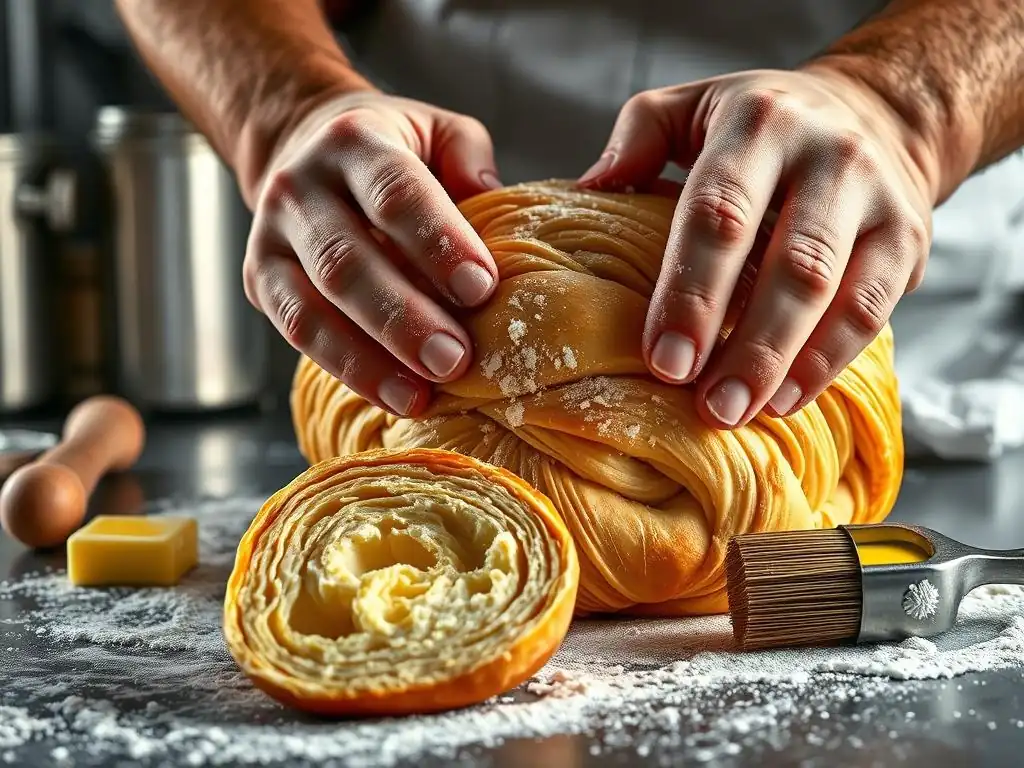
Viennoiserie refers to baked goods made from an enriched laminated dough, often containing yeast. Unlike puff pastry, which is lean, Viennoiserie dough includes ingredients like sugar, milk, and sometimes eggs, making it richer and slightly sweeter. This category includes many breakfast pastries we adore, like croissants and pain au chocolat.
The presence of yeast adds another dimension to the dough's structure and flavor. It undergoes a proofing period, where the yeast ferments and produces gas, contributing to a softer, more bread-like interior structure compared to the purely layered puff pastry. This combination of lamination and yeast leavening gives Viennoiseries their unique balance of flakiness and tender crumb.
Defining Viennoiserie: Enriched Laminated Doughs
Viennoiserie dough starts with a basic enriched dough base, similar to brioche, containing flour, liquid (often milk), yeast, sugar, salt, and sometimes eggs. This dough is then laminated with butter, much like puff pastry. The key difference is the initial dough composition and the inclusion of yeast.
The enrichment from sugar, milk, and eggs gives the dough a softer texture and a slightly sweet flavor profile even before lamination. After the initial dough is made and has had a brief rest, a block of butter is incorporated, and the dough is subjected to turns, typically 3 or 4 single or double turns, similar to puff pastry but often fewer. The dough then requires a significant proofing period to allow the yeast to work, developing flavor and contributing to the final texture.
Key Characteristics of Viennoiserie Dough: Sweetness and Yeast
The defining characteristics of Viennoiserie dough are its richness, slight sweetness, and the presence of yeast. While it achieves flakiness through lamination, it also has a more open, airy, and somewhat chewy interior crumb thanks to the yeast fermentation. The flavor is richer and more complex than puff pastry, with notes of butter, sugar, and the subtle tang from the yeast.
Unlike puff pastry which relies solely on steam for lift, Viennoiserie dough gets lift from both steam and the carbon dioxide produced by the yeast during proofing and baking. This dual leavening results in pastries that are flaky on the outside but have a softer, more substantial interior structure. A perfectly baked croissant, for example, should be crisp and flaky on the exterior but have a delicate, honeycombed crumb inside.
Common Viennoiseries: Croissants, Pain au Chocolat, and More
The world of Viennoiserie is vast and delicious, encompassing many breakfast and snack pastries. The most iconic examples are the croissant and pain au chocolat (chocolate croissant), both made from classic Viennoiserie dough. Other popular examples include pain aux raisins (snail-shaped pastries with pastry cream and raisins), Danish pastries (often filled with fruit or cheese), and brioche feuilletée (a laminated version of brioche).
Regional variations also exist, such as the Kouign Amann from Brittany, a round pastry made from laminated dough with layers of butter and sugar caramelized during baking. While the specific shaping and fillings vary, the common thread is the use of an enriched, yeast-leavened, laminated dough that bakes up into a rich, flaky, and slightly sweet treat.
Puff Pastry vs Viennoiserie Dough: A Detailed Comparison
Understanding the core differences between puff pastry and Viennoiserie dough is crucial for selecting the right dough for your baking project and achieving the desired results. While both rely on the principle of lamination, their ingredients, techniques, and resulting textures set them apart significantly.
This comparison highlights the fundamental distinctions, from the basic dough composition to the final baked characteristics. By examining these factors, you can better appreciate why a croissant requires Viennoiserie dough and a mille-feuille demands puff pastry, even though they share the lamination process.
Ingredient Differences: Flour, Butter, and the Addition of Yeast
The most significant ingredient differences lie in the dough base and the inclusion of yeast. Puff pastry dough is a simple mixture of flour, water, and salt, making it lean and neutral. Viennoiserie dough, on the other hand, is enriched with sugar, milk, and often eggs, giving it sweetness and richness.
Crucially, Viennoiserie dough contains yeast, which is entirely absent in traditional puff pastry. Both doughs use a significant amount of cold butter for lamination, typically around 50-100% of the flour weight, but the composition of the dough wrapped around the butter is fundamentally different.
For example, a standard puff pastry recipe might use 250g flour, 125ml water, a pinch of salt, and 250g butter for lamination, whereas a Viennoiserie recipe might use 250g flour, 100ml milk, 25g sugar, 5g yeast, 1 egg, a pinch of salt, and 150g butter for lamination. These ingredient variations directly impact the dough's handling properties and the final baked good.
Lamination Techniques: Folding for Flakiness vs. Lightness
While both doughs are laminated using repeated rolling and folding, the approach can differ slightly, and the goal is slightly different due to the dough's composition. Puff pastry often undergoes more turns (e.g., 6 single turns) to maximize the number of layers and achieve maximum puff and flakiness. The lean dough is typically firmer and can withstand more rigorous rolling.
Viennoiserie dough, being enriched and containing yeast, is generally softer and more extensible. It typically undergoes fewer turns (e.g., 3-4 single or double turns). The goal is to create sufficient layers for flakiness, but also to allow the yeast to develop and create an open, airy crumb structure. The proofing step, essential for Viennoiserie, is not a factor in puff pastry lamination itself, though puff pastry benefits from resting periods to relax the gluten between turns.
Taste and Texture Profile: The Key Distinctions
The taste and texture are the most obvious differences between puff pastry and Viennoiserie. Puff pastry bakes up incredibly light, airy, and extremely flaky, with a clean, buttery flavor. It's brittle and shatters easily, offering a delicate crispness. There is no chewiness to the interior; it's all about the separation of thin, crisp layers.
Viennoiserie, while also flaky on the exterior, has a richer, slightly sweet flavor profile due to the added sugar, milk, and sometimes egg. The interior crumb is softer, more open, and has a slight chewiness thanks to the yeast. A good croissant, for instance, should have a crisp, flaky exterior that gives way to a tender, honeycombed interior. This contrast in texture and the richer taste are the hallmarks of Viennoiserie compared to the pure flakiness of puff pastry vs viennoiserie dough.
Puff Pastry: Strengths, Weaknesses, and Ideal Uses
Puff pastry is a powerful tool in a baker's arsenal, offering unparalleled flakiness and versatility. However, like any dough, it has its own set of characteristics that make it better suited for certain applications than others. Understanding its strengths and weaknesses helps in choosing the right dough for your recipe.
Knowing when to reach for puff pastry versus Viennoiserie dough is key to successful baking. Its ability to puff dramatically makes it ideal for impressive presentations, while its lack of sweetness makes it adaptable to a wide range of fillings.
Advantages of Using Puff Pastry in Baking
One of the primary advantages of puff pastry is its dramatic puff and incredible flakiness, creating a light and delicate texture unmatched by other doughs. Its neutral flavor profile means it pairs beautifully with both sweet and savory ingredients, allowing the filling to be the star. For instance, a savory tart made with puff pastry lets the flavors of cheese and vegetables shine, while a fruit turnover highlights the fruit.
Another advantage is its relative simplicity in terms of ingredients (just flour, water, salt, butter), making the quality of the lamination the main focus. While the lamination process requires skill, the dough base itself is straightforward. It also freezes exceptionally well, allowing bakers to prepare it in advance and bake fresh as needed. A properly made puff pastry can expand up to 8 times its original height during baking.
Disadvantages of Using Puff Pastry
Despite its advantages, puff pastry can be challenging to master. The lamination process is sensitive to temperature; if the butter is too soft, it can melt into the dough, resulting in a greasy, dense pastry instead of distinct layers. Overworking the dough can develop too much gluten, leading to toughness instead of flakiness.
Another potential disadvantage is that it can be perceived as 'dry' or 'lean' compared to enriched doughs if not paired with a moist filling. Its pure flakiness doesn't offer the same soft, bread-like crumb found in Viennoiseries. Achieving consistent, even puff across a large sheet of dough requires careful handling and even rolling.
Best Recipes for Puff Pastry: Vol-au-vents, Palmiers, Beef Wellington
Puff pastry excels in recipes where maximum puff and flakiness are desired. Classic examples include elegant vol-au-vents, small hollow puff pastry cases perfect for creamy savory fillings like chicken or mushroom. Palmiers, also known as elephant ears, are simple yet delightful pastries made by rolling up sugar-coated puff pastry and slicing it before baking, creating a crisp, caramelized treat.
For a show-stopping main course, Beef Wellington traditionally uses puff pastry to encase tender beef fillet, often with a layer of mushroom duxelles and sometimes pâté. The pastry bakes into a golden, flaky crust surrounding the succulent meat. Other ideal uses include tart shells for fruit or custard tarts, cheese straws, and simple turnovers.
Viennoiserie Dough: Strengths, Weaknesses, and Ideal Uses
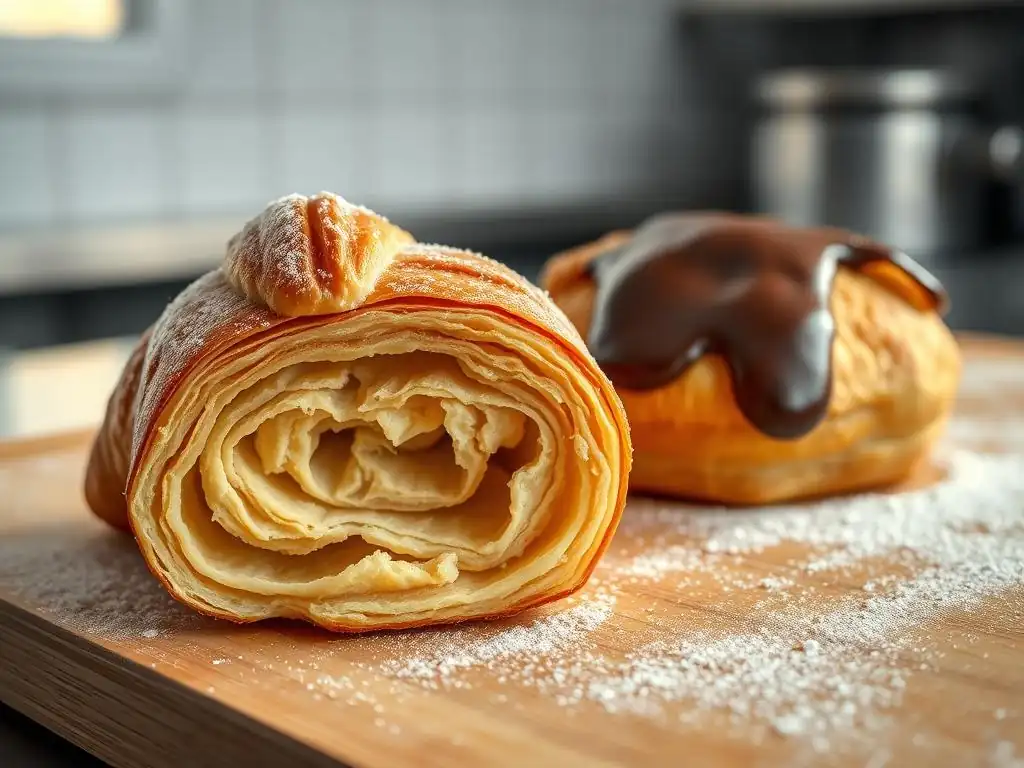
Viennoiserie dough offers a different kind of magic: a perfect balance of flaky exterior and rich, soft interior. Its enriched nature and the inclusion of yeast give it a depth of flavor and texture that sets it apart from lean puff pastry.
Understanding the characteristics of Viennoiserie dough helps explain why certain pastries have that specific irresistible texture and taste. It's the dough of choice for many breakfast and brunch favorites, providing richness and substance alongside flakiness.
Advantages of Baking with Viennoiserie Dough
A major advantage of Viennoiserie dough is its rich, complex flavor and appealing texture combination. The combination of lamination, enrichment (sugar, milk, eggs), and yeast fermentation results in pastries that are flaky on the outside but soft, tender, and slightly chewy on the inside, with a delightful buttery and slightly sweet taste. This textural contrast is highly desirable in many pastries.
The presence of yeast also contributes to a more open crumb structure compared to the tightly packed layers of puff pastry. This open structure is particularly evident in a well-made croissant. The dough is also generally more forgiving during lamination than lean puff pastry due to its higher fat and sugar content, which tenderize the gluten.
Disadvantages of Using Viennoiserie Dough
Viennoiserie dough is arguably more complex to make than puff pastry due to the inclusion of yeast. It requires precise temperature control not only during lamination but also during the proofing stage, which is crucial for developing flavor and achieving the correct rise. Under-proofing can lead to a dense, heavy pastry, while over-proofing can cause the butter layers to melt and leak out during baking.
The enriched nature means it's less adaptable to purely savory applications compared to puff pastry, although some savory Viennoiseries do exist (like ham and cheese croissants). The process, including dough mixing, lamination, shaping, and proofing, typically takes longer than making puff pastry due to the yeast's required fermentation time.
Best Recipes for Viennoiserie Dough: Croissants, Pain aux Raisins, Kouign Amann
Viennoiserie dough is essential for crafting iconic breakfast pastries. The classic croissant is the ultimate test of Viennoiserie skill, aiming for a crisp, flaky exterior and a light, airy, honeycombed interior. Pain au chocolat is another staple, made by wrapping the dough around dark chocolate batons.
Pain aux raisins (snail pastries with pastry cream and raisins) and various Danish pastries (filled with fruit, cheese, or nuts) also showcase the versatility of Viennoiserie dough. The rich dough stands up well to sweet fillings and glazes. The Kouign Amann, a caramelized Breton specialty, uses a similar enriched laminated dough with generous amounts of sugar folded in, resulting in a pastry that is simultaneously flaky, tender, and wonderfully caramelized.
Achieving Perfect Lamination: Tips for Both Doughs
Mastering laminated doughs, whether puff pastry vs viennoiserie dough, hinges on a few critical factors. Temperature control, gentle handling, and understanding the dough's behavior are paramount to achieving those coveted distinct layers and the perfect bake.
Paying close attention to these details throughout the process – from mixing the dough to the final shaping – can significantly improve your results and help you avoid common pitfalls that lead to dense or greasy pastries.
Controlling Butter Temperature for Optimal Layers
The temperature of the butter is perhaps the single most important factor in successful lamination. The butter block needs to be cold enough to remain solid and distinct from the dough layers during rolling and folding, but pliable enough to roll out evenly without breaking into pieces. Ideally, the butter should be around 50-55°F (10-13°C).
If the butter is too cold and hard, it will shatter during rolling, creating an uneven distribution and potentially tearing the dough. If it's too warm and soft, it will melt into the dough, resulting in a greasy texture and poor layer separation during baking. Using high-quality butter with a higher fat content (like European-style butter, typically 82% fat) is also beneficial, as it contains less water and melts at a slightly higher temperature, making it easier to work with. Chilling the dough and butter between turns is essential to maintain the correct temperature.
Dough Handling Techniques: Avoiding Tough Dough
Gentle handling is crucial when working with laminated doughs to avoid developing too much gluten, which can lead to a tough pastry. After mixing the initial dough, allow it to rest sufficiently to relax the gluten before beginning lamination. During rolling, use even pressure and roll in consistent directions, typically away from your body.
Avoid stretching or pulling the dough aggressively. If the dough resists rolling, cover it and let it rest in the refrigerator for 10-15 minutes to allow the gluten to relax before continuing. Rolling on a lightly floured surface helps prevent sticking, but avoid using excessive flour, which can dry out the dough and interfere with lamination. The goal is to roll the dough thinly and evenly to create uniform layers.
Proofing Viennoiseries: The Importance of Yeast Activity
For Viennoiserie dough, proper proofing is just as critical as lamination. Proofing allows the yeast to ferment, producing carbon dioxide gas that expands the dough and contributes to the open, airy crumb structure. The ideal proofing environment is warm and humid, typically around 75-80°F (24-27°C) with 70-80% humidity.
Over-proofing can cause the dough structure to collapse and the butter to melt out before baking. Under-proofing will result in a dense, heavy pastry with poor rise. You can test for proper proofing by gently pressing the dough; it should spring back slowly, leaving a slight indentation. A typical proofing time for croissants might range from 1.5 to 2.5 hours, depending on the temperature and humidity. This step is unique to Viennoiserie and a key difference when comparing puff pastry vs viennoiserie dough preparation.
Troubleshooting Common Issues with Laminated Doughs
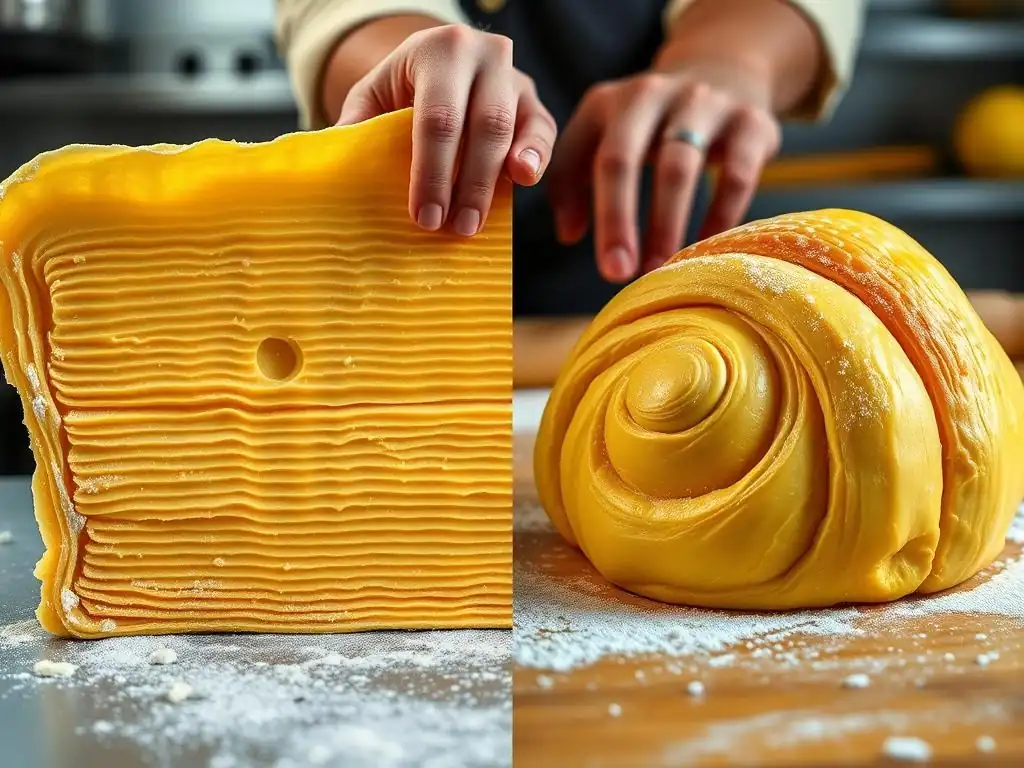
Working with laminated doughs can present challenges, but many common issues can be diagnosed and corrected with a little knowledge. Understanding why things go wrong is the first step to achieving consistent success with both puff pastry vs viennoiserie dough.
From butter leaks to dense interiors, troubleshooting is a normal part of the baking process when dealing with these complex doughs. Don't get discouraged; each attempt is a learning opportunity.
Preventing Butter Leakage During Baking
Butter leakage, often called "butter bleed," is a common and frustrating issue. It typically occurs when the butter layers are not distinct enough, or the dough structure is compromised, allowing the melting butter to escape rather than create steam and lift the layers. This can happen if the butter was too soft during lamination, if the dough was overworked or torn, or if Viennoiserie dough was over-proofed.
To prevent this, ensure your butter is the correct consistency (pliable but cold) during lamination and rest the dough sufficiently between turns in the refrigerator (at least 30 minutes) to keep everything cold and firm. For Viennoiseries, avoid over-proofing and ensure your oven is preheated to the correct high temperature (often 400-425°F or 200-220°C) before baking. A hot oven helps the butter solidify slightly on the outside before melting internally, promoting better layer separation.
Avoiding a Dense or Under-Proofed Dough
A dense or heavy texture in laminated pastries can be caused by several factors. For puff pastry, it might be insufficient turns, butter melting into the dough during lamination, or baking at too low a temperature, which doesn't create enough steam for lift. For Viennoiserie, under-proofing is a primary culprit, as the yeast hasn't produced enough gas to create an open structure.
To avoid density in puff pastry, ensure proper lamination technique, keep dough and butter cold, and bake in a hot oven. For Viennoiserie, allow adequate proofing time in a warm, humid environment. The dough should feel airy and have increased significantly in size (often doubled or nearly tripled for croissants) before baking. Gentle handling during shaping also prevents knocking out too much air.
Achieving Even Baking and Golden-Brown Color
Achieving an even golden-brown color and consistent bake across all layers can be tricky. This often relates to oven temperature, baking time, and the initial shape of the pastry. If the oven is too hot, the outside might burn before the inside is cooked and the layers have fully separated. If it's too cool, the butter might melt out, and the pastry won't puff properly.
Ensure your oven is accurately calibrated. Baking on a baking stone or steel can help provide consistent bottom heat. Rotating the baking sheet halfway through the baking time ensures even browning. For larger pastries, you might need to reduce the oven temperature slightly after the initial puff is achieved to allow the interior to cook through without the exterior burning. A good indicator of a fully baked pastry is a deep golden color and a light feel.
Advanced Baking with Puff Pastry and Viennoiserie
Once you've mastered the basics of puff pastry vs viennoiserie dough, you can explore more complex techniques and creative applications. Advanced methods often involve intricate shaping, combining different doughs or fillings, and pushing the boundaries of lamination.
These advanced techniques build upon the fundamental principles of dough handling, temperature control, and lamination, allowing for even more impressive and delicious creations.
Creative Variations and Flavor Combinations
Beyond classic croissants and turnovers, laminated doughs offer endless possibilities for creative flavor combinations. For Viennoiserie, you can experiment with different fillings like pistachio cream, almond paste, or savory options like spinach and feta. Adding spices or citrus zest to the dough itself can also introduce new dimensions.
For puff pastry, consider layering it with ingredients before rolling, such as cheese, herbs, or spices, to create flavored sheets. You can also use it to encase unusual fillings, like sweet fruit and cheese combinations or gourmet savory mixtures. Exploring different glazes and finishes, like sugar syrups, egg washes, or coarse sugar, can also enhance both flavor and appearance.
Mastering Complex Lamination Techniques
Advanced lamination can involve experimenting with different types of turns (single, double, book folds) and varying the number of turns to achieve specific textures. Some recipes call for hybrid methods, like incorporating butter differently or using alternative fats. Mastering techniques like inverted puff pastry, where the butter wraps around the dough, can result in an even flakier texture.
Precision in rolling and folding becomes even more critical in advanced techniques, often aiming for perfectly uniform layers across large sheets of dough. Understanding how humidity and flour type affect dough extensibility is also key to successfully executing complex laminations.
Mille-Feuille Construction: A Detailed Guide
The Mille-feuille ("thousand leaves") is a classic example of an advanced puff pastry application. It consists of three layers of perfectly baked, caramelized puff pastry interspersed with two layers of pastry cream. Construction requires baking large sheets of puff pastry until golden, crisp, and flat (often by baking between two baking sheets to prevent excessive puff).
After baking, the sheets are typically trimmed to size and can be lightly caramelized with powdered sugar under a broiler or with a blow torch. Pastry cream is then piped evenly onto two of the layers, and the sheets are carefully stacked. The top layer is often decorated with powdered sugar, a glaze, or additional pastry cream. Achieving clean layers, neat trimming, and smooth piping are key to a successful Mille-feuille, showcasing the incredible flakiness of the puff pastry.
Conclusion: Choosing the Right Dough for Your Baking Needs
Deciding between puff pastry vs viennoiserie dough ultimately depends on the desired outcome for your baked good. If you're aiming for maximum flakiness, a neutral, buttery flavor, and a pastry that shatters rather than chews, puff pastry is your ideal choice. It's perfect for savory applications, delicate tart shells, and pastries where the filling is the primary focus.
If you seek a pastry that combines flakiness with a richer, slightly sweet flavor and a soft, airy interior crumb, Viennoiserie dough is the way to go. It's the foundation for beloved breakfast pastries and treats where the dough itself contributes significantly to the overall taste and texture experience.
Recap: Puff Pastry vs Viennoiserie - Key Takeaways
To summarize the key differences between puff pastry vs viennoiserie dough:
- Ingredients: Puff pastry is lean (flour, water, salt, butter); Viennoiserie is enriched (flour, liquid, sugar, salt, often egg, butter) and contains yeast.
- Leavening: Puff pastry relies solely on steam from melting butter; Viennoiserie uses both steam and yeast fermentation.
- Texture: Puff pastry is extremely flaky, crisp, and shatters; Viennoiserie is flaky on the outside but has a softer, airy, slightly chewy interior crumb.
- Flavor: Puff pastry is neutral and purely buttery; Viennoiserie is richer, buttery, and slightly sweet with notes from yeast.
- Uses: Puff pastry is versatile for savory and sweet (tarts, vol-au-vents, palmiers); Viennoiserie is primarily for sweet breakfast pastries (croissants, pain au chocolat, Danishes).
Understanding these distinctions empowers you to select the appropriate dough for your recipe and anticipate the texture and flavor profile you will achieve.
Further Exploration of Laminated Dough Techniques
Mastering puff pastry vs viennoiserie dough is a journey that rewards practice and patience. Don't be discouraged by initial attempts that may not be perfect. Each batch teaches you more about dough handling, temperature control, and the nuances of lamination.
Explore variations in butter types, flour protein levels, and folding techniques. Experiment with different resting times and proofing conditions (for Viennoiserie). As you gain experience, you'll develop an intuitive feel for the dough and butter, leading to consistent success and the ability to create truly spectacular laminated pastries. Continue practicing, and you'll unlock the full potential of these incredible doughs.
Frequently Asked Questions
What is the main difference between puff pastry and viennoiserie dough?
The primary difference lies in their fat incorporation method. Puff pastry uses lamination, layering butter between dough, while viennoiserie incorporates fat and often yeast for a richer, bread-like quality.
Does viennoiserie dough always contain yeast?
While not always, viennoiserie dough typically includes yeast or a similar leavening agent, contributing to its characteristic airy and enriched texture, unlike puff pastry.
Can I substitute puff pastry for viennoiserie dough in a recipe?
Generally, no. Puff pastry creates flaky layers, while viennoiserie offers a softer, more bread-like result. The textures and flavors are significantly different.
Is viennoiserie dough more difficult to make than puff pastry?
Viennoiserie dough is often considered more challenging due to the added complexity of yeast fermentation and precise temperature control required for proofing.
What are some common examples of items made with viennoiserie dough?
Popular examples include croissants, pain au chocolat, and brioche. These pastries showcase the dough's rich, buttery flavor and soft, airy texture.
Final Reflection: The Art of the Airy Layer – Puff Pastry vs. Viennoiserie
The delicate dance between butter and flour, the transformative power of lamination – these are the heartbeats of both puff pastry and viennoiserie, techniques that continue to captivate bakers worldwide. Understanding the nuanced differences between these two methods is not just a matter of technical skill; it's a key to unlocking a world of flavor and texture, influencing everything from classic croissants to elegant palmiers. The precision and patience required highlight the artistry inherent in baking.
The enduring appeal of these techniques lies in their ability to elevate simple ingredients into something truly extraordinary. The sheer beauty of a perfectly layered pastry, the satisfying crunch, and the melt-in-your-mouth richness – these are sensory experiences that transcend mere sustenance. Baking is at once child's play and adult joy. And love, of course.
– Paul Hollywood. This quote perfectly encapsulates the passion and dedication required to master these techniques, and the profound satisfaction derived from the process. The impact of these baking methods extends beyond the individual baker, shaping culinary traditions and influencing the global landscape of desserts.
Now, consider your own baking journey. Perhaps you've already experimented with puff pastry or viennoiserie, or maybe this article has sparked a newfound curiosity. I invite you to embrace the challenge, to explore the intricacies of these techniques, and to discover the unique joy that comes from creating something beautiful and delicious with your own hands. Whether you're a seasoned baker or a curious beginner, the world of layered doughs awaits – a world of endless possibilities, waiting to be explored and perfected, one delicate layer at a time.
Unleash Your Inner Pastry Chef!
Thanks for taking the time to explore the delicious world of puff pastry and viennoiserie doughs! You've now got the knowledge to confidently tackle even the most intricate baked goods. Ready to put your newfound expertise to the test?
- Master a new recipe: Choose one of the techniques discussed and bake something amazing this week. Think of the pride you'll feel!
- Share your creations: Show off your baking skills and inspire others by sharing photos of your masterpiece on social media. Use #BakeWithEase to connect with our community!
- Challenge yourself: Try a more complex recipe that combines both puff pastry and viennoiserie techniques – the results will be truly spectacular!
What incredible pastry will you create first? Let us know in the comments below!