
How Sugar Affects Your Croissant Dough

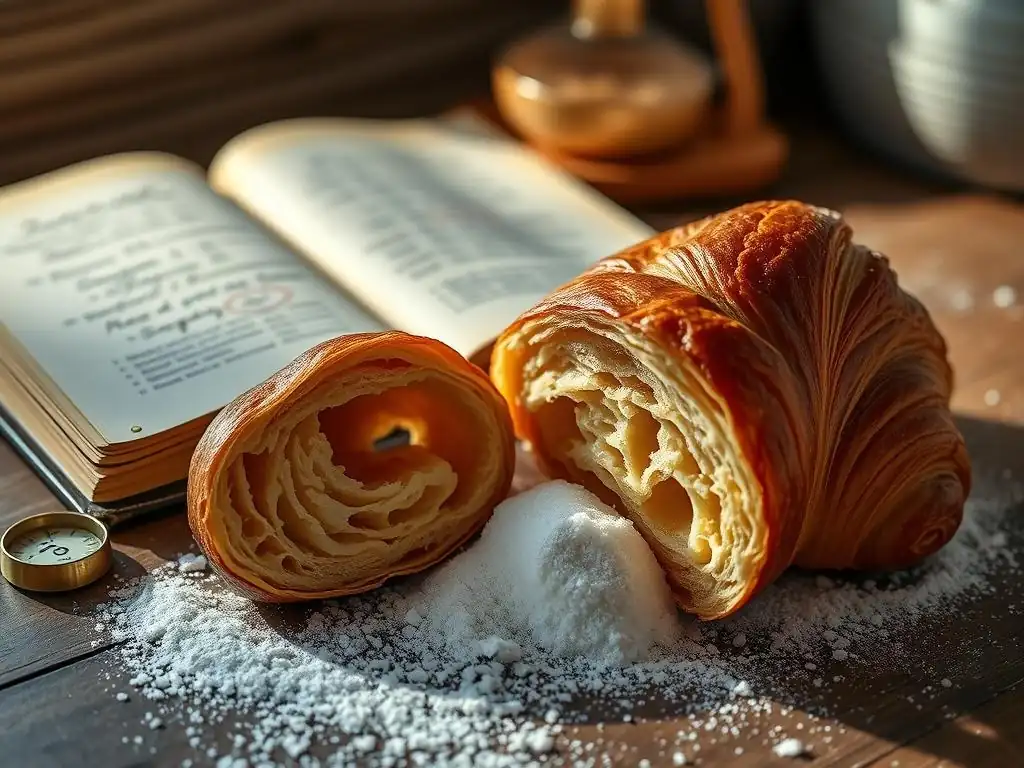
Welcome to BakeWithEase, your guide to baking brilliance! Ever wondered how sugar truly impacts your sugar croissant dough recipe? This article dives deep into the science and art of croissant creation, revealing the secrets to achieving that perfect, flaky texture and irresistibly sweet flavor. Discover how this key ingredient influences everything from rise to browning – and unlock the potential to elevate your baking skills. Prepare to be amazed!
- The Role of Sugar in Croissant Dough: A Baker's Guide
- Understanding Sugar's Function in Croissant Dough
- The Science of Sugar and Croissant Lamination
- Sugar Types and Their Impact on Croissant Dough
- Troubleshooting Sugar-Related Issues in Croissant Baking
- Expert Tips for Using Sugar in Croissant Dough
- Preparing Croissant Dough: A Step-by-Step Guide
- Advanced Techniques for Croissant Dough
- Conclusion: Mastering Sugar for Delicious Croissants
-
Frequently Asked Questions
- What role does sugar play in a sugar croissant dough recipe?
- How does sugar content affect the texture of sugar croissants?
- Can I substitute different types of sugar in a sugar croissant dough recipe?
- What happens if I omit sugar from a sugar croissant dough recipe?
- How does sugar interact with yeast in sugar croissant dough recipe?
- Final Reflection: The Sweet Science of Croissant Perfection
- Unlock Your Croissant's Potential!
The Role of Sugar in Croissant Dough: A Baker's Guide
Welcome back to the BakeWithEase kitchen! Today, we're diving deep into a seemingly simple ingredient that plays a surprisingly complex role in creating that perfect, flaky croissant: sugar. While you might think of sugar primarily for sweetness, its functions in a classic sugar croissant dough recipe extend far beyond taste, influencing everything from texture and color to fermentation and structure.
Understanding the science behind how sugar interacts with other ingredients like flour, yeast, and butter is key to mastering this delicate pastry. Whether you're aiming for a classic French croissant or experimenting with a slightly sweeter sugar croissant dough recipe variation, knowing sugar's multifaceted contribution will elevate your baking skills and help you troubleshoot common issues.
Understanding Sugar's Function in Croissant Dough
Sugar, typically granulated sucrose in most sugar croissant dough recipes, acts as more than just a sweetener. It's a crucial player in the complex chemical and biological processes that transform simple ingredients into a layered, golden-brown delight. Its functions are intertwined with gluten development, yeast activity, and the Maillard reaction, all contributing to the final sensory experience of a well-baked croissant.
Beyond the purely technical aspects, sugar contributes significantly to the overall appeal of a croissant. It balances the richness of the butter and the subtle tang from fermentation, creating a harmonious flavor profile. Furthermore, its interaction with heat during baking is responsible for desirable characteristics like a crisp crust and a tender interior crumb.
Why Sugar is Important for Croissant Quality
Sugar is vital for several quality attributes in a sugar croissant dough recipe. Firstly, it provides readily available food for the yeast, fueling fermentation. This fermentation produces carbon dioxide gas, which is trapped by the gluten network, causing the dough to rise and develop its airy structure during proofing and baking. Without sufficient sugar (or other fermentable carbohydrates), yeast activity would be sluggish, resulting in a dense, flat croissant.
Secondly, sugar contributes to the browning of the crust through caramelization and the Maillard reaction. As the dough bakes, sugar molecules break down and react with proteins, creating hundreds of flavor compounds and the characteristic golden-brown color. A typical sugar croissant dough recipe might contain around 5-10% sugar relative to the flour weight, which is enough to achieve beautiful browning without making the dough excessively sweet. This level of sugar ensures a visually appealing crust that is also structurally sound and flavorful.
Sugar's Impact on Croissant Texture and Flavor Development
Sugar significantly impacts both the texture and flavor of the final croissant. In terms of texture, sugar is hygroscopic, meaning it attracts and retains moisture. This helps keep the baked croissant interior tender and moist, preventing it from drying out quickly. It also slightly inhibits gluten development, resulting in a more tender crumb compared to a dough made without sugar, which can be advantageous in a rich, laminated dough where excessive chewiness is undesirable.
Flavor-wise, sugar provides sweetness, which balances the richness of the butter and the slightly acidic notes from fermentation. During baking, the caramelization process transforms sugars into complex, nutty, and slightly bitter flavors that add depth to the crust. The Maillard reaction, enhanced by the presence of sugar and protein, further contributes to savory, toasted notes. A well-formulated sugar croissant dough recipe leverages these interactions to create a complex and satisfying taste experience.
The Science of Sugar and Croissant Lamination
Lamination is the signature technique for croissants, creating hundreds of thin layers of dough separated by butter. Sugar interacts with the dough structure and the butter layers in subtle but important ways throughout this process, from the initial mixing to the final bake. Understanding these interactions helps ensure successful lamination and a flaky result.
Sugar's influence on the dough's rheology (how it flows and deforms) affects how easily it can be rolled and folded without tearing the delicate layers or squeezing out the butter. Its impact on gluten and yeast activity also dictates the dough's ability to rise and maintain layer separation during proofing and baking.
Sugar's Effect on Gluten Development in Croissant Dough
Sugar competes with flour for water during the initial mixing phase. Because sugar is highly soluble and attracts water, it can reduce the amount of water available for gluten proteins (glutenin and gliadin) to hydrate and form the gluten network. This slight inhibition of gluten development can be beneficial in laminated doughs.
A slightly less developed gluten network makes the dough more extensible and less elastic, allowing it to be rolled out thinly and repeatedly during lamination without excessive snap-back or tearing. While some gluten development is necessary to provide structure and trap gases, too much can make the dough tough and difficult to handle. The typical sugar content in a sugar croissant dough recipe helps strike this balance, resulting in a dough that is strong enough to hold its shape but pliable enough for successful lamination.
How Sugar Influences Yeast Activity in Croissants
Yeast fermentation is crucial for the rise and flavor development of croissant dough. Sugar provides the primary food source for the yeast (Saccharomyces cerevisiae). The yeast consumes simple sugars (like glucose and fructose, which are derived from sucrose) and produces carbon dioxide gas and ethanol as byproducts.
A sufficient amount of sugar, typically around 5-10% of the flour weight in a sugar croissant dough recipe, ensures vigorous yeast activity during bulk fermentation and proofing. This produces the necessary gas to create the open, airy structure. However, too much sugar (e.g., above 15-20%) can actually inhibit yeast activity through osmotic pressure, drawing water out of the yeast cells. Maintaining the correct sugar level is therefore essential for achieving optimal rise and a light, airy crumb.
Sugar's Contribution to Croissant Browning and Crust Development
Sugar is a key player in the reactions that create the desirable golden-brown crust of a croissant: caramelization and the Maillard reaction. Caramelization occurs when sugars are heated to high temperatures (above 320°F or 160°C), breaking down and forming brown-colored compounds with complex flavors.
The Maillard reaction is a complex series of chemical reactions between amino acids (from protein) and reducing sugars that occurs at temperatures above 280°F (140°C). This reaction is responsible for the vast majority of flavor compounds and the brown color in baked goods. Sugar provides the necessary reducing sugars for this reaction to occur effectively. The sugar content in a sugar croissant dough recipe directly influences the extent of these browning reactions; more sugar generally leads to faster and deeper browning, contributing to a crisp, flavorful crust.
Sugar Types and Their Impact on Croissant Dough
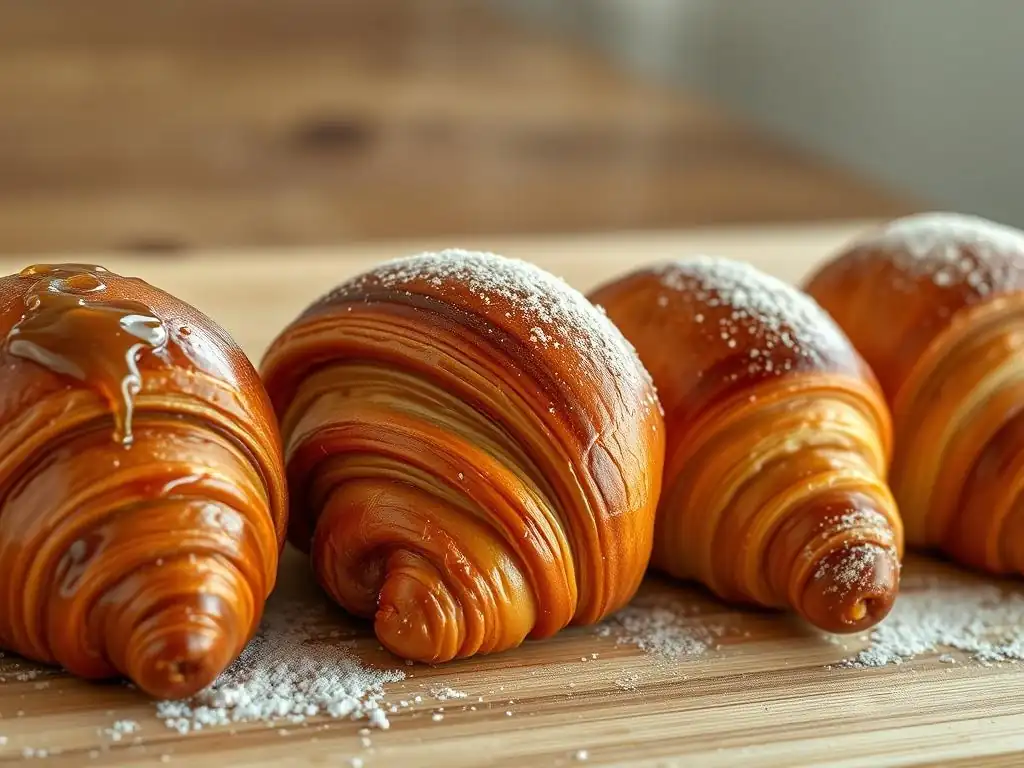
While granulated sugar (sucrose) is the most common choice for a sugar croissant dough recipe, other types of sugar and sweeteners can be used, each imparting slightly different characteristics to the final product. Understanding these differences can help you choose the best sweetener for your desired outcome.
The type of sugar influences not only sweetness but also moisture retention, browning capability, and even the dough's handling properties. Experimenting with different sugars can lead to unique flavor profiles and textures in your homemade croissants.
Granulated Sugar vs. Powdered Sugar in Croissant Dough
Granulated sugar, or table sugar, is the standard for most baking, including a classic sugar croissant dough recipe. Its crystalline structure dissolves relatively easily in the dough's liquid components, providing food for yeast and participating in browning reactions. It's easy to measure accurately and is widely available.
Powdered sugar (confectioners' sugar) is granulated sugar that has been ground into a fine powder, usually mixed with a small amount of cornstarch (typically 3%). While it dissolves very quickly, the cornstarch can potentially affect the dough's structure slightly, though this is usually negligible at typical usage levels. Powdered sugar is not commonly used within the dough for lamination, but it's perfect for dusting finished croissants. Using granulated sugar in the dough is generally preferred for its consistent performance in yeast activity and browning.
The Influence of Honey and Malt Syrup on Croissant Dough
Honey and malt syrup are liquid sweeteners that contain different types of sugars than granulated sugar (sucrose). Honey is primarily fructose and glucose, while malt syrup is rich in maltose. These sugars are readily fermentable by yeast and contribute to browning, often producing a slightly different color and flavor profile.
Using honey or malt syrup in a sugar croissant dough recipe can add subtle floral (honey) or malty (malt syrup) notes and contribute to a softer crumb due to their hygroscopic nature. Malt syrup, in particular, is known for promoting excellent browning and crust crispness.
However, because they are liquids, they add hydration to the dough, which must be accounted for in the overall liquid balance. They also contain enzymes that can affect gluten structure if used in large quantities, so they are often used in smaller amounts as an addition rather than a direct substitution for all the granulated sugar.
Working with laminated dough can present challenges, and sometimes issues arise that are directly or indirectly related to sugar. Knowing how sugar influences dough behavior can help you diagnose problems and adjust your technique or recipe accordingly.
Common issues include dough that is too sticky, croissants that don't rise properly, or those that brown too quickly or too slowly. By understanding sugar's role in hydration, yeast activity, and browning, you can better address these problems in your sugar croissant dough recipe attempts.
Managing Dough Stickiness: Sugar and Hydration Balance
Sugar is highly hygroscopic, meaning it attracts and holds onto water. While beneficial for moisture retention in the final product, adding sugar to a dough increases its overall stickiness because the sugar molecules are competing for the available water that would otherwise hydrate the flour proteins.
If your sugar croissant dough recipe seems excessively sticky, it could be due to the sugar content relative to the hydration level. Ensure you are measuring ingredients accurately. If the recipe calls for a high percentage of sugar, you might need slightly less total liquid than a low-sugar dough. Working with chilled dough is also crucial; cold dough is less sticky and easier to handle during lamination. Using a light dusting of flour on your work surface and rolling pin can help, but avoid incorporating too much extra flour into the dough layers, which can toughen the croissant.
Achieving Optimal Croissant Rise: Sugar and Yeast Balance
Proper rise during bulk fermentation and proofing is essential for a light and airy croissant. Sugar provides the fuel for yeast, but the balance is critical. Too little sugar means insufficient food for the yeast, leading to slow or minimal gas production and a poor rise.
Conversely, too much sugar (typically above 15-20% of flour weight) can create an environment with high osmotic pressure, drawing water out of the yeast cells and inhibiting their activity. This is why enriched doughs with very high sugar content (like brioche) often require osmotolerant yeast. For a standard sugar croissant dough recipe, ensure you are using the correct amount of active or instant dry yeast and that your sugar is within the typical range (5-10%). Also, verify your water temperature is appropriate for activating the yeast (around 105-115°F or 40-46°C for active dry yeast).
Preventing Excessive Browning: Controlling Maillard Reaction
Excessive browning can result in a dark, hard, and potentially bitter crust. Since sugar is a primary reactant in the Maillard reaction and caramelization, its presence directly impacts how quickly and deeply the crust browns.
If your croissants are browning too quickly, especially before the interior is fully baked, the sugar content might be slightly high for your baking temperature, or the oven temperature might be too high. Ensure your oven thermostat is accurate, perhaps using an oven thermometer. You can try slightly reducing the baking temperature (e.g., from 400°F to 375°F or 200°C to 190°C) and increasing the baking time.
If necessary, you can cover the croissants loosely with aluminum foil partway through baking to slow down the crust browning while the interior finishes baking. Adjusting the sugar level slightly in your sugar croissant dough recipe for future batches could also be considered, though this might affect yeast activity and flavor.
Expert Tips for Using Sugar in Croissant Dough
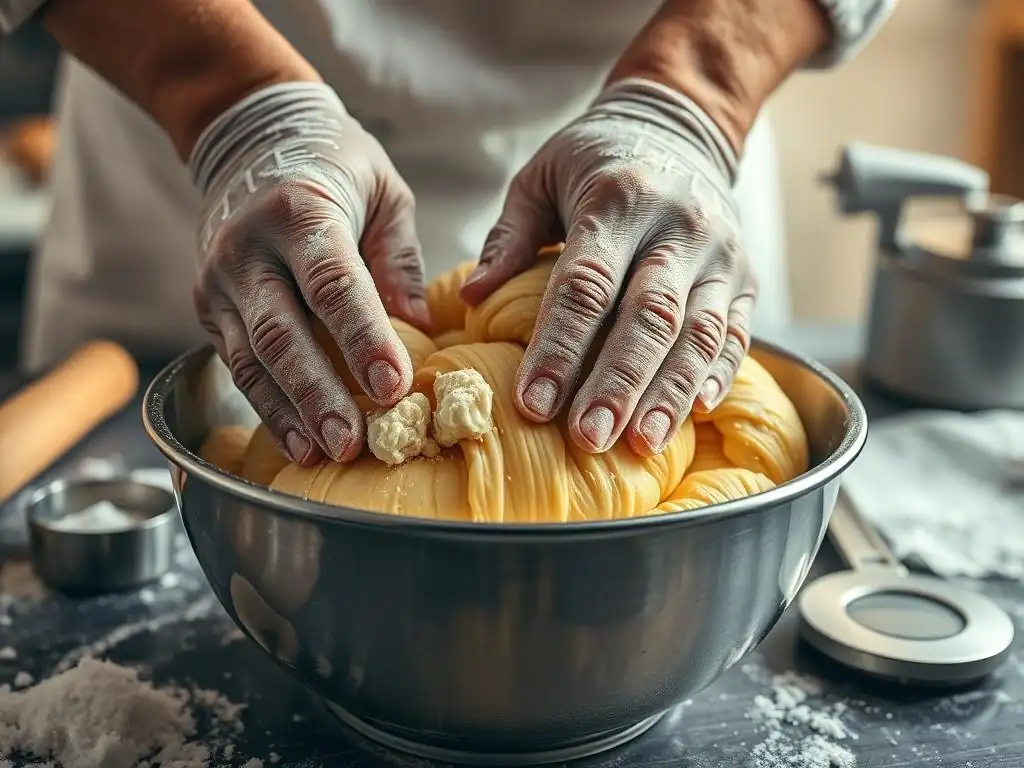
Achieving consistent, high-quality croissants requires attention to detail at every step, and managing the sugar correctly is part of that. Following these expert tips will help you get the most out of the sugar in your sugar croissant dough recipe.
From precise measurement to proper incorporation and thoughtful adjustment, these techniques contribute to predictable results and delicious croissants every time you bake.
Measuring Sugar Accurately for Consistent Results
Accuracy in measuring all ingredients, including sugar, is paramount in baking, especially for sensitive doughs like croissants. Variations in sugar content can significantly impact yeast activity, dough consistency, browning, and flavor.
Using a digital scale to weigh your sugar is the most accurate method. Unlike volume measurements (cups), weighing ensures you have the exact amount specified in the sugar croissant dough recipe, regardless of how densely packed the sugar is. Even a slight difference of 10-15 grams in sugar for a typical batch can noticeably alter fermentation speed and browning characteristics. Consistent measurement leads to consistent results batch after batch.
Incorporating Sugar Properly for Even Distribution
Ensuring the sugar is evenly distributed throughout the dough is important for uniform fermentation, browning, and flavor. Typically, sugar is added along with the flour, yeast, salt, and liquid at the beginning of the mixing process for a sugar croissant dough recipe.
During the initial mixing and kneading, the sugar crystals dissolve in the liquid, becoming integrated into the dough matrix. Proper kneading ensures that the dissolved sugar, along with other ingredients, is uniformly dispersed, allowing yeast to access it efficiently and promoting even browning across the surface of the croissant during baking. Avoid adding undissolved clumps of sugar after initial mixing, as this can lead to uneven spots in the dough.
Adjusting Sugar Levels to Control Sweetness and Browning
While most traditional sugar croissant dough recipes use a relatively low percentage of sugar (around 5-10% of flour weight), you might want to slightly adjust this level based on your preference for sweetness and the desired level of browning.
If you prefer a less sweet croissant or find your croissants brown too quickly, you could try reducing the sugar by a small amount, perhaps 1-2% of the flour weight, in your sugar croissant dough recipe. Conversely, for a slightly sweeter pastry or more intense browning, you could increase it by a similar amount. However, be mindful that significant changes (more than a few percentage points) can impact yeast activity and dough handling. Experimentation is key, but make small, incremental changes and note the results.
Preparing Croissant Dough: A Step-by-Step Guide
Let's walk through the general process of making croissant dough, highlighting where sugar plays its part. While this is a general overview, following a specific sugar croissant dough recipe is recommended for precise measurements and timings.
This guide covers the essential stages, from combining ingredients to the final bake, providing context for sugar's role throughout the process.
Ingredients and Equipment for Croissant Dough
A basic sugar croissant dough recipe requires just a few core ingredients: strong bread flour (for gluten structure), yeast (active dry or instant), salt (for flavor and yeast control), liquid (milk, water, or a mix), a small amount of sugar (typically 5-10% of flour weight), and a significant amount of cold butter for lamination (often 50-80% of flour weight).
Essential equipment includes a stand mixer (highly recommended for kneading), a rolling pin, a sharp knife or pastry wheel for cutting, baking sheets, and parchment paper. Accuracy is key, so a kitchen scale is invaluable for weighing ingredients, especially the flour, sugar, and butter. Using cold ingredients and keeping the dough chilled throughout the process are critical for successful lamination.
Mixing and Kneading: Achieving Proper Dough Development
The initial mixing brings the ingredients together to form a cohesive dough. The sugar is typically added with the dry ingredients. As liquid is introduced, the sugar dissolves, and gluten development begins as the flour hydrates.
Kneading, often done in a stand mixer for 5-10 minutes, develops the gluten network. While sugar slightly inhibits gluten formation, sufficient kneading is still required to create a network strong enough to trap fermentation gases and provide structure. The dough should be relatively smooth and elastic but not overly developed, as extensive rolling will further work the gluten. The temperature of the mixed dough should be relatively cool, ideally between 70-75°F (21-24°C), to control yeast activity before chilling.
Lamination and Shaping: Creating Layers
This is the signature step where cold butter is encased in the dough and repeatedly folded and rolled out to create alternating layers of dough and butter. Sugar's influence on dough extensibility (due to its effect on gluten) is helpful here, making the dough easier to roll thin without tearing.
The dough and butter must be kept cold (ideally 40-50°F or 4-10°C) throughout lamination. The layers created, often through a series of "turns" (e.g., three single turns or one single and one double turn), can number in the hundreds. After lamination, the dough is chilled again before being rolled out to its final thickness, cut into triangles, and shaped into the familiar crescent form. The sugar content in the sugar croissant dough recipe influences how the dough handles and proofs before baking.
Baking: Achieving a Golden-Brown Crust
Baking is where the magic happens, transforming the layered dough into a puffy, golden croissant. Croissants are typically baked at a relatively high temperature, often starting around 400-425°F (200-220°C) for the first 10-15 minutes to create steam and encourage a rapid rise ("oven spring"), then sometimes reduced to 375-400°F (190-200°C) to finish baking and ensure the interior is cooked through.
During baking, the butter melts and creates steam, separating the layers. The yeast undergoes a final burst of activity before dying off. Crucially, the sugar on the surface and within the dough participates in caramelization and the Maillard reaction, producing the beautiful golden-brown color and complex flavors of the crust. The sugar content in your sugar croissant dough recipe dictates the speed and intensity of this browning process.
Advanced Techniques for Croissant Dough
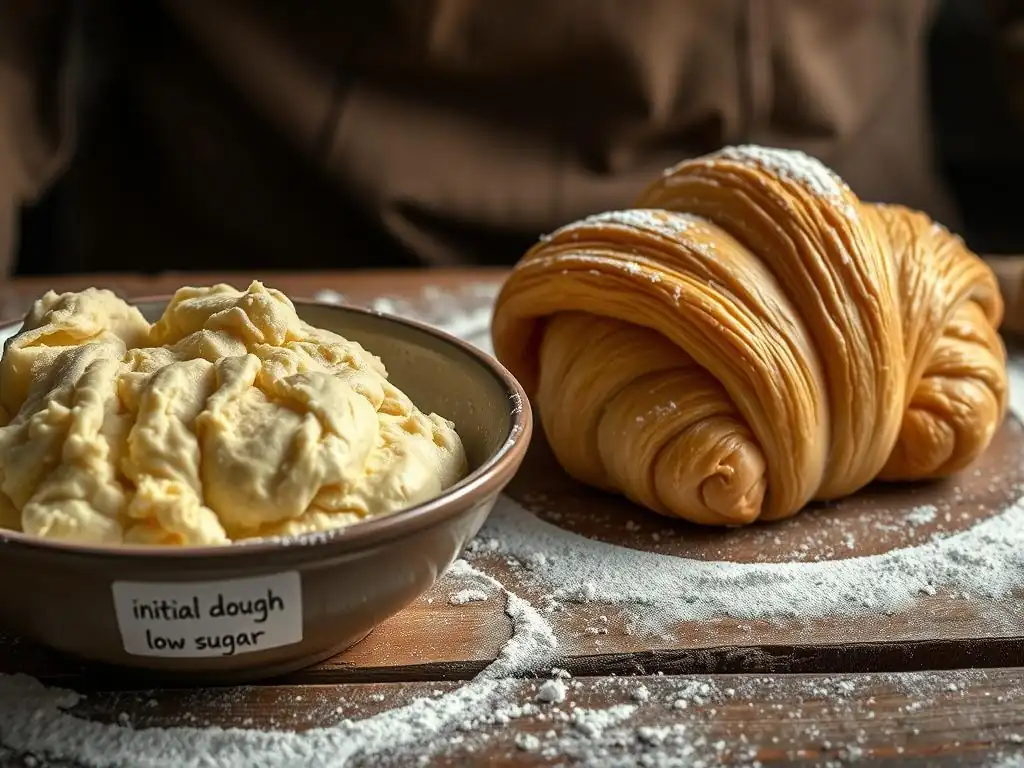
For those looking to take their croissant baking to the next level, incorporating advanced techniques can enhance flavor, texture, and overall quality. While not strictly about sugar, these methods interact with the dough's fermentation and structure, where sugar plays a foundational role.
Exploring pre-ferments, flavor additions, and precise temperature control builds upon the basic principles of a solid sugar croissant dough recipe.
Using a Poolish for Enhanced Flavor and Texture
A poolish is a type of pre-ferment, a wet mixture of equal parts flour and water with a small amount of yeast, allowed to ferment for several hours (often overnight) before being added to the final dough. Using a poolish in a sugar croissant dough recipe introduces more complex flavors developed during the long, slow fermentation.
The acids and alcohols produced by the yeast in the poolish add depth and nuance to the croissant's taste. The poolish also contributes to a slightly more open crumb structure. While the main sugar addition happens in the final dough, the yeast in the poolish is active, consuming sugars from the flour and initiating the fermentation process that the main sugar addition will accelerate in the final mix.
Incorporating Flavor Extracts for Unique Croissant Variations
While classic croissants rely on the pure flavors of butter, flour, and fermentation balanced by sugar, you can introduce other flavors for creative variations. Extracts like vanilla, almond, or orange blossom can be added to the liquid component of the sugar croissant dough recipe during the initial mixing stage.
Since these extracts are typically added in small quantities (e.g., 1-2 teaspoons per batch), they do not significantly alter the dough's structure or sugar balance. They simply infuse the dough with an additional aromatic dimension that complements the richness of the butter and the subtle sweetness provided by the sugar.
Correcting Dough Temperature: Maintaining Optimal Conditions
Maintaining the correct dough temperature throughout the process is critical for controlling yeast activity and keeping the butter solid for lamination. Sugar's role as yeast food makes temperature control even more important; warmer temperatures accelerate sugar consumption and gas production.
After mixing, the dough needs to be chilled thoroughly (often for several hours or overnight) to slow yeast activity and firm up the gluten and any initial butter added to the dough mix. During lamination, the dough and butter block must be kept cold (ideally 40-50°F or 4-10°C) to prevent the butter from melting into the dough layers. If the dough becomes too warm, chilling breaks are necessary.
Before proofing, the dough is warmed slightly to allow yeast activity, but proofing should occur in a humid environment around 75-80°F (24-27°C) – too hot can melt the butter layers before baking. Using a thermometer to check dough temperature is an advanced but highly effective technique for consistent results with any sugar croissant dough recipe.
Conclusion: Mastering Sugar for Delicious Croissants
Sugar, often overlooked beyond its sweetening role, is undeniably a powerhouse ingredient in crafting perfect croissants. It's the essential fuel for yeast fermentation, the catalyst for desirable browning reactions that create a crisp, flavorful crust, and a subtle influencer on dough texture, contributing to a tender interior.
From understanding how sugar interacts with gluten and yeast to troubleshooting common issues and exploring different sugar types, mastering the use of sugar is a key step in elevating your croissant baking skills. So, the next time you embark on a sugar croissant dough recipe, appreciate the multifaceted contribution of this humble ingredient – it's truly integral to achieving those coveted layers and that irresistible golden finish.
Frequently Asked Questions
What role does sugar play in a sugar croissant dough recipe?
Sugar in croissant dough contributes to flavor and tenderizes the dough. It also aids in browning during baking, creating a golden-brown crust.
How does sugar content affect the texture of sugar croissants?
Higher sugar content generally results in a softer and more tender croissant. However, too much sugar can weaken the gluten and make the dough difficult to work with.
Can I substitute different types of sugar in a sugar croissant dough recipe?
Yes, you can typically substitute granulated sugar with other sugars, but this may affect the flavor and texture. Brown sugar, for example, will add a molasses flavor.
What happens if I omit sugar from a sugar croissant dough recipe?
Omitting sugar will result in a less sweet croissant with a tougher texture. The dough may also be less likely to brown properly during baking.
How does sugar interact with yeast in sugar croissant dough recipe?
Sugar provides food for the yeast, which helps it produce carbon dioxide and make the dough rise. However, too much sugar can inhibit yeast activity.
Final Reflection: The Sweet Science of Croissant Perfection
The delicate balance of sugar in croissant dough isn't just a matter of taste; it's the key to unlocking the airy, flaky texture we crave. A seemingly small ingredient, sugar plays a surprisingly significant role in the entire baking process, influencing everything from gluten development to browning and even the final crumb structure. Understanding this intricate relationship is crucial for achieving truly exceptional croissants.
The impact of sugar extends beyond the individual baker's kitchen; it's woven into the very fabric of our culinary heritage. The pursuit of the perfect croissant, with its layers of buttery, sugary goodness, reflects a timeless human desire for both indulgence and mastery. The most beautiful thing we can experience is the mysterious. It is the source of all true art and science.
– Albert Einstein. This quote, while not directly about croissants, speaks to the wonder and complexity inherent in even the simplest baking processes, a complexity heightened by the subtle yet powerful influence of sugar.
Consider the impact of your sugar choices the next time you bake. Will you opt for the predictable sweetness of granulated sugar, or explore the nuanced flavors of brown sugar or even honey? Experiment, learn, and most importantly, savor the journey. The perfect croissant isn't just a recipe to follow; it's a testament to the artistry and precision that comes from understanding the science behind the sweetness. Embrace the challenge, and the reward will be a croissant that transcends mere pastry – a testament to your dedication and skill.
Unlock Your Croissant's Potential!
Thanks for exploring the fascinating world of sugar and croissant dough with us! We hope you've gained valuable insights into how this seemingly simple ingredient impacts your baking. Now it's time to put your newfound knowledge into action.
- Master the perfect sugar ratio: Experiment with slightly varying the sugar amounts in your next batch – note the changes in texture and browning. Keep a detailed record of your findings!
- Share your croissant creations: Show off your improved baking skills by posting pictures of your delicious creations on social media – tag us! #BakeWithEaseCroissants
- Challenge yourself: Try a new croissant recipe that plays with different sugar types (demerara, turbinado, etc.) to explore even more flavor profiles.
Ready to transform your baking game and create the most unforgettable croissants? What unique sugar-based experiment are you most excited to try?