
Spelt, Rye, Kamut & More: A Deep Dive into Specific Artisan Grains

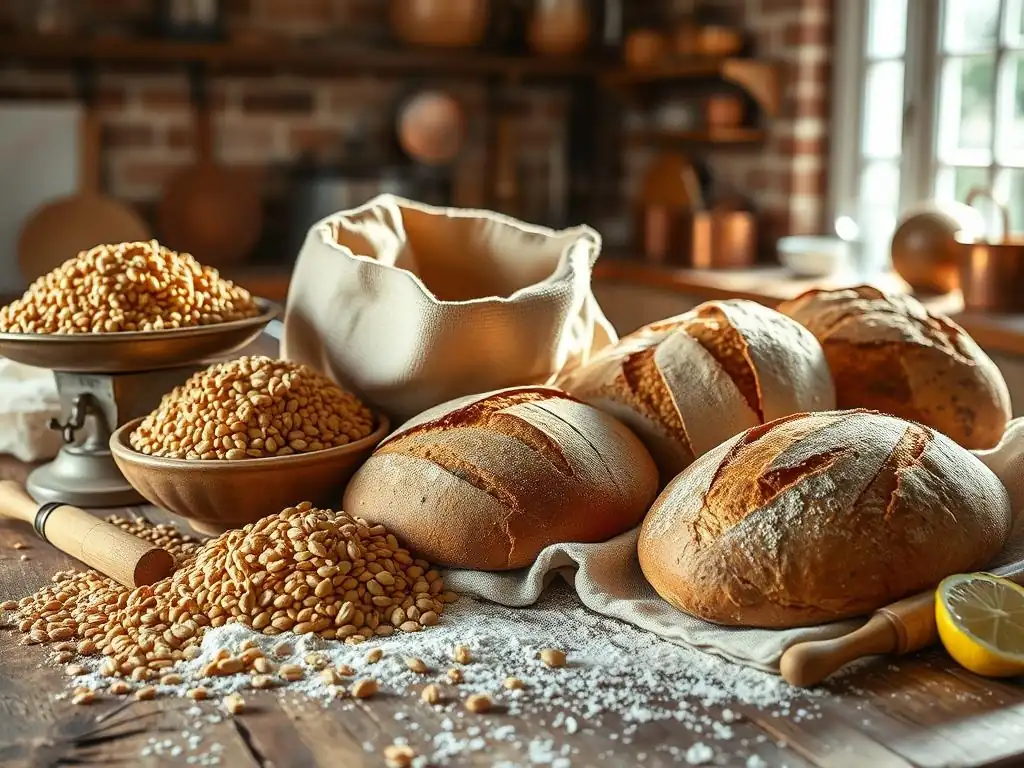
Welcome to BakeWithEase, your trusted companion on your baking journey! Ever wondered how to unlock the full potential of artisan grain baking recipes? This month, we're diving deep into the world of premium baking ingredients, starting with a fascinating exploration of spelt, rye, and kamut. Discover the unique flavors and textures these grains bring to your creations, and learn how to elevate your baking from ordinary to extraordinary. Ready to explore?
- Spelt, Rye, Kamut & More: A Deep Dive into Specific Artisan Grains for Artisan Grain Baking Recipes
- Understanding Artisan Grains and Their Role in Baking Artisan Bread
-
Spelt: The Nutty and Slightly Sweet Artisan Grain for Home Bakers
- Spelt Flour Characteristics: Protein Content, Gluten Development, and Baking Performance
- Best Spelt Flour Brands: Bob's Red Mill vs. King Arthur - A Comparison
- Spelt Bread Recipe Example: A Simple Spelt Sourdough Recipe
- Recommended Baking Tools for Spelt Bread: Banneton Baskets, Dough Scrapers, and Dutch Ovens
-
Rye: The Robust and Earthy Grain for Distinctive Breads
- Rye Flour Types: Light, Medium, and Dark Rye – Understanding the Differences
- Achieving the Perfect Rye Flavor: Techniques and Tips for Rye Bread Baking
- Popular Rye Bread Recipes: Pumpernickel, Russian Rye, and Scandinavian Rye Breads
- Essential Tools for Rye Bread Success: Rye Flour Sifters, Dough Thermometers, and Bread Knives
- Kamut (Khorasan Wheat): The Ancient Grain with a Rich, Buttery Flavor
- Beyond the Basics: Exploring Other Artisan Grains
- Artisan Grain Baking Recipes: Mastering the Art of Blending Grains
- Where to Buy High-Quality Artisan Grains and Baking Supplies
- Troubleshooting Common Issues in Artisan Grain Bread Baking
- Maximizing Your Baking with Artisan Grains: Advanced Techniques
-
Frequently Asked Questions
- How does baking with artisan grains like spelt, rye, and kamut differ from using all-purpose flour?
- Where can I find reliable artisan grain baking recipes suitable for beginners?
- What are some of the health benefits associated with using artisan grains in baking?
- Can I substitute artisan grains like spelt, rye, or kamut directly for all-purpose flour in existing recipes?
- What are some common challenges bakers face when working with artisan grains, and how can they be overcome?
- Final Reflection: The Enduring Allure of Artisan Grains
- Unleash Your Inner Baker: Craft Extraordinary Breads!
Spelt, Rye, Kamut & More: A Deep Dive into Specific Artisan Grains for Artisan Grain Baking Recipes
Understanding Artisan Grains and Their Role in Baking Artisan Bread
What Defines an Artisan Grain? Exploring Heritage Varieties
Artisan grains represent a return to older, often heritage varieties of wheat and other cereals, distinct from the highly hybridized and refined grains commonly used in industrial baking. These grains are typically grown using more traditional methods and are processed minimally, often retaining more of the bran and germ compared to standard white flours.
Think of grains like Einkorn, Emmer (Farro), Spelt, and Khorasan wheat (Kamut) – varieties that have been cultivated for centuries, some even millennia, before modern agricultural practices focused on yield and uniformity above all else. Their genetic makeup is often less complex than modern bread wheat, contributing to unique baking properties and nutritional profiles.
These heritage varieties are chosen by artisan bakers for their distinctive characteristics and the depth of flavor they impart to bread. Unlike the predictable performance of modern high-gluten flours, working with artisan grains requires a deeper understanding of their unique protein structures, hydration needs, and fermentation behaviors.
This exploration into specific artisan grain baking recipes is a journey into history and flavor, offering bakers a chance to connect with ancient traditions and create loaves with true character. The focus is often on preserving the inherent qualities of the grain through careful handling and fermentation, resulting in bread that is not just food, but a reflection of the grain's heritage and the baker's skill.
The Impact of Artisan Grains on Flavor, Texture, and Nutrition in Bread
Incorporating artisan grains into your baking dramatically influences the final product's sensory experience and nutritional value. Flavor profiles vary significantly: rye offers earthy, sometimes tangy notes; spelt provides a nutty, slightly sweet undertone; Kamut contributes a rich, buttery taste; and Einkorn is known for its delicate, almost floral sweetness.
This complexity is a stark contrast to the relatively neutral flavor of white flour made from modern wheat. The presence of bran and germ, often retained in whole or partially-milled artisan flours, is crucial here, carrying much of the grain's essential oils and aromatic compounds that develop during fermentation and baking.
Texture is also profoundly affected. Grains like spelt and Kamut have different gluten structures than modern wheat, often resulting in a more tender crumb, though sometimes requiring adjustments to achieve desired volume. Rye, with its high proportion of pentosans, can create a dense, moist loaf that relies less on gluten for structure.
Nutritionally, artisan grains often boast higher levels of certain vitamins, minerals, and fiber compared to refined flours. For example, Einkorn is often cited for higher levels of protein, antioxidants, and carotenoids than modern wheat. While specific nutrient levels vary by grain and processing, the general trend is towards a more nutrient-dense flour, making artisan grain baking recipes not just delicious, but also potentially more wholesome.
Spelt: The Nutty and Slightly Sweet Artisan Grain for Home Bakers
Spelt Flour Characteristics: Protein Content, Gluten Development, and Baking Performance
Spelt (Triticum spelta) is an ancient grain that has seen a resurgence in popularity among home bakers due to its appealing flavor and relative ease of use compared to some other heritage grains. Spelt flour typically has a protein content ranging from 10% to 14%, similar to many modern wheats. However, its gluten structure is different – the gluten proteins are more water-soluble and can break down more easily with overmixing or long fermentation. This means spelt dough can become sticky and lose structure if handled too vigorously or if proofed for excessive periods.
Despite this nuance, spelt performs well in a variety of artisan grain baking recipes. It absorbs water more slowly than modern wheat, so hydration levels might need adjustment, often requiring slightly less water or a longer autolyse period. The resulting crumb is often tender and moist, with a pleasant, slightly sweet, nutty flavor. Bakers find spelt excellent for everything from rustic loaves and rolls to pastries and quick breads. Understanding its unique gluten behavior is key to success; gentle handling and mindful fermentation are often recommended when working with spelt flour to achieve optimal volume and texture.
Best Spelt Flour Brands: Bob's Red Mill vs. King Arthur - A Comparison
When exploring spelt for your artisan grain baking recipes, two widely available and reputable brands often come to mind: Bob's Red Mill and King Arthur Baking Company. Bob's Red Mill typically offers a high-quality stone-ground whole spelt flour. Stone milling helps preserve the nutrients and flavor from the bran and germ, resulting in a robust, flavorful flour. Their focus is often on providing minimally processed whole grains, which aligns well with the ethos of using heritage varieties. The texture might be slightly coarser, and the flavor profile pronounced.
King Arthur Baking Company, while also offering whole spelt, is perhaps better known for its range of flours and baking products. Their spelt flour is also high quality, and depending on availability, they might offer both whole and sometimes sifted or "light" spelt options. King Arthur's flours are generally known for consistency and reliability. Choosing between them often comes down to personal preference regarding milling style (stone-ground vs. roller-milled, if variations exist) and desired flavor intensity. Both brands provide excellent options for diving into spelt baking, offering reliable performance for your artisan grain baking adventures.
Spelt Bread Recipe Example: A Simple Spelt Sourdough Recipe
A simple spelt sourdough highlights the grain's characteristics beautifully. Imagine a recipe using 70% whole spelt flour and 30% strong bread flour (to lend some structural support), hydrated at around 75%. You would start by feeding your sourdough starter, ideally one that's active and bubbly. Once the starter is ready, mix the flours and water for a brief autolyse (30-60 minutes) to let the spelt absorb moisture. Then, gently mix in the starter and salt. Due to spelt's delicate gluten, instead of aggressive kneading, a series of gentle stretch and folds performed over 2-3 hours is often preferred.
After the bulk fermentation (which might be shorter than with modern wheat doughs, perhaps 3-4 hours depending on temperature), the dough is shaped gently – avoiding degassing it too much – and then proofed. Proofing time can vary; some bakers prefer a shorter ambient proof (1-2 hours), while others opt for a longer cold proof in the refrigerator (8-16 hours) to develop flavor.
Baking in a preheated Dutch oven at around 450°F (230°C) for 20-25 minutes with the lid on, and then 15-20 minutes with the lid off, yields a loaf with a lovely tender crumb and a beautifully browned crust, showcasing the distinct nutty sweetness of the spelt. This approach minimizes stress on the delicate spelt gluten, resulting in a well-risen loaf.
Recommended Baking Tools for Spelt Bread: Banneton Baskets, Dough Scrapers, and Dutch Ovens
Having the right tools can significantly enhance your success when baking spelt bread, especially when working with artisan grain baking recipes. A banneton basket is invaluable for proofing spelt dough. Spelt dough, particularly at higher hydrations, can be quite soft, and proofing it in a floured banneton helps it hold its shape and develop a nice skin before baking. This prevents the dough from spreading out too much on the baking surface.
A flexible dough scraper or bench knife is essential for handling the often-sticky spelt dough. It allows you to gently lift, portion, and move the dough without tearing the delicate gluten network you've worked to build. Finally, a Dutch oven is highly recommended for baking spelt loaves. The enclosed environment of a preheated Dutch oven traps steam released by the dough, which helps the crust stay pliable longer, allowing the loaf to achieve maximum oven spring before the crust sets. This is particularly beneficial for spelt, ensuring a better rise than might be achieved on an open baking stone.
Rye: The Robust and Earthy Grain for Distinctive Breads
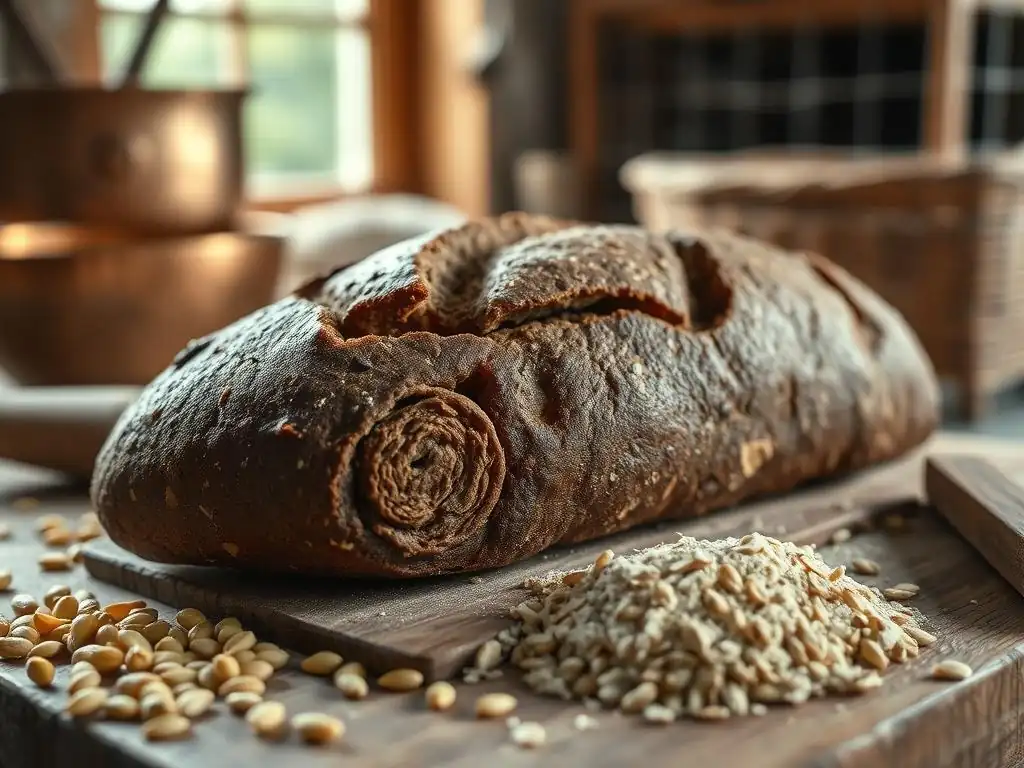
Rye Flour Types: Light, Medium, and Dark Rye – Understanding the Differences
Rye (Secale cereale) is a grain celebrated for its distinctive, earthy, and sometimes tangy flavor, fundamental to many traditional European artisan grain baking recipes. Rye flour comes in various types, primarily categorized by their extraction rate, which refers to how much of the grain (endosperm, bran, and germ) is included in the final flour.
Light rye flour has the lowest extraction rate, meaning most of the bran and germ have been removed, similar to white wheat flour. It's lighter in color and flavor and has the most starch, making it useful for softer loaves or as a blend with wheat.
Medium rye flour contains more of the outer layers and germ than light rye, resulting in a darker color, stronger flavor, and higher nutritional content. It's a versatile flour used in many traditional rye breads. Dark rye flour has the highest extraction rate, often including almost all the bran and germ. It's the darkest, most flavorful, and most nutrient-dense type, creating dense, robust loaves like pumpernickel. Understanding these types is crucial, as they behave differently in baking due to varying levels of gluten-forming proteins and non-starch polysaccharides (pentosans), which play a significant role in rye dough structure.
Achieving the Perfect Rye Flavor: Techniques and Tips for Rye Bread Baking
Mastering rye bread involves understanding its unique properties, particularly its flavor development. Rye contains enzymes that break down starch and proteins more readily than wheat, and it's high in fermentable sugars. This makes it an excellent candidate for sourdough fermentation, which is key to developing the characteristic tangy flavor of many rye breads. A long, slow fermentation, often with a rye-specific sourdough starter (a 'rye sour'), is crucial. The acidity produced by the lactic acid bacteria in the sourdough helps control enzymatic activity and contributes significantly to the flavor profile.
Another technique is using a kochstück or brühstück (a cooked or scalded portion of the rye flour) or a altus (old bread soaker). Scalding rye flour with hot water gelatinizes the starches, allowing them to hold more moisture, leading to a moister crumb and extending shelf life. It also brings out the sweetness of the rye.
Incorporating caraway seeds, coriander, or fennel seeds is also common in many artisan grain baking recipes featuring rye, complementing its robust flavor profile. Gentle handling is also important; rye dough develops very little gluten structure compared to wheat, so aggressive kneading is unnecessary and can even be detrimental.
Rye is the star of many iconic artisan grain baking recipes around the world, each showcasing its unique qualities. Pumpernickel bread, originating from Germany, is perhaps the darkest and most dense rye bread. It traditionally uses coarse dark rye meal, often with whole rye berries, and is baked for many hours at a low temperature, sometimes steaming, which allows enzymatic activity to break down starches into sugars, contributing to its dark color, moist texture, and sweet, malty flavor.
Russian Rye (often Borodinsky bread) is another famous example, a dark, slightly sweet, and aromatic sourdough rye bread flavored with coriander. It typically uses a mix of rye flours and a small amount of wheat, often incorporating a scalded rye portion (zavarka) for moisture and flavor. Scandinavian rye breads, like Danish Rugbrød, are dense, dark, and often packed with seeds and whole grains. These breads rely heavily on sourdough and long fermentation, resulting in a hearty, flavorful loaf that exemplifies the best of rye in artisan grain baking recipes.
Essential Tools for Rye Bread Success: Rye Flour Sifters, Dough Thermometers, and Bread Knives
Specific tools can make working with rye flour more predictable and successful. While not strictly necessary for all rye recipes, a flour sifter can be helpful, especially when working with lighter rye flours where consistency is desired. It helps aerate the flour and remove any small clumps. However, for coarse dark rye or pumpernickel meal, sifting is less common as the goal is often to include all the grain components.
A dough thermometer is highly recommended for rye bread, particularly when using scalds or working with sourdough. Maintaining precise temperatures during the scalding process ensures proper starch gelatinization. Monitoring dough temperature during fermentation is also critical, as rye doughs can ferment rapidly, and controlling temperature helps manage the process and develop desired flavors without over-fermenting. Finally, given the dense, moist nature of many rye loaves, a good quality bread knife with a serrated edge is indispensable for slicing without crushing the loaf.
Kamut (Khorasan Wheat): The Ancient Grain with a Rich, Buttery Flavor
Kamut Flour's Unique Properties: High Protein and Easy Digestibility
Kamut, or Khorasan wheat (Triticum turgidum ssp. turanicum), is an ancient grain with a history stretching back thousands of years. It's known for its large size, distinctive "hump" shape, and a rich, slightly sweet, buttery flavor.
Kamut flour typically boasts a high protein content, often ranging from 12% to 15%, which is comparable to or even higher than many modern hard wheat flours. However, like spelt, its gluten structure is different; while it contains gluten, it's often considered more easily digestible by some individuals compared to modern wheat, although it is not gluten-free and is not suitable for those with Celiac disease.
This unique protein structure means Kamut flour absorbs water differently and develops gluten more slowly and perhaps less tenaciously than modern bread wheat. Doughs can be slightly more extensible and less elastic. The high protein contributes to good structure and oven spring, but care must be taken not to overwork the dough, which can lead to tearing. Its rich flavor makes it a wonderful addition to artisan grain baking recipes, adding depth and a pleasant aroma that fills the kitchen as it bakes.
Incorporating Kamut into Your Artisan Grain Baking Recipes: Tips and Tricks
Using Kamut flour in your artisan grain baking recipes can elevate your loaves with its distinctive flavor and beautiful golden crumb. Because of its slightly different gluten structure, Kamut often benefits from a longer autolyse period (mixing flour and water before adding starter/yeast and salt). This allows the large Kamut particles to fully hydrate and the gluten development to begin gently. Hydration levels are often similar to or slightly higher than those used for modern wheat, perhaps in the 70-80% range depending on the specific flour and desired outcome.
Kamut performs wonderfully in sourdough applications, with the fermentation process further enhancing its nutty, buttery notes. Gentle handling during mixing and folding is advisable to avoid tearing the dough. Kamut can be used as 100% of the flour, creating a loaf with a tender crumb and golden hue, or it can be blended with other flours like modern wheat or spelt to add flavor and nutritional value while leveraging the structural support of other grains. It's particularly good in enriched doughs, like brioche or challah, where its richness complements the butter and eggs.
Kamut Bread Recipe: A Beginner-Friendly Kamut Loaf Recipe
For a beginner exploring Kamut in artisan grain baking recipes, a simple yeast-leavened loaf using 100% whole Kamut flour is a great starting point. Imagine a recipe calling for about 500g whole Kamut flour, 350-375g water (70-75% hydration), 10g salt, and 5g instant yeast. Begin by mixing the flour and water and letting it rest for 30 minutes (autolyse). Then, dissolve the yeast and salt in a small amount of water and mix them into the dough.
Knead the dough gently for about 5-7 minutes until it's smooth and elastic. Kamut dough will feel different from wheat dough – perhaps a bit softer and more extensible. Place the dough in a lightly oiled bowl and let it rise for about 1-1.5 hours, or until doubled, depending on room temperature. Punch down gently, shape into a loaf, and place it in a loaf pan or on a baking sheet.
Let it proof for another 45-60 minutes. Bake in a preheated oven at 375°F (190°C) for 35-45 minutes, or until golden brown and hollow sounding when tapped. This simple approach allows you to experience the unique flavor and texture of pure Kamut with minimal complexity.
Recommended Kamut Flour Brands: Einkorn.com vs. Jovial Foods - Quality and Price
When seeking high-quality Kamut flour for your artisan grain baking recipes, brands specializing in ancient grains are often the best sources. Einkorn.com, while primarily known for Einkorn, also offers Kamut flour and berries. They focus on organic, heritage grains, often milling fresh. Their products are generally considered premium, reflecting a commitment to traditional farming and processing. The price point might be higher, but the quality and focus on ancient varieties are a major draw for serious bakers.
Jovial Foods is another excellent option, widely available and specializing in organic Einkorn and Khorasan wheat (Kamut) products, including flour. Jovial emphasizes traditional methods and sourcing from farms that prioritize quality and sustainability. Their Kamut flour is popular and reliable, offering a consistent product for baking. The price point is often slightly more accessible than smaller specialty producers while still maintaining high quality. Both brands provide excellent organic whole Kamut flour, making them reliable choices for your artisan grain baking projects.
Beyond the Basics: Exploring Other Artisan Grains
Einkorn: The Oldest Wheat Variety with a Delicate Flavor
Einkorn (Triticum monococcum) holds the title of the oldest cultivated wheat, tracing its origins back over 10,000 years. As a diploid wheat, it has a simpler genetic structure than modern hexaploid wheat, and its gluten is often considered different and potentially easier to digest by some individuals (though, again, it contains gluten and is not suitable for Celiacs). Einkorn flour has a distinct, delicate, slightly sweet, and nutty flavor profile, often described as buttery or floral.
Baking with Einkorn presents its own set of challenges and rewards. The gluten is weaker and less elastic than modern wheat gluten, and the dough can be sticky and difficult to handle. Hydration levels often need to be lower (around 60-70% is common for a 100% Einkorn loaf), and gentle mixing and minimal kneading are crucial.
Despite the handling challenges, Einkorn yields a wonderfully tender, moist crumb and imparts a unique, nuanced flavor to artisan grain baking recipes, from rustic loaves to pancakes and pastries. Its rich nutritional profile, often higher in protein, phosphorus, and B vitamins than modern wheat, adds to its appeal.
Emmer (Farro): The Nutty and Slightly Sweet Grain for Rustic Breads
Emmer (Triticum dicoccum), also known as Farro in its hulled form, is another ancient grain with a history spanning thousands of years, closely related to durum wheat. It's a hulled wheat, meaning the hull adheres tightly to the kernel, requiring extra processing to remove. Emmer flour has a pleasant nutty and slightly sweet flavor, offering more character than standard all-purpose flour but perhaps less intense than rye or dark spelt. It's excellent for creating rustic, flavorful loaves.
Baking with Emmer flour can result in a slightly denser loaf compared to modern wheat, but with a wonderfully chewy texture and a rich, earthy aroma. Like other ancient grains, its gluten structure is different from modern wheat, requiring careful handling. It can be used as a significant portion of the flour blend in sourdough or yeasted breads, contributing its unique flavor and a beautiful creamy crumb color. Emmer is also popular in its whole berry form for salads, soups, and side dishes, showcasing its versatility beyond just flour for artisan grain baking recipes.
Triticale: A Hybrid Grain Offering a Unique Flavor Profile
Triticale (Triticosecale) is a relatively modern grain compared to Einkorn or Emmer, developed in the late 19th century as a hybrid of wheat (Triticum) and rye (Secale). The goal was to combine the yield and quality of wheat with the hardiness and disease resistance of rye. As a result, triticale grain and flour offer a unique flavor profile that is a blend of its parents – slightly nutty like wheat, with some of the earthy, tangy notes of rye, but typically less intense than pure rye.
Triticale flour behaves somewhat like a mix of wheat and rye in baking. It has more gluten-forming proteins than rye but less than modern bread wheat. This means it can produce a lighter loaf than pure rye but might still benefit from being blended with stronger wheat flour for optimal structure and volume in artisan grain baking recipes. It imparts a pleasant, complex flavor to bread, rolls, and other baked goods, offering bakers an interesting option for adding unique character to their creations.
Artisan Grain Baking Recipes: Mastering the Art of Blending Grains
Creating Complex Flavors: Combining Spelt, Rye, and Kamut in One Loaf
One of the most exciting aspects of exploring artisan grain baking recipes is the possibility of blending different flours to create complex and layered flavor profiles that cannot be achieved with a single grain. Combining spelt, rye, and Kamut in one loaf, for instance, can yield a bread with incredible depth. Imagine a formula using perhaps 40% strong bread flour (for structure), 20% whole spelt (for tenderness and sweetness), 20% medium rye (for earthy tang and moisture), and 20% whole Kamut (for richness and buttery notes).
This blend allows each grain to contribute its unique characteristics. The spelt adds a gentle sweetness and soft crumb, the rye provides a foundational earthy flavor and keeps the loaf moist, and the Kamut layers in a rich, slightly nutty dimension. The strong bread flour offers the necessary gluten strength to help the loaf rise well despite the inclusion of grains with less robust gluten. Experimenting with different ratios is key; starting with smaller percentages of the more dominant flavors (like rye) and gradually increasing them allows you to find the perfect balance for your palate.
Adapting Your Favorite Bread Recipes for Artisan Grains: A Conversion Guide
Adapting existing artisan grain baking recipes or standard wheat recipes to incorporate artisan grains requires understanding how these flours differ in hydration needs and gluten development. A common approach is to start by substituting a portion of the requested flour with the artisan grain, rather than going straight to 100%. For instance, if a recipe calls for 500g of bread flour, try substituting 100g (20%) with whole spelt or Kamut flour. Observe how the dough feels – it might be stickier or absorb water differently.
Generally, ancient grains like spelt, Einkorn, and Kamut may require slightly less water than modern hard wheat, or they might absorb it more slowly. Rye, especially darker grades, can absorb a lot of water due to pentosans, but the resulting dough feels very different and sticky. When converting, start with slightly less liquid than the original recipe calls for and add more if needed, observing the dough's consistency.
Also, adjust mixing/kneading time – artisan grain doughs often benefit from gentler handling and less aggressive development than high-gluten wheat doughs. Be prepared for slightly different rise times and loaf volumes compared to the original recipe.
The Importance of Hydration and Fermentation in Artisan Grain Baking
Hydration and fermentation are critical factors in all bread baking, but they take on specific importance when working with artisan grain baking recipes due to the unique properties of these flours. Artisan grains absorb water differently than modern wheat.
Whole grain flours, with their bran content, typically require more water or longer soaking time to fully hydrate. Grains like rye, rich in pentosans, can absorb a large amount of water, leading to very sticky doughs where hydration levels might look high numerically (e.g., 80%+) but result in a manageable dough if those pentosans are properly hydrated and managed, often through scalds or long fermentation.
Fermentation timing and temperature also require careful attention. The enzymes and microbial activity can differ when using starters built with or fed artisan grains. Some ancient grains, like spelt, can ferment faster than modern wheat, and their gluten structure can degrade if over-fermented. Rye fermentation relies less on gluten development and more on acid production to manage structure and flavor. Longer, cooler fermentation is often beneficial for developing complex flavors in many artisan grain loaves. Mastering hydration and fermentation, tailored to the specific grain or blend, is fundamental to achieving success with artisan grain baking recipes.
Where to Buy High-Quality Artisan Grains and Baking Supplies
Online Retailers: Amazon and King Arthur Baking Company – A Comparison of Prices and Selection
Finding high-quality artisan grains and specialized baking supplies is crucial for success with artisan grain baking recipes. Online retailers offer convenience and wide selection. Amazon is a vast marketplace where you can find flours from numerous brands, including major ones like Bob's Red Mill and King Arthur, as well as smaller specialty producers. Prices on Amazon can be competitive, and the selection is huge, covering various grain types, milling styles, and bag sizes. However, quality can vary depending on the specific seller and brand, and it can sometimes be hard to verify freshness or sourcing details.
King Arthur Baking Company's online store is a dedicated resource for bakers. They offer their own high-quality flours, including a selection of artisan grains, alongside a curated collection of tools, ingredients, and resources. Their flours are generally known for consistency and reliability.
While their prices might be slightly higher than some options on Amazon, you are often paying for guaranteed quality, excellent customer service, and a selection specifically chosen for bakers. They also offer more detailed product information and baking advice related to their flours. For reliable quality and baking-specific supplies, King Arthur is a strong choice, while Amazon offers unparalleled variety and potential price advantages.
Local Mills and Bakeries: Supporting Local Artisan Grain Producers
Supporting local mills and bakeries is an excellent way to source high-quality artisan grains and connect with your community's food system. Local mills often stone-grind grains grown nearby, providing incredibly fresh flour that retains more nutrients and flavor compared to flour that has traveled long distances or sat on shelves. Buying directly from a mill allows you to inquire about the grain's origin, variety, and milling process.
Some mills even offer specific grinds or custom blends. While not always the cheapest option, the freshness and direct connection to the source can significantly impact the quality of your artisan grain baking recipes.
Many artisan bakeries also source high-quality grains, sometimes milling their own or partnering with local farmers. They might sell flour directly to customers. Buying from a local bakery not only supports a small business but also gives you access to flour that the bakers themselves trust and use. You can often get expert advice directly from the bakers on how to best use their specific flours. Exploring local options provides a chance to work with unique regional grains and support the growing movement towards local food economies.
Investing in Quality Baking Equipment: Maximizing Your Artisan Grain Baking Experience
Beyond the ingredients themselves, having quality baking equipment can significantly improve your results with artisan grain baking recipes. A sturdy stand mixer can handle the sometimes-dense doughs, although many artisan bakers prefer hand mixing and folding, especially for delicate ancient grains. Precision scales are essential for accurately measuring flour and water, which is critical given the varied hydration needs of different grains (measuring by volume is highly inaccurate for flour). A good quality oven thermometer ensures your oven is at the correct temperature, vital for proper oven spring and crust development.
Investing in tools like a Dutch oven or baking stone, a peel, and a lame (for scoring) can elevate your bread from good to great. A Dutch oven provides the necessary steam for a beautiful crust and maximum rise. A baking stone or steel provides consistent heat transfer. A lame allows for precise scoring, which controls the expansion of the loaf and adds aesthetic appeal. While you can start with minimal equipment, gradually acquiring quality tools designed for bread baking will make working with challenging artisan grain baking recipes easier and more rewarding.
Troubleshooting Common Issues in Artisan Grain Bread Baking
Dealing with Sticky Dough: Tips for Handling High-Hydration Artisan Grain Doughs
One common challenge when working with artisan grain baking recipes, especially those with high hydration or significant amounts of rye or whole ancient grains, is dealing with sticky dough. Unlike modern white wheat dough that develops smooth, elastic gluten, doughs with high percentages of whole grains, rye, or ancient wheats like Einkorn can remain relatively sticky and slack. This is often due to the presence of non-starch polysaccharides (like pentosans in rye) and different protein structures.
Tips for handling sticky dough include:
- Use less water initially: Start with a slightly lower hydration than the recipe suggests and add more gradually only if the dough can handle it.
- Allow sufficient autolyse: Letting the flour and water rest for 20-60 minutes before adding other ingredients helps the flour hydrate fully, making the dough less shaggy and potentially less sticky later.
- Wet your hands and tools: Keeping your hands and dough scraper wet or lightly oiled prevents the dough from sticking excessively.
- Use a bench scraper: A stiff bench scraper is invaluable for manipulating sticky dough on a work surface.
- Develop strength gently: Use stretch and folds or coil folds rather than aggressive kneading, which can tear the weaker gluten structures of some ancient grains. These techniques build strength without overworking the dough.
- Flour your proofing basket well: Use rice flour or a mix of rice and wheat flour in your banneton to prevent the sticky dough from adhering during proofing.
Achieving a Good Rise: Optimizing Fermentation Times and Temperatures
Achieving a good rise is crucial for a light and airy crumb in artisan grain baking recipes, but different grains have different fermentation needs. Factors like flour type, hydration, starter/yeast activity, and ambient temperature all play a role. Doughs with a high percentage of ancient grains like spelt or Kamut might ferment faster than pure modern wheat doughs. Their gluten can also degrade more quickly if fermentation goes too long, leading to dough collapse rather than rise.
To optimize the rise:
- Know your starter/yeast: Ensure your sourdough starter is active and bubbly, or your commercial yeast is fresh.
- Monitor dough temperature: Aim for a consistent dough temperature, often around 75-80°F (24-27°C) for bulk fermentation, though cooler temperatures slow fermentation for flavor. Use a dough thermometer.
- Watch the dough, not the clock: Fermentation times are guides; look for visual cues like increased volume (often 50-100% increase depending on the recipe and desired outcome), bubbles, and a domed surface.
- Be mindful of over-proofing: Especially with spelt or high-hydration doughs, over-proofing can lead to a slack dough that doesn't hold its shape and collapses in the oven.
- Adjust for temperature: In a warm kitchen, fermentation will be faster; in a cool kitchen, it will be slower. Learn to adjust your timing accordingly or use a proofing box/oven with a light on.
Preventing Dense Bread: Understanding Gluten Development in Artisan Grains
Dense bread can be a disappointing outcome of artisan grain baking recipes. It's often linked to insufficient gluten development, over-proofing, or improper hydration. While grains like rye are naturally denser, even wheat-based artisan grains like spelt or Kamut can result in dense loaves if their unique gluten properties aren't respected. The gluten in these grains is often weaker or develops differently than in modern hard wheat.
To prevent density:
- Hydrate properly: Ensure the flour is fully hydrated. An autolyse can help, especially with whole grains. Dough that is too dry won't develop gluten properly.
- Develop gluten gently but effectively: Use techniques like stretch and folds or coil folds over a period of time (e.g., 2-3 hours) to build strength progressively without tearing the delicate gluten. Avoid aggressive, prolonged kneading unless the recipe specifically calls for it and the grain can handle it.
- Don't over-ferment: As mentioned, over-fermentation can cause the gluten structure to break down, leading to a lack of support and a dense crumb.
- Ensure sufficient oven spring: A hot oven and steam (like from a Dutch oven) are crucial for the final expansion of the loaf. Insufficient oven spring leads to a denser loaf.
- Consider a flour blend: If using 100% of a challenging ancient grain like Einkorn or high-percentage rye is resulting in density, try blending it with a stronger modern bread flour (e.g., 20-50%) to provide additional structural support.
Maximizing Your Baking with Artisan Grains: Advanced Techniques
Sourdough Starters with Artisan Grains: A Guide to Building and Maintaining Them
Using a sourdough starter is a classic way to leaven artisan grain baking recipes, adding complexity and depth of flavor. You can build and maintain a starter using various artisan flours. A 100% rye starter, for instance, is very active due to the high enzymatic activity and fermentable sugars in rye. It typically requires frequent feeding but is robust and imparts a wonderful tang. You can also build starters using spelt, Kamut, or a blend of artisan grains and modern wheat.
To build and maintain an artisan grain starter:
- Choose your flour: Start with a whole or medium grind of your chosen artisan grain (rye is popular for beginners due to its activity).
- Feed regularly: Follow a consistent feeding schedule (e.g., daily at room temperature, or less often if refrigerated), using equal parts starter, water, and fresh flour by weight.
- Observe activity: Look for consistent doubling or tripling in volume, lots of bubbles, and a pleasant, tangy aroma before feeding.
- Adapt hydration: Some artisan flours absorb water differently; adjust water slightly if your starter is consistently too stiff or too liquid after feeding.
- Consider separate starters: Some bakers maintain separate starters for different grains (e.g., a rye starter, a wheat starter) to optimize their performance in specific artisan grain baking recipes.
Pre-Ferments and Poolish: Enhancing Flavor and Texture in Artisan Grain Breads
Beyond a standard sourdough starter, incorporating pre-ferments like poolish or biga can significantly enhance the flavor and texture of artisan grain baking recipes. A poolish is a liquid pre-ferment, typically made with equal parts flour and water by weight, plus a small amount of yeast or starter, allowed to ferment until bubbly (often 8-16 hours). A biga is a stiffer pre-ferment, usually with a lower hydration (50-60% water to flour), also fermented for several hours.
Using a pre-ferment with artisan grains allows a portion of the flour to undergo a longer fermentation process, developing more complex flavors and aromas. For example, a poolish made with spelt flour can enhance its nutty sweetness. A biga made with Kamut can bring out its buttery notes. These pre-ferments also contribute to better dough structure and oven spring in the final mix. When adapting recipes, a common approach is to use 20-40% of the total flour in the pre-ferment. This technique adds another layer of control and flavor development to your artisan grain baking.
Scoring Techniques for Artisan Grain Breads: Creating Beautiful and Functional Designs
Scoring, or slashing, the surface of a loaf before baking is a crucial step in artisan grain baking recipes, serving both functional and aesthetic purposes. Functionally, scores act as controlled vents, allowing the dough to expand predictably in the intense heat of the oven (oven spring) without bursting randomly. Aesthetically, scores create beautiful patterns that become part of the final crust. Different grains and dough types require different scoring approaches.
For doughs with a strong gluten structure, like those with a significant percentage of modern bread flour or Kamut, deeper, more dramatic cuts (like a single long slash or multiple parallel cuts) can be used to encourage significant blooming. For doughs with weaker gluten or those that are very wet or dense, like high-percentage rye or delicate Einkorn, shallower or simpler scores (like a cross or a few simple slashes) might be more appropriate to prevent the dough from collapsing or spreading too much.
Using a sharp lame or razor blade is essential for clean cuts. Practicing different patterns on different dough types will help you master scoring for your specific artisan grain baking creations.
Frequently Asked Questions
How does baking with artisan grains like spelt, rye, and kamut differ from using all-purpose flour?
Artisan grains often require adjustments to hydration levels and baking times due to their unique gluten structures. They also offer a more complex flavor profile compared to all-purpose flour.
Where can I find reliable artisan grain baking recipes suitable for beginners?
BakeWithEase.com provides step-by-step guides and easy-to-find ingredient lists specifically designed for beginners exploring artisan grain baking. We focus on simplicity and accessibility.
What are some of the health benefits associated with using artisan grains in baking?
Artisan grains can be more nutrient-dense than refined flours. They often contain higher levels of fiber, vitamins, and minerals, contributing to improved digestive health.
Can I substitute artisan grains like spelt, rye, or kamut directly for all-purpose flour in existing recipes?
It's generally not recommended to substitute directly without adjustments. Artisan grains absorb water differently and can affect the texture and structure of your baked goods. Begin by experimenting with partial substitutions.
What are some common challenges bakers face when working with artisan grains, and how can they be overcome?
Challenges include sticky doughs, dense textures, and inconsistent rise. These can be overcome by adjusting hydration, using proper kneading techniques, and understanding the specific properties of each grain.
Final Reflection: The Enduring Allure of Artisan Grains
The resurgence of artisan grains isn't just a fleeting culinary trend; it's a conscious return to flavor, nutrition, and mindful food production. We've explored the unique characteristics of spelt, rye, kamut, and other lesser-known grains, uncovering their distinct profiles and the potential they hold for bakers seeking to elevate their craft. This isn't simply about finding new recipes; it's about reconnecting with the land and appreciating the diversity of nature's bounty.
The journey through these ancient grains has been a personal one, revealing not only the complexities of their flavors but also the rich history and cultural significance woven into their cultivation. Bread is the staff of life,
a simple phrase, yet it encapsulates the profound connection between humanity and grains, a connection that extends far beyond mere sustenance. The increasing interest in artisan grains reflects a growing desire for authenticity, a yearning for food that nourishes both body and soul, and a deeper understanding of the impact our food choices have on the environment.
Now, it's your turn. Consider the possibilities. Experiment with these unique grains, let their earthy notes and robust textures inspire you. Don't be afraid to deviate from traditional recipes, to embrace the unexpected. By incorporating these artisan grains into your baking, you're not just creating delicious bread; you're participating in a movement that values quality, sustainability, and the enduring power of simple, wholesome ingredients. Let the journey begin!
Unleash Your Inner Baker: Craft Extraordinary Breads!
Thanks for taking the time to explore the fascinating world of artisan grains with us! We hope you’ve discovered new inspiration for your baking adventures. Ready to put your newfound knowledge to the test?
- Try a new grain this week! Choose one of the grains featured (spelt, rye, kamut—the choice is yours!) and experiment with a simple loaf recipe. See what unique flavors and textures you can create.
- Share your baking journey! Post a picture of your creation on social media and tag us—we'd love to see your results. Use #BakeWithEaseArtisan.
- Dive deeper into grain exploration! Search our website for more articles on specific artisan grains and unique baking techniques.
What exciting bread will you bake next, and which grain are you most excited to try?