
Bake Schneeballen (German Snowballs): An Easy, Intriguing Guide

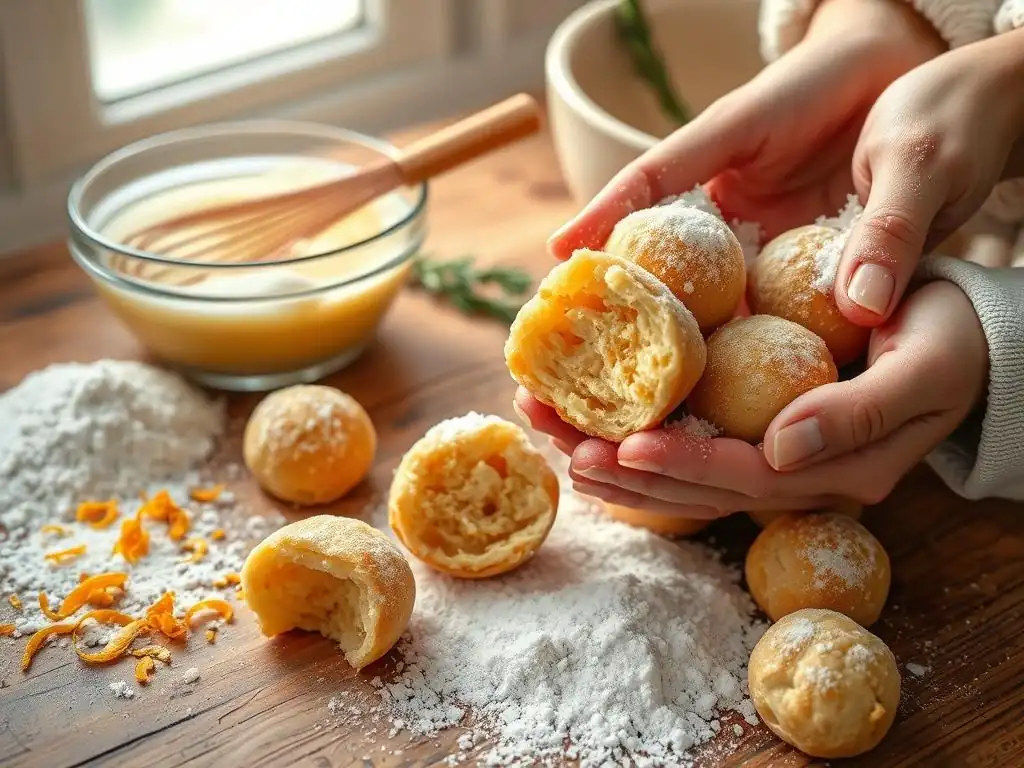
Welcome to BakeWithEase, where the joy of baking meets simplicity! Ever wondered how to create those perfectly round, intricately layered German treats? Delve into our Easy German Snowball Recipe Tutorial and unlock the secrets to crafting these delightful Schneeballen. Get ready to impress your friends and family with this unique and delicious pastry – the adventure begins here!
- Bake Schneeballen (German Snowballs): An Authentic Guide
- Discover the Magic of Schneeballen: A Traditional German Pastry Tutorial
- What are Schneeballen? Exploring This Iconic German Treat
- Authentic Schneeballen Recipe: Bake German Snowballs at Home
- Tips for Perfect Homemade German Snowballs
- Serving and Enjoying Your German Snowballs
- Frequently Asked Questions
- Final Reflection: The Enduring Charm of Simple Delights
- Unleash Your Inner Baker: Master the Art of Schneeballen!
Bake Schneeballen (German Snowballs): An Authentic Guide
Discover the Magic of Schneeballen: A Traditional German Pastry Tutorial
Welcome, fellow baking enthusiasts, to a delightful journey into the heart of German confectionery! Today, we're exploring the charming and delicious Schneeballen, a treat that looks as whimsical as its name suggests – "snowball." If you're looking for an easy German snowball recipe tutorial that guides you through making these unique pastries at home, you've come to the right place. We'll uncover their history, learn the traditional techniques, and get hands-on with a simple yet authentic recipe. Get ready to impress your friends and family with these delightful German snowballs!
Baking Schneeballen might seem intricate at first glance due to their distinctive shape, but the process is surprisingly accessible, even for beginners. The key lies in understanding the simple dough composition and the specific shaping and frying methods. Our easy German snowball recipe tutorial will break down each step, ensuring you gain the confidence to create these crispy, powdery delights right in your own kitchen. So, tie on your apron, gather your ingredients, and let's dive into the world of Schneeballen!
What are Schneeballen? Exploring This Iconic German Treat
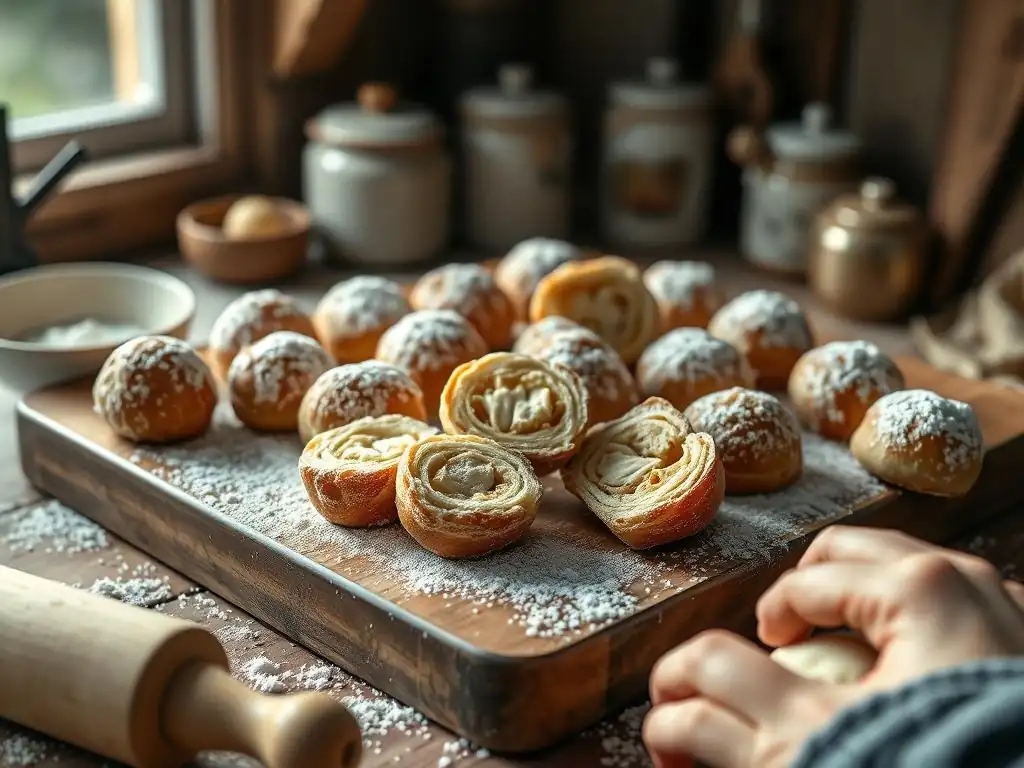
Schneeballen are a traditional pastry originating from the Franconia region of Bavaria, Germany. They are characterized by their distinctive spherical shape, resembling a loosely packed snowball, and their crumbly texture. Made from a simple dough, these pastries are typically deep-fried until golden brown and then generously dusted with powdered sugar, giving them their characteristic "snowy" appearance. They are a popular treat at festivals, bakeries, and markets throughout Southern Germany, especially around holidays and special occasions.
While traditionally plain and coated in powdered sugar, modern variations of Schneeballen have emerged, featuring coatings like chocolate, cinnamon sugar, nuts, or even filled versions. Despite these variations, the core concept remains the same: a crispy, crumbly, and visually striking pastry that offers a delightful bite. Understanding the basics of what makes a Schneeball unique is the first step in mastering our easy German snowball recipe tutorial.
The History and Origins of Schneeballen in Rothenburg ob der Tauber
The history of Schneeballen is deeply rooted in the culinary traditions of Franconia, particularly in the picturesque medieval town of Rothenburg ob der Tauber. This charming town, famous for its well-preserved architecture and festive atmosphere, is often considered the birthplace and spiritual home of the Schneeball. Records suggest the pastry has been made in this region for at least 300 years, initially as a treat for special occasions like weddings and church festivals.
In Rothenburg, the Schneeball transitioned from a seasonal or celebratory item to a year-round staple, becoming synonymous with the town itself. Bakeries throughout Rothenburg proudly display mounds of Schneeballen in their windows, attracting tourists eager to sample this local specialty. While they are now found in other parts of Germany, their association with Rothenburg remains strong, highlighting their specific regional origin and long-standing cultural significance.
Why Schneeballen are Called "Snowballs": Appearance and Tradition
The name "Schneeballen" literally translates to "snowballs" in German, a name that perfectly describes their appearance. After the dough is shaped into a loose sphere and deep-fried, the final step traditionally involves a heavy dusting of powdered sugar. This thick coating of white sugar gives the pastry the unmistakable look of a fresh snowball, covered in glistening white powder.
Beyond the visual resemblance, the name also reflects the season when they were historically most popular – winter and the festive period leading up to Christmas. While now available year-round, their association with snow and winter adds to their charm and traditional appeal. The process of dusting them with powdered sugar is part of the fun, completing the transformation into these delightful German snowballs.
Taste and Texture: Achieving the Signature Crumbly Bite
The defining characteristic of a Schneeball's texture is its unique crumbliness. Unlike a dense cookie or a soft cake, a good Schneeball should shatter into many pieces when bitten into, creating a delightful mess of crispy shards and powdered sugar. This texture is achieved through the specific dough composition, which is relatively low in moisture and often contains a significant amount of fat, and the frying process, which creates a crispy exterior and a delicate interior structure.
The taste is typically mild and slightly sweet, primarily coming from the dough itself and the liberal coating of powdered sugar. Traditional recipes might include a hint of vanilla or lemon zest. Modern variations introduce flavors through coatings like melted chocolate, cinnamon, or ground nuts, adding complexity to the simple base. Mastering the balance of these elements is key to a successful easy German snowball recipe tutorial.
Authentic Schneeballen Recipe: Bake German Snowballs at Home
Ready to try your hand at making these delightful pastries? This easy German snowball recipe tutorial provides a straightforward approach to baking Schneeballen at home. While deep-frying is the traditional method, we'll focus on that to achieve the authentic texture. Gather your ingredients and let's get started on this fun baking project!
Ingredients for Traditional German Schneeballen
Making Schneeballen requires only a few basic ingredients, which you likely already have in your pantry. The simplicity of the ingredients belies the unique texture and appearance of the final product.
- 250 grams All-purpose flour
- 50 grams Granulated sugar
- Pinch of salt
- 1 large Egg
- 50 grams Unsalted butter, melted and slightly cooled
- Approx. 2-3 tablespoons Kirschwasser (cherry liqueur), or milk/cream as a non-alcoholic alternative
- Vegetable oil or shortening for deep frying (approx. 1-1.5 liters)
- Powdered sugar for dusting (generous amount)
Essential Flour and Fat Ratios for Schneeballen Dough
The ratio of flour to fat is crucial for achieving the signature crumbly texture of Schneeballen. In this recipe, we use approximately 250g of flour to 50g of butter, which is a ratio of 5:1. This relatively low fat content compared to some pastries, combined with minimal liquid, results in a stiff dough that fries up crispy and crumbly rather than dense or cake-like.
Getting this ratio right ensures the dough is workable enough to shape but dry enough to develop the desired texture when fried. Too much fat can make the dough greasy and difficult to handle, while too little might result in a hard or tough Schneeball. Precision in measuring your ingredients, especially the flour and fat, is a key step in our easy German snowball recipe tutorial.
The Importance of Kirschwasser (Cherry Liqueur) in Schneeballen Dough
Traditionally, a small amount of Kirschwasser (cherry liqueur) is added to Schneeballen dough. While it might seem like a minor ingredient, it serves a few purposes. Firstly, it adds a subtle, traditional flavor note that complements the simple dough. Secondly, the alcohol can help inhibit gluten development slightly, contributing to a more tender crumb.
If you prefer not to use alcohol, milk or cream can be substituted. However, for the most authentic flavor profile, Kirschwasser is recommended. The amount used is small, typically just enough to help bring the dough together, usually around 2-3 tablespoons for the amount of flour specified. This small addition is a nod to tradition in many German pastries.
Step-by-Step Schneeballen Dough Preparation Guide
Preparing the dough for Schneeballen is quite simple, requiring minimal kneading. The goal is to bring the ingredients together into a cohesive, relatively stiff dough.
- In a large bowl, whisk together the flour, granulated sugar, and salt.
- In a separate bowl, whisk the egg with the melted butter and Kirschwasser (or milk/cream).
- Pour the wet ingredients into the dry ingredients.
- Mix with a fork or spatula until the dough just comes together into a shaggy mass.
- Turn the dough out onto a lightly floured surface.
- Gently knead for just 1-2 minutes, or until the dough forms a smooth ball. Do not overwork the dough.
This straightforward process ensures the dough is ready for the next crucial steps of resting and shaping. Following these steps closely is vital for a successful outcome in our easy German snowball recipe tutorial.
Mixing the Dough: Avoiding Overworking the Gluten
When mixing Schneeballen dough, the key is to handle it gently and avoid overworking the gluten. Unlike bread dough, where gluten development is desired for structure, Schneeballen benefit from less gluten. Overdeveloped gluten can result in a tough, chewy pastry rather than the desired crumbly texture.
Mix the wet and dry ingredients only until they are combined. A brief, gentle knead (just 1-2 minutes) is sufficient to bring the dough together into a smooth ball. Stop kneading as soon as the dough is cohesive and no longer sticky. This minimal handling ensures the gluten remains relaxed, contributing to the final delicate crumb.
Resting the Dough: Allowing for Proper Hydration
After mixing, it's essential to let the Schneeballen dough rest. Wrap the dough ball tightly in plastic wrap and refrigerate it for at least 30 minutes, or up to a few hours. This resting period serves several purposes.
Firstly, it allows the flour to fully hydrate, resulting in a more uniform dough consistency that is easier to roll and shape. Secondly, it allows the gluten to relax further, which is important for achieving the tender, crumbly texture. A well-rested dough is less elastic and prone to snapping back, making the shaping process much smoother.
Shaping Schneeballen: The Traditional Hand-Forming Technique
The distinctive snowball shape is created by hand, using a specific technique that involves strips of dough. This method gives the Schneeball its open, layered structure, which becomes crispy when fried.
- Divide the rested dough into portions (e.g., 4-6 portions depending on desired size).
- Roll one portion of dough out very thinly on a lightly floured surface, almost paper-thin.
- Using a fluted pastry wheel or knife, cut the dough into strips about 1-1.5 cm wide.
- Gather several strips together (e.g., 5-7 strips) and place them on top of each other.
- Carefully lift the stack of strips and loosely form them into a ball shape using your hands, tucking the ends in as you go. The goal is a loose, open structure, not a compact ball.
This traditional hand-forming technique is crucial for achieving the characteristic look and texture. Practice might be needed to get the hang of it, but the process is quite intuitive once you start.
Rolling and Cutting the Dough into Strips
Rolling the dough thinly is perhaps the most critical part of the shaping process. Aim for a thickness of about 1-2 millimeters. The thinner the dough, the crispier the final Schneeball will be. Use plenty of flour on your surface and rolling pin to prevent sticking.
Once rolled thin, use a fluted pastry wheel if you have one – the fluted edge gives the strips a traditional decorative edge, though a sharp knife works just fine. Cut the dough into even strips, ensuring they are roughly the same width so they cook evenly when fried. Consistency in this step helps ensure uniform Schneeballen.
Forming the Ball: A Visual Guide to Tightening the Shape
Forming the ball isn't about creating a solid sphere like a cookie dough ball. Instead, you're creating a loose lattice of dough strips. Stack the strips, then gently cup them in your hands. As you bring your hands together, loosely coil and tuck the strips inward to form a ball shape.
Imagine you're loosely crumpling paper – you want air pockets within the structure. The strips should overlap and intertwine but not be pressed together tightly. This open structure allows the hot oil to circulate during frying, ensuring the inside cooks and becomes crispy. Some bakers use a special metal Schneeball iron or basket to hold the shape while frying, but hand-forming is the traditional method and perfectly achievable with practice.
Frying Schneeballen: Achieving Golden Perfection
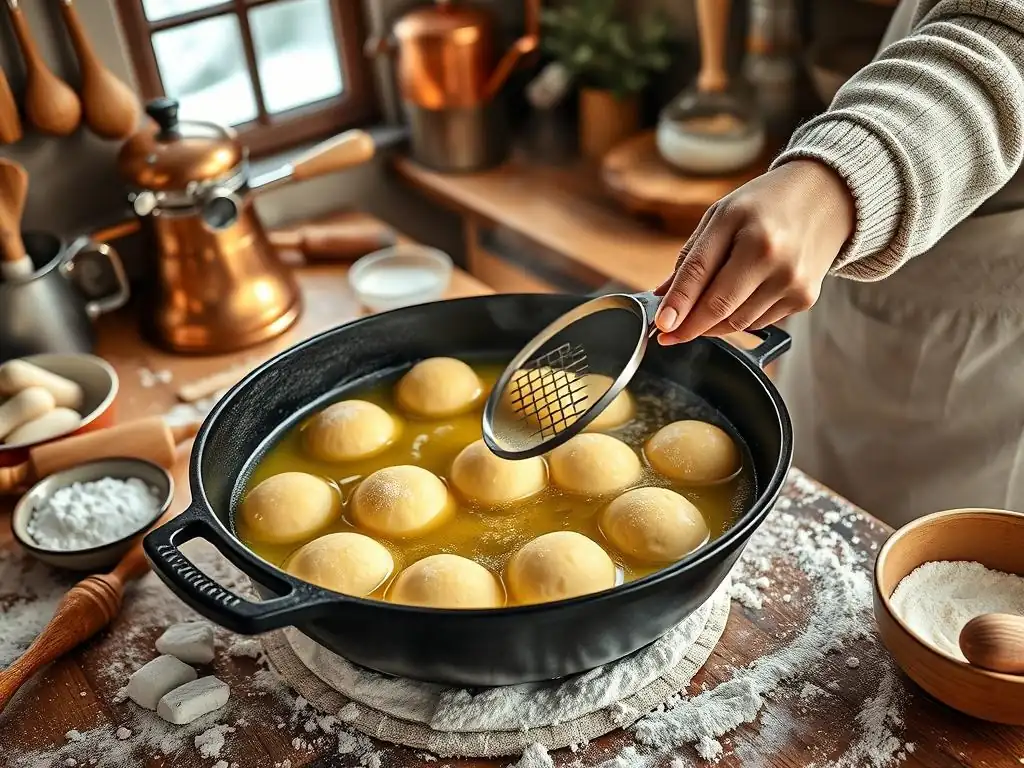
Frying is the traditional and best method for achieving the authentic crispy, crumbly texture of Schneeballen. This step requires attention to oil temperature and careful handling.
- Heat vegetable oil or shortening in a deep pot or Dutch oven to approximately 170-180°C (340-355°F). Use a thermometer to monitor the temperature.
- Carefully lower one or two Schneeballen into the hot oil using a slotted spoon or spider. Do not overcrowd the pot.
- Fry for 3-5 minutes per side, or until golden brown and crispy all over. Use a spider to gently turn the Schneeballen to ensure even browning.
- Once golden, lift the Schneeballen out of the oil using the spider, allowing excess oil to drain back into the pot.
- Place the fried Schneeballen on a wire rack set over paper towels to drain further.
- Repeat with the remaining Schneeballen, ensuring the oil temperature stays within the target range.
This frying process is quick, and watching the Schneeballen puff slightly and turn golden is quite satisfying.
Temperature Matters: Maintaining Consistent Oil Temperature
Maintaining the correct oil temperature is crucial for successful frying. If the oil is too hot, the Schneeballen will brown too quickly on the outside while remaining raw or doughy on the inside. If the oil is too cool, they will absorb too much oil, resulting in greasy, heavy pastries instead of light, crispy ones.
Using a deep-fry thermometer is highly recommended to keep the oil between 170-180°C (340-355°F). The temperature will drop slightly when you add the Schneeballen, so allow it to come back up before adding the next batch. Frying in small batches helps maintain a more consistent temperature.
Achieving Even Cooking: Using a Spider for Turning and Lifting
A spider (a wide, shallow wire mesh spoon with a long handle) is the ideal tool for handling Schneeballen in hot oil. Its shape allows you to scoop and turn the delicate pastries without damaging their structure.
Gently turn the Schneeballen every few minutes to ensure they brown evenly on all sides. They should cook to a uniform golden color. When they are done, use the spider to lift them out of the oil, holding them over the pot for a few seconds to allow excess oil to drip off. Transfer them carefully to a wire rack to cool slightly before dusting.
Schneeballen Variations: Exploring Regional and Modern Twists
While the classic powdered sugar version is the most traditional, Schneeballen lend themselves well to various flavor enhancements and coatings. This allows for creative twists on the easy German snowball recipe tutorial.
- Cinnamon Sugar: Mix powdered sugar with ground cinnamon for a warm, spiced coating.
- Chocolate: Dip fried Schneeballen in melted chocolate (milk, dark, or white).
- Nuts: Roll chocolate-dipped Schneeballen in chopped nuts (almonds, hazelnuts, walnuts).
- Marzipan: Some variations incorporate small pieces of marzipan into the dough or use marzipan coatings.
- Glazes: Drizzle with simple glazes made from powdered sugar and lemon juice or water.
These variations offer exciting ways to customize your homemade German snowballs.
Flavor Infusions: Cinnamon Sugar, Chocolate, and Marzipan
Beyond the simple powdered sugar, adding flavor infusions is a popular way to enjoy Schneeballen. A classic variation is rolling the still-warm Schneeballen in a mixture of powdered sugar and cinnamon. This adds a lovely warmth and aroma.
For a more decadent treat, dipping the fried pastries in melted chocolate is a favorite. Dark chocolate provides a nice contrast to the mild pastry, while milk or white chocolate adds extra sweetness. Marzipan, a traditional German almond paste, can be incorporated by rolling small pieces into the dough strips before shaping, or used as a coating or filling in more complex versions.
Dipping and Coating Ideas for Schneeballen: From Powdered Sugar to Nuts
The final coating is what gives Schneeballen their iconic look and often their primary flavor. The most traditional is, of course, a very liberal dusting of powdered sugar. It's best to do this while the Schneeballen are still slightly warm so the sugar adheres well.
Other popular coatings include rolling them in cinnamon sugar, dipping them fully or partially in melted chocolate, or drizzling them with various glazes. For added texture and flavor, you can roll chocolate-dipped Schneeballen in finely chopped nuts or sprinkles. Get creative with your coatings to make your homemade German snowballs uniquely yours!
Tips for Perfect Homemade German Snowballs
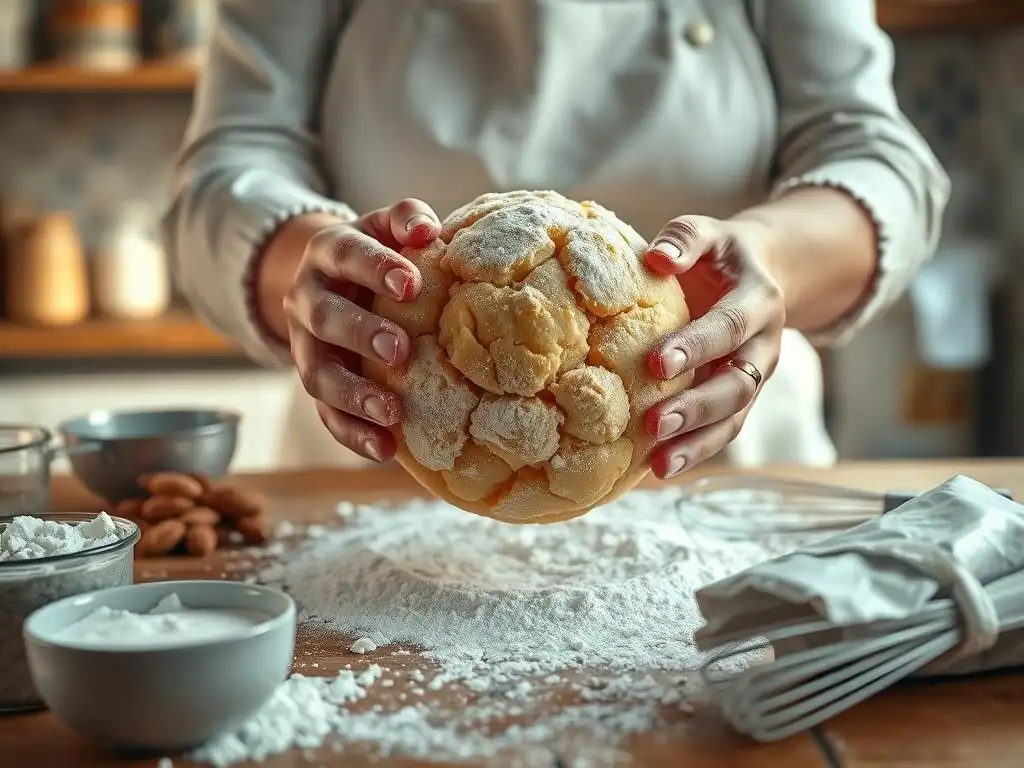
Making delicious Schneeballen is achievable for any home baker, especially with an easy German snowball recipe tutorial like this one. However, keeping a few key tips in mind can help you achieve truly perfect results.
Common Mistakes to Avoid When Baking Schneeballen: Dough Handling and Frying
Several common pitfalls can affect the outcome of your Schneeballen. One of the most frequent is overworking the dough. As mentioned earlier, this develops too much gluten, leading to tough, rather than crumbly, pastries. Mix and knead minimally.
Another critical area is frying. Using oil that isn't hot enough will result in greasy Schneeballen that are heavy and unpleasant. Conversely, oil that is too hot will burn the outside before the inside is cooked, leaving you with a raw center. Always use a thermometer to monitor and maintain the correct oil temperature (170-180°C / 340-355°F). Overcrowding the frying pot is also a mistake; fry in small batches to keep the oil temperature stable and ensure even cooking.
Achieving the Ideal Crispy Texture: Preventing Sogginess
The perfect Schneeball is crispy and airy, not soggy or oily. To achieve this, start with a dough that is not too wet or too rich in fat. Roll the dough strips as thinly as possible – this is key to crispiness.
During frying, ensure the oil is at the correct temperature and the Schneeballen are fried until uniformly golden brown. Once fried, drain them immediately on a wire rack set over paper towels. This allows air circulation around the entire pastry and helps any excess oil drain away. Avoid placing them directly on paper towels without a rack, as this can trap steam and lead to sogginess.
Storing Your Homemade Schneeballen for Optimal Freshness: Maintaining Crispness
Schneeballen are best enjoyed fresh, ideally within a day or two of frying, as their crispness is paramount. To store them and maintain as much crispness as possible, keep them in an airtight container at room temperature.
Avoid refrigerating Schneeballen, as the humidity can make them soft and lose their desirable texture. If they do lose some crispness, you can try briefly warming them in a low oven (around 150°C / 300°F) for a few minutes, though this doesn't always fully restore the original crispness. It's often best to make a batch that you plan to consume relatively quickly after following this easy German snowball recipe tutorial.
Serving and Enjoying Your German Snowballs
Now that you've successfully baked a batch of these delightful German snowballs, it's time to enjoy the fruits of your labor! Serving Schneeballen is part of the experience, and there are traditional ways to present and eat them.
Traditional Ways to Serve Schneeballen: Crushing and Sharing
One traditional way to serve Schneeballen, especially the large ones found in German bakeries, is to place one on a plate and gently break or crush it with a fork or your hands before eating. Because they are so crumbly, attempting to bite directly into a large one can be quite messy! Crushing it makes it easier to eat and share.
For smaller, homemade versions made using this easy German snowball recipe tutorial, crushing might not be strictly necessary, but it's still a fun, traditional gesture. Presenting them piled high on a platter, generously dusted with powdered sugar, is visually appealing and inviting.
Schneeballen as a Dessert or Treat: Festive Occasions and Everyday Enjoyment
Schneeballen are versatile treats suitable for various occasions. Traditionally associated with festivals and holidays like Christmas and weddings in Germany, they bring a touch of festive cheer. Their snowy appearance makes them perfect for winter gatherings.
However, they are also enjoyed year-round as a simple yet satisfying pastry with coffee or tea. Whether served as a unique dessert after a meal or enjoyed as a mid-afternoon snack, these homemade German snowballs are sure to be a hit.
Pairing Suggestions: Coffee, Tea, or Sweet Wine
The mild sweetness and crispy texture of Schneeballen pair wonderfully with hot beverages. A classic pairing in Germany is with a cup of coffee, making them an ideal accompaniment for Kaffee und Kuchen (coffee and cake) time.
Tea is another excellent partner, whether a simple black tea or a fragrant herbal variety. For a more festive pairing, consider serving Schneeballen with a sweet dessert wine, such as a German Riesling or Eiswein, which complements their sweetness without overpowering their delicate flavor. Enjoy your delicious homemade German snowballs!
Frequently Asked Questions
What exactly are Schneeballen, and where do they come from?
Schneeballen, also known as German Snowballs, are a traditional pastry from the Rothenburg ob der Tauber region of Germany. They are made from shortcrust pastry and are known for their distinctive ball shape.
Are Schneeballen difficult to make at home?
While they may look intricate, this tutorial from BakeWithEase aims to provide an easy-to-follow method for baking Schneeballen at home. The recipe emphasizes simple steps and readily available ingredients.
What kind of ingredients are needed for this Schneeballen recipe?
The recipe primarily requires common baking ingredients like flour, butter, sugar, eggs, and a pinch of salt. Some variations might include flavorings like vanilla extract or lemon zest.
What are some variations or toppings I can use for my Schneeballen?
Traditionally, Schneeballen are dusted with powdered sugar. However, you can also experiment with dipping them in chocolate, nuts, or sprinkles for added flavor and decoration.
How should I store Schneeballen to keep them fresh?
Store your Schneeballen in an airtight container at room temperature. They are best enjoyed within a few days to maintain their crisp texture.
Final Reflection: The Enduring Charm of Simple Delights
The seemingly simple act of baking Schneeballen, or German Snowballs, transcends mere culinary creation; it's a journey into tradition, a testament to the power of accessible recipes, and a celebration of shared experiences. This easy German snowball recipe tutorial aimed to demystify this delightful treat, making it achievable for even the most novice bakers. The accessibility of the recipe, coupled with the visual appeal and satisfying crunch of the final product, highlights the joy found in simple, homemade pleasures.
The enduring appeal of Schneeballen lies not just in its deliciousness, but in its ability to connect us to a rich cultural heritage. These delicate pastries, with their intricate history and surprisingly straightforward preparation, offer a tangible link to the past, a reminder of the importance of preserving culinary traditions. The best things in life are simple,
a sentiment perfectly encapsulates the essence of this recipe and the satisfaction derived from creating something beautiful and delicious with minimal fuss. The process itself, from the careful rolling of the dough to the satisfying golden-brown finish, becomes a meditative practice, a moment of mindful creation in our often-hectic lives.
Now, I invite you to embrace the spirit of this tutorial. Don't be intimidated by the seemingly complex appearance of Schneeballen; embrace the simplicity of the recipe and the joy of the process. Gather your ingredients, follow the steps, and experience the satisfaction of creating something truly special. Share your creations with loved ones, and let the aroma of freshly baked Schneeballen fill your home with warmth and the sweet taste of tradition. Let this be more than just a recipe; let it be a reminder to savor the simple delights life offers.
Unleash Your Inner Baker: Master the Art of Schneeballen!
Thanks for joining us on this delicious journey into the world of Schneeballen! We hope you gained a new appreciation for this fascinating German treat and feel inspired to try your hand at baking them. Ready to take the next step?
- Dive into the kitchen and bake your first batch of Schneeballen! Use the recipe and tips from the article as your guide – don't be afraid to experiment!
- Share your Schneeballen creation on social media using #BakeWithEaseSchneeballen and tag @BakeWithEase – let's inspire others!
- Explore other unique recipes on BakeWithEase.com to expand your baking horizons. Perhaps you'll find your next culinary adventure!
What unique twist will you add to your Schneeballen to make them truly your own? Let us know in the comments below!