
Portion Control: Using Scoops for Uniform Cookies, Cupcakes, and More


Welcome to BakeWithEase, your haven for effortless baking! Ever wondered how to achieve perfectly uniform cookies every single time? Dive into our latest article, "Portion Control: Using Scoops for Uniform Cookies, Cupcakes, and More," where we unlock the secrets to achieving baking consistency with easy scoop cookie recipes. Discover how this simple tool can revolutionize your baking and elevate your treats to professional-looking perfection. Intrigued? Keep reading to find out how to say goodbye to uneven bakes forever!
- BakeWithEase Presents: Mastering Portion Control for Baking Success
- Why Portion Control Matters in Baking: Achieving Consistent Results
- Choosing the Right Scoop for Your Baking Needs: A Comprehensive Guide
- Easy Scoop Cookie Recipes: Achieve Uniformity with Precision
- Beyond Cookies: Expanding Scoop Usage in Baking
- Scoop Cleaning and Maintenance: Extending the Lifespan of Your Tools
- Tips and Tricks for Perfect Portioning with Scoops
- Elevate Your Baking: The Benefits of Using Scoops for Portion Control
- Frequently Asked Questions
- Final Reflection: The Sweet Science of Consistent Baking
- Unlock Your Baking Precision: Perfect Portions Every Time!
BakeWithEase Presents: Mastering Portion Control for Baking Success
Achieving perfection in baking often comes down to precision. While ingredients and oven temperature are crucial, the consistency of your dough or batter portions plays a significant role in the final outcome. This is where baking scoops become your secret weapon! Using scoops ensures that every cookie, cupcake, or muffin is the same size, leading to uniform baking, professional presentation, and a more efficient process. Whether you're tackling classic chocolate chip cookies or delicate madeleines, a reliable scoop can elevate your baking game from good to consistently great.
Welcome to your guide on mastering portion control with scoops. We'll explore why uniformity matters, how to choose the right scoop for different tasks, delve into easy scoop cookie recipes, and even look at how scoops can be used for other baked goods like cupcakes and muffins. Get ready to bake with newfound precision and achieve beautiful, evenly baked treats every time!
Why Portion Control Matters in Baking: Achieving Consistent Results
In the world of baking, consistency isn't just a nice-to-have; it's often the key to success. When every piece of dough or batter is the same size and shape, the science of baking works in your favor. This uniformity impacts everything from how the treat bakes to how it looks and even how long the entire baking process takes. Portion control is a fundamental technique that separates inconsistent results from reliably delicious outcomes.
Using tools like baking scoops takes the guesswork out of portioning. Instead of relying on estimates or trying to eyeball equal amounts, a scoop provides a consistent volume every single time. This simple step dramatically improves the predictability of your baking, allowing you to replicate successful results batch after batch. It's a foundational skill for anyone serious about improving their baking consistency.
Consistent Size, Consistent Bake: The Key to Perfect Treats
The most critical advantage of uniform portions is ensuring an even bake. Imagine baking a tray of cookies where some are significantly larger than others. The smaller cookies will likely be done (or even overdone) while the larger ones are still underbaked in the center. This leads to waste and frustration.
For example, a batch of standard chocolate chip cookies portioned with a #40 scoop (approximately 1.6 ounces or 3-4 tablespoons) might bake perfectly in 10-12 minutes at 350°F (175°C). If some cookies on the same tray were portioned with a #20 scoop (around 3.2 ounces), they would require closer to 14-16 minutes, resulting in the smaller cookies becoming overly crisp or burnt.
By using a scoop, every cookie receives the same amount of heat exposure for the same duration, ensuring consistent browning, texture, and doneness across the entire batch. This principle applies equally to cupcakes, muffins, and other baked goods, where consistent volume in each cavity is essential for even rising and baking.
Visual Appeal and Professional Presentation: Elevating Your Baked Goods
Beyond just baking evenly, uniform portions contribute significantly to the visual appeal of your finished goods. Whether you're baking for family, friends, a bake sale, or even commercially, consistent size makes your treats look polished and professional. A tray of cookies, cupcakes, or muffins that are all the same size and shape is inherently more appealing than a collection of disparate sizes.
Consider a display of cupcakes. If each cupcake is filled with the same amount of batter using a scoop, they will all rise to a similar height and have a consistent dome shape. This uniformity allows for consistent frosting application and creates a visually pleasing presentation. Similarly, perfectly sized cookies stack neatly and look appealing in a jar or on a plate. This attention to detail in portioning elevates the perceived quality of your baking and demonstrates skill and care.
Time-Saving and Efficient Baking: Streamlining Your Process
While it might seem like an extra step, using a scoop actually saves time and increases efficiency in the long run. Scooping is often faster than trying to measure or shape individual portions by hand, especially for sticky doughs or batters. A single scoop motion deposits the correct amount quickly and cleanly.
Moreover, because your baked goods are uniform, you eliminate the need to constantly check for doneness on individual pieces. You can trust that when one is ready, they all are, reducing the risk of burning or underbaking and minimizing waste. For high-volume baking, like preparing dozens of cookies or cupcakes, using a scoop is indispensable for maintaining a steady workflow and ensuring consistent results across multiple batches. This efficiency allows you to bake more in less time with greater reliability.
Choosing the Right Scoop for Your Baking Needs: A Comprehensive Guide
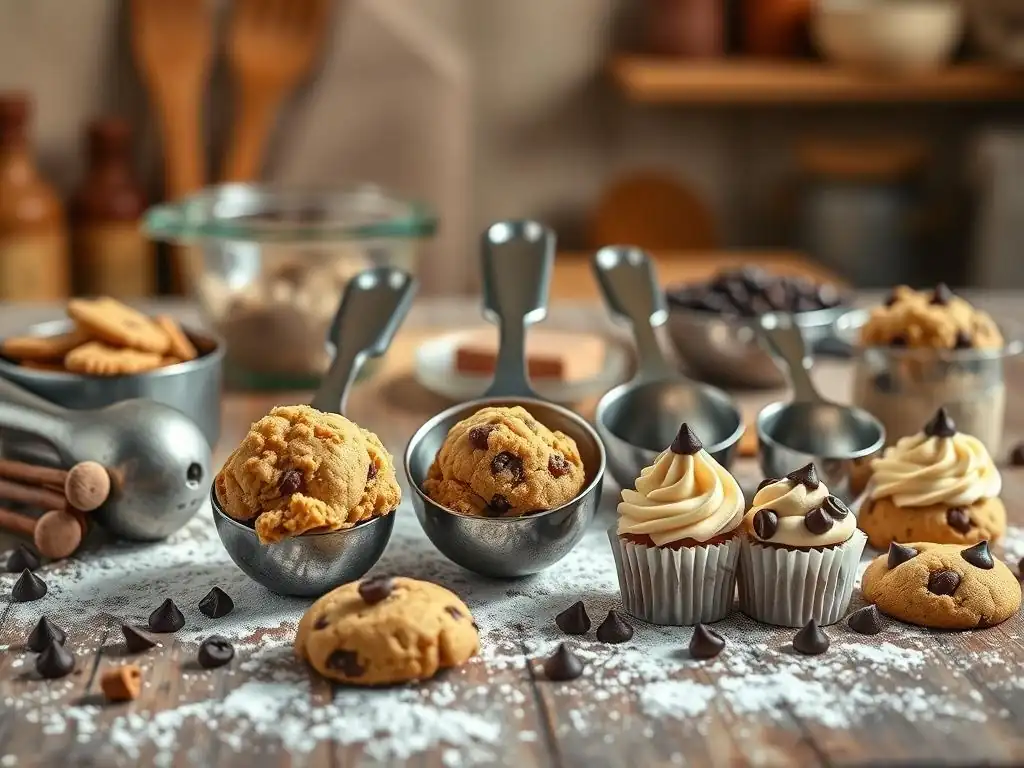
Selecting the appropriate scoop is key to successful portion control. Scoops come in various sizes, materials, and designs, each suited for different baking tasks. Understanding these variations will help you choose the best tools for your kitchen.
From portioning delicate cookie dough to scooping thick muffin batter, the right scoop makes the job easier and more accurate. It's worth investing in a few different sizes to cover a range of baking needs. Thinking about what you bake most often will guide your selection process.
Understanding Scoop Sizes: Ounce Equivalents and Applications
Scoops are typically labeled with a number, which corresponds to the number of scoops it takes to make one quart of product. A smaller number means a larger scoop (e.g., #20 scoop is larger than a #40 scoop). They are also often listed with their approximate ounce or tablespoon capacity. Common sizes for baking include:
- #20 Scoop: Approx. 3.2 oz (about 1/3 cup). Ideal for large muffins, standard size cupcakes, or large cookies.
- #24 Scoop: Approx. 2.6 oz (about 1/4 cup). Good for standard muffins or slightly smaller cupcakes.
- #30 Scoop: Approx. 2.1 oz (about 3 tablespoons). Excellent for medium-sized cookies.
- #40 Scoop: Approx. 1.6 oz (about 2-3 tablespoons). A popular size for standard cookies, like classic chocolate chip or peanut butter cookies.
- #50 Scoop: Approx. 1.2 oz (about 2 tablespoons). Suitable for smaller cookies or mini muffins.
- #60 Scoop: Approx. 0.9 oz (about 1.5 tablespoons). Great for mini cookies or portioning dough for truffles or cake pops.
Choosing the size depends on the desired final size of your baked good. For most easy scoop cookie recipes, a #30 or #40 scoop is a versatile starting point.
While they look similar and function using a similar mechanism (a spring-loaded sweep to release the contents), there are subtle differences between scoops marketed as "cookie scoops" and those for "ice cream." Cookie scoops are often designed with a slightly sharper edge to cut through firmer cookie dough cleanly. They also tend to come in a wider range of smaller sizes suitable for cookies (#30, #40, #50, #60).
Ice cream scoops, on the other hand, are typically more robust and designed to handle hard, frozen ice cream. They often have a larger bowl and may feature a more heavy-duty mechanism. While you can use an ice cream scoop for baking (especially the smaller ones for larger cookies or muffins), a dedicated cookie scoop is often more comfortable and efficient for handling doughs, particularly for easy scoop cookie recipes where precise, smaller portions are desired. Look for scoops specifically labeled for dough or baking for the best results.
Material Matters: Stainless Steel vs. Plastic Scoops for Baking
Baking scoops are commonly made from stainless steel or plastic. Stainless steel scoops are generally more durable, resistant to rust and staining, and can handle firmer doughs more easily due to their strength. They often have a professional feel and can last for many years with proper care. However, they can be slightly more expensive.
Plastic scoops are typically lighter and more affordable. They are suitable for softer doughs and batters. While durable plastic scoops exist, they may not withstand the same rigor as stainless steel and can sometimes stain or retain odors over time. For frequent baking and handling of various dough types, stainless steel is often the preferred choice for its longevity and performance, especially when working through batches of easy scoop cookie recipes.
Ergonomic Design: Comfort and Ease of Use for High-Volume Baking
When you're scooping dozens or even hundreds of portions, the comfort and ease of use of your scoop become paramount. Look for scoops with an ergonomic handle that fits comfortably in your hand and provides a good grip. The mechanism for releasing the dough or batter should operate smoothly without requiring excessive force, which can lead to hand fatigue.
Some scoops feature a thumb press, while others have a squeeze handle. Try both types if possible to see which feels more natural and comfortable for you. A well-designed scoop reduces strain on your hand and wrist, making the portioning process faster and less tiring, especially when you're powering through batch after batch of your favorite easy scoop cookie recipes.
Using a scoop is one of the simplest ways to guarantee perfect, uniform cookies every time. It eliminates the guesswork of rolling dough into balls by hand and ensures each cookie bakes at the same rate. Let's look at how scoops make some classic easy scoop cookie recipes even easier and better.
No more misshapen or unevenly sized cookies! A scoop transforms the process of making drop cookies, resulting in picture-perfect treats ready for stacking, sharing, or simply enjoying one after another, knowing they are all equally delicious and perfectly baked.
Chocolate chip cookies are a staple, and using a scoop is the best way to achieve that classic, uniform shape and consistent texture. After preparing your dough according to your favorite recipe, use a #30 or #40 scoop to portion the dough onto your baking sheets.
Press the scoop into the dough, sweep the lever to collect the full portion, and then release it onto the sheet. This creates neat, rounded mounds of dough that will spread into consistently sized cookies as they bake. For a chewier cookie, you might chill the scooped dough balls for at least 30 minutes before baking. This simple technique is fundamental to many easy scoop cookie recipes and guarantees reliable results.
Oatmeal raisin cookies can sometimes be a bit more rustic, but consistency still matters for even baking. The texture of oatmeal dough can be slightly different from standard cookie dough, but a sturdy scoop handles it beautifully.
Using a #40 or #50 scoop for smaller, classic-sized oatmeal raisin cookies ensures each one contains the same amount of oats and raisins, leading to consistent flavor and texture in every bite. Scoop the dough firmly but without excessive packing, then release onto the baking sheet. The uniform size means they'll all bake up golden brown and chewy or crisp, depending on your recipe, at the same time. It's one of the easiest ways to perfect these comforting treats using easy scoop cookie recipes.
Peanut butter cookies, often made with simple ingredients like peanut butter, sugar, and egg, are another perfect candidate for scoop portioning. Their dough can sometimes be a bit crumbly, but a scoop helps compress it into a consistent ball.
A #40 scoop is often ideal for standard-sized peanut butter cookies. Once scooped, you can gently press the tops with a fork to create the traditional crosshatch pattern. The uniform size ensures that all cookies bake through evenly, achieving that perfect balance of slightly crisp edges and a soft center. Using a scoop simplifies the process and is a key technique in many easy scoop cookie recipes for consistent results.
Snickerdoodle Simplicity: Consistent Texture and Appearance
Snickerdoodles rely on a consistent texture and their signature cinnamon-sugar coating. Portioning the dough uniformly is the first step to ensuring each cookie bakes correctly and has the right dough-to-coating ratio.
Use a #40 or #50 scoop to create uniform dough balls. After scooping, roll each ball in the cinnamon-sugar mixture before placing it on the baking sheet. The consistent size from the scoop ensures that each cookie has a similar surface area for the coating to adhere to and that they all bake up with that characteristic soft, chewy texture and slightly cracked surface at the same rate. Scooping simplifies the process, making it one of the truly easy scoop cookie recipes to master.
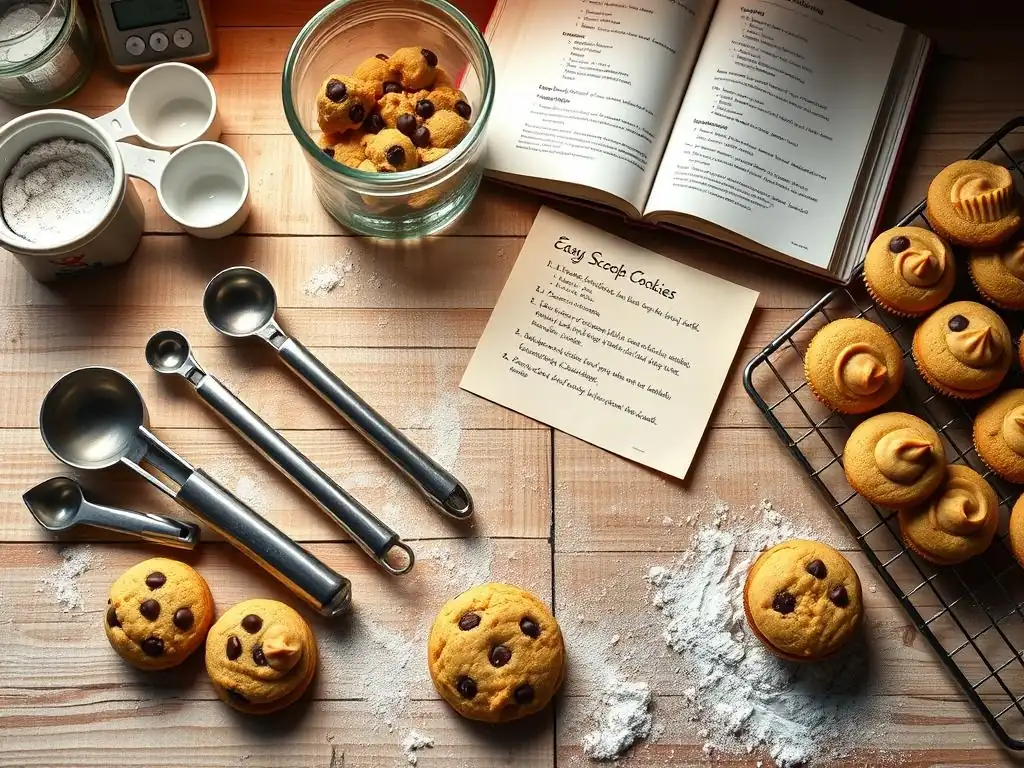
While scoops are famous for cookies, their utility extends far beyond. They are incredibly versatile tools for portioning various batters and doughs, ensuring consistency in other baked goods as well.
Applying the principle of portion control with scoops to muffins, cupcakes, scones, and even cake pops can significantly improve the quality and appearance of these treats. It's about bringing the same level of precision you use for easy scoop cookie recipes to other areas of your baking.
Cupcakes: Achieving Uniform Batter Distribution
For perfect cupcakes, filling each liner with the same amount of batter is crucial for achieving consistent domes and even baking. Overfilling leads to mushroom tops or overflowing liners, while underfilling results in flat, small cupcakes.
A #20 or #24 scoop is typically ideal for standard cupcake liners, filling them about two-thirds full. Simply dip the scoop into the batter, level it gently against the side of the bowl, and release the batter into the liner. This ensures each cupcake receives the exact same volume of batter, resulting in uniform size, shape, and bake time across the entire batch, ready for beautiful frosting.
Muffins: Ensuring Consistent Rise and Texture
Similar to cupcakes, uniform portioning is key for muffins to ensure they rise evenly and have a consistent texture. Muffins often use a slightly thicker batter than cupcakes.
Depending on whether you're making standard or large muffins, a #20 or #24 scoop works well. Scoop the batter and release it into the muffin tin cavities. For large, bakery-style muffins, you might use a #16 scoop (around 4 oz or 1/2 cup) and fill the cavities generously. Consistent portioning means each muffin will bake through properly, developing that desired crust and a moist interior at the same rate.
Scones: Creating Perfectly Portioned Wedges
While scones are often cut from a flattened round or rectangle of dough, scoops can be used for drop scones or to portion dough before shaping. For drop scones, a #30 or #40 scoop creates uniform mounds on the baking sheet.
Alternatively, for cut scones, you can use a large scoop (#16 or #20) to portion out the dough onto a floured surface before gently shaping it into a circle or rectangle and cutting into wedges. This ensures you start with consistent amounts of dough for each batch, leading to more predictable results during baking.
Cake Pops: Perfectly Sized and Shaped
When making cake pops, consistency in the size of the cake and frosting mixture balls is important for even chilling, dipping, and a professional look.
A #50 or #60 scoop is excellent for portioning the cake pop mixture before rolling it into balls. Scoop the mixture, release it, and then roll it by hand into a smooth sphere. The scoop ensures each ball starts with the same volume, making it easier to achieve consistent size and weight for all your cake pops. This uniformity is essential for the subsequent steps of chilling and dipping in chocolate.
Scoop Cleaning and Maintenance: Extending the Lifespan of Your Tools
Proper care of your baking scoops is essential to keep them functioning smoothly and hygienically for years to come. Dough and batter can be sticky and harden if left on the scoop.
Taking a few moments to clean and store your scoops correctly will prevent rust, ensure the mechanism works freely, and keep them ready for your next baking adventure, whether it's a batch of easy scoop cookie recipes or a tray of muffins.
Proper Washing Techniques: Preventing Cross-Contamination
Wash your scoops immediately after use. Warm, soapy water is usually sufficient. Use a brush or sponge to remove all traces of dough or batter, paying close attention to the area around the sweep mechanism where debris can accumulate. For stubborn, dried-on bits, you might need to soak the scoop briefly.
Rinse thoroughly with clean water. If your scoop is dishwasher safe (check the manufacturer's instructions), you can use that method, but hand washing is often recommended, especially for stainless steel, to prolong its life and maintain its shine. Ensure the sweep mechanism is clean and moves freely after washing.
Storage Solutions: Keeping Your Scoops Organized and Accessible
After washing, dry your scoops completely with a towel before storing. Allowing water to air dry, especially on stainless steel, can lead to water spots or even rust over time, particularly around rivets or springs.
Store scoops in a dry place. A utensil drawer is common, but if you have multiple sizes, consider a utensil crock or even hanging them on hooks if they have a loop. Storing them separately from sharp knives can prevent scratches. Keeping them organized and easily accessible encourages you to use them regularly for all your portioning needs, including those easy scoop cookie recipes.
Tips and Tricks for Perfect Portioning with Scoops
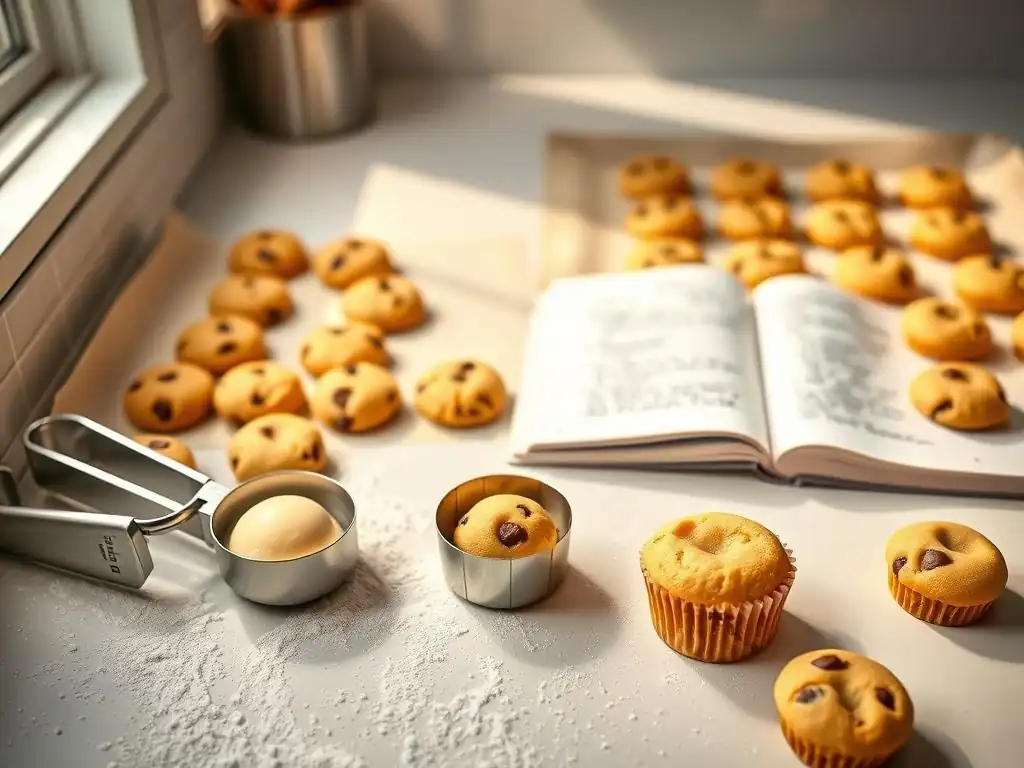
Even with the right scoop, a few simple techniques can help you achieve the most accurate and consistent portions possible. Mastering these nuances will further enhance your baking precision.
These tips are applicable whether you're portioning classic cookie dough for easy scoop cookie recipes or batter for delicate financiers. Small adjustments in technique can make a big difference in the final outcome.
Leveling the Scoop: Achieving Accurate Measurements
For most recipes, you want a level scoop of dough or batter, not a packed one (unless the recipe specifically instructs you to pack it). To achieve a level scoop, press the scoop into the dough/batter, ensuring the cavity is full. Then, use the side of the bowl or a spatula to scrape off any excess, leaving the surface of the dough/batter flush with the rim of the scoop.
This ensures you are getting a consistent volume each time. For drop cookies like easy scoop cookie recipes, a slightly rounded scoop is often acceptable and naturally happens, but for recipes where volume is critical (like cupcakes), leveling is important for consistency.
Avoiding Overfilling: Preventing Uneven Baking
While you want a full scoop, avoid cramming or packing the dough/batter into the scoop unless the recipe specifies otherwise. Over-packing can lead to denser baked goods and can also strain the scoop's mechanism.
For cookies, packing dough can result in cookies that don't spread properly. For cupcakes or muffins, overfilling the scoop can mean the batter is too compressed, affecting the rise. Scoop the dough/batter so it fills the cavity naturally, leveling off any excess as described above.
Adjusting Baking Times: Accounting for Size Variations
The baking time provided in a recipe is typically based on a standard portion size (often implying a scoop size like #40 or #50 for cookies, or #20 for cupcakes). If you choose to use a significantly different size scoop, you may need to adjust your baking time.
Larger portions will require more time to bake through, while smaller portions will bake faster. For instance, baking cookies made with a #20 scoop will take several minutes longer than those made with a #40 scoop. Always bake based on visual cues (like browning edges or a clean toothpick test) rather than strictly adhering to the recipe time, and make notes for future batches using that specific scoop size.
Dealing with Sticky Dough: Tips for a Clean Scoop
Some doughs, particularly those high in butter or with add-ins like chocolate chips or nuts, can be sticky and challenging to release from the scoop. For very sticky doughs, chilling the dough for 30-60 minutes before scooping can make it firmer and easier to handle.
Alternatively, you can lightly spray the scoop with non-stick cooking spray or dip it in warm water between scoops (drying it quickly). However, for most easy scoop cookie recipes, a good quality stainless steel scoop with a smooth mechanism should handle slightly sticky dough without much issue if used promptly after mixing.
Elevate Your Baking: The Benefits of Using Scoops for Portion Control
Incorporating baking scoops into your routine is a simple yet powerful way to enhance your baking results. From achieving perfectly uniform cookies to ensuring consistent cupcakes, the benefits are clear.
Investing in a few quality scoops and getting comfortable using them will pay dividends in the form of beautifully consistent, evenly baked, and professionally presented treats. It's a tool that empowers you to bake with confidence and precision.
From Novice to Pro: Improving Your Baking Skills
Using scoops is a technique that helps bakers of all levels improve. For beginners, it simplifies the process of portioning and guarantees a level of consistency that can be hard to achieve by hand. This leads to more successful outcomes early on, building confidence.
For more experienced bakers, scoops provide efficiency and precision, ensuring professional-quality results batch after batch. Whether you're perfecting your easy scoop cookie recipes or expanding your repertoire to muffins and scones, the scoop is a fundamental tool for mastering portion control and elevating your overall baking skills.
Choosing reliable tools makes a difference. A popular and well-regarded option among home bakers is the OXO Good Grips Cookie Scoop set, which often includes small, medium, and large sizes (like #60, #40, and #20 equivalents). These scoops are known for their comfortable, non-slip handles and smooth, easy-to-use sweep mechanisms.
Their stainless steel construction is durable and easy to clean, making them a solid investment for anyone serious about consistent portioning in their baking. Having a set provides versatility for different types of easy scoop cookie recipes, as well as cupcakes, muffins, and more.
Mastering Portioning for Consistent and Delicious Baked Goods
Ultimately, mastering portion control with baking scoops is about ensuring every bite of your baked goods is as delicious and perfectly baked as the last. It takes the guesswork out of the process and allows you to focus on the joy of baking itself.
By using scoops for your easy scoop cookie recipes, cupcakes, muffins, and other treats, you achieve consistent size, even baking, professional presentation, and save time. Make the scoop a staple in your baking toolkit and experience the difference consistency makes!
Frequently Asked Questions
What are the benefits of using scoops for baking?
Using scoops ensures consistent portion sizes for your baked goods, leading to uniform baking and a more professional appearance. It also saves time and reduces mess compared to other methods.
What sizes of scoops are commonly used in baking?
Common sizes include teaspoon, tablespoon, and quarter-cup scoops. The best size depends on the recipe and desired size of the finished product, but tablespoon scoops are ideal for cookies.
Consider the recipe's yield and desired cookie size. Start with a scoop size recommended in the recipe or experiment to find one that produces the perfect cookie size and shape.
Absolutely! Scoops are versatile tools that can be used for portioning cupcake batter, muffin batter, ice cream, or even fillings like jam. They're great for consistent portioning across various recipes.
How do I clean my baking scoops?
Most scoops are dishwasher safe, but hand-washing with warm, soapy water is also effective. Ensure they are completely dry before storing to prevent rust or corrosion.
Final Reflection: The Sweet Science of Consistent Baking
The quest for the perfect cookie, cupcake, or other baked treat often hinges on one seemingly small detail: consistent portioning. Achieving uniform size and bake time isn't just about aesthetics; it's about ensuring every bite delivers the same delicious experience. This article explored the simple yet powerful tool that can revolutionize your baking: the humble scoop.
The impact of consistent portioning extends far beyond the individual baked good. It speaks to a broader appreciation for precision and control in the kitchen, fostering a sense of accomplishment and predictability in a process that can often feel unpredictable. Baking is a science, but it's also an art. Mastering the science allows you to fully express your artistry.
This quote highlights the balance between technique and creativity that consistent portioning helps achieve. It's about taking the guesswork out of baking, allowing you to focus on the nuances of flavor and presentation.
Now, consider your own baking journey. What small changes can you implement to elevate your baking game? Perhaps it's investing in a good quality scoop, or simply taking the time to measure your ingredients more precisely. I invite you to embrace the power of the scoop, not just as a tool, but as a key to unlocking more consistent, more delicious, and ultimately, more satisfying baking experiences. Experiment, refine your technique, and savor the sweet rewards of your efforts. Happy baking!
Unlock Your Baking Precision: Perfect Portions Every Time!
Thanks for joining us on this baking adventure! We hope you've gained valuable insights into the power of portion control for consistently delicious results. Ready to take your baking to the next level?
- Master the scoop: Start experimenting with different sized scoops to find the perfect portion for your favorite recipes. Try measuring out your next batch of cookies or cupcake batter using a scoop—you’ll be amazed by the difference!
- Share your scoop success: Show us your perfectly portioned creations on social media using #BakeWithEaseScoops! We'd love to see what you bake.
- Explore our recipe collection: Dive deeper into the world of precise baking by checking out our extensive library of recipes, many designed with portion control in mind. You'll find even more ways to elevate your baking game!
What surprising baking breakthrough will you achieve by mastering portion control next?