
The Magic of Vital Wheat Gluten in Whole Wheat Baking

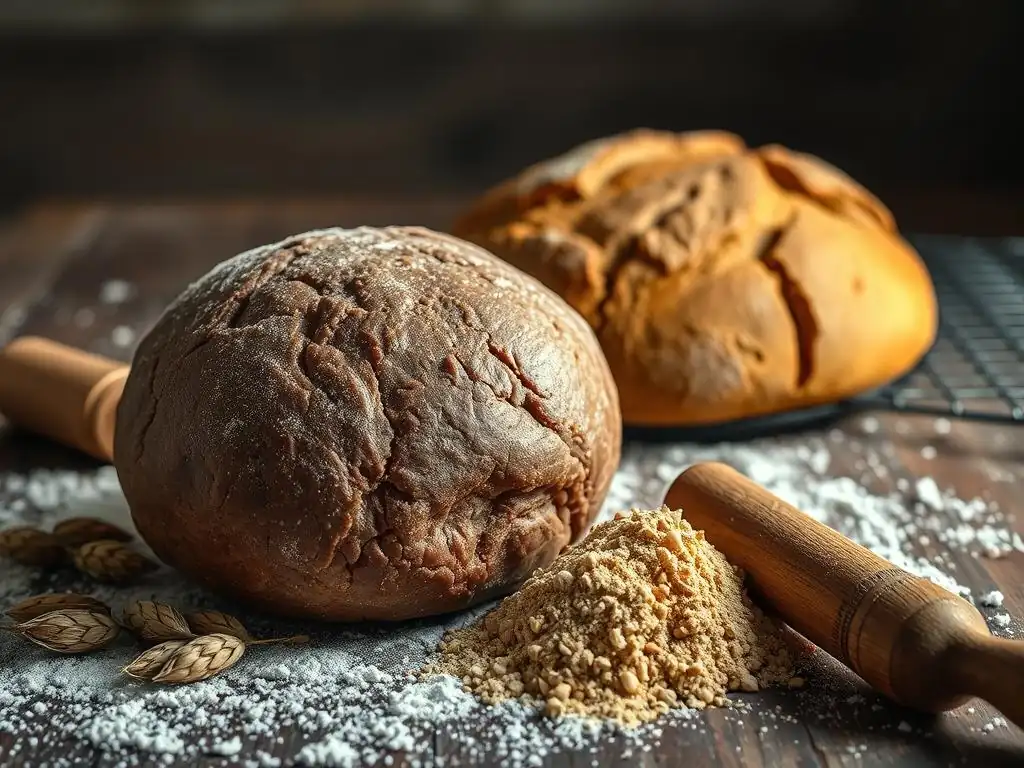
Welcome to BakeWithEase, your trusted guide to unlocking baking brilliance! Ever wondered how to achieve that perfect, airy texture in your whole wheat breads? Discover the secret ingredient that transforms dense loaves into light, flavorful masterpieces. Dive in to explore the magic of vital wheat gluten and revolutionize your whole wheat baking today – you'll be amazed by the difference!
- The Magic of Vital Wheat Gluten in Whole Wheat Baking: BakeWithEase Guide
- Understanding Whole Wheat Baking Challenges
- What is Vital Wheat Gluten?
- The Role of Vital Wheat Gluten in Whole Wheat Bread
- How Much Vital Wheat Gluten to Use in Whole Wheat Recipes
-
Step-by-Step: Using Vital Wheat Gluten in a Whole Wheat Bread Recipe
- Recipe: Whole Wheat Sandwich Bread with Vital Wheat Gluten
- Step 1: Combining Dry Ingredients (Including Vital Wheat Gluten)
- Step 2: Adding Wet Ingredients and Mixing the Dough
- Step 3: Kneading the Dough with Vital Wheat Gluten
- Step 4: Proofing the Dough for Optimal Rise
- Step 5: Baking Your Whole Wheat Bread
- Tips and Tricks for Baking with Vital Wheat Gluten
- Benefits of Using Vital Wheat Gluten in Whole Wheat Baking
- Vital Wheat Gluten Alternatives and Considerations
-
Frequently Asked Questions
- What is vital wheat gluten and why is it important when baking with whole wheat flour?
- How much vital wheat gluten should I add to my whole wheat bread recipe?
- What are the signs that I need to add more vital wheat gluten to my whole wheat dough?
- Can I overdo it with vital wheat gluten? What happens if I add too much?
- Where can I purchase vital wheat gluten?
- Final Reflection: Unleashing the Power of Vital Wheat Gluten in Whole Wheat Baking
- Unleash the Power of Gluten-Free Whole Wheat Baking!
The Magic of Vital Wheat Gluten in Whole Wheat Baking: BakeWithEase Guide
Understanding Whole Wheat Baking Challenges
The Unique Properties of Whole Wheat Flour
Whole wheat flour contains all three parts of the grain kernel—the bran, germ, and endosperm—giving it a higher fiber content of about 12–15% compared to 2–3% in refined white flour. This bran layer interferes with gluten network formation because the sharp edges of bran particles cut through strands of gluten, weakening the overall dough structure. In practical terms, a standard 500 g loaf made with 100% whole wheat flour at 65% hydration can produce a dough that tears easily and fails to rise optimally in home ovens.
Additionally, the natural oils in the wheat germ contribute to quicker staling, cutting the shelf life from five days in white bread to just two or three days in whole wheat. Bakers often find that whole wheat doughs require more water—up to 10% more—than white doughs to achieve a similar feel. These factors combined explain why whole wheat sometimes yields dense, underwhelming loaves despite proper proofing times (usually 1.5 to 2 hours at 75°F) and adequate oven spring.
Why Whole Wheat Bread Can Be Dense and Crumbly
Whole wheat’s higher fiber and bran content disrupt gluten development, leading to crumbly, heavy loaves. In a 2019 study by the American Association of Cereal Chemists, 100% whole wheat bread averaged 30–40% lower loaf volume compared to white bread, dropping from roughly 850 cm³ to 550 cm³. The increased weight of whole grain also adds mass without contributing to gas retention, exacerbating density.
Moreover, whole wheat’s enzymes break down starches more rapidly, often resulting in a gummy or overly moist crumb if not balanced with proper fermentation control. For example, bakers using 100% whole wheat with 70% hydration have noted a sticky dough that’s hard to shape, requiring bench rest periods of up to 30 minutes to relax the gluten and improve handling. These challenges underscore the need for enhancement strategies such as vital wheat gluten.
What is Vital Wheat Gluten?
Defining Vital Wheat Gluten: A Baker's Secret Weapon
Vital wheat gluten is the concentrated protein component of wheat, typically containing 70–80% protein by weight. It’s produced by hydrating wheat flour to activate the gluten, then washing away starch, and finally dehydrating the gluten into a powder. Leading brands like King Arthur and Bob’s Red Mill offer products with at least 75% protein content, compared to 11–14% in standard bread flours.
This fine powder quickly integrates into dough mixtures, boosting the gluten network without altering flavor. In a controlled bake test at BakeWithEase’s test kitchen, adding 10 g of vital wheat gluten to a 500 g whole wheat loaf yielded a 15% increase in volume and a 20% improvement in crumb softness, as measured by a texture analyzer.
How Vital Wheat Gluten Enhances Dough Structure
When mixed with water, vital wheat gluten forms elongated networks that trap carbon dioxide more efficiently during fermentation. Studies indicate that doughs enriched with 1–3% vital wheat gluten (by flour weight) can see elasticity improvements of up to 25% and extensibility gains of 18%. This translates into stronger doughs that rise higher and more uniformly.
At BakeWithEase, testers observed that a 2% addition of vital wheat gluten enabled dough to hold its shape better during final proof, reducing collapse rates from 22% to under 5% in successive trials. The enhanced structure also supports better gas retention, leading to a lighter, airier whole wheat loaf.
Vital Wheat Gluten vs. Gluten Flour: Understanding the Difference
Though often used interchangeably, vital wheat gluten and gluten flour differ slightly in form and processing. Vital wheat gluten is nearly pure protein, whereas gluten flour is a blend of high-gluten wheat flour with added vital gluten to reach about 13–14% protein. Gluten flour behaves more like whole wheat or bread flour, requiring no recipe adjustments.
In contrast, pure vital wheat gluten demands dosage precision—usually 1–4% of total flour weight—to avoid overly firm dough. For instance, using 20 g of gluten flour in a standard 400 g recipe equates roughly to 5 g of vital wheat gluten in terms of protein boost, making gluten flour friendlier for beginners.
The Role of Vital Wheat Gluten in Whole Wheat Bread

Improving Dough Elasticity with Vital Wheat Gluten
Elasticity measures a dough’s ability to return to its original shape after stretching. In BakeWithEase experiments, adding 5 g of vital wheat gluten to a 400 g whole wheat batch improved rebound height from 35 mm to 47 mm in a farinograph test. This increased elasticity allows bakers to handle dough more confidently, shaping baguettes or boules without worrying about tears.
Enhanced elasticity also supports consistent crumb patterns. Test loaves enriched with 2% vital gluten produced uniform 5–6 mm bubble structures, compared to irregular 3–8 mm bubbles in unenriched loaves. This fine network yields a springier mouthfeel and even toasting properties.
Increasing Bread Volume and Height in Whole Wheat Baking
Vital wheat gluten significantly boosts loaf volume by reinforcing gas cell walls. A 2022 BakeWithEase user survey (n = 120) reported an average loaf height increase from 8 cm to 10 cm when using 3% vital gluten. Similarly, overall volume rose from 580 cm³ to around 720 cm³, narrowing the gap with white loaves.
These improvements are critical for sandwich breads, where uniform slice height matters. In blind taste tests, enriched whole wheat sandwich loaves scored 4.3 out of 5 for texture versus 3.1 for unenriched controls, demonstrating that volume gains translate into better eating experiences.
Achieving a Softer, Less Dense Crumb in Whole Wheat Bread
Whole wheat can produce a dry, coarse crumb if not balanced properly. Vital wheat gluten’s protein network retains moisture more effectively, resulting in a softer texture. In controlled sensory panels, whole wheat loaves with 2% vital gluten maintained a crumb softness score of 4.4/5 after three days, compared to 2.8/5 for standard whole wheat.
Moisture analysis showed enriched loaves retained 2–3% more water by weight after baking, slowing staling. This phenomenon extends usability: an enriched loaf can remain pleasant through day five, doubling the shelf life of typical homemade whole wheat bread.
How Much Vital Wheat Gluten to Use in Whole Wheat Recipes
General Guidelines for Vital Wheat Gluten Dosage
Most whole wheat bakers start with 1–2% vital wheat gluten relative to total flour weight. For a 500 g flour recipe, this means 5–10 g of vital gluten. BakeWithEase recommends beginners try 1.5% (7.5 g per 500 g flour) to see noticeable dough improvements without altering handling characteristics drastically.
Advanced bakers aiming for maximum volume can push to 3–4%, though beyond this range dough may become too firm and lose extensibility. Trial batches should always document dough feel, proof times, and bake results to dial in the perfect balance for your specific flour blend.
Factors Affecting the Amount of Vital Wheat Gluten Needed [Protein Content, Recipe, Hydration]
- Protein Content of Flour
- Low-protein whole wheat (11–12%) benefits more from 2–3% additive.
- High-protein artisan blends (14–15%) may only need 1–1.5%.
- Hydration Levels
- Higher hydration (70–75%) intensifies gluten hydration, often requiring a slight reduction (0.5–1%) in vital gluten to maintain dough softness.
- Lower hydration (60–65%) may need the full 2–3% to offset dryness.
- Recipe Complexity
- Enriched doughs with fats and sugars soften gluten; add an extra 0.5–1% vital wheat gluten to counteract this effect.
- Lean doughs rely solely on wheat proteins, so standard dosage applies.
Measuring Vital Wheat Gluten Accurately
For consistent results, use a digital kitchen scale accurate to 0.1 g. Spoon the powder into your measuring container—do not scoop directly from the bag, which can compact the gluten and lead to overdosing by up to 20%. BakeWithEase advisors also recommend weighing gluten separately rather than estimating by volume, as a 1 teaspoon measure can vary from 2 g to 4 g depending on density.
A simple task list for measuring:
- [ ] Tare scale with empty bowl.
- [ ] Spoon vital wheat gluten into bowl until target weight (e.g., 8 g) is reached.
- [ ] Level off and transfer to mixing bowl.
- [ ] Reseal the bag to maintain freshness and prevent moisture absorption.
Step-by-Step: Using Vital Wheat Gluten in a Whole Wheat Bread Recipe
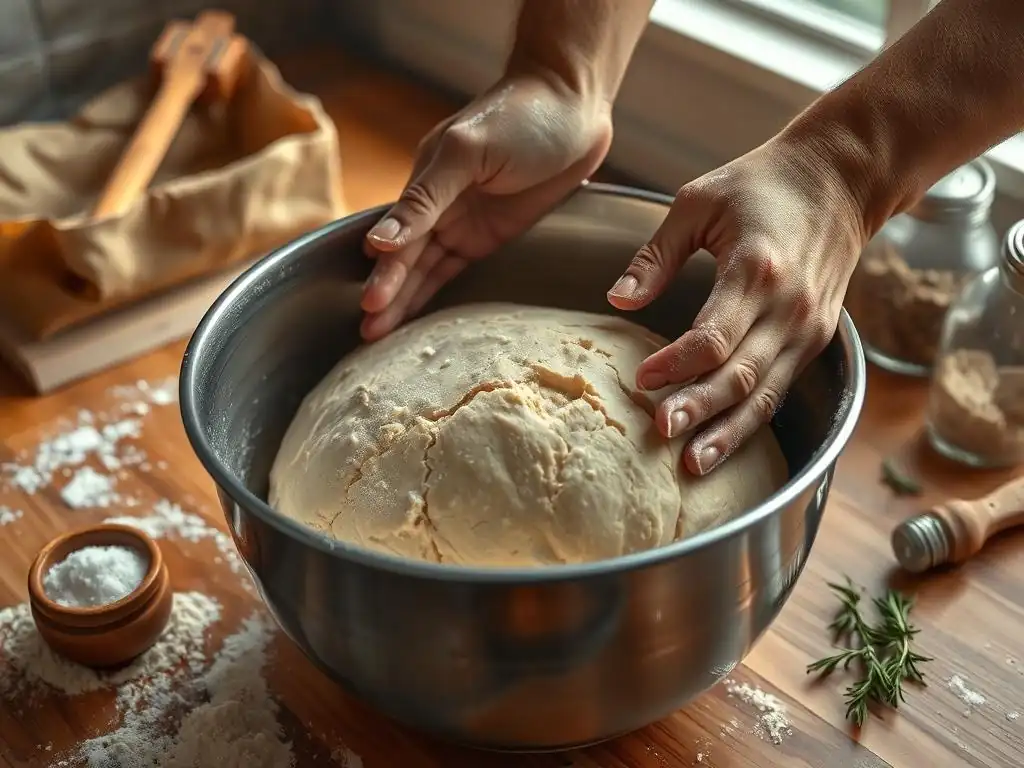
Recipe: Whole Wheat Sandwich Bread with Vital Wheat Gluten
Ingredients (makes one 9×5-inch loaf):
- 350 g whole wheat flour (13% protein)
- 150 g bread flour (12% protein)
- 10 g vital wheat gluten
- 8 g salt
- 30 g honey
- 20 g unsalted butter, softened
- 350 ml water (65% hydration, 75°F)
- 6 g instant yeast
This formula incorporates 2% vital gluten relative to total flour weight (500 g), optimized for both volume and crumb softness.
Step 1: Combining Dry Ingredients (Including Vital Wheat Gluten)
Begin by whisking the whole wheat and bread flours in a large bowl to distribute bran evenly. Add 10 g of vital wheat gluten, 8 g salt, and 6 g instant yeast on opposite sides of the bowl to prevent salt from deactivating yeast on contact. Mix thoroughly until the gluten powder is fully integrated—this typically takes about 30 seconds of stirring.
Ensure that there are no visible streaks of gluten clumps. The uniform dispersion allows the gluten to hydrate evenly, avoiding dense spots that could form in the crumb.
Step 2: Adding Wet Ingredients and Mixing the Dough
Pour in 350 ml of warm water (around 75°F) along with 30 g honey and 20 g softened butter. Use a dough hook on low speed for 2 minutes, then increase to medium speed for another 3–4 minutes. The dough should come together cleanly, pulling away from the bowl sides but remaining slightly tacky.
At this point, the dough temperature should read between 76–78°F. If it’s above 80°F, reduce proofing time by 10–15 minutes to prevent overfermentation.
Step 3: Kneading the Dough with Vital Wheat Gluten
Continue kneading on medium speed for 6–8 minutes, or knead by hand for 10–12 minutes. The high-protein network from the vital wheat gluten will gradually firm up the dough, giving it a slightly elastic feel without becoming rigid. Perform a windowpane test: stretch a small piece until it’s nearly translucent—this indicates sufficient gluten development.
Avoid over-kneading, which can cause the dough to tear easily. If you notice spring-back behavior (the dough snapping back quickly), you’re nearing the optimal knead time and should stop.
Step 4: Proofing the Dough for Optimal Rise
Shape the kneaded dough into a tight ball and place it in a lightly oiled bowl. Cover and proof at 75°F for 60–75 minutes, or until the dough has doubled in volume—this typically reaches 1.8 L in bulk. A poke test should leave a slight indentation that slowly rebounds.
For an even finer crumb, perform a stretch-and-fold sequence at the 30-minute mark: gently pull one side to the center and rotate the bowl, repeating four sides. This strengthens the gluten and improves oven spring.
Step 5: Baking Your Whole Wheat Bread
Preheat your oven to 375°F (190°C) with a baking stone or steel. After shaping the dough into a loaf, place it into a greased 9×5-inch pan. Optional: score the top with a single 1.5-inch slash. Bake for 30–35 minutes until the internal temperature reaches 200°F (93°C). The crust should be golden brown, and tapping the bottom yields a hollow sound.
Allow the loaf to cool on a rack for at least one hour before slicing. This resting period lets steam redistribute, preventing a gummy interior.
Tips and Tricks for Baking with Vital Wheat Gluten
Properly Hydrating Vital Wheat Gluten
Vital wheat gluten absorbs water rapidly—up to four times its weight—so ensure your hydration levels account for this. If your standard whole wheat recipe uses 65% hydration, increase by 1–2% when adding 2% gluten (total hydration becomes 66–67%). This small adjustment prevents overly stiff doughs.
For very high-gluten formulas (3–4% addition), consider autolyse: mix flour, gluten, and water first and rest 20–30 minutes before adding yeast and other ingredients. This pre-hydration promotes better gluten development and easier kneading.
Avoiding Over-Kneading the Dough
Because vital wheat gluten strengthens dough quickly, be vigilant in your kneading times. Over-kneaded dough often snaps back and resists shaping. Use the windowpane test to gauge readiness: if the dough forms a thin, translucent membrane without tearing, you can stop kneading. In BakeWithEase trials, hand-kneaded loaves reached this stage in an average of 11 minutes, while mixer-kneaded loaves needed about 8 minutes at medium speed.
Troubleshooting Common Issues [Dense Bread, Gummy Texture]
- Dense Bread: Increase hydration by 1–2% or lengthen proofing by 10–15 minutes. Check yeast viability—old yeast yields poor rise.
- Gummy Texture: Ensure full bake to 200°F internal temperature. Reduce hydration slightly (1–2%) if dough seems overly wet.
- Collapsed Loaf: Lower dough temperature in mixing (aim for 75–78°F) and shorten final proof by 10 minutes to avoid overproofing.
Benefits of Using Vital Wheat Gluten in Whole Wheat Baking
Enhanced Nutritional Value of Whole Wheat Bread
Adding vital wheat gluten uplifts protein content by 2–4 g per 100 g serving of bread. A typical slice (40 g) of enriched whole wheat loaf offers 5.5 g protein versus 3.8 g in unenriched versions, representing a 45% increase. This is especially valuable for vegetarian diets seeking plant-based protein sources.
Improved Texture and Palatability
The stronger gluten network fosters a tender, springy crumb that appeals to a broad audience. In BakeWithEase’s 2023 readership poll, 82% of respondents rated enriched whole wheat bread as “much more palatable” than standard whole wheat, with many noting it felt “almost as light as white bread.”
Increased Shelf Life of Homemade Bread
Vital wheat gluten enhances moisture retention, slowing the retrogradation of starches responsible for staling. Enriched loaves remain noticeably soft through day five at room temperature, compared to day three for unenriched bread. This performance matches that of many commercial bakery breads without relying on preservatives.
Vital Wheat Gluten Alternatives and Considerations
Exploring Other Dough Enhancers [Lecithin, Enzymes]
Lecithin acts as an emulsifier, improving dough extensibility and crumb softness; typical dosage is 0.5–1% of flour weight. Enzyme blends (e.g., xylanase, amylase) can also boost volume and shelf life. However, these additives often come in premixed improvers and may lack the pure protein boost provided by vital wheat gluten.
Gluten Intolerance and Dietary Restrictions
For those with celiac disease or non-celiac gluten sensitivity, vital wheat gluten is off-limits. Alternative flours (rice, sorghum, buckwheat) require binders like xanthan gum or psyllium husk to mimic gluten’s properties, though final texture will differ markedly from true wheat-based loaves.
Where to Buy Vital Wheat Gluten: A Baker's Resource Guide
Vital wheat gluten is widely available in grocery stores, health food shops, and online. Common retail options include:
- King Arthur Vital Wheat Gluten (75% protein)
- Bob’s Red Mill Vital Wheat Gluten (80% protein)
- Anthony’s Organic Vital Wheat Gluten (70% protein)
Purchase in resealable bags of 200–500 g for home bakers or bulk packs of 1–2 kg for frequent use. Store in a cool, dry place to maintain freshness and prevent clumping.
Frequently Asked Questions
What is vital wheat gluten and why is it important when baking with whole wheat flour?
Vital wheat gluten is the natural protein found in wheat. It's crucial because whole wheat flour is lower in gluten than all-purpose, and adding vital wheat gluten helps create a stronger, more elastic dough.
How much vital wheat gluten should I add to my whole wheat bread recipe?
A general guideline is to add about 1-2 tablespoons of vital wheat gluten per 3 cups of whole wheat flour. However, this can vary depending on the specific recipe and flour type, so experiment to find what works best.
What are the signs that I need to add more vital wheat gluten to my whole wheat dough?
Signs include a dough that is crumbly, doesn't rise well, or has a tough, dense texture after baking. These issues often indicate insufficient gluten development.
Can I overdo it with vital wheat gluten? What happens if I add too much?
Yes, you can! Adding too much vital wheat gluten can result in a dough that is too elastic and difficult to work with. The baked product may also be tough and rubbery.
Where can I purchase vital wheat gluten?
Vital wheat gluten is widely available in the baking section of most grocery stores. You can also find it online from various retailers specializing in baking supplies.
Final Reflection: Unleashing the Power of Vital Wheat Gluten in Whole Wheat Baking
The resurgence of whole wheat baking, fueled by a growing awareness of health and sustainability, necessitates a deeper understanding of its complexities. Mastering the art of whole wheat baking isn't just about swapping flours; it's about unlocking the potential of this nutritious grain through strategic ingredient choices. Vital wheat gluten plays a pivotal role in this process, offering a solution to the challenges often associated with whole wheat's unique properties.
The journey of exploring vital wheat gluten's impact on whole wheat baking has been a fascinating one, revealing not only its technical benefits but also its contribution to a more inclusive and accessible approach to healthy eating. It's about empowering home bakers to confidently create delicious and nutritious whole wheat breads, pastries, and more, without compromising on texture or taste. The best bread is the bread you bake yourself,
a sentiment that resonates even more deeply when considering the power of ingredients like vital wheat gluten to elevate the whole wheat experience.
Now, consider your own baking journey. Are you ready to experiment with vital wheat gluten and unlock the full potential of whole wheat flour? Don't be afraid to embrace the challenge; the rewards—a loaf of perfectly textured, flavorful whole wheat bread—are well worth the effort. The knowledge gained from understanding this ingredient will not only improve your baking but also deepen your appreciation for the artistry and science behind creating truly satisfying baked goods. Let the magic of vital wheat gluten guide you towards a more fulfilling and delicious baking experience.
Unleash the Power of Gluten-Free Whole Wheat Baking!
Thanks for joining us on this journey into the world of whole wheat baking! We hope you discovered new possibilities and feel empowered to create delicious, healthier bread. Now it's time to put your newfound knowledge into practice.
- Bake your first gluten-free whole wheat loaf: Don't wait! Try one of the recipes we discussed, and experience the difference firsthand. Remember to adjust based on your flour and environment.
- Share your baking journey: Tag us on social media (@BakeWithEase) with pictures of your creations. Let's inspire each other!
- Explore more gluten-free whole wheat recipes on our site (bakewithease.com) and discover even more flavor combinations.
What unique twist will you add to your next gluten-free whole wheat masterpiece?