
Fixing Bread That's Too Sweet (When Not Intended)


Welcome to BakeWithEase, your trusted companion in the delightful world of baking! Ever found yourself with a sweet bread that's a little too sweet? Don't despair! We've all been there. Dive into our latest article where we unravel the secrets of sweet bread recipe adjustment, providing you with practical tips and tricks to rescue your bake and achieve the perfect balance of flavors. Curious to learn how to troubleshoot that overly sweet loaf? Let's get baking!
- Sweet Bread Recipe Adjustment: Diagnosing the Problem
-
Frequently Asked Questions
- How can I tell if my sweet bread is too sweet before baking?
- What's the best way to reduce the sweetness of sweet bread dough after I've already mixed it?
- If my sweet bread is too sweet, should I just throw it away and start over?
- How does adding more flour affect the texture of my sweet bread if it's already too sweet?
- Are there any ingredients I can add besides flour to balance out the excess sweetness in my sweet bread recipe?
- Final Reflection: The Sweetness of Imperfection and the Joy of Rescue
- Rescue Your Too-Sweet Bread: Sweet Success Awaits!
Sweet Bread Recipe Adjustment: Diagnosing the Problem
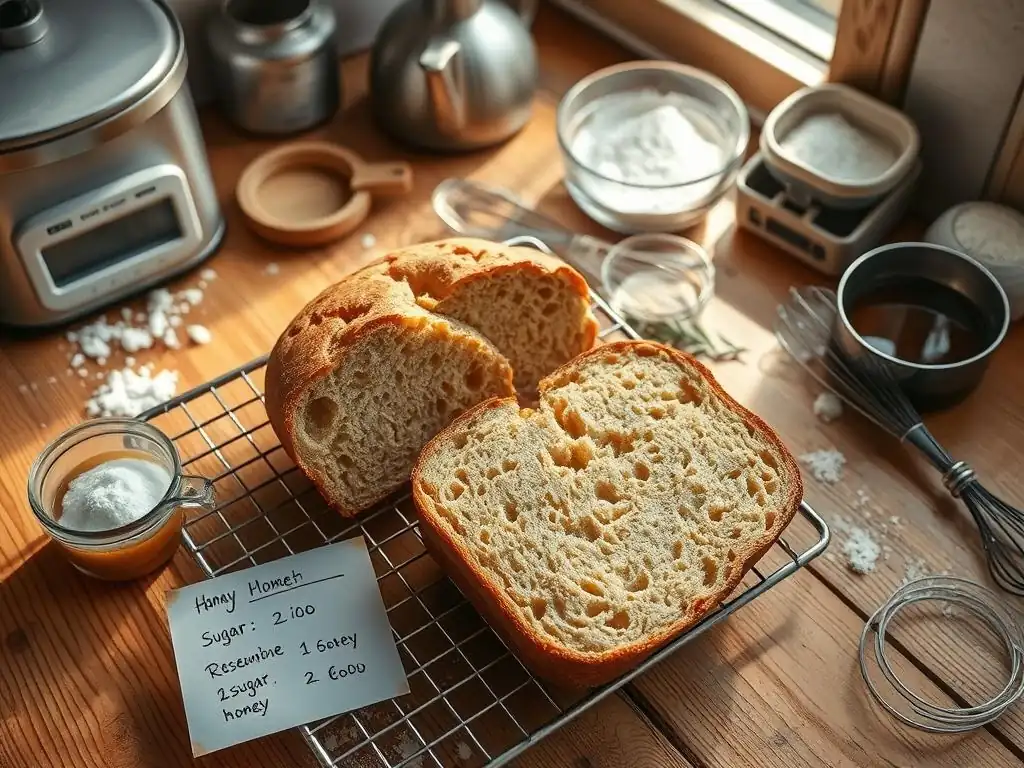
Reviewing Your Recipe: Sugar Content Analysis
The first step in a successful sweet bread recipe adjustment is to meticulously review the recipe itself. Different types of bread naturally contain varying amounts of sugar. Lean doughs, like a classic French baguette or a rustic country loaf, typically contain very little to no added sugar – often less than 1% of the total flour weight.
This minimal amount primarily serves as food for the yeast early in fermentation. Enriched doughs, however, used for challah, brioche, or sweet rolls, can contain significantly more sugar, sometimes ranging from 5% to 20% or even higher relative to the flour weight. Understanding the expected range for the specific type of bread you attempted to bake is crucial.
Analyzing your recipe involves comparing the listed sugar quantity to typical benchmarks for that bread style. If you were aiming for a savory loaf but the recipe calls for 10% or more sugar relative to the flour, this is a major indicator that the recipe itself is designed to produce a sweeter bread than you intended.
High sugar levels not only contribute sweetness but also affect fermentation speed (initially speeding it up, then potentially slowing it down at very high concentrations), crust browning (promoting darker crusts via Maillard reactions and caramelization), and crumb tenderness. A proper sweet bread recipe adjustment starts with confirming the recipe's inherent design.
Checking Your Ingredients: Incorrect Measurements
Even with a well-written recipe, errors in measuring ingredients are a frequent cause of unexpected results, including overly sweet bread. Sugar is particularly prone to measurement inaccuracies, especially when using volume measures like cups. Scooping granulated sugar directly from the bag with a measuring cup can compact it, leading you to add significantly more sugar than intended. For example, a properly spooned and leveled cup of granulated sugar weighs approximately 200 grams, but a packed cup could easily weigh 220-240 grams or more – a substantial difference that impacts sweetness.
Weight measurement is the gold standard for baking precision because it's far less susceptible to technique variations. If your recipe provides weight measurements (e.g., grams), using a digital kitchen scale is highly recommended for accurate sweet bread recipe adjustment. Beyond simple measurement errors, accidentally using the wrong type of sugar is another common pitfall. Confectioners' sugar, for instance, is much finer and contains cornstarch, behaving differently than granulated sugar. Brown sugar adds moisture and molasses flavor. Ensuring you used the correct type and the precise amount listed is vital for diagnosing why your bread turned out too sweet.
Evaluating Flour Type: Impact on Sweetness
While flour isn't typically thought of as a primary source of sweetness, the type of flour used can subtly influence the final flavor profile and contribute to the perception of sweetness in your bread. Different flours contain varying levels of complex carbohydrates (starch) and enzymes (like amylase) that break down these starches into simpler sugars during the dough's fermentation process.
Whole wheat flour, for example, generally contains more active enzymes and complex flavors than refined white flour. These enzymes work during bulk fermentation and proofing, converting starch into maltose and other sugars that feed the yeast but also contribute to the bread's underlying taste.
Using a flour with higher enzymatic activity than expected for the recipe, or allowing a very long, slow fermentation (which gives enzymes more time to work), can result in a bread that tastes slightly sweeter than anticipated, even without excessive added sugar. Malted barley flour, sometimes added to bread flour, is specifically included for its high enzyme content to improve fermentation and crust color, but too much can lead to a gummy crumb and increased sweetness.
Considering the flour type and how its inherent properties interact with the fermentation time is a nuanced but important aspect of understanding and executing a proper sweet bread recipe adjustment.
Frequently Asked Questions
How can I tell if my sweet bread is too sweet before baking?
Taste the dough! A small nibble will reveal if the sugar levels are significantly off. You're looking for a balanced sweetness, not an overpowering one.
What's the best way to reduce the sweetness of sweet bread dough after I've already mixed it?
Adding more of the unsweetened ingredients (flour, water, etc.) is the most common solution. Adjust in small increments to avoid affecting the dough's texture and rise.
If my sweet bread is too sweet, should I just throw it away and start over?
Absolutely not! There are several ways to adjust the flavor profile, even after baking. Consider a less sweet glaze or a savory topping to balance the sweetness.
How does adding more flour affect the texture of my sweet bread if it's already too sweet?
Adding too much flour can make the bread drier and denser. Be mindful of the gluten development and consider adding a touch more liquid (water or milk) to compensate.
Are there any ingredients I can add besides flour to balance out the excess sweetness in my sweet bread recipe?
A pinch of salt can help to counteract sweetness. Also, adding a bit of lemon juice or zest can provide a tart counterpoint.
Final Reflection: The Sweetness of Imperfection and the Joy of Rescue
The unexpected sweetness in a loaf of bread is a common baking mishap, but it's a problem with a surprisingly simple solution. More than just a technical fix, mastering the art of adjusting overly sweet bread speaks to a larger principle: the ability to adapt and transform setbacks into successes. It's a skill applicable far beyond the kitchen.
The journey from a sugary disaster to a perfectly palatable loaf mirrors life's own unexpected turns. We often encounter situations where initial plans go awry, leaving us with something less than ideal. But just as we can salvage a too-sweet bread, we can find ways to adjust our course and achieve a satisfying outcome. The greatest glory in living lies not in never falling, but in rising every time we fall.
This sentiment perfectly encapsulates the resilience and resourcefulness required, both in baking and in life.
Consider this: the next time you face a challenge – be it a failed project, a disappointing outcome, or even a simply overly sweet loaf of bread – remember the techniques discussed in this article. Don't let the initial imperfection define the final result. Instead, embrace the opportunity to learn, adapt, and transform that setback into something delicious and rewarding. You have the power to salvage your "mistakes" and create something truly special.
Rescue Your Too-Sweet Bread: Sweet Success Awaits!
Thanks for taking the time to learn how to fix overly sweet bread! We hope you found our tips helpful and are ready to bake with renewed confidence. Now, let's put that knowledge into action!
- Embrace the Fix: Try one of the suggested methods from the article— adding savory ingredients, using it in a bread pudding, or even making croutons— to transform your unintentionally sweet bread into something delicious! This is your chance to experiment and create something unique.
- Share Your Story: Tell us about your baking adventure! What did you do with your too-sweet bread? Share your results and tips in the comments below.
- Explore Savory Baking: Take a look at our other articles on savory baking — you might discover a new passion!
Ready to tackle your next baking challenge with even more confidence? What savory bread will you create next?