
Perfecting GlutenFree Muffins and Quick Breads: Key Swaps

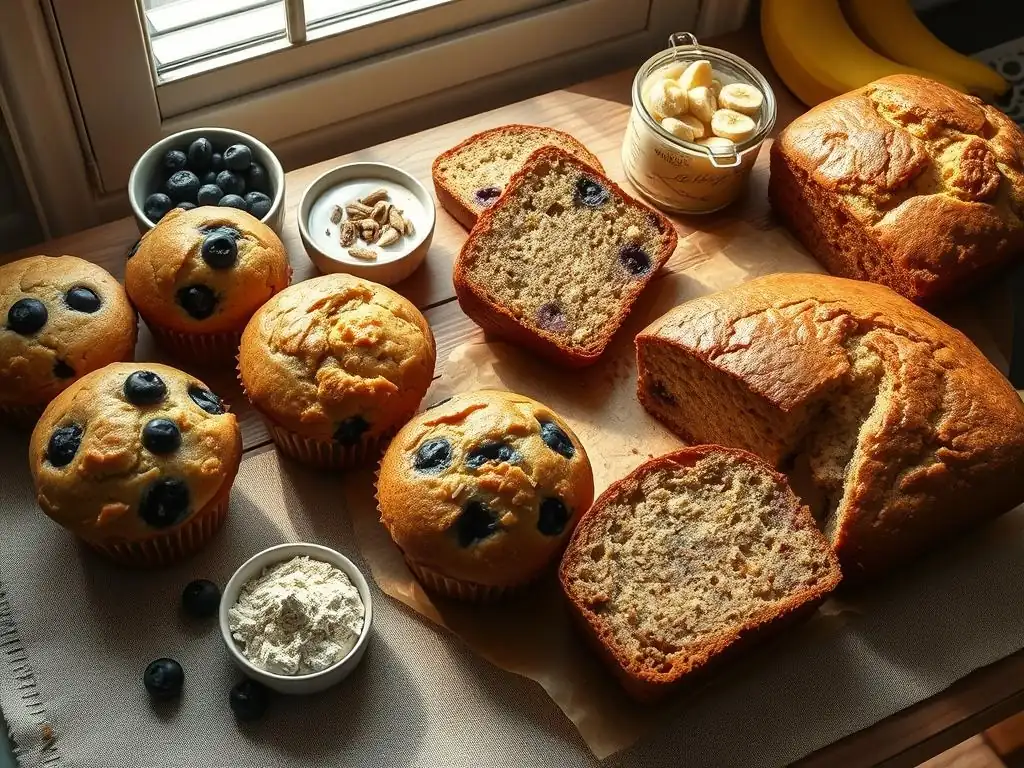
Welcome to BakeWithEase, your haven for effortless baking! Are you ready to unlock the secrets to perfectly moist and delicious gluten-free muffins, even if you're new to the world of gluten-free baking? Discover the key swaps that will transform your recipes and banish dry, crumbly results. Dive into our latest guide, "Perfecting GlutenFree Muffins and Quick Breads: Key Swaps," and prepare to amaze yourself (and your taste buds!). What if the secret to bakery-worthy gluten-free muffins was simpler than you thought? Read on to find out!
- Introduction to Gluten-Free Muffin Recipes
- Understanding Gluten's Role in Muffins and Quick Breads
- Key Gluten-Free Flour Swaps for Muffin Success
- Essential Binding Agents for Gluten-Free Muffins
- Liquid Adjustments for Optimal Gluten-Free Muffin Texture
- Sweeteners and Flavor Enhancers for Gluten-Free Muffins
- Troubleshooting Common Gluten-Free Muffin Problems
- Recipe Adaptations Using Key Swaps
- Tips for Baking the Perfect Gluten-Free Quick Bread
- Conclusion: Mastering Gluten-Free Muffin Recipes
-
Frequently Asked Questions
- What are the key ingredients to substitute when baking gluten-free muffins?
- Are gluten-free muffins more difficult to bake than regular muffins?
- What kind of gluten-free flour blend works best for muffins and quick breads?
- How can I prevent gluten-free muffins from being dry and crumbly?
- Can I use regular recipes and just swap out the flour for gluten-free flour?
- Final Reflection: The Enduring Appeal of Gluten-Free Baking
- Unlock Your Gluten-Free Baking Potential!
Introduction to Gluten-Free Muffin Recipes
Mastering gluten-free baking might seem daunting at first, but it's absolutely achievable with the right knowledge and techniques. This guide will walk you through the essential swaps needed to transform your favorite muffin and quick bread recipes into delicious, gluten-free delights. Whether you're new to baking without gluten or looking to improve your current results, understanding the role of each ingredient is key to creating moist, tender, and well-risen baked goods. Let's make baking gluten-free muffins easy and enjoyable.
Baking Gluten-Free Muffins: A Beginner's Guide
Starting out with gluten-free muffin recipes can feel like navigating a new culinary landscape. The fundamental difference lies in replacing traditional wheat flour, which contains gluten, with a blend of gluten-free flours and starches. A simple approach for beginners is to start with recipes specifically developed for gluten-free baking, as these have already balanced the ratios of different flours and binders. Look for easy gluten-free muffin recipes that use readily available ingredients like almond flour, rice flour, and tapioca starch.
Once you're comfortable with dedicated gluten-free recipes, you can begin experimenting with adapting your favorite traditional recipes. This involves understanding how to substitute wheat flour (typically 1:1 by weight using a gluten-free blend) and incorporating necessary binding agents. A common starting point is a simple blueberry muffin recipe, where the primary challenge is achieving a light texture without the gluten structure. Many successful easy gluten-free muffin recipes rely on a combination of different flours and a binder like xanthan gum to mimic the properties of wheat flour.
Why Gluten-Free Baking Can Be Tricky (and How to Overcome It)
Gluten provides structure, elasticity, and helps trap gases produced by leavening agents, allowing baked goods to rise and hold their shape. When gluten is removed, you lose this essential network. This often results in baked goods that are dense, crumbly, or don't rise properly. Imagine trying to build a sturdy house without mortar; the bricks (flour particles) won't hold together effectively. This is why simply swapping wheat flour for a single gluten-free flour usually doesn't work well for easy gluten-free muffin recipes.
Overcoming these challenges involves using a combination of flours and starches to replicate the texture and structure provided by gluten, along with binding agents to hold everything together. For instance, a typical gluten-free flour blend might contain a mix of whole-grain flours (like brown rice or oat), starches (like tapioca or cornstarch), and lighter flours (like white rice or sorghum).
Additionally, ingredients like xanthan gum or psyllium husk are crucial for providing the necessary structure and elasticity that gluten would normally supply. Patience and precise measurements are key, as gluten-free doughs and batters often behave differently than their wheat-based counterparts.
Understanding Gluten's Role in Muffins and Quick Breads
The Importance of Gluten in Traditional Baking
Gluten is a protein composite found in wheat, barley, and rye. When flour is mixed with liquid and kneaded or mixed, the gluten proteins (glutenin and gliadin) form a network. This network is strong yet elastic, much like a flexible scaffolding. In muffins and quick breads, while not developed as extensively as in yeast breads, this gluten network still plays a vital role. It provides strength to the batter, allowing it to support the weight of add-ins like fruit or nuts, and gives the finished product its characteristic shape and structure.
Consider a standard wheat-based muffin batter. As you mix, gluten strands develop, creating a cohesive mixture. During baking, leavening agents produce gases, and the gluten network traps these gases, causing the muffin to rise. The elasticity of the gluten allows the batter to expand without collapsing. Without this network, the gas bubbles would simply escape, resulting in a flat, dense product. Gluten also contributes to the crumb structure, creating those desirable air pockets and tenderness.
How Gluten Affects Texture, Rise, and Structure
The gluten network directly impacts the final texture, rise, and structure of baked goods. In muffins and quick breads, a well-developed but not overdeveloped gluten structure leads to a tender crumb that holds together. It provides just enough strength to allow the muffin to rise significantly in the oven, creating a domed top and a light interior. The elasticity also prevents the muffin from becoming too crumbly.
Conversely, without gluten, the batter lacks this inherent structure and elasticity. This is why gluten-free muffins and quick breads can easily become dense, heavy, or fall apart. The challenge in creating easy gluten-free muffin recipes is finding the right combination of substitute ingredients that can replicate these crucial functions of gluten, enabling the batter to rise and maintain a pleasant texture without being gummy or excessively crumbly.
Key Gluten-Free Flour Swaps for Muffin Success
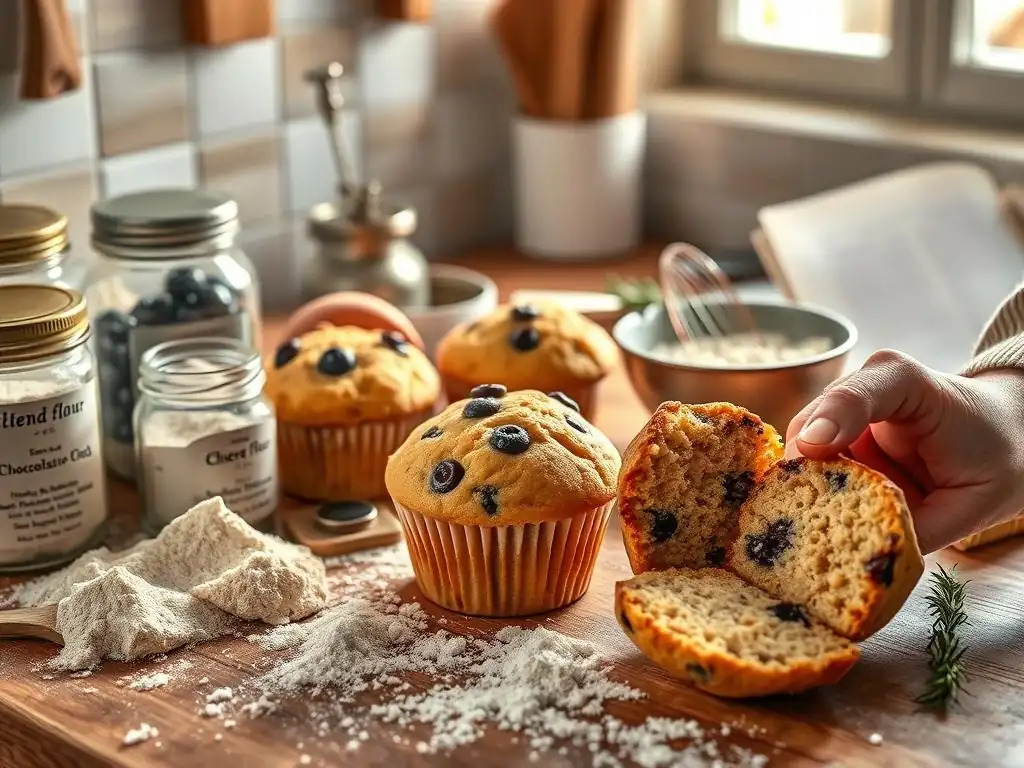
Replacing wheat flour is the first and most significant step in creating gluten-free muffin recipes. However, different gluten-free flours have vastly different properties in terms of absorption, protein content, and flavor. Using a single flour like almond or coconut flour often won't yield the desired result. Successful gluten-free baking typically relies on a blend of different flours and starches to mimic the composition and performance of wheat flour. A common strategy is to use a mix of 'heavy' or protein-rich flours, 'light' or starchy flours, and binders.
For example, a balanced gluten-free blend might consist of approximately 40% whole-grain flour (like brown rice or sorghum), 30% starch (like tapioca or cornstarch), and 30% lighter flour (like white rice or millet). However, the ideal blend can vary depending on the specific recipe and desired outcome. Some easy gluten-free muffin recipes might simplify this by using a pre-mixed commercial blend, but understanding the individual properties of common gluten-free flours allows for greater customization and troubleshooting.
Almond Flour: Adding Nutty Flavor and Moisture
Almond flour, made from ground almonds, is a popular gluten-free option known for adding richness, moisture, and a slightly nutty flavor to baked goods. It's relatively high in fat and protein compared to many other gluten-free flours. Because of its fat content, it can help create a tender crumb and prevent dryness, a common issue in gluten-free baking. It works particularly well in recipes like almond flour muffins or quick breads, often paired with other flours to balance its density.
When substituting with almond flour, remember it's denser than wheat flour and doesn't absorb as much liquid as some other gluten-free flours like coconut flour. A common ratio when substituting part of the flour in a recipe might involve using about 1/4 to 1/3 less almond flour by volume than the wheat flour it replaces, though this varies.
For example, if a recipe calls for 1 cup of wheat flour, you might start with 3/4 cup of almond flour in a blend. Its higher fat content can also sometimes mean a slightly longer baking time or lower temperature to prevent over-browning.
Coconut Flour: Absorption and Hydration Considerations
Coconut flour is a highly absorbent, low-carbohydrate flour made from dried, defatted coconut meat. It's known for its unique texture and subtle coconut flavor. Due to its extreme absorbency, you need significantly less coconut flour than wheat flour, and it requires a lot more liquid and often more eggs to prevent baked goods from being dry and crumbly. It's rarely used as the sole flour in a recipe for this reason, especially in easy gluten-free muffin recipes.
As an illustration of its absorbency, 1/4 cup of coconut flour can often absorb as much liquid as 1 cup of wheat flour. This means that if you're adapting a recipe, replacing 1 cup of wheat flour might require only 1/4 to 1/3 cup of coconut flour, plus a substantial increase in liquid (often an extra egg or a significant amount of milk/water). Recipes using coconut flour often have a higher proportion of eggs than traditional recipes, as eggs provide structure and moisture to counteract the flour's dryness.
Oat Flour: A Versatile Gluten-Free Option
Oat flour, made from finely ground oats, is a versatile and relatively easy-to-use gluten-free flour. It offers a slightly sweet, nutty flavor and contributes tenderness to baked goods. It's important to use certified gluten-free oats and oat flour if baking for someone with celiac disease, as oats are often cross-contaminated during processing. Oat flour can often be substituted for wheat flour in some recipes at a 1:1 ratio by weight, though you might need slightly less liquid.
Its texture is somewhat similar to whole wheat flour, making it a good base for many gluten-free muffin recipes. For example, in a simple banana bread recipe, replacing wheat flour with oat flour (plus a binder) can yield excellent results. Oat flour absorbs liquid more readily than white rice flour but less than coconut flour. It's a good source of fiber and can contribute to a moist crumb, making it a favorite in many easy gluten-free muffin recipes and quick bread adaptations.
Rice Flour: Balancing Texture
Rice flour, available in white and brown varieties, is a staple in many gluten-free flour blends. White rice flour is finely ground and relatively neutral in flavor, providing structure without adding much density. Brown rice flour is coarser, has a nuttier flavor, and adds more fiber and nutrients. Both are relatively low in protein compared to wheat or almond flour. They are often used as the base of a gluten-free blend, providing bulk and structure.
However, using only rice flour can result in a gritty texture, especially with brown rice flour, and a dry or crumbly finished product due to its lower protein and fat content. To counteract this, rice flour is typically combined with starches like tapioca or cornstarch to improve texture and binding, and sometimes with higher-protein flours like almond or sorghum flour for better structure and moisture. A common blend might use 60-70% rice flour (white or brown) combined with 30-40% starch for general baking purposes.
Tapioca Starch: Improving Texture and Binding
Tapioca starch (also called tapioca flour) is a fine, white starch extracted from the cassava root. It is an excellent binder and thickener in gluten-free baking, helping to improve the texture of baked goods. It adds a slight chewiness and helps create a crisp exterior crust, which can be beneficial in quick breads. It also helps to lighten the texture of denser gluten-free flours.
Tapioca starch is often used in conjunction with other flours in a blend, typically making up 20-30% of the total flour mix. For instance, in a blend designed for easy gluten-free muffin recipes, you might combine brown rice flour, white rice flour, and tapioca starch. Adding tapioca starch helps prevent the crumbly texture that can occur when using only rice flour and contributes to the overall structure by providing some elasticity when heated.
Essential Binding Agents for Gluten-Free Muffins
Without the gluten network, gluten-free baked goods need help holding together. This is where binding agents come in. These ingredients help to mimic the cohesive properties of gluten, preventing crumbling and giving the muffins or quick breads a better structure. Choosing the right binder and using the correct amount is crucial for success in easy gluten-free muffin recipes. Too little binder can result in a crumbly mess, while too much can lead to a gummy or heavy texture.
Common binding agents include xanthan gum, psyllium husk, chia seeds, and flaxseed meal. The amount needed varies depending on the recipe and the types of flours used. Recipes using a higher proportion of dense or heavy flours might require slightly more binder than those using primarily starches. Many pre-mixed gluten-free flour blends already contain a binder, so check the ingredients list before adding more.
Xanthan Gum: The Gluten Replacement Powerhouse
Xanthan gum is a popular and effective binder in gluten-free baking. It's a polysaccharide produced by fermenting sugar with a type of bacteria. When added to liquid, it creates a gel-like substance that helps to bind ingredients together and trap air bubbles, much like gluten does. It is often used in very small quantities relative to the amount of flour.
A typical guideline for adding xanthan gum when using a gluten-free flour blend that doesn't already contain it is about 1/4 to 1/2 teaspoon per cup of flour blend for muffins and quick breads. For example, if your recipe uses 2 cups of a blend without gum, start with 1/2 to 1 teaspoon of xanthan gum. Using too much can result in a gummy or slightly slimy texture, so it's best to start with the recommended amount and adjust in future batches if needed. It's a key ingredient for many successful easy gluten-free muffin recipes.
Psyllium Husk: Adding Fiber and Structure
Psyllium husk, derived from the seeds of the Plantago ovata plant, is another effective gluten-free binder that also adds dietary fiber. When mixed with liquid, it forms a gel that provides structure and elasticity to doughs and batters. It can help create a less crumbly texture and contribute to a better rise, particularly in quick breads. Psyllium husk is available in whole husk or powder form; the powder is more potent, so you'll need less of it.
If using whole psyllium husks, a common ratio is about 1 to 1.5 teaspoons per cup of gluten-free flour blend. If using psyllium husk powder, you'll typically use about half that amount (0.5 to 0.75 teaspoons per cup). Psyllium husk absorbs more liquid than xanthan gum, so you might need to slightly increase the liquid in your recipe when using it as a binder. It's often preferred by bakers looking for a more natural binder option and can give quick breads a nice, slightly chewy crumb.
Chia Seeds and Flaxseed Meal: Natural Binders
Chia seeds and flaxseed meal are excellent natural binders that add nutrients and fiber to your baked goods. When mixed with liquid, both form a gel that can help hold gluten-free batters together. To use them as a binder, you create a "chia egg" or "flax egg" by mixing the ground seeds with water and letting it sit for a few minutes until it thickens.
A standard "flax egg" or "chia egg" is made by combining 1 tablespoon of ground flaxseed meal or chia seeds with 2.5 to 3 tablespoons of water and letting it sit for 5-10 minutes. This mixture can often replace one egg in a recipe and acts as a binder. For recipes requiring more binding or multiple eggs, you might need to use a combination of these seed binders and perhaps a small amount of xanthan gum or psyllium husk to achieve the desired structure, especially in easy gluten-free muffin recipes with lots of add-ins.
Liquid Adjustments for Optimal Gluten-Free Muffin Texture
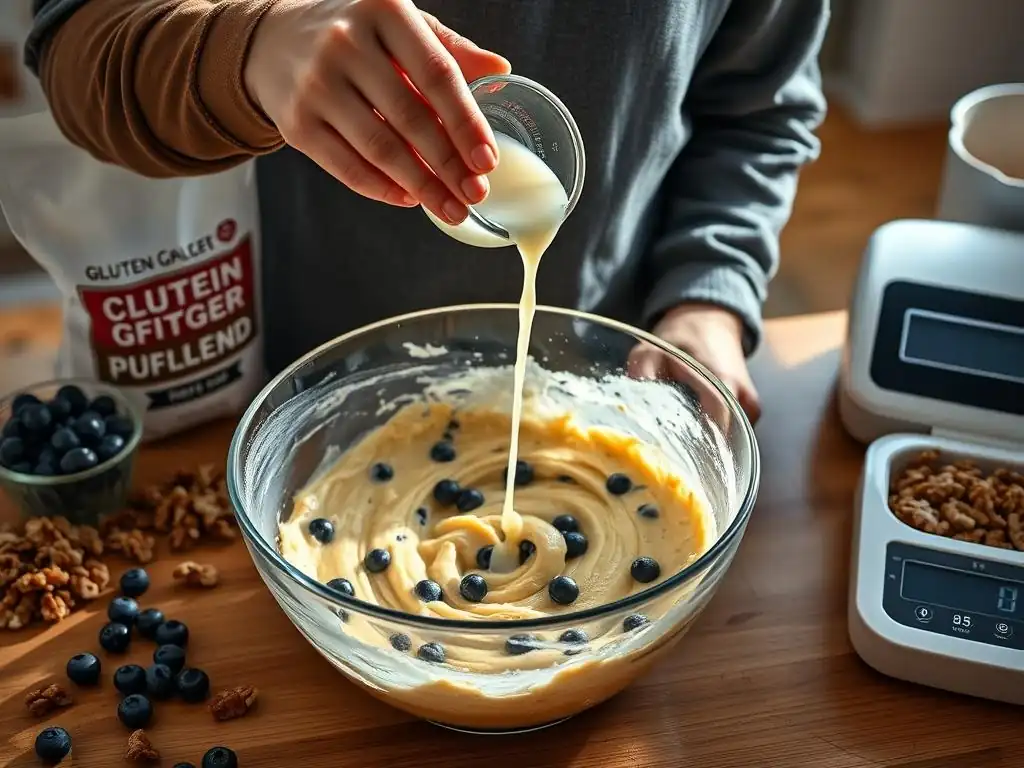
Why Moisture Levels Matter in Gluten-Free Baking
Moisture is incredibly important in gluten-free baking because gluten-free flours tend to absorb more liquid than wheat flour, and they also dry out faster during baking and cooling. Without the gluten network to trap moisture effectively, baked goods can easily become dry, crumbly, or dense. The right amount of liquid is crucial for hydrating the flours and starches, activating leavening agents, and creating a tender, moist crumb.
Getting the liquid levels right can be one of the trickiest parts of adapting traditional recipes to be gluten-free. The ideal amount of liquid will vary significantly depending on the specific blend of gluten-free flours used. Coconut flour, as mentioned, requires substantially more liquid than a blend heavy in rice flour. A batter that looks slightly wetter than a traditional wheat batter is often desired in gluten-free baking to ensure adequate moisture in the finished product.
Adjusting Liquid Ratios for Different Flour Combinations
Since different gluten-free flours absorb liquid differently, you'll need to adjust the liquid ratio based on your flour blend. A common issue when simply swapping a 1:1 gluten-free blend for wheat flour is that the final product can be dry if the blend contains high-absorption flours like brown rice or sorghum without adequate liquid. Conversely, too much liquid with a blend heavy in white rice or starch can lead to a gummy texture or poor rise.
As a starting point when adapting a recipe, if your gluten-free blend contains high-absorption flours (like brown rice, sorghum, or especially coconut flour), you might need to increase the liquid by 10-20%. If your blend is primarily white rice and starch, you might need less adjustment or even a slight reduction if the original recipe was very wet. Pay attention to the batter consistency – it should be thick but pourable, not stiff like cookie dough or runny like pancake batter. Some easy gluten-free muffin recipes might specifically call for a slightly wetter batter than you're used to.
Using Yogurt, Sour Cream, or Applesauce for Added Moisture
Incorporating ingredients like yogurt, sour cream, buttermilk, applesauce, or mashed banana can add significant moisture and tenderness to gluten-free muffins and quick breads. These ingredients provide liquid in a way that also adds richness or subtle flavor, and their slight acidity can react with baking soda to improve the rise. Using these moistening agents is a fantastic way to ensure your easy gluten-free muffin recipes turn out beautifully moist.
For example, replacing some of the liquid (like milk) or fat (like oil) in a recipe with an equal amount of plain yogurt or sour cream can yield a very tender crumb. Applesauce or mashed banana can replace some of the fat and sugar while adding moisture and natural sweetness, as seen in many gluten-free banana bread recipes. Start by substituting a portion, say 1/4 to 1/2 cup, of the liquid or fat with your chosen moistening agent and observe the results. This technique is particularly helpful in preventing the dry, crumbly texture common in gluten-free baking.
Sweeteners and Flavor Enhancers for Gluten-Free Muffins
Choosing the right sweetener and enhancing flavors are just as important in gluten-free muffins as in traditional ones. Sweeteners not only provide sweetness but also contribute to moisture, tenderness, and browning. Flavor enhancers like spices, extracts, fruits, nuts, and chocolate chips add the delicious character we expect from muffins and quick breads.
Choosing the Right Sweetener: Honey, Maple Syrup, or Sugar Alternatives
Granulated sugar, brown sugar, honey, maple syrup, and various sugar alternatives can all be used in gluten-free baking. Granulated sugar contributes to a crisp exterior and tender interior, while brown sugar adds moisture and a caramel-like flavor. Liquid sweeteners like honey and maple syrup add distinct flavors and contribute significant moisture, which can be beneficial in gluten-free recipes prone to dryness.
When using liquid sweeteners instead of granulated sugar, you might need to slightly reduce other liquids in the recipe to maintain the correct batter consistency. For example, if substituting 1/2 cup of sugar with 1/2 cup of maple syrup, you might reduce the milk or other liquid by 1-2 tablespoons.
Sugar alternatives like stevia or erythritol behave differently; they often don't provide the same level of moisture or aid in browning as traditional sugars, so recipes might need specific adjustments or combinations with other sweeteners. Many easy gluten-free muffin recipes work well with a mix of granulated and brown sugar.
Enhancing Flavor with Spices and Extracts
Spices and extracts are essential for adding depth and warmth to gluten-free muffins and quick breads. Cinnamon, nutmeg, ginger, and cloves are classic choices for quick breads like pumpkin or zucchini bread. Vanilla extract is a staple that enhances the overall flavor profile of almost any baked good.
Don't be shy with flavorings! Gluten-free flours can sometimes have subtle flavors of their own (like the nuttiness of almond or oat flour), but they also benefit greatly from complementary spices and extracts. For a batch of 12 standard muffins, using 1-2 teaspoons of vanilla extract and 1/2 to 1 teaspoon of cinnamon is a good starting point for many recipes. Lemon zest or orange zest can also brighten flavors, especially in easy gluten-free muffin recipes featuring fruit.
Incorporating Fruits, Nuts, and Chocolate Chips
Adding fruits, nuts, and chocolate chips not only provides flavor and texture but can also help keep gluten-free baked goods moist. Fresh or frozen berries, diced apples, mashed banana, chopped nuts, and chocolate chips are all excellent additions.
When adding these ingredients, ensure they are distributed evenly throughout the batter. If using frozen fruit, you can toss it in a tablespoon or two of gluten-free flour or starch before adding it to the batter to help prevent it from sinking to the bottom. For a standard batch of 12 muffins, incorporating about 1 to 1.5 cups of add-ins is typical. Using slightly moist add-ins like mashed banana or shredded zucchini is a fantastic trick for ensuring moist results in your easy gluten-free muffin recipes.
Troubleshooting Common Gluten-Free Muffin Problems
Baking gluten-free can sometimes present challenges, but most common issues can be resolved with a little know-how. Understanding why a problem occurred is the first step to fixing it in your next baking attempt. Don't get discouraged by a less-than-perfect batch; view it as a learning opportunity!
Dense and Gummy Muffins: Causes and Solutions
Dense and gummy textures are common complaints in gluten-free baking and often indicate an issue with the flour blend, binder, or liquid levels. A gummy texture usually means too much binder (especially xanthan gum) or too much starch in the flour blend, or potentially not enough baking time. Density can result from insufficient leavening, too little liquid, or a blend that is too heavy (e.g., too much dense flour like almond or brown rice flour without enough lighter flour or starch).
To fix this, evaluate your recipe. If you suspect too much binder, reduce the amount slightly in the next batch (e.g., from 1 tsp xanthan gum per cup to 3/4 tsp). If the blend seems starch-heavy, try incorporating a bit more whole-grain flour or a lighter flour like white rice or millet.
Ensure you are using fresh leavening agents (baking powder/soda) and that your oven temperature is accurate. If the batter seemed dry, increase the liquid slightly next time. Baking fully is also key; check for doneness with a toothpick inserted into the center – it should come out with moist crumbs, not wet batter.
Dry and Crumbly Muffins: How to Add Moisture
Dryness and crumbliness are also frequent issues and often point to insufficient moisture or fat, or too much of a very absorbent flour without enough compensating liquid. Gluten-free flours, as mentioned, are prone to drying out. If your muffins are crumbly, it means the ingredients aren't binding together well enough.
To add moisture, consider increasing the total liquid slightly (start with 1-2 tablespoons per cup of flour blend). Incorporating moist ingredients like applesauce, yogurt, sour cream, mashed banana, or even extra eggs can help significantly. Increasing the fat content slightly (adding an extra tablespoon of oil or butter) also improves moisture and tenderness. Ensure you are using a binder (xanthan gum, psyllium, etc.) and that you haven't reduced the sugar too much, as sugar helps retain moisture. Baking just until done is also crucial; over-baking is a major cause of dryness.
Muffins That Don't Rise: Addressing Leavening Issues
Poor rise in gluten-free muffins can be frustrating. This is often caused by inactive leavening agents, insufficient binder to support the rise, too heavy a batter, or an oven that isn't hot enough initially (the initial burst of heat helps activate leavening).
First, check your baking powder and baking soda to ensure they are fresh. Baking powder can be tested by adding a teaspoon to hot water – it should fizz vigorously. Baking soda can be tested by adding a pinch to vinegar – it should also fizz. If they don't react, replace them.
Ensure your recipe includes an acidic ingredient (like yogurt, buttermilk, lemon juice, or brown sugar) if using baking soda, as it needs acid to activate. Make sure you are using enough binder to create a structure that can hold the air pockets. Also, ensure your oven is preheated properly to the correct temperature. Sometimes, starting at a slightly higher temperature for the first 5-7 minutes (e.g., 400°F or 200°C) before reducing it to the main baking temperature can help achieve a better initial lift.
Recipe Adaptations Using Key Swaps
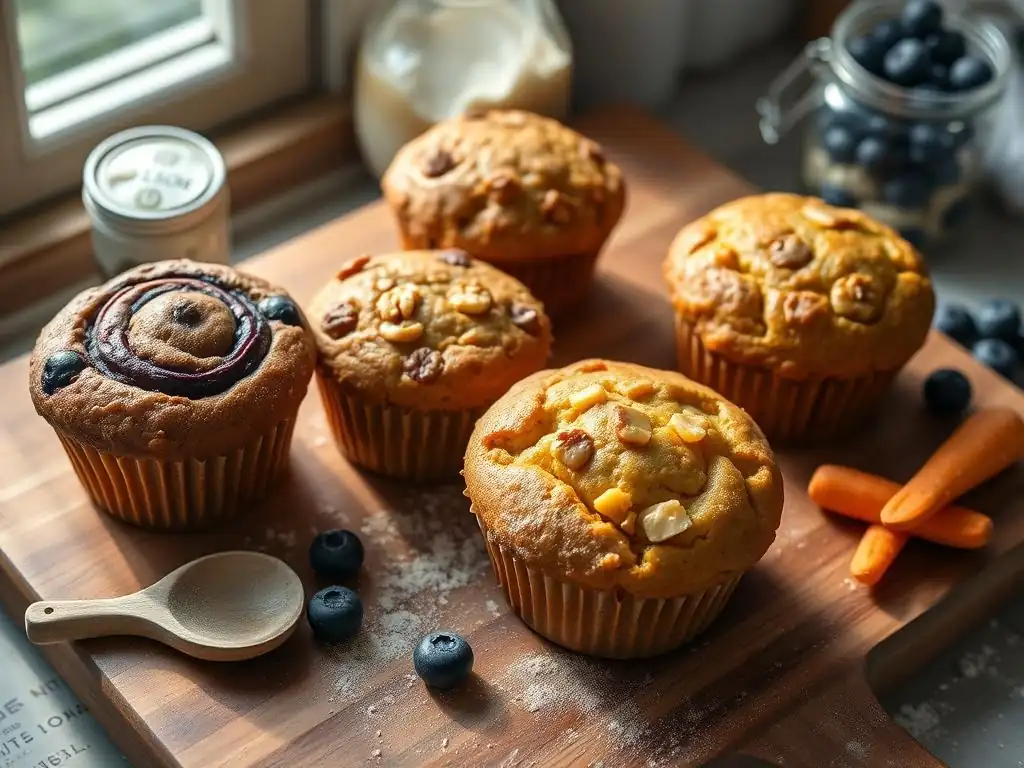
Adapting your favorite traditional muffin or quick bread recipe to be gluten-free is a rewarding process that becomes easier with practice. The key is understanding the function of wheat flour and how to replace it with a balanced gluten-free blend and a binder, while also being mindful of liquid levels.
Adapting a Traditional Muffin Recipe
Let's consider adapting a classic blueberry muffin recipe that calls for 2 cups of all-purpose wheat flour. You would start by replacing the 2 cups of wheat flour with 2 cups of a pre-mixed gluten-free all-purpose flour blend that contains a binder (like xanthan gum). If your blend does not contain a binder, you would add the appropriate amount, typically 1/2 to 1 teaspoon per cup of flour, so 1 to 2 teaspoons for this recipe.
Keep the other ingredients the same initially, but be prepared to make slight adjustments to the liquid. Mix the batter and observe its consistency – it should be similar to or slightly wetter than the original wheat batter. If it seems too thick or dry, add liquid (milk, buttermilk, etc.) 1 tablespoon at a time until the desired consistency is reached.
If it seems too thin, add a tablespoon or two more of the gluten-free flour blend. Bake as directed, but check for doneness a few minutes earlier, as gluten-free baked goods can sometimes bake faster or slower depending on the blend. This approach makes achieving easy gluten-free muffin recipes more attainable.
Converting a Quick Bread Recipe to Gluten-Free
Converting a quick bread recipe, like banana bread or zucchini bread, follows a similar logic but quick breads often benefit from slightly more binder and moisture than muffins due to their larger size and longer baking time. For a recipe calling for 3 cups of wheat flour, you would substitute 3 cups of a gluten-free all-purpose blend with a binder, or add 1.5 to 3 teaspoons of xanthan gum (or equivalent psyllium husk) if the blend is binder-free.
Quick breads often contain mashed fruits or vegetables, which naturally add moisture. However, you might still need to slightly increase the liquid (milk, oil, etc.) by a few tablespoons, especially if your gluten-free blend is very absorbent. Pay close attention to baking time; quick breads take longer than muffins, and ensuring the center is fully baked without the edges drying out can be a challenge. Tent the top loosely with foil partway through baking if it's browning too quickly. Checking with a long skewer or toothpick in the center is essential for doneness.
Tips for Baking the Perfect Gluten-Free Quick Bread
Baking a perfect gluten-free quick bread requires attention to detail, especially regarding moisture and even baking. Quick breads are larger and denser than muffins, making complete baking without drying out the edges or having a soggy middle a key goal.
Achieving a Tender and Moist Gluten-Free Quick Bread
To ensure your gluten-free quick bread is tender and moist, focus on hydration and fat. Use a gluten-free flour blend that incorporates some higher-moisture flours like almond or oat flour, or ensure your blend has a good ratio of starch. Include moistening ingredients like mashed banana, applesauce, yogurt, or sour cream. Don't reduce the fat (butter or oil) or sugar in the recipe too much, as they contribute significantly to moisture and tenderness.
Proper mixing is also important – mix until just combined; overmixing can still negatively impact texture even without gluten. Bake at the correct temperature; often, 325-350°F (160-175°C) is ideal for quick breads to allow the center to bake through before the exterior burns. Using a light-colored metal pan can also help prevent over-browning compared to dark metal or glass pans.
Preventing a Soggy Bottom: Baking Techniques
A soggy bottom is a common issue in quick breads, both gluten-free and traditional, especially when moisture-rich ingredients like fruits are used. This happens when the bottom of the bread doesn't bake through properly or condensation forms during cooling.
To prevent a soggy bottom, ensure your oven rack is in the correct position, usually the middle or slightly lower. Bake the bread fully; check for doneness by inserting a skewer or toothpick into the very center – it should come out clean or with a few moist crumbs, not wet batter.
Once baked, remove the bread from the oven and let it cool in the pan on a wire rack for about 10-15 minutes before attempting to remove it completely. Cooling on a wire rack allows air circulation around the entire loaf, preventing steam from condensing on the bottom and making it soggy.
Storing Gluten-Free Muffins and Quick Breads for Freshness
Gluten-free baked goods tend to dry out faster than their wheat counterparts. Proper storage is essential to maintain their freshness and texture. Allow muffins and quick breads to cool completely on a wire rack before storing. Storing warm baked goods creates condensation, leading to sogginess and potential spoilage.
Once completely cool, store muffins and quick breads in an airtight container at room temperature for 2-3 days. For longer storage, wrap individual muffins or slices of quick bread tightly in plastic wrap, then place them in a freezer-safe bag or container. Frozen gluten-free muffins and quick breads can last for up to 2-3 months. Thaw them at room temperature or gently reheat in a microwave or oven. Proper storage helps preserve the tender texture you worked hard to achieve in your easy gluten-free muffin recipes.
Conclusion: Mastering Gluten-Free Muffin Recipes
Embarking on the journey of gluten-free baking, particularly with easy gluten-free muffin recipes and quick breads, is a rewarding experience. By understanding the foundational role of gluten and how key ingredient swaps – from flour blends and binders to liquid adjustments and moistening agents – can compensate for its absence, you gain the power to create delicious, satisfying baked goods. It takes a little practice and experimentation, but the results are well worth the effort.
Remember that successful gluten-free baking is often about balance and synergy between different ingredients. The right combination of flours provides structure, starches add tenderness, binders hold everything together, and proper moisture ensures a delightful texture. Don't be afraid to experiment with different blends and techniques as you become more comfortable. Each batch is a step towards perfecting your craft.
Embrace the Art of Gluten-Free Baking
Gluten-free baking is less about limitation and more about exploring a wider variety of flours and ingredients. Think of it as expanding your baking repertoire! Many gluten-free flours offer unique flavors and nutritional benefits that you don't get from wheat flour alone. For instance, sorghum flour offers a slightly sweet taste, while teff flour brings an earthy depth. Mastering easy gluten-free muffin recipes opens the door to a world of new taste and texture possibilities.
As you gain confidence, you can start creating your own gluten-free flour blends tailored to specific recipes or preferences. Keep notes on what works and what doesn't. Perhaps you find that a blend with more oat flour gives you the perfect tender crumb for muffins, while a blend with more brown rice and psyllium husk works best for a hearty quick bread. Embrace the process of experimentation and discovery.
Further Resources for Gluten-Free Baking Success
To continue your journey in mastering gluten-free muffin recipes and quick breads, seek out reliable resources. Look for cookbooks or websites dedicated specifically to gluten-free baking, as these often provide tested recipes and valuable tips. Following experienced gluten-free bakers online can offer inspiration and practical advice.
Consider joining online communities or forums where you can ask questions, share experiences, and learn from others navigating the same baking challenges. Many ingredient manufacturers also provide detailed information on how to best use their gluten-free flours and binders. With dedication and the wealth of information available, you'll be whipping up perfect, easy gluten-free muffin recipes and quick breads in no time.
Frequently Asked Questions
What are the key ingredients to substitute when baking gluten-free muffins?
The main swaps involve using gluten-free flour blends instead of wheat flour. You may also need to add binding agents like xanthan gum or psyllium husk to mimic gluten's structure.
Are gluten-free muffins more difficult to bake than regular muffins?
Not necessarily, but they require understanding gluten-free baking principles. Careful measuring of ingredients and using the correct gluten-free flour blend are crucial for success.
What kind of gluten-free flour blend works best for muffins and quick breads?
A blend specifically designed for baking is ideal. Look for a blend that includes rice flour, tapioca starch, and potato starch, and perhaps even a binding agent already included.
How can I prevent gluten-free muffins from being dry and crumbly?
Use sufficient moisture in the recipe, like applesauce or yogurt. Also, avoid over-baking, as this can exacerbate dryness, or add binding agents.
Can I use regular recipes and just swap out the flour for gluten-free flour?
While possible, it's not always successful. Gluten-free recipes are often formulated with adjustments to liquid ratios and added binding agents to compensate for the lack of gluten.
Final Reflection: The Enduring Appeal of Gluten-Free Baking
The quest for perfectly moist, flavorful gluten-free muffins and quick breads isn't just a culinary challenge; it's a testament to the growing demand for inclusive and delicious food. The rise in gluten-free diets, driven by both necessity and preference, has created a vibrant landscape of innovation in baking, pushing us to refine techniques and discover new ingredient combinations. This exploration has yielded surprisingly delightful results, proving that deliciousness doesn't require gluten.
This journey into the world of gluten-free baking has underscored for me the importance of understanding the science behind the recipe. It's not simply about substituting ingredients; it's about understanding how those substitutions affect the final product's texture and flavor. The process of experimentation, trial, and error has been incredibly rewarding, teaching me patience and precision. The best way to find yourself is to lose yourself in the service of others.
– Mahatma Gandhi. While this quote doesn't directly relate to baking, the dedication and attention to detail required in perfecting gluten-free recipes mirrors the dedication needed in any pursuit of excellence.
Now, it's your turn. Don't be intimidated by the seemingly complex world of gluten-free baking. Take the recipes explored in this article as a springboard for your own culinary adventures. Experiment with different flours, add-ins, and techniques. Embrace the challenge, and you'll discover the immense satisfaction of creating delicious, inclusive treats that everyone can enjoy. The perfect gluten-free muffin awaits your creative touch!
Unlock Your Gluten-Free Baking Potential!
Thanks for taking the time to explore the world of perfect gluten-free muffins and quick breads! You've now discovered the key ingredient swaps that unlock delicious, texture-rich results. Ready to put your new knowledge into practice?
- Bake your dream gluten-free treat today! Choose your favorite recipe (even a non-gluten-free one!) and try out one of the ingredient swaps we discussed. Let us know how it turned out!
- Share your baking triumph (or even your baking journey!) on social media – tag us so we can celebrate your success!
- Challenge yourself: Try experimenting with different gluten-free flours and combinations to discover your perfect blend.
What exciting gluten-free creation will you bake first?