
Altitude Baking: Adjusting Leavening Agents at High Elevations

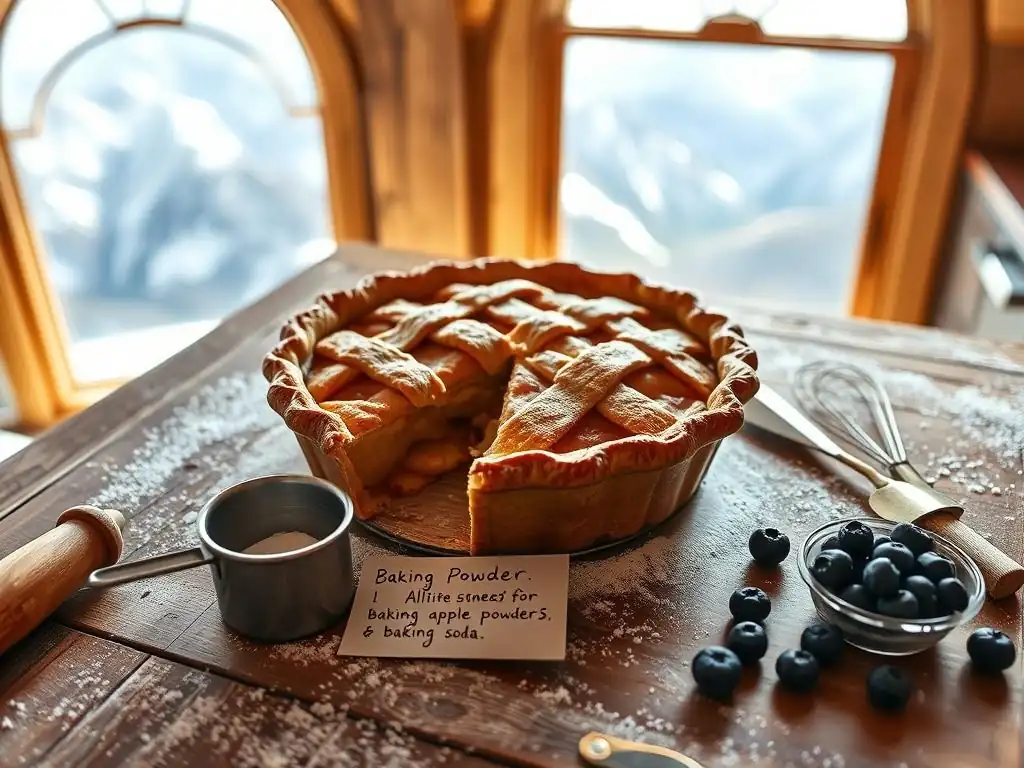
Welcome to BakeWithEase, where we unlock the secrets to baking success! Ever wondered why your cakes fall flat at higher altitudes? Get ready to conquer the challenges of altitude baking with our expert advice. Discover essential high elevation baking tips and learn how to adjust leavening agents for perfectly risen treats, no matter how high you are! Curious to know the simple tweak that can save your next batch? Keep reading to find out!
- High Elevation Baking Tips: Mastering Altitude Baking with Leavening Agents
- How Altitude Affects Leavening Agents in Baking
- Step-by-Step Guide to Adjusting Leavening Agents for Altitude Baking
- Practical High Elevation Baking Tips for Different Types of Baked Goods
- Troubleshooting Common Problems in High Altitude Baking Related to Leavening
- Expert Techniques to Enhance Leavening Performance at High Altitudes
- Final Thoughts on High Elevation Baking Tips: Perfecting Leavening for Every Home Baker
-
Frequently Asked Questions
- How does high altitude affect baking?
- What are the main leavening agents affected by altitude?
- How can I adjust baking soda and baking powder at high altitudes?
- Why is moisture control important in high altitude baking?
- Besides leavening and moisture, what else should I consider for high-altitude baking?
- Final Reflection: Scaling New Heights in Baking
- Unlock Your High-Altitude Baking Secrets!
High Elevation Baking Tips: Mastering Altitude Baking with Leavening Agents
Welcome, fellow bakers! Tackling baking at high altitudes can feel like a whole new ballgame, especially when it comes to getting that perfect rise. The air is thinner, pressure is lower, and ingredients behave differently. Mastering high elevation baking tips requires understanding these differences, particularly how they affect leavening agents. Don't worry, it's a challenge we can conquer together, one perfectly risen loaf or cake at a time.
This guide will walk you through the science behind baking at high elevations and provide practical high elevation baking tips focused specifically on adjusting your leavening agents – the unsung heroes responsible for making your baked goods light and airy. We'll cover everything from baking powder and soda to yeast, giving you the knowledge to adapt your favorite recipes and achieve delicious results, no matter how high you bake.
Understanding the Impact of High Altitude on Baking Ingredients
At higher elevations, atmospheric pressure is lower than at sea level. This reduced pressure has a significant impact on how ingredients behave during baking. Liquids evaporate faster because water boils at a lower temperature – around 202°F (94°C) at 5,000 feet, compared to 212°F (100°C) at sea level. This rapid evaporation means less moisture remains in your batter or dough, potentially leading to drier, denser results if not accounted for.
Furthermore, gases expand more readily in the lower pressure environment of high altitudes. This affects leavening agents directly, as they produce gases (like carbon dioxide) that create rise. While more expansion might sound good, too much too fast can cause issues like over-rising followed by collapse, large air pockets, and a coarse texture. Understanding these fundamental changes is the first step in implementing effective high elevation baking tips.
Why Adjusting Leavening Agents Is Crucial for Successful High Elevation Baking
Leavening agents are designed to create lift and structure in baked goods. In a standard recipe developed for sea level, the amount of leavening is carefully balanced with other ingredients like flour, sugar, and liquid to achieve a desired texture and rise under normal atmospheric pressure. When you take that same recipe to a higher elevation, the increased gas expansion means the original amount of leavening will likely produce too much gas, too quickly.
Using the standard amount of baking powder, baking soda, or yeast at high altitudes can lead to rapid, excessive rising during the initial baking phase. This fast expansion can stretch the gluten structure or crumb too thin before it has a chance to set, causing the baked good to collapse in the oven or cool. Adjusting leavening is one of the most critical high elevation baking tips to prevent these common failures, ensuring your cakes don't sink and your breads maintain their shape and structure.
How Altitude Affects Leavening Agents in Baking
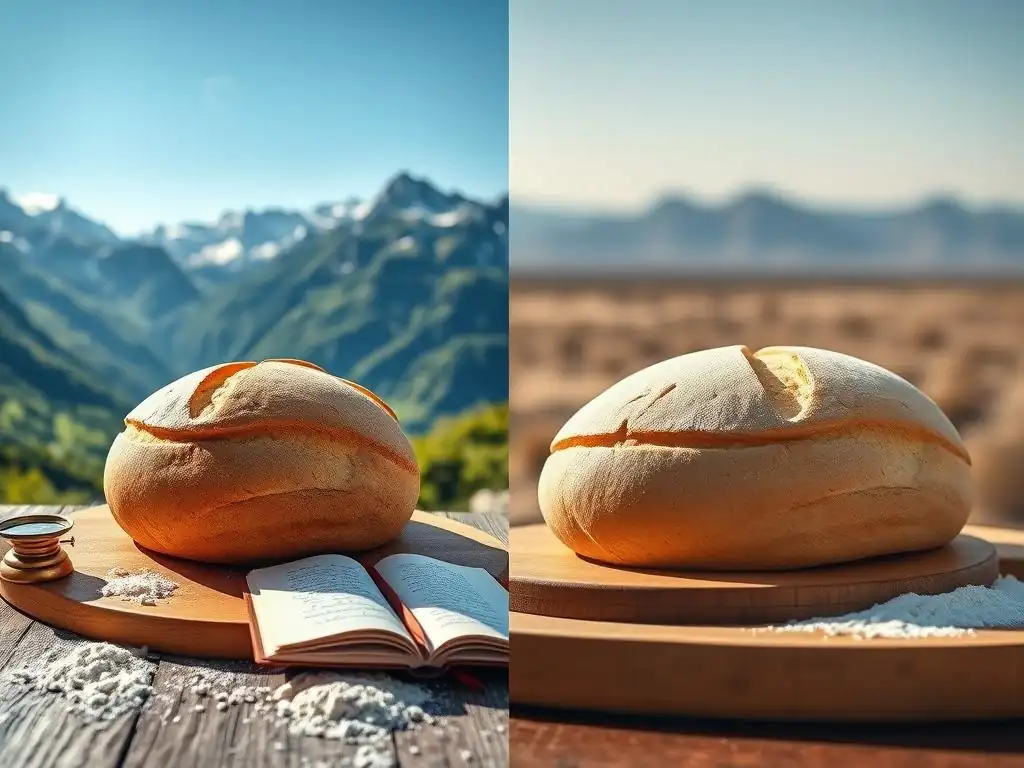
The science of baking changes quite a bit when you're above 3,000 feet. As mentioned, the lower atmospheric pressure allows gases to expand more than they would at sea level. Leavening agents work by creating these gases within the batter or dough. Chemical leaveners like baking powder and baking soda produce carbon dioxide when activated by moisture and/or heat. Yeast produces carbon dioxide through fermentation.
At high altitudes, the gas bubbles produced by these leaveners expand more vigorously. Imagine a balloon being inflated – at high altitude, it needs less air to reach the same size compared to sea level. Similarly, the gas bubbles in your dough expand more easily. This can lead to a very rapid initial rise, which, if not controlled, can compromise the final structure and texture of your baked goods. This phenomenon is central to understanding the need for high elevation baking tips.
The Science Behind Leavening at High Elevations
The primary scientific principle at play is Boyle's Law, which states that for a fixed amount of gas at constant temperature, pressure and volume are inversely proportional. As altitude increases, atmospheric pressure decreases, meaning the volume of a given amount of gas increases. In baking, the gases produced by leaveners (primarily CO2) expand more significantly within the confines of the batter or dough.
This increased gas expansion leads to several issues. The rapid stretching of cell walls can cause them to break, resulting in a coarse, open crumb structure rather than a fine, even one. If the expansion happens too quickly before the proteins (like gluten or egg proteins) have coagulated and set, the structure cannot support the expanded volume, leading to collapse. This is why simply following a sea-level recipe often results in disappointing outcomes when baking at high elevations; the delicate balance of ingredients and their reactions is disrupted.
Common Challenges with Baking Powder and Baking Soda Above 3,000 Feet
Baking powder and baking soda are chemical leaveners commonly used in cakes, muffins, cookies, and quick breads. They react to produce carbon dioxide gas. At high altitudes, the gas produced expands more dramatically. A common problem is excessive initial rise, leading to a dome that then cracks or collapses in the center. For example, a standard muffin recipe might overflow its cups or sink significantly upon cooling when baked at 5,000 feet using the same amount of baking powder as at sea level.
Another challenge is related to the faster evaporation of liquids. Chemical leaveners often require moisture to activate. With liquids evaporating more quickly, the leavening reaction might be less consistent or complete, or the batter might become too dry too fast, hindering proper gas distribution. Recipes often recommend reducing baking powder and baking soda by 10-25% depending on the altitude and recipe type. For instance, at 5,000 feet, you might start by reducing the leavening by about 1/8 to 1/4 teaspoon per teaspoon called for in the original recipe.
The Role of Yeast and Gas Expansion in High Altitude Baking
Yeast is a biological leavener used primarily in breads. It produces carbon dioxide through fermentation of sugars. Like chemical leaveners, the CO2 produced by yeast expands more rapidly at high altitudes due to lower pressure. This means doughs will typically rise much faster during proofing. A bread dough that might take 60-90 minutes to double in size at sea level could do so in 30-45 minutes at 5,000 feet.
The challenge with yeast is managing this accelerated fermentation and rise. If the dough proofs too quickly, it can overproof before baking, leading to a poor structure and a loaf that collapses in the oven. The rapid gas expansion can also cause large, irregular holes in the crumb. High elevation baking tips for yeast often involve reducing the amount of yeast, shortening proofing times, and potentially using cooler liquids to slow down fermentation. For example, reducing yeast by 1/4 to 1/2 teaspoon per packet (about 2 1/4 teaspoons) is a common starting point at elevations above 3,000 feet.
Step-by-Step Guide to Adjusting Leavening Agents for Altitude Baking
Adjusting leavening agents is a key component of successful high elevation baking tips. While specific adjustments vary by recipe, altitude, and even humidity, there are general guidelines you can follow as a starting point. It's important to remember that these are starting points, and some trial and error will likely be needed to perfect your recipes for your specific location.
Start with a small adjustment and observe the results. It's often easier to add a little more leavening in subsequent attempts than to correct for too little rise initially. Keep detailed notes on your adjustments and the outcome – this is invaluable for refining your high elevation baking tips over time. Patience and observation are your best tools here.
Calculating the Right Amount of Baking Powder and Baking Soda at High Elevations
For baking powder and baking soda, a common rule of thumb is to reduce the amount as altitude increases.
- For elevations between 3,000 and 5,000 feet: Reduce baking powder by about 10-15% (roughly 1/8 to 1/4 teaspoon per teaspoon).
- For elevations above 5,000 feet: Reduce baking powder by about 15-25% (roughly 1/4 to 1/2 teaspoon per teaspoon).
- For baking soda (which is stronger), the reduction is often smaller, perhaps 1/8 teaspoon per teaspoon at higher elevations.
Consider a cake recipe calling for 2 teaspoons of baking powder at sea level. If baking at 6,000 feet, you might start by using 1.5 teaspoons (a 25% reduction). For a recipe with 1 teaspoon of baking soda, you might try 7/8 teaspoon. These are initial estimates; observe how your cake rises and adjust in small increments (e.g., 1/16 or 1/8 teaspoon) in future bakes.
Modifying Yeast Quantities for Optimal Rise in Thin Air
When working with yeast at high altitudes, your primary goal is to slow down the rapid rise. The most common adjustment is reducing the amount of yeast used. A typical starting point for elevations above 3,000 feet is to reduce the yeast by about 1/4 to 1/2 teaspoon per standard recipe (usually using one 2.25 tsp packet of active dry or instant yeast).
Another crucial high elevation baking tip for yeast recipes is managing proofing time and temperature. Since fermentation accelerates, doughs will reach the desired volume faster. Watch the dough, not the clock! Proof until the dough is just about doubled in size, which might be half the time specified in a sea-level recipe. Using cooler liquids (around 100°F instead of 110°F) can also help slow the yeast activity slightly, allowing for better flavor development and structure before the dough overproofs.
Balancing Leavening Adjustments with Other Ingredient Changes (Flour, Liquids)
Adjusting leavening agents is often just one piece of the puzzle when it comes to comprehensive high elevation baking tips. Because liquids evaporate faster and sugars become more concentrated, recipes at high altitudes often require increased liquids, slightly reduced sugar, and sometimes slightly increased flour or eggs to strengthen the structure. These adjustments work in tandem with leavening changes.
For instance, if you reduce leavening but don't increase liquid, your baked goods might still be dense and dry. If you reduce sugar (which helps tenderize and retain moisture) without slightly increasing flour or eggs, the reduced leavening might struggle to lift a weaker structure.
Think of it as a system: changing one element often requires balancing others. A common recommendation is to increase liquids by 1-2 tablespoons per cup of liquid called for at elevations above 3,000 feet, and potentially add an extra egg or a tablespoon or two of flour to provide more structure to support the adjusted leavening.
Practical High Elevation Baking Tips for Different Types of Baked Goods
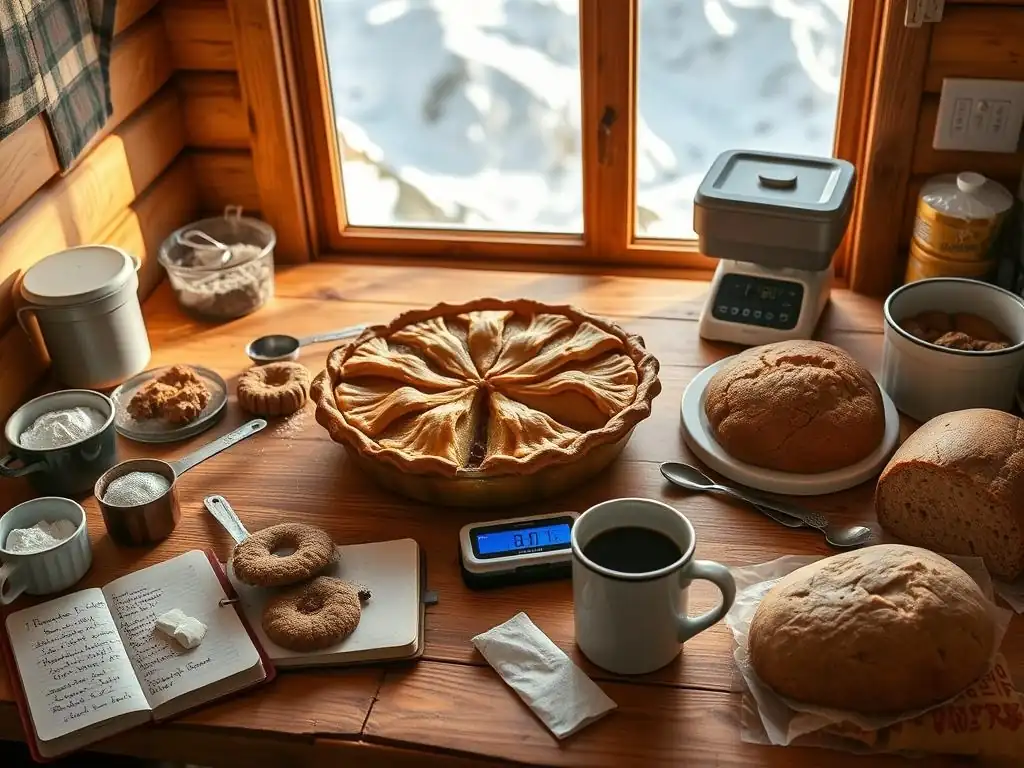
The specific adjustments needed for leavening agents vary depending on the type of baked good you are making. A delicate cake will respond differently than a sturdy loaf of bread or a dense cookie. Understanding these nuances is key to applying high elevation baking tips effectively across your entire repertoire.
Recipes with higher amounts of sugar and fat (like rich cakes or some cookies) tend to be more tender and may require less reduction in leavening than leaner recipes (like quick breads or muffins). Similarly, the method of leavening (chemical vs. yeast) dictates the approach to adjustments.
Adjusting Leavening in Cakes and Quick Breads at High Altitudes
Cakes and quick breads (like muffins, scones, and loaf breads) rely heavily on chemical leavening (baking powder and/or baking soda). As discussed, the main challenge is preventing excessive, rapid rise and subsequent collapse. A good starting point for these items at 5,000 feet is to reduce baking powder by about 20% and baking soda by perhaps 10-15%.
For example, if a muffin recipe calls for 2.5 teaspoons of baking powder, try reducing it to 2 teaspoons. If it uses 1 teaspoon of baking soda, try 7/8 teaspoon. Alongside leavening, you'll likely need to increase liquid slightly (e.g., add 1-2 tablespoons of milk or buttermilk per cup) and potentially increase flour or add an extra egg to strengthen the structure and help the batter support the adjusted leavening. Baking at a slightly higher temperature (increase by 15-25°F) for a shorter time can also help set the structure before the gases over-expand.
Cookies and pastries often use smaller amounts of leavening compared to cakes, or rely on mechanical leavening (like creaming butter and sugar) and physical leavening (steam). However, chemical leaveners are still common, particularly in recipes aiming for spread or puff. The primary concern with cookies at high altitudes is often excessive spread and a flat, coarse texture due to rapid leavening expansion and faster moisture loss.
For cookies that use baking powder/soda for lift and spread, you may need a slight reduction, perhaps 1/8 teaspoon per teaspoon of leavening. Increasing flour slightly (1-2 tablespoons per cup) and reducing sugar (1-2 tablespoons per cup) are also common high elevation baking tips for cookies to help control spread and provide structure. For pastries like puff pastry, the rapid expansion of steam at altitude can be beneficial, but careful chilling and handling are still crucial to prevent butter from melting too quickly before the structure sets.
Bread Baking Adjustments: Yeast Leavening and Proofing Times in Elevated Environments
Bread baking with yeast requires careful management of fermentation and proofing at high altitudes. The accelerated yeast activity means your dough will rise faster. A core high elevation baking tip is to reduce the amount of yeast used, typically by 1/4 to 1/2 teaspoon per recipe. You must also significantly shorten proofing times. Instead of waiting for the dough to double, watch for it to be almost doubled or just slightly less than doubled compared to what you'd expect at sea level.
Using cooler water (around 100°F) for activating yeast can help slow things down. Kneading might require slightly more liquid than at sea level because of faster evaporation, but add it cautiously. The second rise (proof in the pan) will also be faster; again, watch the dough, not the clock. Overproofing is a major cause of collapsed bread at high altitudes, so learning to gauge the readiness of your dough by feel (the poke test) rather than just time is essential.
Even with careful adjustments, baking at high altitudes can present challenges. Understanding how leavening issues manifest allows you to diagnose problems and refine your high elevation baking tips. Common signs of incorrect leavening adjustments include cakes that dome excessively and then fall, quick breads with large tunnels or a coarse crumb, or breads that collapse in the oven.
Don't get discouraged by early failures! Every bake is an opportunity to learn. By systematically observing the results – the rise, the structure, the texture – you can pinpoint what went wrong and make targeted adjustments for your next attempt. Troubleshooting is an integral part of mastering high altitude baking.
Identifying Over-Risen or Collapsed Baked Goods
Over-rising or collapse is a classic sign of too much leavening (or improper structural support) at high altitudes. In cakes and quick breads, this often looks like a batter that rose beautifully in the oven but then sank dramatically in the center as it cooled, leaving a dense, sunken area. The edges might be dry and tough from over-baking while the center is undercooked.
For yeast breads, over-rising during proofing can lead to a loaf that looks puffy but collapses in the oven, resulting in a dense, heavy texture with large, irregular holes (or a lack of structure entirely). If you see these signs consistently, your first step should be to reduce the amount of leavening agent further in your next attempt, following the percentage guidelines discussed earlier. Also, evaluate if you need to add a bit more structure (flour or egg) or reduce sugar to help support the rise.
Fixing Excessive Crumb Coarseness and Dryness from Leavening Issues
A coarse, open crumb structure with large holes, or a texture that is generally dry and crumbly, can also be related to leavening issues at high altitudes. Rapid, excessive gas expansion can stretch the cell walls of the batter or dough too thin, causing them to break and merge, creating large, irregular air pockets instead of a fine, even crumb. This rapid expansion is often coupled with faster moisture loss.
To address this, ensure you have properly reduced your leavening agents. If the crumb is still coarse, consider if you also need to increase liquid slightly in the recipe. Adding 1-2 tablespoons of milk, buttermilk, or water per cup of liquid can help keep the batter or dough moist. Additionally, baking at a slightly higher temperature for a shorter time can help set the structure faster before the gases expand too much and before too much moisture is lost.
How to Test and Adapt Leavening Agent Levels Through Trial and Error
Mastering high elevation baking tips ultimately comes down to experimentation. Start with the recommended percentage adjustments for leavening based on your altitude. Bake the recipe and carefully evaluate the results. Did it rise too much? Not enough? Did it collapse? Was the crumb texture right?
Based on your observations, make small, incremental adjustments to the leavening for the next bake. If a cake collapsed, reduce the baking powder by another 1/8 teaspoon. If bread was still overproofed too quickly, reduce the yeast by another 1/4 teaspoon. Keep detailed notes: record the exact altitude you are baking at, the original recipe, your adjustments to leavening (and other ingredients), baking time and temperature, and the final outcome. This systematic approach allows you to refine each recipe specifically for your kitchen's environment.
Expert Techniques to Enhance Leavening Performance at High Altitudes
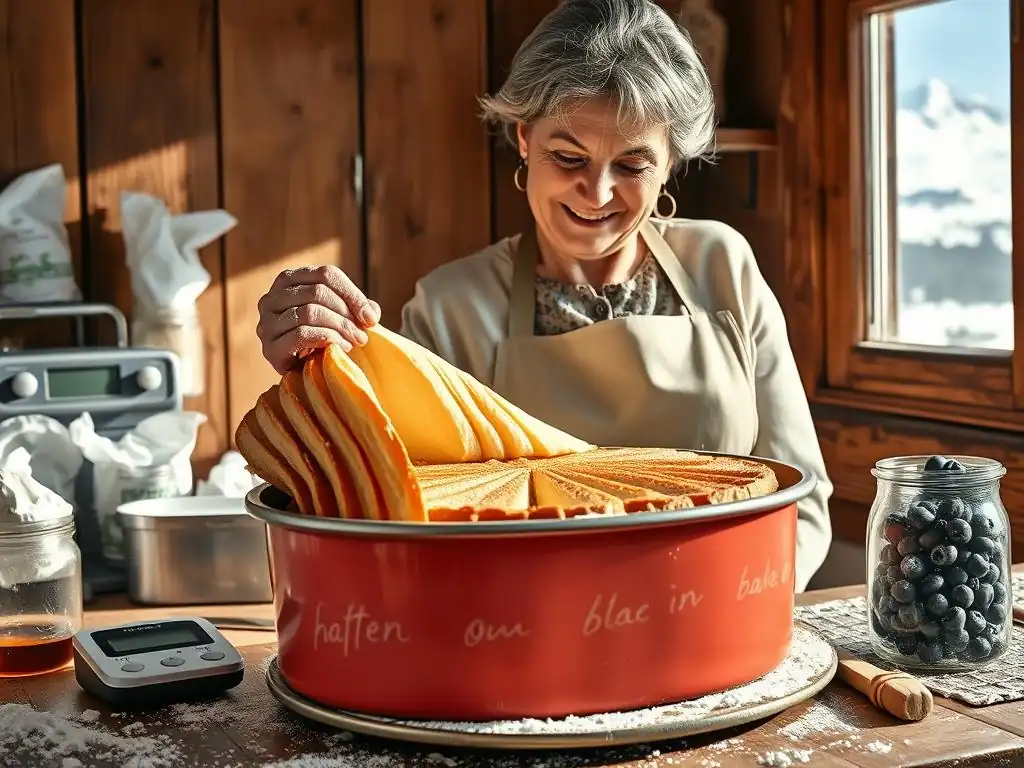
Beyond simply reducing leavening, there are other techniques that experienced high altitude bakers use to optimize results. These methods often involve supporting the adjusted leavening or using alternative approaches to create lift. Incorporating these high elevation baking tips can help you achieve even better texture and structure.
Consider how different leavening methods interact and how structural ingredients can work in harmony with gas production to create a stable, well-risen product. Sometimes, a combination of techniques is the most effective solution for challenging recipes.
Combining Chemical Leaveners with Mechanical Leavening for Better Results
In recipes that use both chemical and mechanical leavening (like many cakes where butter and sugar are creamed), focusing on enhancing the mechanical leavening can help compensate for reduced chemical leavening. Proper creaming of butter and sugar incorporates air bubbles, which expand in the oven, contributing to rise. Creaming for the full recommended time (often 3-5 minutes until light and fluffy) is crucial.
Similarly, whipping egg whites or whole eggs until foamy or stiff peaks form incorporates significant air. Folding these gently into the batter adds another layer of mechanical leavening. By maximizing the air incorporated through creaming and whipping, you can potentially reduce the chemical leavening slightly more, leading to a finer crumb and more stable structure at high altitudes. This synergy between leavening methods is a valuable high elevation baking tip.
Using Alternative Leavening Agents Suitable for High Elevation Baking
While baking powder, baking soda, and yeast are the most common, other leavening methods can be particularly useful at high altitudes. Steam, generated from the liquid in the batter or dough, is a form of physical leavening that expands significantly in the lower pressure environment. Recipes that rely heavily on steam, like popovers or choux pastry, often work quite well at altitude with minimal adjustments, perhaps just a slight increase in liquid.
Another consideration is the use of acidic ingredients with baking soda. Since baking soda requires an acid to react fully, ensuring sufficient acidic liquid (like buttermilk, yogurt, or sour cream) in the recipe is important, especially as liquids evaporate faster. Some bakers also experiment with leavening blends specifically formulated for high altitudes, though adjusting standard ingredients is often sufficient with practice.
Tips for Gradual Adjustment and Recipe Development at Different Altitude Ranges
If you bake at varying altitudes, or if you are developing recipes for others at different elevations, understanding how to make gradual adjustments is key. The impact of altitude becomes noticeable around 3,000 feet and increases significantly above 5,000 feet. Adjustments needed at 7,000 feet will be more substantial than at 4,000 feet.
A practical high elevation baking tip is to create a scaling factor for your leavening adjustments based on elevation. For example, you might find that reducing leavening by 10% works well at 4,000 feet, while a 20% reduction is needed at 6,000 feet. By testing recipes at different altitudes and documenting your results, you can develop a reliable system for adapting recipes across a range of elevations. This systematic approach allows for consistent results and confident baking, no matter the height.
Final Thoughts on High Elevation Baking Tips: Perfecting Leavening for Every Home Baker
Baking at high altitudes presents unique challenges, but with the right knowledge and a willingness to experiment, you can achieve fantastic results. Understanding how lower atmospheric pressure impacts gas expansion and liquid evaporation is fundamental. Armed with effective high elevation baking tips, particularly regarding leavening agents, you can confidently adapt your favorite recipes.
Remember that adjusting baking powder, baking soda, and yeast quantities is often the most critical step in preventing common high-altitude baking failures like collapse and poor texture. Start with recommended reductions and fine-tune based on your observations. Don't forget that leavening adjustments work best when balanced with modifications to other ingredients like liquids and sugar, and potentially structural elements like flour or eggs.
Summary of Key Adjustments for Successful Altitude Baking
Let's recap the core high elevation baking tips for leavening:
- Baking Powder/Soda: Reduce by 10-25% depending on altitude and recipe. Start small (e.g., 1/8 to 1/4 tsp per tsp) and adjust.
- Yeast: Reduce by 1/4 to 1/2 tsp per recipe.
- Proofing: Significantly shorten proofing times for yeast doughs. Watch the dough's size and feel, not the clock.
- Liquids: Often need to be increased to compensate for faster evaporation (1-2 tbsp per cup).
- Structure: May need to increase flour or add an egg to support the adjusted leavening.
- Temperature: Consider slightly increasing oven temperature (15-25°F) to set structure faster.
These are starting points, and every recipe is different. Applying these high elevation baking tips requires a bit of detective work and patience, but the results are well worth it.
Encouragement for Bakers to Experiment and Refine Leavening Techniques
The journey to mastering high altitude baking is one of continuous learning and adaptation. Don't be discouraged by initial outcomes that aren't perfect. Every collapsed cake or dense loaf provides valuable information. Think of yourself as a culinary scientist, testing variables and refining your hypotheses with each bake.
Keep a baking journal! Note the altitude, the original recipe, the changes you made, the baking time and temperature, and the final result (appearance, texture, taste). Over time, this journal will become your most valuable resource, helping you understand what works best in your specific kitchen environment. Embrace the process; it's incredibly rewarding to successfully bake challenging recipes at high elevations.
How Mastering Leavening Agent Adjustments Elevates Your Baking Skills at High Altitudes
By focusing on and mastering the adjustment of leavening agents – arguably the most impactful change needed for high altitude baking – you develop a deeper understanding of how ingredients interact and how environmental factors influence the baking process. This knowledge transcends simply following a recipe; it empowers you to troubleshoot problems and adapt any recipe to your conditions.
Becoming proficient in high elevation baking tips, particularly those related to leavening, not only ensures your cakes rise beautifully and your breads are perfectly proofed, but it also makes you a more confident, skilled baker. You'll be ready to tackle any recipe, anywhere, equipped with the knowledge to make it work. Happy baking at any altitude!
Frequently Asked Questions
How does high altitude affect baking?
High altitude baking presents challenges due to lower air pressure, causing leavening agents to react more quickly and liquids to evaporate faster, potentially leading to dry, collapsed baked goods.
What are the main leavening agents affected by altitude?
The primary leavening agents affected are baking soda and baking powder. At higher altitudes, these release carbon dioxide more rapidly, which can cause the batter to rise too quickly and then fall.
How can I adjust baking soda and baking powder at high altitudes?
Generally, reduce the amount of baking soda or baking powder by 1/8 to 1/4 teaspoon per teaspoon called for in the recipe. This helps prevent over-leavening and collapse.
Why is moisture control important in high altitude baking?
Lower air pressure causes liquids to evaporate more quickly. Therefore, you may need to increase the liquid in your recipe by a tablespoon or two to maintain proper moisture levels in your baked goods.
Besides leavening and moisture, what else should I consider for high-altitude baking?
You might also need to increase oven temperature slightly (around 25 degrees Fahrenheit) to help set the structure of your baked goods faster before they over-rise and collapse.
Final Reflection: Scaling New Heights in Baking
The challenges of high-altitude baking are far more than just a quirky inconvenience; they represent a fundamental shift in the way we approach classic recipes. Mastering these adjustments isn't simply about producing a visually appealing cake; it's about understanding the science behind leavening and adapting to a unique environment. The subtle changes in air pressure and boiling points drastically alter how ingredients behave, demanding a nuanced understanding to achieve consistent, delicious results.
High-altitude baking has profoundly shaped my own approach to cooking, pushing me to move beyond rote memorization of recipes and into a deeper appreciation for the chemical reactions at play. The most important thing is to understand the why, not just the how.
This quote, though not specifically about baking, perfectly encapsulates the shift in perspective required to conquer the unique challenges of high-altitude baking. It's a journey of discovery, constantly refining techniques and understanding the interplay of flour, liquid, and leavening agents in a less-dense atmosphere.
Now, it's your turn to take flight. Don't be intimidated by the altitude; embrace the challenge. Experiment with the adjustments outlined in this article, and don't be afraid to tweak them further based on your own experiences and the specific ingredients you use. Each successful high-altitude bake is a testament to your understanding, a small victory in the face of unique culinary conditions. Remember, the journey to mastering high-altitude baking is a rewarding one, filled with delicious discoveries and the satisfaction of conquering a unique culinary challenge.
Unlock Your High-Altitude Baking Secrets!
Thanks for exploring the world of altitude baking with us! You've now got the tools to create perfectly risen treats, no matter how high you are. Ready to put your new knowledge into practice?
- Bake your best high-altitude creation yet! Try out one of the recipes you’ve been saving, and adapt it using the techniques discussed. Share your results with us – we'd love to see your masterpieces!
- Experiment with different leavening agent combinations. Challenge yourself to find the perfect balance for your favorite baked goods.
- Join our BakeWithEase community! Share your high-altitude baking tips and triumphs (and even your flops – learning from mistakes is part of the fun! ).
What delicious high-altitude adventure will you embark on next?