
Using a Baking Stone or Steel for Better Croissants

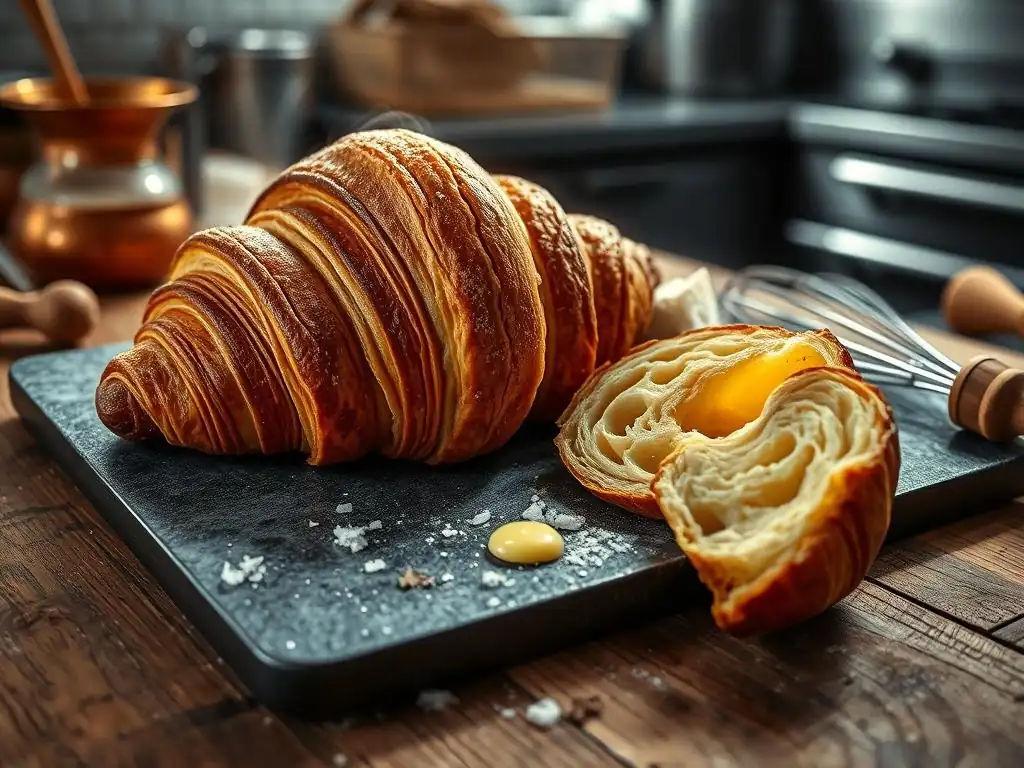
Welcome to BakeWithEase, where we transform baking dreams into delicious realities! Ever wondered how to achieve that perfect, flaky croissant texture at home? You're in the right place! Get ready to unlock a secret weapon in your baking arsenal: learn how a baking stone or steel can revolutionize your croissant game with our baking stone croissants recipe easy. Discover how this simple technique can elevate your baking from good to unforgettable, and prepare to impress your friends and family with bakery-quality croissants made right in your own kitchen. Intrigued? Let's get baking!
- Baking Stone vs. Baking Steel for Croissants: A Guide to Achieving Flaky Perfection
- Introduction: Elevating Your Croissant Baking at Home
- The Importance of Baking Surface in Croissant Baking
-
Baking Stone for Croissants
- Understanding Baking Stones and Their Function
- Benefits of Using a Baking Stone
- Potential Drawbacks of Baking Stones
- Selecting a Baking Stone for Croissants
- Understanding Baking Steels and Their Function
- Advantages of Using a Baking Steel
- Disadvantages of Baking Steels
- Selecting a Baking Steel for Croissants
- Baking Stone vs. Baking Steel: A Comparison
- Baking Stone Croissant Baking: A Step-by-Step Guide
- Troubleshooting Common Croissant Baking Issues
- Advanced Techniques for Baking Stone or Steel
- Conclusion: Achieving Croissant Perfection
-
Frequently Asked Questions
- What makes using a baking stone or steel beneficial for croissants?
- Can I use a baking stone or steel for any croissant recipe?
- Is there a significant difference between using a baking stone versus baking steel for croissants?
- How do I preheat a baking stone or steel for baking croissants?
- What type of baking stone or steel is recommended for baking croissants?
- Final Reflection: The Transformative Power of a Simple Stone
- Unleash Your Inner Boulanger: Perfect Croissants Await!
Baking Stone vs. Baking Steel for Croissants: A Guide to Achieving Flaky Perfection
Introduction: Elevating Your Croissant Baking at Home
The Challenges of Homemade Croissants
Crafting perfect croissants at home can feel like navigating a culinary Everest. Many home bakers encounter hurdles like uneven baking, dense interiors instead of airy layers, and bottoms that are either burnt or undercooked. These issues often stem from inconsistent oven temperature, poor heat transfer to the dough, and inadequate management of moisture during the critical baking phase. Standard baking sheets, while versatile, don't possess the thermal mass needed to deliver the intense, consistent heat required for the characteristic oven spring and flaky texture of a truly great croissant.
Overcoming these challenges requires understanding the science behind baking and employing techniques and tools that professional patisseries use. Without the right surface, achieving that delicate balance of a crisp, golden exterior and a light, honeycomb interior remains elusive. Even with a solid croissant recipe, the lack of proper heat dynamics can lead to disappointing results, making the journey to delicious homemade pastries seem overly complicated and frustrating for many aspiring bakers.
Baking Stone vs. Steel: Enhancing Croissant Quality
Introducing a baking stone or baking steel into your oven setup can dramatically transform your croissant baking results. These tools act as thermal batteries, absorbing and radiating heat much more effectively than thin metal sheets. This consistent, high-intensity heat transfer is crucial for promoting rapid oven spring – the initial puffing of the dough as water turns to steam – which is essential for creating those coveted flaky layers.
By providing a stable, hot surface, a baking stone or steel helps ensure that the base of the croissant bakes quickly and evenly, preventing the dreaded soggy bottom while allowing the top to brown beautifully. This controlled environment supports the delicate laminated dough structure, helping it expand upwards and outwards optimally. Incorporating one of these surfaces is often the missing piece for home bakers looking to elevate their skills and produce croissants that rival those from their favorite bakery.
The Importance of Baking Surface in Croissant Baking
Consistent Heat Distribution for Flaky Layers
The key to those stunning, airy layers in a croissant lies in the rapid expansion of steam trapped between the butter and dough layers during baking. This process, known as oven spring, requires a powerful, even heat source to initiate quickly and uniformly across the entire pastry. A baking stone or steel provides this by storing a significant amount of thermal energy. When the cold croissant dough hits the hot surface, this stored heat is rapidly transferred to the base, causing the butter to melt and create steam almost instantly.
This intense, direct heat from below works in concert with the ambient oven heat to create a thermal gradient, driving moisture upwards and outwards and encouraging the dough layers to separate and puff up. Without this consistent and high heat transfer from the base, the oven spring is diminished, resulting in flatter, denser croissants with less distinct layers. The material's ability to maintain temperature despite the cold dough load is paramount for this effect.
Moisture Management for Optimal Texture
Beyond heat transfer, the baking surface also plays a role in managing moisture within the oven environment. While steam is vital for initial oven spring and keeping the crust pliable as the dough expands, too much moisture late in the bake can result in a soft, rather than crisp, crust. Baking stones, being porous, can absorb some moisture released by the dough, which can be beneficial in certain oven environments to prevent excessive humidity.
Baking steels, on the other hand, are non-porous but their intense heat helps drive moisture out of the dough efficiently. The rapid cooking of the base minimizes the time moisture lingers there, contributing to a crisp bottom crust. Both surfaces, by promoting faster overall baking, reduce the total time the croissants spend in the oven, which inherently limits moisture loss from the interior while ensuring the exterior achieves the desired crispness and golden-brown color.
Baking Stone for Croissants
Understanding Baking Stones and Their Function
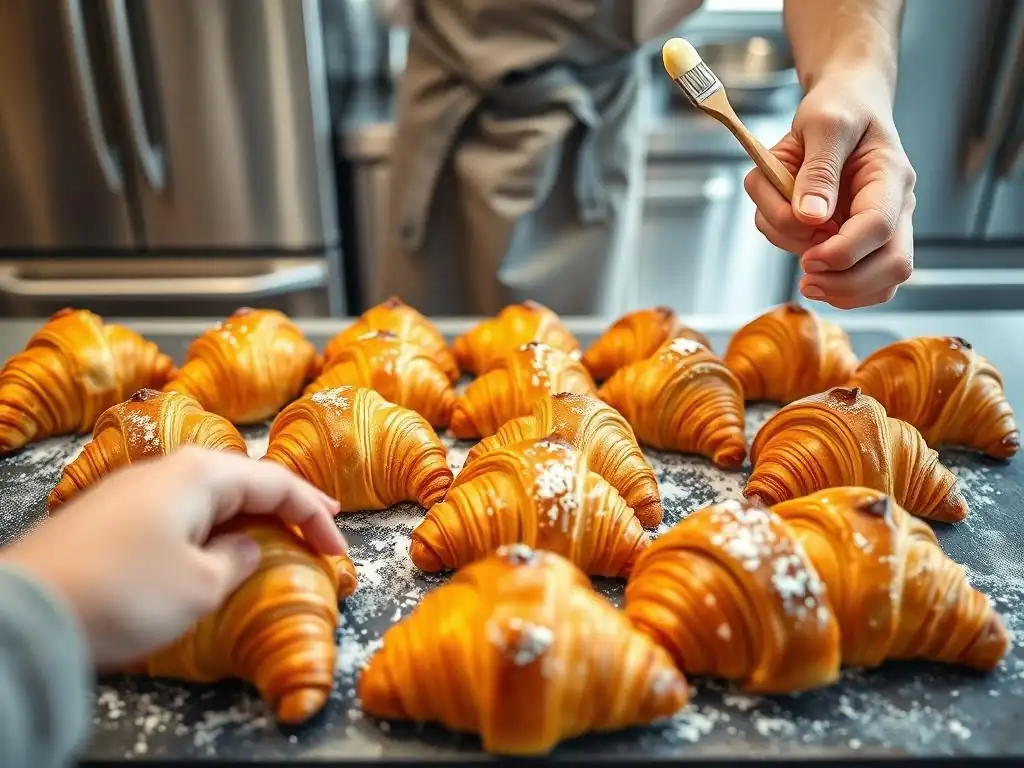
Baking stones are typically made from ceramic, cordierite, or firebrick materials. These natural, often porous materials are excellent at absorbing and retaining heat, making them ideal for creating a stable baking environment. When preheated thoroughly, usually for an hour or more at high temperatures (like 400°F to 500°F or 200°C to 260°C), a baking stone acts as a heat sink. This stored heat is then radiated upwards, providing a consistent and intense heat source from below.
The porous nature of baking stones also allows them to absorb some moisture from the baking food. While this is often highlighted for baking bread with a crisp crust, it can also subtly help manage humidity around delicate pastries like croissants, preventing them from becoming soggy on the bottom. Their thermal mass helps maintain a steady temperature, minimizing fluctuations when the oven door is opened briefly.
Benefits of Using a Baking Stone
One of the primary benefits of using a baking stone for croissants is the even heat distribution it provides. Unlike a metal sheet that can have hot spots, a properly preheated stone radiates heat uniformly across its surface, leading to consistent browning and baking across all the croissants placed on it. This contributes to more predictable and reliable results.
Another advantage is the ability of the stone to absorb some moisture. For home ovens that might trap more humidity, this can help in achieving a crispier bottom crust. Baking stones are also generally less expensive than baking steels, making them a more accessible option for home bakers starting to explore enhanced baking surfaces. They are also often lighter than similarly sized steels.
Potential Drawbacks of Baking Stones
Despite their benefits, baking stones do have limitations. Their porous nature makes them susceptible to staining from grease and moisture, and they can be difficult to clean thoroughly once stained. They are also relatively fragile and can crack if subjected to rapid temperature changes (thermal shock) or if dropped.
Furthermore, baking stones typically take longer to preheat fully compared to baking steels – often requiring 60 minutes or more to reach optimal temperature saturation. While they retain heat well, they may not transfer heat as rapidly or intensely as steel, which can sometimes result in slightly less dramatic oven spring compared to baking on steel, depending on the specific stone material and thickness.
Selecting a Baking Stone for Croissants
When choosing a baking stone for croissants, consider the material and thickness. Cordierite stones are often recommended as they are more resistant to thermal shock than traditional ceramic. A thickness of at least 1/2 inch (about 1.2 cm) is desirable for sufficient heat retention and transfer; thicker stones (up to 1 inch or 2.5 cm) will store more heat but take longer to preheat.
The size should fit comfortably on your oven rack, leaving an inch or two of space around the sides for air circulation. Avoid glazed stones, as the glaze can sometimes interfere with moisture absorption and heat transfer properties. Look for unglazed, kiln-fired materials. Finding a good baking stone for croissants can significantly improve your baking results.
Understanding Baking Steels and Their Function
Baking steels are typically made from solid carbon steel or sometimes stainless steel. Unlike porous stones, steel is non-porous and exceptionally dense. Steel has a much higher thermal conductivity and volumetric heat capacity than stone. This means it heats up faster, gets hotter, and transfers heat more rapidly and intensely than stone.
When preheated, usually for 45-60 minutes at high temperatures (often 450°F to 500°F or 230°C to 260°C), a baking steel becomes a powerful heat source. Placing croissant dough directly on this surface delivers a significant jolt of heat, promoting incredibly rapid oven spring. The intense heat transfer from steel is particularly effective at creating a very crisp bottom crust.
Advantages of Using a Baking Steel
The primary advantage of using a baking steel for croissants is its superior heat transfer rate and capacity. Steel gets hotter and transfers heat to the dough much faster than stone, leading to more vigorous oven spring and potentially loftier, flakier croissants. This intense heat also helps achieve a crispier bottom crust quickly, preventing it from becoming soggy.
Baking steels are also significantly more durable than stones. They are virtually indestructible, resistant to thermal shock, and easy to clean (though they can rust if not seasoned or dried properly). They typically require less preheating time than thick stones while still providing substantial thermal mass. Many home bakers find the results from a baking steel for croissants to be exceptional.
Disadvantages of Baking Steels
Despite their performance benefits, baking steels have a few drawbacks. They are generally more expensive than baking stones, sometimes costing twice as much or more for a similar size. They are also considerably heavier than stones, making them more difficult to handle and potentially adding significant weight to your oven rack.
Because steel is non-porous, it does not absorb any moisture. In some ovens or recipes, this can lead to a very humid environment initially, which might require venting the oven later in the bake. The intense heat transfer, while usually a benefit, can potentially lead to over-browning or even burning the bottom if not managed carefully, especially for delicate pastries like croissants baked at high temperatures.
Selecting a Baking Steel for Croissants
When selecting a baking steel for croissants, the material is usually carbon steel, known for its excellent heat properties. Thickness is a key factor; while thinner steels (like 1/4 inch or 0.6 cm) heat faster, thicker steels (like 3/8 inch or 1 cm or even 1/2 inch or 1.2 cm) store more heat and provide a more stable temperature, which is beneficial for multiple batches or large items. A thickness of 3/8 inch is often considered a good balance for overall baking performance.
Ensure the steel is made from food-grade material. The size should fit your oven rack comfortably, allowing for air circulation. Some steels come pre-seasoned, which is helpful for maintenance and preventing rust. Look for a smooth finish. Choosing the right baking steel can make achieving that perfect baking stone croissants recipe easy achievable.
Baking Stone vs. Baking Steel: A Comparison
Heat Retention and Transfer
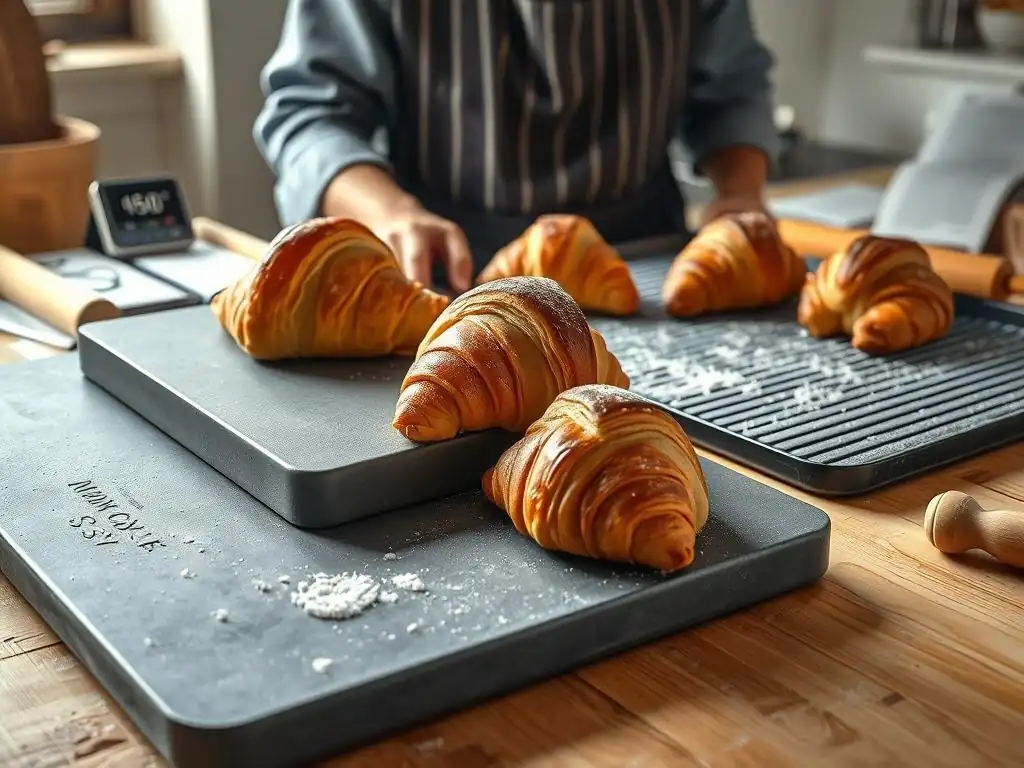
Baking steels excel in both heat retention and, more significantly, heat transfer speed compared to baking stones. Steel heats up faster and stores a large amount of energy, releasing it into the dough at a rapid rate. This high thermal conductivity is why steel provides such powerful oven spring. For example, a 3/8" steel preheated to 450°F might transfer heat into the dough at a rate significantly higher than a 1" cordierite stone at the same temperature in the initial minutes of baking.
Baking stones also retain heat well once fully saturated, but their lower thermal conductivity means they transfer that heat more slowly. This can result in a slightly gentler bake from the bottom. While both surfaces provide superior heat retention compared to a standard baking sheet, the difference in heat transfer rate is a key factor in the resulting crust and crumb structure, with steel generally promoting a faster, more dramatic rise.
Impact on Crust and Texture
The difference in heat transfer directly impacts the croissant's crust and interior texture. A baking steel, with its intense, rapid heat transfer, tends to produce a very crisp, well-browned bottom crust and can contribute to a more open, airy interior crumb due to the strong initial oven spring. The rapid cooking of the base ensures it doesn't remain doughy.
A baking stone, with its slightly slower and more even heat transfer, can also produce a wonderfully crisp bottom crust, though perhaps not as intensely browned as with steel. The porous nature might subtly affect steam distribution around the base. Both surfaces significantly outperform baking sheets in achieving a desirable bottom crust and promoting flakiness compared to a standard baking sheet.
Ease of Use and Maintenance
In terms of ease of use, baking steels are generally more forgiving. They are nearly indestructible and resistant to cracking from thermal shock. Cleaning is typically just scraping off debris and wiping down, though they require seasoning to prevent rust. Their weight can be a disadvantage when handling.
Baking stones require more care. They are prone to cracking from sudden temperature changes (like placing a frozen item directly on a very hot stone or washing a hot stone with cold water). They stain easily and can be difficult to clean; often, scraping is the only option, and stains are permanent. Their lighter weight is an advantage when moving them.
Cost Considerations
Cost is a significant factor for many home bakers. Baking stones are typically more budget-friendly, with many good quality stones available in the $30-$60 range depending on size and material. This makes them an accessible entry point for improving baking results.
Baking steels, on the other hand, represent a more significant investment. A quality baking steel can range from $70 to $150 or more, depending on the size and thickness. While the initial cost is higher, their durability means they can last a lifetime, potentially offering better long-term value if used frequently.
Baking Stone Croissant Baking: A Step-by-Step Guide
Key Considerations for Baking Stone Method
Using a baking stone for croissants requires careful preheating. Place the stone in a cold oven on a rack positioned in the lower third or middle, depending on your oven's hot spots and the desired browning balance. Preheat the oven to the temperature specified in your baking stone croissants recipe easy, typically between 375°F and 425°F (190°C - 220°C), and allow the stone to preheat for at least 60 minutes after the oven reaches temperature. This ensures the stone is fully saturated with heat.
Prepare your croissants on parchment paper. When the oven and stone are ready, carefully transfer the parchment with the proofed croissants onto the hot stone using a peel or a flat baking sheet as a temporary slide. This minimizes heat loss from the stone. Bake according to your recipe instructions, rotating the tray if necessary for even browning, though a good stone often reduces the need for rotation.
Baking Steel Croissant Baking: A Step-by-Step Guide
Using a baking steel also starts with proper preheating, though it may take slightly less time than a thick stone. Place the steel on a rack in your oven, usually in the middle or lower third. Preheat the oven to your recipe's specified temperature, often in the range of 400°F to 450°F (200°C - 230°C), and let the steel preheat for 45-60 minutes after the oven reaches temperature. Steel gets hotter and transfers heat more rapidly, which can sometimes mean slightly lower oven temps than a stone are sufficient.
As with the stone, arrange your proofed croissants on parchment paper. Carefully slide the parchment and croissants directly onto the hot steel using a peel. The rapid heat transfer from the steel will immediately begin the oven spring. Monitor the croissants closely as they may bake slightly faster on steel due to the intense heat. This method makes achieving a crisp bottom crust on your baking stone croissants recipe easy more reliable.
Key Considerations for Baking Steel Method
Because steel transfers heat so efficiently, it's important to ensure your croissants are properly proofed before placing them on the hot surface. Under-proofed dough might result in less impressive oven spring even with the steel's help, and the intense heat could set the structure before it has fully expanded. Conversely, over-proofed dough can collapse.
Monitor the bottom crust towards the end of the baking time, as the intense heat from the steel can potentially lead to faster browning or burning compared to a stone. If the bottoms are browning too quickly but the tops aren't ready, you can try moving the rack higher or placing a second baking sheet underneath the steel for the last few minutes, though ideally, the steel is on the lowest effective rack for maximum bottom heat transfer.
Troubleshooting Common Croissant Baking Issues
Addressing Insufficient Rise
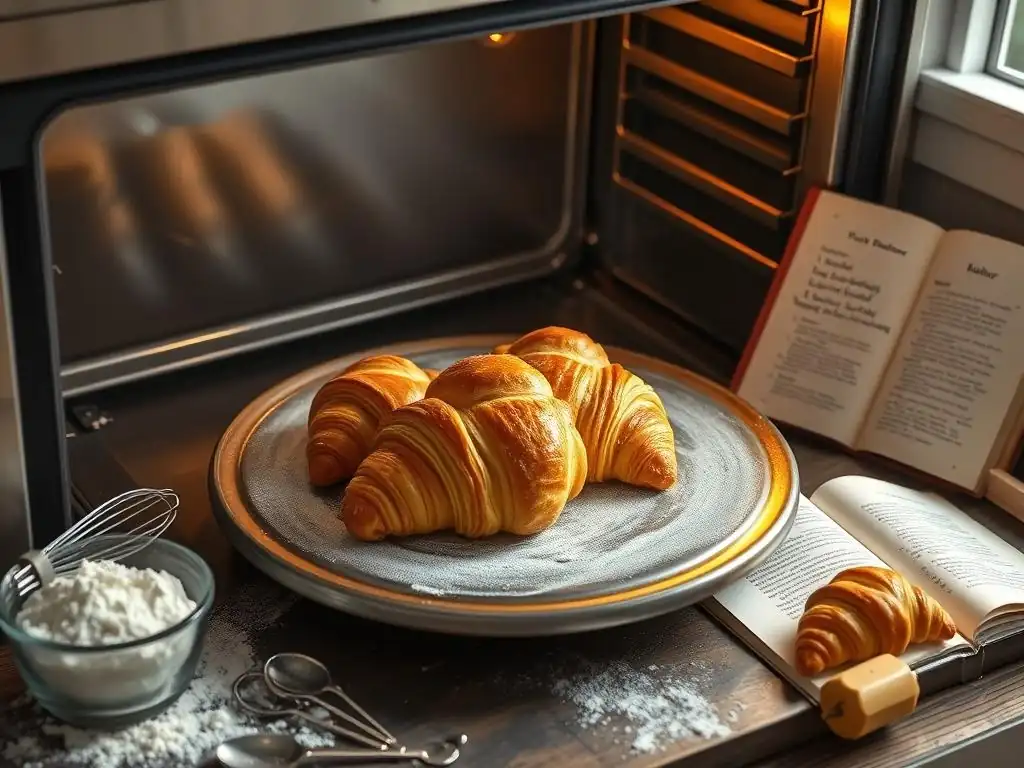
Insufficient rise, or poor oven spring, is a common issue even when using a baking stone or steel. This can be caused by several factors:
- Under-proofing: The dough didn't have enough time or warmth to develop sufficient gas before baking. Ensure your proofing environment is warm (around 75-80°F or 24-27°C) and allow adequate time until the croissants are visibly puffy and jiggle slightly when gently nudged.
- Insufficient Oven/Surface Temperature: If your baking stone or steel isn't fully preheated, it won't deliver the necessary thermal shock. Always preheat for the recommended time (60+ mins for stone, 45-60 mins for steel) after the oven reaches temperature. Calibrating your oven thermometer can also help ensure accuracy.
Another factor can be the internal dough temperature when it hits the hot surface. Cold dough hitting a hot surface creates more steam pressure. Ensure your proofed croissants are not overly warm before baking; slightly chilled proofed croissants can actually benefit from the intense heat transfer, promoting better spring. Also, double-check that your oven temperature is correct using an independent thermometer placed near the baking surface.
Resolving Dense or Doughy Texture
A dense or doughy interior often indicates that the croissants didn't bake through properly or didn't achieve sufficient oven spring to create an open crumb. This relates closely to insufficient rise and heat transfer. Ensure your baking surface is adequately preheated and that the oven temperature is correct throughout the bake. Dropping the temperature too soon after the initial spring can hinder the final cooking.
Overworking the dough during lamination or using butter that was too soft can also lead to dense spots where layers haven't separated properly. The intense heat from a stone or steel helps mitigate some lamination imperfections by promoting strong steam expansion, but proper technique is still crucial. If the exterior is browning quickly but the interior is still doughy, try reducing the oven temperature slightly and extending the baking time to allow the inside to catch up without burning the outside.
Preventing Bottom Burning
While a crisp bottom is desirable, a burnt bottom is not. This usually happens when the baking surface is too hot or the croissants are left on the surface for too long relative to the oven's ambient temperature. Ensure your oven temperature is accurate, especially near the surface. If using a baking steel, which transfers heat very intensely, you might need to use a slightly lower oven temperature than you would with a stone or a standard baking sheet, or place the rack higher.
If bottoms consistently burn before the tops are done, try placing a second, empty baking sheet on the rack below your stone or steel. This can help shield the bottom slightly from the radiant heat. Alternatively, use a thicker parchment paper or even a thin silicone mat (ensure it's rated for high heat) between the croissants and the surface for the last few minutes of baking, although this might slightly impact the crispness.
Achieving Even Baking
Uneven baking can result in some croissants being perfectly golden while others are pale or over-browned. While a good baking stone or steel helps distribute heat evenly across its surface, unevenness can still occur due to oven hot spots or if croissants are placed too close together, obstructing airflow. Ensure there is adequate space between croissants on the parchment paper to allow heat to circulate around each pastry.
If your oven has known hot spots, you may need to rotate the parchment paper on the baking surface halfway through the baking time. Positioning the baking stone or steel in the correct part of your oven (often the middle or lower third) is also crucial. Experiment with rack placement to find the position that yields the most even results for your specific oven and baking surface combination.
Advanced Techniques for Baking Stone or Steel
Optimizing Preheating
To truly optimize the performance of your baking stone or steel, don't just wait for the oven's preheating indicator to signal readiness. That light only indicates the air temperature has reached the setting, not that the thermal mass of your stone or steel is fully saturated. For most stones (especially 3/4" or 1" thick) and steels (1/2" thick), preheating for a full 60 minutes after the oven signals readiness at your target temperature (e.g., 425°F or 220°C) is recommended. Thinner steels (1/4" or 3/8") might be ready in 45 minutes.
For maximum effect, some bakers preheat their stone or steel at the highest oven temperature (e.g., 500°F or 260°C) for the last 15-20 minutes of the preheat cycle, then reduce the temperature to the baking temperature just before loading the croissants. This supercharges the surface heat for the initial spring. However, this requires careful monitoring to avoid burning, especially with a baking steel, and is best attempted once you are comfortable with your equipment and baking stone croissants recipe easy.
Utilizing Steam for Enhanced Rise
Introducing steam at the beginning of the bake is a classic technique for bread, but it can also benefit croissants baked on a stone or steel. Steam keeps the exterior crust pliable longer, allowing the dough to expand more fully before the crust sets. While the moisture from the dough itself contributes, actively adding steam can boost oven spring, particularly in dry oven environments.
One common method is to place a heatproof pan (like a cast iron skillet) on the rack below your baking surface during preheating. Just before loading the croissants, carefully pour a cup of boiling water into the hot pan. This creates a burst of steam. Be extremely cautious when doing this to avoid burns. The steam is usually vented after the first 10-15 minutes of baking by opening the oven door briefly to allow the crust to crisp up.
Ingredient Experimentation
While the baking surface is key, the ingredients and technique in your baking stone croissants recipe easy also matter. Experimenting with different types of butter (high-fat European butter is preferred for its plasticity and flavor) and flours (bread flour for structure, or a blend) can impact the final texture and how the dough behaves on a hot surface. The hydration level of the dough also plays a role; a slightly higher hydration might benefit more from the intense heat of a steel, promoting steam conversion.
Consider the temperature of your dough and butter during lamination and proofing. Keeping the butter cold and firm during folding is crucial for creating distinct layers. The final proofing temperature and time also significantly impact the dough's readiness for the hot surface. Slight adjustments to these variables can fine-tune how your croissants perform when baked on a stone or steel, leading to even better results.
Conclusion: Achieving Croissant Perfection
Choosing the Right Surface for Your Needs
Deciding between a baking stone and a baking steel for your croissant journey ultimately depends on your priorities and budget. If you're looking for an accessible, effective tool that provides even heat and helps manage moisture, a baking stone is an excellent choice. It will significantly improve results compared to a standard sheet pan and is less expensive.
If you prioritize maximum oven spring, the crispiest possible bottom crust, and unparalleled durability, a baking steel is likely worth the higher investment. Its rapid, intense heat transfer is hard to beat for achieving dramatic puff. Both surfaces represent a significant upgrade for homemade croissants, transforming a challenging bake into a more consistently rewarding experience. Many bakers find a baking stone croissants recipe easy becomes truly achievable with one of these tools.
Enjoying Homemade Croissants
Regardless of whether you choose a baking stone or a baking steel, mastering the art of croissants at home is a rewarding endeavor. The journey involves understanding the dough, the lamination process, and crucially, how to harness heat effectively. With the help of a high-quality baking surface, you can overcome common hurdles and consistently produce flaky, golden, and delicious croissants right from your own oven.
So, preheat your chosen surface, shape your perfectly proofed dough, and get ready to experience the magic of intense heat transforming simple ingredients into bakery-worthy pastries. The aroma filling your kitchen will be your reward, and the taste of a warm, flaky homemade croissant baked on your stone or steel will be truly unforgettable. Enjoy the process and the delicious results!
Frequently Asked Questions
What makes using a baking stone or steel beneficial for croissants?
Using a baking stone or steel provides more even heat distribution and helps maintain a consistent temperature. This promotes a crispier, flakier crust on your croissants.
Can I use a baking stone or steel for any croissant recipe?
Yes, you can adapt most croissant recipes to use a baking stone or steel. You may need to adjust the baking time slightly, as the stone/steel can bake the croissants faster.
Is there a significant difference between using a baking stone versus baking steel for croissants?
While both improve heat retention, baking steel generally heats up and transfers heat more quickly than a baking stone. This can result in a slightly crispier crust, but requires careful monitoring to prevent burning.
How do I preheat a baking stone or steel for baking croissants?
Place the stone or steel in your oven and preheat it to the recipe's required temperature for at least 30-60 minutes. This ensures it's fully heated and ready to transfer heat efficiently to the croissants.
What type of baking stone or steel is recommended for baking croissants?
A smooth, flat baking stone or steel is ideal. Avoid porous stones as they can absorb moisture and impact the croissant's texture. A thicker steel plate will retain heat better.
Final Reflection: The Transformative Power of a Simple Stone
The journey to the perfect croissant is often paved with frustration, but as this article has shown, a baking stone or steel can be the key ingredient to unlocking flaky, golden-brown perfection. This isn't just about achieving a superior texture; it's about understanding the fundamental principles of heat transfer and how they impact the final product, making even an easy recipe yield extraordinary results. The seemingly small addition of a baking stone elevates the entire baking experience, transforming a potentially challenging process into one of rewarding mastery.
The impact of this simple tool extends beyond just croissants; it speaks to the power of mindful attention to detail in any culinary pursuit. The even heat distribution provided by a baking stone mirrors the careful precision needed in all aspects of baking, from measuring ingredients to monitoring oven temperature. This meticulous approach, often overlooked in the rush of daily life, is what truly elevates a recipe from good to exceptional. As Julia Child famously said, Find something you're passionate about and keep tremendously interested in it.
This passion, coupled with the right tools, can unlock incredible results.
Now, it's your turn. Consider how the principles discussed here – the importance of even heat distribution, the impact of a consistent oven environment, and the transformative power of the right equipment – can be applied to other areas of your life. Don't just bake croissants; bake your dreams. Experiment, refine your techniques, and embrace the journey of culinary exploration. The perfect croissant, and perhaps even the perfect you, awaits.
Unleash Your Inner Boulanger: Perfect Croissants Await!
Thanks for taking the time to elevate your croissant game! You've now unlocked the secrets to achieving that coveted flaky, golden-brown perfection. Ready to put your newfound knowledge into practice?
- Bake a batch of croissants using your baking stone or steel. This is the best way to truly experience the difference! Note the improved texture and crispness.
- Share your croissant creations on social media – tag us @BakeWithEase so we can admire your baking prowess!
- Explore our other recipes for perfecting classic French pastries – discover how to elevate your baking skills even further.
What unique ingredient or technique will you try next to perfect your croissants?