
Level Up Your Measuring Station: Organizing Tools for Precision and Speed

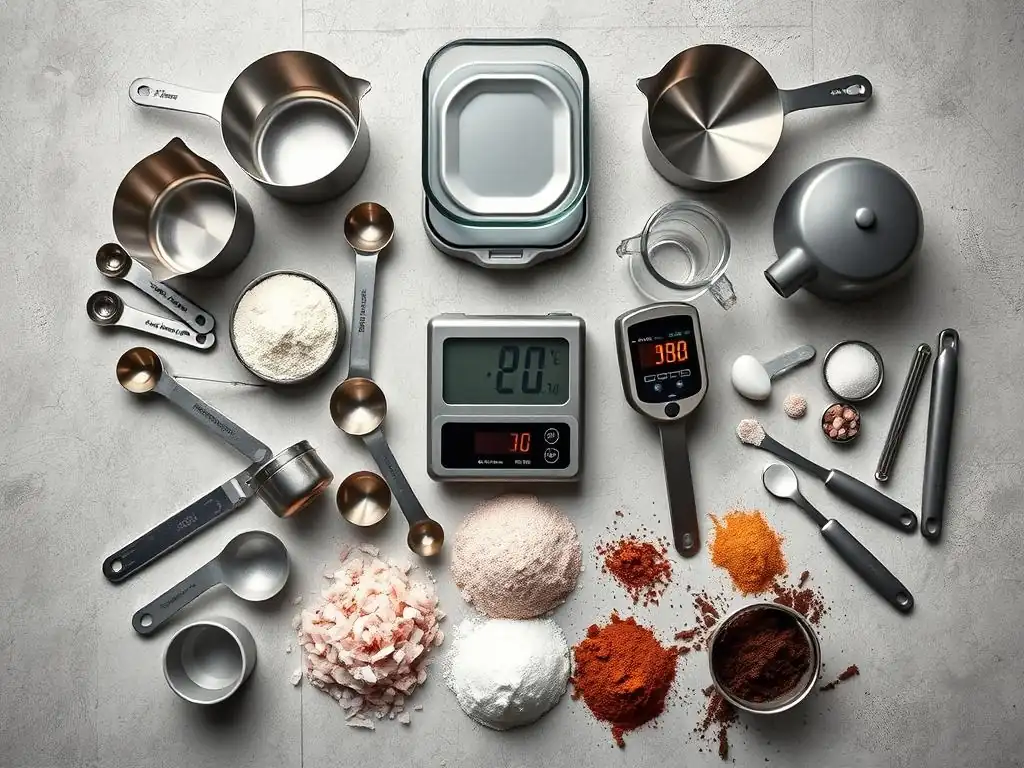
Welcome to BakeWithEase, your trusted companion on your baking journey!
Ever wondered how to truly unlock consistent, flawless results in your baking? It all starts with the right tools and a well-organized space. This article dives deep into the world of precise baking measuring tools, uncovering not just what to use, but how to organize them for maximum efficiency and accuracy. Ready to transform your baking from good to extraordinary? Let's get started!
- Introduction: The Importance of a Well-Organized Baking Measuring Station for Baking Success
- Section 1: Assessing Your Current Baking Measuring Tool Organization
- Section 2: Essential Tools for a Streamlined Baking Measuring Station
-
Section 3: Effective Strategies for Organizing Your Precise Baking Measuring Tools
- Grouping by Type: Cups, Spoons, Scales, and Accessories
- Utilizing Drawer Organizers for Measuring Spoons and Cups
- Vertical Storage Solutions: Maximizing Counter Space for Measuring Cups
- Wall-Mounted Options: Hanging Measuring Spoons and Cups
- Designated Scale Storage: Protecting and Accessing Your Digital Scale
- Section 4: Maximizing Speed and Efficiency in Your Baking Process
- Section 5: Maintaining Your Organized Baking Measuring Station
- Conclusion: The Sweet Rewards of a Well-Organized Baking Measuring Station
-
Frequently Asked Questions
- What are the essential precise baking measuring tools for achieving consistent results?
- Why is using precise baking measuring tools more important than just eyeballing ingredients?
- How do I properly clean and maintain my precise baking measuring tools to ensure longevity?
- What are some tips for organizing my precise baking measuring tools for quick and easy access?
- Where can I find reliable precise baking measuring tools, and what features should I look for?
- Final Reflection: The Sweet Science of Precision in Baking
- Unleash Your Inner Baking Maestro: Elevate Your Measuring Game!
Introduction: The Importance of a Well-Organized Baking Measuring Station for Baking Success
Why Precise Measurements Matter in Baking
Baking is often described as a science, and at its core, successful results hinge on precise measurements. Unlike cooking, where you can often adjust ingredients by taste, baking relies on chemical reactions that require specific ratios of ingredients. Even slight deviations in the amount of flour, sugar, or leavening can drastically alter the texture, rise, and flavor of your final product. Imagine a cookie recipe calling for 1 teaspoon of baking soda – accidentally adding 1 tablespoon could lead to a bitter, overly spread cookie with a weird texture, while too little might result in a dense, flat disc.
This need for accuracy is why having reliable and easily accessible precise baking measuring tools is non-negotiable for consistent results. Whether you're aiming for perfectly fluffy cakes, crusty artisan bread, or delicate pastries, using the correct quantities ensures that the chemical reactions occur as intended. It's the difference between a perfectly risen loaf and a brick, or a tender scone and a hockey puck. Investing time in organizing your measuring station directly contributes to your baking consistency and reduces the likelihood of frustrating failures, making the whole process more enjoyable and rewarding.
The Frustration of a Disorganized Measuring Tool Setup
We've all been there: you're in the middle of measuring ingredients, flour dust is settling, and you can't find the 1/2 teaspoon measure you just used. Or perhaps your measuring cups are tangled together in a drawer, requiring a frustrating minute of jiggling to separate the 1/3 cup from the 1/4 cup.
This disorganization doesn't just waste time; it increases the chances of measurement errors when you're rushing or distracted. Picture needing 175 grams of flour for a recipe, but your scale is buried under a pile of mixing bowls, forcing you to default to less accurate volume measurement with a cup you had to dig out.
A chaotic measuring station adds unnecessary stress to the baking process. It can interrupt your flow, make you second-guess your measurements, and slow you down considerably. Trying to locate specific precise baking measuring tools when you need them interrupts the momentum of baking, which ideally should be a smooth, almost rhythmic activity. Addressing this disorganization isn't just about tidiness; it's about creating an efficient workspace that supports accuracy and makes baking a more relaxed and enjoyable experience.
Section 1: Assessing Your Current Baking Measuring Tool Organization
Taking Stock: Inventory of Your Measuring Cups, Spoons, and Scales
The first step to creating an organized system for your precise baking measuring tools is understanding what you currently have. Pull out all your measuring cups, both dry and liquid, your full collection of measuring spoons, and any kitchen scales you own. Lay them out on a counter or table. Don't forget any specialized measuring tools like scoops, leveling tools, or even timers that are part of your measurement process.
As you inventory your tools, take note of their condition. Are any bent, cracked, or missing markings? Do you have multiple sets that might be redundant or incomplete?
This is also a good time to identify any gaps – perhaps you only have a basic set of spoons and could benefit from a set with in-between sizes, or maybe you've been relying solely on cups and realize a digital scale is a necessary upgrade for truly precise baking measurement. Documenting what you have is the foundation for deciding what to keep, what to discard, and what you might need to acquire.
Identifying Problem Areas: Common Measuring Station Organizational Issues
Once you have your tools laid out, think about how you currently store and access them. Where do you usually measure ingredients? Is it near your mixing area? Is there enough counter space? Common problems include tools being scattered across different drawers, cabinets, or even rooms, leading to wasted time searching. Another frequent issue is poor storage methods – tossing everything into a deep drawer where smaller items get lost, or stacking cups precariously where they can fall.
Consider the workflow of your baking. Do you find yourself frequently digging through drawers to find the right size spoon or cup? Is your scale inconveniently located, making you less likely to use it? Perhaps your liquid measuring cups are stored with dry goods, leading to cross-contamination or awkward access. Identifying these specific pain points in your current setup is crucial because your new organization system should directly address and solve these frustrations, making your precise baking measuring tools readily available when and where you need them.
Section 2: Essential Tools for a Streamlined Baking Measuring Station
Must-Have Measuring Cups for Accurate Baking
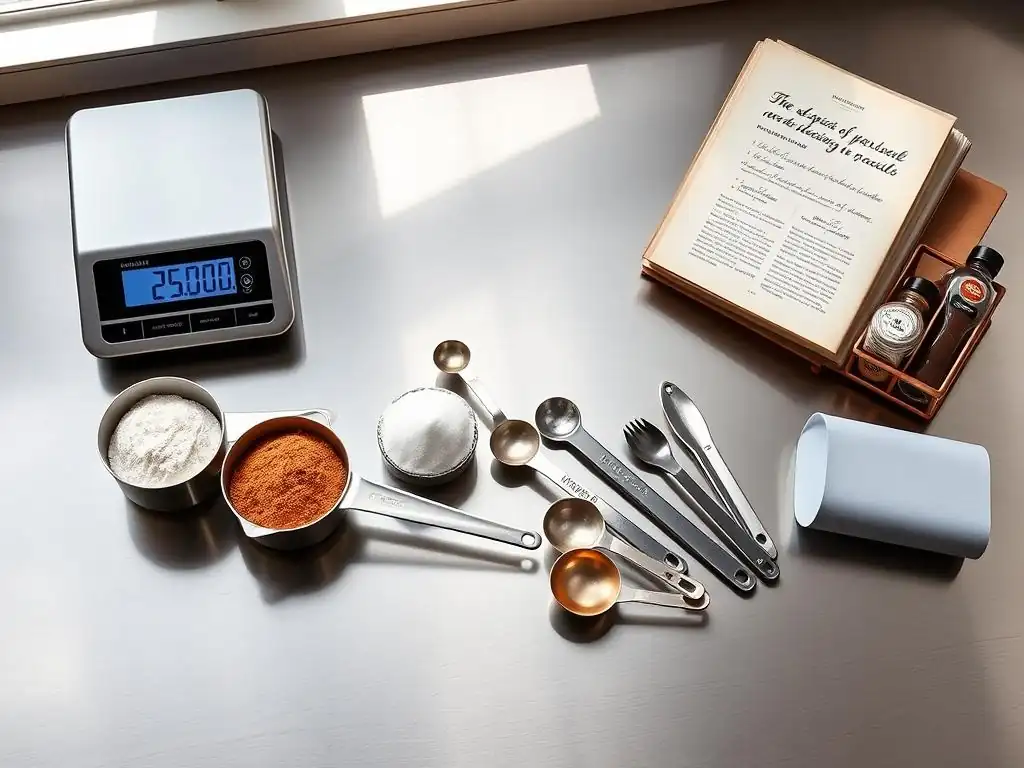
For accurate baking, you generally need two types of measuring cups: dry and liquid. Dry measuring cups, typically made of plastic or metal, are designed to be filled to the brim and then leveled off with a straight edge. They come in standard sizes like 1/4 cup, 1/3 cup, 1/2 cup, and 1 cup.
Having a complete set is essential for volumetric measurements of dry ingredients like flour, sugar, and cocoa powder. Look for sets where the cup sizes are clearly marked and won't easily wear off, and consider material durability – stainless steel is often preferred for its longevity.
Liquid measuring cups, on the other hand, are usually made of clear glass or plastic with a spout for easy pouring and graduated markings along the side. They typically have extra space above the highest marking to prevent spills and are read at eye level on a flat surface. Standard sizes range from 1 cup up to 4 cups (or 1 liter).
Having at least one 2-cup (500ml) liquid measuring cup is incredibly useful for recipes calling for milk, water, oils, or syrups. The spout and clear markings are designed specifically for the properties of liquids, ensuring you get an accurate reading at the meniscus.
The Importance of Quality Measuring Spoons for Precise Ingredient Measurement
Measuring spoons are indispensable for smaller quantities of both dry and liquid ingredients, particularly potent ones like leavening agents, spices, extracts, and salt. Standard sets usually include 1/4 teaspoon, 1/2 teaspoon, 1 teaspoon, and 1 tablespoon. Just like dry measuring cups, dry ingredients in spoons should be leveled off for accuracy. For liquids, fill the spoon until the surface is slightly domed, taking care not to spill.
Using a quality set of measuring spoons is vital for precise baking measuring tools because the difference between 1/4 teaspoon and 1/2 teaspoon of baking powder can significantly impact a recipe's outcome. Look for spoons that are sturdy, ideally made of metal, with clearly engraved or stamped markings that won't fade. Some sets also offer oval shapes that fit better into spice jars, which is a small but significant convenience. Having a complete set, perhaps even one with 1/8 teaspoon or 2 tablespoon measures, provides greater flexibility and accuracy for a wider range of recipes.
Digital Kitchen Scales: A Game Changer for Precise Baking Measurements
While measuring cups and spoons are standard, a digital kitchen scale is arguably the most important tool for achieving true precision in baking. Measuring by weight (grams or ounces) is far more accurate than measuring by volume (cups or spoons), especially for ingredients like flour, which can vary significantly in weight depending on how it's scooped and packed.
For example, 1 cup of all-purpose flour can weigh anywhere from 120 to 150 grams. A recipe calling for 2 cups could therefore have a 60g variation if measured by volume, but weighing 240 grams (if using a standard 120g/cup conversion) provides consistent accuracy every time.
Digital scales allow you to tare (zero out) the weight of your container, letting you add ingredients directly into your mixing bowl or container for minimal mess and maximum speed. They typically measure in grams, ounces, pounds, and sometimes milliliters.
Look for a scale with a capacity suitable for your needs (many handle up to 5kg or 11lbs, sufficient for most home baking tasks) and readability down to 1 gram or 0.1 ounce. Using a digital scale for your precise baking measuring tools eliminates the guesswork associated with volume and is the secret weapon of professional bakers for achieving consistent, repeatable results.
Other Helpful Tools: Levelers, Scrapers, and Ingredient Containers
Beyond the core measuring cups, spoons, and scales, a few other accessories can significantly enhance your measuring station's efficiency and accuracy. A straight-edged tool, like the back of a knife or a dedicated leveling tool, is essential for sweeping excess dry ingredients off the top of dry measuring cups and spoons to ensure an accurate, level measure. This simple step prevents over-packing and ensures you're getting the precise amount intended by the recipe developer.
Small scrapers or bench scrapers can be useful for scooping ingredients like flour or sugar into measuring cups, or for portioning dough after weighing. Airtight ingredient containers are also invaluable. Storing frequently used dry ingredients like flour, sugar, and oats in clearly labeled containers not only keeps them fresh but also makes them incredibly easy to scoop and measure directly, reducing clutter from bags and boxes. Having these supplementary precise baking measuring tools organized alongside your main collection creates a truly efficient workflow.
Section 3: Effective Strategies for Organizing Your Precise Baking Measuring Tools
Grouping by Type: Cups, Spoons, Scales, and Accessories
One of the most intuitive and effective organization strategies for precise baking measuring tools is grouping items by type. Designate specific areas for your measuring cups, another for your measuring spoons, a dedicated spot for your digital scale, and a place for accessories like levelers or scrapers. This prevents the frustrating rummage through a mixed-up drawer or cabinet.
By keeping all your cups together (perhaps further separated into dry and liquid if you have space), all your spoons together, and so on, you know exactly where to reach for the tool you need at any given moment. This simple act of grouping significantly reduces the time spent searching and keeps your focus on the task of accurate measurement. It's the foundational step for any successful organizational system for your precise baking measuring tools.
Utilizing Drawer Organizers for Measuring Spoons and Cups
Drawers are a common storage location for smaller precise baking measuring tools like spoons and nested dry measuring cups. However, simply tossing them into a drawer results in a jumbled mess. Drawer organizers, typically made of plastic, bamboo, or metal, with various compartments, are incredibly effective for keeping these items sorted. You can find organizers specifically designed for kitchen gadgets, or simply use adjustable dividers.
Dedicate specific slots or sections within the organizer for each size of spoon (1/4 tsp, 1/2 tsp, 1 tsp, 1 tbsp) and each size of dry measuring cup (1/4 cup, 1/3 cup, 1/2 cup, 1 cup). This not only keeps them tidy but makes it immediately obvious if a tool is missing. A well-organized drawer means you can quickly grab the exact 1/2 teaspoon measure you need without fumbling, streamlining the ingredient measurement phase of your baking.
Vertical Storage Solutions: Maximizing Counter Space for Measuring Cups
Counter space is often at a premium in kitchens, but some precise baking measuring tools, like liquid measuring cups or frequently used dry cup sets, might benefit from being stored vertically on the counter or a shelf for easy access. Vertical storage racks or tiered shelves can hold multiple liquid measuring cups, keeping them stable and visible. This is particularly useful if you have several sizes you use regularly.
Alternatively, consider stacking dry measuring cups on a small stand or inside a larger container if they don't nest perfectly or if you want them readily available near your flour and sugar containers. Utilizing vertical space, whether on the counter, within a cabinet using risers, or on shelves, keeps these bulkier items accessible without hogging valuable flat workspace. It's about making your precise baking measuring tools easy to grab without having to open drawers repeatedly.
Wall-Mounted Options: Hanging Measuring Spoons and Cups
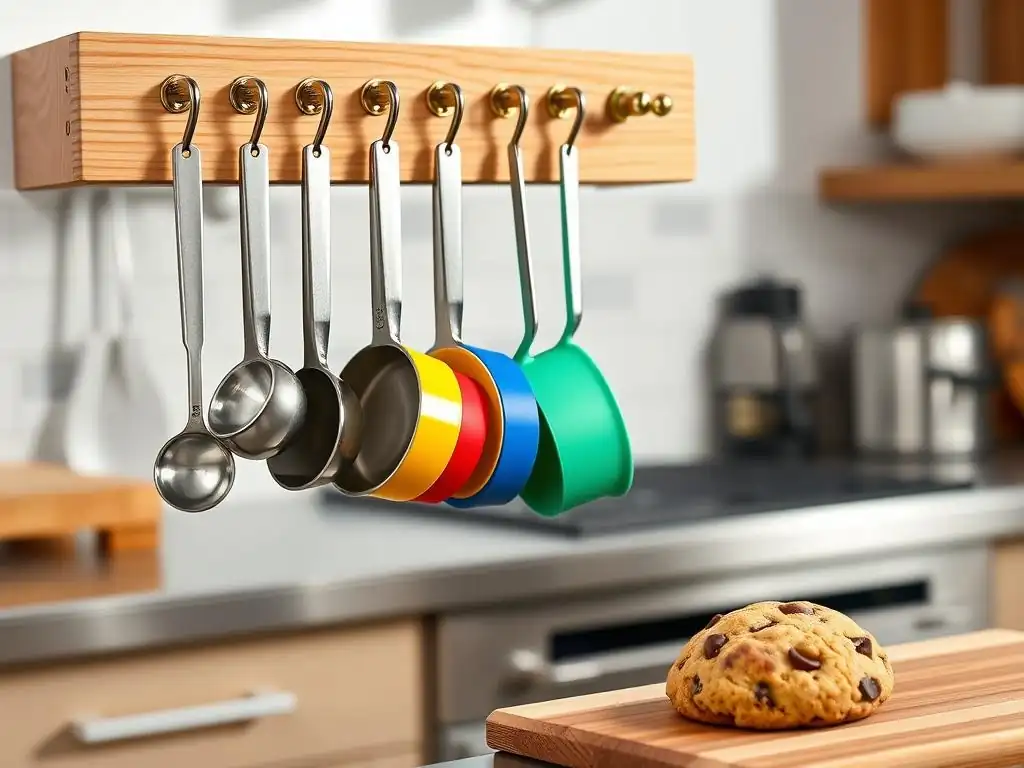
For those with limited drawer or cabinet space, or who simply prefer having their precise baking measuring tools in plain sight for quick access, wall-mounted storage is an excellent option. Magnetic strips or hook racks installed on a backsplash or inside a cabinet door can be used to hang metal measuring spoons and cups. This keeps them untangled and instantly visible.
Small hooks can be screwed into the underside of cabinets to hang nested measuring cups. Ensure the hooks are sturdy enough to hold the weight and that the cups have holes in their handles for hanging. This method frees up drawer space and puts your most frequently used precise baking measuring tools right where you can see and grab them, which can significantly speed up your measuring process. It's a great way to utilize often-overlooked vertical space in your kitchen.
Designated Scale Storage: Protecting and Accessing Your Digital Scale
Your digital kitchen scale, one of your most critical precise baking measuring tools, requires careful storage to maintain its accuracy and ensure its longevity. Avoid storing heavy items on top of it, which can damage the sensor. Find a designated spot where it is easily accessible but protected from spills and physical impact.
This could be a dedicated shelf in a pantry, a specific spot in a shallow drawer where nothing else is piled on top, or even standing it on its side if the design allows, tucked between other items. Some scales come with hooks for wall mounting. The key is consistency – always putting it back in the same spot after use so you know exactly where it is when it's time to weigh ingredients for precise baking measurement. Keep it near your main baking prep area for convenience.
Section 4: Maximizing Speed and Efficiency in Your Baking Process
Labeling Ingredients for Quick Identification
Efficient baking starts before you even pick up your precise baking measuring tools. Clearly labeling your ingredients, especially those stored in opaque containers, saves valuable time and prevents frustrating mix-ups. Imagine reaching for baking soda only to find you've accidentally used baking powder because the containers look similar and aren't labeled.
Use labels on your flour, sugar, salt, baking powder, baking soda, cornstarch, and any other frequently used dry ingredients stored in containers. Simple adhesive labels or even masking tape and a marker work well. Include the ingredient name and perhaps the purchase date to help with freshness rotation. This immediate identification allows you to move quickly and confidently when gathering ingredients, ensuring you grab the right item before you even start measuring with your precise baking measuring tools.
Creating a Baking Workflow: Optimizing Your Measuring and Mixing Sequence
A well-organized measuring station is most effective when integrated into a logical baking workflow. Think about the typical sequence of a recipe: gathering ingredients, measuring dry, measuring wet, combining. Arrange your measuring station and ingredients to support this flow. For instance, keep your dry measuring tools near your dry ingredients (flour, sugar, etc. ), and your liquid measuring tools near your liquids (milk, oil, extracts).
If using a digital scale, position it in a clear workspace where you can easily weigh ingredients directly into bowls or containers. Having your precise baking measuring tools arranged in a way that mirrors your recipe's steps minimizes unnecessary movement and searching. This optimized sequence reduces friction in the process, allowing you to measure and mix more quickly and with less chance of error.
Pre-Measuring Ingredients: Saving Time and Reducing Errors
For complex recipes or when you're short on time, pre-measuring ingredients is a technique that significantly boosts efficiency and accuracy. Before you even start mixing, measure out all the required ingredients using your precise baking measuring tools and place them into small bowls or containers (often called mise en place).
This ensures you have everything ready before you begin the active mixing steps, preventing frantic searching for ingredients or tools mid-process. It also reduces the chance of errors, as you can double-check that you've measured everything correctly before adding it to the mix. While it adds a step at the beginning, having all your precise baking measuring tools and measured ingredients ready makes the actual mixing phase much smoother, faster, and less stressful.
Cleaning as You Go: Maintaining a Tidy Measuring Station
Maintaining a tidy workspace during the baking process is key to efficiency and preventing cross-contamination. As you finish using a precise baking measuring tool – a cup, a spoon, or the scale – give it a quick rinse or wipe down if possible, or place it in a designated area for washing. Don't let used, sticky tools pile up.
Cleaning as you go keeps your measuring station clear, leaving space for the tools you still need and preventing you from accidentally grabbing a used tool for a different ingredient. It also makes the final cleanup much less daunting. A clean, organized measuring station allows you to focus on the task at hand – accurate measurement – rather than navigating clutter.
Section 5: Maintaining Your Organized Baking Measuring Station
Regular Purges: Getting Rid of Unnecessary Measuring Tools
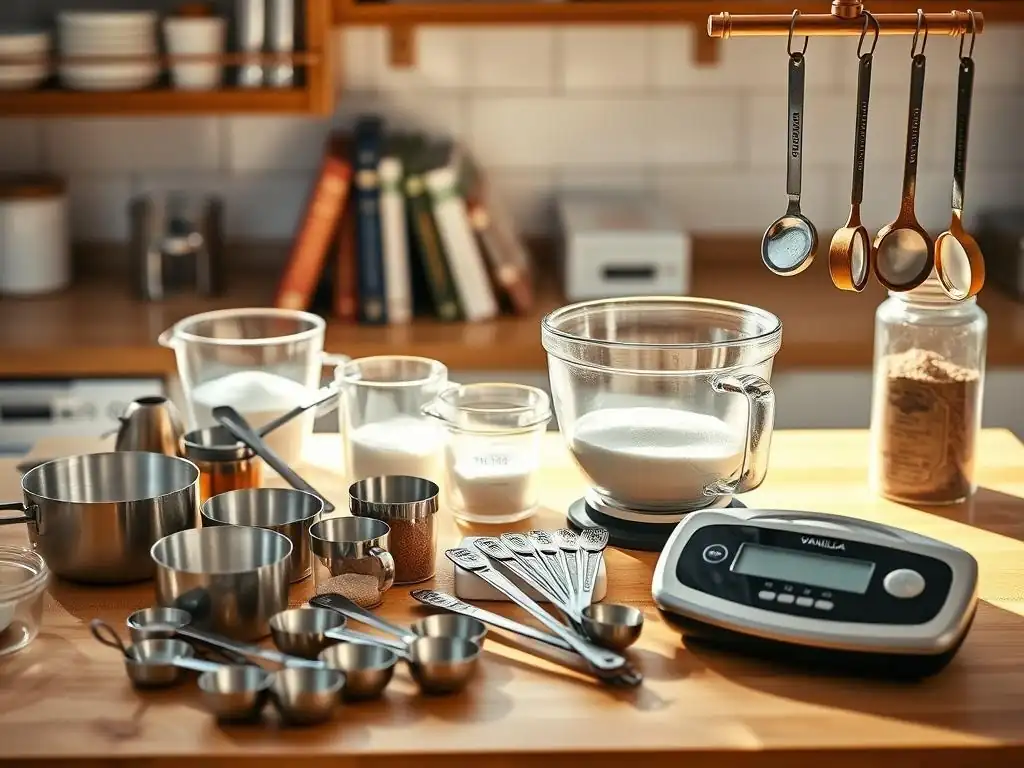
Even the best organization system can become cluttered over time if you accumulate unnecessary items. Schedule periodic purges of your precise baking measuring tools. Do you have multiple identical sets of spoons? Are some cups warped or damaged? Do you own specialty tools you've never actually used?
Go through your collection at least once or twice a year. Discard or donate tools that are redundant, broken, or simply not used. Keeping only the tools you actually need and use frees up storage space and makes it easier to find the precise baking measuring tools you rely on. A streamlined collection is easier to keep organized and maintain.
Deep Cleaning Your Measuring Tools
Beyond the quick rinse during baking, your precise baking measuring tools need regular deep cleaning. Residue from sticky ingredients like honey, molasses, or fats can build up over time, affecting accuracy and hygiene. Check the markings on your cups and spoons to ensure they are free of dried-on gunk that might obscure the measurement lines.
Wash metal and plastic tools in hot, soapy water, paying attention to handles and any crevices where residue can hide. For digital scales, follow the manufacturer's instructions, which usually involve wiping down the surface with a damp cloth, being careful not to let water seep into the electronics. Keeping your precise baking measuring tools clean ensures they remain accurate and hygienic for every baking project.
Restocking Supplies: Ensuring You Always Have What You Need
An organized measuring station isn't just about the tools; it's also about being prepared with the ingredients you'll be measuring. Regularly check your pantry staples – flour, sugar, baking powder, baking soda, salt, etc. – to ensure you have sufficient quantities before starting a recipe.
Running out of a key ingredient mid-measurement is a major disruption. Make a habit of noting when ingredients are running low and add them to your shopping list. Keeping your pantry well-stocked ensures that when you reach for your precise baking measuring tools, you actually have ingredients to measure, allowing for a smooth and uninterrupted baking experience.
Conclusion: The Sweet Rewards of a Well-Organized Baking Measuring Station
Increased Accuracy and Consistency in Your Baking
The primary benefit of leveling up your measuring station and organizing your precise baking measuring tools is the significant improvement in your baking accuracy and consistency. When your tools are easy to find, clean, and properly used (especially incorporating weight measurement with a digital scale), you are far more likely to measure ingredients correctly, down to the last gram or fraction of a teaspoon.
This precision translates directly into more reliable baking results. Your cookies will spread just right, your cakes will rise evenly, and your bread will have the desired texture. You'll experience fewer frustrating failures and more consistent successes, leading to baking that looks and tastes just as intended, batch after batch.
Reduced Stress and Improved Baking Enjoyment
Beyond the technical benefits, an organized measuring station dramatically reduces stress and enhances the sheer enjoyment of baking. No longer will you waste precious minutes hunting for tools or second-guessing your measurements. Your workflow will become smoother, faster, and more intuitive.
With your precise baking measuring tools neatly stored and easily accessible, the process of gathering and measuring ingredients transforms from a potential source of frustration into a calm, efficient step. This allows you to relax, focus on the creative aspects of baking, and truly savor the process from start to finish. Ultimately, a well-organized measuring station makes baking more accurate, more efficient, and significantly more fun.
Frequently Asked Questions
What are the essential precise baking measuring tools for achieving consistent results?
The essential tools include a digital kitchen scale for accurate ingredient weights, a set of measuring cups and spoons for liquids and dry goods, and a liquid measuring cup with clear markings.
Why is using precise baking measuring tools more important than just eyeballing ingredients?
Eyeballing can lead to inconsistencies. Using precise measuring tools ensures that your recipes turn out as intended, especially with sensitive ingredients like leavening agents.
How do I properly clean and maintain my precise baking measuring tools to ensure longevity?
Wash your measuring cups and spoons with warm, soapy water immediately after use. Avoid abrasive cleaners that could scratch the surfaces of delicate measuring tools like digital scales.
What are some tips for organizing my precise baking measuring tools for quick and easy access?
Consider using drawer dividers or a utensil holder to separate your measuring tools. Store them near your primary baking workspace for optimal efficiency.
Where can I find reliable precise baking measuring tools, and what features should I look for?
You can find them at most kitchen supply stores or online. Look for tools made of durable materials with clear, easy-to-read markings for accurate measurements.
Final Reflection: The Sweet Science of Precision in Baking
The pursuit of perfectly measured ingredients isn't just about following a recipe; it's about unlocking the potential for culinary artistry. A precisely measured teaspoon of baking powder can be the difference between a flat, disappointing cake and a light, airy masterpiece. This article explored the crucial role of organized, high-quality measuring tools in achieving baking success, a pursuit relevant to both seasoned bakers and enthusiastic beginners alike.
The impact of precise measurement extends far beyond the kitchen; it speaks to a broader cultural appreciation for detail and craftsmanship. We live in a world increasingly focused on efficiency and instant gratification, yet the meticulous process of baking, demanding accuracy and patience, offers a powerful counterpoint. The difference between ordinary and extraordinary is that little extra.
This quote, while applicable to many aspects of life, perfectly encapsulates the transformative power of precision in baking. The act of carefully measuring ingredients becomes a meditative practice, a connection to a tradition that values both skill and dedication.
Now, consider your own baking space. What tools are within easy reach? Are they well-maintained and easy to use? Take a moment to assess your measuring station. By investing in quality tools and organizing them effectively, you're not just improving your baking; you're investing in a more mindful and rewarding culinary experience. Embrace the sweet science of precision, and discover the joy of consistently achieving baking perfection.
Unleash Your Inner Baking Maestro: Elevate Your Measuring Game!
Thanks for taking the time to explore smarter ways to measure your baking ingredients! We hope you discovered some valuable tips to boost your baking precision and efficiency. Ready to put your new knowledge into practice?
- Master the art of precise measuring: Start by organizing your measuring tools – dedicate a specific drawer or shelf just for them. This alone will drastically improve your workflow.
- Share your newly organized station: Show off your improved setup on social media using #BakeWithEaseOrganized and inspire others!
- Try out a new recipe, this time focusing on those detailed measuring techniques! What are you baking next?
Now, what's your favorite baking tool, and how do you keep it organized? Let's chat in the comments below!