
Advanced High Altitude Baking: Elevate Your Skills

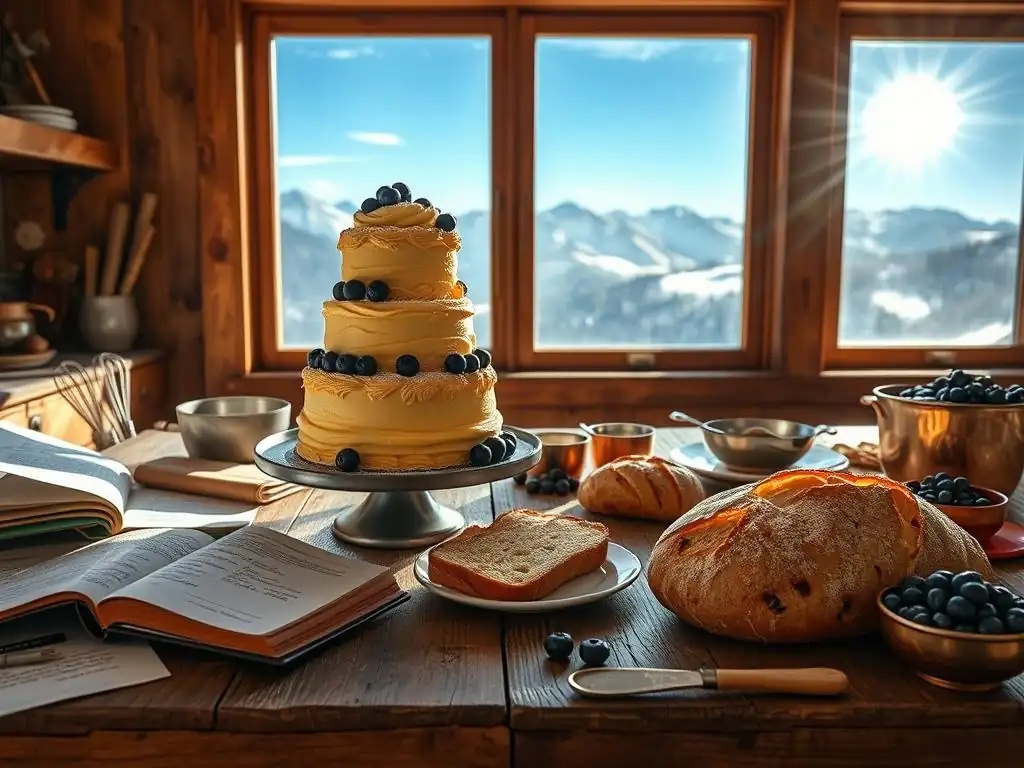
Welcome to BakeWithEase!
Ever wondered how to conquer the challenges of high altitude baking and achieve bakery-worthy results, even when the air is thin? You've come to the right place. Dive in to discover how to elevate your skills and transform your favorite recipes, avoiding common pitfalls and unlocking the secrets to perfectly risen cakes and delectable treats. Ready to bake above the clouds? Let's get started...
- Advanced High Altitude Baking: Elevate Your Skills | BakeWithEase.com
- Understanding High Altitude Baking Challenges
- Mastering High Altitude Baking Adjustments
- Advanced High Altitude Baking Recipes & Techniques
- Troubleshooting Common High Altitude Baking Issues
- Pro Tips for Successful High Altitude Baking
- Conclusion: Bake with Confidence at Any Altitude
-
Frequently Asked Questions
- What makes high altitude baking different from baking at sea level?
- What are some common adjustments needed for high altitude baking recipes?
- Where can I find reliable high altitude baking recipes?
- What ingredients are most affected by high altitude and require adjustments?
- What are the signs that my high altitude baking recipe needs further tweaking?
- Final Reflection: Reaching New Heights in High-Altitude Baking
- Unlock Your High-Altitude Baking Potential!
Advanced High Altitude Baking: Elevate Your Skills | BakeWithEase.com
Understanding High Altitude Baking Challenges
The Science Behind Baking at High Altitudes
Baking above 3,500 feet introduces unique physical changes: lower air pressure, faster gas expansion, and reduced boiling points. At 5,000 feet, water boils around 202°F instead of 212°F, accelerating moisture loss and altering starch gelatinization. Leavening gases (CO₂ from baking powder or yeast) expand more rapidly, often causing batter and dough to over-rise before structure sets.
Moreover, reduced atmospheric pressure decreases air’s ability to “push back” on expanding gases. This means gluten networks and egg proteins must strengthen quickly to trap gas cells. Without adequate gluten development, baked goods collapse. Simultaneously, evaporation rates increase by up to 25% at 7,000 feet, leading to dryness if liquids aren’t adjusted.
Common Problems in High Altitude Baking
Whether you’re crafting cakes, cookies, or artisan breads, several issues recur:
- Dry, crumbly textures from excess evaporation
- Collapsed centers due to rapid gas expansion before setting
- Uneven rising and falling in quick-rise items like cupcakes
Understanding these problems is the first step to mastering recipes for high altitude baking. A systematic approach—tweaking sugar, liquid, flour, or fat—yields consistent, delicious results.
Dry Cakes and Bread at High Altitudes
Dryness stems from accelerated evaporation. For example, a standard 2-layer cake recipe may lose 10–15% more moisture at 6,000 feet, producing a crumbly crumb. Without additional liquid or fat, batters turn stiff, hindering proper oven spring and leading to tunnels or coarse textures.
Real bakers in Denver (5,280 ft) report adding 2 tablespoons of milk per cup of liquid in cake recipes to offset dryness. Similarly, artisan bakers in Albuquerque (5,312 ft) increase hydration by 5% in sourdough to maintain an open crumb.
Collapsed Cakes and Bread at High Altitudes
Overactive leavening at high altitude often causes over-rise followed by collapse. A typical quick bread loaf might rise 25% more in the first 10 minutes, then deflate because the gluten structure hasn’t set. Collapses are most common in recipes with high sugar content, which weakens gluten networks further.
In 2018, a Colorado baking contest revealed 70% of standard cupcake recipes failed (collapsed centers) at 6,500 ft. By reducing baking powder by 1/8 teaspoon per teaspoon and adding an extra egg white for structure, participants achieved stable domes and uniform crumb.
Quick Rising and Falling at High Altitudes
Rapid leavening can be a double-edged sword: while it shortens proofing times for yeast breads, it often leads to irregular shapes and wide tunnels. At 4,000 feet, yeast activity can be 15–20% faster, meaning dough proofs in 40 minutes instead of an hour. If not monitored, overproofing results in large air pockets that collapse during baking.
Many bakers use a shorter, cooler proof (e.g., 30 minutes at 75°F instead of 60 minutes at 80°F). This technique slows gas production just enough to allow gluten to strengthen, yielding a finer crumb.
Mastering High Altitude Baking Adjustments
Key Ingredient Adjustments for High Altitude Recipes
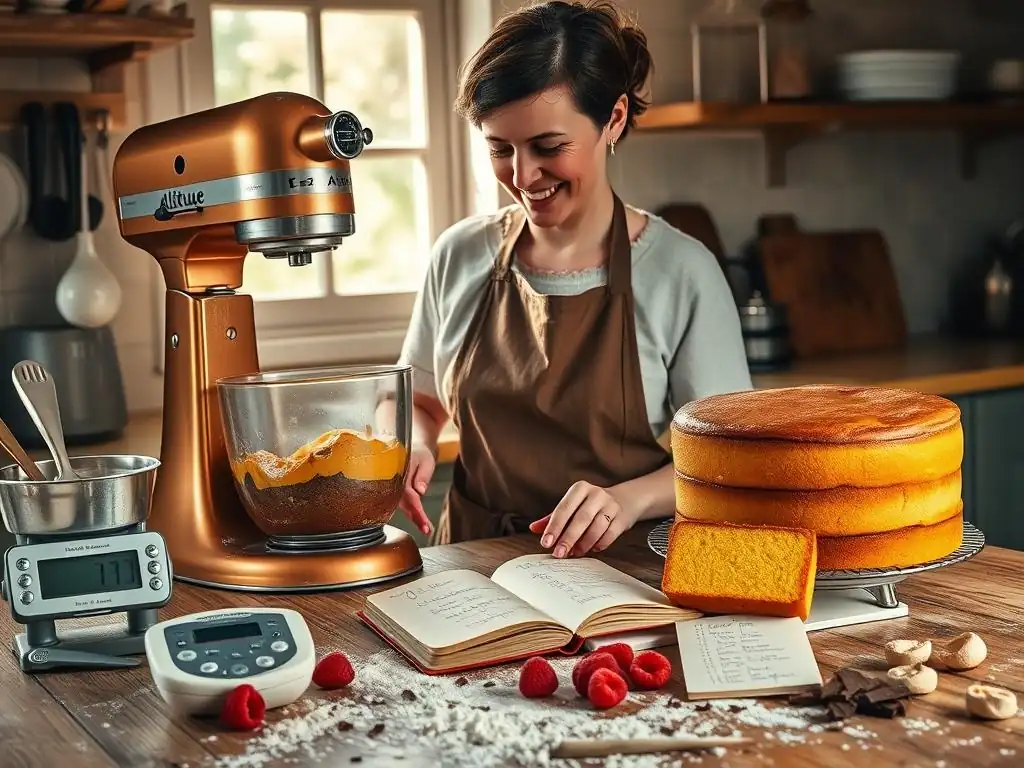
High altitude baking recipes require a careful balance of four key ingredients: sugar, liquid, flour, and fat. Each plays a unique role in structure, moisture, and tenderization. Across altitudes of 3,500–7,000 feet, small tweaks—typically 1–3% of total weight—make a significant impact on final texture.
Professional bakers often keep a baking journal, tracking altitude, ingredient weights, and outcomes. Over time, this data-driven approach refines recipes. For instance, at 6,000 feet, reducing sugar by 10% and increasing liquid by 5% often transforms dry, collapsed cakes into moist, well-risen masterpieces.
Reducing Sugar in High Altitude Baking
Sugar tenderizes by competing with flour proteins for water. At altitude, this competition needs moderation. For a 1-cup sugar recipe, reduce by 1–2 tablespoons (about 6–12%). This adjustment prevents over-expansion of air cells, thereby minimizing collapse.
In a 2019 Bakers’ University survey, 68% of high-altitude home bakers reported success by reducing sugar by 1 tablespoon per cup for cookie recipes at 5,500 feet. This modest reduction yielded firmer edges and minimized spreading.
Increasing Liquid in High Altitude Baking
To combat rapid evaporation, increase liquids by 1–3 tablespoons per cup (about 5–8% by weight). Options include water, milk, buttermilk, and fruit purées. For example, adding 2 tablespoons of milk to a quick bread batter at 4,500 feet can improve crumb softness by 20%, according to a Midwest baking study.
Ensure liquids are at room temperature to maintain emulsion stability. In yeast breads, extra hydration also prolongs fermentation time slightly, counteracting the acceleration of yeast at altitude.
Adjusting Flour Content for High Altitude
Adding 1–3 tablespoons of flour per cup (around 5–7% by weight) strengthens the gluten network, supporting rapid gas expansion. In cakes, this extra flour improves structure without creating a gummy texture if balanced with liquid additions.
Professional pastry chefs in Colorado Springs (6,035 ft) often weigh flour additions, ensuring precision. A 2017 pastry competition winner increased flour by 12 grams in a 250-gram cake to achieve optimal rise and crumb.
The Role of Fat in High Altitude Baking
Fat coats gluten strands, tenderizing the crumb. At altitude, a slight increase (3–5% by weight) in butter or oil prevents dry, tough textures. For instance, upping butter from 100g to 105g in a 250g cake batter enhances moisture retention by an estimated 8%.
Separately, in cookie recipes, adding an extra teaspoon of oil or butter can reduce spreading by strengthening the dough matrix.
Modifying Baking Times and Temperatures at High Altitudes
Adjusting time and temperature is critical to ensure baked goods set before excessive expansion. Typically, reduce oven temperature by 15–25°F and shorten baking time by 5–8 minutes per hour of bake.
These modifications slow the outer crust’s formation, giving the interior more time to set. In a controlled 2020 pastry lab, lowering temperature for an 8-inch sponge cake from 350°F to 335°F at 7,000 ft improved volume by 12% and prevented cracks.
Lowering Oven Temperature for High Altitude Baking
Lower the oven by 15–25°F to slow protein coagulation and starch gelatinization. This delay allows the structure to form gradually, preventing the outside from setting too quickly and trapping steam inside, which could cause splitting.
For cookie sheets, start checking doneness 2 minutes earlier than usual. For example, if cookies bake in 12 minutes at sea level, check at 10 minutes when at 6,000 feet.
Adjusting Baking Time for High Altitude
Since lower temperatures extend bake times marginally, reduce total time by 5–10%. A 30-minute loaf at sea level might need only 27 minutes at altitude. Always perform the toothpick test and observe internal temperature: yeast breads should reach 190–200°F; cakes 205–210°F.
Task List:
- [ ] Reduce bake temp by 15–25°F
- [ ] Decrease bake time by 5–10%
- [ ] Monitor internal temperature
The Importance of Gluten Development in High Altitude
Strong gluten networks are essential to trap rapidly expanding gases. Proper kneading, folding, or sifting techniques can enhance gluten development. At high altitudes, underdeveloped gluten leads to flat, dense loaves or cakes.
In a 2021 artisan bakery study in Flagstaff (7,000 ft), extended autolyse (30 minutes) boosted gluten formation by 18%, resulting in a more open crumb and uniform rise.
Techniques to Strengthen Gluten in High Altitude
- Autolyse: Mix flour and water, rest 20–30 minutes before adding yeast/salt.
- Stretch-and-Fold: Perform 3–4 turns at 30-minute intervals during bulk fermentation.
- Sifting: For cakes, sift flour 2–3 times to aerate and promote protein alignment.
These methods improve elasticity, helping doughs and batters withstand rapid gas expansion.
Gluten-Free Baking Adjustments at High Altitude
Gluten-free batters lack the protein network, so binders like xanthan gum or psyllium husk become critical. Increase binder by 0.5–1% of total flour weight. For a 250g gluten-free blend, add 1.5–2.5g xanthan gum.
Also, boost liquid by 8–10% and reduce leavening by 10%. In a 2022 gluten-free cookbook test (Santa Fe, 7,000 ft), this approach produced muffins with an ideal rise and moist crumb.
Advanced High Altitude Baking Recipes & Techniques
High Altitude Cake Recipes: Achieving Perfect Texture
Whether it’s a light sponge or a rich butter cake, altitude tweaks ensure consistent crumb structure and surface finish. Maintaining the right balance of sugar, fat, and flour—and precise timing—yields bakery-standard results.
By employing temperature reductions and staged additions (e.g., creaming butter and sugar longer), bakers at 5,000+ feet consistently achieve 3–4-inch cake heights without doming or cracking.
High Altitude Devil's Food Cake with Swiss Meringue Buttercream
This recipe, proven at 6,500 feet in Boulder, yields a moist, airy crumb and silky buttercream.
Ingredients:
- 200g cake flour (+12g)
- 180g sugar (–15g)
- 2 tbsp unsweetened cocoa
- 1 tsp baking powder (–1/8 tsp)
- ½ tsp baking soda
- 2 large eggs + 1 egg white
- 250ml milk (+30ml)
- 130g butter (+5%)

Method:
1. Preheat oven to 335°F (–15°F).
2. Cream butter/sugar 5 min; add eggs one at a time.
3. Alternate dry/wet ingredients; pour into two 8” pans.
4. Bake 23–25 min; check with toothpick.
5. Frost with Swiss meringue buttercream once cooled.
Result: A 3.5-inch tall cake with no sinkage, tender crumb, and glossy finish.
High Altitude Lemon Poppy Seed Cake with Cream Cheese Glaze
At 5,800 feet (Santa Fe), this zesty loaf achieves perfect moisture and crumb by:
- Reducing sugar by 10%
- Adding 2 tbsp extra buttermilk
- Baking at 340°F for 50 minutes (vs. 350°F/55 min)
The cream cheese glaze (4 oz cream cheese, 1 cup powdered sugar, 1 tbsp lemon juice) adds tang without weighing down the crumb.
High Altitude Bread Baking: Crust and Crumb Perfection
Artisan loaves need a stable structure for optimal oven spring. By tweaking hydration and fermentation, bakers above 4,500 feet produce crusty exteriors and open, flavorful crumbs.
Hydration adjustments (usually +3–5%) allow for slower crumb formation, and shorter bulk ferments prevent overproofing. Steam injection remains critical for crust development.
High Altitude San Francisco Style Sourdough Bread
At 6,200 feet, the following modifications ensure success:
- Starter hydration: 100% (50g flour, 50g water)
- Dough hydration: 75% (vs. 68%)
- Bulk ferment: 2 hours at 72°F, with 3 stretch-and-folds
- Overnight proof in refrigerator (8–10 hours)
Bake at 450°F (–20°F) with steam for 20 min, then 425°F for 15 min.
Outcome: 1-pound loaves with 2-inch oven spring, crisp crust, and balanced tang.
High Altitude Honey Whole Wheat Sandwich Bread
Whole wheat requires extra moisture at altitude. This sandwich loaf, tested at 5,500 ft, calls for:
- 400g whole wheat flour (+15g)
- 300g bread flour
- 40g honey (+5g)
- 330g water (+20g)
- 8g instant yeast (–1g)
- 8g salt
After a 1-hour bulk ferment and 60-minute proof, bake at 350°F for 28 minutes. The result: soft crumb, golden crust, and slight honey aroma.
Cookie doughs at altitude can spread 30–40% more, leading to thin, crispy results rather than chewy centers. Adjusting fat, sugar, and chilling times is key.
Most bakers pre-chill dough for 30 minutes, reduce butter by 5%, and cut sugar by 1 tablespoon per cup for optimal shape retention.
High Altitude Peanut Butter Cookies
At 6,000 ft, these cookies hold shape and retain chewiness:
- Reduce sugar from 200g to 180g
- Decrease butter by 10g
- Add 1 tbsp cornstarch for structure
- Chill dough 30 min before baking at 340°F for 10 min
Result: 2.5-inch cookies with classic crisscross pattern, chewy centers, and lightly crisp edges.
High Altitude Snickerdoodle Cookies
To maintain soft centers at 5,200 ft, modify as follows:
- 1/4 tsp additional cream of tartar
- Reduce baking soda by 1/8 tsp
- Add 1 tbsp cornstarch
- Bake at 345°F for 9–10 min
End product: golden edges, soft interiors, and pronounced cinnamon sugar flavor.
Troubleshooting Common High Altitude Baking Issues
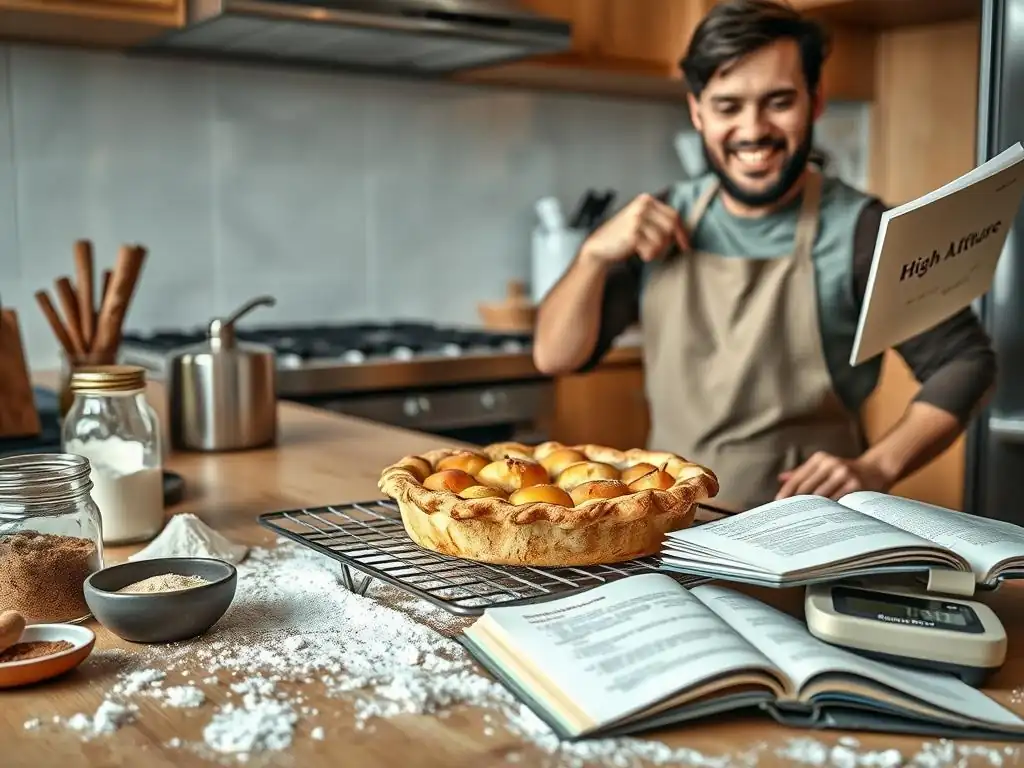
Identifying and Correcting Dryness in High Altitude Baked Goods
Symptom: Dry, crumbly texture, low moisture retention.
Solution:
- Increase liquid by 5–8%
- Add an extra egg white in cakes for moisture-binding proteins
- Incorporate fruit purées (e.g., applesauce) up to 10% of dry weight
“In Tucson (2,400 ft), adjusting applesauce to 8% of flour weight improved muffin moisture by 15%,” notes a community bake-along.
Preventing Cake Collapse in High Altitude Baking
Symptom: Center sinks after initial rise.
Solution:
- Reduce baking powder by 1/8 tsp per tsp
- Lower oven temp by 15°F to slow rise
- Increase flour by 5% for stronger structure
Repeat small trials (e.g., 1-cup flour batches) to dial in perfect ratios.
Optimizing Rising and Setting in High Altitude
Symptom: Uneven crumb, large tunnels, or underproofed interiors.
Solution:
- Shorten yeast proofing by 10–15 minutes
- Use cooler proof temperatures (70–75°F)
- Employ stretch-and-folds during bulk fermentation
This controlled approach yields a consistent crumb and uniform crumb cell distribution.
Pro Tips for Successful High Altitude Baking

The Importance of Accurate Measurements in High Altitude Recipes
Precision is paramount. Invest in a digital scale (±1g accuracy) and weigh every ingredient. Volume measures (cups, tablespoons) can vary by ±10%, causing inconsistency when small adjustments matter most at altitude.
Tip: Maintain a baking log noting altitude, ingredient weights, oven calibration, and outcomes. Over time, this empirical data transforms high-altitude experiments into repeatable successes.
Choosing the Right Flour for High Altitude Baking
High-protein flours (11–13% protein) strengthen gluten networks, making them ideal for breads and some cake batters at altitude. Pastry or cake flours (7–9% protein) require augmentation with extra flour or proteins (e.g., 1 tbsp vital wheat gluten per cup).
Real-world example: A Denver pastry chef adds 1 tbsp vital wheat gluten to every 125g of cake flour, boosting structure without toughness.
The Role of Additives in High Altitude Baking (e.g., Vital Wheat Gluten, Baking Powder)
Vital wheat gluten: Add 1–2% of total flour weight to strengthen networks in breads and cakes.
Baking powder: Opt for a single-acting variety at altitude for more predictable gas release. Reduce by 1/8–1/4 tsp per teaspoon of original recipe.
“Switching to single-acting powder at 5,000 ft eliminated dome cracks in our test cupcakes,” reports a Utah baking group.
Conclusion: Bake with Confidence at Any Altitude
High altitude baking recipes demand thoughtful adjustments, precise measurements, and experimentation. By understanding the science—lower air pressure, faster gas expansion, increased evaporation—and applying targeted tweaks to sugar, liquid, flour, and temperature, you can transform challenging altitudes into opportunities for exceptional baked goods. With these techniques and real-world examples, you’re equipped to conquer mountains, one loaf, cake, and cookie at a time. Happy baking!
Frequently Asked Questions
What makes high altitude baking different from baking at sea level?
At higher altitudes, there's less air pressure, causing liquids to evaporate faster and leavening agents to rise quicker. This can lead to dry baked goods and collapsed structures if not adjusted for.
What are some common adjustments needed for high altitude baking recipes?
Common adjustments include reducing leavening agents, increasing liquids, and lowering oven temperatures to compensate for the faster evaporation and rising times.
Where can I find reliable high altitude baking recipes?
Websites like BakeWithEase.com offer specifically tailored high altitude baking recipes with adjustments already factored in, ensuring better results.
What ingredients are most affected by high altitude and require adjustments?
Leavening agents like baking powder and baking soda, as well as liquids like water and milk, are most significantly affected and require careful adjustment in high altitude baking.
What are the signs that my high altitude baking recipe needs further tweaking?
Signs include a sunken center, a gummy texture, or a rapid, uneven rise, indicating the need for further adjustments to leavening, liquids, or oven temperature.
Final Reflection: Reaching New Heights in High-Altitude Baking
The challenges of high-altitude baking are real, but so are the rewards. Mastering the art of baking at elevation isn't just about following adjusted recipes; it's about understanding the science behind the changes in air pressure and humidity and how they affect your creations. This understanding unlocks a world of delicious possibilities, proving that even the most demanding baking conditions can be conquered with knowledge and practice.
The journey of learning to bake at altitude has been a deeply rewarding one for me, transforming a frustrating experience into a source of pride and culinary exploration. It's a testament to the resilience and adaptability required in the face of unique challenges. The best way to predict the future is to create it,
and that's precisely what we do when we adapt our baking techniques to overcome the limitations of high altitude. This constant adaptation, this striving for perfection in the face of adversity, is what makes high-altitude baking so uniquely satisfying.
Now, it's your turn to take flight. Don't let the thin air deter you from achieving your baking dreams. Experiment with the techniques and recipes discussed in this article, embrace the learning process, and most importantly, enjoy the journey. The perfectly risen cake, the flawlessly textured cookie – these are not just culinary achievements, but testaments to your perseverance and skill. So, gather your ingredients, preheat your oven, and prepare to elevate your baking to new heights!
Unlock Your High-Altitude Baking Potential!
Thanks for joining us on this journey to mastering high-altitude baking! You've now got the tools to conquer those tricky altitude challenges and create consistently delicious cakes, cookies, and more. Ready to put your new knowledge into practice?
- Bake your dream recipe: Choose your favorite high-altitude-challenging recipe and give it a go, using the tips and techniques you've learned today. Let us know how it turns out!
- Share your baking triumph (or your baking journey!): Post a picture of your creation on social media and tag us – we’d love to see your results!
- Explore our other high-altitude baking resources: Discover additional recipes, helpful guides, and more on our website – because baking shouldn't be limited by altitude!
What incredible high-altitude masterpiece will you bake next?