
The Secret to a Light & Airy Sandwich Bread Loaf

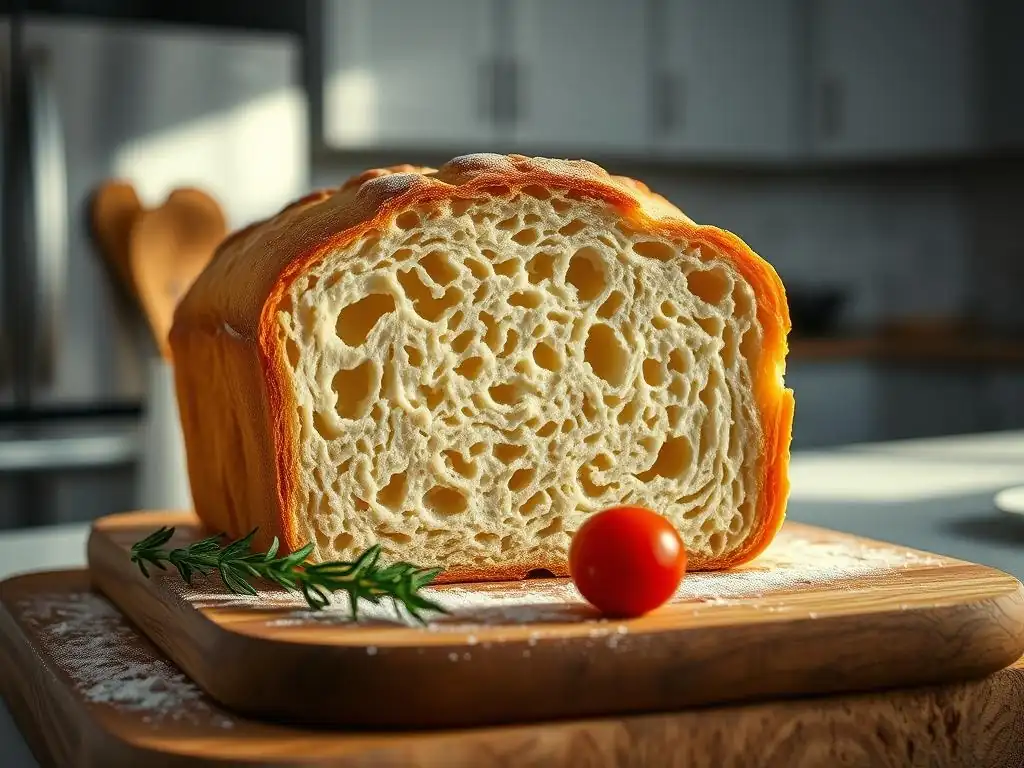
Welcome to BakeWithEase, your trusted companion on your baking journey! Ever wondered how to achieve that perfectly light and airy sandwich bread that's the envy of every baker? We're about to unlock the secrets! Prepare to dive into a world of fluffy, delectable loaves and discover the techniques that will transform your bread-making game. Intrigued? Let's get baking!
- Troubleshooting Common Problems: Why Isn't My Bread Light and Airy?
-
Frequently Asked Questions
- What are the key ingredients that contribute to a light and airy sandwich bread?
- What is the best technique for achieving a light and airy texture in sandwich bread?
- How does the type of flour affect the texture of sandwich bread?
- Can I use a stand mixer to make light and airy sandwich bread, or is kneading by hand better?
- What are some common mistakes that prevent sandwich bread from being light and airy?
- Final Reflection: The Enduring Allure of the Perfect Loaf
- Unleash Your Inner Baker: Craft the Perfect Loaf!
Troubleshooting Common Problems: Why Isn't My Bread Light and Airy?
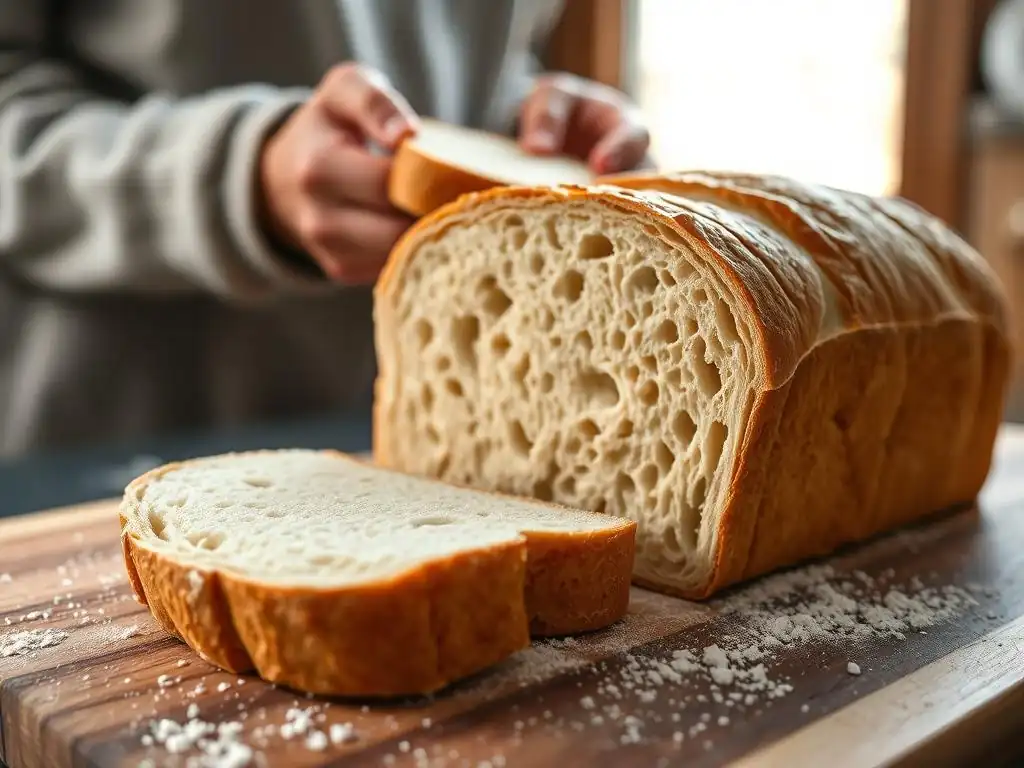
Even with the best recipe and ingredients, achieving that perfect light and airy sandwich bread can sometimes feel elusive. If your loaf turns out dense, uneven, or has crust issues, don't despair! These are common challenges, and understanding the root causes can help you troubleshoot and bake better bread next time. Identifying whether the problem lies in ingredient ratios, kneading, proofing, or baking is the first step to perfecting your technique and consistently producing a truly light and airy sandwich bread.
Baking is a science, and small deviations can have significant impacts. Perhaps your kitchen temperature wasn't quite right for proofing, or your flour absorbed more liquid than expected. Maybe you rushed the kneading process, or your oven temperature was inaccurate. Pinpointing the specific step where things went awry is crucial. Let's explore some of the most frequent issues and how to fix them, so you can turn those baking setbacks into successes and finally enjoy a wonderfully light and airy sandwich bread loaf from your own oven.
Dense and Heavy Bread: Possible Causes and Solutions
One of the most common frustrations is a loaf that is dense and heavy, lacking the desired light and airy texture. This often stems from issues related to gluten development and yeast activity. If your dough wasn't kneaded sufficiently, the gluten network necessary to trap the carbon dioxide gas produced by the yeast couldn't fully form. Think of gluten like tiny elastic balloons; if they aren't properly developed, they can't inflate and hold the air, resulting in a tight, dense crumb structure instead of a buoyant light and airy sandwich bread.
Insufficient yeast activity or underproofing are equally significant culprits. Yeast needs optimal conditions (warmth, food, moisture) to produce gas. If your yeast is old, the water temperature is too cold or too hot during activation (ideally between 105-115°F or 40-46°C for active dry yeast), or the dough isn't allowed enough time to rise properly during the first proof, it won't generate enough gas to lighten the loaf.
A dough that hasn't doubled in size during the first proof is a strong indicator of underproofing, which will inevitably lead to a dense loaf. Ensure you're using fresh yeast and proofing in a warm, draft-free environment until the dough passes the "poke test" – gently indenting the dough with a finger should leave an impression that springs back slowly, not immediately.
Uneven Texture or Large Holes: Addressing Air Pocket Problems
If your sandwich bread has an uneven crumb with some dense spots and other areas with large, irregular holes, the issue often lies in the handling and shaping of the dough. During kneading and proofing, air bubbles are created within the dough. The goal of shaping is to redistribute these bubbles and create a relatively uniform structure before the final proof. If you handle the dough too roughly or, conversely, too gently without properly degassing, you can trap large pockets of air unevenly.
Improper shaping techniques are a prime cause of large, isolated holes. When forming the loaf, you need to gently but firmly press out any excessively large air bubbles while preserving the smaller ones that contribute to the light and airy texture. Failing to do this can result in large voids next to areas with a tight crumb.
Overproofing can also contribute to an uneven texture; if the dough rises too much, the gluten structure can weaken and collapse in certain areas, leading to larger, weaker pockets of air that don't hold up during baking. Practice gentle degassing and careful shaping to ensure a consistent crumb throughout your light and airy sandwich bread loaf.
Crust Issues: Too Thick, Too Hard, or Too Pale
Crust problems can significantly detract from the enjoyment of your light and airy sandwich bread. A crust that is too thick or too hard is often a result of baking in an oven that is too cool, baking for too long, or, critically, not providing enough steam during the initial stages of baking. Steam in the oven keeps the surface of the dough moist and pliable, allowing the loaf to expand fully before the crust sets. Without sufficient steam, the crust forms too early and becomes rigid, resulting in a thicker, harder shell.
A pale crust, on the other hand, usually indicates underbaking or a low oven temperature. The beautiful golden-brown color of bread crust comes from the Maillard reaction and caramelization, processes that require sufficient heat and time. If your oven temperature is too low (always verify with an oven thermometer!)
or you pull the loaf out too soon, these reactions won't occur fully. Ensure your oven is properly preheated to the temperature specified in the recipe, and bake the loaf until its internal temperature reaches around 190-200°F (88-93°C) for a soft, light and airy sandwich bread. If the crust is still too pale but the inside is done, you can try baking for a few extra minutes or, for future loaves, brush the surface with a little milk or egg wash before baking to promote browning.
Frequently Asked Questions
What are the key ingredients that contribute to a light and airy sandwich bread?
The most important ingredients are strong bread flour for gluten development, yeast for leavening, and water for hydration. Proper ratios are also crucial.
What is the best technique for achieving a light and airy texture in sandwich bread?
The best technique involves proper kneading to develop gluten, a long proofing time for maximum rise, and using the correct oven temperature.
How does the type of flour affect the texture of sandwich bread?
Using bread flour, which has a higher protein content than all-purpose flour, is essential. This higher protein creates more gluten, leading to a light and airy loaf.
Can I use a stand mixer to make light and airy sandwich bread, or is kneading by hand better?
A stand mixer simplifies the process and ensures even gluten development, which is key. While hand-kneading works, a mixer is generally more efficient.
What are some common mistakes that prevent sandwich bread from being light and airy?
Common mistakes include under-kneading the dough, using old yeast, or over-proofing it. Measuring ingredients accurately is also essential.
Final Reflection: The Enduring Allure of the Perfect Loaf
The pursuit of the perfect light and airy sandwich bread is more than just a culinary quest; it's a reflection of our desire for simple pleasures and comforting traditions. In a world increasingly dominated by fast food and processed ingredients, the act of crafting a loaf of bread from scratch, achieving that elusive lightness and airiness, represents a powerful connection to something authentic and deeply satisfying. This article explored the techniques and nuances involved, but the true reward lies far beyond the perfectly risen dough.
The impact of a good loaf of bread extends far beyond the simple act of eating. It's a symbol of home, of shared meals, and of the enduring power of simple ingredients transformed by skill and care. It's a testament to the artistry of baking, a craft passed down through generations. As Julia Child once said, Find something you're passionate about and keep tremendously interested in it.
For me, that passion is found in the pursuit of the perfect loaf, and I hope this article has ignited a similar spark in you.
Now, I invite you to consider your own relationship with bread. Perhaps you'll try your hand at baking your own light and airy loaf, embracing the challenge and the reward. Or maybe you'll simply appreciate the next sandwich you eat with a newfound awareness of the artistry and effort that can go into even the simplest of foods. Regardless, I hope this exploration has enriched your understanding and appreciation for the enduring magic of a perfectly crafted loaf of bread. Let the journey towards your own perfect loaf begin!
Unleash Your Inner Baker: Craft the Perfect Loaf!
Thanks for joining us on this baking adventure! We hope you’ve discovered the secrets to a light and airy sandwich bread that will impress your family and friends. Ready to take your baking skills to the next level?
- Bake your dream loaf: Try our recipe today – the results are truly rewarding! Adjust it to your taste preferences and experiment with different flours or add-ins.
- Share your creation: Show us your stunning loaves on social media using #BakeWithEase – we'd love to see them!
- Explore more delicious bread recipes on our website – we have tons more where that came from!
What unique twist will you add to your next perfectly airy loaf?