
Timer Tech: From Classic Dials to Smart Apps for Flawless Timing

Welcome to BakeWithEase, your haven for baking bliss! Ever wonder if you're really harnessing the full potential of your oven's timer? This week, we're diving deep into Smart Oven Timer Settings, from understanding classic dials to mastering the latest smart app integration. Unlock the secrets to perfectly timed bakes, eliminate burnt edges, and elevate your creations. Curious to discover how precision timing can transform your baking? Let's get started!
- Baking Timers: From Mechanical Dials to Smart Apps for Perfect Results
- The Evolution of Baking Timers: A Baker's Companion
- Understanding Traditional Baking Timers: Mastering the Fundamentals
- The Rise of Smart Oven Timer Features: Baking in the Digital Era
- Smart Oven Timer Features: A Comprehensive Look at Functionality
- Choosing the Right Baking Timer: Key Considerations
- Troubleshooting Common Timer Problems in Baking
- Optimizing Your Baking with Precise Timing: Valuable Tips and Tricks
- Smart Apps for Baking: Expanding Your Baking Capabilities
- Advanced Baking Techniques: Leveraging Smart Timers for Precision
- Mastering Smart Oven Timer Features: Achieving Baking Excellence
-
Frequently Asked Questions
- How do smart oven timers differ from traditional dial timers?
- What are the benefits of using smart oven timer settings for baking?
- Can I control my smart oven timer from my smartphone while I'm away from home?
- Are smart oven timers compatible with all types of ovens, or are there limitations?
- What are some common mistakes people make when using oven timers, and how can I avoid them?
- Final Reflection: The Enduring Power of Precise Timing
- Unlock Your Inner Baking Maestro!
Baking Timers: From Mechanical Dials to Smart Apps for Perfect Results
The Evolution of Baking Timers: A Baker's Companion
Baking is often described as a science, and like any precise science, timing is absolutely critical. Whether you're proofing delicate brioche dough, baking a towering layer cake, or achieving that perfect golden-brown crust on a loaf of sourdough, the difference between perfection and disappointment can often come down to just a few minutes. This is where the humble baking timer steps in, evolving from simple mechanical devices to sophisticated digital tools and integrated smart oven timer settings, becoming an indispensable companion in the kitchen.
The journey of baking timers mirrors the progression of technology itself. Early bakers relied on instinct, observation, and perhaps sundials or hourglasses. The advent of mechanical timers brought a new level of control, allowing bakers to step away from the oven without fear of burning their creations. Today, smart technology, including advanced smart oven timer settings, offers unprecedented precision, remote monitoring, and even integration with recipes, truly transforming how we approach baking.
Why Precise Timing is Essential for Baking Success
Precise timing is the cornerstone of successful baking, influencing everything from texture and rise to flavor and color. For instance, baking cookies for just 8-10 minutes at 180°C (350°F) yields soft, chewy centers, while an extra 2-3 minutes can result in crispy, potentially dry cookies. Similarly, a cake baked for the recommended 30-35 minutes might be perfectly moist, but leaving it in for 40 minutes could lead to a dry, dense texture due to excessive moisture loss.
Moreover, timing is crucial for chemical reactions within your baked goods. Leavening agents like baking powder and baking soda react with heat and moisture over a specific duration. Yeast activity in bread dough is heavily time-dependent during proofing and baking. Over-proofing can cause dough to collapse, while under-baking can leave the center raw. Using accurate timers, including reliable smart oven timer settings, ensures these reactions occur precisely as intended by the recipe, leading to consistent and delicious results every time.
From Mechanical Timers to Digital Displays: A Historical Journey
The earliest kitchen timers were simple mechanical devices, often powered by a spring that unwound over a set period, much like a clock. These timers typically featured a dial that you'd twist to the desired time, and they would emit a loud ring when time elapsed. Their robustness and simplicity made them kitchen staples for decades, though their accuracy could sometimes vary.
The late 20th century saw the rise of digital timers. Powered by batteries, these offered exact minute and second readouts on an LCD screen. They were often more precise than their mechanical counterparts and included features like count-up functions and multiple timers. The integration of digital timers into kitchen appliances, including ovens, became standard, paving the way for the sophisticated smart oven timer settings we see in modern kitchens today.
Understanding Traditional Baking Timers: Mastering the Fundamentals
Traditional baking timers, whether mechanical or basic digital, remain popular for their reliability and straightforward operation. They serve as excellent tools for learning the fundamentals of baking time management without the complexities of modern technology.
Mastering a traditional timer involves understanding its mechanism and limitations. A mechanical timer, for example, requires winding past the desired time before setting it back to ensure the spring engages correctly. A simple digital timer often requires pressing buttons to set hours, minutes, and seconds. While lacking advanced features, their simplicity makes them dependable for single-task timing in a busy kitchen.
Types of Traditional Timers: Dial Timers and Spring-Wound Mechanisms
The most recognizable traditional timer is the mechanical dial timer. These rely on a spring-wound mechanism. You turn the dial clockwise to set the desired time (often up to 60 minutes), which winds the internal spring. As the spring unwinds, the dial rotates back, and a bell rings when it reaches zero. They are durable and require no batteries.
Another type includes simpler digital timers, often small, battery-powered devices with a magnetic back or stand. These use a simple electronic circuit and display time digitally. They typically offer count-down and count-up functions, sometimes with multiple timers. While basic, they provide precise digital readouts and are widely accessible.
Setting and Using a Mechanical Kitchen Timer: A Practical Guide
Using a mechanical kitchen timer effectively involves a simple, yet specific process. First, turn the dial past the 55-minute mark (or near the maximum time) to fully engage the spring mechanism. This is a critical step for ensuring the timer runs accurately.
Next, turn the dial counter-clockwise back to the desired time setting. For example, if your cookies need 10 minutes, turn the dial to the '10' mark. Place the timer where you can easily hear the alarm. When the time is up, the timer will ring, signaling your baking stage is complete. Remember that mechanical timers might have a margin of error, sometimes a minute or two, so it's wise to check your baked goods slightly before the timer is expected to go off, especially for sensitive recipes.
Maintaining Your Traditional Timer for Longevity and Accuracy
Maintaining a traditional timer, whether mechanical or digital, is generally simple. For mechanical timers, avoid dropping them or exposing them to extreme temperatures, as this can damage the internal spring mechanism. Keep the exterior clean using a damp cloth, avoiding harsh chemicals.
For digital timers, the main maintenance involves replacing the battery when the display dims or the timer stops working. Check the battery compartment, usually on the back, for the required battery type (often AAA or button cells). Keep the timer dry, as moisture can damage the electronic components. Storing both types away from direct heat sources, like on top of a hot oven, will help ensure their longevity and continued accuracy.
The Rise of Smart Oven Timer Features: Baking in the Digital Era
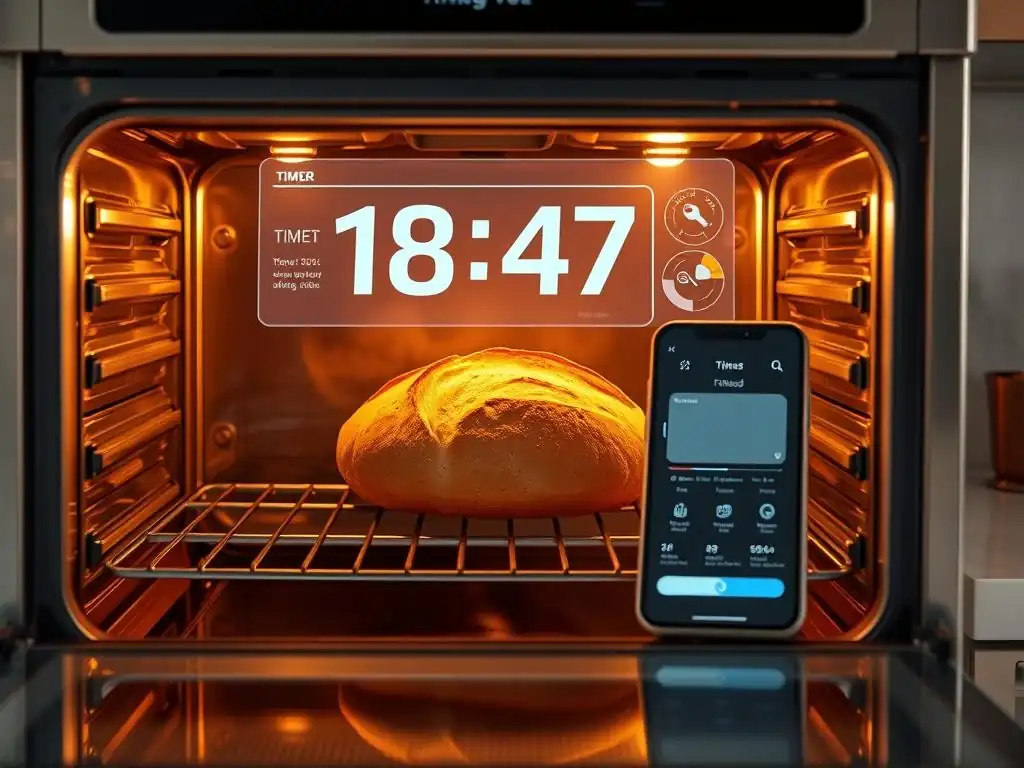
The integration of technology into kitchen appliances has revolutionized baking, with smart oven timer features leading the charge. These advanced functions go far beyond simple countdowns, offering unprecedented control, convenience, and precision. Smart ovens, equipped with Wi-Fi connectivity, allow bakers to interact with their appliance remotely, directly impacting how they manage baking times and temperatures.
Smart oven timer settings are often part of a larger suite of connected features, controlled via a mobile app on a smartphone or tablet. This allows bakers to preheat the oven while they're prepping ingredients in another room, receive notifications when the oven reaches the target temperature, and most importantly, set, monitor, and adjust baking times from anywhere within range of their network. This level of control significantly reduces the need to constantly hover around the oven, freeing up time for other tasks or simply relaxing while your culinary creation comes to life.
What Are Smart Oven Timers and How Do They Enhance Baking?
Smart oven timers are digital timers integrated into internet-connected ovens, often controllable via a dedicated mobile application. They enhance baking by offering features like remote setting and monitoring, precise minute-by-second countdowns, and often integration with pre-programmed cooking cycles or even specific recipes.
These timers can communicate with other oven functions, such as temperature probes, allowing them to automatically adjust timing based on internal food temperature. For example, when baking a large roast alongside a side dish, a smart oven timer setting linked to a probe can alert you when the roast reaches its target temperature, while a separate timer tracks the side dish, ensuring everything is ready simultaneously and perfectly cooked. This level of coordination is a significant leap from traditional timers.
Benefits of Using Smart Timer Features for Baking Precision
Using smart oven timer features offers numerous benefits for achieving baking precision. Foremost is the ability to set exact times down to the second, eliminating the slight inaccuracies sometimes found in mechanical timers. Remote monitoring means you can check the remaining time from your phone, avoiding repeated opening of the oven door, which can cause temperature fluctuations and negatively impact delicate bakes like soufflés or meringues.
Notifications sent directly to your device ensure you never miss the critical moment the timer expires, preventing accidental over-baking or burning. Some advanced smart oven timer settings can even pause or switch to a warming mode automatically when the time is up, providing a buffer if you're momentarily delayed. This hands-off precision is invaluable for busy bakers or complex multi-stage recipes.
Exploring Smart Oven Timer Options: Built-in Features vs. Mobile Apps
When considering smart oven timer options, you'll encounter two primary interfaces: the built-in controls on the oven itself and the associated mobile application. Most smart ovens have a digital display and control panel where you can set timers directly, similar to a standard digital oven timer but often with more options.
However, the full power of smart oven timer settings is typically unlocked through the companion mobile app. The app provides a more intuitive interface for setting complex timers, managing multiple timers simultaneously, receiving push notifications on your phone, and often integrating timers with specific recipe instructions or cooking modes available on your oven. While the built-in controls offer basic smart timing, the app provides the convenience and advanced features that define the "smart" experience.
Smart Oven Timer Features: A Comprehensive Look at Functionality
Smart oven timer features represent a significant advancement in baking technology, offering functionalities that streamline the baking process and improve outcomes. Understanding these capabilities helps bakers leverage their smart appliances to their full potential.
These features move beyond simple countdowns to include integration with temperature sensors, remote control, and even recipe-specific instructions. The convenience of adjusting or starting a timer from another room, receiving alerts on your phone, or having the oven switch modes automatically based on the timer is a game-changer for many home bakers, particularly when managing multiple tasks or complex recipes requiring precise timing and temperature changes.
Precise Timing Control: Achieving Consistent Baking Outcomes
One of the core advantages of smart oven timer settings is their precise timing control. Unlike mechanical timers which might have a small margin of error, digital smart timers count down in exact seconds. This level of precision is vital for recipes where a minute or two can significantly alter the result, such as delicate pastries, temperamental cookies, or finicky custards.
Furthermore, smart oven timers often integrate with the oven's heating elements and convection fans. Some settings allow for programmed transitions, like switching from a high initial temperature for a bread crust to a lower temperature for the remainder of the bake after a specific time, all handled automatically by the smart oven timer settings. This automation ensures these critical timing-based temperature changes happen exactly when they should, contributing significantly to consistent baking outcomes.
Remote Monitoring and Notifications: Preventing Over-Baking
A standout feature of smart oven timer settings is the ability to monitor the countdown remotely via a mobile app. This means you don't have to be standing in the kitchen to know exactly how much time is left on your bake. You could be folding laundry, helping kids with homework, or prepping the next dish, and a quick glance at your phone tells you the status.
Crucially, smart timers send push notifications to your device when the time is up. This alert is far less likely to be missed than a traditional timer's bell, especially in a noisy household or if you step out of earshot. By immediately notifying you the moment the timer expires, these notifications drastically reduce the risk of forgetting about your bake and consequently over-baking or burning your meticulously prepared goods.
Programmable Baking Schedules: Streamlining Your Baking Workflow
Some advanced smart oven timer settings allow for the programming of complex baking schedules. This is particularly useful for recipes that require multiple stages with different temperatures and durations, or for starting a bake at a future time.
For example, you could program the oven to preheat to 220°C, bake for 15 minutes, then automatically drop the temperature to 180°C for another 30 minutes, and finally switch to a warming mode. All these steps, including the timing and temperature changes, are pre-set using the smart oven timer settings and controls, executing seamlessly without manual intervention. This capability streamlines the baking workflow for multi-stage recipes, making them much more manageable and less prone to error.
Integrating Smart Timers with Baking Recipes: Bread Baking Example
A powerful application of smart oven timer settings is their integration with digital recipes, often available within the oven's companion app or through third-party recipe platforms that connect to your appliance.
Consider baking a no-knead bread that requires a 30-minute bake with the lid on, followed by a 15-minute bake with the lid off. Using a recipe integrated with your smart oven, you might select the recipe in the app, and it automatically sets the oven to the correct temperature and programs the smart oven timer settings for the two distinct stages.
The oven will alert you via the app when it's time to remove the lid for the second stage, and then alert you again when the entire bake is complete. This level of integration takes the guesswork out of timing complex steps and ensures you follow the recipe precisely.
Choosing the Right Baking Timer: Key Considerations
Selecting the perfect baking timer depends on your baking habits, the types of recipes you tackle, and your personal preference for technology. Whether you opt for a simple mechanical timer, a basic digital one, or invest in appliances with advanced smart oven timer settings, several factors should influence your decision.
Consider not just the basic function of counting down, but also factors like ease of use, reliability, and any special features that could benefit your specific baking style. A timer that works seamlessly for your needs will become an indispensable tool in your kitchen, helping you achieve consistent, delicious results with every bake.
Accuracy and Reliability: Selecting a Dependable Timer
Accuracy is paramount in baking. A timer that consistently runs fast or slow can lead to under or over-baked goods. Mechanical timers can sometimes lose accuracy over time or if roughly handled, perhaps varying by a minute or two over an hour. Basic digital timers are generally more accurate, relying on electronic pulses.
Smart oven timer settings, integrated into modern appliances, are typically the most accurate, often counting down to the second. Their reliability is tied to the oven's electronics and your home's Wi-Fi stability if using remote features. When choosing any timer, look for reviews or specifications that speak to its accuracy. A dependable timer is one you can trust to alert you at precisely the right moment.
Ease of Use: User-Friendly Interfaces for Every Baker
The best timer for you is one you find easy and intuitive to use. Mechanical timers are simple: twist the dial and go. Basic digital timers involve a few button presses to set the time.
Smart oven timer settings can vary in complexity. While the basic function might be accessible on the oven's control panel, utilizing advanced features like programming multiple stages or integrating with recipes via a mobile app requires comfort with technology. Consider your own tech savviness. If you prefer simplicity, a traditional timer might be best. If you embrace technology, the user-friendly interface of a well-designed smart oven app can make setting and managing timers effortless.
Features and Functionality: Matching the Timer to Your Baking Style
Different timers offer different features. Do you need multiple timers running simultaneously for different items in the oven? A basic single-function timer won't suffice. Do you bake complex recipes requiring temperature changes mid-bake? Programmable smart oven timer settings are ideal.
Consider features like loud alarms (important in a noisy kitchen), visual indicators (like a flashing light), magnetic backs for easy placement, or the ability to pause and resume. If you frequently bake multi-stage items or want the convenience of remote monitoring, smart oven timer settings with app integration offer significant advantages over simpler models. Match the timer's capabilities to the demands of your typical baking projects.
Durability and Maintenance: Ensuring a Long and Reliable Service
A good timer should be built to last. Mechanical timers, with fewer electronic parts, can be quite durable if not abused. Digital timers are sensitive to moisture and drops but are generally reliable until the battery dies.
Smart oven timer settings are part of a larger appliance; their durability is tied to the oven itself. Maintenance for traditional timers is minimal (cleaning, battery replacement). For smart timers, it involves keeping the oven clean and ensuring your home network is stable. Choosing a timer or appliance from a reputable brand with good build quality helps ensure it will provide long and reliable service in your kitchen.
Troubleshooting Common Timer Problems in Baking
Even the most reliable baking timers can occasionally present issues. Knowing how to troubleshoot common problems can save you frustration and prevent baking mishaps. From a timer that fails to ring to one that seems inaccurate, addressing these issues promptly ensures your timing remains on point.
Whether you're dealing with a simple mechanical device or complex smart oven timer settings, understanding the potential pitfalls and their solutions is key to maintaining precision in your baking. A malfunctioning timer can ruin a recipe just as easily as incorrect measurements or temperatures, so a quick fix is often necessary.
My Timer Isn't Ringing: Common Causes and Troubleshooting
If your mechanical timer isn't ringing, the most common cause is often improper winding. Ensure you are winding the dial past the desired time (e.g., past 55 minutes for a 60-minute timer) before setting it back. This fully engages the spring mechanism required to power the bell. If it still doesn't ring, the internal mechanism might be damaged, requiring repair or replacement.
For digital timers, a lack of ringing typically indicates a dead battery. Replace the battery with a fresh one of the correct type. If it's a smart oven timer, check the oven's settings to ensure the timer volume isn't muted or set too low. Also, verify that notifications are enabled in the mobile app and on your phone's settings for smart oven timer settings alerts. Network issues might delay smart timer notifications, but the oven's internal timer should still alert you.
The Timer is Inaccurate: Calibration and Adjustment Techniques
Mechanical timers can sometimes become less accurate over time. Unfortunately, most consumer-grade mechanical timers are not designed for user calibration. If a mechanical timer is consistently inaccurate by more than a minute or two over 30-60 minutes, it might be time to replace it.
Digital timers are generally very accurate and do not require calibration. If a digital timer is displaying incorrect time, it might be a sign of a dying battery or internal malfunction. Smart oven timer settings are typically the most accurate, relying on the oven's internal clock. If you suspect inaccuracy with a smart oven timer, verify the oven's clock is set correctly. If the issue persists, it might indicate a service issue with the appliance.
Smart Timer Connectivity Problems: Troubleshooting Network Issues
Problems with smart oven timer settings, particularly remote monitoring and notifications via a mobile app, are often related to network connectivity. First, ensure your oven is properly connected to your home's Wi-Fi network. Check the oven's settings menu or the app for network status.
Verify that your mobile device is also connected to the internet (either Wi-Fi or cellular data). Sometimes, simply restarting your Wi-Fi router, the smart oven, and your mobile device can resolve connectivity issues. Ensure the smart oven app is updated to the latest version. If the problem persists, check your oven's manual for specific troubleshooting steps related to smart oven timer settings and connectivity, or contact the manufacturer's support.
Optimizing Your Baking with Precise Timing: Valuable Tips and Tricks
Beyond simply setting a timer and waiting for it to ring, there are several strategies you can employ to truly optimize your baking using precise timing. Understanding the nuances of how timing interacts with other baking variables like temperature and environment can elevate your results from good to truly exceptional.
Incorporating multiple timers for different elements of a recipe, accounting for subtle factors like altitude, and using visual cues in conjunction with your timer are all valuable techniques. By being mindful of these details, you can leverage your timer, whether it's a basic model or relies on sophisticated smart oven timer settings, to its fullest potential.
Using Multiple Timers for Multi-Stage Recipes
Many baking recipes involve multiple components or stages that require independent timing. For example, baking cookies on two trays might require rotating them or taking one tray out sooner. Baking a pie might involve blind-baking the crust for 15 minutes, then adding filling and baking for another 30-40 minutes.
Using multiple timers—perhaps a traditional timer for one stage, a digital timer for another, or utilizing the multi-timer function on a smart oven or app with flexible smart oven timer settings—allows you to track each step accurately. This prevents you from forgetting a crucial transition point and ensures each element of your bake is timed perfectly, contributing to the overall success of the final product.
Understanding Oven Temperatures and Their Influence on Timing
The accuracy of your oven's temperature is just as critical as the accuracy of your timer. An oven that runs hot or cold will significantly impact the actual baking time required, regardless of what the recipe or your timer suggests. An oven set to 180°C (350°F) might actually be 160°C or 200°C inside.
Using an independent oven thermometer placed inside the oven will show you the true temperature. If your oven is consistently off, you'll need to adjust your baking time accordingly. If it runs hot, you might need slightly less time; if it runs cold, you'll need more. Some advanced smart ovens have self-calibration features or temperature probes that integrate with smart oven timer settings to help maintain accuracy, but an external thermometer is always a good check.
Adjusting Baking Times for Altitude and Humidity Considerations
Environmental factors like altitude and humidity can also influence baking times. At higher altitudes (generally above 3,000 feet or 900 meters), air pressure is lower, causing baked goods to rise faster but also dry out quicker. Liquids evaporate faster, and leavening agents work more rapidly.
This often means baking times need to be adjusted, typically requiring slight reductions in baking temperature and potentially increases in baking time to ensure the interior is fully cooked before the exterior over-bakes. High humidity can also affect baking times, sometimes requiring a bit longer for items to crisp up. While timers themselves don't adjust for these factors, being aware of them allows you to proactively modify the time you set on your timer or within your smart oven timer settings based on your specific environment and recipe.
Smart Apps for Baking: Expanding Your Baking Capabilities
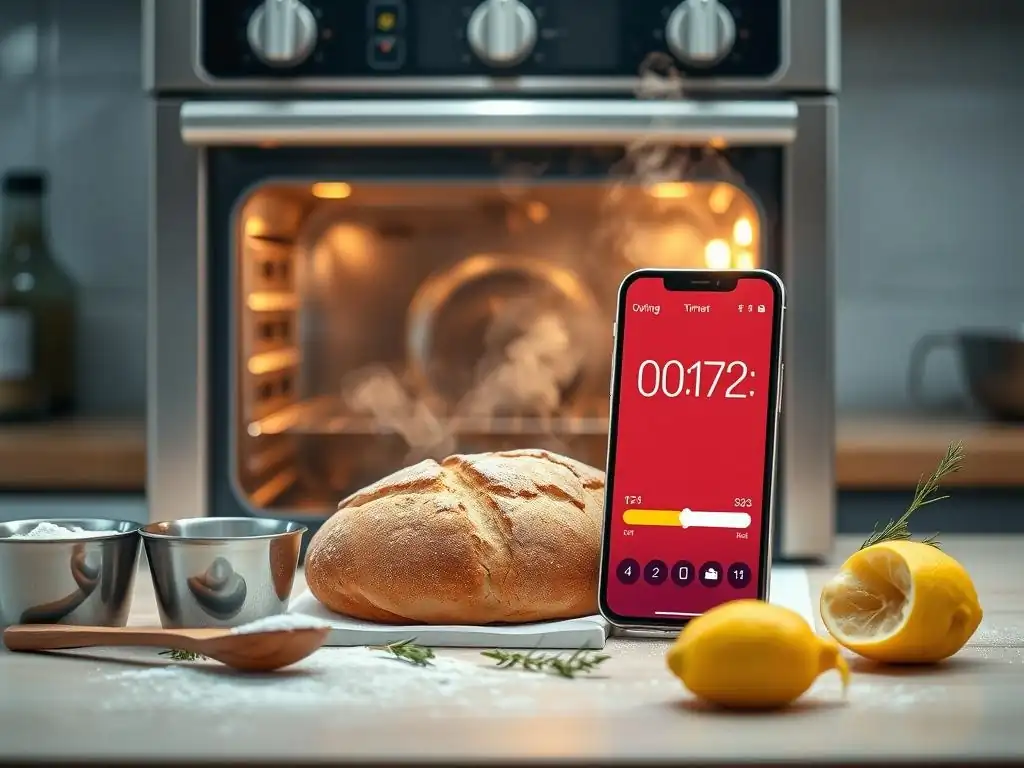
Beyond controlling smart oven timer settings, dedicated baking apps offer a wealth of features that can further enhance your baking precision and organization. These apps often serve as digital hubs for managing recipes, creating shopping lists, and providing integrated timing functions that work seamlessly with your baking process.
Leveraging these apps can centralize your baking workflow, keeping track of notes, substitutions, and, crucially, the exact timing used for previous bakes. This digital record-keeping, combined with sophisticated timer capabilities, provides a powerful tool for continuous improvement and consistency in your baking.
Top-Rated Baking Timer Apps for iOS and Android Platforms
While many general kitchen timer apps exist, some are specifically designed with bakers in mind. While I cannot provide specific app names (due to the no-link rule), you can search app stores for terms like "baking timer," "kitchen timer multiple," or "recipe timer." Look for apps that offer multiple simultaneous timers, clear visual interfaces, customizable alarms, and the ability to save timer presets for frequently baked items.
Some highly-rated apps also offer features like unit conversion, ingredient scaling, and recipe storage alongside their timing functions. When exploring options, read user reviews focusing on reliability, ease of use, and whether the app integrates well with the baking process, potentially even offering specific smart oven timer settings control if compatible with your appliance brand.
Using Apps for Recipe Management and Timer Synchronization
Many baking apps combine recipe management with integrated timers. You can store your favorite recipes within the app, and when you select a recipe, the app automatically displays or sets the required timers for each stage.
For example, a cookie recipe might have separate timers for mixing time, chilling time (perhaps a 30-minute minimum), and baking time (e.g., 9-11 minutes). The app can manage all these timers, reminding you when to move to the next step. If the app is linked to your smart oven, it might even be able to send the baking time directly to your smart oven timer settings, ensuring perfect synchronization between your recipe steps and oven operation.
Setting Custom Notifications and Reminders for Optimal Baking
A key benefit of using baking apps, especially those linked to smart oven timer settings, is the ability to customize notifications. You can often set different alert sounds for different timers or even receive reminders leading up to the timer expiring (e.g., "Timer expires in 5 minutes").
This allows for more nuanced time management. For a long proofing time (say, 4 hours), you might set a notification halfway through to check on the dough. For baking, you'd want an immediate alert when the time is up. Some apps even allow you to set reminders for steps after baking, like "Cool on wire rack for 30 minutes" or "Glaze when completely cool." These custom reminders ensure optimal timing throughout the entire baking process, not just the oven time.
Advanced Baking Techniques: Leveraging Smart Timers for Precision
For bakers exploring more advanced techniques, smart timers, particularly integrated smart oven timer settings, offer unparalleled precision that can be crucial for achieving perfect results in sensitive processes. Techniques like sous vide baking, precise fermentation control for sourdough, and accurate chocolate tempering rely heavily on maintaining exact temperatures and durations.
While traditional timers can track overall time, smart timers often integrate with temperature probes and programmable cycles, providing the granular control needed for these delicate methods. Leveraging these capabilities allows bakers to tackle complex challenges with confidence, knowing their timing and temperature are meticulously managed.
Sous Vide Baking: Maintaining Consistent Temperatures for Delicate Desserts
Sous vide, traditionally used for meats, has found its way into baking for achieving incredibly consistent textures in delicate items like cheesecakes, custards, and crème brûlée. This method involves baking in a water bath at a precisely controlled low temperature for an extended period.
While a dedicated sous vide immersion circulator handles the water temperature, some smart ovens have sous vide capabilities, maintaining a precise temperature in the oven cavity for water bath baking. The smart oven timer settings are critical here, allowing for long-duration timers (hours, not just minutes) and ensuring the bake stops exactly when needed to prevent overcooking the delicate proteins. The precision of smart oven timer settings is essential for the success of this low-and-slow baking method.
Fermentation Control: Precise Timing for Sourdough Bread Production
Sourdough bread production is a highly time-sensitive process, with bulk fermentation and proofing times varying significantly based on ambient temperature, starter activity, and desired flavor profile. These stages can range from a few hours to over 24 hours.
While not directly controlling the dough itself, smart oven timer settings or connected baking apps can be invaluable for tracking these long fermentation periods. You can set timers and reminders for folding schedules during bulk fermentation (e.g., every 30 minutes for 2 hours), track the total bulk fermentation time (e.g., 4 hours at 24°C), and monitor the final proofing time (e.g., 12 hours in the refrigerator). Using an app to log these times alongside environmental conditions helps you refine your process and achieve consistent sourdough results.
Chocolate Tempering: Achieving Perfect Texture with Precise Timing
Tempering chocolate involves carefully heating and cooling chocolate to specific temperatures to stabilize its crystal structure, resulting in a glossy finish and crisp snap. This process requires holding the chocolate at precise temperatures for specific periods.
While a thermometer is essential for temperature, a timer is crucial for controlling how long the chocolate remains at each temperature stage. For example, you might need to hold melted chocolate at 32°C (89.6°F) for a few minutes while stirring.
Using a precise timer, perhaps a dedicated chocolate tempering timer app or a timer on your phone, ensures you don't overwork the chocolate or miss the critical window at each temperature stage. For those with smart ovens offering very low, precise temperature settings, integrating a timer with these smart oven timer settings could potentially assist in maintaining temperature during the tempering process.
Mastering Smart Oven Timer Features: Achieving Baking Excellence
Embracing smart oven timer settings is about more than just convenience; it's about unlocking a new level of precision and control that can significantly elevate your baking. By understanding the full range of functionalities offered by these features, from remote monitoring and notifications to programmable schedules and recipe integration, you can streamline your workflow and achieve consistently excellent results.
Whether you are baking a simple batch of cookies or tackling a complex multi-stage bread, leveraging the power of smart timers allows you to focus on the artistry of baking while the technology handles the critical element of time. This mastery of timing, facilitated by modern tools, is a key ingredient in achieving baking excellence in the digital age.
Final Thoughts and Encouragement for Bakers to Embrace Precision
Precision in baking, particularly with timing, is a skill that develops with practice and the right tools. From the satisfying ding of a mechanical timer to the helpful ping from your smart oven timer settings app, these devices are designed to be your allies in the kitchen. Don't be intimidated by new technology; explore the features your oven or smart device offers.
Experiment with different timer types and functionalities to see what best suits your baking style and the recipes you love. Pay attention not just to the timer, but also to visual cues from your bake. Use your timer as a guide, but always trust your senses too. By embracing precise timing with the tools available today, including sophisticated smart oven timer settings, you are well on your way to mastering the art and science of baking and achieving flawless results time after time.
Frequently Asked Questions
How do smart oven timers differ from traditional dial timers?
Smart oven timers offer more precise control and often include features like remote monitoring and programmable settings. Traditional dial timers are simpler and rely on manual adjustment, potentially leading to less accuracy.
What are the benefits of using smart oven timer settings for baking?
Smart oven timer settings allow for consistent results by ensuring accurate cooking times and temperatures. They also provide convenience through features like remote preheating and automatic shut-off.
Can I control my smart oven timer from my smartphone while I'm away from home?
Yes, most smart oven timers come with a dedicated app that allows you to monitor and control the oven's settings remotely. This includes starting, stopping, and adjusting the cooking time and temperature.
Are smart oven timers compatible with all types of ovens, or are there limitations?
While many newer ovens come equipped with smart timer capabilities, some older models may require a separate smart timer device or attachment. Check the compatibility of the smart timer with your specific oven model.
What are some common mistakes people make when using oven timers, and how can I avoid them?
A common mistake is overlooking preheating time or not accounting for oven calibration. To avoid these, always preheat fully and periodically test your oven's temperature for accuracy.
Final Reflection: The Enduring Power of Precise Timing
The quest for perfect timing, once the domain of simple kitchen timers, has evolved into a sophisticated interplay of technology and convenience. From the satisfying tick-tock of a classic clock to the intelligent algorithms of smart oven apps, our relationship with time measurement continues to shape how we approach cooking and daily life. This evolution isn't merely about faster cooking; it's about optimizing our experiences and maximizing efficiency.
The impact of precise timing extends far beyond the kitchen. It underscores our increasing reliance on technology to streamline our lives and achieve our goals. The ability to precisely control cooking times, through features like smart oven timer settings, reflects a broader societal shift towards optimization and control. Time is the most valuable thing a man can spend.
This quote, while seemingly simple, highlights the profound impact of efficient time management on our overall well-being and productivity. The article's exploration of various timing methods underscores the importance of finding the right tool for the task, be it a simple timer or a sophisticated smart app.
Consider, for a moment, how you manage your time in various aspects of your life. Are you utilizing the most effective tools available to you? This article serves as a reminder that even seemingly small improvements in time management can lead to significant gains in efficiency and satisfaction. Experiment with different timing methods, from the nostalgic charm of a traditional timer to the advanced capabilities of smart oven technology. Discover the perfect balance between precision and simplicity, and unlock the potential of flawless timing in your own life.
Unlock Your Inner Baking Maestro!
Thanks for exploring the world of timers with us! You've now got the knowledge to elevate your baking game. Ready to put your newfound expertise into practice?
- Master the art of precise timing: Experiment with different timer types and techniques to find your perfect baking rhythm. Try a new recipe relying completely on your timer skills!
- Share your timing triumphs (or tales of near misses!): Let's build a community of bakers—share your experiences and favorite timer tips in the comments below.
- Challenge yourself: Try a complex recipe that requires multiple precise timings. Then share how using a timer elevated the success of your baking project.
What unexpected baking challenge are you ready to tackle with your improved timing skills?