
Bench Scraper Mastery: Cut, Portion, and Shape Dough Like a Pro

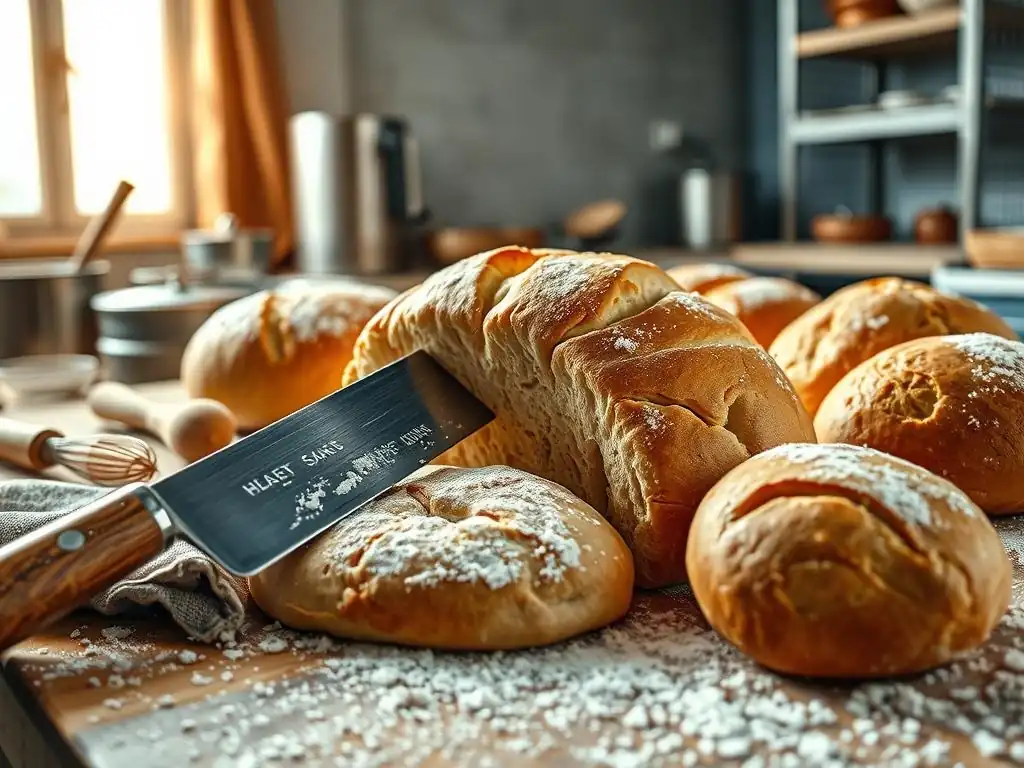
Welcome to BakeWithEase, your guide to unlocking the secrets of effortless baking! Ever wondered how to achieve perfectly portioned and beautifully shaped dough with professional ease? This week, we're diving into the world of easy bench scraper dough shaping. Discover how this simple tool can transform your baking, making everything from delicate pastries to rustic loaves a breeze. Ready to elevate your dough-handling skills? Let's get started!
- Introduction to the Bench Scraper: Your Baking Best Friend
- Choosing the Right Bench Scraper for Easy Dough Shaping
- Mastering the Art of Cutting Dough with a Bench Scraper
- Portioning Dough Like a Pro: Bench Scraper Techniques
- Dough Shaping Made Easy: Bench Scraper Techniques
- Cleaning and Maintaining Your Bench Scraper for Longevity
- Troubleshooting Common Dough Handling Issues
- Beyond Dough: Other Uses for Your Bench Scraper in the Kitchen
- Conclusion: Unleash Your Baking Potential with Bench Scraper Mastery
-
Frequently Asked Questions
- How can a bench scraper help with easy bench scraper dough shaping?
- What types of dough are best suited for easy bench scraper dough shaping?
- Can a bench scraper improve my easy bench scraper dough shaping technique as a beginner?
- Are there different types of bench scrapers, and which is best for easy bench scraper dough shaping?
- Besides shaping, what other uses does a bench scraper have in baking for easy bench scraper dough shaping?
- Final Reflection: The Humble Bench Scraper's Unexpected Power
- Unleash Your Inner Baker: Master the Bench Scraper!
Introduction to the Bench Scraper: Your Baking Best Friend
What is a Bench Scraper and Why You Need One for Dough Handling
A bench scraper, sometimes called a dough scraper or bench knife, is a simple yet indispensable tool in the baker's arsenal. At its most basic, it's a flat, rectangular piece of metal or plastic with a handle along one edge. While unassuming, its design is perfectly suited for tasks involving dough, from initial mixing and cleanup to precise cutting and shaping. For anyone looking to improve their bread or pastry making, understanding how this tool facilitates easy bench scraper dough shaping and handling is fundamental.
The primary reason a bench scraper is essential for dough handling lies in its ability to cleanly interact with dough, especially sticky varieties, without causing excessive sticking or tearing. Unlike a standard knife, which can drag and compress dough, the sharp, flat edge of a bench scraper slices through dough with minimal resistance, preserving its structure.
This is particularly important when dividing dough for loaves or rolls, where consistent size and minimal handling are key to achieving a good final product. It truly makes easy dough shaping with a bench scraper a reality, simplifying processes that might otherwise be messy and difficult.
The Versatility of the Bench Scraper: Beyond Dough Cutting
While its name suggests a singular purpose related to benches and dough, the bench scraper's utility extends far beyond just cutting dough. Its flat, rigid surface and comfortable handle make it incredibly versatile in the kitchen. Think of it as an extension of your hand, designed to scoop, lift, and transfer ingredients efficiently.
Beyond the realm of cutting and easy bench scraper dough shaping, this tool excels at cleaning up your workspace. After kneading dough, flour and sticky residue often cling to the counter. A bench scraper is perfect for scraping up these messes quickly and effectively, leaving your surface clean with minimal effort. It can also be used to scrape excess pastry dough or cookie dough from cutting boards or countertops, ensuring you waste less and keep your workspace tidy throughout the baking process. This multifunctionality makes it a truly valuable investment for any home baker.
Choosing the Right Bench Scraper for Easy Dough Shaping
Stainless Steel vs. Plastic Bench Scrapers: Which is Best for Your Needs?
When selecting a bench scraper, one of the primary choices is the material: stainless steel or plastic. Stainless steel bench scrapers are generally favored by professional bakers and serious home bakers for their durability, weight, and sharp edge. A good quality stainless steel scraper, often made from food-grade stainless steel like 18/8, offers excellent rigidity, allowing for clean cuts through even firm dough.
The weight can also provide a sense of control during tasks like scraping sticky dough from a surface or executing precise cuts for easy bench scraper dough shaping. They are built to last for years with proper care.
Plastic bench scrapers, on the other hand, are typically lighter, more flexible, and less expensive. They are often preferred for scraping down bowls, as their flexibility allows them to conform to the bowl's curves, or for working with softer doughs and batters where a sharp edge isn't as critical.
While they can be used for cutting, they may not provide as clean or effortless a cut through tougher doughs as stainless steel. However, for simple scraping tasks and gentle handling of delicate doughs, a plastic scraper can be quite effective and is a great starting point for easy dough shaping with a bench scraper if you're on a budget.
Bench Scraper Size and Handle: Finding the Perfect Fit
Bench scrapers come in various sizes, primarily differing in the width of the blade. Common widths range from about 5 inches to 8 inches. A wider scraper (7-8 inches) is excellent for handling larger quantities of dough, scooping up chopped vegetables, or cleaning a broad surface quickly. A narrower scraper (5-6 inches) might offer more precision for smaller tasks or feel more maneuverable for those with smaller hands. Consider the typical volume of dough you work with and the size of your workspace when choosing.
The handle design is also crucial for comfort and control, especially when performing repetitive tasks like portioning dough for easy bench scraper dough shaping. Handles can be made of wood, plastic, or metal and vary in shape. Some are simple, flat extensions of the blade, while others are raised and ergonomically shaped.
A good handle should feel secure in your grip, provide leverage, and not cause discomfort during prolonged use. Test a few different styles if possible to see what feels best in your hand – a comfortable grip is key to achieving precise and easy dough shaping with a bench scraper.
Where to Buy a Quality Bench Scraper: Considerations for Durability
Investing in a quality bench scraper is worthwhile, as a durable tool will perform better and last longer. You can find bench scrapers at various retailers, including kitchen supply stores, large department stores with a kitchen section, and online marketplaces. When shopping, look for products made by reputable kitchenware brands known for quality. For stainless steel scrapers, check if the steel is described as "food-grade" or "stainless steel" without vague terms, and look for a sturdy handle attachment – rivets are often a good sign of durable construction.
Reading product reviews can also be helpful. Look for comments specifically mentioning how well the scraper performs for tasks like cutting dough and how durable it is over time. A bench scraper in the range of $10-$30 can often provide excellent quality and durability for home use. While cheaper options exist, they might use thinner steel or less robust handle construction, which could lead to bending or breakage, making easy bench scraper dough shaping less effective. A well-made bench scraper should feel solid and have a blade that is straight and relatively sharp along the edge.
Mastering the Art of Cutting Dough with a Bench Scraper
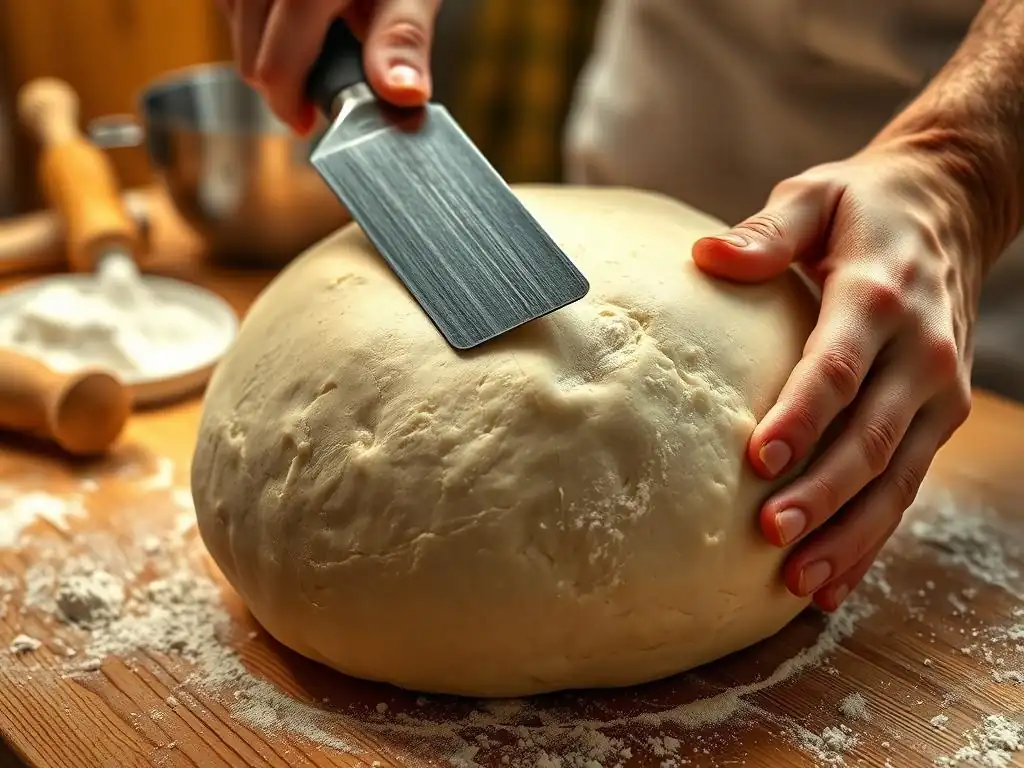
Precise Dough Cutting Techniques: Achieving Uniform Portions
Precise cutting is fundamental to successful baking, especially for items like rolls, biscuits, or pastries where uniform size ensures even baking. Using a bench scraper allows you to achieve this precision with relative ease. Start by gently patting or rolling your dough into a rectangle or square of even thickness on a lightly floured surface. This provides a consistent starting point for cutting.
To cut, hold the bench scraper with the blade perpendicular to the counter and the dough. Apply firm, downward pressure to slice through the dough in a single, decisive motion. Avoid dragging the scraper, which can stretch and distort the dough.
For uniform portions, you can use a ruler or simply eyeball consistent widths or lengths, making small marks on the dough's edge before cutting. For example, if you need 12 equal rolls from a rectangular piece of dough, you might divide one side into three segments and the other into four, then cut along those lines. This technique is crucial for achieving easy bench scraper dough shaping into consistent units.
Using a Bench Scraper to Divide Dough for Bread, Rolls, and Pastries
Dividing large batches of dough into smaller, manageable portions is a key step in preparing many baked goods. A bench scraper is the ideal tool for this task, whether you're making a dozen dinner rolls or scaling dough for multiple bread loaves. For bread, you might scale the dough using a kitchen scale – place the entire dough mass on the scale, then use the bench scraper to cut off portions, adding or removing small pieces until the desired weight is reached (e.g., 500g for a standard loaf).
For rolls or pastries, where weight might be less critical than visual consistency, you can simply divide the dough visually using the techniques described above. For example, to make 24 cookies from a batch of dough, you might divide the dough into four equal parts, then each part into six. The bench scraper's clean cut ensures that the dough portions are roughly the same size and shape, setting you up for easy dough shaping with a bench scraper later in the process. This method is far more efficient than trying to pull or tear dough apart by hand.
Tips for Clean and Efficient Dough Cutting with Your Scraper
Achieving clean and efficient cuts requires a few simple practices. First, ensure your bench scraper has a reasonably sharp edge. While not razor-sharp like a knife, the edge should be clean and not rounded. Second, work on a surface that allows the scraper to make full contact – a smooth countertop or large cutting board is ideal. Lightly flouring your surface and the blade of the scraper can also help prevent sticking, especially with wetter doughs.
When cutting, maintain a firm grip on the handle and press straight down. If cutting a long piece, you can rock the scraper slightly from front to back as you press down, but the primary motion should be vertical. For sticky doughs, dipping the scraper blade in flour or even a little water between cuts can significantly improve efficiency and prevent dough from clinging, ensuring easy bench scraper dough shaping starts with clean divisions. Practice makes perfect; the more you use your scraper, the more intuitive these movements will become.
Portioning Dough Like a Pro: Bench Scraper Techniques
How to Weigh Dough Portions Accurately Using a Bench Scraper
Accurate portioning by weight is critical for consistent baking results, particularly in professional settings or when following recipes that specify weights. A bench scraper is an essential partner to your kitchen scale for this task. Place your mixing bowl or a large piece of parchment paper on your scale and zero it out. Transfer the bulk dough onto the scale.
Use your bench scraper to cut roughly the amount of dough needed for one portion directly on the scale. If the portion is slightly over, use the edge of the scraper to carefully slice off a small piece. If it's under, add a small piece from the main dough mass. Use the scraper to lift and transfer the portioned dough off the scale. Repeat this process until all the dough is portioned. This technique, facilitated by the bench scraper's ability to cleanly cut and move dough, makes achieving precise weights for easy bench scraper dough shaping straightforward and efficient.
Achieving Consistent Dough Ball Sizes for Baking Success
While weighing provides the most accurate consistency, sometimes you need visually consistent portions for items like rolls or buns without the scale. This is where your bench scraper's cutting precision comes into play. After rolling or patting your dough into an even slab, use the scraper to cut it into squares or rectangles of roughly equal size.
Once cut, use the bench scraper to gently lift each portion. You can then proceed to shape these portions into balls or other desired forms. The bench scraper's flat surface is also useful here for gathering dough scraps or tidying up the edges of your cut portions before shaping. Starting with uniformly cut pieces makes the subsequent steps of easy bench scraper dough shaping much simpler, ensuring that all your rolls or buns bake evenly and look appealingly similar.
Speed Portioning: Efficiently Preparing Dough for Large Batches
When dealing with large quantities of dough, such as for catering or preparing many loaves, speed and efficiency in portioning are key. The bench scraper is invaluable for rapid division. Instead of weighing every single piece, you can quickly divide the large dough mass into several large chunks using the scraper, then further divide those chunks into smaller, roughly equal portions.
For example, if you have 5 kg of dough for rolls that need to be around 100g each, you could use the scraper to divide the dough into 5 x 1 kg chunks first. Then, divide each 1 kg chunk into ten roughly 100g pieces. While not as precise as individual weighing, this method is significantly faster and, with practice, can yield surprisingly consistent results. The scraper's ability to slice cleanly through large volumes of dough makes this type of easy bench scraper dough shaping prep work highly efficient.
Dough Shaping Made Easy: Bench Scraper Techniques
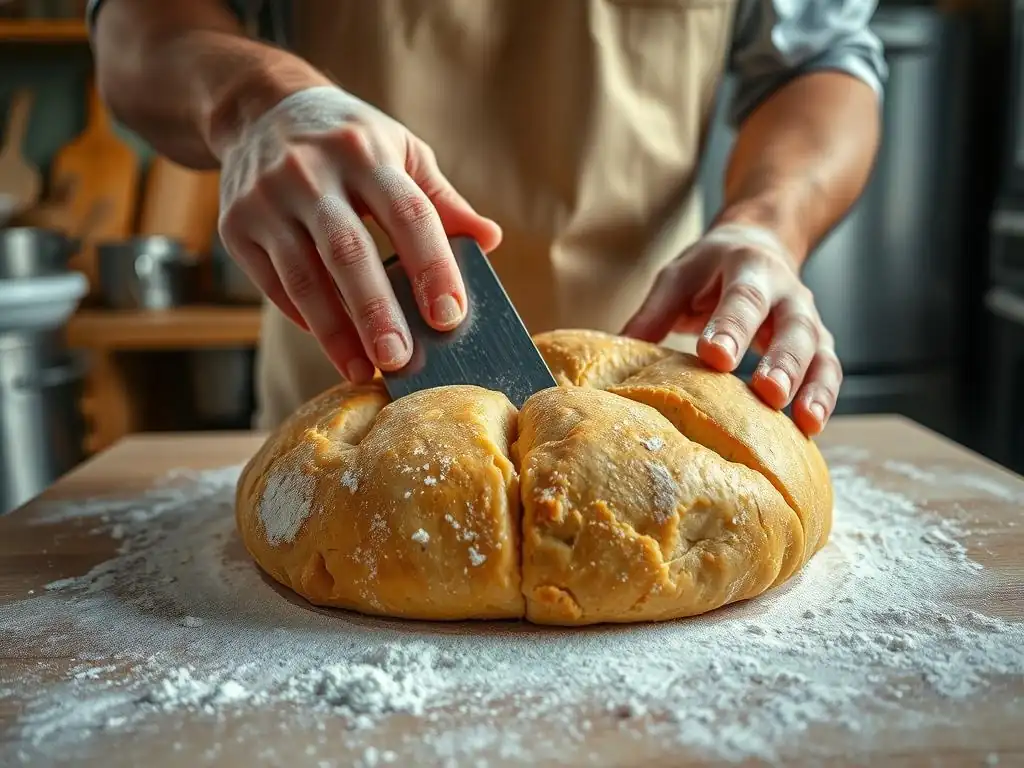
Basic Dough Shaping with a Bench Scraper: Rounding and Tucking
Once your dough is portioned, the next step is often shaping. A bench scraper is surprisingly useful for basic shaping techniques, particularly rounding dough balls. For a simple round loaf or roll, take a portion of dough and place it on a lightly floured or unfloured surface (depending on the dough's stickiness). Cup your hand around the dough and use the bench scraper positioned just outside your hand to gently push and rotate the dough.
The scraper acts as a barrier, helping to create tension on the dough's surface as you tuck the edges underneath. This motion helps form a smooth, taut skin on the outside of the dough ball, which is crucial for a good rise and structure. The flat side of the scraper can also be used to gently nudge or tuck edges of dough during shaping. This simple application makes easy bench scraper dough shaping for basic rounds much more controlled and effective than relying solely on your hands.
Shaping Baguettes and Boules: Advanced Techniques with Your Scraper
For more advanced shapes like baguettes and boules, the bench scraper plays a supporting but important role. When shaping baguettes, after pre-shaping into cylinders, you'll perform a final shaping step involving folding and rolling. The bench scraper can be used to help lift and fold the dough without tearing it, and its straight edge can assist in creating a taut surface by gently pushing the dough against the counter.
For boules (round loaves), after the initial rounding, you might perform a final shaping before placing the dough in a proofing basket. The bench scraper can be used similarly to the basic rounding technique, helping to build surface tension by tucking the dough underneath. Some bakers also use the scraper to carefully lift the shaped dough from the counter and transfer it to a proofing basket or baking surface, minimizing distortion. These techniques demonstrate how a bench scraper aids in achieving easy bench scraper dough shaping even for more complex forms.
Creating Decorative Dough Shapes: Getting Creative with Your Bench Scraper
Beyond functional shaping, a bench scraper can even be used for simple decorative touches. While not designed for intricate scoring, its edge can be used to make shallow cuts or indentations on certain doughs before baking. For example, pressing the edge into focaccia dough before adding toppings can create a rustic pattern.
For pastry doughs, the straight edge can be used to trim edges cleanly or even to help cut lattice strips of consistent width. While specialized tools exist for decorative work, the bench scraper offers a simple way to add basic visual appeal. Experimenting with how the flat side or the edge interacts with different dough textures can lead to surprising results, adding another dimension to easy bench scraper dough shaping beyond just basic forms.
Cleaning and Maintaining Your Bench Scraper for Longevity
Proper Cleaning Techniques for Stainless Steel and Plastic Scrapers
Proper cleaning is essential to keep your bench scraper hygienic and in good condition. For both stainless steel and plastic scrapers, the best practice is to clean them immediately after use, before dough or residue has a chance to dry and harden. Wash them with warm, soapy water, using a sponge or brush to remove all traces of flour and dough.
For stubborn, dried-on dough, especially on stainless steel, you might need to soak the scraper briefly or use a stiffer brush. Avoid using abrasive scrub pads on plastic scrapers, as they can scratch the surface. Ensure you get into any crevices around the handle where dough can hide. A thorough wash ensures your scraper is clean and ready for the next batch of easy bench scraper dough shaping.
Preventing Rust and Damage: Caring for Your Bench Scraper
Stainless steel is generally rust-resistant, but it's not entirely immune, especially if left wet for extended periods or exposed to harsh chemicals. After washing a stainless steel scraper, dry it immediately and thoroughly with a clean towel. Avoid putting stainless steel scrapers in the dishwasher if they have wooden handles, as the heat and moisture can damage the wood.
Plastic scrapers are less prone to rust but can warp if exposed to high heat, such as being left on a hot stove or in a very hot dishwasher cycle (check if it's dishwasher safe). They can also be scratched, which can create small crevices where dough might stick. Handle both types of scrapers with care to avoid dropping them, which can bend the blade of a metal scraper or crack a plastic one, impairing its ability to perform easy bench scraper dough shaping effectively.
Storage Tips: Keeping Your Bench Scraper Safe and Ready for Use
Storing your bench scraper properly protects it from damage and keeps it accessible. Bench scrapers are often stored in a kitchen drawer, but be mindful of how they are placed. A stainless steel scraper's edge, while not razor-sharp, can still scratch other utensils or even cut you if you rummage carelessly. Consider storing it in a dedicated slot or with the blade edge facing away from where you'd grab it.
Some bakers prefer to hang their bench scraper on a hook, especially if it has a hole in the handle. This keeps the blade exposed but prevents it from getting damaged or damaging other items in a drawer. Wherever you store it, ensure it's completely dry beforehand to prevent rust on metal scrapers. Proper storage ensures your tool remains in top condition for all your easy dough shaping with a bench scraper needs.
Troubleshooting Common Dough Handling Issues
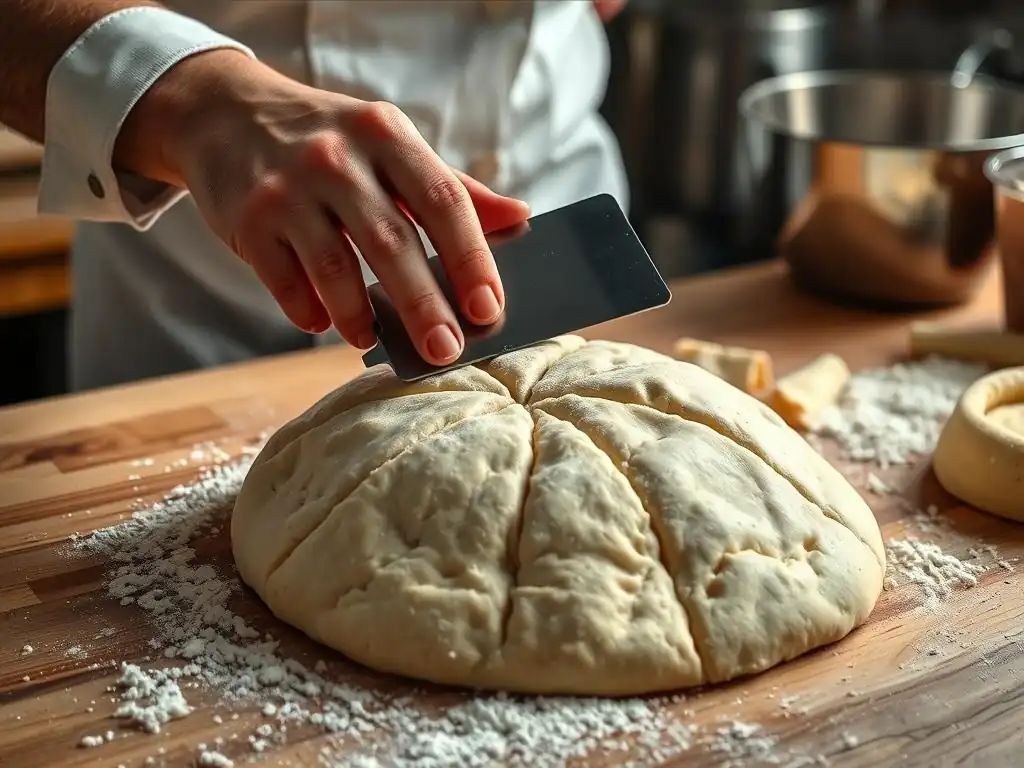
Dough Sticking to the Bench Scraper: Solutions and Prevention
One of the most common frustrations when working with dough is it sticking to your tools, including the bench scraper. This often happens with very wet or sticky doughs, like high-hydration sourdough. To prevent this, the simplest solution is to lightly flour the blade of your bench scraper before each cut or scrape. Keep a small bowl of flour nearby for quick dips.
Alternatively, for very sticky doughs, a little water on the blade can also work, creating a temporary barrier. If dough does stick, use another scraper or a stiff brush to carefully scrape it off. Avoid using your fingers, as this can be messy. Maintaining a clean scraper throughout the process is key to smooth and easy bench scraper dough shaping.
Achieving a Smooth Dough Surface: Tips for Perfect Shaping
A smooth, taut surface on your shaped dough is important for a good rise and appearance. While shaping by hand is the primary method, the bench scraper can assist. When rounding dough, using the scraper to gently push and tuck the dough underneath helps create the necessary surface tension.
If your dough surface tears during shaping, it might be overworked or not properly rested. Allow the dough to rest for 10-15 minutes (a brief "bench rest") before attempting to reshape. The scraper can also be used gently to lift and reposition the dough if it's sticking, without disrupting the developing smooth surface. Practicing your rounding technique, potentially using the scraper as a guide, will significantly improve your easy bench scraper dough shaping results.
Fixing Uneven Dough Portions: Correcting Mistakes with Your Scraper
Even with careful cutting, you might end up with slightly uneven dough portions, especially when speed portioning. A bench scraper is perfect for making quick adjustments. If a portion is too large, place it on the scale and use the scraper to slice off the excess. If it's too small, use the scraper to lift a small piece from a larger portion or scrap dough and add it.
The scraper's straight edge and maneuverability allow for precise trimming and adding of small dough pieces. This ability to easily correct portion sizes means that minor errors during the initial cut don't derail your plan for consistent baking, ensuring your path to easy bench scraper dough shaping remains smooth.
Beyond Dough: Other Uses for Your Bench Scraper in the Kitchen
Chopping Vegetables and Herbs with Precision
While primarily a dough tool, the bench scraper is surprisingly useful for handling chopped ingredients. After finely chopping vegetables like onions, peppers, or herbs on a cutting board, use the flat side of your bench scraper to neatly gather them into a pile. The straight edge allows you to scrape right up to the blade of your knife, minimizing waste.
Once gathered, slide the scraper underneath the pile. Its flat surface provides a stable platform to lift and transfer the chopped items directly into a bowl, pot, or pan. This is much more efficient than trying to scoop them up with your hands or a knife blade, which can scatter them. While not directly related to easy bench scraper dough shaping, this use demonstrates the tool's broader utility.
Transferring Ingredients Efficiently
Beyond chopped vegetables, the bench scraper is excellent for transferring various ingredients. Think of dry ingredients like flour, sugar, or cocoa powder that might spill when measuring or mixing. Use the scraper to scoop up spills or to transfer measured amounts from a large container to a smaller one.
It's also great for moving ingredients to your workspace. If you've measured out flour or spices, you can pour them onto the scraper and then use it to carefully add them to your mixing bowl, preventing mess. This simple task makes kitchen workflow smoother, even when you're not focused on easy bench scraper dough shaping.
Cleaning Your Work Surface with Ease
As mentioned earlier, cleaning is where the bench scraper truly shines beyond dough handling. After any kitchen task, from baking to cooking, residue is often left on countertops. Use the bench scraper to scrape up dried spills, flour, crumbs, or sticky messes.
The rigid edge is far more effective than a cloth or sponge for this kind of scraping action. It can tackle dried-on batter, sticky glaze drips, or accumulated flour with minimal effort. A quick scrape with your bench scraper followed by a wipe-down is often all that's needed to leave your counter spotless, making cleanup after easy bench scraper dough shaping or any other kitchen activity a breeze.
Conclusion: Unleash Your Baking Potential with Bench Scraper Mastery
The humble bench scraper is far more than just a tool for cutting dough; it's a versatile workhorse that can significantly improve your efficiency and results in the kitchen. From precise portioning and aiding in easy bench scraper dough shaping to effortlessly cleaning your workspace and transferring ingredients, its uses are numerous.
By understanding the different types available, mastering basic cutting and shaping techniques, and incorporating it into your cleaning routine, you unlock the full potential of this simple tool. Whether you're a beginner trying your hand at your first loaf or an experienced baker perfecting your craft, embracing bench scraper mastery will make your baking journey smoother, cleaner, and ultimately, more rewarding. Invest in a quality scraper, practice these techniques, and discover just how much easier easy bench scraper dough shaping and overall dough handling can be.
Frequently Asked Questions
How can a bench scraper help with easy bench scraper dough shaping?
A bench scraper allows for clean and precise cuts of dough, making portioning easier. It also assists in lifting and manipulating sticky dough, crucial for shaping without excessive handling.
What types of dough are best suited for easy bench scraper dough shaping?
Bench scrapers are versatile and work well with various doughs, especially sticky or wet doughs like sourdough or high-hydration breads. They also excel with firm doughs for pastries.
Can a bench scraper improve my easy bench scraper dough shaping technique as a beginner?
Absolutely! A bench scraper provides more control and precision compared to using your hands alone. This makes it easier to achieve consistent shapes and improves the overall baking experience for beginners.
Are there different types of bench scrapers, and which is best for easy bench scraper dough shaping?
Yes, there are metal and plastic scrapers. Metal scrapers are more durable and offer a sharper edge for cutting, while plastic scrapers are gentler on non-stick surfaces.
Besides shaping, what other uses does a bench scraper have in baking for easy bench scraper dough shaping?
Beyond shaping, a bench scraper is useful for cleaning your work surface, lifting ingredients, and even scraping bowls to ensure all ingredients are incorporated, contributing to overall ease.
Final Reflection: The Humble Bench Scraper's Unexpected Power
Mastering the bench scraper isn't just about efficient dough handling; it's about unlocking a deeper connection with the baking process itself. The seemingly simple act of scraping, cutting, and shaping dough with precision transforms the entire experience, from a potentially frustrating chore into a mindful and creative endeavor. This newfound control translates directly into better-looking and better-tasting baked goods, a reward that speaks volumes about the power of mastering even the smallest tools.
The impact of this seemingly small tool extends far beyond the kitchen counter. It's a microcosm of the larger principle of finding beauty and efficiency in simplicity. Learning to use a bench scraper effectively mirrors the journey of mastering any skill – patience, practice, and attention to detail are key. As the renowned baker, Paul Hollywood, once said, Baking is about precision and attention to detail. It's about understanding the science and the art.
This sentiment perfectly encapsulates the spirit of bench scraper mastery; it's a blend of both technical skill and artistic expression.
Now, consider your own baking journey. Think about the areas where you might benefit from a more precise approach, a sharper focus on technique. Perhaps it's not just dough shaping, but also your approach to measuring ingredients or understanding oven temperatures. I invite you to pick up your bench scraper, not just as a tool, but as a symbol of mindful practice and the pursuit of excellence in your baking. Embrace the challenge, celebrate the small victories, and discover the unexpected joy that comes from truly mastering a craft.
Unleash Your Inner Baker: Master the Bench Scraper!
Thanks for taking the time to explore the world of bench scraper mastery! We hope you now feel confident and ready to tackle any dough challenge. Ready to put your new skills to the test?
- Immediately try a new recipe: Choose a bread, pie crust, or cookie recipe you've been wanting to make and use your bench scraper to perfect the dough shaping and portioning. Embrace the precision!
- Share your baking triumphs (or even your flops!): Let's build a community! Tell us about your experience using your new bench scraper skills in the comments below. We'd love to hear your story and see your creations.
- Challenge a friend to a baking duel: Use your newfound bench scraper expertise to out-bake a friend. Make it a friendly competition focused on precision and speed.
What amazing dough creations will you craft with your newly honed bench scraper skills?