
Cream of Tartar’s Role in Stabilizing Baking Soda Reactions

Welcome to BakeWithEase, your companion in the delightful world of baking! Ever wondered about the secret ingredient that unlocks the perfect rise and texture in your favorite treats? Delve into the fascinating science behind cream of tartar baking soda and how this dynamic duo can transform your baking game. Discover its crucial role in stabilizing baking soda reactions and achieving bakery-worthy results. Are you ready to elevate your baking from good to extraordinary?
- Cream of Tartar's Role in Stabilizing Baking Soda Reactions: Bake With Ease
- Understanding Leavening Agents: Baking Soda and Cream of Tartar
- Cream of Tartar and Baking Soda: The Dynamic Duo in Baking
- The Science Behind Stabilization: Cream of Tartar's Mechanism
- Benefits of Using Cream of Tartar with Baking Soda
- When to Use Cream of Tartar and Baking Soda Together
- Troubleshooting Common Issues with Baking Soda and Cream of Tartar
- Cream of Tartar Alternatives: What to Use if You Don't Have It
- Baking with Ease: Mastering Baking Soda and Cream of Tartar Combinations
-
Frequently Asked Questions
- What is cream of tartar, and what is its main function in baking?
- How does cream of tartar interact with baking soda?
- Can I substitute cream of tartar with something else in a recipe?
- What happens if I don't use cream of tartar when a recipe calls for it?
- Is cream of tartar the same as baking powder?
- Final Reflection: The Unexpected Power of Cream of Tartar
- Unlock Baking Secrets: Master the Power of Cream of Tartar!
Cream of Tartar's Role in Stabilizing Baking Soda Reactions: Bake With Ease
Understanding Leavening Agents: Baking Soda and Cream of Tartar
What is Baking Soda and How Does it Work?
Baking soda, chemically known as sodium bicarbonate, is a pure leavening agent. It's an alkaline compound that requires an acid to activate its leavening power. When baking soda encounters an acidic ingredient in your dough or batter – like buttermilk, yogurt, lemon juice, or even brown sugar – it produces carbon dioxide gas. This gas gets trapped within the gluten structure of the dough or the protein network of the batter, causing it to expand and rise during baking.
This reaction is quite rapid, often starting as soon as the wet and dry ingredients are combined. Because the reaction happens quickly and requires an acid, recipes relying solely on baking soda often need to be baked immediately after mixing to capture the maximum leavening effect. A typical amount might be 1/4 teaspoon per cup of flour if combined with sufficient acid, though this varies greatly depending on the recipe and other leavening agents used.
What is Cream of Tartar? A Baker's Secret Ingredient
Cream of tartar, or potassium bitartrate, is a fine, white powder that might look unassuming, but it's a powerhouse in the baking world. It's a natural byproduct of winemaking, essentially the crystalline acid that precipitates out of grape juice during fermentation. Despite its name, it's not creamy at all! It's a dry acid, similar in function to lemon juice or vinegar, but in a convenient, stable powder form.
In baking, cream of tartar serves several important purposes. It's most famously used to stabilize whipped egg whites, helping them reach greater volume and preventing them from collapsing. It also plays a key role in preventing sugar crystallization in candies and syrups. But its interaction with baking soda is perhaps one of its most crucial functions in everyday baking, impacting everything from cookies to cakes.
The Chemical Reaction: Baking Soda and an Acid
The magic of baking soda as a leavener happens when it reacts with an acid. This acid-base reaction produces carbon dioxide gas, water, and a salt. The basic formula looks something like this: NaHCO₃ (baking soda) + Acid → CO₂ (carbon dioxide) + H₂O (water) + Salt. The carbon dioxide is the star here, creating bubbles that lift and lighten your baked goods.
Different acids react with baking soda at different rates and temperatures. Acids like lemon juice or vinegar cause an immediate, vigorous reaction at room temperature. Other acids, like those found in buttermilk or yogurt, also react quickly. Cream of tartar is a dry acid that reacts predictably with baking soda when moisture is introduced, and its reaction can be moderated, making it particularly useful for controlled leavening.
Cream of Tartar and Baking Soda: The Dynamic Duo in Baking
Why Use Cream of Tartar with Baking Soda?
Combining cream of tartar with baking soda is a classic baking technique that leverages the benefits of both ingredients. While baking soda needs an acid to react, cream of tartar provides a reliable, consistent source of acid in a dry form. This pairing is essentially what makes up commercial baking powder, which is a pre-mixed blend of baking soda, a dry acid (often cream of tartar), and a starch (like cornstarch) to keep it dry and prevent premature reaction.
Using cream of tartar alongside baking soda in a recipe allows bakers to control the leavening process more precisely than using baking soda with a liquid acid alone. It ensures there's enough acid present to fully react with the baking soda, preventing unreacted alkaline residue. This is crucial for achieving the desired rise and texture in many recipes, especially those that might not contain enough natural acidic ingredients to fully activate the baking soda.
Cream of Tartar as a Stabilizer: Preventing Metallic Tastes
One of the key roles of cream of tartar when used with baking soda is to act as a stabilizer and prevent off-flavors. If baking soda doesn't fully react with an acid, residual sodium bicarbonate can remain in the finished product. This unreacted baking soda is alkaline and can impart an unpleasant, soapy, or metallic taste to your baked goods. It can also leave behind yellowish or greenish spots, particularly in lighter colored batters.
By ensuring there's sufficient acid from the cream of tartar, the baking soda is fully neutralized. This means all the sodium bicarbonate is converted into carbon dioxide, water, and salts, leaving no alkaline residue to affect the flavor. Think of it as balancing the scales – the cream of tartar provides the necessary acidic counterweight to the alkaline baking soda, resulting in a cleaner, more pleasant taste profile.
Controlling Leavening: How Cream of Tartar Affects Rise
Beyond just preventing off-flavors, cream of tartar plays a critical role in controlling the timing and extent of the leavening reaction when paired with baking soda. Unlike some liquid acids that cause an immediate fizz, cream of tartar's reaction with baking soda is more controlled, especially when mixed into a dry blend before adding wet ingredients.
When moisture is added, the reaction begins, producing gas. However, the full leavening power is often unleashed more gradually or gets a second boost from the heat of the oven. This controlled release of carbon dioxide allows for a more even and sustained rise throughout the baking process, contributing to a finer, more uniform crumb structure. It helps prevent that initial rapid burst of gas that might escape before the structure of the baked good is set.
The Science Behind Stabilization: Cream of Tartar's Mechanism
How Cream of Tartar Moderates Baking Soda's Reactivity
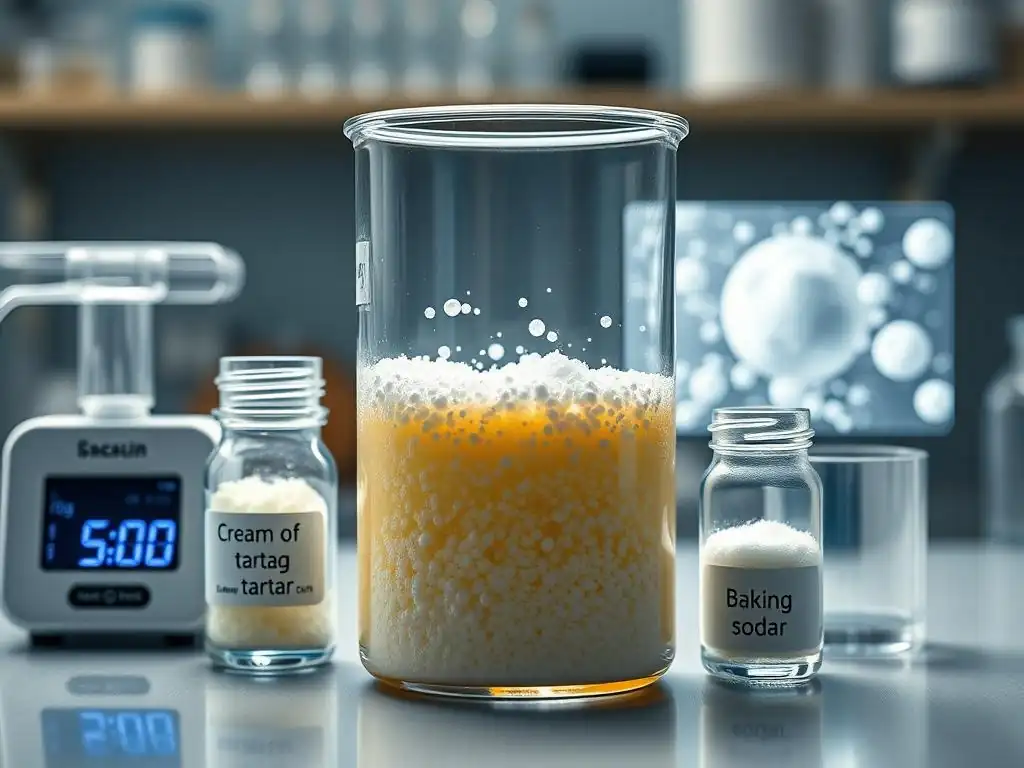
Cream of tartar is a monoprotic acid, meaning it has one acidic hydrogen ion to donate in a reaction. When it meets baking soda (sodium bicarbonate), an acid-base reaction occurs. The dry, crystalline nature of cream of tartar means that this reaction is relatively slow until moisture is introduced. Once dissolved, the reaction proceeds, producing carbon dioxide.
The crucial aspect is the rate and completeness of this reaction. Cream of tartar provides a consistent, reliable source of hydrogen ions to react with the bicarbonate ions from the baking soda. This ensures that, provided the ratio is correct and there's enough moisture and heat, the baking soda is fully neutralized, preventing the unreacted alkaline residue that causes off-flavors and poor texture. This controlled reaction is less volatile than reactions with stronger, faster-acting acids like vinegar.
pH Balance: Achieving Optimal Leavening with Cream of Tartar
The effectiveness of baking soda and cream of tartar as a leavening system is closely tied to the pH of the batter or dough. Baking soda is alkaline (high pH), while cream of tartar is acidic (low pH). The leavening reaction occurs optimally when the pH is balanced to allow the full release of carbon dioxide.
Using the correct ratio of cream of tartar to baking soda ensures that the final mixture achieves a pH that is neither too acidic nor too alkaline. An ideal ratio, often found in baking powder (which is typically 1 part baking soda to 2 parts cream of tartar, plus starch), ensures the baking soda is fully reacted. This pH control is vital not just for leavening but also for enzymatic activity (like browning) and protein coagulation, all of which contribute to the final texture, color, and structure of the baked good.
Preventing Over-Leavening: The Role of Acid in Baking
While it might seem counterintuitive, the acid provided by cream of tartar actually helps control leavening rather than just boosting it wildly. Baking soda alone, if paired with a very strong, fast-acting acid in high quantities, could potentially cause such a rapid release of gas that the bubbles merge into large, unstable pockets, or worse, the gas escapes before the structure sets, leading to collapse.
Cream of tartar, with its more moderate reaction rate compared to some liquid acids, allows for a sustained production of gas throughout the initial stages of baking. This controlled release, especially when the batter heats up in the oven, helps create a fine, even crumb structure. The acid also helps to strengthen the gluten network in the dough or the protein structure in batters (like egg whites), making them more capable of holding onto the generated gas, preventing over-expansion followed by deflation.
Benefits of Using Cream of Tartar with Baking Soda
Improved Texture and Crumb Structure in Baked Goods
Using the correct combination of cream of tartar and baking soda can significantly enhance the texture and crumb structure of your baked goods. The controlled release of carbon dioxide gas facilitated by the cream of tartar creates smaller, more uniform bubbles throughout the batter or dough.
This results in a finer, more tender crumb. Instead of large, irregular holes, you get a consistent network of air pockets that contribute to a soft, pleasant mouthfeel. For instance, in a cake, this combination helps achieve a delicate, even texture, while in cookies, it can contribute to a desirable spread and chewiness, depending on other ingredients and ratios. This is one of the key reasons why recipes often specify both ingredients or rely on baking powder, which uses this principle.
Enhanced Flavor Profile: Avoiding Bitterness from Baking Soda
As mentioned earlier, one of the most important benefits is the prevention of the harsh, metallic, or soapy flavor that can result from unreacted baking soda. Cream of tartar, by providing the necessary acid to fully neutralize the baking soda, ensures that all of it is converted during the baking process.
This means the pure, intended flavors of your ingredients – vanilla, chocolate, spices, butter – can shine through without being masked or tainted by alkaline notes. This is particularly noticeable in recipes with a delicate flavor profile or those that use a significant amount of baking soda relative to other acidic ingredients. Achieving this clean flavor is essential for baking success.
Consistent Results: Reliable Leavening Every Time
Using a balanced combination like cream of tartar and baking soda (or baking powder) offers a level of consistency that can be harder to achieve when relying solely on the variable acidity of other ingredients (like different brands of buttermilk or ripeness of bananas). Cream of tartar is a stable, dry acid with a predictable reaction rate.
When combined with fresh baking soda in the correct ratio, you can count on a consistent amount of carbon dioxide gas being produced every time you bake that recipe. This reliability is invaluable for bakers seeking reproducible results, ensuring your cookies spread just right or your cakes rise to the perfect height batch after batch. It takes some of the guesswork out of the leavening process.
When to Use Cream of Tartar and Baking Soda Together
Recipes That Benefit Most from This Combination
Certain types of recipes particularly benefit from the controlled leavening and pH balancing provided by cream of tartar used with baking soda. These often include recipes where a fine, even crumb is desired, where preventing off-flavors is crucial, or where a specific spread or texture is characteristic.
Think of recipes that might not contain a lot of naturally acidic ingredients but still require significant leavening. Cookies, especially those designed to spread and have a chewy interior, often use this combination. Cakes that need a tender crumb, quick breads, and even some pastry doughs can also leverage the unique properties of this leavening duo. Understanding the role allows you to predict how different leavening agents will behave.
Angel Food Cake and Snickerdoodles: Perfect Partners for Cream of Tartar
Two classic examples showcase the power of cream of tartar in baking. Angel food cake relies heavily on whipped egg whites for structure and rise. Cream of tartar is added to the egg whites to stabilize the foam, allowing it to be whipped to maximum volume without collapsing. This is slightly different from its role with baking soda, but illustrates its acidic stabilizing power.
Snickerdoodles, on the other hand, are a prime example of cream of tartar used with baking soda. The signature tangy taste and the crackly surface of a snickerdoodle come directly from the combination of baking soda and cream of tartar (often in a 1:2 ratio, similar to baking powder). This combination provides the leavening for spread and puffiness, while the cream of tartar contributes acidity that interacts with the sugar and cinnamon coating, creating that distinctive flavor and texture.
Adjusting Ratios: Finding the Perfect Balance for Your Recipe
The ratio of cream of tartar to baking soda is critical and depends entirely on the specific recipe's needs and other ingredients. As a general guideline, a ratio of 1 part baking soda to 2 parts cream of tartar provides a neutral leavening effect similar to baking powder. For example, 1/4 teaspoon of baking soda combined with 1/2 teaspoon of cream of tartar can replace 1 teaspoon of baking powder.
However, many recipes call for different ratios to achieve specific results. A recipe might use more baking soda than cream of tartar if it already contains a significant amount of liquid acid (like buttermilk), needing just a bit more base to react. Conversely, a recipe might use relatively more cream of tartar for its tenderizing and flavor-enhancing effects, even if the primary leavening comes from other sources like eggs or mechanical aeration. Always follow the recipe's specified amounts unless you understand the desired outcome of altering the balance.
Troubleshooting Common Issues with Baking Soda and Cream of Tartar
Too Much Baking Soda: Recognizing and Correcting the Imbalance
Using too much baking soda relative to the amount of acid (including cream of tartar) in a recipe is a common issue. The most obvious sign is that unpleasant, soapy, or metallic aftertaste we discussed. You might also notice yellowish or greenish spots in the crumb, especially in lighter batters like vanilla cake or sugar cookies.
To correct this in future baking endeavors, ensure you are measuring your ingredients accurately. If you suspect a recipe has an imbalance, you might slightly increase the amount of acid (if the recipe can handle a bit more tang) or slightly decrease the baking soda in your next attempt. Always level off your measuring spoons for dry ingredients like baking soda and cream of tartar.
Not Enough Cream of Tartar: Signs and Solutions
If a recipe calls for both ingredients but you don't use enough cream of tartar relative to the baking soda, you'll likely encounter the same issues as using too much baking soda: off-flavors and potentially poor color. Additionally, the leavening might not be as controlled or complete, potentially leading to a denser or heavier texture than desired.
If you find yourself short on cream of tartar for a recipe that specifically calls for it alongside baking soda, you might need to make a substitution using another acid (see the next section). However, simply omitting it or significantly reducing it without adjusting the baking soda will likely negatively impact the outcome. For best results, use the specified amount of cream of tartar when a recipe requires it with baking soda.
Cookies that spread too much and end up thin and flat can sometimes be attributed to an imbalance in leavening agents, although many factors like butter temperature, sugar type, and flour measurement also play a role. If your cookies consistently lack puffiness and spread excessively, and the recipe uses both baking soda and cream of tartar, you might consider slightly increasing the ratio of cream of tartar to baking soda in your next batch.
A higher proportion of acid (cream of tartar) relative to the base (baking soda) in a cookie recipe can help control spread and encourage more upward puff. The acid helps set the proteins and starches in the dough more quickly in the heat of the oven, limiting how much the cookie spreads before it starts to rise. Experimenting with small adjustments, like adding an extra 1/4 teaspoon of cream of tartar, can sometimes make a noticeable difference in cookie texture and height.
Cream of Tartar Alternatives: What to Use if You Don't Have It
Lemon Juice, Vinegar, and Buttermilk: Acidic Stand-ins for Cream of Tartar
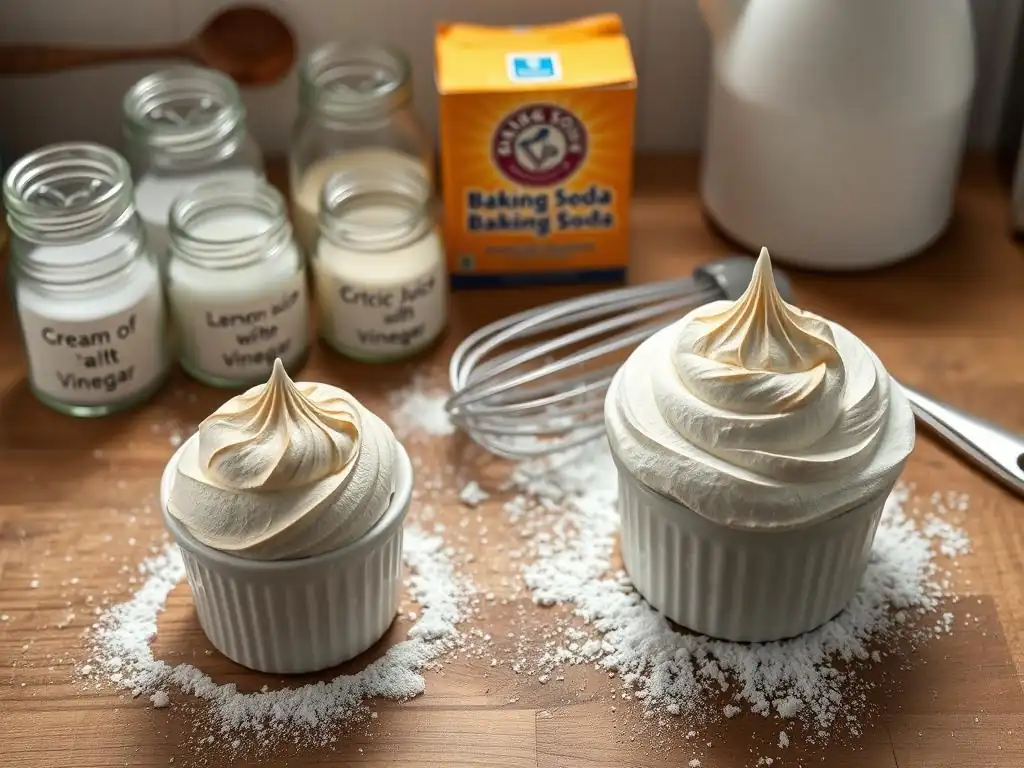
If a recipe specifically calls for cream of tartar and you're out, you can sometimes substitute other acidic ingredients, though the results may vary slightly as the reaction rates and flavors differ. Common acidic stand-ins include lemon juice, white vinegar, or buttermilk.
- Lemon Juice or White Vinegar: These are liquid acids and react very quickly with baking soda. A common substitution is using 1 teaspoon of lemon juice or vinegar for every 1/2 teaspoon of cream of tartar. Remember that you're adding liquid, so you might need to slightly reduce other liquids in the recipe, although for small amounts (like 1-2 teaspoons), this is often negligible.
- Buttermilk, Yogurt, or Sour Cream: These dairy products are acidic and can also react with baking soda. If substituting for cream of tartar in a recipe using baking soda, you'd use a larger quantity – perhaps 1/4 cup of buttermilk or yogurt for every 1/2 teaspoon of cream of tartar and 1/4 teaspoon of baking soda. You'd also need to adjust the total liquid in the recipe significantly.
Adjusting Recipes for Substitutions: Maintaining the Right Leavening
Substituting cream of tartar requires careful consideration of the original recipe's balance. If the recipe uses cream of tartar with baking soda, your goal is to provide an equivalent amount of acid to react with the baking soda already present. If the recipe uses cream of tartar for stabilizing egg whites or preventing sugar crystallization, acidic liquid substitutes might not work the same way.
When using liquid acids like lemon juice or vinegar to substitute cream of tartar in a baking soda reaction, be mindful that the reaction starts immediately upon mixing wet and dry ingredients. Work quickly to get the batter or dough into the oven to capture the gas. Substituting with dairy acids like buttermilk also introduces fat and protein, which will impact texture. The best approach is often to find recipes specifically developed for the leavening agents you have on hand.
Baking Powder vs. Baking Soda and Cream of Tartar: Understanding the Difference
It's crucial to understand that baking powder is not a direct substitute for using baking soda and cream of tartar separately in all recipes, even though baking powder contains both. Baking powder is a complete, pre-portioned leavening system. Most commercial baking powders are "double-acting," meaning they produce gas in two phases: once when mixed with liquid at room temperature, and again when heated in the oven.
When a recipe calls for baking soda and cream of tartar separately, it's often because the recipe writer wants to control the precise ratio of acid to base, or they are relying on other acidic ingredients in the recipe to contribute to the reaction with the baking soda, using cream of tartar for a specific boost or stabilization. Substituting baking powder directly might not provide the correct balance of leavening or acidity needed for the intended outcome of that specific recipe.
Baking with Ease: Mastering Baking Soda and Cream of Tartar Combinations
Tips for Using Cream of Tartar Effectively
To get the best results when using cream of tartar with baking soda, keep these simple tips in mind. First, always measure accurately using level measuring spoons. The ratio is important for achieving the right leavening and flavor. Second, when a recipe calls for mixing dry ingredients, ensure the cream of tartar and baking soda are well distributed throughout the flour mixture before adding wet ingredients. This helps ensure an even reaction.
Third, understand that the reaction starts when liquid is introduced. While cream of tartar provides a more controlled reaction than some acids, it's still best practice to get your batter or dough into the oven reasonably quickly after mixing, especially if the recipe relies heavily on this leavening system for its initial rise.
Store Cream of Tartar Properly; Use Fresh Baking Soda
Just like other baking ingredients, the freshness and proper storage of cream of tartar and baking soda are key to their effectiveness. Cream of tartar should be stored in a cool, dry place in a tightly sealed container. While it has a long shelf life, it can lose potency over time, especially if exposed to moisture or air.
Baking soda can absorb odors and also loses its leavening power over time. To check if your baking soda is still active, place a teaspoon in a small bowl and add a few teaspoons of vinegar or lemon juice. If it fizzes vigorously, it's good to go. If the fizz is weak or non-existent, it's time to replace it. Using fresh ingredients ensures you get the reliable leavening you expect from the cream of tartar baking soda combination.
Achieving Baking Success: A Summary of Cream of Tartar’s Role
Mastering the use of leavening agents like baking soda and cream of tartar is a fundamental step in becoming a more confident baker. Understanding how cream of tartar stabilizes baking soda reactions, prevents off-flavors, and controls leavening allows you to predict outcomes and even troubleshoot when things go wrong.
This dynamic duo, whether used separately or combined in baking powder, is essential for achieving light, tender textures, consistent rise, and clean flavors in a wide variety of baked goods. By paying attention to ratios, using fresh ingredients, and understanding the science, you can harness the power of cream of tartar and baking soda to bake with ease and achieve delicious results every time.
Frequently Asked Questions
What is cream of tartar, and what is its main function in baking?
Cream of tartar is an acidic by-product of winemaking. In baking, its primary function is to stabilize baking soda reactions, helping create a leavening effect.
How does cream of tartar interact with baking soda?
Cream of tartar is an acid. When combined with the alkaline baking soda in a recipe, it creates carbon dioxide gas, which causes baked goods to rise. This reaction is essential for leavening.
Can I substitute cream of tartar with something else in a recipe?
Yes, you can sometimes substitute with lemon juice or white vinegar, but you'll need to adjust the liquid content of the recipe. These substitutes must be acidic to react with baking soda.
What happens if I don't use cream of tartar when a recipe calls for it?
Without cream of tartar, the baking soda reaction may be incomplete, resulting in a flat or dense baked good. The flavor may also be affected.
Is cream of tartar the same as baking powder?
No, cream of tartar is not the same as baking powder. Baking powder already contains both an acid and a base (baking soda), while cream of tartar is just the acid component.
Final Reflection: The Unexpected Power of Cream of Tartar
The seemingly simple interaction between cream of tartar and baking soda holds the key to unlocking consistently light and fluffy baked goods, a detail crucial for both professional and home bakers today. Understanding this fundamental chemical reaction isn't just about achieving perfect soufflés; it's about mastering the very essence of baking, ensuring predictable and delicious results every time.
The subtle yet significant role cream of tartar plays in stabilizing baking soda's reactivity has profoundly shaped the culinary landscape, influencing everything from classic recipes passed down through generations to the innovative creations of modern pastry chefs. Its impact extends beyond mere functionality; it represents a perfect example of how a seemingly minor ingredient can have a dramatic effect on the final product. The devil is in the details,
a culinary adage perfectly encapsulates the importance of understanding the chemistry behind baking. This understanding allows us to appreciate the artistry and precision involved in creating delectable treats.
Now, consider the power you hold in your hands. You've learned about the crucial role cream of tartar plays in baking. Take this knowledge and experiment!
Don't be afraid to explore different recipes, to tweak proportions, and to observe the subtle changes that occur when you adjust the balance of these key ingredients. By understanding the science behind baking, you unlock a world of culinary possibilities, transforming simple ingredients into extraordinary creations. The journey of baking, with its precise measurements and chemical reactions, is a journey of discovery, and you are now equipped to embark on it with a deeper understanding and appreciation.
Unlock Baking Secrets: Master the Power of Cream of Tartar!
Thanks for diving into the fascinating world of baking soda and cream of tartar! You've now unlocked a key ingredient to achieving perfectly risen treats every time. Ready to put your newfound knowledge into action?
- Try a Cream of Tartar-Enhanced Recipe: Pick your favorite recipe and add cream of tartar as described in the article – you’ll be amazed at the difference!
- Share your baking triumphs (or challenges!) with our community in the comments below. Let's learn from each other!
- Explore other BakeWithEase articles for more tips and tricks on perfecting your baking skills.
What delicious creation will you bake next, empowered by your new understanding of cream of tartar?