
A Brief History of Brioche: From France to Your Kitchen

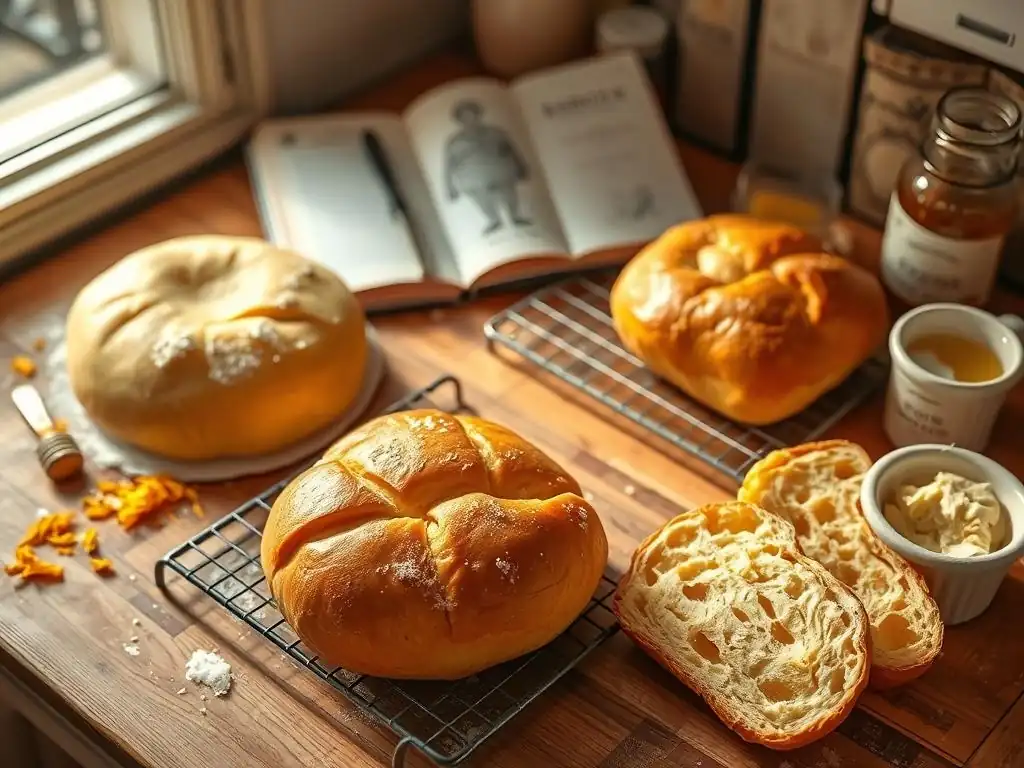
Welcome to BakeWithEase, where baking becomes a joy, not a chore! Ever wondered about the rich history behind that golden, buttery loaf? Dive into our exploration of brioche, from its humble beginnings in France to becoming a staple in kitchens worldwide. Ready to unlock the secrets of an easy French brioche recipe and impress your friends and family? Let's get baking!
- A Brief History of the Sourdough Bread: From Ancient Egypt to San Francisco
- Discovering the Origins of Sourdough: A Fermented Bread History
- The Evolution of Sourdough: From Simple Staple to Culinary Art
- Mastering the Sourdough Recipe: A Guide for Home Bakers
- Sourdough Beyond Bread: Its Versatility and Adaptations
- Baking with Ease: Bringing Sourdough Baking to Your Home Kitchen
- Frequently Asked Questions
- Final Reflection: The Enduring Allure of Brioche
- Unleash Your Inner Boulanger: Bake Brioche Today!
A Brief History of the Sourdough Bread: From Ancient Egypt to San Francisco
Discovering the Origins of Sourdough: A Fermented Bread History
The Ancient Roots of Sourdough: Early Forms of Leavened Bread
The story of sourdough bread begins thousands of years ago, long before commercial yeast was discovered. Evidence suggests that leavened bread first emerged in Ancient Egypt, likely as far back as 4,000 BC or even earlier. It's thought that a forgotten batch of dough, left exposed to the warm, humid air, naturally captured wild yeasts and bacteria present in the environment. This accidental fermentation caused the dough to rise, resulting in a lighter, more palatable bread than the flatbreads common at the time.
This spontaneous leavening process, the basis of sourdough, was a revolutionary step in baking. Early bakers would keep a portion of this fermented dough – the starter – to inoculate subsequent batches, ensuring a consistent rise. This method spread throughout ancient civilizations, from the Greeks to the Romans, becoming the primary way to leaven bread for millennia. While the exact timeline is debated, archaeological finds, such as remnants of ancient bread loaves found in Egyptian tombs, provide tangible proof of early leavened bread production, demonstrating a rudimentary understanding of fermentation.
Sourdough's Rise in California: From the Gold Rush to Modern Bakeries
While sourdough has ancient roots, its association with San Francisco is particularly famous. The California Gold Rush in the mid-19th century played a significant role in popularizing sourdough in North America.
Prospectors, needing resilient and reliable food sources, found that a sourdough starter was relatively easy to maintain on the trail and produced a hearty loaf. The unique microclimate of the San Francisco Bay Area, with its cool, foggy air, proved particularly conducive to fostering a specific strain of Lactobacillus sanfranciscensis, a bacterium that thrives in these conditions and contributes significantly to the distinct tangy flavor profile of authentic San Francisco sourdough.
This regional characteristic cemented San Francisco's reputation as a sourdough capital. Bakeries like Boudin Bakery, established in 1849, became iconic for their tangy loaves, using starters purportedly kept alive for over a century. Today, San Francisco sourdough remains a sought-after product, its unique taste a direct result of the symbiotic relationship between specific local microbes and the flour and water used. While you might be exploring a French brioche recipe easy to make at home, understanding the enduring legacy of sourdough highlights the diverse world of fermented doughs.
The Evolution of Sourdough: From Simple Staple to Culinary Art
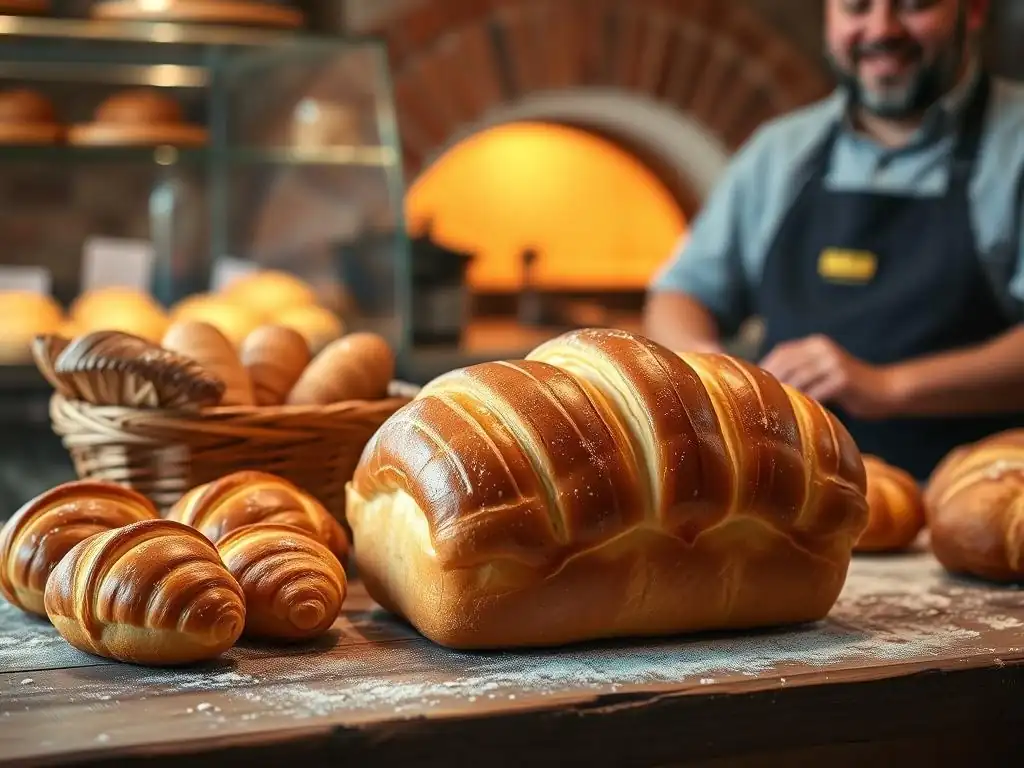
Different Types of Sourdough: Exploring San Francisco Sourdough, Rye Sourdough, and More
Sourdough is not a single entity but a diverse category of breads, each influenced by the type of flour used, the hydration level of the starter and dough, and the local microbial environment. The classic San Francisco sourdough, as mentioned, is known for its pronounced tang and often uses a blend of white and whole wheat flours. However, bakers worldwide experiment with different grains. Rye sourdough, for instance, is popular in Northern and Eastern Europe, yielding a dense, flavorful loaf with a characteristic earthy taste.
Beyond the primary flour type, variations exist in hydration levels (the ratio of water to flour). A high-hydration dough (75% water or more relative to flour weight) typically results in a more open crumb structure, while a lower hydration (60-70%) produces a denser loaf. The age and activity of the starter also impact the final bread's flavor and texture.
Some bakers maintain multiple starters, each nurtured with different flours or kept at varying hydration levels, to achieve specific bread characteristics. Mastering a simple French brioche recipe easy to follow involves understanding ingredients, much like sourdough requires understanding flour and starter.
Regional Variations of Sourdough: A Taste of Global Baking Heritage
The practice of sourdough baking has produced unique regional variations shaped by local ingredients, climate, and culinary traditions. In Italy, pane di Matera, a traditional sourdough bread from the Basilicata region, is made with durum wheat semolina and has a distinctive conical shape and hard crust. German sourdoughs, often incorporating rye flour, are known for their dense texture and robust, slightly sour flavor, forming the base for breads like Pumpernickel or Vollkornbrot.
Ethiopian Injera, a staple flatbread, is perhaps one of the oldest continuous sourdough traditions, made from teff flour and fermented for several days, resulting in its characteristic spongy texture and tangy taste. Even within France, while brioche might be celebrated for its richness (perhaps inspiring someone to search for a French brioche recipe easy to master), regional sourdough breads exist, showcasing the diversity of French baking beyond enriched doughs. These global examples underscore sourdough's adaptability and its deep connection to cultural foodways.
Mastering the Sourdough Recipe: A Guide for Home Bakers
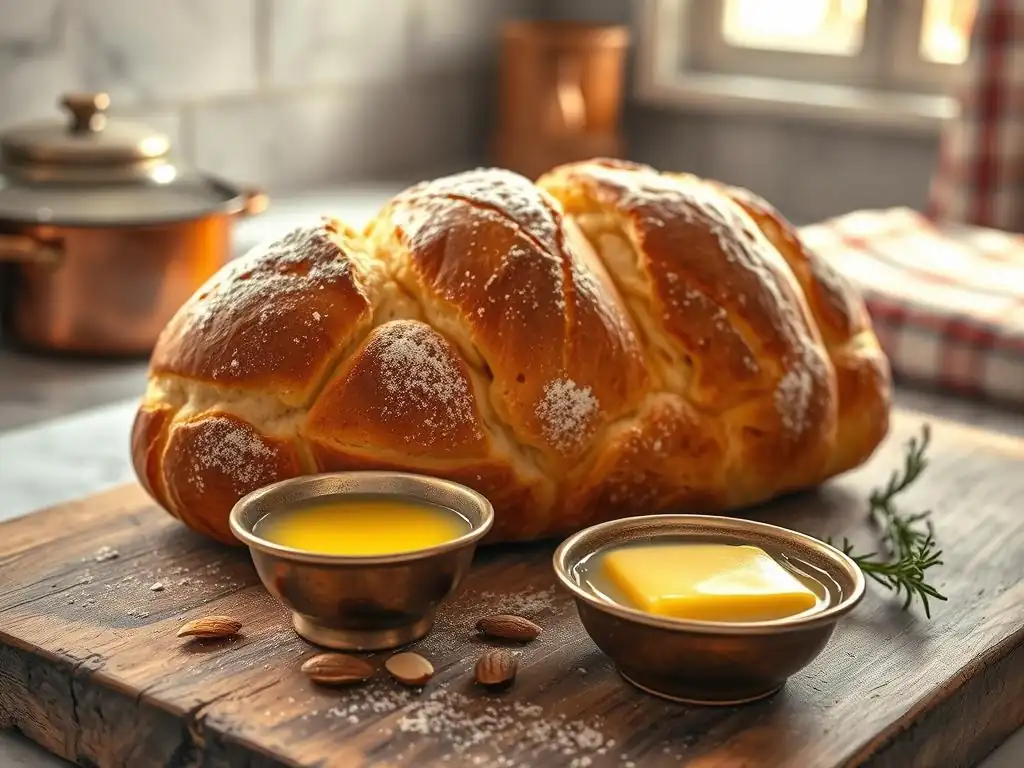
Key Ingredients for an Authentic Sourdough: Flour, Water, Salt, Starter
At its heart, sourdough bread is incredibly simple, requiring only four fundamental ingredients: flour, water, salt, and a live sourdough starter. The type of flour significantly impacts the outcome; a blend of strong bread flour (high protein content, typically 12-14%) and whole wheat or rye flour is common for feeding the starter and building the dough, providing nutrients for the microbes and structure for the loaf. Filtered or non-chlorinated water is preferred, as chlorine can potentially harm the delicate ecosystem of the starter.
Salt is crucial not just for flavor but also for controlling the fermentation rate and strengthening the gluten structure. Non-iodized salt is often recommended. Finally, the sourdough starter itself is the magical component – a living culture of wild yeasts and lactic acid bacteria nurtured with regular feedings of flour and water. A healthy, active starter, often called 'levain' in French baking terms (though different from the enriched dough used in a French brioche recipe easy to make), is bubbly, smells pleasantly acidic, and reliably doubles in volume after feeding.
Step-by-Step Sourdough Recipe: Achieving the Perfect Rise and Texture
Baking sourdough involves several key stages, requiring patience and attention to detail. It typically starts with mixing flour, water, and a portion of active starter (the autolyse and bulk fermentation phases), allowing the gluten to develop and fermentation to begin. This is followed by a series of 'stretch and folds' over several hours, which build dough strength. After bulk fermentation, the dough is shaped (often into a boule or batard) and undergoes a cold proofing period in the refrigerator, which slows fermentation and develops flavor, usually for 12-24 hours.
Baking is often done in a hot oven, ideally in a Dutch oven or on a baking stone with steam, to create a crisp crust and allow for maximum oven spring. The Dutch oven traps steam released by the dough, keeping the crust pliable initially and allowing the loaf to expand fully before the crust sets.
Baking times and temperatures vary, but a common method is baking covered at around 450-500°F (230-260°C) for 20-30 minutes, then uncovered for another 15-25 minutes to achieve a deep golden-brown crust. While different from following a French brioche recipe easy to bake, the process requires precision and temperature control.
Tips and Tricks for Baking the Best Sourdough: Temperature, Proofing, Scoring
Achieving a consistently great sourdough loaf involves understanding several factors. Temperature is critical throughout the process; warmer temperatures accelerate fermentation, while cooler ones slow it down. Maintaining a consistent room temperature (ideally 70-78°F or 21-26°C) during bulk fermentation is helpful. Proper proofing is also key – knowing when the dough is ready to bake requires practice, looking for signs like increased volume (often 50-75% increase after shaping) and a dough that springs back slowly when gently poked. Over or under-proofing can lead to poor oven spring and dense loaves.
Scoring the loaf just before baking is essential; it controls where the bread expands, preventing blowouts and allowing for a beautiful 'ear' or crusty flap. Different scoring patterns yield different results. Equipment can also make a difference; a digital scale for accurate measurements, a dough scraper, and a lame (a scoring tool) are valuable tools for the sourdough baker. Patience is perhaps the most important ingredient; sourdough baking is a slow process that rewards observation and learning from each bake. Just as perfecting a French brioche recipe easy version takes practice, so does mastering sourdough.
Sourdough Beyond Bread: Its Versatility and Adaptations
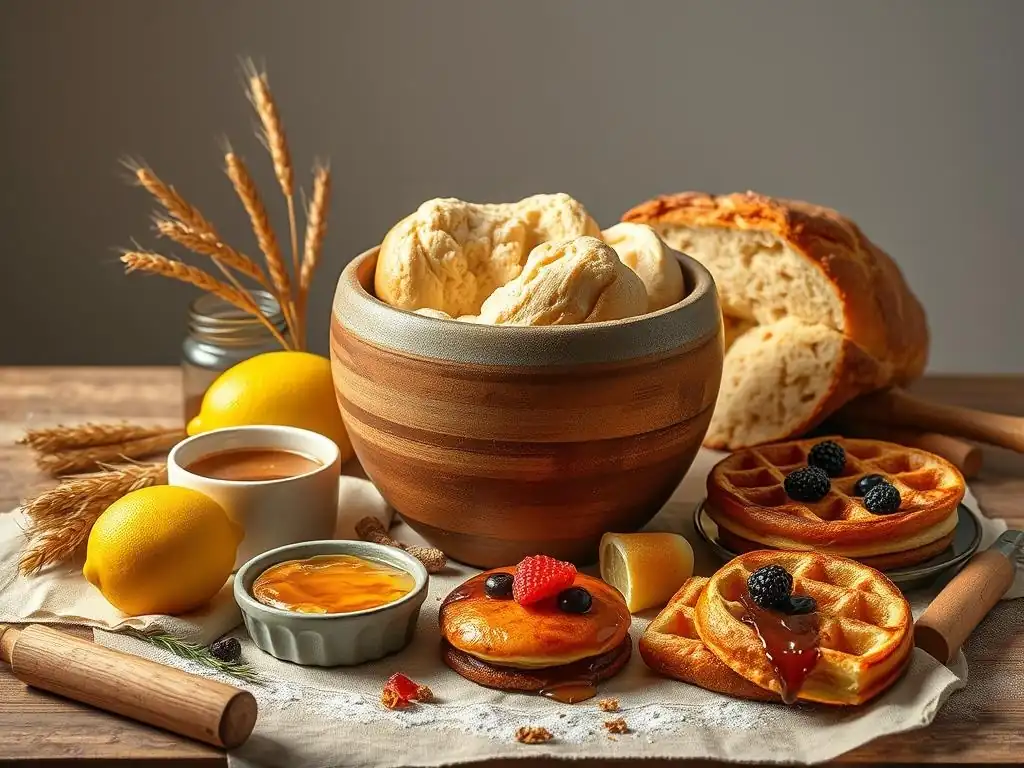
Sourdough in Pizza Making: A Tangy Twist on a Classic
Sourdough starter isn't limited to loaves of bread; it can be a fantastic base for pizza dough, adding a subtle tang and chewiness that commercial yeast alone can't replicate. Using a sourdough starter for pizza involves a similar process to bread dough – mixing flour, water, salt, and starter, allowing for bulk fermentation, and then shaping. The long fermentation process, often including a cold proof in the refrigerator, develops complex flavors and results in a crust with great texture and digestibility.
A sourdough pizza crust can range from thin and crispy to thick and airy, depending on the hydration level and shaping technique. The slight acidity from the lactic acid bacteria in the starter also complements the richness of tomato sauce and cheese beautifully. Many pizza enthusiasts consider sourdough crust the pinnacle of pizza perfection, offering a depth of flavor that elevates the entire dish. While you might be searching for a French brioche recipe easy enough for beginners, exploring sourdough pizza shows the broader applications of fermented doughs.
Sourdough-Inspired Recipes: Sourdough Pancakes, Sourdough Pretzels, Sourdough Crackers
The versatility of sourdough extends far beyond bread and pizza. Discarded sourdough starter (the portion removed during feeding) can be used in a variety of recipes, reducing waste and imparting a unique flavor. Sourdough pancakes or waffles are a popular way to use discard, resulting in light, fluffy, and slightly tangy breakfast treats. The acidity in the starter reacts with baking soda or powder, providing extra lift.
Sourdough pretzels offer a chewy interior and a classic pretzel crust, with the starter contributing to a more nuanced flavor than conventional recipes. Sourdough crackers are another excellent use for discard, producing crispy, flavorful snacks that can be customized with herbs and spices. Even recipes like sourdough doughnuts, muffins, or quick breads can benefit from the addition of discard, adding moisture and a subtle tang. This creativity mirrors the way bakers adapt classic recipes, whether it's perfecting a French brioche recipe easy to bake or developing new uses for sourdough.
Baking with Ease: Bringing Sourdough Baking to Your Home Kitchen
Simple Sourdough Recipe Adaptations for Beginner Bakers
Getting started with sourdough might seem daunting, but several adaptations can make it more accessible for beginners. One common approach is using a smaller amount of starter relative to flour, which slows down fermentation and provides a larger window for hitting the right proofing times. Another simplification is focusing on a basic loaf shape, like a simple boule, which is less challenging to handle than elongated shapes like batards.
Some beginner recipes also incorporate a small amount of commercial yeast alongside the sourdough starter, providing a safety net for rise while still allowing the sourdough flavor to develop. While this isn't a purist approach, it can help build confidence. Using all-purpose flour initially, rather than specialized bread flour, can also simplify the process. Just as finding a French brioche recipe easy to follow is key for newcomers to enriched doughs, starting with simplified sourdough methods is crucial for beginners.
Troubleshooting Your Sourdough: Common Baking Problems and Solutions
Sourdough baking involves a learning curve, and encountering issues is part of the process. Common problems include a dense loaf with poor rise, which can result from an inactive starter, under-proofing, or insufficient dough strength. Ensuring your starter is consistently active (doubling within 4-8 hours of feeding) is fundamental. If under-proofing is suspected, try extending the bulk fermentation or final proofing time, paying attention to visual cues like dough volume increase.
A pale crust can indicate insufficient baking time or temperature, or lack of steam during the initial bake. Crumb that is too wet or gummy might be due to underbaking or cutting into the loaf before it has fully cooled (it continues to cook internally as it cools). Blowouts on the side of the loaf, rather than where scored, suggest insufficient scoring or uneven gluten development. Each bake offers clues, helping you refine your technique, much like troubleshooting issues when trying a new French brioche recipe easy version.
Enjoying Your Homemade Sourdough: Serving Suggestions and Storage Tips
Once you've successfully baked your sourdough loaf, the rewards are immense. Allow the bread to cool completely on a wire rack for at least 2-3 hours before slicing; this allows the internal structure to set and moisture to distribute evenly. Sourdough is delicious served simply with butter, olive oil, or as the base for sandwiches and toast. Its tangy flavor pairs well with soups, stews, and cheeses. Leftover sourdough makes excellent croutons, breadcrumbs, or is perfect for French toast (though perhaps not as rich as French toast made with a French brioche recipe easy loaf! ).
Proper storage is key to maintaining freshness. Store the cooled loaf at room temperature, ideally in a paper bag or a bread box to allow the crust to remain crispy while keeping the interior relatively soft. Avoid airtight plastic bags if you want to preserve the crust, as they trap moisture and can make it soggy. For longer storage, slice the cooled bread and freeze the slices in an airtight container or bag; they can be toasted directly from frozen. Enjoy the fruits of your labor – the unique flavor and texture of homemade sourdough.
Frequently Asked Questions
What exactly is brioche bread?
Brioche is a rich French bread made with a high proportion of butter and eggs. This gives it a tender, slightly sweet, and almost cake-like texture.
Is the French brioche recipe easy to make at home?
Yes! While traditionally time-consuming, there are many easy brioche recipes available. BakeWithEase.com focuses on providing simplified methods for home bakers.
What makes brioche different from regular bread?
The main difference lies in the high fat content from butter and eggs. This creates a much richer and more decadent bread compared to leaner, everyday breads.
What kind of dishes can I use brioche bread for?
Brioche is incredibly versatile! It's fantastic for French toast, sandwiches, burger buns, or simply enjoyed on its own with butter and jam.
Where can I find an easy French brioche recipe?
BakeWithEase.com offers a variety of easy French brioche recipes with step-by-step instructions and readily available ingredients for bakers of all skill levels.
Final Reflection: The Enduring Allure of Brioche
The simple act of baking a brioche, a seemingly small pleasure, connects us to centuries of culinary tradition and offers a surprisingly profound experience. From humble beginnings in French monasteries to its current global popularity, the brioche's journey reflects our enduring fascination with rich, buttery flavors and the comforting ritual of baking. Its enduring appeal speaks to a deeper human need for connection to history and the satisfaction of creating something beautiful and delicious with our own hands.
The brioche's influence extends far beyond the kitchen; it's a symbol of celebration, comfort, and the artistry of baking. It's a testament to the power of simple ingredients transformed into something extraordinary. The process itself, from kneading the dough to the intoxicating aroma filling the kitchen, is a meditative experience. As Julia Child once said, Cooking is at once child's play and adult joy. And cooking done with care is an act of love.
This sentiment perfectly encapsulates the spirit of brioche baking, a process that transcends mere sustenance and becomes a form of self-expression and connection.
Now, consider your own kitchen. Imagine the warmth of the oven, the golden-brown crust of a freshly baked brioche, the soft, yielding crumb. Don't just read about the history of brioche; experience it. Try your hand at a recipe, even a simple one, and allow yourself to be transported to the heart of French culinary tradition. Let the process of baking be a moment of mindful creation, a connection to the past, and a celebration of the simple joys in life. The reward? A delicious brioche, and a deeper appreciation for the enduring power of food and tradition.
Unleash Your Inner Boulanger: Bake Brioche Today!
Thanks for joining us on this delicious journey through the history of brioche! We hope you now appreciate the rich heritage and delightful possibilities of this classic bread. Ready to take your baking skills to the next level?
- Bake your own brioche! Find our easy-to-follow recipe on the BakeWithEase website (bakewithease.com - Note: This link would be included on the actual website, but is omitted here per instructions.). It's easier than you think!
- Share your brioche creations with us on social media using #BakeWithEaseBrioche – let's inspire each other!
- Explore other delicious bread recipes on our website. We've got plenty more where that came from!
What unique twist will you add to your next brioche masterpiece?