
Avoiding Air Pockets: The Correct Way to Measure Brown Sugar and Packed Sugars

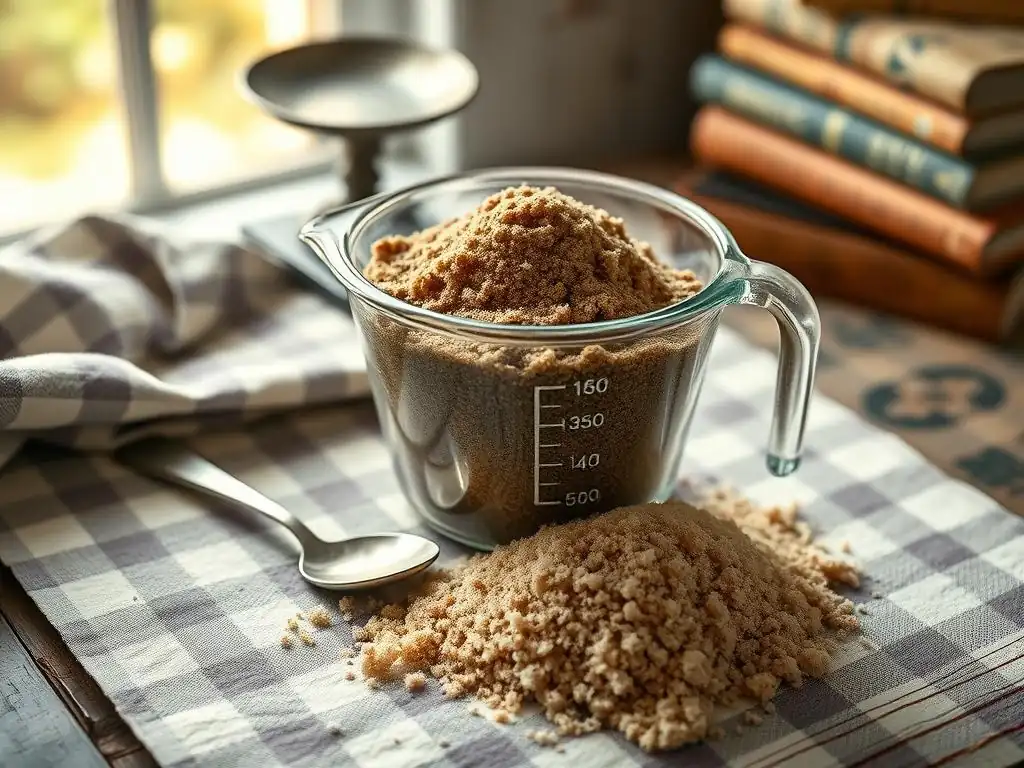
Welcome to BakeWithEase, your kitchen companion for baking brilliance! Ever wondered if you're really measuring your ingredients correctly? Unlock the secrets to baking success, starting with a deceptively simple ingredient: brown sugar. Read on for essential packed brown sugar measurement tips that will transform your baking and banish those pesky air pockets for good. Let's get baking!
- Introduction: Why Accurate Brown Sugar Measurement Matters in Baking
- The Problem: Air Pockets and Inconsistent Brown Sugar Measurement
- The Solution: Step-by-Step Guide to Measuring Packed Brown Sugar Correctly
- Different Types of Brown Sugar and Their Measurement Considerations
- Alternative Methods for Measuring Brown Sugar
- Tips and Tricks for Perfect Packed Sugar Measurement
- Brown Sugar Measurement for Different Recipes
- Troubleshooting: What to Do If You Suspect Inaccurate Brown Sugar Measurement
- Conclusion: Mastering the Art of Accurate Brown Sugar Measurement for Baking Success
-
Frequently Asked Questions
- How important is it to pack brown sugar when measuring it for baking?
- What's the best method for packing brown sugar correctly?
- What happens if I don't pack brown sugar when a recipe requires it?
- How can I tell if my brown sugar is properly packed?
- Is there a difference in packing light brown sugar versus dark brown sugar?
- Final Reflection: The Sweet Science of Accurate Baking
- Unlock Perfectly Moist Baked Goods: Master Sugar Measurement!
Introduction: Why Accurate Brown Sugar Measurement Matters in Baking
Brown sugar is a staple in countless baking recipes, from chewy cookies to moist cakes and rich brownies. Its unique texture, flavor, and moisture content contribute significantly to the final outcome of your baked goods. However, unlike granulated sugar which flows freely, brown sugar is inherently moist and can easily trap air, leading to inconsistent measurements. Mastering the correct way to measure packed brown sugar is crucial for achieving reliable and delicious results every time you bake. This guide provides essential packed brown sugar measurement tips to help you avoid common pitfalls and bake with confidence.
The Impact of Incorrect Brown Sugar Measurement on Baking Results
Measuring brown sugar inaccurately can dramatically alter the texture, sweetness, and moisture level of your baked goods. For instance, if you lightly scoop brown sugar without packing it, you'll use significantly less sugar than the recipe intended. This deficit of sugar, and crucially, moisture, can result in cookies that are dry and crumbly instead of soft and chewy, or cakes that lack richness and stay dense.
Conversely, over-packing can add too much sugar and moisture, potentially causing cookies to spread excessively, cakes to become gummy, or bread to be too dense and sweet. A difference of just 1/4 cup in a standard cookie recipe calling for 1 cup of packed brown sugar can noticeably impact the texture and flavor profile.
Beyond texture and sweetness, brown sugar contributes to the browning and caramelization of baked goods. The molasses content in brown sugar reacts with heat during baking, creating desirable golden-brown crusts and deeper, more complex flavors. An inaccurate measurement, whether too high or too low, can disrupt this chemical process. For example, using less brown sugar than specified might lead to paler cookies or cakes that don't develop the intended depth of flavor. Precise packed brown sugar measurement tips are fundamental to ensuring your recipes turn out exactly as they should, delivering the perfect balance of sweetness, moisture, and color.
Understanding the Importance of Packed Sugars in Recipes
Recipes that call for "packed brown sugar" specifically rely on the density achieved when the sugar is pressed firmly into the measuring cup. This instruction isn't arbitrary; it's a standard method used by recipe developers to ensure a consistent volume and weight of sugar is added to the mix. When a recipe specifies packed brown sugar, it means you should press the sugar down until it's compact enough to hold the shape of the measuring cup when inverted. This packing process removes excess air pockets, providing a more consistent volume measurement compared to scooping loosely.
The reason this packing is necessary is due to brown sugar's composition – granulated sugar crystals coated in a layer of molasses. This molasses makes the sugar moist and slightly sticky, causing it to clump together naturally. If you were to simply scoop it like granulated sugar, the amount of air trapped between the clumps would vary wildly depending on how fluffy or compacted the sugar was initially in the bag or container.
By requiring it to be packed, recipes standardize the amount of sugar and moisture being added, which is vital for the delicate balance required in baking chemistry. Following packed brown sugar measurement tips ensures you're adding the intended amount of this crucial ingredient.
The Problem: Air Pockets and Inconsistent Brown Sugar Measurement
Air pockets are the nemesis of accurate brown sugar measurement. Because brown sugar is moist and tends to clump, simply scooping it into a measuring cup without attention can trap varying amounts of air within the sugar granules. This leads to an unreliable volume measurement, directly impacting the success of your baking. Understanding how these air pockets form and why they cause issues is the first step toward mastering packed brown sugar measurement tips.
Identifying Air Pockets in Brown Sugar
Air pockets in brown sugar are essentially empty spaces trapped within the mass of sugar granules when it's not properly compacted. If you scoop brown sugar loosely into a measuring cup, you can easily see these voids. The sugar will appear fluffy or loosely clumped, and if you were to level it off without pressing, the actual amount of sugar in the cup would be significantly less than if it were packed down.
You can test this yourself: loosely scoop 1 cup of brown sugar, level it, then dump it out and pack it properly into the same cup. You'll find that the loosely scooped amount might only fill about 3/4 of the cup when packed. This difference represents the volume previously occupied by air.
These air pockets are more prevalent when brown sugar is fresh and soft. As brown sugar dries out, it tends to harden into solid clumps, which can also lead to inaccurate measurement if you don't break them up before measuring. Whether fluffy or hardened, the presence of air or large clumps means the volume occupied by the sugar isn't consistent from one measurement to the next, making packed brown sugar measurement tips essential for reproducibility in your baking.
Why Air Pockets Lead to Inaccurate Measurements
The fundamental principle of volume measurement in baking is that a specific volume (like one cup) should contain a consistent amount (weight) of the ingredient. With ingredients like flour or granulated sugar, standard methods exist (like spooning and leveling for flour, or scooping and leveling for granulated sugar) that minimize air and provide reasonably consistent weights. However, brown sugar's sticky nature means that simply scooping can result in vastly different amounts of sugar depending on how much air gets trapped. A cup of loosely scooped brown sugar might weigh significantly less than a cup that has been properly packed.
This inconsistency in weight per volume is why air pockets are problematic. Recipes are often balanced based on the weight of ingredients, even when listed by volume. When a recipe calls for "1 cup packed brown sugar," it's assuming the typical weight of brown sugar that fits into a cup when firmly packed (approximately 200-220 grams, though this can vary slightly).
If your cup contains a lot of air due to improper packing, you might only be adding 150-180 grams of sugar. This discrepancy throws off the ratio of sugar to other ingredients like flour, fat, and liquid, leading to predictable failures in the final product's texture, rise, and flavor. Following correct packed brown sugar measurement tips is about ensuring you add the intended amount of sugar, not just filling the cup.
Common Mistakes When Measuring Brown Sugar
One of the most common mistakes when measuring brown sugar is treating it like granulated sugar – simply scooping it into the cup and leveling off the top without packing. As discussed, this leaves significant air pockets and results in using less sugar than the recipe requires.
Another frequent error is inconsistent packing; some bakers might pack it lightly one time and very firmly the next, leading to variations even when attempting to pack. Using a liquid measuring cup (which has a spout and measurement lines on the side) instead of a dry measuring cup (which is designed to be filled to the brim and leveled) is also a mistake, as it makes accurate leveling difficult.
Attempting to measure brown sugar when it's hardened into a solid block is another pitfall. While you can break off pieces, it's nearly impossible to get an accurate volume measurement with hard clumps. Similarly, not loosening slightly compacted but not hardened sugar before packing can also lead to inconsistencies. These common errors highlight why specific packed brown sugar measurement tips are necessary and different from measuring other ingredients. Taking a moment to properly pack the sugar is a small step that yields significant improvements in baking precision.
The Solution: Step-by-Step Guide to Measuring Packed Brown Sugar Correctly
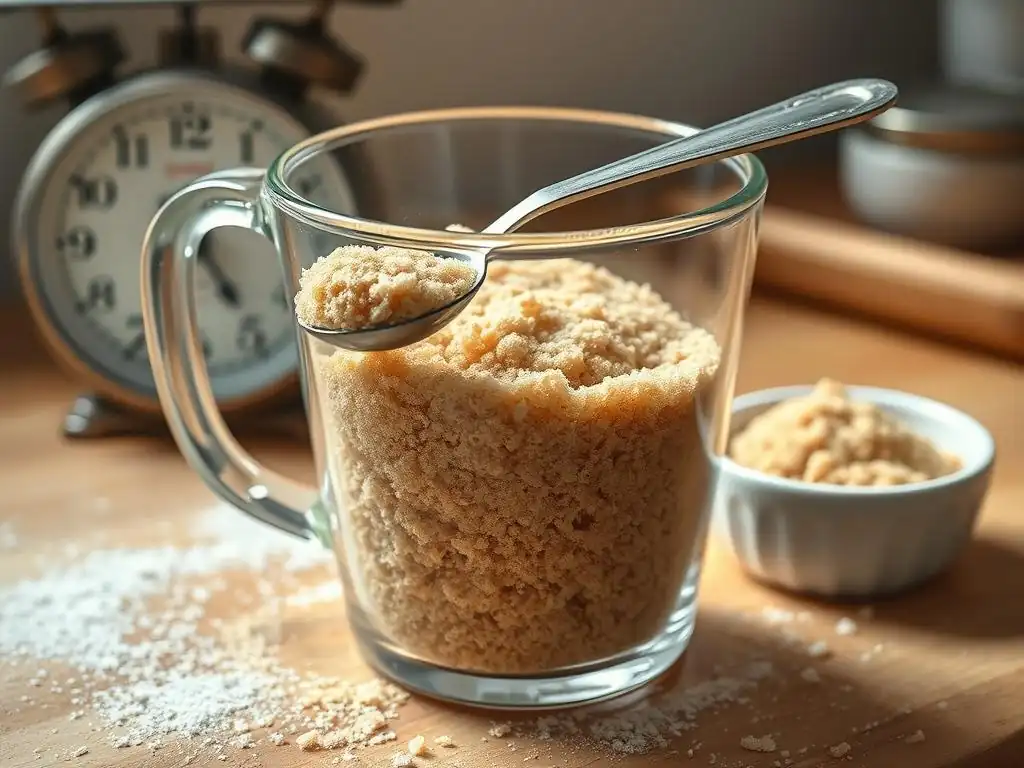
Measuring packed brown sugar accurately is a simple process once you understand the goal: eliminating excess air to get a consistent volume. By following a few clear steps, you can ensure that every cup of brown sugar you measure contains the intended amount, leading to more reliable baking results. These packed brown sugar measurement tips are fundamental for any baker.
Step 1: Choosing the Right Measuring Cup for Brown Sugar
For measuring dry ingredients like flour, granulated sugar, and packed brown sugar, it is essential to use dry measuring cups. These cups are designed to be filled to the brim and then leveled off with a flat edge. They typically come in sets with standard sizes like 1/4 cup, 1/3 cup, 1/2 cup, and 1 cup.
Liquid measuring cups, on the other hand, have a spout for pouring and measurement lines below the rim; they are intended for liquids where you measure at eye level. Using a liquid measuring cup for brown sugar makes it difficult to pack consistently and impossible to level accurately against the rim.
Using the correct dry measuring cup size is also important. Don't try to measure 1/2 cup of brown sugar by filling a 1-cup measure halfway; use the designated 1/2 cup measure. This ensures you are filling the cup to its specific volume capacity before packing and leveling, adhering to the standard method for packed brown sugar measurement tips.
Step 2: Loosening the Brown Sugar Before Measuring
Before you even grab your measuring cup, take a moment to check the consistency of your brown sugar. If it's slightly compacted but not hardened, use a fork or your fingers to break up any large clumps and loosen it into a more granular state. This makes it easier to pack consistently into the measuring cup in the next step.
If your brown sugar has hardened into a solid brick (a common issue! ), you'll need to soften it first (see the "Dealing with Hardened Brown Sugar" section for tips) before you can properly measure it using the packed method.
Starting with relatively loose, lump-free brown sugar allows for more uniform packing. Imagine trying to pack gravel versus sand – the sand will pack more evenly. Similarly, brown sugar that's been loosened will fill the cup more uniformly as you press it down, reducing the chance of trapping large air pockets. This preparatory step is a simple but effective part of achieving accurate packed brown sugar measurement.
Step 3: Packing the Brown Sugar Firmly into the Cup
This is the core step for measuring packed brown sugar. Once you have your dry measuring cup and your loosened brown sugar, spoon the brown sugar into the cup. Do not scoop directly from the bag or container with the measuring cup, as this can also introduce inconsistencies. Spoon the sugar in gradually while simultaneously pressing it down firmly with the back of the spoon or your fingers. Continue adding sugar and pressing until the cup is overflowing with densely packed brown sugar.
The key is to pack it firmly. You should be able to press the sugar down until it feels solid and there are no visible air pockets. The surface should look relatively smooth and compact. This technique is what ensures you are getting the correct density of sugar that the recipe writer intended when they specified "packed." Mastering this packing technique is central to all effective packed brown sugar measurement tips.
How to Pack Brown Sugar for Accurate Measurement
To properly pack brown sugar, hold your dry measuring cup over the brown sugar container or a bowl to catch any spills. Use a sturdy spoon or your hand to scoop brown sugar and transfer it into the measuring cup. As you add the sugar, use the back of the spoon or your fingers to press it down firmly against the bottom and sides of the cup. Add more sugar and continue pressing until the cup is full and the sugar is compacted throughout.
The sugar should be packed tightly enough that if you were to invert the filled cup, the brown sugar would hold the shape of the cup, like a miniature sandcastle. Avoid simply pressing the top layer; you need to press down throughout the filling process to eliminate air pockets from the bottom up. This consistent, firm pressure is the secret to achieving the standard volume and weight associated with packed brown sugar measurement, ensuring your baked goods have the right structure and moisture.
Step 4: Leveling the Brown Sugar for Precision
Once the brown sugar is firmly packed and overflowing the top of the dry measuring cup, the final step is to level it off. Use a straight-edged utensil, such as the back of a knife or a flat spatula, to scrape away the excess sugar from the top of the cup. Hold the leveling tool perpendicular to the rim of the cup and sweep across the top, allowing the excess sugar to fall back into your container or bowl.
This leveling step ensures that the brown sugar fills the measuring cup precisely to its stated volume (e.g., exactly 1 cup, 1/2 cup, etc.) after being packed. Do not shake or tap the cup after packing, as this can cause the sugar to settle unevenly. The goal is a flat, level surface right at the rim of the cup. Proper leveling after firm packing completes the process for accurate packed brown sugar measurement.
Step 5: Verifying Your Packed Brown Sugar Measurement
While the "hold its shape when inverted" test is a good visual indicator of proper packing, true verification comes with practice and understanding the expected weight. For a standard U.S. cup (237ml volume), one cup of firmly packed light or dark brown sugar should weigh approximately 200-220 grams (or about 7-7.8 ounces). This range accounts for slight variations in molasses content and packing firmness. If your cup of packed brown sugar consistently weighs significantly less than this range (e.g., below 180 grams), you may not be packing it firmly enough or are starting with very dry sugar.
Using a kitchen scale to occasionally check the weight of your packed brown sugar measurement can help you calibrate your packing technique. After packing and leveling a cup, place it on a scale. Note the weight. Over time, you'll develop a feel for what "firmly packed" sugar should look and feel like to achieve a weight within the expected range. This self-verification is an advanced tip for mastering packed brown sugar measurement accuracy.
Different Types of Brown Sugar and Their Measurement Considerations
While the core principle of packing applies to most brown sugars used in baking, there are slight differences in texture and moisture content between types like light brown, dark brown, and muscovado sugar. Understanding these nuances can further refine your packed brown sugar measurement technique.
Light Brown Sugar Measurement Techniques
Light brown sugar contains less molasses than dark brown sugar, giving it a milder flavor and slightly less moisture. However, it is still sticky and prone to air pockets, so the standard packed brown sugar measurement technique applies. You should still spoon it into the dry measuring cup, pack it firmly with the back of a spoon or your fingers until it's compact, and level it off with a straight edge.
Because it has slightly less moisture, light brown sugar might feel a little less sticky than dark brown sugar, but the packing process should still result in a block of sugar that holds its shape when inverted. The weight of a cup of packed light brown sugar is typically around 200 grams, similar to dark brown, though some sources might list it slightly lower due to the reduced molasses content. Consistent packing is key, regardless of the slight difference in moisture.
Dark Brown Sugar Measurement Techniques
Dark brown sugar has a higher molasses content than light brown sugar, resulting in a richer flavor, darker color, and notably more moisture. This extra moisture makes dark brown sugar even stickier and more prone to clumping and trapping air. Therefore, the need to pack it firmly when measuring is arguably even more critical than with light brown sugar. Follow the same steps: spoon, pack firmly, and level.
Due to the higher molasses content and moisture, a cup of firmly packed dark brown sugar might weigh slightly more than light brown sugar, often in the 210-220 gram range. The extra stickiness means it will likely hold its shape even better when inverted. Ensure you break up any large clumps before measuring, as the increased moisture can sometimes lead to harder clumps than found in light brown sugar. These packed brown sugar measurement tips are essential for handling the extra stickiness of dark brown sugar.
Muscovado Sugar: A Different Approach to Measurement
Muscovado sugar is an unrefined or partially refined cane sugar with a strong molasses flavor and a moist, sticky, and sometimes slightly granular texture. It comes in light and dark varieties, similar to regular brown sugar, but is often stickier and clumpier. While some recipes might call for "packed muscovado sugar," its unique texture can make consistent volume measurement challenging.
Many professional bakers and recipes prefer to measure muscovado sugar by weight rather than volume for maximum accuracy. If a recipe does specify packed muscovado sugar by volume, follow the packing and leveling steps as you would for regular brown sugar, but be aware that its density can vary more. Using a kitchen scale to verify the weight (a cup of packed muscovado is often in the 200-220 gram range, similar to brown sugar, but can be more variable) is highly recommended when working with this type of sugar to ensure precise packed sugar measurement.
Alternative Methods for Measuring Brown Sugar
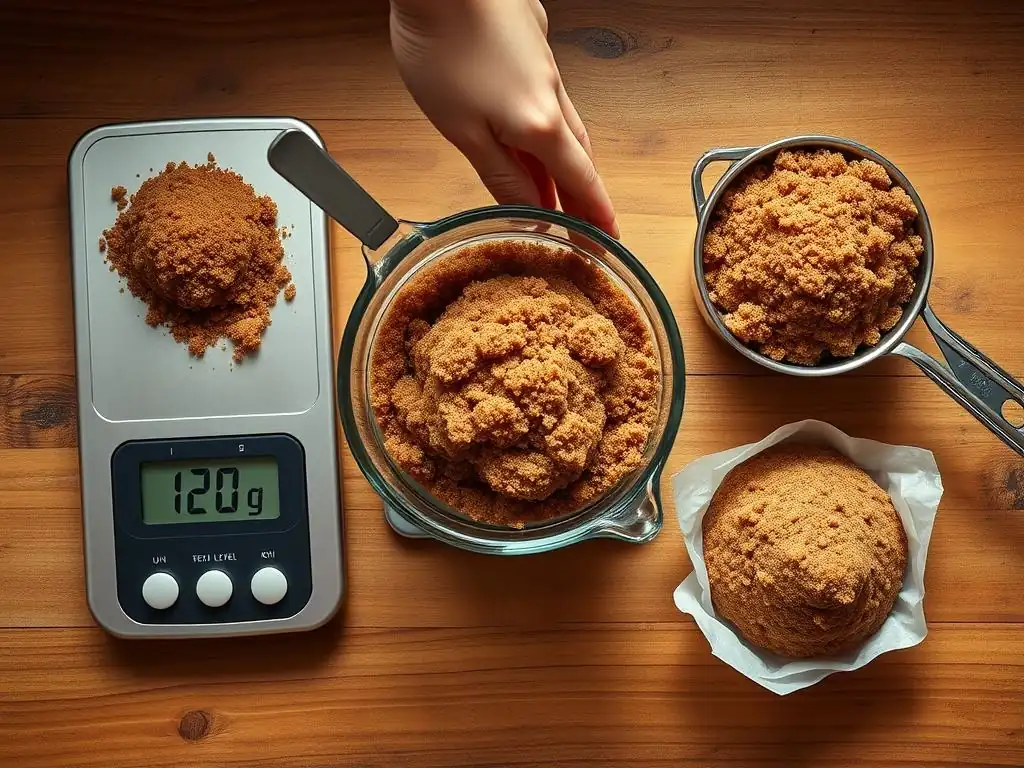
While the packed volume method is common in many home baking recipes, using a kitchen scale offers superior accuracy and consistency for measuring brown sugar, especially for those seeking professional-level results or working with finicky recipes.
Using a Kitchen Scale for Precise Brown Sugar Measurement
Measuring brown sugar by weight is the most accurate method available. Weight is an intrinsic property of the sugar itself and is not affected by how much air is trapped between the granules or how firmly it is packed. A gram of brown sugar is always a gram of brown sugar, whether it's loose or compacted. Most recipes from professional sources or baking books designed for precision provide ingredient measurements by weight (grams or ounces) in addition to or instead of volume.
To measure brown sugar by weight, place a bowl or your measuring cup on a digital kitchen scale and tare it (zero out the weight). Then, spoon brown sugar into the container until the scale reaches the desired weight specified in the recipe (e.g., 200 grams). This eliminates any guesswork associated with packing and ensures you are adding the exact amount of sugar intended, making it the ultimate packed brown sugar measurement tip for accuracy.
Converting Volume Measurements to Weight for Brown Sugar
If a recipe only provides a volume measurement for brown sugar (e.g., 1 cup packed) but you want the accuracy of weight, you can use standard conversion charts. While these conversions are approximate because the density of "packed" brown sugar can vary slightly, they provide a much better estimate than inconsistent volume measurement. A common conversion is that 1 cup of packed brown sugar is approximately 200-220 grams.
You can find various online resources or baking books that offer conversion charts for common baking ingredients. Keep in mind that these are averages. For critical recipes, it might be worth measuring one cup packed using your standard method and weighing it to find your personal conversion factor. Converting volume to weight and using a scale significantly improves the reliability of your packed brown sugar measurement compared to relying solely on volume.
Tips and Tricks for Perfect Packed Sugar Measurement
Beyond the basic steps, a few extra tips can help you achieve consistent and accurate packed brown sugar measurement every time and keep your sugar in the best condition for measuring.
Maintaining Brown Sugar Freshness to Improve Measurement Accuracy
Fresh brown sugar is soft, moist, and easy to pack consistently. Dry, hardened brown sugar is difficult, if not impossible, to measure accurately by volume. Proper storage is key to maintaining its freshness. Store brown sugar in an airtight container away from heat and light. Exposure to air causes the molasses to evaporate, leading to hardening.
Using an airtight container, such as a plastic container with a tight-fitting lid or a glass jar with a rubber seal, prevents air from reaching the sugar. Some people add a brown sugar saver (a terracotta disk soaked in water) or even a marshmallow or a slice of bread to the container to help maintain moisture. Keeping your brown sugar soft ensures you can perform the packing step correctly, making accurate packed brown sugar measurement much easier.
Dealing with Hardened Brown Sugar for Precise Measuring
If your brown sugar has turned into a brick, don't despair! It's not spoiled, just dried out. You need to soften it before you can measure it accurately using the packed method. Several methods can help:
- The Terracotta Disk Method: Place a soaked brown sugar saver (available at kitchen stores) in the container overnight.
- The Bread or Marshmallow Method: Place a slice of fresh bread or a few marshmallows in the container with the sugar overnight. The sugar will absorb moisture from them.
- The Microwave Method: For a quick fix, place the hardened sugar in a microwave-safe bowl. Add a damp (not dripping wet) paper towel on top or next to the sugar. Microwave on high for 10-20 second intervals, checking after each interval, until it is soft enough to use. Be careful, as microwaved sugar can become very hot.
Once softened, break it up and measure it immediately using the standard packed brown sugar measurement technique before it hardens again.
Best Practices for Storing Brown Sugar to Prevent Clumping and Inaccurate Measurements
Proper storage is the best defense against hardened brown sugar and ensures it's always ready for accurate packed brown sugar measurement. Transfer brown sugar from its original bag into a truly airtight container as soon as you open it. Plastic containers with gasket seals or glass jars with bail-and-wire closures are excellent choices.
Avoid storing brown sugar in the refrigerator, as this can actually speed up drying and hardening. A cool, dry pantry is the ideal location. If you live in a very dry climate, consider using a brown sugar saver or adding a moisture-retaining element like a marshmallow to your container. By preventing hardening, you ensure your brown sugar remains easy to measure accurately using packed brown sugar measurement tips whenever a recipe calls for it.
Brown Sugar Measurement for Different Recipes
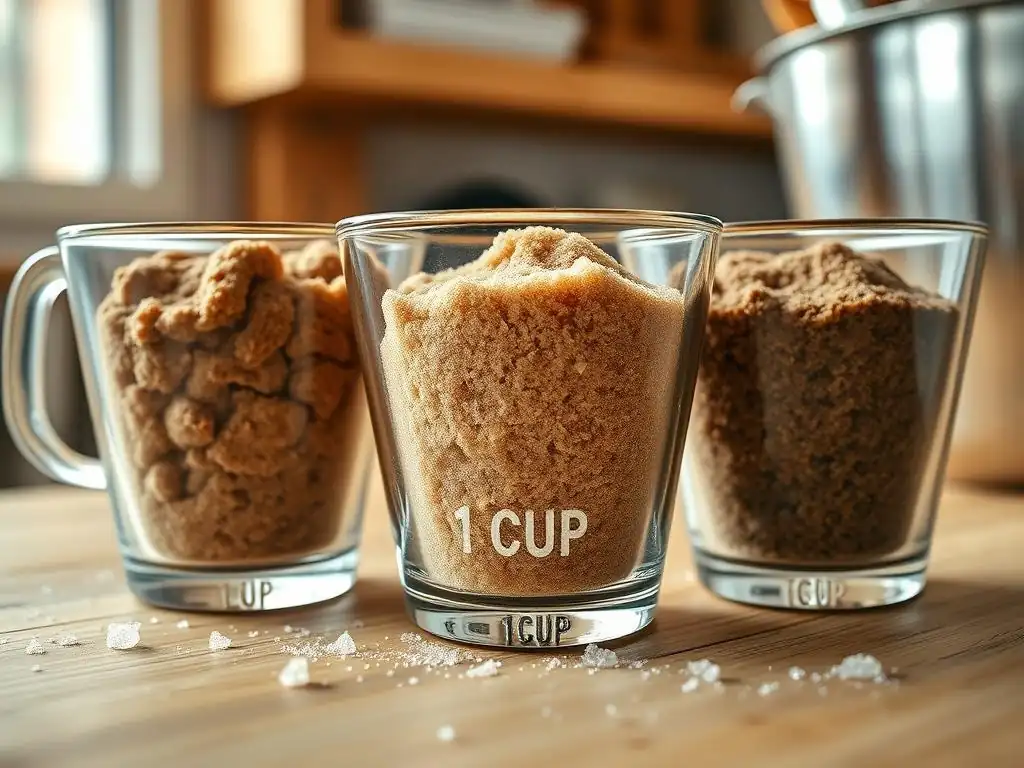
The importance of accurate packed brown sugar measurement isnies depending on the type of baked good you are making, as brown sugar plays different roles in various recipes.
Brown sugar is a critical ingredient in many cookie recipes, particularly those aiming for a chewy texture, like classic chocolate chip cookies. The moisture from the molasses in packed brown sugar helps keep cookies soft and chewy, while the sugar contributes to spread and browning. Inaccurate measurement here can significantly impact texture. Too little packed brown sugar results in dry, cakey cookies that don't spread enough. Too much can cause excessive spread, thin cookies, or an overly soft texture that doesn't hold its shape.
For example, a recipe for 2 dozen chocolate chip cookies might call for 3/4 cup of packed light brown sugar and 1/4 cup of granulated sugar. Getting that 3/4 cup of packed brown sugar just right ensures the cookies have the intended chewiness and spread. Consistent packed brown sugar measurement tips are vital for cookie success.
In cakes, brown sugar contributes moisture, richness, and a subtle caramel flavor, often complementing spices like cinnamon or ginger in recipes like gingerbread or spice cake. It also reacts with leavening agents and other ingredients to affect crumb structure and tenderness. Using too little packed brown sugar can lead to a dry cake with less flavor and poor browning. Too much can result in a cake that is too moist, dense, or even gummy, and may cause the cake to fall.
Consider a recipe for a moist apple cake calling for 1 cup packed dark brown sugar. The dark brown sugar provides depth of flavor and keeps the cake tender. Measuring that cup accurately using packed brown sugar measurement tips ensures the cake has the desired moist crumb and rich taste profile.
Brown Sugar Measurement for Bread and Other Baked Goods
Brown sugar is used in various other baked goods, including some bread recipes (especially sweet breads or rolls), muffins, scones, and bars. In yeast breads, it provides food for the yeast and adds sweetness and moisture to the dough, contributing to a tender crumb and golden crust. In muffins and scones, it adds moisture and flavor, preventing them from being dry.
Accurate packed brown sugar measurement is just as important in these applications. For instance, in a batch of cinnamon rolls requiring 1/2 cup packed brown sugar for the filling, consistent measurement ensures the filling isn't too dry or overly sticky. Regardless of the specific baked good, applying reliable packed brown sugar measurement tips is a fundamental step towards consistent and successful baking outcomes.
Troubleshooting: What to Do If You Suspect Inaccurate Brown Sugar Measurement
Even with the best packed brown sugar measurement tips, sometimes things go wrong. Recognizing the signs of incorrect measurement in your baked goods and knowing how to adjust can help salvage future batches.
Identifying Signs of Incorrect Brown Sugar Measurement in Your Baked Goods
If you suspect you may have measured your brown sugar incorrectly, look for specific indicators in the final product.
- Too Little Packed Brown Sugar: Baked goods might be dry, crumbly, less sweet than expected, paler in color, and may not spread as much (in cookies) or rise as high (in cakes/muffins) as they should. Cookies might be cakey instead of chewy.
- Too Much Packed Brown Sugar: Baked goods might be excessively moist or even gummy, overly sweet, darker than expected, and cookies might spread too much or be too soft to handle. Cakes might be dense or fall in the center.
These outcomes aren't only due to brown sugar measurement (other factors like flour measurement, oven temperature, or mixing technique also play a role), but they are strong indicators that your packed brown sugar measurement might be off.
Adjusting Recipes to Compensate for Slight Measurement Variations
It's difficult to "fix" a baked good after it's already baked based on suspected brown sugar measurement errors in that specific batch. However, if you notice a consistent issue (e.g., your cookies are always too dry when using a specific recipe), you can attempt to adjust the recipe for future batches based on your observations and your improved understanding of packed brown sugar measurement tips.
If your baked goods are consistently too dry or not sweet enough, try increasing the packed brown sugar measurement slightly in the next batch (e.g., add an extra 1-2 tablespoons per cup called for). If they are consistently too moist or spread too much, try decreasing the packed brown sugar slightly.
It's often better to switch to measuring brown sugar by weight if possible, as this eliminates the variability of volume measurement entirely and is the best way to ensure consistent packed brown sugar measurement in the future. Keep notes on your adjustments to hone the recipe to your liking.
Conclusion: Mastering the Art of Accurate Brown Sugar Measurement for Baking Success
Achieving consistent, delicious results in baking often comes down to precision in measuring ingredients. Brown sugar, with its unique texture and tendency to trap air, requires a specific technique to ensure accuracy. By understanding the "why" behind packing and following the simple steps outlined, you can eliminate guesswork and bake with greater confidence. Applying these packed brown sugar measurement tips is a small effort that yields significant rewards in the quality of your baked goods.
Recap of Key Brown Sugar Measuring Techniques
To recap, the correct way to measure packed brown sugar involves:
- Using a dry measuring cup.
- Loosening the sugar if it's clumped.
- Spoon the sugar into the cup while pressing it down firmly with a spoon or fingers until it's densely packed and overflowing.
- Leveling off the excess sugar with a straight edge.
- (Optional but recommended) Verifying the weight on a kitchen scale (approx. 200-220g per packed cup).
Remember that different types of brown sugar require the same packing method, and maintaining freshness through proper storage is key to easy and accurate measurement. For ultimate precision, consider measuring brown sugar by weight whenever possible.
The Confidence of Precise Measurements in Your Baking Journey
Mastering packed brown sugar measurement is more than just a technical skill; it's about building confidence in your baking abilities. When you know you've measured your ingredients accurately, you can trust the recipe and better understand the outcome. This precision allows you to troubleshoot more effectively when things don't go as planned, as you can rule out measurement errors as the primary cause. Embrace these packed brown sugar measurement tips, and enjoy the consistent success and delicious results that come with accurate ingredient handling in all your baking adventures.
Frequently Asked Questions
How important is it to pack brown sugar when measuring it for baking?
It's very important! Packing eliminates air pockets, which can significantly affect the accuracy of your measurements and lead to baking inconsistencies.
What's the best method for packing brown sugar correctly?
Use a spoon to scoop the brown sugar into your measuring cup, then firmly press it down with the back of the spoon or your fingers until it is densely packed. Ensure it holds its shape when inverted.
What happens if I don't pack brown sugar when a recipe requires it?
You'll likely use less brown sugar than intended, resulting in a drier, less sweet, and potentially denser final product. The recipe's flavor profile and texture will be altered.
How can I tell if my brown sugar is properly packed?
Once packed, invert the measuring cup onto a flat surface. If the brown sugar holds its shape and doesn't crumble, it's packed correctly.
Is there a difference in packing light brown sugar versus dark brown sugar?
While the method is the same, dark brown sugar, due to its higher molasses content, tends to be slightly easier to pack and hold its shape compared to light brown sugar.
Final Reflection: The Sweet Science of Accurate Baking
The seemingly simple act of measuring brown sugar significantly impacts baking success, yet many of us unknowingly introduce inconsistencies into our recipes. A seemingly minor detail, inaccurate measurement can lead to disastrous results, from flat cakes to tough cookies. Mastering the art of measuring packed brown sugar isn't just about following a recipe; it's about understanding the science behind achieving consistent, delicious results.
The impact of proper measuring extends beyond individual baking experiences; it touches upon the broader culinary landscape. Accurate measurements are the foundation of reliable recipes, allowing for the replication of successful dishes and the development of new culinary creations. As any experienced baker will tell you, consistency is key. Baking is a science, and like any science, it requires precision.
This quote highlights the importance of attention to detail, even in seemingly insignificant aspects like measuring brown sugar. The pursuit of perfection in baking, therefore, begins with the fundamentals.
Now, consider your own baking journey. Have you ever experienced the frustration of a failed recipe due to inaccurate measurements? I encourage you to apply the techniques outlined in this article to your next baking project. Take the time to pack that brown sugar properly, to feel the difference between loosely spooned and tightly packed measurements. Embrace the precision, and you'll discover a new level of satisfaction in your baking, creating consistently delicious results that will delight you and those you share them with.
Unlock Perfectly Moist Baked Goods: Master Sugar Measurement!
Thanks for taking the time to learn about achieving perfectly moist baked goods! We hope you now feel confident in your ability to measure brown sugar and other packed sugars accurately. Ready to put your new skills to the test?
- Bake your favorite recipe today, paying close attention to your sugar measurements. Notice the difference!
- Share your baking success (or even your struggles!) with us in the comments below. We love hearing your stories!
- Try a new recipe that relies heavily on precise sugar measurement – challenge yourself to create something amazing!
What delicious treat are you going to bake first using your newfound sugar-measuring expertise?