
Rotisserie in an Oven: Setting Temps and Times for Baked Meat Fans

Welcome to BakeWithEase, your trusted guide in the delicious world of baking!
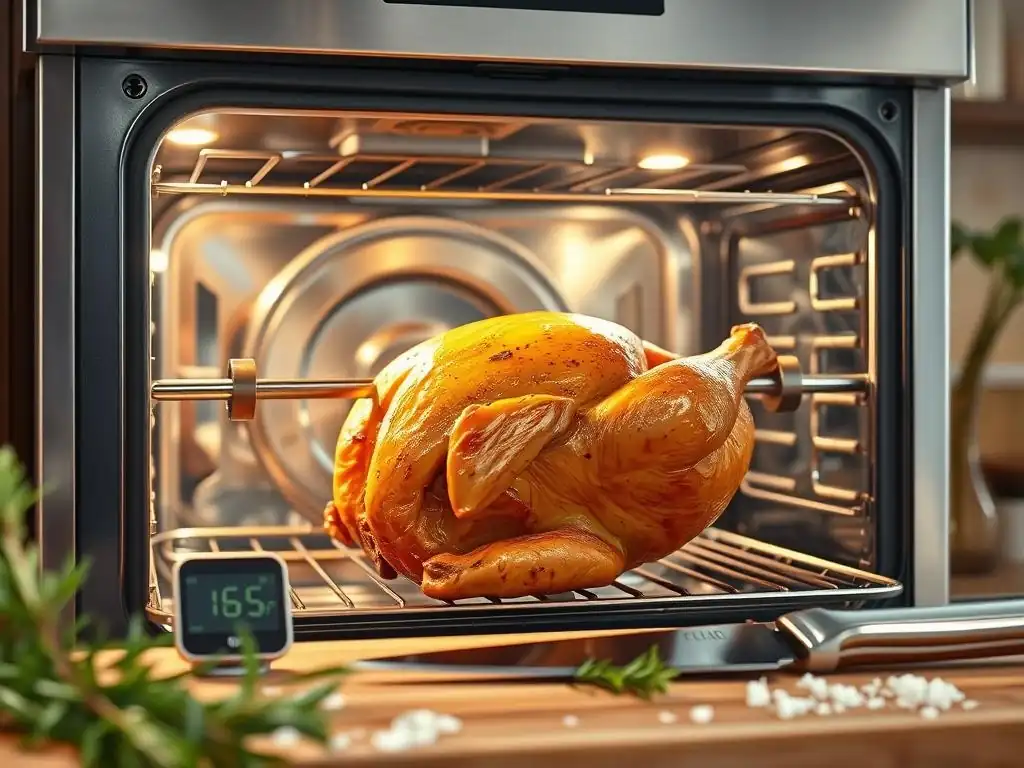
Ever thought about achieving that perfect rotisserie flavor without the rotisserie? We're diving into the secret science of oven rotisserie baked meat temps, unlocking a technique that brings succulent, evenly cooked meats right to your kitchen. Curious how to replicate that crispy, flavorful crust in your very own oven? Let's explore the temperatures and times that will transform your baking game and impress every palate. Ready to discover the magic?
- Rotisserie in an Oven: Setting Temps and Times for Baked Meat
- Introduction to Oven Rotisserie Baking
- Understanding Oven Rotisserie Functionality
- Essential Equipment for Oven Rotisserie Baking
- Setting the Right Oven Temperature for Rotisserie Baked Meat
- Determining Rotisserie Baking Times
- Step-by-Step Guide to Oven Rotisserie Baking
- Tips and Tricks for Perfect Oven Rotisserie Results
- Safe Handling and Storage of Rotisserie Baked Meat
- Conclusion: Enjoying Delicious Rotisserie-Style Meat at Home
-
Frequently Asked Questions
- What is the ideal internal temperature for chicken baked using an oven rotisserie?
- How long does it typically take to cook a 3-pound roast using an oven rotisserie?
- What temperature should I set my oven to when using the rotisserie function for baking meat?
- How do I ensure even cooking when using an oven rotisserie?
- What are some common mistakes to avoid when using an oven rotisserie for baking meat?
- Final Reflection: Mastering the Art of Oven-Roasted Rotisserie Perfection
- Unlock Juicy, Tender Perfection: Mastering Oven Rotisserie
Rotisserie in an Oven: Setting Temps and Times for Baked Meat
Introduction to Oven Rotisserie Baking
Discover the Ease of Rotisserie-Style Cooking in Your Home Oven
Bringing the delicious taste of rotisserie-cooked meats into your own kitchen is more accessible than you might think, especially if your oven is equipped with a rotisserie function. This feature allows meat to rotate slowly on a spit while baking, resulting in incredibly moist and evenly cooked results that are often hard to achieve with traditional baking methods. It's a fantastic way to elevate your home baking game, transitioning from static baking to dynamic roasting that crisps the exterior beautifully while keeping the interior wonderfully juicy.
Using the oven rotisserie for baked meat simplifies the cooking process significantly. Instead of constantly turning or basting by hand, the rotation does the work for you, promoting self-basting and uniform heat distribution. This hands-off approach means you can spend less time hovering over the oven and more time enjoying the aromas filling your kitchen or preparing side dishes. It's particularly effective for poultry, pork roasts, and smaller cuts of beef or lamb, delivering that sought-after restaurant-quality finish right from your standard oven.
Guide to Perfect Oven-Roasted Meats
Achieving perfect oven-roasted meats using the rotisserie function involves understanding a few key principles, primarily centered around setting the correct oven rotisserie baked meat temps and determining the appropriate cooking times. Unlike baking cakes or bread where precise temperatures are critical for structure, roasting meat requires hitting the right temperature range to ensure thorough cooking without drying out, focusing ultimately on reaching a safe internal temperature.
This guide will walk you through everything you need to know, from preparing your chosen cut of meat to troubleshooting common issues. We'll cover recommended oven temperatures for different types of meat, discuss how factors like weight and oven accuracy influence cooking time, and emphasize the crucial role of a meat thermometer. Mastering these elements will unlock the secret to consistently producing succulent, flavorful oven rotisserie baked meat that becomes a regular highlight in your home cooking repertoire.
Understanding Oven Rotisserie Functionality
How Does a Rotisserie Oven Work?
An oven equipped with a rotisserie function features a motor-driven spit that runs horizontally through the oven cavity. This spit is designed to hold food, typically a piece of meat, allowing it to rotate slowly and continuously throughout the cooking process. As the oven heats up, the rotating meat is exposed to the circulating hot air from all sides, ensuring even cooking and browning. This constant rotation also allows the meat's natural juices to continuously baste the surface, which helps keep the meat moist and contributes to a beautiful, crispy exterior crust.
The rotisserie motor is usually housed within the oven's wall and connects to the spit via a socket or bracket. The spit itself is a sturdy metal rod, often with adjustable forks or prongs that secure the meat firmly in place, preventing it from slipping as it turns. The combination of consistent heat and continuous rotation is what distinguishes rotisserie cooking from standard baking, leading to more uniform results and often shorter cooking times for certain cuts due to the efficient heat transfer.
Benefits of Using a Rotisserie Feature in Your Oven
Utilizing the rotisserie feature in your oven offers several distinct advantages when cooking meat. Firstly, the continuous rotation ensures exceptionally even cooking. Unlike baking on a rack where one side might be closer to a heating element or brown faster, the rotisserie exposes all surfaces equally to the heat, resulting in uniformly cooked meat from edge to center. This is particularly beneficial for larger or irregularly shaped cuts.
Secondly, the self-basting effect is a major benefit. As the meat rotates, its juices drip down, but with the rotation, these juices are constantly redistributed over the surface. This natural basting helps keep the meat moist and flavorful throughout the cooking time, reducing the need for manual basting and creating a more succulent final product. Finally, the even exposure to heat promotes superior browning and crisping of the skin (on poultry) or the exterior surface (on roasts), giving that appealing, caramelized finish that is a hallmark of great oven rotisserie baked meat.
Essential Equipment for Oven Rotisserie Baking
Choosing the Right Rotisserie Spit and Accessories
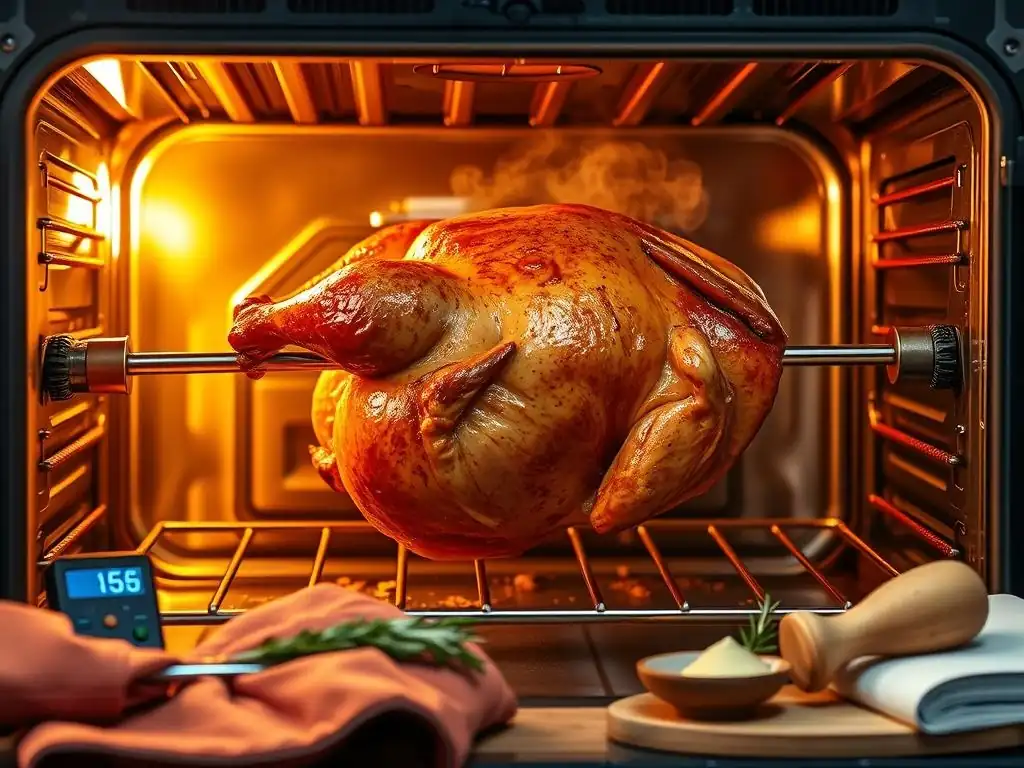
Most ovens with a rotisserie function come equipped with a standard spit rod and a pair of forks. However, ensuring you have the right accessories is key to success. The spit rod needs to be sturdy enough to support the weight of the meat you plan to cook without bending. The forks, often pronged and adjustable, are crucial for securing the meat firmly in the center of the spit. Make sure the forks are tight and properly inserted into the meat to prevent it from spinning freely on the rod instead of rotating with it.
For larger or awkwardly shaped pieces of meat, some cooks find additional accessories helpful, such as counterbalance weights. These attach to the spit and help ensure the meat rotates smoothly without putting excessive strain on the motor. Using heat-resistant gloves when handling the hot spit and forks is also essential for safety. Before cooking, always test that the spit, with the meat secured, fits and rotates freely within your oven, clearing the heating elements and walls.
Preparing Your Meat for the Rotisserie
Proper preparation is vital before placing meat on the rotisserie spit. Start by selecting a cut that is suitable in size and shape for your oven's capacity – typically, cuts weighing between 3 and 6 pounds work best for standard home ovens. Trim any excess fat or skin that might cause flare-ups or interfere with rotation. For poultry like chickens, trussing is absolutely critical. Trussing involves tying the wings and legs close to the body using butcher's twine.
- Trussing Steps:
- Tuck wing tips behind the back.
- Tie legs together tightly.
- Loop twine around the body to secure wings and legs further.
- Ensure the shape is compact and uniform.
Trussing creates a compact, balanced shape that rotates smoothly and cooks evenly. Without proper trussing, limbs can dangle, catch on heating elements, or cause the meat to wobble unevenly. Once trimmed and trussed (if necessary), season the meat generously. Rubs, marinades (applied judiciously to avoid dripping), or simple salt and pepper work well. Ensure the meat is centered and tightly secured on the spit using the rotisserie forks before placing it in the oven.
Setting the Right Oven Temperature for Rotisserie Baked Meat
Recommended Oven Temps for Different Types of Meat
Setting the correct oven rotisserie baked meat temps is paramount for achieving both safety and deliciousness. While slightly lower temperatures over a longer time can yield tender results, many home cooks find success with medium-high temperatures that promote crispy exteriors. A common range for oven rotisserie baking is between 325°F (160°C) and 400°F (200°C), depending on the type and size of meat and your desired outcome.
For example, poultry often benefits from higher temperatures to crisp the skin, while larger roasts might start at a higher temp and then drop, or cook consistently at a moderate temperature. It's important to remember that these are general guidelines; your oven's calibration and the specific cut of meat will influence the ideal setting. Always preheat your oven fully before starting the rotisserie.
Rotisserie Chicken Temperature Guide
For a whole chicken, a popular oven rotisserie baked meat option, many cooks aim for a temperature between 375°F (190°C) and 400°F (200°C). Cooking at this range helps render fat and crisp the skin effectively. A 3.5-4 pound chicken might take approximately 1 hour to 1 hour 15 minutes at 375°F, while a slightly larger 5-pound bird could take closer to 1 hour 30 minutes.
Some prefer starting at a very high temperature, like 425°F (220°C), for the first 15-20 minutes to really crisp the skin, then reducing it to 350°F (175°C) to finish cooking. This method requires careful monitoring to prevent burning. Regardless of the initial oven rotisserie baked meat temp, the chicken is done when a meat thermometer inserted into the thickest part of the thigh (without touching bone) registers 165°F (74°C).
Rotisserie Pork Temperature Guide
Pork roasts, such as loins or shoulders suitable for rotisserie, benefit from slightly lower oven rotisserie baked meat temps compared to chicken to ensure they don't dry out before reaching the correct internal temperature. A range of 325°F (160°C) to 350°F (175°C) is often recommended. A 4-pound pork loin might take around 1 hour 30 minutes to 2 hours at 325°F.
For pork shoulder, which benefits from a longer, slower cook to become tender, you might even go as low as 300°F (150°C), though this significantly increases cooking time. The U.S. Department of Agriculture (USDA) recommends cooking pork to an internal temperature of 145°F (63°C) for roasts, followed by a three-minute rest. For pulled pork made from shoulder, you'll need to cook it to a much higher temperature, around 195-205°F (90-96°C), until it's easily shreddable.
Rotisserie Beef Temperature Guide
Rotisserie beef roasts, like a tenderloin or a smaller rib roast, are often cooked at moderate to high oven rotisserie baked meat temps to achieve a good crust while keeping the interior to the desired level of doneness. Temperatures between 350°F (175°C) and 375°F (190°C) work well for achieving a nice exterior sear and even cooking. A 3-pound beef tenderloin might cook in as little as 45-60 minutes at 375°F for medium-rare.
Larger, tougher cuts less suitable for traditional roasting are generally not recommended for the rotisserie unless cooked for an extended period at a very low temperature, which is less common for this method. The key for beef is cooking to your preferred internal temperature:
- Rare: 120-125°F (49-52°C)
- Medium-Rare: 130-135°F (54-57°C)
- Medium: 140-145°F (60-63°C)
Remember that the temperature will rise a few degrees as the meat rests.
Rotisserie Lamb Temperature Guide
Lamb, such as a leg of lamb or a smaller boneless roast, is well-suited for oven rotisserie baking. Similar to beef, you'll likely use oven rotisserie baked meat temps in the 350°F (175°C) to 375°F (190°C) range. A 4-pound boneless leg of lamb might take roughly 1 hour 15 minutes to 1 hour 45 minutes at 350°F, depending on the desired doneness.
Lamb is often enjoyed medium-rare to medium. Target internal temperatures are similar to beef:
- Medium-Rare: 130-135°F (54-57°C)
- Medium: 140-145°F (60-63°C)
- Medium-Well: 150-155°F (66-68°C)
Allowing lamb to rest after cooking is crucial for juice retention.
The Importance of Internal Temperature for Safe Cooking
While setting the oven rotisserie baked meat temps correctly provides the heat environment, the internal temperature of the meat is the definitive measure of doneness and safety. Relying solely on cooking time or external appearance can be misleading, as factors like the meat's starting temperature, shape, and actual oven performance can vary.
Using a reliable meat thermometer is non-negotiable for safe and perfectly cooked rotisserie meat. Insert the thermometer into the thickest part of the meat, ensuring it doesn't touch bone, fat, or the rotisserie spit itself, as these can give inaccurate readings. Different types of meat and cuts have specific recommended minimum safe internal temperatures, as outlined by food safety authorities like the USDA. Always check the temperature in multiple spots to ensure the entire piece of meat has reached the target temperature.
Determining Rotisserie Baking Times
Factors Affecting Rotisserie Cooking Time
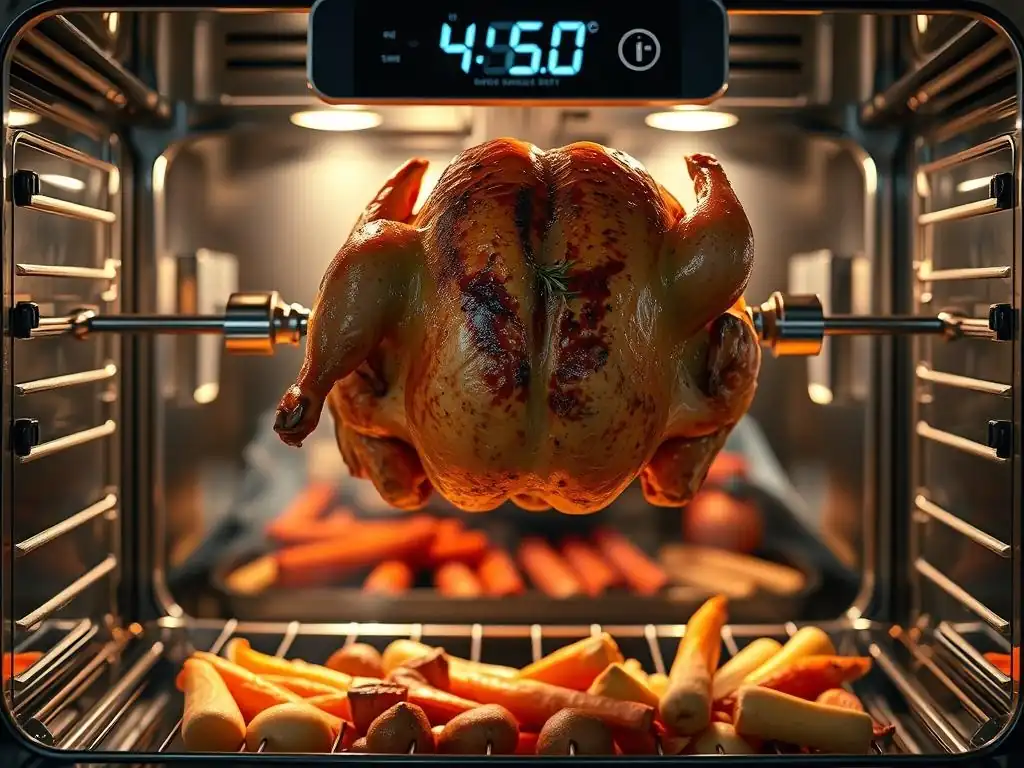
Predicting the exact rotisserie cooking time for baked meat can be tricky, as several variables come into play. While temperature is a primary factor, the specific time required depends heavily on what you're cooking and the conditions of your oven. It's less about a fixed duration and more about reaching the correct internal temperature at a given oven setting.
Key factors include the initial temperature of the meat (room temperature meat cooks faster than cold meat), the accuracy and consistency of your oven's temperature, and whether you open the oven door frequently (which causes heat loss). The desired level of doneness, particularly for beef and lamb, also significantly impacts how long the meat stays on the spit.
Weight and Size of the Meat
The most significant factor influencing rotisserie cooking time is the weight and size of the meat. A larger, heavier piece of meat will require considerably longer to cook through to the center than a smaller one at the same oven rotisserie baked meat temps. For example, a 5-pound chicken will take longer than a 3-pound chicken.
However, it's not just about weight; the shape matters too. A compact, evenly shaped roast will cook more uniformly than a long, thin piece or one with awkward protrusions (hence the importance of trussing poultry). As a very rough guideline, many meats cooked on a rotisserie at typical roasting temperatures (325-375°F) might take approximately 15-20 minutes per pound, but this is merely a starting point for estimation.
Oven Calibration and Accuracy
Even if you set your oven to a specific temperature, its internal thermostat might not be perfectly accurate. Oven calibration can drift over time, meaning the actual temperature inside could be higher or lower than what the dial indicates. This inaccuracy directly affects cooking time – a slightly cooler oven will take longer, while a hotter one will cook faster and potentially risk drying out the exterior before the interior is done.
Using an independent oven thermometer placed inside the oven cavity can help you verify the true temperature and adjust your settings accordingly. Knowing how your specific oven performs will allow you to better estimate cooking times and fine-tune your approach to setting oven rotisserie baked meat temps for consistent results.
Desired Level of Doneness
For meats like beef, lamb, and even pork, the desired level of doneness (rare, medium-rare, medium, etc.) is a critical factor in determining cooking time. Cooking a beef roast to a medium-rare 130°F internal temperature will take significantly less time than cooking it to a well-done 160°F.
This is where the meat thermometer becomes your absolute best friend. Instead of relying solely on the clock, use the thermometer to check the internal temperature as the estimated cooking time approaches. Remove the meat when it reaches a few degrees below the final target temperature, as it will continue to cook as it rests due to carryover heat.
Rotisserie Cooking Time Chart for Various Meats
Below is a very approximate guide for rotisserie cooking times at typical oven rotisserie baked meat temps (e.g., 350-375°F). Always use a meat thermometer to confirm doneness.
| Meat Type | Weight Range | Approximate Time (per pound) | Target Internal Temp |
|---|---|---|---|
| Whole Chicken | 3-5 lbs | 15-18 minutes | 165°F (74°C) |
| Pork Loin | 3-4 lbs | 20-25 minutes | 145°F (63°C) |
| Beef Roast | 2-4 lbs | 15-20 minutes (for Med-Rare) | 130-135°F (54-57°C) |
| Leg of Lamb | 3-5 lbs | 18-22 minutes (for Med-Rare) | 130-135°F (54-57°C) |
Note: These times are estimates. Factors like oven calibration, meat shape, and starting temperature will cause variations. Always cook to target internal temperature.
For example, a 4-pound chicken might take around 60-72 minutes (4 lbs * 15-18 min/lb) at 375°F. A 3-pound beef roast cooked to medium-rare might take 45-60 minutes (3 lbs * 15-20 min/lb) at 375°F. Use these as starting points for checking the internal temperature.
Using a Meat Thermometer for Precise Results
As reiterated throughout this guide, a meat thermometer is the single most important tool for successful oven rotisserie baked meat. It removes the guesswork and ensures your meat is cooked safely and to your desired level of doneness.
There are different types of meat thermometers:
- Instant-Read Thermometers: Quick and accurate, inserted towards the end of cooking to check temperature.
- Leave-In Probe Thermometers: A probe is inserted into the meat before cooking begins, and a wire connects to a display unit outside the oven, allowing you to monitor the temperature rise without opening the door. Some models have alarms that sound when the target temperature is reached.
For rotisserie cooking, a leave-in probe thermometer is incredibly convenient as it minimizes the need to stop the rotation and open the oven, which helps maintain consistent oven rotisserie baked meat temps. If using an instant-read thermometer, momentarily stop the rotisserie, carefully open the oven door (use caution with the hot, rotating spit), insert the thermometer into the thickest part, get your reading, remove, and resume rotation.
Step-by-Step Guide to Oven Rotisserie Baking
Preparing Your Meat: Seasoning and Trussing
Let's walk through the process. First, prepare your meat. Pat it dry thoroughly with paper towels – dry surfaces crisp up better. Apply your chosen seasoning liberally. This could be a simple salt and pepper rub, a complex spice blend, or herbs and garlic tucked under the skin (for poultry) or rubbed into the surface.
If cooking a whole chicken or similar poultry, truss it tightly using butcher's twine to create a compact, balanced shape. For roasts, ensure any netting is secure or tie with twine if needed to help it hold its shape. Carefully thread the rotisserie spit through the center of the meat, aiming for the most balanced point. Secure the meat firmly with the rotisserie forks, tightening them well. Ensure the meat is centered on the spit and balanced; if it's lopsided, it won't rotate smoothly.
Setting Up Your Rotisserie Oven
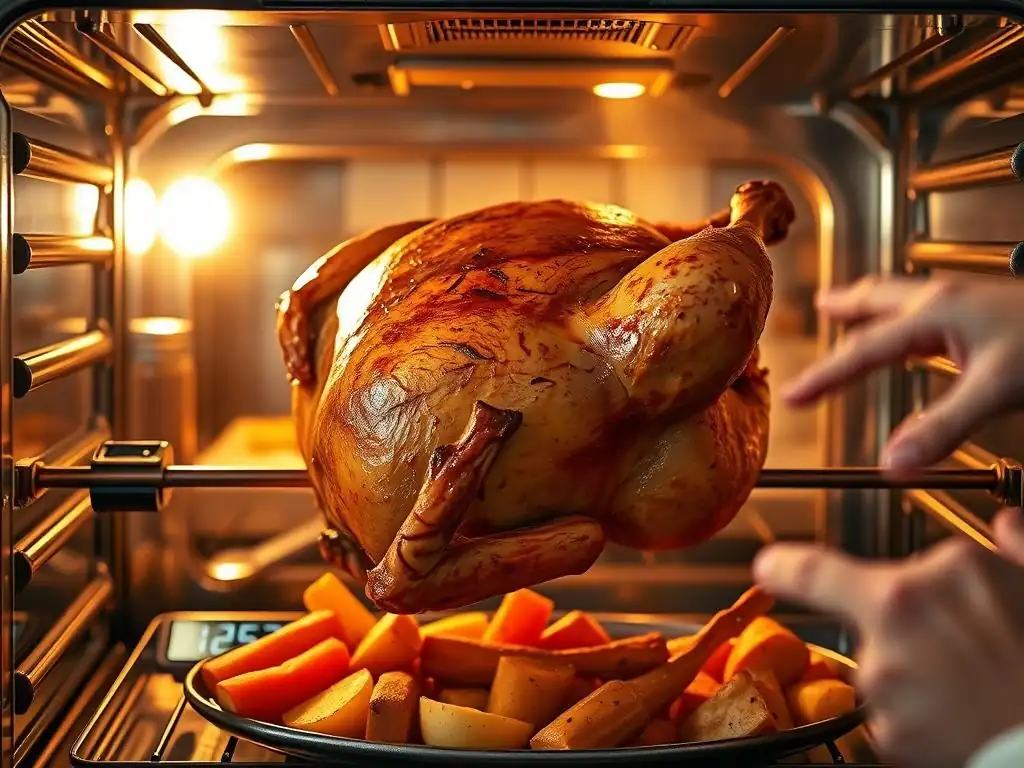
Once the meat is secured on the spit, it's time to set up the oven. Place a drip pan on the oven rack directly below where the meat will rotate. This pan will catch juices and fat, making cleanup easier and preventing smoke or flare-ups. You can add a little water, broth, or vegetables to the drip pan for added moisture and flavor, which can also be used for gravy.
Carefully slide the spit assembly with the meat into the oven, fitting one end into the motor socket and resting the other end in the support bracket. Ensure the meat clears the heating elements and the bottom drip pan as it rotates. Close the oven door. Set your oven rotisserie baked meat temps according to the type and size of meat you are cooking, usually between 325°F and 400°F. Select the "Rotisserie" function on your oven and start the process.
Monitoring the Cooking Process
Monitoring is key, especially during the latter half of the cooking time. While the rotisserie function does much of the work, you'll want to keep an eye on how the meat is browning. If one side seems to be browning too quickly (though less likely with continuous rotation), you might need to adjust the oven temperature slightly or, in rare cases, briefly pause and reposition the meat if your oven has hot spots.
Crucially, start checking the internal temperature with your meat thermometer as you approach the estimated cooking time. For a 4-pound chicken at 375°F, you might start checking around the 50-minute mark. For a 3-pound beef roast at 375°F aiming for medium-rare, start checking around 35-40 minutes. Remember to insert the thermometer carefully, avoiding the spit and bone. Continue cooking until the lowest reading in the thickest part reaches your target temperature.
Achieving a Crispy Exterior and Juicy Interior
The beauty of oven rotisserie baked meat lies in its ability to develop a wonderfully crispy exterior while remaining exceptionally juicy inside. Achieving this requires a balance of temperature and technique. Starting with dry, well-seasoned meat is essential for crisping. Using a slightly higher oven temperature, especially towards the end of cooking, can also help develop a golden-brown, crispy skin or crust.
Avoiding overcooking is the absolute best way to ensure a juicy interior. Once the meat reaches its target internal temperature, remove it from the oven immediately. Allowing it to rest, tented loosely with foil, for 10-15 minutes (for chicken/small roasts) or 15-20 minutes (for larger roasts) is critical. Resting allows the juices, which have been pushed towards the center during cooking, to redistribute throughout the meat, resulting in a more succulent final product. Cutting the meat too soon will cause these precious juices to run out.
Tips and Tricks for Perfect Oven Rotisserie Results
Basting Techniques for Added Flavor and Moisture
While the rotisserie motion provides a degree of self-basting, you can enhance flavor and moisture by applying additional basting liquids. A simple melted butter or oil baste can promote crispier skin on poultry. For roasts, you might use pan drippings (collected in your drip pan), broth, wine, or a glaze.
- Basting Methods:
- Use a heat-safe basting brush or spoon.
- Apply liquid carefully while the spit is rotating, or momentarily pause rotation.
- Avoid basting too frequently, as opening the oven door lowers the temperature.
- For poultry, avoid basting in the last 15-20 minutes to allow the skin to crisp fully.
Some cooks even create an automated basting system by placing herbs, garlic, or citrus in the drip pan with liquid, allowing the steam to infuse the meat as it cooks. Experiment with different basting liquids to find what you like best with your oven rotisserie baked meat.
Preventing Meat from Drying Out During Rotisserie
The rotisserie process inherently helps keep meat moist through self-basting, but there are extra steps you can take to prevent drying, especially with leaner cuts or if cooking for a longer time.
- Prevention Checklist:
- ✅ Start with properly prepared meat (trussed if poultry).
- ✅ Don't overcook! Use a meat thermometer and remove meat promptly at target temp.
- ✅ Ensure adequate fat layer (or add fat like butter under poultry skin).
- ✅ Consider injecting marinades into thicker parts of larger roasts.
- ✅ Place liquid (broth, water) in the drip pan to create steam.
- ✅ Rest the meat adequately after cooking.
Using the right oven rotisserie baked meat temps – generally not excessively high for too long – also plays a crucial role in preventing dryness. A temperature between 325°F and 375°F is often a good balance for many meats.
Troubleshooting Common Rotisserie Baking Problems
Even with careful preparation, you might encounter a few issues:
- Meat not rotating smoothly: This is usually a balance issue. Ensure the meat is centered on the spit and secured tightly with the forks. If needed, use twine to tie any loose parts or try a counterbalance weight if available.
- Meat cooking unevenly: Check your oven's calibration with an oven thermometer. If it has hot spots, you might need to slightly adjust the meat's position or the temperature. Ensure the meat clears all heating elements and the drip pan.
- Skin not crisping (poultry): Ensure the skin was patted very dry before seasoning. Cook at a slightly higher oven rotisserie baked meat temp (375-400°F) for at least part of the cooking time. Avoid basting in the final 15-20 minutes.
- Meat drying out: Most often caused by overcooking. Always use a thermometer! Also, ensure adequate resting time. Using liquid in the drip pan can help maintain humidity in the oven.
Safe Handling and Storage of Rotisserie Baked Meat
Cooling and Storing Leftover Rotisserie Meat
Proper cooling and storage of leftover oven rotisserie baked meat are essential for food safety. Once the meat has finished resting, carve and serve what you need. Any leftovers should be cooled quickly before storing. Avoid leaving cooked meat at room temperature for more than two hours (or one hour if the ambient temperature is above 90°F / 32°C).
To cool quickly, carve the meat into smaller portions or slices and spread them on a plate or shallow container. Once cooled to room temperature, transfer the meat to airtight containers or wrap tightly in plastic wrap or foil. Store the leftovers in the refrigerator. Properly stored, cooked meat will typically last 3-4 days in the refrigerator.
Reheating Rotisserie Meat Without Drying It Out
Reheating leftover oven rotisserie baked meat can be challenging, as it's easy to dry it out. The key is to reheat gently and avoid high temperatures.
- Reheating Methods:
- Oven: The best method for larger pieces or retaining crispness. Preheat oven to a low temperature, around 250-300°F (120-150°C). Place meat in an oven-safe dish, perhaps with a little broth or water to add moisture, and cover tightly with foil. Heat until just warmed through (check with a thermometer), typically 20-30 minutes depending on size.
- Microwave: Fastest method, but can make meat rubbery. Use short intervals at a lower power setting. Cover the meat to trap steam. Best for small portions.
- Stovetop: Good for sliced meat. Heat a skillet over medium-low heat with a little oil or butter. Add meat and gently warm, flipping occasionally.
Avoid overheating, as this is the primary cause of dryness. Reheat only the amount you plan to eat.
Conclusion: Enjoying Delicious Rotisserie-Style Meat at Home
Mastering the art of cooking with your oven's rotisserie function opens up a world of incredibly flavorful and moist baked meat possibilities right in your own kitchen. By understanding how the rotation works, properly preparing your meat, and most importantly, setting the correct oven rotisserie baked meat temps and monitoring with a thermometer, you can consistently achieve restaurant-quality results.
From perfectly crispy-skinned chicken to tender, juicy pork and succulent beef or lamb roasts, the rotisserie offers a unique advantage over static baking methods. It's a hands-off technique that yields impressive results, making it ideal for both weeknight dinners and special occasions. So, dust off that rotisserie spit, choose your favorite cut of meat, and get ready to enjoy the delicious rewards of home oven rotisserie baking!
Frequently Asked Questions
What is the ideal internal temperature for chicken baked using an oven rotisserie?
The ideal internal temperature for cooked chicken is 165°F (74°C). Always use a meat thermometer to ensure it's fully cooked.
How long does it typically take to cook a 3-pound roast using an oven rotisserie?
Cooking time depends on the oven and the cut of meat, but a general guideline for a 3-pound roast is roughly 20-25 minutes per pound, aiming for the target internal temperature. Always check with a meat thermometer.
What temperature should I set my oven to when using the rotisserie function for baking meat?
For optimal oven rotisserie results, set your oven to around 325-350°F (163-177°C). This allows for even cooking and prevents the outside from burning before the inside is done.
How do I ensure even cooking when using an oven rotisserie?
Ensure even cooking by properly balancing the meat on the rotisserie rod and allowing the meat to rest before carving. This helps retain moisture.
What are some common mistakes to avoid when using an oven rotisserie for baking meat?
Common mistakes include overcrowding the oven (impeding air circulation), not monitoring the internal temperature, and failing to properly season the meat. Proper seasoning is key to flavor.
Final Reflection: Mastering the Art of Oven-Roasted Rotisserie Perfection
The quest for juicy, flavorful, evenly-cooked rotisserie-style meat is no longer limited to specialized equipment. Achieving that signature crispy skin and tender interior is now within reach for every home cook, thanks to the simple yet effective techniques explored in this article. Understanding the nuances of temperature and timing, as outlined here, unlocks a world of culinary possibilities.
The impact of readily available, high-quality rotisserie-style meals at home is undeniable. It's not just about convenience; it's about elevating everyday dining. It's about reclaiming the joy of creating a truly special meal without the need for expensive appliances. The best things in life are simple,
a sentiment that perfectly encapsulates the beauty of achieving rotisserie-style results with readily available tools. This method allows us to appreciate the process, the aromas, and the final product in a way that mass-produced meals simply cannot replicate.
Now, it's your turn. Experiment with the temperature and timing guidelines provided, adapt them to your oven and your chosen cut of meat, and discover the joy of creating restaurant-quality rotisserie-style meals in your own kitchen. Don't be afraid to tweak the process, to learn from your experiences, and to savor the delicious results. The journey to mastering oven rotisserie is a rewarding one, filled with delicious discoveries and the satisfaction of creating something truly special.
Unlock Juicy, Tender Perfection: Mastering Oven Rotisserie
Thanks for taking the time to explore the art of oven rotisserie! You've now got the knowledge to elevate your roasted meats to a whole new level of flavor and tenderness. Ready to put your newfound skills to the test?
- Try our recommended temperature and time guide for your next roast: Experiment with different cuts and marinades, and discover your new favorite recipe. This is your chance to become a true rotisserie master!
- Share your culinary creations: Post a picture of your perfectly roasted masterpiece on social media and tag us! Let's inspire each other.
- Explore different vegetables to roast alongside your meat: This is a great opportunity to add extra flavor and nutrition. Think vibrant root vegetables, colorful peppers, or even seasonal fruits.
What unique twist will you add to your next oven-rotisserie masterpiece? Let's hear about it in the comments below!