
The Importance of Weighing Ingredients for Accurate Pizza Dough

Welcome to BakeWithEase, where we believe everyone can create delicious baked goods! Ever wondered why your pizza dough never quite turns out right? This week, we're diving deep into the often-overlooked secret of perfect pizza: accurate pizza dough weighing. Unlock the key to consistent results and say goodbye to frustrating dough disasters. Intrigued? Read on to discover why precise measurements are essential for pizza perfection!
- The Importance of Weighing Ingredients for Accurate Neapolitan Pizza Dough
- Why Accurate Pizza Dough Weighing Matters for Perfect Neapolitan Pizza
- The Science Behind Weighing Pizza Dough Ingredients
- Essential Tools for Accurate Pizza Dough Weighing
- Weighing Specific Pizza Dough Ingredients: A Detailed Guide
- Step-by-Step Guide to Weighing Ingredients for Pizza Dough
- Troubleshooting Common Issues with Pizza Dough Weighing
- Benefits of Accurate Pizza Dough Weighing Beyond Consistency
- Mastering Pizza Dough: Weighing as a Cornerstone Technique
-
Frequently Asked Questions
- Why is accurate pizza dough weighing so important?
- What type of scale is recommended for weighing pizza dough ingredients?
- What happens if I don't accurately weigh my pizza dough ingredients?
- Besides flour and water, which other pizza dough ingredients should be weighed?
- What units of measurement are best to use when weighing pizza dough ingredients?
- Final Reflection: The Weight of Perfection in Pizza Dough
- Unleash Your Inner Pizzaiolo: Perfect Dough, Every Time!
The Importance of Weighing Ingredients for Accurate Neapolitan Pizza Dough
Baking, especially crafting the perfect Neapolitan pizza dough, is often described as a blend of art and science. While experience hones the art, the science relies heavily on precision. For anyone serious about achieving consistent, high-quality results in their homemade pizza, embracing accurate pizza dough weighing is not just a suggestion – it's a fundamental technique. Moving beyond volume measurements like cups and spoons to using a kitchen scale is a transformative step in your baking journey.
This guide will walk you through why weighing your ingredients is crucial for Neapolitan pizza dough, delve into the science behind it, explore the tools you need, and provide practical tips for mastering this essential skill.
Why Accurate Pizza Dough Weighing Matters for Perfect Neapolitan Pizza
Achieving that signature light, airy, yet chewy crust of a Neapolitan pizza requires a delicate balance of ingredients and precise execution. Slight variations can dramatically alter the dough's texture, fermentation, and baking performance. This is where the power of accurate pizza dough weighing comes into play, offering unparalleled control over your recipe.
Consistent Results Through Precise Measurements
Imagine you're using a recipe that calls for 500 grams of "00" flour. If you consistently measure 500 grams using a reliable scale, you know exactly how much flour is going into your dough every single time. Compare this to using a cup measure, where factors like how densely the flour is packed or the type of cup used can lead to variations of 20 grams or more per cup. In a recipe using 3-4 cups of flour (roughly 360-480 grams), this inconsistency can easily add up to a difference of 50-100 grams of flour.
This seemingly small difference in flour weight significantly impacts the hydration level of your dough. If a recipe calls for 300 grams of water (60% hydration relative to 500g flour), but you accidentally use 550 grams of flour due to volume measurement errors, your effective hydration drops to around 54.5% (300g water / 550g flour). This lower hydration will result in a drier, harder-to-handle dough that yields a denser, less airy crust than intended. Accurate pizza dough weighing eliminates this variability, ensuring that if you follow the same recipe and process, you'll get remarkably similar dough batches every time.
Eliminating Guesswork in Neapolitan Pizza Dough Recipe
Baking with volume measurements often requires subjective judgment. How full is the cup? Is the flour leveled correctly? Is the brown sugar packed just right? This introduces guesswork into your process, making it difficult to identify what went wrong when a batch doesn't turn out as expected. Was it the yeast? The water temperature? Or simply the inconsistent measurement of flour or water?
By implementing accurate pizza dough weighing, you remove this layer of uncertainty. Each ingredient is added based on a specific mass, a quantifiable and reproducible figure. If your dough is too wet or too dry, you can confidently look at other factors like mixing technique, fermentation time, or ambient temperature, knowing that your ingredient ratios were correct according to the recipe's weight specifications. This methodical approach is essential for learning, troubleshooting, and ultimately mastering your Neapolitan pizza dough recipe.
The Science Behind Weighing Pizza Dough Ingredients
Understanding why weight is superior to volume involves a bit of baking science. It's not just about being precise; it's about accounting for the inherent variability of ingredients, particularly flour and liquids, when measured by volume.
Understanding Baker's Percentage for Pizza Dough
Professional bakers universally use baker's percentage, a system where each ingredient's weight is expressed as a percentage of the flour's weight (which is always 100%). This system is incredibly powerful because it allows for easy scaling of recipes and provides a clear picture of the dough's composition. For example, a typical Neapolitan dough might use:
Flour: 100% (e.g., 500g)
Water: 55-65% (e.g., 275g - 325g)
Salt: 2-3% (e.g., 10g - 15g)
Yeast: 0.1-1% (depending on type and fermentation time, e.g., 0.5g instant yeast for a long ferment)
Using baker's percentage, you can easily double or halve the recipe while maintaining the exact same ratios, ensuring the dough behaves consistently. If you decide you want a slightly higher hydration dough, you simply adjust the water percentage relative to the flour weight, not by adding an arbitrary extra splash to a cup measurement. This scientific approach, underpinned by accurate pizza dough weighing, provides a framework for understanding and modifying recipes effectively.
How Volume Measurements Can Lead to Inconsistent Pizza Dough
Volume measurements like cups and spoons are designed for liquids or granular solids that pack uniformly, like sugar or salt (though even these can vary). Flour, however, is light, fluffy, and easily compressible. The amount of flour that fits into a standard cup can vary significantly depending on how it's scooped and leveled. Simply scooping directly from a bag can pack in much more flour than gently spooning it into the cup and leveling it off. This difference can be as much as 30-40 grams per cup, a substantial error margin in a sensitive dough recipe like Neapolitan pizza.
Water, while seemingly uniform, also has slight density variations with temperature, though this is less significant than flour variability. However, the primary issue with measuring water by volume for dough hydration is its relationship to the weight of the flour. Since flour weight is inconsistent with volume measurements, measuring water by volume (e.g., milliliters or fluid ounces) relative to an inconsistent flour volume measurement creates a double layer of potential error. Accurate pizza dough weighing ensures that the critical ratio of water to flour is precise every time.
The Impact of Humidity on Volume-Based Flour Measurements
Another factor affecting the density of flour when measured by volume is ambient humidity. Flour is hygroscopic, meaning it absorbs moisture from the air. On a humid day, flour can absorb several percentage points of moisture, making it slightly heavier for the same volume compared to a dry day.
While a kitchen scale accounts for this absorbed moisture (a gram is a gram, regardless of whether it's dry flour or flour plus absorbed water), a volume measure does not. A cup of flour on a humid day might contain more actual flour solids (plus water weight) than a cup on a dry day, even if packed the same way.
This variation directly impacts your dough's hydration. If your recipe uses volume and you measure flour on a humid day, you might inadvertently add more flour by weight than on a dry day, potentially resulting in a stiffer dough even if you measured your water accurately by volume. Accurate pizza dough weighing negates this environmental variable, as you are always measuring the true mass of the flour, allowing you to adjust your water by weight to achieve the desired hydration relative to that specific batch of flour.
Essential Tools for Accurate Pizza Dough Weighing
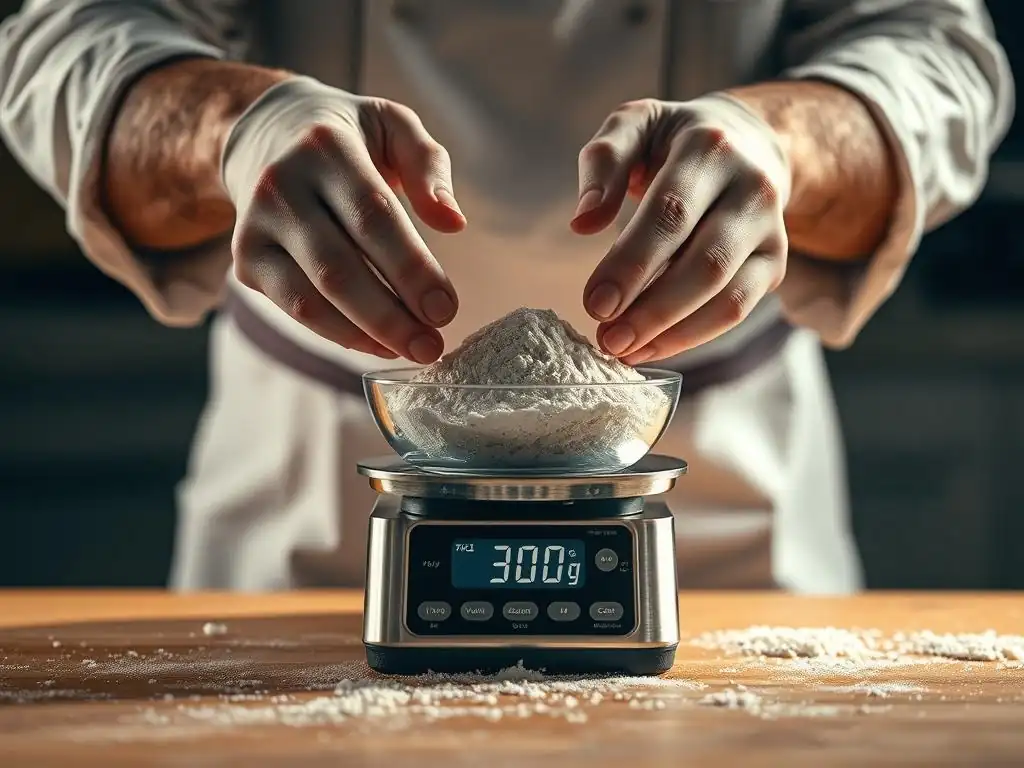
To practice accurate pizza dough weighing, you don't need a lot of fancy equipment. A reliable kitchen scale is the primary tool, but understanding how to use it effectively is key.
Kitchen Scales: Choosing a Digital Scale for Baking
The most crucial tool for accurate pizza dough weighing is a digital kitchen scale. Look for a scale that has:
- Capacity: Can handle at least 1-2 kg (2-4 lbs), enough for most home baking recipes.
- Precision: Measures in 1-gram increments. Some highly precise scales measure in 0.1-gram increments, which is excellent for tiny amounts of yeast or salt, but 1-gram precision is sufficient for most home bakers.
- Units: Can switch between grams and ounces. Grams are highly recommended for baking precision.
- Tare function: This is essential! It allows you to reset the scale to zero after placing a container on it, so you only measure the weight of the ingredients added.
- Easy-to-read display: Important for quick and accurate reading.
A good digital scale can be purchased for a reasonable price, often under $30-$40, and it will drastically improve your baking consistency.
Grams vs. Ounces: Using Grams for Precision in Pizza Dough Recipes
While digital scales often offer both grams and ounces, grams are the preferred unit for baking, especially for accurate pizza dough weighing. Why? Grams are a metric unit based on mass (weight), and they are more precise than ounces. There are approximately 28.35 grams in one ounce. This means a 1-gram increment on your scale is much finer than a 1-ounce increment (or even a 0.1-ounce increment, which is ~2.8 grams).
Using grams allows you to measure small quantities of ingredients like yeast or salt with greater accuracy. A recipe calling for "7 grams of salt" is much easier to measure precisely than one calling for "a quarter ounce" or "two teaspoons." Adopting grams for all your baking measurements, starting with your pizza dough, will simplify recipes and enhance your precision.
Using Measuring Cups and Spoons as a Backup (and why they are not ideal)
While you should rely primarily on your kitchen scale for accurate pizza dough weighing, measuring cups and spoons can serve limited purposes or act as a rough backup if your scale battery dies (though you should always check your scale before starting!). They are still useful for measuring very small volumes of liquids like olive oil after it has been weighed, or for scooping ingredients into the weighing container.
However, as discussed earlier, their inherent inaccuracy for ingredients like flour makes them unsuitable for precise dough making. Think of them as tools for initial scooping or for recipes where extreme precision isn't critical (like cooking sauces), but not for the core ingredients in your pizza dough recipe if you aim for consistent, professional-level results.
Weighing Specific Pizza Dough Ingredients: A Detailed Guide
Each ingredient in your Neapolitan pizza dough plays a specific role, and measuring each one accurately by weight is critical for achieving the desired outcome.
Flour: Using "00" Flour and Weighing Accurately
"00" flour is traditionally used for Neapolitan pizza dough due to its fine texture and relatively lower protein content compared to bread flour, resulting in a tender crust with good chew. When weighing your "00" flour (or any flour), the process is simple:
- Place your mixing bowl or a separate container on the digital scale.
- Press the "Tare" button to zero out the scale.
- Gently spoon flour into the container until the scale reads the exact weight specified in your recipe (e.g., 500g). Avoid scooping directly with the container, as this can compact the flour.
Even with careful spooning, using a scale guarantees you have the correct mass of flour, regardless of how compacted it might be in the bag or how humid the air is. This is the cornerstone of accurate pizza dough weighing.
Water: Achieving Optimal Hydration Through Weighing
Water is just as critical as flour, defining the dough's hydration level, which significantly impacts texture and handling. Neapolitan pizza dough typically has a hydration level between 55% and 65%. Weighing water is much more accurate than measuring by volume, especially for specific percentages. For example, 300 grams of water is exactly 300 grams, whereas 300 milliliters is approximately 300 grams (water's density is close to 1g/mL, but can vary slightly with temperature).
To weigh water:
- Place a container (like a measuring jug or your mixing bowl) on the scale.
- Press "Tare".
- Pour water into the container until the scale shows the required weight (e.g., 300g).
Using weight ensures your water measurement is precisely proportional to your flour weight, guaranteeing the intended hydration level for your accurate pizza dough weighing process.
Yeast: Ensuring Proper Activation with Precise Measurement
Yeast quantity, especially for instant or active dry yeast used in relatively small amounts for long fermentation, needs to be precise. Too much yeast can lead to overly rapid fermentation and a dough that's difficult to handle and might taste overly yeasty. Too little can result in sluggish or insufficient rise. For example, a recipe might call for just 1 or 2 grams of instant dry yeast for a 24-hour fermentation.
Weighing these small amounts requires a sensitive scale, ideally one that measures in 0.1-gram increments, though a good 1-gram scale is often sufficient if you are careful or weigh slightly larger batches. To weigh yeast:
- Place a small container or piece of parchment paper on the scale.
- Press "Tare".
- Carefully add yeast until the correct weight is displayed (e.g., 1g).
Precise yeast measurement is crucial for controlling the fermentation process, a key factor in developing the flavor and texture of Neapolitan pizza dough.
Salt: Balancing Flavors and Controlling Dough Development with Weight
Salt does more than just add flavor; it plays a vital role in controlling yeast activity and strengthening the gluten structure. Too little salt can lead to bland dough that ferments too quickly and is sticky. Too much salt can inhibit yeast, slow down fermentation, and make the dough tough. Salt content is typically 2-3% of the flour weight in pizza dough.
Weighing salt ensures you hit this percentage accurately. Like yeast, salt amounts are often small (e.g., 10-15 grams for 500g of flour). Use the tare function with a small container and carefully add the salt until the scale shows the exact weight. This precision, part of accurate pizza dough weighing, helps achieve the perfect balance in your final crust.
Oil: (Optional) Weighing Oil for Specific Dough Styles
Traditional Neapolitan pizza dough typically does not include oil. However, some pizza dough recipes, particularly for different styles like New York or pan pizza, might include a small amount of olive oil for flavor, tenderness, and easier handling. If your recipe calls for oil, weighing it is more accurate than measuring by volume, especially for smaller quantities.
Oil is less dense than water, so milliliters and grams won't be 1:1. Weighing ensures you add the exact amount specified in the recipe's ratio. Use the tare function with a container and pour the oil until the scale reaches the target weight. This contributes to the overall accurate pizza dough weighing process for any recipe variation you choose.
Step-by-Step Guide to Weighing Ingredients for Pizza Dough
Incorporating accurate pizza dough weighing into your routine is simple once you get the hang of it. Here’s a typical workflow:
Zeroing Your Scale: Starting with a Clean Slate
Before weighing any ingredient, place the container you will use (your mixing bowl, a jug, a small dish) onto the scale. Once the scale stabilizes, press the "Tare" or "Zero" button. This resets the display to 0.0 grams, effectively subtracting the weight of the container. Now, any ingredient you add to the container will be measured accurately on its own.
Weighing Dry Ingredients First: A Best Practice
It's generally easiest to weigh your dry ingredients first, starting with the largest quantity – the flour.
- Place your mixing bowl on the tared scale.
- Weigh your flour directly into the bowl (e.g., 500g).
- Do not tare yet. Add your salt on top of the flour, weighing it (e.g., 10g). The scale will now show the combined weight (510g).
- Add your yeast (e.g., 1g). The scale will show the total dry weight (511g).
This method allows you to measure multiple dry ingredients sequentially into the same bowl, saving time and dishes. Just ensure you add them in the correct order if the recipe specifies, or simply add them on top of the flour.
Adding Water Gradually: Monitoring Hydration Levels
Once your dry ingredients are in the mixing bowl, you'll weigh your water.
- Place a separate jug or container on the scale.
- Press "Tare".
- Weigh your water into this container (e.g., 300g).
- Now, add the weighed water to your dry ingredients in the mixing bowl according to your recipe's instructions (e.g., pouring most of it in and reserving a little).
Weighing water separately before adding it allows you to confirm the correct amount and makes it easier to control its addition to the dough.
Recording Weights: Keeping Track for Future Success
A great habit for any baker is to keep notes. When you use accurate pizza dough weighing, record the exact weights you used, the brand of flour, the ambient temperature and humidity, and the results.
- Create a simple logbook or digital document.
- Note the recipe name, date, and the exact weight used for flour, water, salt, yeast, and any other ingredients.
- Record the dough's behavior (stickiness, rise time, handling) and the final pizza's characteristics (crust texture, flavor).
This detailed record-keeping, enabled by precise weighing, allows you to troubleshoot effectively and reproduce your best results, constantly refining your accurate pizza dough weighing process.
[ ] Check scale battery before starting
[ ] Have all ingredients ready and measured by weight
[ ] Use the tare function correctly for each ingredient
[ ] Record all weights used in a baking log
[ ] Observe dough behavior and compare to expectations based on precise measurements
Troubleshooting Common Issues with Pizza Dough Weighing
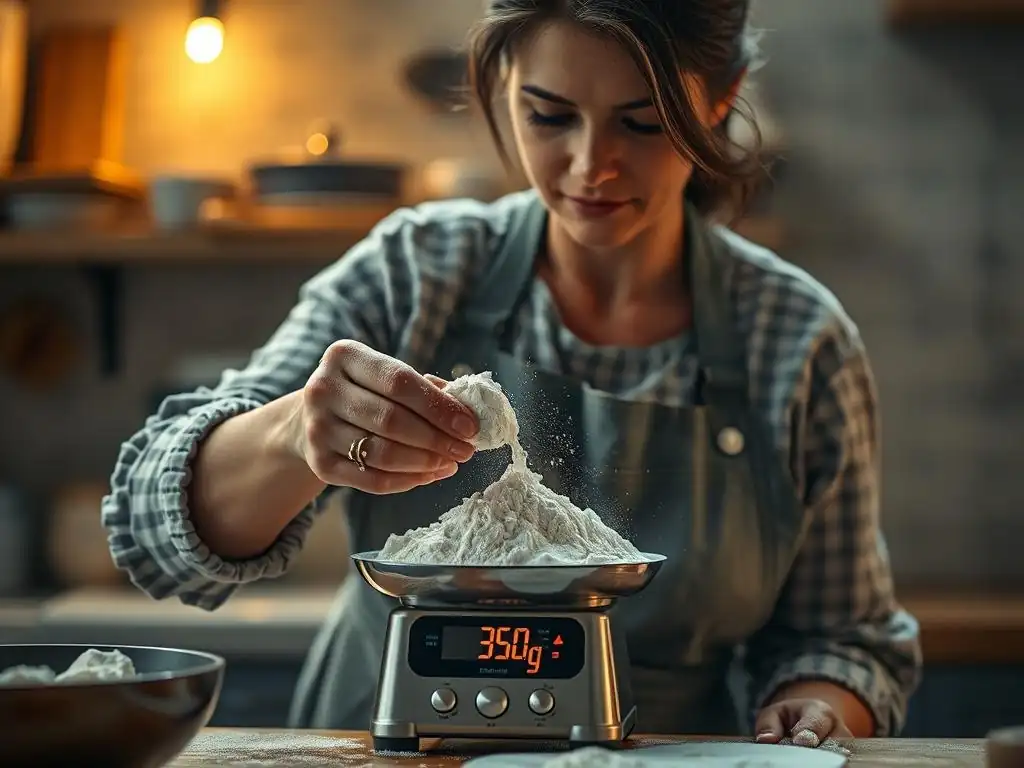
While accurate pizza dough weighing is straightforward, you might encounter minor issues. Knowing how to address them ensures your success.
Scale Inaccuracies: Calibration and Maintenance
Even good digital scales can lose accuracy over time or if mishandled. If you suspect your scale is off, you can check its calibration. Most scales come with instructions for this, often involving weighing a known weight (like specific coins or calibration weights if you have them).
If your scale isn't calibratable or seems consistently off, it might be time for a replacement. Ensure the scale is on a flat, stable surface when weighing, and avoid getting it wet or dropping it. Regular maintenance involves keeping it clean and dry. A reliable, accurate scale is foundational to accurate pizza dough weighing.
Converting Recipes: From Volume to Weight
Many older or online recipes still use volume measurements. Converting these to weight is essential for accurate pizza dough weighing. There are conversion charts available online, but be aware that volume-to-weight conversions for flour are often estimations because, as we've discussed, the density in a cup varies. A common conversion is 1 cup of all-purpose flour ≈ 120-130 grams, but for "00" flour, it might be closer to 110-120 grams per cup.
The best approach is to find recipes specifically written with weight measurements. If you must convert, use a conversion chart as a starting point, but be prepared to adjust based on how the dough feels. For example, if a recipe calls for 4 cups of flour (estimating 480g - 520g) and 1.5 cups of water (estimating 350g), start by weighing 500g flour and 300g water (60% hydration) and adjust slightly based on your flour's absorption.
Adjusting Recipes Based on Weighing Results [Example: Adjusting hydration levels]
One of the benefits of accurate pizza dough weighing and keeping records is the ability to make informed adjustments. Suppose a recipe calls for 500g flour and 300g water (60% hydration), but after making it several times, you consistently find the dough too stiff for your liking or for your specific flour's absorption.
Because you weighed accurately, you know the ratio was correct according to the recipe. You can confidently decide to increase the hydration slightly for your next batch. Instead of guessing with volume, you can precisely adjust the water weight, perhaps trying 310g of water (62% hydration) with your 500g of flour. This incremental, data-driven adjustment, made possible by accurate pizza dough weighing, is how you truly refine a recipe to suit your ingredients and preferences.
Benefits of Accurate Pizza Dough Weighing Beyond Consistency
While consistency is a major advantage, accurate pizza dough weighing offers several other benefits that contribute to better pizza and a more enjoyable baking experience.
Improved Pizza Crust Texture and Flavor
Precise control over ingredient ratios, especially flour-to-water (hydration), salt, and yeast, directly impacts the dough's gluten development and fermentation. The correct hydration ensures the dough isn't too dry (leading to a tough crust) or too wet (leading to a gummy crust). Accurate salt measurement ensures proper gluten structure and balanced flavor. Precise yeast quantity and controlled fermentation contribute to the development of complex flavors and a desirable open crumb structure in the crust.
By consistently hitting the target ratios through accurate pizza dough weighing, you maximize the potential for that perfect balance of chewiness and airiness characteristic of great Neapolitan pizza. This level of control is difficult, if not impossible, to achieve reliably with volume measurements.
Reduced Waste and Cost Savings
Using a scale means you measure exactly what you need. There's less chance of over-measuring ingredients, which can lead to waste. When converting recipes, having precise weights helps you calculate exactly how much flour, etc., you'll need, preventing you from opening a new bag unnecessarily or having tiny unusable amounts left over.
Furthermore, consistently successful batches mean fewer failed attempts that end up in the trash. While the initial investment in a scale is small, the long-term savings from reduced ingredient waste and more reliable results add up, making accurate pizza dough weighing an economical choice for regular bakers.
Greater Control Over Dough Fermentation
Yeast activity is highly sensitive to the amount of yeast used, salt levels, and hydration. When these variables are accurately controlled through weighing, you gain greater predictability over how your dough will ferment.
- Precise Yeast: Ensures the fermentation proceeds at the expected rate for your chosen temperature and time.
- Accurate Salt: Correctly regulates yeast activity, preventing it from going too fast or too slow.
- Consistent Hydration: Influences the dough's temperature and yeast's environment.
This control is vital for long, slow fermentation methods often used for Neapolitan dough, which develop superior flavor and texture. Accurate pizza dough weighing allows you to confidently plan your fermentation schedule and achieve optimal dough development.
Mastering Pizza Dough: Weighing as a Cornerstone Technique
Embarking on the journey to master homemade pizza dough is rewarding. While practice and feel are important, establishing a solid foundation of precision is key to accelerating your learning and achieving consistent success. Accurate pizza dough weighing is arguably the most critical technique to adopt early on.
From Beginner to Pro: Embracing Accurate Measurement
Whether you're making your very first batch of pizza dough or aiming to perfect your craft, switching to accurate pizza dough weighing is the single best step you can take to improve. Beginners will find that recipes are less intimidating and results more predictable, building confidence. Experienced bakers will appreciate the fine-tuned control it offers, allowing them to experiment with hydration levels, different flours, and fermentation times with greater precision.
Think of it as learning the scales before playing a complex piece of music. Mastering the fundamentals of accurate measurement sets you up for success with any dough recipe.
Building Confidence in Your Pizza Making Skills
There's immense satisfaction in consistently producing delicious, beautiful homemade pizza. Inconsistent results can be frustrating and discouraging. By adopting accurate pizza dough weighing, you remove a major variable contributing to inconsistency. When your dough turns out perfectly, you'll know it's because you followed the recipe precisely, not because you got lucky with your cup measurements.
This reliability builds confidence in your abilities and encourages you to bake more often and potentially tackle more challenging recipes. Accurate pizza dough weighing empowers you to take control of your baking process.
Neapolitan Pizza Dough Recipe: Demonstrating Accurate Weighing
Let's illustrate with a simple example using weights:
- "00" Flour: 500g
- Water (approx. 60% hydration): 300g
- Fine Sea Salt (approx. 2.5%): 12.5g
- Instant Dry Yeast (approx. 0.1%): 0.5g (You might need a scale with 0.1g precision or weigh 5g yeast with 5g flour for better accuracy on a 1g scale)
This recipe, based on precise weights, provides a clear and reproducible starting point. By using your digital scale for each measurement, you ensure that your ratios are correct, setting the stage for a successful dough batch every time. Embrace accurate pizza dough weighing as your secret ingredient for perfect pizza!
Frequently Asked Questions
Why is accurate pizza dough weighing so important?
Accurate weighing ensures consistent results every time you bake. This is crucial for achieving the desired dough hydration and texture. It minimizes variations that can lead to tough or sticky dough.
What type of scale is recommended for weighing pizza dough ingredients?
A digital kitchen scale is highly recommended for its precision. Look for one that measures in grams and ounces, and can handle the weight of your largest bowl. It offers more accuracy than measuring cups.
What happens if I don't accurately weigh my pizza dough ingredients?
Inaccurate measurements can lead to incorrect hydration levels. This can result in dough that is either too dry and difficult to work with, or too wet and sticky, making it hard to shape and handle. Ultimately affecting the final pizza quality.
Besides flour and water, which other pizza dough ingredients should be weighed?
Yeast, salt, and any added fats like olive oil should also be weighed. These ingredients, even in small quantities, significantly impact the dough's structure and flavor. Accurate weighing is crucial for flavor consistency.
What units of measurement are best to use when weighing pizza dough ingredients?
Grams are generally preferred for their greater precision compared to ounces or cups. Using grams allows for finer adjustments to the recipe, leading to a more predictable outcome and better pizza.
Final Reflection: The Weight of Perfection in Pizza Dough
The precise measurement of ingredients isn't just a detail in baking; it's the cornerstone of achieving consistently delicious pizza dough. Ignoring this fundamental principle results in inconsistent texture, unpredictable rise, and ultimately, a subpar pizza experience. The quest for the perfect pizza begins, and ends, with the scale.
The impact of accurate weighing extends beyond the individual pizza. It speaks to a broader appreciation for precision and craftsmanship in cooking, a movement away from haphazard guesswork towards a more scientific and reliable approach. The difference between something good and something great is attention to detail.
This quote, while often applied to many fields, perfectly encapsulates the transformative power of precise ingredient measurement in pizza making. It elevates the process from a casual hobby to a refined art.
Now, consider your own baking journey. Are you ready to embrace the transformative power of the scale? Will you commit to weighing your ingredients, not just for pizza dough, but for all your baking endeavors? Take the leap – the reward is a consistently superior product and a deeper understanding of the culinary arts. The journey to perfect pizza begins with a single, precise measurement.
Unleash Your Inner Pizzaiolo: Perfect Dough, Every Time!
Thanks for taking the time to explore the world of precise pizza dough! You've just learned how weighing your ingredients dramatically improves consistency and flavor. Ready to put this newfound knowledge into action?
- Craft your masterpiece: Try making a pizza dough recipe today using a kitchen scale. Note the difference in texture and taste!
- Share your success (or challenges!): Post a picture of your perfectly weighted pizza dough on social media and tag us! We'd love to see your creations.
- Experiment with different flours: Explore how different types of flour impact your dough's characteristics – what discoveries will you make?
What unique flour blend will you try next to perfect your pizza dough recipe?