
Mastering Oven Temperature for Perfectly Baked Bread

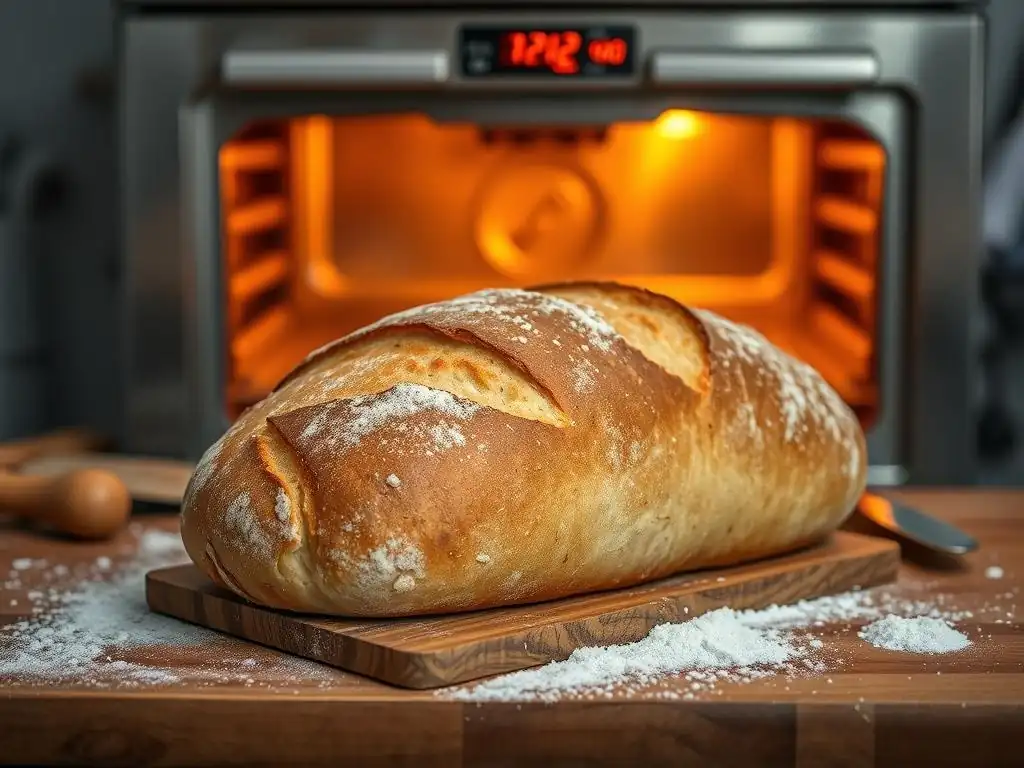
Welcome to BakeWithEase, where we unravel the secrets to baking success! Ever wondered what separates a good loaf from a perfectly baked one? This article delves into the crucial role of oven temperature in achieving bread-baking bliss. Discover how mastering this element can transform your sourdough, elevate your pastries, and ensure every bake is a triumph. Ready to unlock the secrets to perfect oven temperature bread? Let's get baking!
- BakeWithEase: Mastering Oven Temperature for Perfectly Baked Bread
- Understanding the Importance of Oven Temperature for Bread Baking
- Identifying the Ideal Oven Temperature for Different Bread Types
- Troubleshooting Oven Temperature Issues for Bread
- Techniques for Achieving Perfect Oven Temperature
- Common Bread Baking Problems Related to Oven Temperature
- Advanced Oven Temperature Strategies for Bread Bakers
- Tips and Tricks for Maintaining Perfect Oven Temperature
- Achieving Baking Perfection: Your Oven Temperature Checklist for Bread
-
Frequently Asked Questions
- What is the ideal oven temperature for baking most breads according to BakeWithEase?
- Why is oven temperature so crucial for achieving perfectly baked bread?
- How do I know if my oven temperature is accurate?
- What adjustments might I need to make to the oven temperature based on the type of bread I'm baking?
- What are some common signs that my oven temperature is incorrect while baking bread?
- Final Reflection: The Heart of the Hearth - Achieving Baking Bliss
- Unleash Your Inner Baker: Perfect Bread, Every Time!
BakeWithEase: Mastering Oven Temperature for Perfectly Baked Bread
Baking bread to golden perfection is as much a science as an art—and perfect oven temperature bread lies at its heart. At BakeWithEase, we believe that dialing in your oven’s temperature is the single most effective way to elevate your loaf from good to extraordinary. Whether you’re aiming for that crackling crust of a rustic boule or a soft, pillowy sandwich loaf, controlling heat precisely is non-negotiable.
From understanding how heat interacts with dough to troubleshooting under- or over-baked results, this guide offers step-by-step insights, real data, and proven techniques. Let’s unlock the secret behind consistent, bakery-quality results every time you fire up your oven.
Understanding the Importance of Oven Temperature for Bread Baking
Why Oven Temperature Matters for Crust Formation
A loaf’s crust forms when starches and sugars at the dough’s surface undergo the Maillard reaction—a chemical process that requires temperatures above 300°F (150°C). At 475°F (246°C), for instance, you’ll see:
- Rapid browning within the first 10 minutes
- A crackly crust that retains internal moisture
- Distinct flavor compounds like maltol and pyrazines
Professional bakers at Tartine Bakery preheat their ovens to 485°F (252°C) and steam for the first 15 minutes to replicate a wood-fired effect. This “flash heat” jumpstarts crust development, creating a thin, crisp shell that seals in aroma and chewiness.
How Internal Temperature Affects Bread Texture
While crust optics are essential, the interior crumb’s texture hinges on hitting the right internal temperature. A fully baked loaf typically measures between 200°F (93°C) and 210°F (99°C) in the center:
- 200°F yields a slightly moist, tender crumb
- 210°F ensures drier, more structured slices ideal for toasting
Using an instant-read probe thermometer, you can gauge doneness within seconds. Many home bakers who follow King Arthur Flour recommendations aim for 208°F (98°C)—a sweet spot that balances moisture and structural integrity.
The Role of Oven Temperature in Yeast Activity
Yeast growth peaks between 95°F (35°C) and 120°F (49°C). Exposing dough to oven temperatures above 140°F (60°C) quickly halts fermentation, so the early bake phase is critical:
- Oven Spring: In the first 8–12 minutes at 450°F (232°C), trapped CO₂ and water vapor expand, giving the loaf its final lift.
- Yeast Kill Zone: By 140°F, most yeast cells die, freezing the crumb structure in place.
A controlled ramp—holding at 375°F (190°C) for 5 minutes before cranking up to 450°F—can optimize both rise and crust formation. This two-stage profile mimics professional deck ovens without risking uneven crumb.
Identifying the Ideal Oven Temperature for Different Bread Types
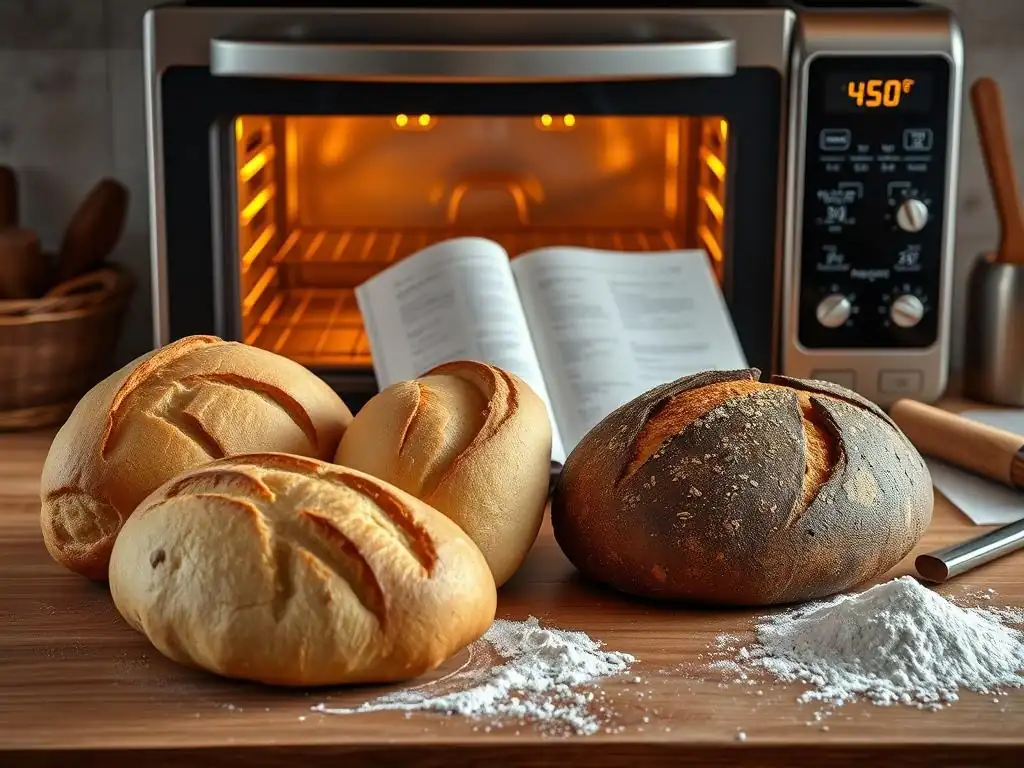
Best Oven Temperatures for Sourdough Bread
Sourdough’s lactic acidity and hydrated dough demand a high-heat environment:
- Preheat: 500°F (260°C) with a baking stone
- Bake profile: 20 minutes at 500°F with steam; 25–30 minutes at 450°F (232°C) uncovered
- Internal goal: 205°F (96°C)
In a real case study, baker Chad Robertson of Tartine achieved a 1.5-inch ear and open crumb by following this regimen. For a home oven, loading a Dutch oven preheated at 475°F (246°C) yields nearly identical results with minimal adjustments.
Optimal Temperature for Baking Sandwich Loaves
Uniform crumb and soft crust are key:
- Standard pullman loaf: 350°F (175°C) for 30–35 minutes
- Enriched dough (with milk and butter): 325°F (163°C) to prevent over-browning
- Internal target: 195°F (90°C)
At King Arthur Flour test kitchens, lowering the temp by 25°F when adding sugar or fat extended bake time without excessive browning, resulting in a tender, slice-ready loaf.
Temperature Guidelines for Crusty Artisan Breads
For European-style bâtards and ciabatta:
- High heat start: 475°F (246°C) for 15 minutes
- Finish: 425°F (218°C) for 20–25 minutes
- Steam: 2 cups of water in a preheated tray
Italian bakers at Forno d’Asolo replicate wood-fired ovens by pouring ½ cup boiling water onto the stone at load, then spraying every 5 minutes. The result: blistered, crackly crust with deep caramelization.
Adjusting Temperature for Sweet Breads and Rolls
Delicate, sugar-rich doughs require gentler heat:
- Dinner rolls: 375°F (190°C) for 18–22 minutes
- Cinnamon buns: 350°F (175°C) for 22–25 minutes
- Enriched brioche: 325°F (163°C) for 25–30 minutes
A commercial bakery in Vienna found that reducing the oven by 15°F when sugar > 10% of flour weight prevented crust burning. The buns emerged glossy, evenly golden, and irresistibly soft.
Troubleshooting Oven Temperature Issues for Bread
Dealing with Uneven Baking Due to Temperature Fluctuations
Homes ovens can swing ±25°F during a single bake:
- Uneven crust color
- Hot spots leading to dry edges and gummy centers
Solution:
- Invest in an oven thermometer with ±1°F accuracy.
- Identify hot zones by placing thermometers at four corners.
- Rotate the loaf halfway through baking.
“I once traced a persistent raw spot to a malfunctioning bake element,” recalls home baker Maria L. “A quick swap fixed it.”
Calibrating Your Oven for Accurate Bread Baking
An oven can misreport its internal heat by 20–50°F over time:
- Compare reading on thermometer to dial setting
- Adjust dial “+” or “–” accordingly, or consult your manual
# Sample calibration routine
for setting in 350 375 400; do
  set_oven $setting°F
  actual=$(read_thermometer)
  echo "Dial: $setting°F | Actual: $actual°F"
done
Repeat monthly or after major use. Many bakers mark the correct adjustment on a sticky note inside the door for quick reference.
Addressing Underbaked Bread: Temperature Solutions
Symptoms:
- Doughy center
- Pale crust
Fixes:
- Increase overall temperature by 15–25°F next bake
- Slide loaf to a lower rack for better bottom heat
- Finish bake under the broiler for 1–2 minutes ( monitor closely)
Solving Overbaked or Burnt Bread: Temperature Adjustments
Symptoms:
- Thick, dark crust
- Dry crumb
Strategies:
- Reduce temperature by 25°F in future bakes
- Shorten bake time by 5–10 minutes, checking internal temp at 195–200°F
- Shield crust with aluminum foil after 20 minutes to prevent further browning
Techniques for Achieving Perfect Oven Temperature
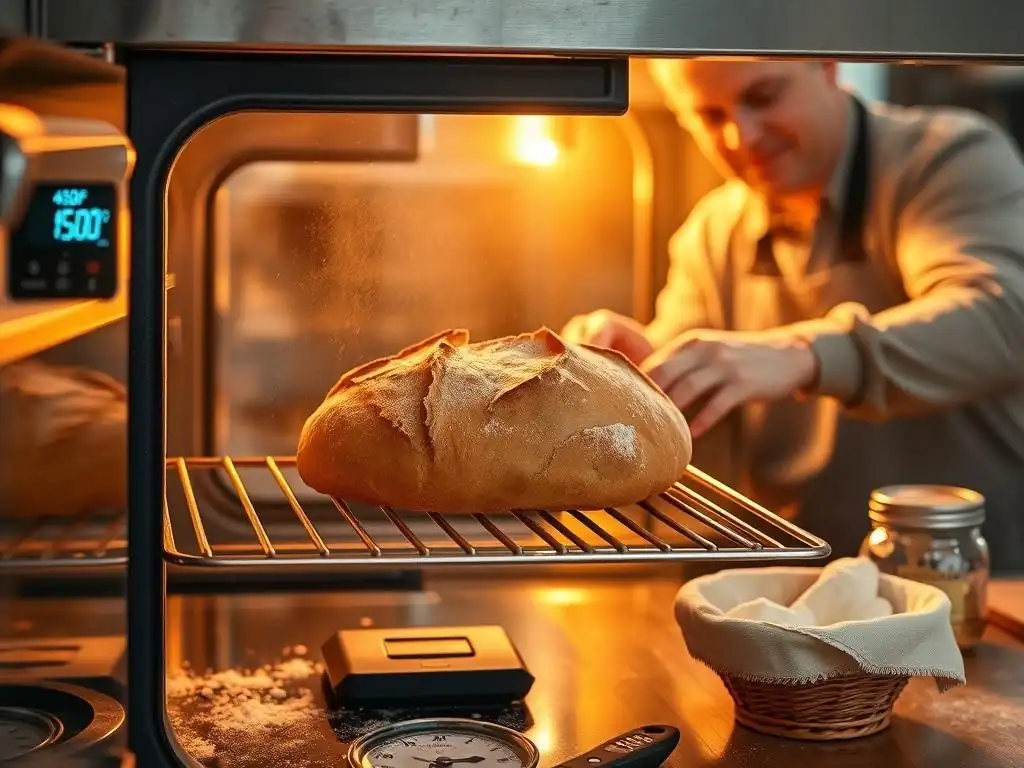
Using an Oven Thermometer for Precise Temperature Control
An oven thermometer is your best friend:
- Dial-style: inexpensive, ±2°F
- Digital probe: real-time display, programmable alarms
Place it at rack level in the center. A variance beyond ±5°F signals the need to recalibrate or service the oven.
Preheating Your Oven: A Crucial Step for Bread Success
Proper preheat sets the stage:
- Duration: at least 20 minutes for gas ovens, 15 for electric
- Include baking stone/Dutch oven: takes extra time to absorb heat
- Confirm: thermometer reads target temp before loading
Skipping preheat can reduce oven spring by 30%, leading to a tight crumb and poor rise.
The Importance of Oven Rack Placement for Even Baking
Rack position affects heat exposure:
- Top third: intense radiative heat—ideal for browning
- Middle: balanced convection and radiation—recommended for most loaves
- Bottom third: direct heat for crisp bottoms and open crumb
Shuffle racks periodically if you bake multiple loaves to ensure uniform results.
Utilizing Baking Stones or Dutch Ovens for Consistent Heat
Thermal mass equals stability:
- Baking stone: retains 90% of heat, smooths out oven swirls
- Dutch oven: traps steam and radiates heat evenly
Preheat both for at least 45 minutes. A ½-inch cordierite stone performs similarly to commercial deck ovens, lowering temperature fluctuations to ±3°F.
Dense Bread: Adjusting Temperature and Baking Time
Dense crumb often results from:
- Under-expanded dough due to too low a start temp (<400°F)
- Condensed oven spring followed by collapse
Remedies:
- Boost initial heat to 450–475°F for a stronger oven spring
- Maintain 400°F after 10 minutes to finish baking without burning
Crumbly Bread: Finding the Right Temperature Balance
A crumbly, dry texture signals over-baking:
- Crust forms too quickly, sealing moisture out
- Internal moisture escapes as steam, leaving a brittle crumb
Solutions:
- Lower temperature by 25°F and extend bake by 5–10 minutes
- Cover with foil at mid-bake to slow crust formation
Preventing a Gummy Texture: Temperature Management
Gummy centers arise from:
- Insufficient internal temp (<200°F)
- Overly humid baking environment without proper heat
Prevention:
- Ensure inside hits at least 205°F before removing
- After steam phase, vent or crack door slightly for the final 10 minutes
Advanced Oven Temperature Strategies for Bread Bakers
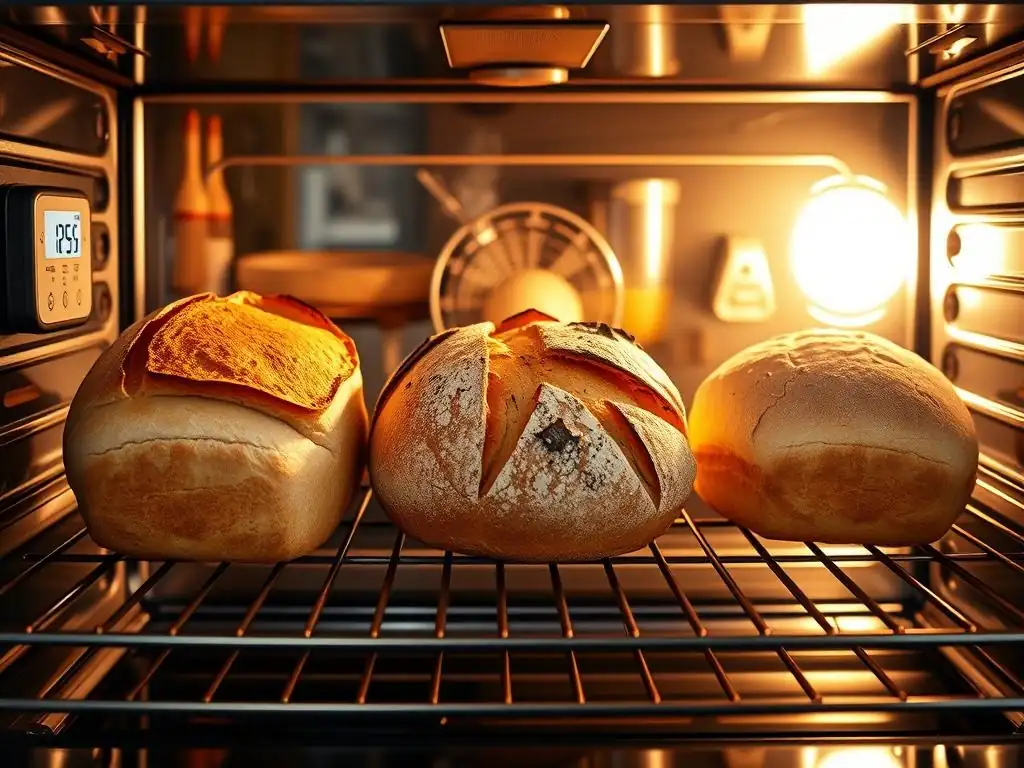
Using Steam in the Oven for Crust Development
Steam keeps the crust pliable, allowing maximum expansion:
- Add 1 cup boiling water to a preheated tray at 450°F
- Misting every 3–5 minutes for the first 15 minutes
The result: glass-like sheen and dramatic ear formation, as practiced by Parisian boulangeries.
Baking at High Temperatures for a Bold Crust
Bold, mahogany crusts need 475–500°F for at least the first 15 minutes:
- Encourages deep caramelization and flavor complexity
- Often used for rye or multigrain loaves that benefit from a chewy bite
Keep an eye on sugar content; any >5% sugar by flour weight can scorch rapidly at these temps.
The Benefits of Baking at Lower Temperatures for a Softer Loaf
Lower temps (325–350°F) yield:
- Even moisture distribution
- Gentle crust browning—ideal for enriched doughs and sandwich breads
Extended bake times (up to 40 minutes) allow internal and surface heat to equalize, giving a uniformly tender crumb.
Tips and Tricks for Maintaining Perfect Oven Temperature
Avoiding Opening the Oven Door Too Frequently
Every door opening drops heat by ~30°F:
- Use the oven light and window to monitor progress
- Limit checks to two times: mid-bake rotation and final color check
Rotating Your Bread for Even Heat Distribution
Even in calibrated ovens, hot spots exist:
- Rotate 180° halfway through
- If baking two loaves, swap rack positions as well
Adjusting Temperature Based on Bread Color and Texture
Final bake judgments:
- Pale crust at 20 minutes? Increase heat by 10–15°F for the remaining time.
- Over-browning edges? Shield with foil and drop temp by 25°F.
Achieving Baking Perfection: Your Oven Temperature Checklist for Bread
Ensuring Optimal Bread Baking Results with Correct Temperature
Consistent results come down to diligent checks and balances. Before every bake:
- [ ] Confirm oven thermometer reads target temp
- [ ] Preheat with stone or Dutch oven for at least 30 minutes
- [ ] Plan a two-stage bake if targeting a bold crust + tender crumb
- [ ] Monitor internal temperature, aiming for 200–210°F (93–99°C)
- [ ] Rotate loaves and shield crusts as needed
By following this Perfect oven temperature bread checklist, you’ll transform your home oven into a precision baking tool—delivering bakery-quality loaves every time.
Frequently Asked Questions
What is the ideal oven temperature for baking most breads according to BakeWithEase?
The ideal temperature generally ranges from 350°F to 450°F. However, the specific temperature depends on the type of bread and its recipe instructions.
Why is oven temperature so crucial for achieving perfectly baked bread?
Oven temperature directly affects crust formation, crumb texture, and overall rise of the bread. Too hot, and the crust burns before the inside is cooked; too cold, and the bread won't rise properly.
How do I know if my oven temperature is accurate?
Use an oven thermometer to verify the actual temperature. Many ovens can be off by as much as 25-50 degrees, which can impact your bread baking success.
What adjustments might I need to make to the oven temperature based on the type of bread I'm baking?
Richer doughs, like brioche, often require lower temperatures (around 325°F) to prevent burning. Lean doughs, like sourdough, benefit from higher initial temperatures (450°F-500°F) for optimal oven spring.
What are some common signs that my oven temperature is incorrect while baking bread?
If your bread's crust is burning quickly while the inside is still raw, the oven is too hot. If the bread isn't rising well and remains pale, the oven is likely too cold.
Final Reflection: The Heart of the Hearth - Achieving Baking Bliss
Mastering oven temperature isn't just about precise numbers; it's the key to unlocking the soul of perfectly baked bread. A seemingly small detail, the temperature inside your oven dictates the rise, the crust, and ultimately, the entire sensory experience of that first warm bite. Getting it right transforms a simple loaf into a culinary masterpiece.
The quest for the perfect loaf has captivated bakers for centuries, a testament to the enduring power of simple ingredients transformed by heat and skill. The subtle nuances of temperature—the difference between a slightly underbaked crumb and a perfectly golden crust—are a constant lesson in patience and precision. Baking is a science, but it's also an art. It's about understanding the ingredients and trusting your instincts.
This quote perfectly captures the journey of mastering oven temperature, a journey that blends technical knowledge with intuitive understanding.
Now, I invite you to reflect on your own baking experiences. Consider the times your bread has risen beautifully, its crust a symphony of textures, and the times it hasn't quite lived up to expectations. What adjustments can you make to your baking process, based on the insights shared in this article? The pursuit of the perfect loaf is an ongoing one, a rewarding journey of experimentation and discovery. Embrace the process, learn from each bake, and savor the delicious rewards of your efforts. The perfect oven temperature awaits—and so does your perfect loaf.
Unleash Your Inner Baker: Perfect Bread, Every Time!
Thanks for taking the time to explore the world of perfect bread baking! We hope you’ve gained valuable insights into mastering oven temperature. Now it's time to put your newfound knowledge into action.
- Bake a test loaf: Use your favorite recipe and meticulously monitor the oven temperature throughout the baking process. Note any adjustments you make and the results you achieve. This is your chance to really master this skill!
- Share your baking journey: Post a picture of your perfectly baked loaf on social media and tag us using #BakeWithEase – let's inspire others together!
- Experiment with different bread types: Try a new recipe that challenges your skills and see how your newfound understanding of oven temperature impacts the outcome.
Ready to transform your baking game? What new bread recipe are you excited to tackle now?