
Authentic German Zwetschgenkuchen (Plum Cake) StepbyStep

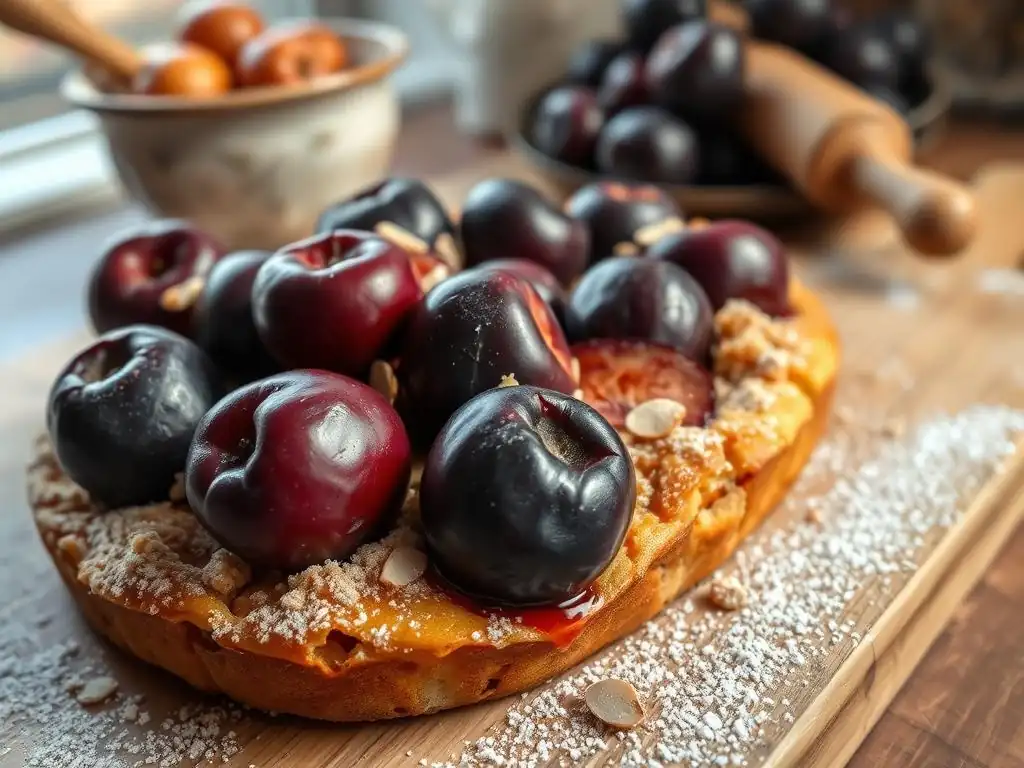
Welcome to BakeWithEase, your trusted guide to effortless baking! Ever dreamt of recreating that luscious, perfectly spiced plum cake you savored on your last trip to Germany? Today, we're unlocking the secrets to an Authentic German Zwetschgenkuchen (Plum Cake) – a regional favorite that's surprisingly simple to master. Prepare to be transported to a Bavarian Konditorei with our step-by-step recipe. But what's the key to achieving that signature tender crumb and perfectly caramelized fruit? Let's find out...
- Authentic German Zwetschgenkuchen (Plum Cake) Recipe: A Step-by-Step Guide
- Introduction to Authentic German Plum Cake Baking
- Gathering Your Ingredients for German Zwetschgenkuchen
- Preparing the Dough for Your Zwetschgenkuchen
- Arranging the Plums: The Art of Zwetschgenkuchen Topping
- Baking Your Authentic German Plum Cake
- Adding the Finishing Touches: Crumble Topping (Optional)
- Serving and Enjoying Your Homemade Zwetschgenkuchen
- Tips and Tricks for the Best German Plum Cake
- Making Ahead and Freezing Zwetschgenkuchen
- Conclusion: Mastering the Authentic German Plum Cake Recipe
- Frequently Asked Questions
- Final Reflection: A Slice of Tradition, A Taste of Home
- Unlock the Secrets of Authentic Zwetschgenkuchen!
Authentic German Zwetschgenkuchen (Plum Cake) Recipe: A Step-by-Step Guide
Introduction to Authentic German Plum Cake Baking
Discover the Delight of Homemade Zwetschgenkuchen
Zwetschgenkuchen, often simply called plum cake, is a beloved classic in German baking, particularly popular during late summer and early autumn when fresh plums are abundant. This traditional sheet cake features a tender, often yeast-based or shortcrust base, generously topped with halved Zwetschgen plums (a specific type of European plum). The charm of this authentic German plum cake recipe lies in its simplicity and the delightful contrast between the slightly tart plums and the sweet dough, making it a comforting and timeless treat enjoyed across Germany, often served with a dollop of Schlagrahm (whipped cream).
Baking Zwetschgenkuchen at home allows you to capture the essence of German coffee and cake culture right in your own kitchen. While variations exist, the core of an authentic German plum cake recipe focuses on quality ingredients and a careful balance of flavors. The process is straightforward enough for enthusiastic home bakers, offering a rewarding experience from preparing the dough to arranging the vibrant plums and finally pulling that golden, fragrant cake from the oven. It's a recipe that connects you to generations of German bakers who have perfected this seasonal delight.
Why Bake This Traditional German Plum Cake Recipe?
Choosing to bake this traditional authentic German plum cake recipe offers several compelling reasons beyond just creating a delicious dessert. Firstly, it provides an opportunity to work with fresh, seasonal fruit at its peak, ensuring the most vibrant flavor and natural sweetness. Using Zwetschgen plums, known for their firm flesh and slightly tart profile, is key to achieving the authentic taste that defines this specific cake. These plums hold their shape beautifully during baking, preventing the cake from becoming overly soggy, a common issue with other plum varieties.
Furthermore, mastering an authentic German plum cake recipe introduces you to fundamental German baking techniques, such as working with a simple shortcrust or yeast dough base suitable for fruit tarts and cakes. It's a recipe that is forgiving yet offers room for personal touches, like adding a hint of cinnamon or a simple streusel topping.
The satisfaction of serving a slice of warm, homemade Zwetschgenkuchen, perhaps dusted with powdered sugar, to friends and family is immense. It's more than just a cake; it's a taste of German tradition and a testament to the simple pleasure of baking with seasonal ingredients.
Gathering Your Ingredients for German Zwetschgenkuchen
The Key Ingredients for Authentic Plum Cake Flavor
An authentic German plum cake recipe relies on a few key ingredients to achieve its characteristic flavor and texture. The foundation is typically a simple shortcrust or yeast dough. For a classic shortcrust (Mürbeteig), you'll need all-purpose flour, cold unsalted butter, sugar, a pinch of salt, and often one egg to bind it. The cold butter is crucial for creating a tender, crumbly base. Using unsalted butter allows you to control the salt level precisely, enhancing the overall flavor profile without unwanted salinity.
Beyond the dough, the star ingredient is, of course, the plums. Specifically, Zwetschgen plums are preferred for their oval shape, firm texture, and balanced sweet-tart taste. Sugar is used in both the dough and sometimes sprinkled over the plums to sweeten them and help draw out their juices during baking.
A little bread crumbs or semolina are often sprinkled on the base before adding the plums; this is a traditional trick to absorb excess moisture from the fruit, ensuring the cake base remains crisp and not soggy. The quality of these core ingredients directly impacts the success and authenticity of your German plum cake.
Sourcing the Best Plums for Your Zwetschgenkuchen
Finding the right plums is perhaps the most critical step in achieving an authentic German plum cake recipe. While other plum varieties can be used, Zwetschgen plums (also known as prune plums in some regions) are the traditional choice. Look for plums that are ripe but still firm to the touch. They should have a deep purple-blue skin and yield slightly when gently squeezed but not feel soft or mushy. Avoid plums with bruises or blemishes. The firmness is important because these plums hold their shape better during baking and release less liquid than softer varieties.
Zwetschgen plums are typically in season from late summer through early autumn, roughly August to October in the Northern Hemisphere. You are most likely to find them at farmers' markets, specialty grocery stores, or supermarkets during this peak season.
If Zwetschgen plums are absolutely unavailable, you could substitute with other firm, slightly tart plum varieties like Italian Prune Plums or even certain types of Damsons, though the flavor and texture will vary slightly from the truly authentic German plum cake recipe. Ensure you have approximately 1 kilogram of plums for a standard 24-26 cm round cake or a small sheet pan, which is about 2.2 pounds.
Ingredients:
- 250g All-Purpose Flour
- 125g Unsalted Butter, cold and cubed
- 75g Granulated Sugar
- 1 Large Egg
- Pinch of Salt
- 1 kg Fresh Zwetschgen Plums, halved and pitted
- 2 tbsp Bread Crumbs
- Optional: Powdered Sugar for dusting
Preparing the Dough for Your Zwetschgenkuchen
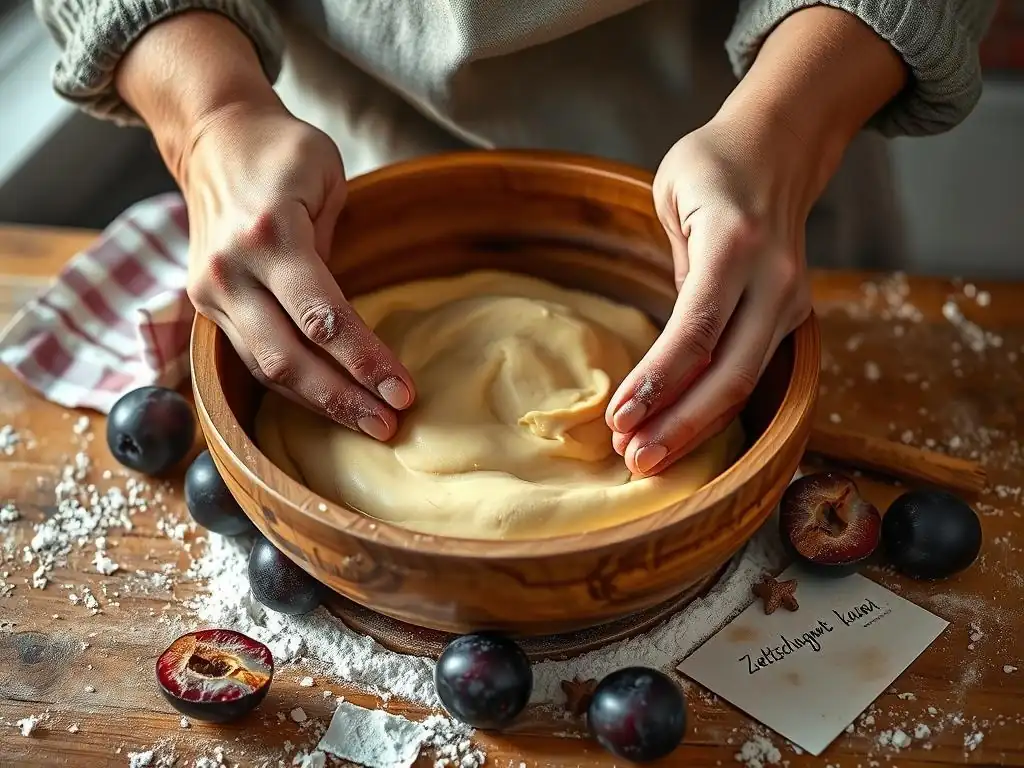
Step 1: Making the Base Dough – A Detailed Guide
Creating the dough for your authentic German plum cake recipe is a simple process, especially when opting for a classic shortcrust (Mürbeteig). Begin by combining the 250g all-purpose flour, 75g granulated sugar, and a pinch of salt in a large mixing bowl. Add the 125g cold, cubed unsalted butter to the dry ingredients.
Using your fingertips, a pastry blender, or a food processor, work the butter into the flour mixture until it resembles coarse crumbs, similar to the texture of wet sand. It's important that the butter remains cold during this process to ensure a tender, flaky dough when baked.
Next, add the 1 large egg to the crumb mixture. Gently bring the dough together using your hands, a fork, or a mixer fitted with a paddle attachment on low speed. Mix until the dough just comes together into a cohesive ball. Be careful not to overwork the dough, as this can result in a tough crust. The dough might seem a little crumbly initially, but it should hold together when squeezed. If it's too dry, you can add a tiny splash of ice water (about a teaspoon at a time), but usually, the egg provides enough moisture.
Step 2: Resting and Preparing the Dough for Baking
Once the dough for your authentic German plum cake recipe has formed, flatten it into a disc shape. Wrap the disc tightly in plastic wrap. Resting the dough is a crucial step that allows the gluten to relax and the butter to firm up again, making the dough easier to roll out and preventing shrinkage during baking. Place the wrapped dough in the refrigerator for at least 30 minutes, or up to 2 days. A longer rest often results in a more tender crust.
After chilling, remove the dough from the refrigerator. Lightly flour a clean work surface and a rolling pin. Roll out the dough to fit your chosen baking pan – typically a 24-26 cm springform pan or a small rectangular pan (around 20x30 cm). Aim for a thickness of about 3-4 mm (roughly 1/8 inch).
Carefully transfer the rolled dough to the greased and floured pan, gently pressing it into the bottom and up the sides to form a slight rim. Prick the base of the dough all over with a fork; this helps prevent the base from puffing up during baking. Sprinkle the 2 tbsp of bread crumbs evenly over the base of the dough. This layer acts as a barrier, absorbing moisture from the plums and keeping your cake base wonderfully crisp.
Dough Consistency and Texture
The ideal dough for this authentic German plum cake recipe, specifically a shortcrust, should be relatively firm after chilling but pliable enough to roll without cracking excessively. When you're working the butter into the flour, the goal is to create small, pea-sized pieces of butter coated in flour. As the cake bakes, these butter pieces melt, creating steam pockets that result in a tender, slightly crumbly texture. If your dough feels sticky or too soft before chilling, it likely means the butter warmed up too much, or it was overworked.
After resting, the dough should be smoothish but still have a slightly rustic feel due to the flour-coated butter pieces. When rolled out, it should hold its shape well. If the dough is too cold, it might crack; let it sit at room temperature for a few minutes before rolling. Conversely, if it's too warm, it will be difficult to handle and might stick. Achieving the right consistency through proper chilling ensures your authentic German plum cake recipe base bakes up perfectly golden and tender, providing a sturdy yet delicate foundation for the generous plum topping.
Arranging the Plums: The Art of Zwetschgenkuchen Topping
Step 3: Preparing the Plums for the Cake
The preparation of the plums is straightforward but essential for the success of your authentic German plum cake recipe. Start with your 1 kg of fresh Zwetschgen plums. Rinse them gently under cool water and pat them dry with a clean cloth or paper towel. The next step is to halve each plum and remove the pit. Zwetschgen plums are freestone, meaning the pit usually separates easily from the flesh. Simply make a cut along the seam of the plum down to the pit, then twist the two halves apart. The pit should pop out easily.
Once halved and pitted, some traditional recipes call for scoring the plum halves. To do this, make several parallel cuts into the flesh of each plum half, without cutting all the way through the skin. These cuts, often 3-4 per half, help the plums soften evenly during baking and allow some of their delicious juices to mingle with the cake base while preventing excessive moisture release that could make the base soggy. This careful preparation ensures the plums are ready for their beautiful arrangement on the dough.
Step 4: Arranging the Plums on the Dough – A Visual Guide
Arranging the plums on your authentic German plum cake recipe base is where the cake starts to take its iconic form. With the dough in the pan and the bread crumbs sprinkled, it's time to place the prepared plum halves. The traditional method involves arranging the plum halves in concentric circles, starting from the outside edge of the pan and working your way towards the center. Place the plums cut-side up, slightly overlapping each other like shingles on a roof.
This shingle-like arrangement is both visually appealing and practical. It allows the plums to fit snugly together, covering the entire surface of the cake base right up to the edge. As you work inwards, the pattern might change slightly, but the goal is to cover the dough completely with a dense layer of plums. The scored cuts you made in the plums should be visible facing upwards. This systematic arrangement is a hallmark of the authentic German plum cake recipe and contributes significantly to the final presentation.
Tips for Achieving a Visually Appealing Plum Arrangement
A well-arranged plum topping elevates your authentic German plum cake recipe from simple to stunning. Here are a few tips: First, ensure your plum halves are roughly uniform in size. If some are much larger than others, you might need to cut the larger ones into quarters to maintain consistency in the pattern. Second, start with the largest plum halves around the outer edge if you have varying sizes.
Pay attention to the overlap. A slight overlap ensures full coverage and creates that classic layered look. Don't be afraid to really pack the plums in; they will shrink slightly as they bake. Aim for a dense layer.
Some bakers like to sprinkle a little extra sugar (perhaps 1-2 tablespoons) directly over the plums before baking, especially if the plums are very tart. This enhances their sweetness and helps create a lovely slightly caramelized surface. A visually appealing arrangement not only looks professional but also ensures an even distribution of fruit in every slice of your delicious authentic German plum cake.
Baking Your Authentic German Plum Cake
Step 5: Setting the Oven Temperature and Baking Time
Proper oven temperature and baking time are critical for achieving a perfectly baked authentic German plum cake recipe. Preheat your oven to 180°C (350°F). If your oven tends to run hot or cold, using an oven thermometer is recommended for accuracy. Place the oven rack in the middle position; this ensures even heat circulation around the cake.
Once the oven is preheated, carefully place the assembled cake pan onto the middle rack. The typical baking time for a Zwetschgenkuchen of this size is between 40 to 60 minutes. The exact time will depend on your oven, the pan size, and the moisture content of the plums. You'll know the cake is nearing readiness when the edges of the dough are golden brown and the plums look soft and slightly shrunken.
Step 6: Monitoring Your Zwetschgenkuchen While Baking
Keeping an eye on your authentic German plum cake recipe as it bakes is important to prevent over or under-baking. After about 40 minutes, check the cake. The edges of the crust should be visibly browning. The plums will have softened and released some juice, which might bubble slightly. The center of the cake might still look a bit moist, but the dough underneath the plums should be cooked through.
A good indicator is the crust around the edges and where it's visible between the plums. It should be a lovely golden-brown color. If the edges are browning too quickly but the center seems underdone, you can loosely tent the cake with aluminum foil for the remaining baking time.
Continue baking until the crust is fully cooked and the plums are tender. A thin knife or skewer inserted into the dough part (avoiding the plums) should come out clean, though this is less reliable with a fruit cake than a standard cake. The smell of warm baked plums and buttery crust filling your kitchen is a sure sign that your authentic German plum cake is nearly ready!
Troubleshooting Tips: Avoiding a Soggy or Burnt Cake
Avoiding a soggy bottom is a common concern with fruit cakes like this authentic German plum cake recipe. The bread crumb layer is your first line of defense. Ensure you used enough and distributed it evenly.
Also, make sure your plums were fresh and not overly ripe or bruised, as these release more liquid. Baking at the correct temperature helps the base cook through before the plums release too much juice. If you notice excessive bubbling liquid from the plums during baking, you can try slightly increasing the temperature for the last 10-15 minutes, or carefully tilting the pan (if using a solid pan) to drain a tiny bit of excess juice, though this is rarely necessary with Zwetschgen plums and a good bread crumb layer.
To prevent the cake from burning, particularly the edges of the crust, monitor the browning, especially after the 40-minute mark. If the edges are getting too dark, tenting with foil is the best solution. Ensure your oven temperature is accurate; an oven running too hot is a primary cause of burning. If the top (plums) seems to be drying out or browning too much before the base is done, again, tenting with foil will help. A properly baked authentic German plum cake recipe will have a golden-brown crust and tender, soft plums without a watery base or burnt edges.
Adding the Finishing Touches: Crumble Topping (Optional)
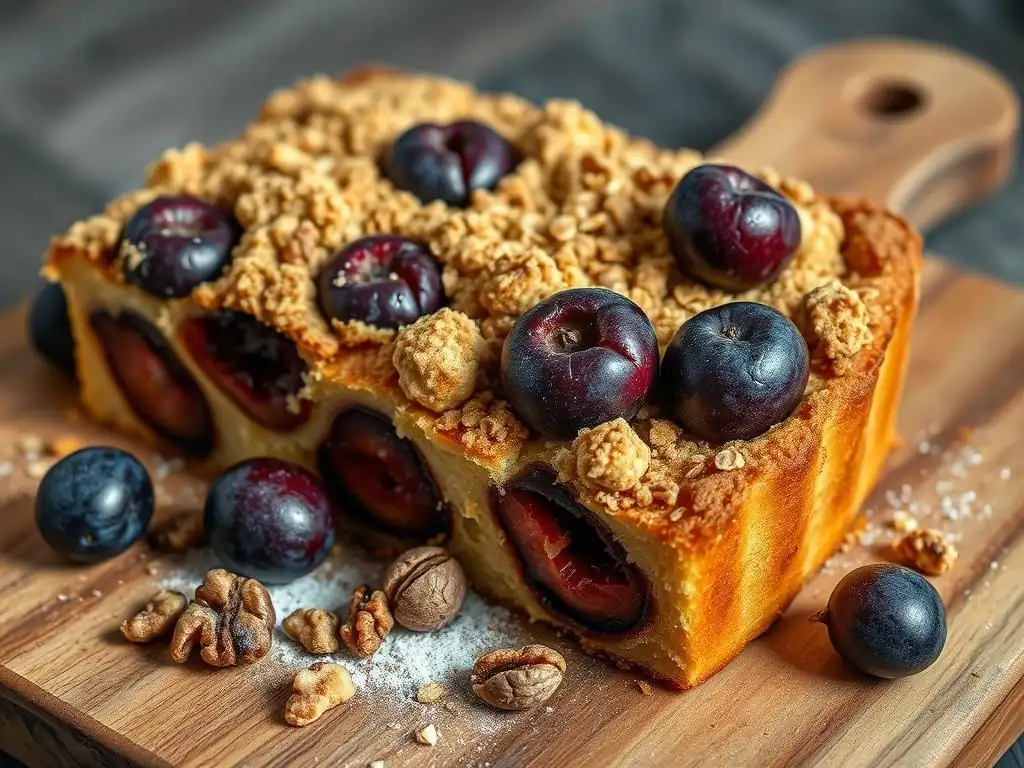
Creating a Delicious Crumble Topping for Extra Flavor
While a classic authentic German plum cake recipe often features just plums on a dough base, adding a simple streusel or crumble topping is a popular and delicious variation. This topping adds a delightful texture contrast and an extra layer of buttery sweetness. To make a crumble, you'll typically combine flour, sugar, cold butter, and sometimes a spice like cinnamon. The key is to rub the cold butter into the dry ingredients until coarse crumbs form.
The ratio of ingredients is important for a good crumble. A common ratio, like the one provided (50g flour, 25g butter, 25g sugar), creates a nice, slightly clumpy topping. Ensure the butter is very cold and cut into small pieces before you start rubbing it in. You can use your fingertips (the traditional method), a pastry blender, or a food processor (pulse briefly) to achieve the crumbly texture. Avoid overmixing, as you want distinct crumbs, not a paste.
Crumble Topping Recipe:
- 50g All-Purpose Flour
- 25g Unsalted Butter, cold and cubed
- 25g Granulated Sugar
- Pinch of Cinnamon
Sprinkling the Crumble and Final Bake
Once your crumble topping is prepared, it's time to add it to your authentic German plum cake recipe. This is typically done after the plums have been arranged on the dough base. Gently sprinkle the crumble mixture evenly over the top of the plums. You can aim for full coverage or leave some plums exposed depending on your preference. Distribute the crumbs as evenly as possible to ensure every slice gets some of that delicious topping.
If you are adding a crumble topping, the baking time might need a slight adjustment, potentially adding another 5-10 minutes to allow the crumble to become golden and crisp. Bake the cake as directed in Step 5 and 6, but keep an eye on the crumble. It should turn a lovely golden brown color and feel firm to the touch when ready. If the crumble starts browning too quickly before the rest of the cake is done, loosely tent the cake with aluminum foil. Bake until the crust is golden, the plums are tender, and the crumble is crisp.
Serving and Enjoying Your Homemade Zwetschgenkuchen
Serving Suggestions for a Perfect Plum Cake Experience
Serving your warm, fragrant authentic German plum cake recipe is the culmination of your baking efforts. While delicious on its own, Zwetschgenkuchen is traditionally served slightly warm or at room temperature. Allowing it to cool for at least 30-60 minutes after baking helps the structure set and the flavors meld. Cutting into a cake that is too hot can result in a crumbly mess.
The classic accompaniment in Germany is a generous dollop of freshly whipped cream (Schlagsahne or Schlagrahm). The cool, light cream provides a wonderful contrast to the warm, slightly tart plums and rich crust. Some people also enjoy it with a scoop of vanilla ice cream. For a simpler presentation, a dusting of powdered sugar just before serving adds a touch of elegance and sweetness. Serve slices with a fork and enjoy with a cup of coffee or tea, just like they do in German Kaffee und Kuchen tradition.
Storing Your Zwetschgenkuchen to Maintain Freshness
Proper storage is key to keeping your authentic German plum cake recipe fresh and delicious for several days. Once the cake has cooled completely to room temperature, cover it loosely with plastic wrap or aluminum foil, or place it in an airtight cake container. Store the cake at room temperature for up to 2 days. The crust might soften slightly over time, but the flavors will remain excellent.
If you need to store it for longer, you can refrigerate it for up to 4-5 days. Refrigeration will firm up the butter in the crust, and the plums might become firmer. To enjoy a refrigerated slice, you can warm it gently in a microwave for 15-30 seconds or in a low oven (150°C / 300°F) for a few minutes until just warm. This helps restore some of the texture and brings out the flavors again. Always ensure the cake is completely cool before storing to prevent condensation, which can make it soggy.
Tips and Tricks for the Best German Plum Cake
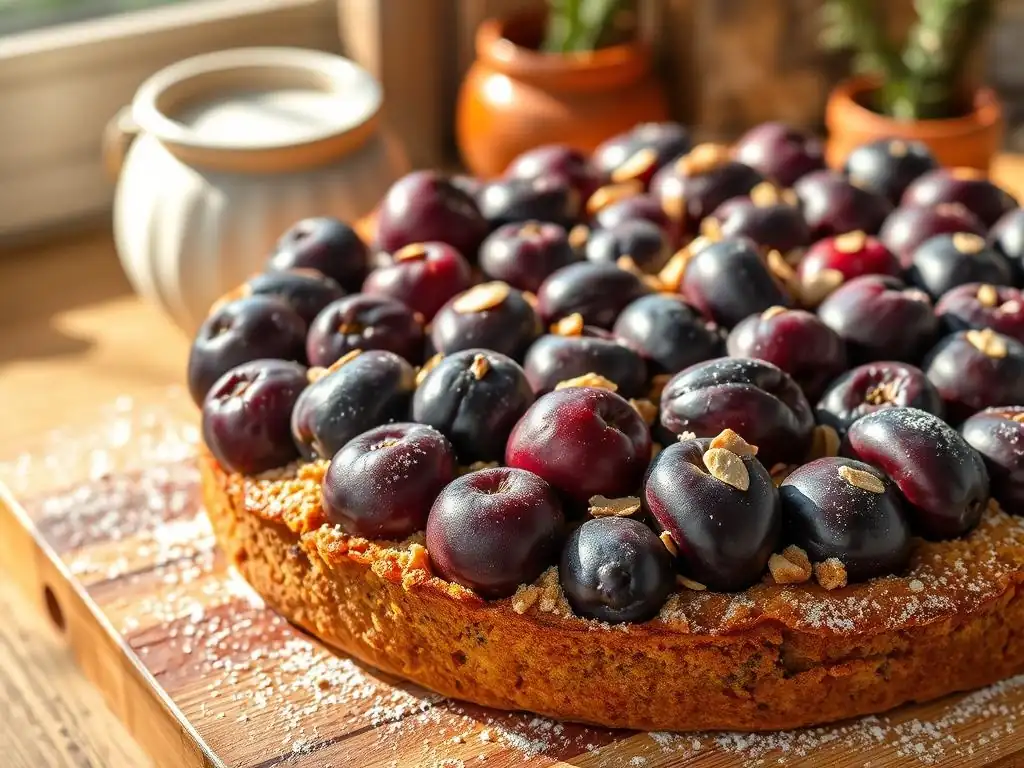
Expert Tips for a Flawless Zwetschgenkuchen
Achieving a flawless authentic German plum cake recipe is certainly within reach with a few expert tips. Firstly, start with high-quality, seasonal Zwetschgen plums that are ripe but firm. This makes a significant difference in flavor and texture. Secondly, ensure your butter is very cold when making the shortcrust dough; this creates a more tender and flaky base. Don't overwork the dough; mix just until it comes together.
Using bread crumbs or semolina on the base before adding the plums is a traditional and effective method for preventing a soggy bottom. About 2 tablespoons for a standard pan is usually sufficient. When arranging the plums, pack them relatively tightly, overlapping slightly. This ensures a good fruit-to-dough ratio in every bite. Finally, allow the cake to cool sufficiently before slicing. Patience here is rewarded with clean slices and a better texture. Following these tips will help you bake a superb authentic German plum cake every time.
Variations and Adaptations of the Classic Plum Cake Recipe
While the authentic German plum cake recipe is a beloved classic, there are several delightful variations you can explore. One popular adaptation is using a yeast dough base instead of shortcrust; this results in a softer, slightly breadier cake, similar to a German Streuselkuchen (crumble cake). Another common variation, as mentioned earlier, is adding a streusel or crumble topping over the plums for added texture and sweetness.
You can also enhance the flavor profile. A pinch of cinnamon or a tiny amount of ground cloves sprinkled over the plums before baking complements their taste beautifully. Lemon zest can be added to the dough for a bright, citrusy note. While Zwetschgen plums are traditional, other firm, slightly tart fruits can be used when plums are out of season, such as apricots or even sour cherries, though this moves away from the authentic German plum cake definition. Experimenting with these simple variations allows you to personalize your baking while staying true to the spirit of this wonderful dessert.
Making Ahead and Freezing Zwetschgenkuchen
Preparing Zwetschgenkuchen in Advance: A Time-Saving Guide
Preparing components of your authentic German plum cake recipe in advance can be a great time-saver, especially if you're baking for a gathering. The dough is particularly well-suited for making ahead. You can prepare the shortcrust dough as described in Step 1, wrap it tightly, and refrigerate it for up to 2 days. This allows you to get the messier part of the process out of the way and have the dough ready to roll out when you're ready to assemble and bake.
While the assembled cake with fresh plums is best baked immediately, you could potentially halve and pit the plums a few hours in advance. Store the prepared plums in a covered container in the refrigerator. However, they might start to release some juice, so drain them briefly before arranging them on the dough. For best results with an authentic German plum cake recipe, assembling and baking on the same day is recommended, but making the dough ahead significantly reduces the preparation time on baking day.
Freezing and Thawing Tips for Optimal Results
Zwetschgenkuchen freezes remarkably well, making it an excellent candidate for baking ahead or preserving leftovers. To freeze, ensure the cake has cooled completely to room temperature. You can freeze the entire cake, half of it, or individual slices. For best results, wrap the cake or slices tightly in plastic wrap, then wrap again in aluminum foil or place in a freezer-safe bag or container. Label with the date; the cake can be frozen for up to 2-3 months.
When you're ready to enjoy your frozen authentic German plum cake, the best way to thaw it is slowly in the refrigerator overnight. Thawing at room temperature is also possible but might result in more condensation. Once thawed in the refrigerator, you can warm individual slices in the microwave or warm the whole cake (or a large piece) in a low oven (around 150°C / 300°F) for about 10-15 minutes until heated through. Avoid refreezing thawed cake. Freezing is a fantastic way to extend the enjoyment of this seasonal authentic German plum cake recipe.
Conclusion: Mastering the Authentic German Plum Cake Recipe
Enjoy the Fruits of Your Labor: A Taste of Germany at Home
Baking an authentic German plum cake recipe, or Zwetschgenkuchen, is a truly rewarding experience. From preparing the simple, buttery dough to carefully arranging the beautiful Zwetschgen plums and finally pulling that golden, fragrant cake from the oven, each step contributes to a delicious outcome.
This cake embodies the warmth and tradition of German home baking, offering a delightful balance of sweet and tart flavors and a comforting texture. Serving a slice, perhaps with a dollop of whipped cream, is more than just dessert; it's an invitation to slow down and savor a taste of German culture and the bounty of the late summer harvest.
You've now walked through the process, from gathering the specific ingredients like firm Zwetschgen plums and cold butter, to the techniques for rolling the dough, preventing a soggy bottom with bread crumbs, arranging the fruit just so, and baking it to perfection. Whether you add a crumble topping or stick to the classic plum-only top, you've created something truly special. This authentic German plum cake recipe is a testament to the simple elegance of traditional baking, proving that with quality ingredients and a little care, you can bring a piece of Germany into your own home kitchen.
We hope you feel inspired and equipped to bake your own authentic German plum cake recipe. There's immense satisfaction in mastering a traditional dish and sharing it with loved ones. The process itself is enjoyable, and the result – a delicious, comforting slice of Zwetschgenkuchen – is well worth the effort. Don't hesitate to experiment slightly with the optional crumble or a hint of spice to make it your own, while still honoring the core of this classic.
We encourage you to share your baking journey and the beautiful results of your authentic German plum cake recipe. Baking is a wonderful way to connect with others, whether by sharing slices with friends and family or by sharing your experiences online. Enjoy the process, savor the aroma that fills your kitchen, and most importantly, relish every bite of your homemade Zwetschgenkuchen. Happy baking!
Frequently Asked Questions
What is Zwetschgenkuchen?
Zwetschgenkuchen is an authentic German plum cake known for its sweet and slightly tart flavor, often featuring a simple dough base and fresh plums. It's a seasonal favorite enjoyed during plum harvest.
What makes this recipe "authentic"?
This recipe uses traditional German techniques and ingredients, like a yeasted dough base and specific varieties of plums, to achieve the genuine taste and texture of Zwetschgenkuchen. It focuses on classic methods instead of modern shortcuts.
Can I use a different type of plum?
While Zwetschgen plums are ideal, you can substitute with other firm-fleshed plums like Italian plums, but the flavor profile will be slightly different. Adjust baking time if needed based on the plum's ripeness.
What kind of dough is used for Zwetschgenkuchen?
Traditionally, a yeasted dough is used, providing a slightly tangy and chewy base that complements the sweetness of the plums. Some variations may use a shortcrust pastry, but the yeasted dough is preferred.
How should I store leftover Zwetschgenkuchen?
Store leftover Zwetschgenkuchen in an airtight container at room temperature for up to 2 days, or in the refrigerator for up to 4 days. The cake is best enjoyed within a few days to maintain its freshness and moisture.
Final Reflection: A Slice of Tradition, A Taste of Home
The enduring appeal of authentic recipes lies not just in the perfect execution of a dish, but in the story it tells. This exploration of the Authentic German Zwetschgenkuchen recipe reveals more than just a method for baking a delicious plum cake; it unveils a window into German culinary heritage and the comforting power of tradition in a rapidly changing world. The meticulous steps, the careful selection of ingredients, and the emphasis on seasonal produce all contribute to a final product that transcends mere sustenance, becoming a symbol of cultural identity and family connection.
The impact of recipes like this extends far beyond the kitchen. They are vessels for preserving cultural memory, passing down skills and knowledge across generations. The scent of baking Zwetschgenkuchen evokes powerful memories and emotions, connecting us to our past and to those who came before us. As the world becomes increasingly homogenized, the preservation of unique culinary traditions like this one becomes even more vital. Food is symbolic of love when words are inadequate.
- Alan D. Wolfelt. This quote perfectly encapsulates the emotional resonance of sharing and experiencing authentic recipes like this plum cake.
Now, I invite you to consider the recipes that hold special meaning in your own life. What stories do they tell? What memories do they evoke? Perhaps this exploration of the Zwetschgenkuchen has inspired you to try your hand at baking this delicious cake, or to delve deeper into the culinary traditions of your own heritage. More importantly, I hope it has ignited a spark of appreciation for the power of food to connect us to our past, our present, and to each other. Go forth and bake, and share the stories within your own culinary traditions!
Unlock the Secrets of Authentic Zwetschgenkuchen!
Thanks for joining us on this delicious journey into the heart of German baking! We hope you now feel confident in tackling this classic recipe. Ready to take your baking skills to the next level?
- Bake your own masterpiece: Gather your ingredients and follow the recipe again – this time, experiment with different plum varieties or add a sprinkle of cinnamon!
- Share your Zwetschgenkuchen journey: Tag us on social media with your baking creations – we’d love to see your results! Use #BakeWithEaseZwetschgenkuchen
- Discover more German baking delights: Explore our website for other traditional recipes and baking tips.
What unexpected ingredient will you try in your next Zwetschgenkuchen?