
AgarAgar Substitutes: What to Use When You're Out

Welcome to BakeWithEase, where baking becomes a joy, not a chore! Ever found yourself mid-recipe and realized you're out of a crucial ingredient? We've all been there! In this article, we're diving deep into the world of agar agar substitutes. Discover the best alternatives and learn how to use them effectively, ensuring your culinary creations are always a success, even when the unexpected happens. Curious about which substitute will work best for your recipe? Let's unlock the secrets to baking perfection, no matter what your pantry looks like!
- Understanding Gelling Agents in Baking
- Exploring Vegan Gelling Agents for Baking: A Comprehensive Guide
- Vegan Gelling Agent Recipes: Practical Applications
- Choosing the Right Vegan Gelling Agent for Your Recipe
- Mastering Baking with Vegan Gelling Agents: Expert Tips and Techniques
- Frequently Asked Questions
- Final Reflection: Beyond the Bowl: Exploring Culinary Adaptability
- Unlock Your Baking Potential: Discover Delicious Agar-Agar Alternatives!
Understanding Gelling Agents in Baking
What are Gelling Agents and How are They Used in Baking?
Gelling agents are substances used in baking and confectionery to provide structure, stability, and texture to various food products. They work by forming a gel network when dissolved in a liquid under specific conditions, typically involving heat and subsequent cooling. In the world of baking, these agents are crucial for everything from setting fruit fillings and puddings to creating stable mousses and glazes.
Think of a perfectly set fruit tart filling or a smooth, sliceable panna cotta – these textures are often achieved through the careful application of a gelling agent. They transform liquids into semi-solids or solids, giving shape and body to desserts that would otherwise be runny.
Common gelling agents include gelatin, agar-agar, pectin, carrageenan, and starches like cornstarch and tapioca starch. Each agent has unique properties, affecting the final texture, clarity, and setting temperature of the finished product. For instance, gelatin creates a melt-in-your-mouth texture, while agar-agar produces a firmer, more brittle gel. Understanding these differences is key to successful baking. When exploring agar agar substitutes recipes, it's important to know what role the original agar-agar played in the recipe to choose the most suitable alternative.
The Properties of Gelling Agents: Gelling Power and Texture
The effectiveness of a gelling agent is often measured by its "gelling power" or "gel strength." This refers to the concentration needed to form a gel of a certain firmness. For example, high-quality agar-agar can have a gelling power significantly higher than some types of gelatin, meaning you need less of it to achieve the same firmness. Agar-agar typically sets at temperatures between 32-43°C (90-109°F) and melts at 85-95°C (185-203°F), making gels quite stable at room temperature, unlike gelatin which melts closer to body temperature (around 35°C or 95°F).
Beyond simple firmness, gelling agents influence texture in nuanced ways. Agar-agar creates a firm, sometimes brittle gel that breaks cleanly. Pectin, especially high-methoxyl pectin used with sugar and acid, forms a jam-like consistency. Carrageenan can produce various textures, from soft and elastic (kappa carrageenan) to firm and brittle (iota carrageenan). Starches like cornstarch and tapioca starch act primarily as thickeners that become gel-like upon cooling, yielding a softer, less rigid set compared to agar-agar or gelatin. Choosing the right agar agar substitutes recipes means considering not just firmness but also the desired mouthfeel and texture.
Why Might You Need an Agar Agar Alternative? [Dietary Restrictions, Flavor Profile]
There are several common reasons why a baker might seek out an alternative to agar-agar. One primary reason is dietary restrictions, particularly for those following a vegan or vegetarian lifestyle. Agar-agar is derived from seaweed, making it suitable for these diets, but other recipes might call for gelatin, which is animal-derived. Conversely, if a recipe specifically calls for agar-agar and you don't have it, you'll need a substitute, and many of the common alternatives are also plant-based, making them suitable for vegan agar agar substitutes recipes.
Another factor can be the desired texture or even flavor profile. While agar-agar is generally flavorless, it can sometimes impart a slight taste if used in very high concentrations or if it's not of high quality. Furthermore, as mentioned, its firm, brittle gel might not be the ideal texture for every application. For instance, a creamy pudding might benefit more from the smooth thickness provided by cornstarch or tapioca starch rather than the firm set of agar-agar. Exploring different agar agar substitutes recipes allows bakers to fine-tune textures and cater to various dietary needs simultaneously.
Exploring Vegan Gelling Agents for Baking: A Comprehensive Guide

Gelatin Alternatives: Considerations and Adjustments
When a recipe calls for gelatin but you need a vegan option, plant-based gelling agents are the answer. However, simply swapping one for the other in equal measure rarely works due to their different gelling powers and setting properties. Gelatin typically requires dissolving in a cold liquid before heating gently, and it sets as it cools. Plant-based alternatives like agar-agar, pectin, or carrageenan often require boiling to activate their gelling properties and may set at different temperatures.
Successful substitution requires understanding the ratio needed and the method of incorporation. For example, agar-agar is often used at a ratio of about 1:8 to 1:10 compared to gelatin by weight, but this can vary. If a recipe uses 10g of gelatin, you might start with 1-1.2g of agar-agar powder, dissolving it in the liquid and boiling for 1-2 minutes to ensure activation before cooling. Adjustments to liquid amounts or cooking times might also be necessary to achieve the desired consistency when using agar agar substitutes recipes.
Using Plant-Based Gelling Agents Instead of Gelatin
Replacing gelatin with plant-based alternatives like agar-agar is common in vegan baking. Agar-agar is perhaps the most popular direct substitute for gelatin in many applications because it provides a firm set. Other options include carrageenan, which can mimic some textures achieved by gelatin, or pectin, particularly in fruit-based preparations. The key is to research the specific properties of the plant-based agent you choose.
For example, agar-agar sets much more firmly than gelatin and at room temperature, which is useful for desserts that need to hold their shape outside the refrigerator. Carrageenan can create a softer, more elastic gel, sometimes preferred for mousses or puddings. When developing vegan agar agar substitutes recipes, remember that acidity can affect the gelling power of agar-agar, sometimes requiring a slightly higher concentration or longer boiling time in acidic mixtures.
Vegan Recipes: Tips for Success
Creating successful vegan recipes often hinges on selecting the right gelling agent. Since dairy and eggs, which provide structure and richness, are omitted, plant-based thickeners and gelling agents become even more critical. When adapting traditional recipes or creating new vegan agar agar substitutes recipes, test small batches to confirm the ratio and method work for your specific ingredients and desired outcome.
Consider the final texture. Do you want a firm, sliceable jelly (good for agar-agar or firm carrageenan)? A soft, spoonable pudding (cornstarch, tapioca, or soft carrageenan)? A spreadable jam (pectin)? Understanding the nuances of each agent is vital. Also, ensure the gelling agent is fully dissolved and activated according to its specific requirements – this usually involves bringing the mixture to a boil and simmering for a specified time, unlike gelatin which only needs gentle heating.
Pectin: A Plant-Based Gelling Agent
Pectin is a naturally occurring polysaccharide found in the cell walls of fruits and vegetables. It's most famously used in making jams, jellies, and preserves, where it reacts with sugar and acid to form a gel. Different fruits contain varying amounts of pectin; apples, citrus fruits (especially the peels), and cranberries are high in pectin, while berries (except cranberries) and stone fruits are lower.
In baking, pectin is primarily used in fillings and toppings rather than structural elements like panna cotta. For instance, a berry pie filling might use pectin to prevent it from being too runny. It creates a soft, spreadable gel, different from the firm, clean break of agar-agar. While not a direct swap for agar-agar in all applications, it's an excellent plant-based option for specific fruit-centric agar agar substitutes recipes.
Pectin for Jams, Jellies, and Fruit-Based Desserts
Pectin is the go-to gelling agent for transforming fruit juice or pulp into jams and jellies. It requires specific conditions to gel effectively: sufficient sugar content (typically 50-70% of the total weight) and adequate acidity (pH 2.8-3.5). When these conditions are met and the mixture is heated, the pectin molecules form a network, trapping the liquid and creating the gel structure characteristic of preserves.
In fruit-based desserts like tarts or pie fillings, adding pectin helps the filling set firmly enough to be sliced without collapsing. For example, using 1-2 tablespoons of commercial pectin powder per 4-5 cups of fruit can ensure a well-set pie filling. When considering agar agar substitutes recipes for fruit tarts, pectin is often a more suitable choice than agar-agar for achieving a natural, soft fruit gel texture.
Different Types of Pectin: High Methoxyl (HM) vs. Low Methoxyl (LM) Applications
Commercial pectin is available in different forms, primarily High Methoxyl (HM) and Low Methoxyl (LM) pectin, which have different gelling requirements. HM pectin is the most common type used in traditional jams and jellies. It requires high sugar concentration (over 55%) and acid to gel. Rapid-set HM pectin gels quickly at high temperatures, while slow-set HM pectin gels more slowly as it cools.
LM pectin, on the other hand, requires calcium ions to gel and does not need high sugar or acid levels. This makes it ideal for low-sugar or sugar-free jams and jellies, or dairy-based desserts where calcium is present. Using the correct type of pectin is crucial; substituting HM for LM (or vice versa) will likely result in failure to gel. When adapting agar agar substitutes recipes for low-sugar fruit applications, LM pectin is often the appropriate choice.
Carrageenan: A Seaweed-Derived Gelling Agent
Carrageenan is another gelling agent extracted from red seaweed, making it suitable for vegan diets. It's widely used in the food industry as a thickener, stabilizer, and gelling agent, often found in dairy and non-dairy products like ice cream, yogurt, and puddings. Like agar-agar, it requires heating to dissolve and activate, typically needing to be boiled for a few minutes.
There are three main types of carrageenan used in food: Kappa, Iota, and Lambda. Kappa carrageenan forms a firm, brittle gel, especially in the presence of potassium ions. Iota carrageenan forms a softer, more elastic gel, often enhanced by calcium ions. Lambda carrageenan does not gel but is used as a thickener. This versatility makes carrageenan a valuable tool in vegan baking, offering different textures depending on the type used.
Understanding Carrageenan's Properties and Applications in Baking
Kappa carrageenan's firm, brittle gel makes it a potential substitute for agar-agar in some applications, though it can sometimes result in a slightly different mouthfeel. It's often used in vegan jellies or firm puddings. Iota carrageenan's elastic texture is useful for creating smooth, spoonable gels, sometimes preferred in vegan panna cotta or mousses for a creamier feel than agar-agar provides.
Carrageenan is particularly effective in dairy and non-dairy milk systems because of its interaction with milk proteins or calcium. It helps stabilize suspensions and prevent separation, which is why it's common in plant-based milk products. When using carrageenan in agar agar substitutes recipes, particularly those involving plant milks, it can often provide excellent results, sometimes even a smoother texture than agar-agar.
Using Carrageenan as a Substitute: Recipe Adaptations
Substituting carrageenan for agar-agar requires careful consideration of the type of carrageenan and the desired texture. For a firm, agar-like gel, Kappa carrageenan is the best choice. The substitution ratio can vary, but a common starting point is using approximately the same amount of Kappa carrageenan powder as you would agar-agar powder, though testing is recommended.
Carrageenan needs to be fully dispersed in the liquid before heating, often by whisking it into cold liquid or mixing it with a small amount of sugar to prevent clumping. The mixture then needs to be brought to a boil and simmered for 1-2 minutes to activate the gelling properties. It sets as it cools. When adapting agar agar substitutes recipes, pay attention to whether the original recipe requires a very firm set (potentially needing Kappa) or a softer, more elastic one (Iota).
Cornstarch: A Simple Thickening Agent
Cornstarch is a common kitchen staple, primarily used as a thickening agent for sauces, gravies, soups, and pie fillings. It's derived from the endosperm of corn kernels and is naturally gluten-free. Unlike gelling agents like agar-agar or gelatin which form a thermo-reversible gel (melting when heated, setting when cooled), cornstarch acts more as a thickener that becomes gel-like upon cooling due to starch gelatinization.
Cornstarch is activated by heat; it needs to be mixed with a cold liquid first to form a slurry (to prevent lumps) and then heated, usually to a boil, while stirring continuously. As it heats, the starch granules absorb liquid and swell, thickening the mixture. Upon cooling, this thickened mixture sets into a soft, opaque gel.
Cornstarch as a Gelling Agent: When it Works Best
While primarily a thickener, cornstarch can function as a soft gelling agent, particularly in puddings, custards, and pie fillings. It creates a smooth, creamy, opaque texture, quite different from the firm, clear gel produced by agar-agar. It doesn't create a structure strong enough to stand on its own like a jelly or panna cotta made with agar-agar or gelatin.
Cornstarch works best in recipes where a gentle set and creamy texture are desired, such as classic chocolate pudding or lemon pie filling. It's not suitable for applications requiring a firm, sliceable gel, like vegan cheese or fruit jellies that need to hold a sharp shape. When considering agar agar substitutes recipes, cornstarch is a good option for spoonable desserts.
Recipes Where Cornstarch Can Replace Agar Agar Effectively
Cornstarch can effectively replace agar-agar in recipes where the agar-agar is used primarily for thickening and providing a soft set, rather than a firm structure. Examples include creamy vegan puddings, no-bake pie fillings (though these might need refrigeration to set), or sauces that need to thicken significantly upon cooling.
For instance, a recipe for a vegan chocolate pudding might use agar-agar for a slight set. Cornstarch can often be substituted, typically using about twice the amount of cornstarch as agar-agar powder called for, mixed into a slurry and cooked until thickened. The resulting texture will be creamier and less firm. This makes cornstarch a viable option in certain agar agar substitutes recipes focused on smooth, spoonable desserts.
Tapioca Starch: A Gluten-Free Thickening Option
Tapioca starch, also known as tapioca flour, is extracted from the cassava root. Like cornstarch, it's a gluten-free starch primarily used as a thickener. It works similarly to cornstarch, requiring heat to thicken, but it produces a more translucent, slightly chewy or stringy texture compared to the opaque, smooth texture of cornstarch.
Tapioca starch is often preferred in fruit fillings because it thickens at a lower temperature than cornstarch and creates a glossy finish. It's also more stable when frozen and thawed compared to cornstarch, which can become spongy.
Tapioca Starch for Pudding, Sauces, and Fruit Fillings
Tapioca starch is excellent for thickening fruit pies and cobblers, giving the filling a slight sheen and soft, gel-like consistency. It's also used in puddings, sauces, and even some baked goods like cookies and breads for texture. Small pearl tapioca is famously used in tapioca pudding, where the pearls swell and become translucent gels.
When used as a thickener, tapioca starch is typically added towards the end of cooking or mixed into a cold liquid first before heating. Overheating can sometimes cause it to break down and lose some thickening power.
Using Tapioca Starch as a Gelling Agent: Tips and Tricks
While not a primary gelling agent like agar-agar, tapioca starch can contribute to a soft, gel-like texture in certain applications. It's particularly good in recipes where a clear, slightly elastic set is desired, such as fruit sauces or some types of vegan cheese sauces.
To substitute tapioca starch for agar-agar in appropriate agar agar substitutes recipes (where a firm set isn't crucial), you'll generally need to use about 2-3 times the amount of tapioca starch as agar-agar powder. Mix it into a slurry with cold liquid before adding to the hot mixture and cooking until thickened and translucent. It won't provide the firm, sliceable structure of agar-agar but will create a pleasant, soft set.
Arrowroot Powder: A Versatile Gelling Agent
Arrowroot powder is another gluten-free starch derived from the rhizomes of several tropical plants. It is similar to cornstarch and tapioca starch in that it functions as a thickener and forms a soft gel upon cooling. However, it has some distinct advantages: it thickens at a lower temperature than cornstarch, results in a perfectly clear, glossy finish, and is less prone to breaking down in acidic mixtures or when overheated.
Arrowroot is also more stable when frozen compared to cornstarch. It's a versatile ingredient used in sauces, gravies, fruit fillings, and even some light puddings where clarity is desired.
Arrowroot Powder in Baking: Gelling and Thickening Properties
Arrowroot powder provides a smooth, velvety texture without the opaqueness of cornstarch or the slight stringiness of tapioca. It's excellent for thickening clear sauces or fruit glazes where you want the color of the fruit to shine through. Like other starches, it needs to be mixed into a cold slurry before being added to a hot liquid and heated until thickened.
It creates a soft, spoonable gel upon cooling, making it suitable for puddings or pie fillings that don't require a firm, structural set. Its neutral flavor and clarity make it a popular choice in delicate sauces and fruit preparations.
How to Substitute Agar Agar with Arrowroot Powder
Arrowroot powder can be used as a substitute for agar-agar in agar agar substitutes recipes where a gentle thickening and soft, clear set are needed, such as fruit sauces or light puddings. It cannot replicate the firm, brittle gel of agar-agar for applications like vegan cheese or firm jellies.
When substituting, you'll typically need to use about 2-3 times the amount of arrowroot powder as agar-agar powder. Mix the arrowroot with an equal amount of cold liquid to form a slurry before whisking it into the hot mixture. Heat gently until thickened – avoid prolonged boiling, as this can sometimes reduce arrowroot's thickening power. The resulting texture will be a soft, clear gel, suitable for spooning but not slicing.
Vegan Gelling Agent Recipes: Practical Applications
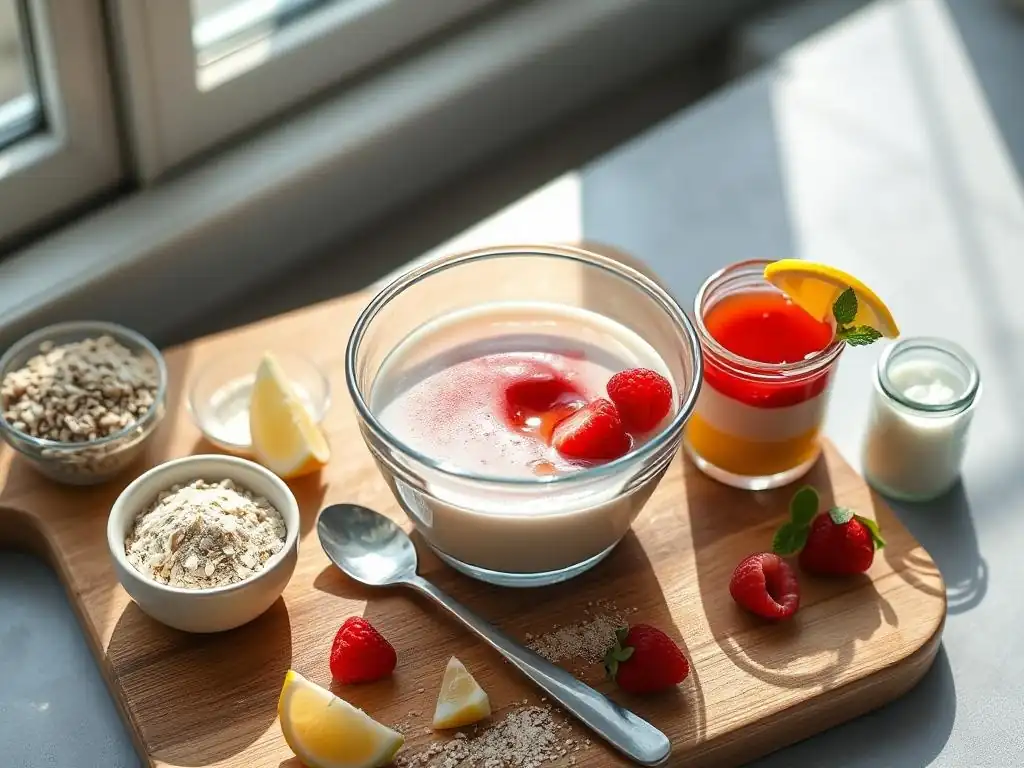
Recipe 1: Pectin-Based Strawberry Jam
Yields approx. 4 cups
Prep time: 15 minutes
Cook time: 20-30 minutes
Ingredients:
- 4 cups crushed fresh strawberries (about 2 lbs)
- 4 cups granulated sugar
- 1/4 cup lemon juice (provides necessary acid)
- 1 box (1.75 oz) powdered High Methoxyl (HM) pectin
Instructions:
- Prepare your jars: Sterilize jars and lids according to standard canning practices. Keep jars hot in a water bath or oven.
- Combine ingredients: In a large, heavy-bottomed pot, combine the crushed strawberries, lemon juice, and pectin. Stir well to distribute the pectin evenly.
- Bring to a boil: Over high heat, bring the mixture to a rolling boil that cannot be stirred down. Stir constantly to prevent scorching.
- Add sugar: Quickly stir in the measured sugar. Return the mixture to a rolling boil and boil hard for exactly 1 minute, stirring constantly.
- Skim foam: Remove from heat. Skim off any foam that has formed on the surface using a metal spoon.
- Fill jars: Carefully ladle hot jam into the hot sterilized jars, leaving 1/4 inch headspace. Wipe rims clean. Place lids and rings on jars and tighten finger-tight.
- Process jars (optional but recommended for shelf stability): Process filled jars in a boiling water bath for 10 minutes (adjust time for altitude). Remove jars and let them cool undisturbed on a towel for 12-24 hours. Check seals; lids should be concave.
Instructions and Tips for Using Pectin
- Accuracy is Key: Pectin requires precise ratios of fruit, sugar, and acid to gel correctly. Do not alter these amounts significantly.
- Rapid, Rolling Boil: Achieving a full, rolling boil after adding the sugar is crucial for activating HM pectin.
- Timing: Boil for the exact time specified in the pectin package instructions (usually 1 minute for HM pectin). Over-boiling can result in a stiff, rubbery jam; under-boiling can result in a runny jam.
- Testing for Set: While boiling for the specified time is usually sufficient, you can test for a set by placing a spoonful of hot jam on a cold plate (kept in the freezer). Let it cool for a minute; if it wrinkles when pushed, it's ready.
- Acid Matters: Lemon juice is typically added to low-acid fruits like strawberries to ensure the pH is low enough for HM pectin to gel.
Recipe 2: Cornstarch-Based Chocolate Pudding
Yields approx. 4 servings
Prep time: 10 minutes
Cook time: 10-15 minutes
Ingredients:
- 1/2 cup granulated sugar
- 1/4 cup unsweetened cocoa powder
- 1/4 cup cornstarch
- 1/4 teaspoon salt
- 3 cups plant-based milk (such as soy, almond, or oat)
- 2 tablespoons vegan butter or margarine
- 1 teaspoon vanilla extract
Instructions:
- Combine dry ingredients: In a medium saucepan, whisk together the sugar, cocoa powder, cornstarch, and salt. This helps distribute the cornstarch and cocoa evenly.
- Add liquid gradually: Gradually whisk in about 1/2 cup of the plant-based milk to form a smooth slurry, ensuring there are no lumps of cornstarch or cocoa.
- Add remaining milk: Whisk in the remaining 2 1/2 cups of plant-based milk.
- Cook and thicken: Place the saucepan over medium heat and cook, stirring constantly with a whisk or wooden spoon, until the mixture thickens significantly and comes to a gentle boil. Continue to stir and boil gently for 1 minute to cook the cornstarch fully.
- Add butter and vanilla: Remove from heat. Stir in the vegan butter and vanilla extract until the butter is melted and fully incorporated.
- Chill: Pour the pudding into individual serving dishes or a larger bowl. Place plastic wrap directly on the surface of the pudding to prevent a skin from forming. Refrigerate for at least 2-3 hours, or until well chilled and set.
Instructions and Tips for Using Cornstarch
- Make a Slurry: Always mix cornstarch with a cold liquid before adding it to a hot mixture. This prevents clumping and ensures even thickening.
- Stir Constantly: Stir the mixture continuously while heating to prevent the bottom from scorching and to ensure even thickening.
- Bring to a Boil: Cornstarch requires boiling to reach its maximum thickening potential. Cook for at least one minute after it thickens and begins to bubble gently.
- Avoid Over-Stirring After Thickening: Once thickened, vigorous stirring can sometimes break down the starch structure, resulting in a thinner consistency. Stir gently.
- Cooling is Key: The pudding will continue to thicken as it cools. Ensure it is thoroughly chilled for the best texture.
Recipe 3: Carrageenan-Based Vegan Jelly
Yields approx. 2 cups
Prep time: 5 minutes
Cook time: 5-10 minutes
Chill time: 1-2 hours
Ingredients:
- 2 cups fruit juice (such as apple, grape, or berry)
- 2-3 tablespoons sugar (optional, adjust to taste depending on juice sweetness)
- 1/2 teaspoon Kappa carrageenan powder (adjust slightly depending on brand/desired firmness)
Instructions:
- Combine dry ingredients: In a small saucepan, whisk together the Kappa carrageenan powder and sugar (if using). This helps disperse the carrageenan and prevent clumps.
- Add juice: Gradually whisk in the fruit juice until the carrageenan mixture is fully dissolved and no lumps remain.
- Heat and boil: Place the saucepan over medium-high heat and bring the mixture to a rolling boil, stirring constantly.
- Simmer: Reduce heat slightly and simmer for 1-2 minutes, continuing to stir. Ensure the carrageenan is fully dissolved and activated.
- Pour and chill: Remove from heat. Pour the hot liquid into desired molds or serving dishes. Let cool slightly at room temperature, then refrigerate for at least 1-2 hours, or until firmly set.
Instructions and Tips for Using Carrageenan
- Dispersion is Important: Like starches and agar-agar, carrageenan powder needs to be well-dispersed in cold liquid (or mixed with sugar) before heating to prevent clumping.
- Boiling Required: Carrageenan requires boiling to properly activate its gelling properties. Ensure the mixture reaches a boil and simmers for the specified time.
- Type Matters: Use Kappa carrageenan for a firm, brittle gel similar to agar-agar or traditional jelly. Iota carrageenan will produce a softer, more elastic gel.
- Acidity: High acidity can sometimes affect carrageenan gels. If using very acidic juice, you might need a tiny bit more carrageenan to achieve the desired firmness.
- Setting: Carrageenan sets relatively quickly as it cools, often faster than gelatin. It will firm up in the refrigerator within an hour or two.
Choosing the Right Vegan Gelling Agent for Your Recipe
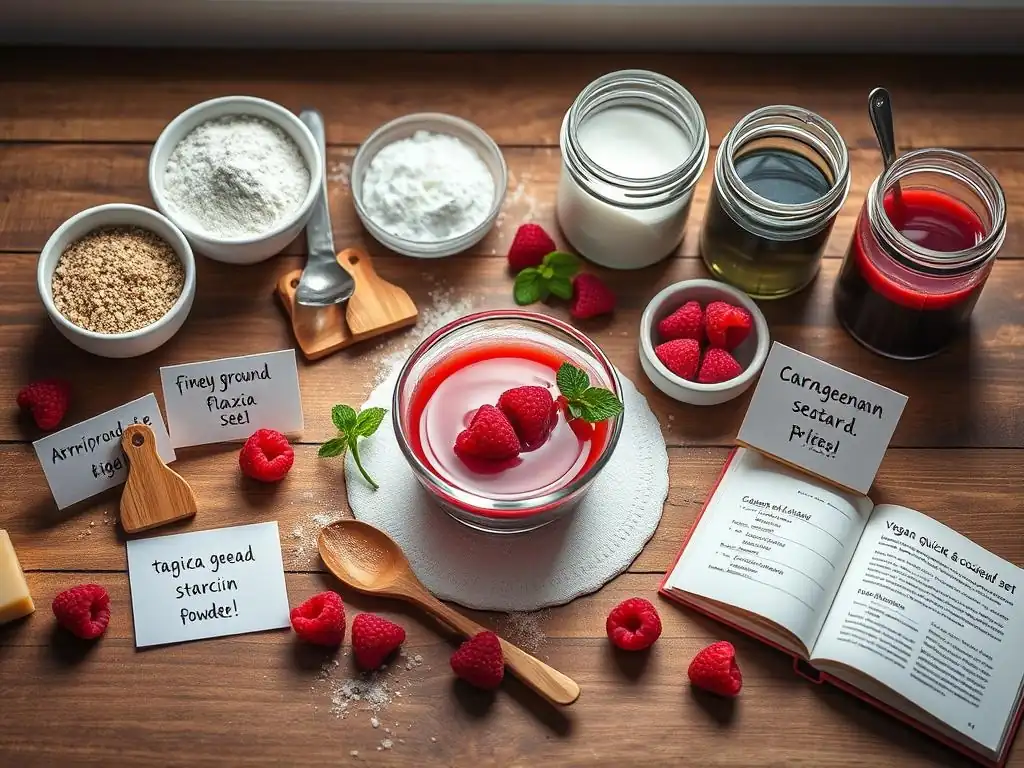
Factors to Consider: Texture, Flavor, and Dietary Needs
Selecting the best vegan gelling agent requires evaluating several factors to ensure it aligns with your recipe goals and any dietary requirements. Foremost is the desired texture: do you need a firm, sliceable gel (like agar-agar or Kappa carrageenan), a soft and creamy set (cornstarch, tapioca, or Iota carrageenan), or a jam-like consistency (pectin)? Each agent creates a unique mouthfeel, and the right choice is crucial for the final product's success. For instance, agar agar substitutes recipes aiming for a firm vegan cheese will need a different agent than those for a smooth pudding.
Flavor is another consideration, though most refined gelling agents are relatively neutral. However, some lower-quality agar-agar or carrageenan products can sometimes impart a slight "seaweed" flavor if used in high concentrations. Starches like cornstarch and tapioca are generally flavorless when cooked properly. Dietary needs are also paramount; ensuring the chosen agent is truly vegan and free from any cross-contamination is essential for those with strict dietary restrictions.
Matching the Gelling Agent to the Specific Application
The success of agar agar substitutes recipes heavily depends on matching the gelling agent to the specific function needed in the recipe. For replicating firm jellies, panna cotta, or vegan cheeses that traditionally use gelatin or agar-agar, Kappa carrageenan or a higher concentration of agar-agar (if you just ran out and need a ratio adjustment for a different brand) are often the best choices due to their firm gelling power.
For fruit-based fillings, glazes, or jams, pectin is usually the most appropriate agent, creating that characteristic soft, spreadable gel. For creamy puddings, custards, or sauces where a gentle set and smooth texture are desired, cornstarch, tapioca starch, or arrowroot powder are excellent options. Iota carrageenan can also work for softer gels in dairy or plant-milk bases. Understanding the properties discussed earlier is key to making the right match.
Troubleshooting Common Issues with Vegan Gelling Agents
Working with vegan gelling agents can sometimes present challenges, but most issues are easily resolved with a little knowledge. A common problem is failure to gel or achieving a weak set. This is often due to insufficient heating (not boiling the mixture for long enough to activate the agent), incorrect ratios of agent to liquid, or issues related to acidity or sugar content affecting certain agents (like pectin or agar-agar). Always ensure the agent is fully dissolved and boiled according to instructions.
Another issue can be a lumpy texture. This usually happens if the powdered agent wasn't properly dispersed in a cold liquid first before heating. Whisking thoroughly or mixing with a small amount of sugar helps prevent clumps. If a gel is too firm, reduce the amount of gelling agent in future attempts. If too soft, slightly increase the amount and ensure proper boiling. With practice, mastering agar agar substitutes recipes and other vegan gels becomes straightforward.
Mastering Baking with Vegan Gelling Agents: Expert Tips and Techniques
Achieving the Perfect Texture with Alternative Gelling Agents
Achieving the desired texture when using agar agar substitutes recipes requires precision and sometimes a bit of experimentation. Because the gelling power of plant-based agents can vary depending on the brand, purity, and even the specific ingredients in your recipe (like acidity or calcium content), starting with recommended ratios and then adjusting based on test batches is a professional approach. For example, while a general guideline might suggest 1 teaspoon of agar-agar powder gels 1 cup of liquid, you might find your specific brand needs slightly more or less.
Pay close attention to the cooling process. Some gels, like those made with agar-agar or carrageenan, set at room temperature, while others, like those using starches, require refrigeration for a firmer set. Allowing adequate chilling time is crucial for the gel structure to fully form and stabilize. Gentle handling of gels after they've set is also important, as vigorous stirring or shaking can sometimes break the delicate gel network, especially with agar-agar.
Adjusting Baking Times and Temperatures
While gelling agents themselves don't typically require "baking" in the traditional sense (they are usually dissolved and heated on the stovetop), they are often components of baked goods like pie fillings or tarts. When using agar agar substitutes recipes in such contexts, adjustments to baking times and temperatures might be minimal, as the gelling process primarily happens during the initial cooking phase on the stovetop and subsequent cooling/baking.
However, if a recipe relies on the gelling agent to provide structure before or during baking (e.g., setting a filling that is then baked), ensure the gel is sufficiently set before putting it in the oven. For instance, a pie filling thickened with pectin or agar-agar should ideally cool and start setting before baking to prevent it from bubbling out excessively. Starch-thickened fillings might need slightly longer baking times to ensure the starch is fully cooked within the pie.
Exploring Creative Baking with Vegan Gelling Agents
Once you understand the properties of various vegan gelling agents, you can unlock a world of creative possibilities in your baking. Beyond standard puddings and jellies, consider using agar-agar to create firm, sliceable layers in vegan entremets, or employing Kappa carrageenan for sophisticated vegan terrines. Iota carrageenan can lend a delightful melt-in-your-mouth quality to vegan crémeux or mousses.
Pectin isn't just for jam; it can be used to create stable fruit pastes or even as a binder in some baked goods. Experiment with combining different agents for unique textures – perhaps a base set with agar-agar topped with a softer layer set with Iota carrageenan. Mastering these agar agar substitutes recipes allows you to confidently adapt traditional recipes and invent new vegan delights with precise textures and structures.
Frequently Asked Questions
What is Agar Agar and why is it used in baking?
Agar Agar is a vegetarian gelling agent derived from seaweed. It's used in baking to set desserts and create a firm texture, often as a substitute for gelatin. It is a common ingredient in many vegan or vegetarian baking recipes.
What are the best Agar Agar substitutes for vegan baking?
Several options exist, including carrageenan, pectin, and cornstarch. The best choice depends on the desired texture and the specific recipe. Each will give slightly different results.
Can gelatin be used as a substitute for Agar Agar?
Yes, but gelatin is an animal-based product, so it's not suitable for vegan or vegetarian diets. The ratio of substitution might also need adjusting.
How does the amount of Agar Agar substitute affect the final product?
Using too much substitute can result in an overly firm or rubbery texture. Too little may lead to a soft or unset dessert. Careful measurement and recipe adherence are key.
Where can I find Agar Agar substitutes in a typical grocery store?
Look for substitutes like cornstarch or pectin in the baking aisle. Carrageenan may be found in the health food or natural foods section. Experiment with different brands.
Final Reflection: Beyond the Bowl: Exploring Culinary Adaptability
The scarcity of a single ingredient shouldn't halt culinary creativity; the ability to adapt and substitute speaks volumes about a cook's resourcefulness and understanding of flavor. This article explored the versatile world of agar agar and, more importantly, the readily available alternatives that can step in when this gelling agent is unavailable. We've uncovered a spectrum of options, each with its own unique properties and applications, proving that culinary innovation thrives on flexibility.
The exploration of agar agar substitutes isn't simply about finding a replacement; it's about deepening our understanding of food science and the interconnectedness of flavors. It's about embracing the unexpected and discovering new culinary pathways. This journey of substitution reflects a larger cultural shift towards mindful consumption and resourceful cooking, a movement away from rigid recipes and towards a more experimental and adaptable approach. The best chefs are those who can improvise with what they have.
This simple truth underscores the power of substitution and the importance of embracing unexpected challenges in the kitchen.
So, the next time you find yourself facing an empty pantry shelf where your agar agar should be, remember the lessons learned here. Don't be discouraged; be inspired! Embrace the opportunity to experiment, to explore the unique qualities of different ingredients, and to create something new and delicious. Let this article serve as a springboard for your own culinary adventures, a reminder that the most rewarding culinary experiences often arise from unexpected detours and resourceful substitutions.
Unlock Your Baking Potential: Discover Delicious Agar-Agar Alternatives!
Thanks for exploring the world of agar-agar substitutes with us! You've now got the knowledge to confidently tackle any recipe, even when your pantry's a little light. Ready to put your new skills to the test?
- Master a new recipe: Try substituting agar-agar with one of the alternatives we discussed – experiment with a simple jelly or panna cotta recipe!
- Share your baking triumphs (or challenges!): Tell us in the comments below about your experience with a different gelling agent. What worked best for you?
- Explore more baking secrets: Dive deeper into our other articles on ingredient substitutions – you might be surprised at what you discover!
What unique dessert creation will you whip up with your newfound agar-agar expertise?