
How Altitude Affects Measurements and Adapting for HighElevation Baking

Welcome to BakeWithEase, your partner in creating delicious baked goods! Ever wondered why your cakes fall flat or your cookies spread too thin when baking at higher elevations? This article delves into the fascinating science behind high altitude baking adjustments, revealing the secrets to perfect pastries, breads, and more, no matter how high you are! Uncover the simple tweaks that can transform your baking and unlock a world of fluffy, flavorful treats...
- Understanding How Altitude Affects Baking Measurements and Results
- Key Factors Influencing Accurate Ingredient Measurements at High Altitude
- Essential High Altitude Baking Adjustments for Perfect Results
- Techniques to Measure Ingredients Accurately at High Elevation
- Adapting Common Baking Recipes for High Altitude Success
- Troubleshooting Common Baking Problems Related to Altitude
- Tools and Resources for Mastering High Altitude Baking Adjustments
-
Frequently Asked Questions
- How does high altitude affect baking in general?
- What are some common adjustments needed for high-altitude baking?
- Why is it important to adjust baking recipes for high altitude?
- Where can I find specific high-altitude adjustment recommendations for my location?
- What happens if I accidentally use a recipe without adjusting for high altitude?
- Final Reflection: Scaling the Heights of Baking Success
- Unlock Your High-Altitude Baking Secrets!
Understanding How Altitude Affects Baking Measurements and Results
Baking is a science, and like any science, it's subject to the laws of physics. When you change your location to a higher altitude, you change the physical conditions that affect how ingredients behave. Specifically, the air pressure is lower, and this seemingly small difference can have a significant impact on everything from how your yeast dough rises to how quickly your cake bakes and sets. Understanding these fundamental principles is the first step toward mastering high altitude baking adjustments and achieving consistent success no matter where you bake.
The challenges of baking at higher elevations aren't insurmountable, but they do require a different approach than baking at sea level. Recipes designed for lower altitudes often need modification because the chemical reactions and physical changes that occur during baking proceed differently. Ignoring these altitude effects can lead to disappointing results, such as collapsed cakes, dry cookies, or dense breads. Learning about the science behind these changes empowers you to make informed High altitude baking adjustments.
The Science Behind High Elevation Baking Challenges
At higher altitudes, the atmospheric pressure is significantly lower than at sea level. For example, at sea level, the average atmospheric pressure is around 14.7 pounds per square inch (psi), or 101.3 kilopascals (kPa). However, at an elevation of 5,000 feet (approximately 1,500 meters), the pressure drops to about 12.2 psi (84 kPa), a reduction of roughly 17%. This decrease in pressure has profound effects on gases within your dough and batter and on the behavior of liquids.
This reduced pressure allows leavening gases (like carbon dioxide produced by baking soda, baking powder, or yeast) to expand more rapidly and with less resistance. While this might sound like a good thing – more rise! – it often leads to over-expansion before the structure of the baked good is set. This premature expansion can cause air bubbles to coalesce into large pockets, weakening the structure, and potentially leading to collapse during or after baking. Effectively managing this increased leavening power is a critical aspect of High altitude baking adjustments.
Impact of Reduced Air Pressure on Ingredient Behavior
Lower air pressure directly affects how gases behave in your baked goods. When you mix ingredients and introduce leavening agents, gas bubbles begin to form and expand. At sea level, the surrounding air pressure provides resistance, helping to keep these bubbles relatively small and evenly distributed until the heat of the oven sets the structure. At higher altitudes, with less external pressure, these bubbles expand much more freely and rapidly.
This rapid expansion can cause the fragile cell walls of your batter or dough to stretch too thin and break before the proteins (like gluten in flour or egg proteins) have time to coagulate and provide structural support. This often results in a coarse texture, sunken centers in cakes, or excessive spreading in cookies. Adjusting the amount of leavening agent is a primary High altitude baking adjustment to counteract this effect.
Changes in Boiling Point and Moisture Evaporation at High Altitudes
One of the most significant impacts of lower atmospheric pressure at high altitudes is on the boiling point of water. At sea level, water boils at 212°F (100°C). However, for every 500 feet increase in elevation above approximately 2,000 feet, the boiling point drops by about 1°F. This means at 5,000 feet, water boils at roughly 202°F (94.4°C), and at 7,500 feet, it boils around 197°F (91.7°C).
This lower boiling point means that liquids in your batter or dough turn to steam and evaporate faster and at a lower temperature in the oven. This can lead to baked goods drying out more quickly before the interior is fully cooked and the structure is set. Consequently, recipes may need increased liquid, reduced baking time, or a slightly higher baking temperature to compensate for this accelerated moisture loss and ensure proper cooking and texture, vital considerations in High altitude baking adjustments.
Key Factors Influencing Accurate Ingredient Measurements at High Altitude
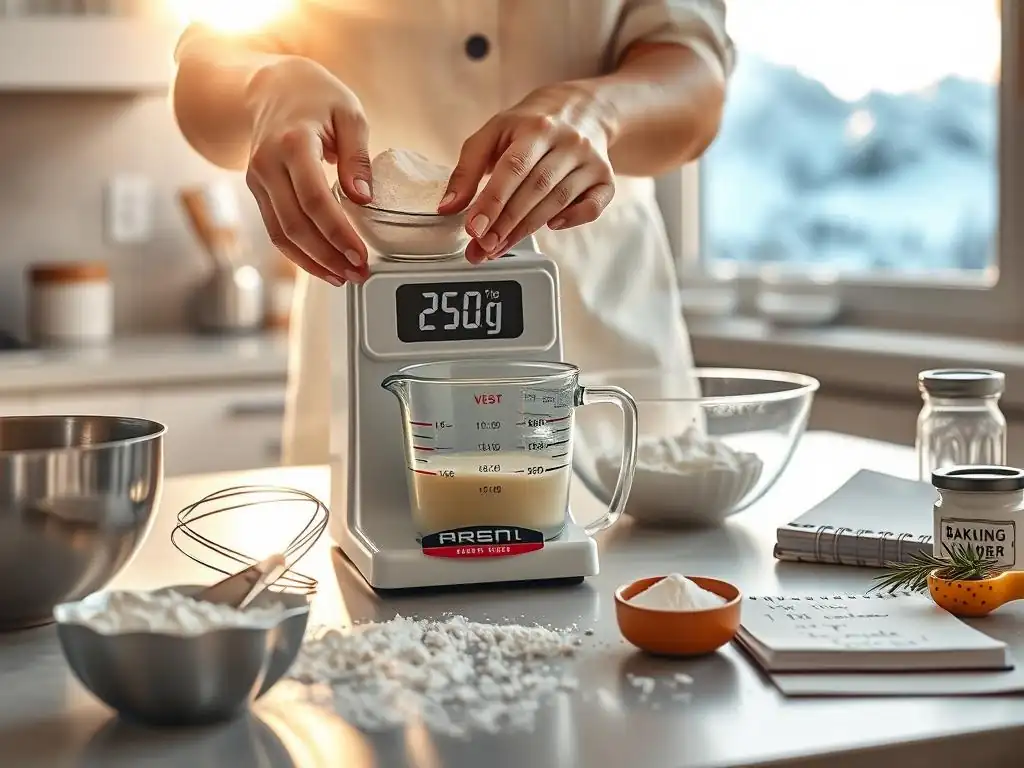
Precise measurement is always crucial in baking, but it becomes even more critical when dealing with the unique conditions of high altitude. The altered environment affects the physical properties of ingredients themselves, particularly dry goods like flour and sugar, and also changes how liquids interact within a mixture. Understanding these subtle shifts helps you measure more accurately and anticipate how ingredients will behave during the baking process, leading to more effective High altitude baking adjustments.
Factors like the inherent moisture content of ingredients, their density, and how they absorb liquids can vary slightly with elevation and storage conditions. While these variations might be negligible at sea level, they can exacerbate the challenges posed by reduced air pressure and lower boiling points at higher altitudes. Paying close attention to ingredient quality and storage, in addition to precise measurement techniques, contributes significantly to high altitude baking success.
Variations in Flour Absorption and Density with Elevation
Flour's ability to absorb moisture can be subtly affected by the drier air often found at higher elevations. Depending on storage conditions, flour at high altitudes might be slightly drier than flour stored at sea level. Drier flour can absorb liquids differently, potentially requiring more hydration in a recipe. Additionally, while the density of flour itself doesn't change with altitude, the way it packs into a measuring cup can be influenced by atmospheric pressure and humidity, making accurate volume measurement more challenging.
For instance, using the "dip and sweep" method for measuring flour might yield a slightly different weight at 7,000 feet compared to sea level, simply due to packing variations and moisture content influenced by the environment. This is why weighing flour is highly recommended for High altitude baking adjustments; it provides a consistent measure regardless of altitude or humidity, typically aiming for around 4.25 to 4.5 ounces (about 120-128 grams) per cup, though this can vary slightly by flour type.
Effects of Altitude on Liquid Ingredients and Hydration Levels
While the physical properties of liquids like water, milk, or oil don't change with altitude, their interaction within a recipe does. As discussed, water boils and evaporates faster at high elevations. This means that the initial amount of liquid in a batter or dough needs to be carefully calibrated to ensure there's enough moisture present throughout the baking process, preventing the final product from being dry or crumbly.
Recipes often call for increasing liquid amounts as part of High altitude baking adjustments. For example, a cake recipe might require adding an extra 1 to 2 tablespoons of liquid per cup of flour at 5,000 feet. The exact increase depends on the recipe, the specific altitude, and other factors like oven temperature and baking time. Getting the hydration level right is crucial for texture and structure.
Adjusting Leavening Agents for Precise Volume Control
Leavening agents, such as baking powder, baking soda, and yeast, are designed to produce gases that create volume in baked goods. At high altitude, these gases expand more readily due to lower pressure. If you use the same amount of leavening as a sea-level recipe, your baked goods will likely rise too quickly and too much, potentially leading to collapse.
Therefore, reducing the amount of chemical leaveners is a standard High altitude baking adjustment. A general guideline suggests reducing baking powder by about 1/4 teaspoon per teaspoon used in the original recipe for altitudes above 3,000 feet. For yeast, less yeast or shorter fermentation times may be needed. Precise measurement of these powerful agents is critical; even a slight overage can result in undesirable textures or flavors.
Essential High Altitude Baking Adjustments for Perfect Results
Successfully baking at high altitudes requires making specific modifications to standard recipes. These High altitude baking adjustments aim to counteract the effects of lower air pressure, reduced boiling point, and increased evaporation. While the exact adjustments can vary depending on the recipe type, the specific altitude, and even local humidity, several common strategies apply across most baking endeavors.
Approaching these adjustments systematically, often starting with small changes and testing the results, is key. Many experienced high altitude bakers keep detailed notes on what works for their specific location and recipes. It's a process of experimentation and refinement, but understanding the core principles behind the adjustments makes it much less daunting.
Modifying Flour and Dry Ingredient Quantities for High Elevation Baking
One common High altitude baking adjustment involves slightly increasing the amount of flour or other dry ingredients in a recipe. This might seem counterintuitive since you're also dealing with drier air, but the purpose is to strengthen the structure of the batter or dough. The extra dry ingredients, particularly flour, help to absorb the increased liquid often added (to combat evaporation) and provide more structural support to hold the rapidly expanding gas bubbles.
A typical adjustment might involve adding 1 to 2 tablespoons of flour per cup of flour called for in the original recipe, especially for cakes and muffins. For cookies, slightly increasing flour helps control spread. However, adding too much can result in a dry product, so this adjustment is often made in conjunction with increasing liquids and decreasing leavening. Weighing flour is highly recommended for accuracy when making these High altitude baking adjustments.
Adapting Liquid Measurements and Hydration Techniques
As discussed earlier, liquids evaporate faster at high altitudes. To combat this drying effect, increasing the liquid content in recipes is a standard High altitude baking adjustment. This helps ensure the baked goods remain moist and tender. The amount of extra liquid needed increases with altitude; a recipe baked at 7,000 feet will generally require more additional liquid than one baked at 3,000 feet.
For example, a cake recipe might call for an extra 2 to 4 tablespoons of milk or water per cup of flour at altitudes above 5,000 feet. Some bakers also find success by covering baked goods loosely with foil during the final part of baking to reduce surface evaporation. Using ingredients like buttermilk, yogurt, or sour cream, which contribute moisture and acidity (which can help stabilize batter), can also be beneficial in High altitude baking.
Regulating Sugar and Fat Amounts to Balance Texture and Moisture
Sugar and fat play crucial roles in baking, contributing to tenderness, moisture, flavor, and browning. At high altitudes, the increased rate of moisture evaporation can lead to a higher concentration of sugar in the batter or dough, which can result in excessive browning and a tougher texture. Sugar also interferes with gluten development and egg protein coagulation, which are already challenged by rapid leavening expansion.
Therefore, slightly reducing sugar is a common High altitude baking adjustment. A reduction of 1 to 3 tablespoons per cup of sugar in the original recipe is typical for cakes and muffins. Similarly, reducing fat slightly can help strengthen the structure, as fat can tenderize and weaken the gluten network. Finding the right balance of sugar and fat is essential for achieving the desired texture and preventing excessive browning or dryness in high altitude baking.
Adjusting Leavening Agents: Baking Powder, Baking Soda, and Yeast
Controlling the rise is paramount in high altitude baking. Since gases expand more readily, chemical leaveners like baking powder and baking soda need to be reduced. This is perhaps the most critical High altitude baking adjustment for many recipes, particularly cakes, muffins, and quick breads. Over-leavening is a primary cause of collapsed centers and coarse textures.
For baking powder, a general rule of thumb is to reduce the amount by 1/8 to 1/4 teaspoon per teaspoon called for in the original recipe, starting at around 3,000 feet and increasing the reduction for higher altitudes. Baking soda, often used with an acidic ingredient, may also need a slight reduction, though its reaction is often more controlled than double-acting baking powder.
For yeast breads, less yeast may be needed, or the fermentation times may need to be shortened, as the dough will rise faster. Punching down the dough more frequently can also help control the rise in high altitude baking.
Techniques to Measure Ingredients Accurately at High Elevation
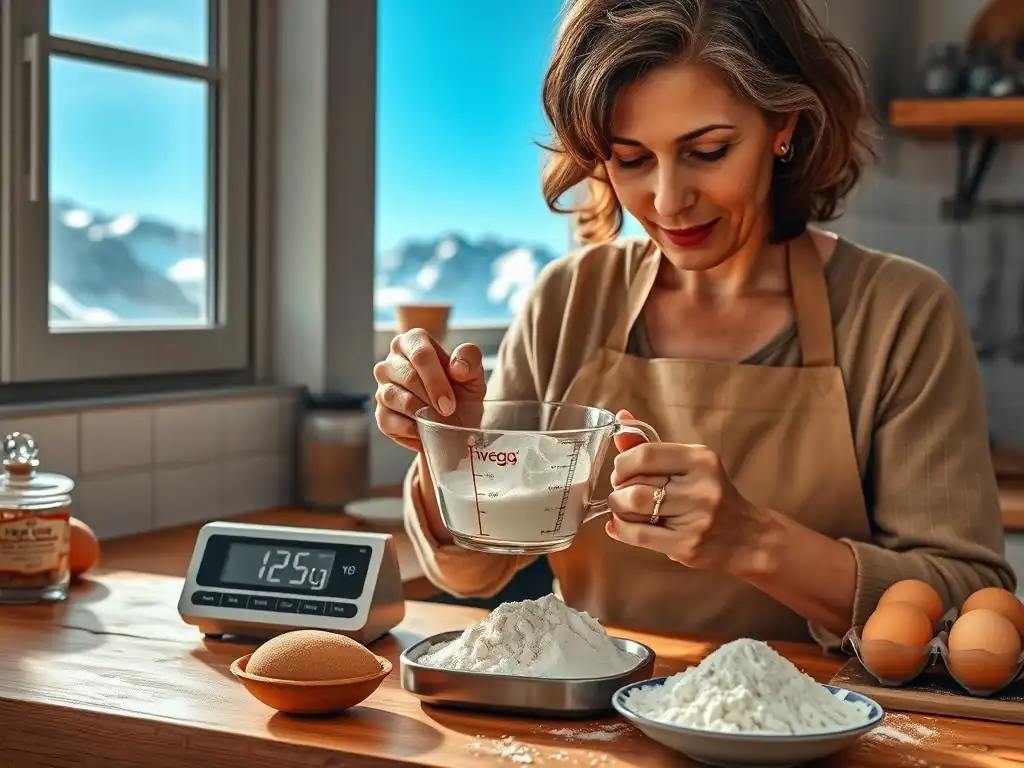
Accurate measurement is the bedrock of successful baking, regardless of altitude. However, when facing the unique environmental conditions of high elevation, employing precise techniques becomes even more critical. Small errors in measurement can be magnified by the atmospheric differences, leading to unpredictable results. Mastering proper measuring methods is a non-negotiable step in making effective High altitude baking adjustments.
While volume measurements using cups and spoons are common, they are inherently less accurate than weighing ingredients, especially dry ones. Factors like how tightly flour is packed or how precisely a liquid is leveled can introduce variations. At high altitudes, where ingredient behavior is already altered, minimizing these measurement variables is essential for consistency.
Best Practices for Weighing and Sifting Dry Ingredients
Weighing dry ingredients like flour, sugar, and cocoa powder using a digital kitchen scale is the most accurate method for High altitude baking. Weight is not affected by altitude, humidity, or how tightly an ingredient is packed. For example, a standard cup of all-purpose flour is generally accepted to weigh around 4.25 to 4.5 ounces (120-128 grams), but this can vary slightly depending on the flour type and brand. Using a scale ensures you always add the correct mass of the ingredient.
Sifting dry ingredients like flour and confectioners' sugar is also beneficial at high altitudes. Sifting aerates the ingredient, breaks up clumps, and provides a more consistent texture. When a recipe calls for sifted flour, sift before measuring (by volume) or weighing. If it calls for "flour, sifted," measure (by volume or weight) then sift. For High altitude baking adjustments, weighing is preferred, and sifting can still be done after weighing to incorporate air.
Using Liquid Measuring Tools Correctly in High Altitude Conditions
Measuring liquid ingredients accurately requires using the right tools and techniques. Use clear liquid measuring cups with spouts, placed on a flat surface. Pour the liquid and bend down so your eyes are level with the measurement line you need to reach. Fill the cup precisely to the line. Do not lift the cup to eye level while pouring, as this can lead to inaccuracies.
While the density of liquids themselves doesn't change with altitude, ensuring the correct volume is used is crucial, especially when you are making High altitude baking adjustments by increasing the liquid content. Using standard measuring spoons for smaller liquid amounts (like extracts or vanilla) and ensuring they are filled completely to the rim without overflowing is also important for precision.
Temperature and Humidity Considerations When Measuring Ingredients
While altitude is the primary factor, local temperature and humidity can also influence ingredients, particularly dry ones. High-altitude environments are often drier, which can affect the moisture content of flour and sugar over time. Storing ingredients in airtight containers helps mitigate this.
Temperature also plays a role, especially when working with fats like butter or liquids like milk. Ensure butter is at the correct temperature (softened, melted, or cold) as specified by the recipe, as its state affects how it incorporates into the mixture. Using liquids at room temperature unless otherwise specified can also improve ingredient integration. While these aren't direct High altitude baking adjustments, maintaining consistent ingredient temperature and storage practices contributes to overall baking success at any elevation.
Adapting Common Baking Recipes for High Altitude Success
Armed with an understanding of how altitude affects ingredients and armed with precise measurement techniques, you can begin to adapt your favorite recipes. The specific High altitude baking adjustments needed will vary depending on the type of baked good – cakes, cookies, and breads each present unique challenges and require different modification strategies. Patience and experimentation are key, but starting with established guidelines for different recipe types provides a solid foundation.
Remember that these are starting points. Your specific altitude, oven calibration, and even the specific brand of ingredients you use can influence the final outcome. Don't be discouraged if your first attempt isn't perfect. Think of it as a delicious science experiment!
High Altitude Adjustments for Cakes and Quick Breads
Cakes and quick breads (like muffins, scones, and loaves) are particularly susceptible to high altitude issues due to their reliance on chemical leavening and delicate structure. The most common problems are excessive rising followed by collapse, dryness, and a coarse or crumbly texture. Key High altitude baking adjustments for these items focus on controlling leavening, adding moisture, and strengthening the structure.
Start by reducing baking powder (e.g., 1/8 to 1/4 tsp reduction per tsp) and potentially baking soda. Increase liquids (e.g., 1-4 tbsp per cup of flour). Slightly increase flour (e.g., 1-2 tbsp per cup of flour) and potentially egg (e.g., add an extra egg white).
Reduce sugar (e.g., 1-3 tbsp per cup of sugar). Increase oven temperature by 15-25°F to help set the structure faster and decrease baking time slightly. For example, a standard yellow cake recipe baked at 5,000 feet might use 1/4 tsp less baking powder per cup of flour, add 2 tbsp extra milk per cup of flour, and bake at 365°F instead of 350°F for a slightly shorter time.
Cookies generally fare better at high altitudes than cakes, but they can still suffer from excessive spread, dryness, or a hard texture. High altitude baking adjustments for cookies often involve slightly increasing flour and decreasing leavening to control spread, and sometimes adding a tiny bit more liquid or reducing baking time to prevent dryness.
For chewy cookies, a slight increase in flour (e.g., 1-2 tbsp per cup) can provide more structure and limit spread. If the recipe uses baking soda or powder, a minor reduction might be necessary, especially if excessive puffiness is an issue. Reducing sugar slightly can help prevent excessive browning and crispness. Some bakers add an extra tablespoon of milk or a touch more butter to maintain moisture. Chilling the dough thoroughly before baking is also a good practice at high altitudes to help control spread.
Tips for Bread Baking and Sourdough at Elevated Heights
Yeast-leavened breads and sourdough require High altitude baking adjustments primarily related to fermentation time and hydration. Yeast activity is often accelerated at higher temperatures and with less atmospheric pressure resisting the gas expansion. This means dough can rise much faster than at sea level.
For traditional yeast breads, you may need to reduce the amount of yeast slightly or, more commonly, shorten the rising times. Watching the dough and relying on visual cues (like doubling in size) rather than strict time limits is crucial. You might also need to punch down the dough more than once during the bulk fermentation to control the rise.
Hydration levels may need to be increased slightly to compensate for faster evaporation during baking. Sourdough starter activity can also be more vigorous; monitoring fermentation time and potentially using a slightly less active starter or cooler proofing temperatures are useful High altitude baking adjustments for sourdough.
Even with careful High altitude baking adjustments, you might encounter issues. Baking at elevation is a learned skill, and troubleshooting is part of the process. Recognizing the signs of common altitude-related problems helps you pinpoint what adjustments might be needed for future attempts. Don't consider a less-than-perfect result a failure, but rather valuable feedback for refining your techniques.
Many problems stem from the core issues: too much leavening, too little moisture, or inadequate structural support. By observing the texture, shape, and doneness of your baked goods, you can often deduce which High altitude baking adjustments need further tweaking. Keeping a baking journal noting the recipe, altitude, adjustments made, and the outcome is incredibly helpful for troubleshooting.
How to Fix Overly Dry or Crumbly Baked Goods
If your cakes, muffins, or cookies turn out dry, crumbly, or tough at high altitude, the most likely culprit is insufficient moisture or too much flour/dry ingredient. Remember, liquids evaporate faster at elevation.
- Solution 1: Increase the liquid content in your recipe. Add 1-4 tablespoons of milk, water, or other liquid per cup of flour in the original recipe for cakes and quick breads. For cookies, try adding 1-2 tablespoons.
- Solution 2: Reduce the amount of flour or dry ingredients slightly if you previously increased them too much. Weighing flour is crucial here to ensure accuracy.
- Solution 3: Reduce baking time or slightly lower the oven temperature (while still ensuring it's hot enough to set the structure quickly, perhaps 10-15°F lower than your increased temperature). Use a toothpick test to check for doneness without overbaking.
Addressing Excessive Rising and Collapsing in High Altitude Baking
This is a classic high altitude problem for cakes and quick breads. It occurs when the leavening gases expand too quickly and too much before the structure of the baked good is set, leading to a spectacular rise followed by a disappointing collapse in the center.
- Solution 1: Reduce the amount of chemical leavener (baking powder and/or baking soda). This is often the most effective High altitude baking adjustment for this issue. Start with a 1/8 to 1/4 teaspoon reduction per teaspoon of baking powder called for.
- Solution 2: Ensure you have increased the structural ingredients like flour and egg appropriately to support the rise.
- Solution 3: Increase the oven temperature by 15-25°F (compared to sea level) to help the structure set faster before the gases over-expand.
- Solution 4: For yeast breads, shorten fermentation times or punch down the dough more frequently to control the rapid rise.
Solutions for Flat or Dense Results Due to Measurement Errors
Sometimes, despite making High altitude baking adjustments, baked goods turn out flat, dense, or heavy instead of light and airy. This can be due to insufficient leavening (if you've reduced it too much), too much liquid, or issues with ingredient activation.
- Solution 1: Double-check your leavening measurements. Ensure you haven't reduced baking powder or soda too drastically. If using yeast, confirm your yeast is active and the liquid temperature for activation was correct.
- Solution 2: Review your liquid measurements. If you've added too much liquid, the batter or dough can be too heavy to rise properly. Ensure you are measuring liquids accurately using a liquid measuring cup.
- Solution 3: Ensure your dry ingredients, particularly flour, were measured correctly, preferably by weight. Too little flour won't provide enough structure for the leavening to work effectively.
- Solution 4: Check that your baking powder is fresh (test by adding a teaspoon to hot water – it should bubble vigorously).
Tools and Resources for Mastering High Altitude Baking Adjustments
Becoming proficient in high altitude baking is an ongoing journey. Having the right tools and access to reliable information makes the process much smoother and more enjoyable. While you don't need highly specialized equipment, a few key items can significantly improve the accuracy of your High altitude baking adjustments and the consistency of your results.
Beyond tools, leveraging resources like conversion charts, dedicated high altitude cookbooks, and online communities can provide invaluable guidance and support. Many websites, including BakeWithEase.com, offer specific tips and recipes tailored for elevated environments.
Recommended Measuring Equipment for Precision at Elevation
Precision is paramount in high altitude baking. The most important tool for accurate measurement is a digital kitchen scale. This allows you to weigh ingredients like flour, sugar, and even liquids for maximum consistency, removing the variability of volume measurements which can be affected by packing density and altitude. Aim for a scale that can measure in grams and ounces.
Other essential measuring tools include:
- Set of dry measuring cups: For ingredients like brown sugar or chopped nuts that are still best measured by volume.
- Set of liquid measuring cups: Clear cups with spouts for water, milk, oil, etc., viewed at eye level on a flat surface.
- Set of measuring spoons: For smaller quantities of leavening, salt, spices, and extracts. Ensure they are level.
- Optional but helpful: An oven thermometer to verify your oven's actual temperature, as many ovens are not calibrated correctly, and precise temperature is important for setting structure at high altitude.
Reliable Conversion Charts and High Altitude Baking Guides
While general guidelines for High altitude baking adjustments exist (like reducing baking powder or increasing liquid), the exact modifications often depend on the specific altitude. Access to reliable conversion charts or guides that provide recommended adjustments for various altitudes (e.g., 3,000 ft, 5,000 ft, 7,000 ft) can be incredibly helpful starting points.
Look for charts that specify adjustments for different types of baked goods (cakes, cookies, breads). Many university extension offices in high-altitude states (like Colorado or Wyoming) publish excellent, research-based guides on high altitude food preparation, including baking. These resources often provide precise ratios and techniques that have been tested extensively.
Where to Find High Altitude Specific Recipes and Tips on BakeWithEase.com
BakeWithEase.com is dedicated to helping bakers of all levels succeed, including those facing the unique challenges of high altitude. We understand that adapting every single recipe can be time-consuming. That's why we are building a collection of recipes specifically developed and tested for high elevation baking.
Our "Baking Tips & Hacks" section, particularly within the "Measuring Ingredients Accurately" subcategory, contains detailed articles like this one to explain the science and techniques behind High altitude baking adjustments. Look for recipes explicitly marked as "High Altitude" on our site. These recipes have already incorporated the necessary modifications for leavening, liquids, sugar, and baking times, taking the guesswork out of the process for you. Explore these resources to find proven recipes and further tips tailored to your high altitude baking needs.
Frequently Asked Questions
How does high altitude affect baking in general?
High altitude baking is affected because there is less air pressure. This causes liquids to evaporate faster and leavening agents to rise more quickly, potentially leading to collapsed cakes or dry cookies.
What are some common adjustments needed for high-altitude baking?
Common adjustments include reducing leavening agents (baking powder/soda), increasing liquids, and increasing oven temperature slightly. These adjustments help balance the faster evaporation and rising.
Why is it important to adjust baking recipes for high altitude?
Failing to adjust for altitude can result in poorly textured baked goods, such as flat cakes, dry cookies, or breads that collapse. It is crucial for achieving optimal results at higher elevations.
Where can I find specific high-altitude adjustment recommendations for my location?
While BakeWithEase.com offers general guidelines, it is best to consult resources that provide adjustments tailored to your specific elevation. Search online for "high-altitude baking adjustments [your elevation]" for more precise information.
What happens if I accidentally use a recipe without adjusting for high altitude?
You might end up with a dry, crumbly, or sunken baked good. The exact outcome depends on the recipe and your altitude, but the results are often less than desirable.
Final Reflection: Scaling the Heights of Baking Success
The challenges of high-altitude baking are not merely inconveniences; they are fundamental shifts in the physics of cooking. Ignoring these differences can lead to disastrous results, from flat cakes to gummy cookies. Understanding how altitude impacts baking, however, unlocks a world of delicious possibilities, proving that even the thin air can be conquered with the right knowledge.
The impact of altitude on baking extends beyond just the recipe adjustments; it speaks to a deeper human desire to adapt and overcome environmental limitations. We are, after all, resourceful creatures, constantly finding ways to thrive in diverse conditions. This drive to perfect the art of high-altitude baking mirrors our broader human endeavor to adapt and innovate, to find solutions where others see only obstacles. The greatest glory in living lies not in never falling, but in rising every time we fall.
- Nelson Mandela. This quote perfectly encapsulates the spirit of high-altitude baking – a process of trial, error, and ultimately, triumphant success.
Now, it's your turn to take flight. Don't let the altitude intimidate you; instead, embrace the challenge. Experiment with the adjustments outlined in this article, and discover the unique joys of baking at higher elevations. Remember, every perfectly risen cake, every chewy cookie, is a testament to your perseverance and understanding. The next time you face a seemingly insurmountable challenge, remember the lessons learned here – and rise to the occasion.
Unlock Your High-Altitude Baking Secrets!
Thanks for taking the time to explore the world of high-altitude baking! You've now got the knowledge to conquer those tricky altitude adjustments. Ready to put your newfound skills to the test?
- Bake your masterpiece: Try adapting one of your favorite recipes using the techniques we discussed. Let us know how it goes!
- Share your success (or challenges!): We'd love to see your high-altitude creations on social media – tag us!
- Explore our other articles for more baking tips and tricks.
What unique high-altitude baking challenge are you ready to tackle next?