
Why Water Temperature is a Game Changer for Your Pizza Dough

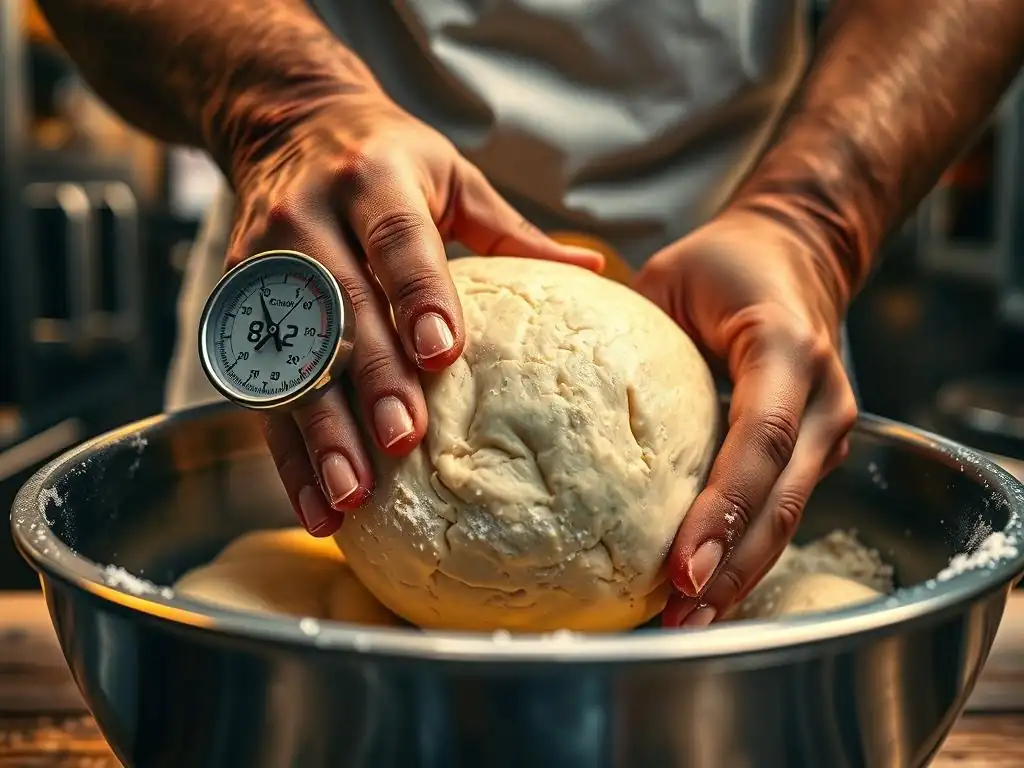
Welcome to BakeWithEase, your trusted guide to baking brilliance! Ever wondered why your pizza dough just isn't quite right? Our latest exploration dives deep into a surprisingly crucial element – the perfect pizza dough water temp. Discover how this often-overlooked detail can be the key to unlocking a truly exceptional crust. Intrigued? Let's get baking!
- Why Water Temperature is Crucial for Pizza Dough
- Introduction: Achieving Optimal Pizza Dough with Water Temperature
- The Science Behind Water Temperature in Pizza Dough
- Determining the Ideal Water Temperature for Pizza Dough
- Water Temperature's Effect on Different Pizza Styles
- Troubleshooting Dough Issues with Water Temperature Adjustments
- Step-by-Step Guide to Perfect Water Temperature
- Advanced Techniques: Exploring Water Temperature's Potential
- Recipes: Applying Water Temperature Knowledge
- Common Mistakes in Water Temperature Control
- Conclusion: Elevating Your Pizza Dough with Water Temperature Mastery
- Frequently Asked Questions
- Final Reflection: The Perfect Slice Starts with Perfect Temperature
- Unlock Your Pizza Dough's Potential: Perfect Pies Await!
Why Water Temperature is Crucial for Pizza Dough
Introduction: Achieving Optimal Pizza Dough with Water Temperature
Making perfect pizza dough is often seen as an art form, but it's also deeply rooted in science. While ingredients like flour, yeast, salt, and time are fundamental, one element often overlooked, yet incredibly impactful, is the water temperature. It's not just about hydrating the flour; the temperature of the water you use can dramatically influence the dough's texture, rise, flavor development, and overall handling characteristics.
Mastering the perfect pizza dough water temp is a key step towards elevating your homemade pizza from good to truly exceptional. This guide will explore why this simple factor holds so much power and how you can harness it to achieve your desired results every time.
Understanding the role of water temperature is especially critical when you move beyond basic recipes and start experimenting with different fermentation times or pizza styles. Whether you're aiming for a quick rise for same-day pizza or a slow, cold ferment for complex flavors, the water's temperature sets the initial pace. It dictates how quickly the yeast becomes active, how the gluten structure forms, and ultimately, the final quality of your crust. Let's dive into the fascinating science behind this crucial ingredient and learn how to control it for consistently perfect pizza dough water temp.
The Science Behind Water Temperature in Pizza Dough
Impact of Water Temperature on Yeast Activity
Water temperature is arguably the most significant factor influencing yeast activity in dough. Yeast, a living organism, thrives within a specific temperature range. Warm water, typically between 95°F and 115°F (35°C and 46°C), is often recommended for rapidly activating dry yeast, providing a comfortable environment for it to "wake up" and begin fermentation quickly. For instant yeast, this activation step isn't strictly necessary, but the water temperature still affects the initial fermentation rate.
Conversely, cooler water, say between 50°F and 70°F (10°C and 21°C), significantly slows down yeast activity. This is beneficial for longer fermentation periods, especially cold fermentation in the refrigerator, which can last from 24 to 72 hours or even longer. Slower fermentation allows for the development of more complex flavors and aromas in the dough, resulting in a crust with greater depth and character. Using water that is too hot (above 130°F or 54°C) can kill the yeast, preventing the dough from rising entirely.
Water Temperature's Influence on Gluten Development
While hydration (the ratio of water to flour) is the primary driver of gluten development, water temperature also plays a supporting role. Warmer water tends to hydrate the flour more quickly, facilitating the initial formation of gluten strands when mixing begins. This can sometimes lead to a slightly faster development of a smooth, elastic dough during kneading.
However, extremely hot water is detrimental as it can essentially 'cook' the gluten, denaturing the proteins and resulting in a dough that is weak and lacks structure. Cold water, while hydrating the flour more slowly initially, allows for a longer mixing or autolyse period (letting the flour and water rest before adding other ingredients), which can contribute to better gluten development over time, particularly in doughs with higher hydration levels. Achieving the perfect pizza dough water temp helps balance hydration speed with yeast activity and gluten formation.
Water Temperature and Dough Consistency
The initial temperature of the water directly impacts the dough's consistency immediately after mixing and throughout the bulk fermentation process. Warmer water results in a warmer dough, which ferments faster and tends to be looser and more extensible more quickly. This can be desirable for certain high-hydration doughs or when a rapid rise is needed.
Colder water leads to a cooler dough, which is typically stiffer and less extensible initially. This cooler temperature significantly slows down fermentation, making the dough easier to handle for longer periods and allowing for controlled development of structure and flavor without the risk of over-proofing too quickly at room temperature. The perfect pizza dough water temp helps achieve the desired dough temperature for the specific fermentation schedule and handling properties you are aiming for.
Determining the Ideal Water Temperature for Pizza Dough
Calculating Desired Dough Temperature (DDT)
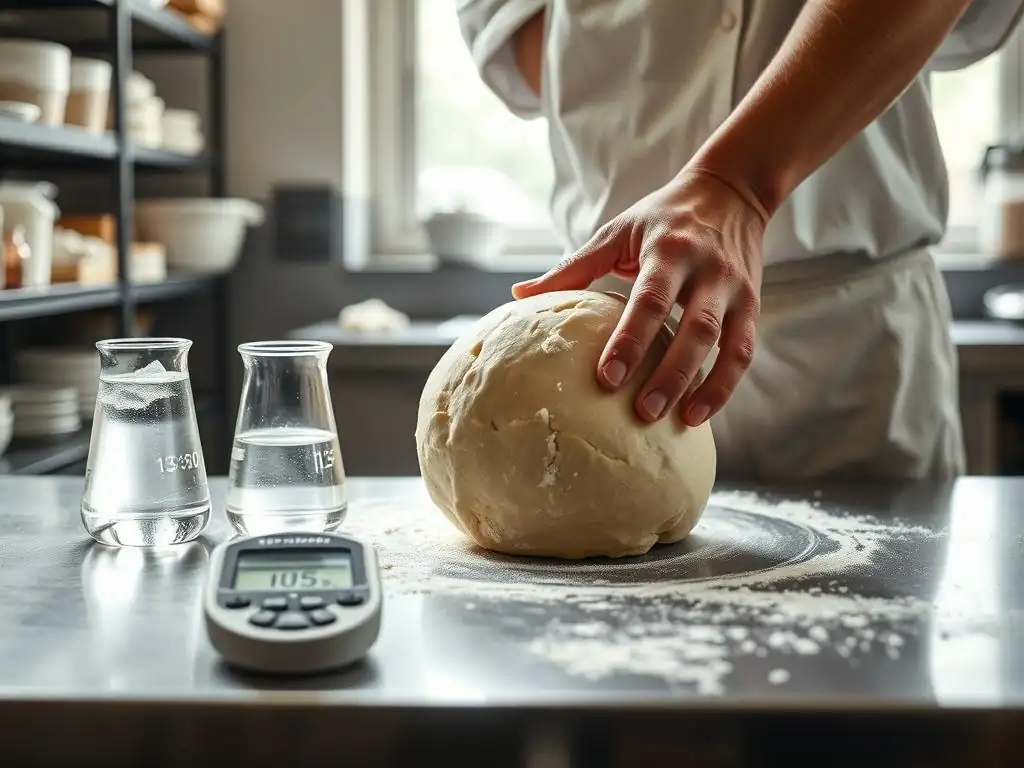
A precise way to determine the perfect pizza dough water temp is by using the Desired Dough Temperature (DDT) formula. This formula helps you calculate the necessary water temperature to achieve a specific final dough temperature after mixing, which is crucial for controlling fermentation speed. A common target DDT for many pizza doughs is between 75°F and 80°F (24°C and 27°C). The basic formula is:
Water Temperature = (DDT x Number of Factors) - (Flour Temperature + Room Temperature + Friction Factor)
A simplified version often used for home bakers assumes three main factors (Flour, Room, Water) and a small friction factor (representing the heat generated during mixing, typically 0-5°F):
Water Temperature = (DDT x 3) - (Flour Temp + Room Temp + Friction Factor)
For example, if your target DDT is 78°F, your flour is 70°F, your room is 72°F, and you estimate a friction factor of 2°F: Water Temp = (78 x 3) - (70 + 72 + 2)
Water Temp = 234 - 144
Water Temp = 90°F
This calculation tells you that you need water at approximately 90°F to achieve a final dough temperature of 78°F after mixing.
Considering Room and Flour Temperatures
Room temperature and flour temperature are critical inputs for the DDT calculation. These two factors contribute significantly to the final temperature of your dough. Flour stored at room temperature will naturally be close to the ambient temperature. If your kitchen is cold, say 65°F (18°C), your flour will likely be around that temperature. If your kitchen is warm, 80°F (27°C), your flour will also be warmer.
Ignoring these temperatures can lead to significant deviations from your target dough temperature. For instance, in the previous example, if you assumed your flour and room were both 70°F but they were actually 65°F, using 90°F water would result in a final dough temperature lower than your target 78°F, leading to slower fermentation than anticipated. Always measure your current room and flour temperatures for the most accurate DDT calculation and perfect pizza dough water temp.
Using a Thermometer for Accurate Measurement
Accuracy is paramount when controlling water temperature for perfect pizza dough water temp. Relying on touch or estimation is highly unreliable, as a difference of just a few degrees can significantly impact fermentation speed and dough development. A simple digital thermometer is an indispensable tool for any serious baker.
Use a thermometer to measure the temperature of your water precisely before adding it to the flour. It's also highly recommended to measure the temperature of your flour and the ambient room temperature before you begin mixing, as these are necessary for the DDT calculation. Finally, immediately after mixing the dough, take its temperature to verify that you've hit your target DDT. If the dough is too warm or too cold, you can learn from the result and adjust your water temperature calculation for the next batch.
Water Temperature's Effect on Different Pizza Styles
Neapolitan Pizza: High Hydration and Temperature Control
Neapolitan pizza dough traditionally uses minimal yeast and undergoes a long fermentation, often 24 hours or more, sometimes including a period of cold fermentation. The dough is typically high hydration, around 60-65%. Achieving the perfect pizza dough water temp for Neapolitan style is about controlling this slow fermentation and managing the hydration.
Typically, cooler water is used to keep the dough temperature lower, around 72-75°F (22-24°C) after mixing. This slower initial fermentation at room temperature or in the fridge allows for the development of the characteristic airy, puffy crust with a slightly tangy flavor profile. Using water that is too warm would cause the dough to ferment too quickly, potentially over-proofing before the desired flavor complexity develops, resulting in a flat or dense crust.
New York Style Pizza: Achieving the Desired Texture
New York style pizza dough often has a slightly lower hydration than Neapolitan, around 58-62%, and can use slightly more yeast for a fermentation that might be shorter, sometimes 8-24 hours, often with cold fermentation. The goal is a crust that is sturdy enough to fold, with a good chew and a crispy bottom. The perfect pizza dough water temp helps control the fermentation rate to achieve this balance of chewiness and crispness.
A common target dough temperature after mixing for NY style might be slightly warmer than Neapolitan, perhaps 75-78°F (24-26°C). This allows for a slightly faster bulk fermentation initially, followed by a cold proofing period. Using water that is too cold could slow fermentation too much, potentially leading to a dense crust if not given enough time. Conversely, water that's too warm could accelerate fermentation excessively, resulting in a crust that is too airy or lacks the characteristic chew.
Detroit Style Pizza: Managing the Rise
Detroit style pizza dough is known for its high hydration, often 70% or more, and is typically baked in a deep, rectangular pan. The dough is usually fermented at room temperature for a relatively short period, often 2-4 hours, or cold-fermented for a longer time. The perfect pizza dough water temp is key to managing this high-hydration dough and achieving the desired airy, open crumb structure that fills the pan.
Given the short room-temperature rise often employed, warmer water is frequently used to achieve a dough temperature of 78-82°F (26-28°C) after mixing. This warmer temperature encourages rapid yeast activity, allowing the dough to rise quickly and fill the corners of the pan before baking. If cold fermentation is used, cooler water would be necessary to slow the initial rise. Using water that is too cool for a short room-temperature rise would prevent the dough from developing enough volume, resulting in a dense crust.
Troubleshooting Dough Issues with Water Temperature Adjustments
Over-Proofing: Solutions
Over-proofing often occurs when the dough ferments too quickly or for too long, leading to a collapsed structure, loss of elasticity, and sometimes an overly sour smell. A primary cause can be a dough temperature that is too high, often due to using water that is too warm or the room temperature being too high. If your dough is consistently over-proofing faster than expected, the perfect pizza dough water temp adjustment is to use cooler water in your next batch.
Measure your room and flour temperatures accurately and recalculate your water temperature using the DDT formula, targeting a lower final dough temperature, perhaps a few degrees cooler than your previous target. For instance, if you were aiming for 78°F and over-proofed, try aiming for 75°F. Additionally, ensure your measuring tools are accurate. Using water that is 5-10°F cooler can significantly slow down yeast activity and prevent over-proofing.
Under-Proofing: Solutions
Under-proofing happens when the dough hasn't fermented long enough or fast enough. This results in a dense, tight dough that is difficult to stretch and produces a flat, heavy crust with a tight crumb. A common reason for under-proofing is a dough temperature that is too low, often because the water was too cool or the room was too cold. To achieve the perfect pizza dough water temp for proper fermentation, you need to use warmer water in subsequent batches.
Recalculate your water temperature using the DDT formula, aiming for a higher final dough temperature, perhaps 2-5°F warmer than your previous target. If you were aiming for 75°F and under-proofed, try aiming for 78°F or even 80°F. Double-check your thermometer's accuracy. Using water that is 5-10°F warmer can significantly increase yeast activity and help the dough reach its full potential within the desired fermentation time.
Tackiness: Water Temperature Adjustments
Excessive tackiness can sometimes be related to dough temperature, although hydration and mixing are more common causes. A dough that is too warm can feel stickier because fermentation is proceeding rapidly, potentially breaking down some of the gluten structure prematurely. If your dough feels excessively sticky and difficult to handle, and you suspect temperature is a factor, adjusting the perfect pizza dough water temp might help.
While reducing hydration is the primary fix for overly wet dough, ensuring your dough isn't too warm can also help. Aiming for a slightly lower final dough temperature (perhaps 1-3°F cooler) by using slightly cooler water can slow down enzyme activity that might contribute to stickiness. This allows the gluten structure more time to strengthen relative to the fermentation speed, potentially resulting in a less sticky dough.
Dense Dough: Adjusting Water Temperature
Dense dough is often a symptom of under-proofing, where insufficient gas has been produced by the yeast to create an open crumb structure. As discussed, under-proofing is frequently linked to a dough temperature that is too low, inhibiting yeast activity. If your pizza crusts are consistently dense, adjusting the perfect pizza dough water temp to achieve a warmer dough temperature is a key strategy.
Re-evaluate your DDT calculation and aim for a higher final dough temperature, typically between 75°F and 80°F (24°C and 27°C) for many standard pizza doughs. This requires using warmer water. Ensure you are accurately measuring room and flour temperatures. A difference of just a few degrees in the final dough temperature can significantly impact the volume and lightness of your crust.
Step-by-Step Guide to Perfect Water Temperature
Step 1: Measuring Flour and Room Temperature Accurately
Before you even think about your water, you need to know the temperature of your other key variables: the flour and the room. Use a reliable thermometer to measure the temperature of your flour. Simply stick the probe into the bag or container of flour. Then, measure the ambient air temperature in the room where you will be mixing the dough.
Record these two temperatures. Let's say your flour is 70°F (21°C) and your room is 72°F (22°C). These numbers are essential inputs for calculating the perfect pizza dough water temp needed to hit your desired final dough temperature. Don't skip this step, as these temperatures fluctuate based on the season and your home's climate control.
Step 2: Calculating Target Water Temperature
Decide on your desired final dough temperature (DDT). For a relatively quick rise (4-6 hours), you might target 78°F (26°C). For a longer room-temperature rise or preparation for cold fermentation, you might target 75°F (24°C). Use the simplified DDT formula: Water Temperature = (DDT x 3) - (Flour Temp + Room Temp + Friction Factor). Estimate a friction factor (often 0-5°F; start with 2°F if unsure).
Using our example from Step 1 (Flour 70°F, Room 72°F) and targeting a DDT of 78°F with a 2°F friction factor: Water Temp = (78 x 3) - (70 + 72 + 2)
Water Temp = 234 - 144
Water Temp = 90°F
Your target perfect pizza dough water temp for this batch is 90°F.
Step 3: Precise Water Temperature Measurement
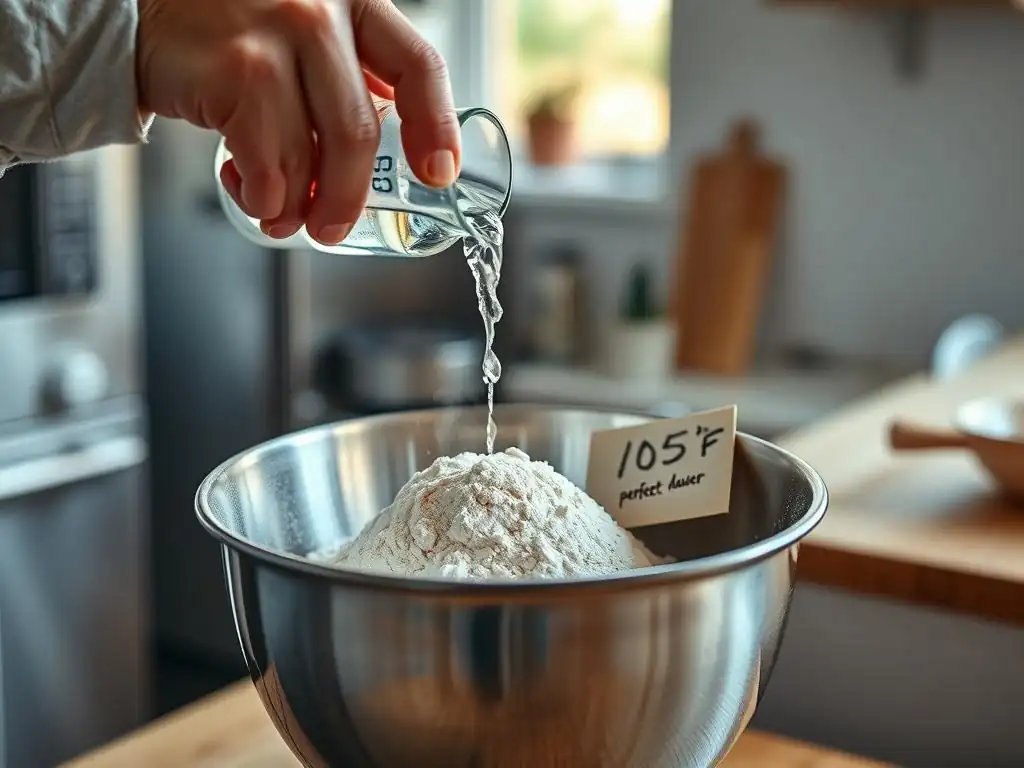
Now that you have your target water temperature, measure the required amount of water for your recipe. Use your digital thermometer to heat or cool the water until it reaches the calculated temperature. This might involve mixing hot and cold tap water or using a kettle and letting the water cool.
Be precise! Aim to get within +/- 1°F (or 0.5°C) of your target temperature. Small variations here can lead to noticeable differences in your final dough temperature and fermentation rate. Having the perfect pizza dough water temp ready before you combine ingredients is key to consistency.
Step 4: Mixing the Dough with Temperature Precision
Add your temperature-controlled water to your mixing bowl according to your recipe instructions (usually combining water and yeast first, then adding flour and salt, or using an autolyse method). Mix the dough until all ingredients are incorporated and the dough comes together.
Immediately after mixing is complete, take the temperature of the dough using your thermometer. Gently insert the probe into the center of the dough mass. Note the temperature. This is your actual dough temperature. Compare it to your target DDT. This feedback loop allows you to refine your DDT calculation and friction factor estimation for future batches, helping you consistently achieve the perfect pizza dough water temp and final dough temperature.
Advanced Techniques: Exploring Water Temperature's Potential
Cold Fermentation and Flavor Development
Cold fermentation, typically done in a refrigerator at temperatures between 35°F and 40°F (2°C and 4°C), is a technique used to slow down yeast activity dramatically. This extended, slow fermentation, often lasting 24 to 72 hours or even up to 5 days, allows enzymes in the dough to break down starches into sugars and proteins into amino acids. This process develops complex flavors and aromas that are not present in quickly fermented doughs.
To initiate cold fermentation effectively, you typically aim for a lower initial dough temperature after mixing, perhaps 70-74°F (21-23°C). This requires using cooler water in your mix. The perfect pizza dough water temp for cold fermentation ensures the dough is cool enough initially to slow yeast activity but warm enough to begin fermentation before being placed in the fridge. This controlled start prevents the dough from becoming too active at room temperature before the cold can take effect.
Autolyse and Water Temperature
Autolyse is a resting period, usually 20 minutes to an hour, after mixing only the flour and water, before adding salt and yeast. This allows the flour to fully hydrate and enzymes naturally present in the flour to start breaking down starches and proteins. This process kickstarts gluten development and makes the dough easier to handle later. The temperature of the water used for the autolyse impacts the speed of hydration and enzymatic activity.
For a standard autolyse, using water at a moderate temperature, perhaps 70-80°F (21-27°C), is common. Warmer water will hydrate the flour faster, which can be useful for shorter autolyse periods or doughs with high hydration. Cooler water slows things down, potentially beneficial for longer autolyse periods or when working in a warm environment. The perfect pizza dough water temp for autolyse depends on the desired length of the rest and the overall dough temperature target.
Utilizing Ice Water for Specific Dough Characteristics
In extreme cases, particularly in very hot environments or when aiming for an exceptionally long, slow fermentation without refrigeration, bakers might use ice water or very cold water. The goal is to achieve a very low initial dough temperature, perhaps in the 60s°F (around 18°C). This drastically slows down yeast activity from the start.
Using ice water, or even ice cubes in the water, allows for a very slow initial bulk fermentation at room temperature, which can still develop some flavor. It also provides a buffer against warm room temperatures that might otherwise cause the dough to ferment too quickly. While not always necessary for home bakers, understanding how to use very cold or ice water demonstrates the power of the perfect pizza dough water temp to manipulate fermentation speed in challenging conditions.
Recipes: Applying Water Temperature Knowledge
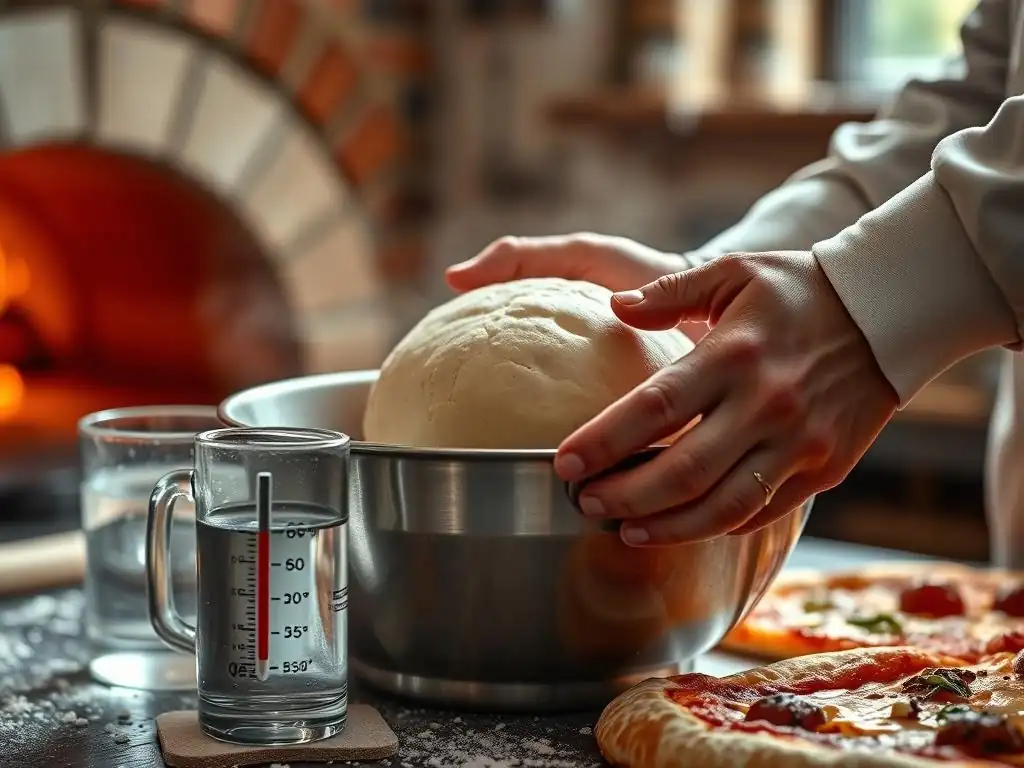
Recipe 1: Neapolitan Pizza Dough with Controlled Water Temperature
This recipe targets a final dough temperature of 75°F (24°C) for a slow, 24-hour fermentation (partially cold).
- Yields: Two 10-12 inch pizzas
- Ingredients:
- 500g "00" or bread flour
- 325g water (65% hydration)
- 1g active dry yeast (approx. 0.2%)
- 10g fine sea salt (2%)
- Method:
- Measure room temperature (e.g., 72°F) and flour temperature (e.g., 70°F).
- Calculate target water temperature for 75°F DDT:
Water Temp = (75 x 3) - (70 + 72 + 2) = 225 - 144 = 81°F. Your perfect pizza dough water temp is 81°F. - Measure 325g water at 81°F. Dissolve yeast in water.
- Combine water/yeast mixture with flour and salt. Mix until just combined.
- Rest (autolyse) for 20 minutes.
- Knead gently for 5-10 minutes until smooth.
- Measure dough temperature (should be around 75°F).
- Bulk ferment at room temperature for 2-3 hours, then divide, shape into balls, and cold proof in the refrigerator for 20-22 hours.
Recipe 2: New York Style Pizza Dough with Precise Water Temperature
This recipe targets a final dough temperature of 78°F (26°C) for an 8-12 hour fermentation (includes cold proof).
- Yields: Two 12-14 inch pizzas
- Ingredients:
- 500g bread flour
- 300g water (60% hydration)
- 2g instant yeast (approx. 0.4%)
- 10g fine sea salt (2%)
- 5g olive oil (optional)
- Method:
- Measure room temperature (e.g., 70°F) and flour temperature (e.g., 68°F).
- Calculate target water temperature for 78°F DDT:
Water Temp = (78 x 3) - (68 + 70 + 2) = 234 - 140 = 94°F. Your perfect pizza dough water temp is 94°F. - Measure 300g water at 94°F.
- Combine water, flour, yeast, salt, and oil (if using). Mix until dough comes together.
- Knead for 8-12 minutes until smooth and elastic.
- Measure dough temperature (should be around 78°F).
- Bulk ferment at room temperature for 1-2 hours, then divide, shape into balls, and cold proof in the refrigerator for 6-10 hours.
Recipe 3: Sourdough Pizza Dough with Water Temperature Guidance
Sourdough relies on wild yeast and bacteria, which are also temperature-sensitive. This recipe targets a final dough temperature of 76°F (24°C) for a slower, flavorful rise.
- Yields: Two 10-12 inch pizzas
- Ingredients:
- 500g bread flour
- 325g water (65% hydration)
- 100g active sourdough starter (fed and active, 100% hydration)
- 10g fine sea salt (2%)
- Method:
- Measure room temperature (e.g., 73°F) and flour temperature (e.g., 71°F).
- Calculate target water temperature for 76°F DDT:
Water Temp = (76 x 3) - (71 + 73 + 2) = 228 - 146 = 82°F. Your perfect pizza dough water temp is 82°F. - Measure 325g water at 82°F.
- Combine water and active starter. Stir to disperse.
- Add flour and salt. Mix until just combined.
- Rest (autolyse) for 30 minutes.
- Perform 3-4 sets of stretch and folds over 1.5-2 hours.
- Measure dough temperature (should be around 76°F).
- Bulk ferment at room temperature until increased by about 50-75% (timing varies based on starter strength and room temp, approx. 4-8 hours). Divide, shape, and cold proof for 12-48 hours.
Common Mistakes in Water Temperature Control
Overestimation or Underestimation of Water Temperature
One of the most frequent errors is simply guessing the water temperature or relying on terms like "lukewarm." What feels lukewarm to one person might be significantly warmer or cooler to another. A difference of just 5°F can change a 4-hour room-temperature rise into a 6-hour rise or a 3-hour rise.
Without using a thermometer and aiming for a specific temperature based on your desired outcome and ambient conditions, you lose control over the fermentation process. Consistently achieving the perfect pizza dough water temp requires precise measurement, not estimation. Invest in a good thermometer and use it every time you bake.
Ignoring Room and Flour Temperatures
Another critical mistake is failing to account for the temperature of your kitchen and your flour. Many home bakers focus solely on the water temperature, unaware that the bulk of the dough's mass (the flour) and the environment it ferments in (the room) significantly influence the final dough temperature.
As shown in the DDT calculation, room and flour temperatures together contribute twice as much to the final dough temperature as the water temperature (in the simplified 3-factor model). Ignoring these factors means your calculated water temperature, even if measured precisely, will likely not result in the desired final dough temperature, leading to unpredictable fermentation. The perfect pizza dough water temp is calculated in conjunction with these other temperatures.
Inaccurate Measurements
This applies not only to water temperature but also to the measurement of flour, water, and other ingredients. Using volume measurements (cups) instead of weight (grams) for flour and water is notoriously inaccurate and inconsistent. This variability in hydration alone can drastically alter the dough's texture and handling, making it difficult to isolate the impact of water temperature.
Furthermore, using an unreliable or uncalibrated thermometer will give you false readings, leading you to use water at the wrong temperature. For consistently perfect pizza dough water temp and reproducible results, use a digital scale for ingredients and a reliable digital thermometer for temperatures. This precision eliminates variables and allows you to troubleshoot effectively.
Conclusion: Elevating Your Pizza Dough with Water Temperature Mastery
Water is more than just a hydrating agent in pizza dough; its temperature is a powerful lever that controls the pace of fermentation, influences gluten development, and impacts the final texture and flavor of your crust. By understanding the science behind how water temperature affects yeast and gluten, and by learning how to accurately measure and calculate your target water temperature using the Desired Dough Temperature formula, you gain significant control over your dough-making process.
Moving beyond guesswork to precise temperature control allows you to troubleshoot common dough issues like over- or under-proofing and tailor your dough to specific pizza styles, from the airy crumb of Neapolitan to the chewy bite of New York style. Mastering the perfect pizza dough water temp is a fundamental skill that transforms baking from a hopeful endeavor into a predictable science, ensuring that each batch of pizza dough is not just good, but consistently excellent. Embrace the thermometer, calculate your DDT, and watch as your pizza dough reaches new heights of perfection.
Frequently Asked Questions
Why is water temperature so important when making pizza dough?
Water temperature significantly impacts the yeast activity. Too cold, and the yeast won't activate properly; too hot, and it will kill the yeast, hindering dough rise. The perfect temperature ensures optimal fermentation.
What is the ideal water temperature for pizza dough?
The generally recommended water temperature for pizza dough is between 105-115°F (40-46°C). This range allows the yeast to thrive and develop the gluten effectively.
What happens if the water is too cold?
If the water is too cold, the yeast will become dormant or inactive. This results in a slow or nonexistent rise, leading to a dense and tough pizza crust.
Water that is too hot will kill the yeast, preventing fermentation altogether. You'll end up with a flat, lifeless dough that won't rise, no matter how long you wait.
How can I accurately measure the water temperature?
Use a reliable kitchen thermometer to ensure accuracy. A few degrees difference can significantly affect the yeast's performance and the final outcome of your pizza dough.
Final Reflection: The Perfect Slice Starts with Perfect Temperature
The quest for the perfect pizza dough is, ultimately, a quest for temperature control. A seemingly small detail, the water temperature used to activate the yeast and hydrate the flour, significantly impacts the final product's texture, rise, and overall flavor. Ignoring this crucial element can lead to a disappointing, dense, or even inedible pizza, while mastering it unlocks the potential for a truly transcendent culinary experience.
The impact of precise water temperature extends far beyond the individual pizza. It speaks to a broader appreciation for the delicate balance required in cooking, a balance often overlooked in the rush of modern life. Cooking is at its heart a craft of precision, a dance between heat and time, where even the smallest detail can make all the difference.
This quote, though not directly about pizza dough, perfectly encapsulates the lesson learned throughout this article: attention to detail yields extraordinary results. The pursuit of the perfect pizza dough, therefore, becomes a microcosm of a more mindful approach to cooking and life itself.
Now, consider your own pizza-making journey. What temperature have you typically used? Are you ready to experiment, to meticulously measure and adjust, to unlock the secrets hidden within a few degrees of water? The path to the perfect pizza dough, and perhaps even a more fulfilling culinary experience, begins with a simple adjustment – a conscious choice to embrace precision and unlock the transformative power of temperature. Take the leap, experiment, and discover the delicious rewards that await.
Unlock Your Pizza Dough's Potential: Perfect Pies Await!
Thanks for diving into the world of perfect pizza dough with us! You've now unlocked a key ingredient to consistently amazing results: water temperature. Let's put that knowledge to work!
- Make a test batch: Experiment with different water temperatures (following the guidelines in the article) and see which yields your ideal dough consistency. This is where the magic truly happens!
- Share your findings: Tell us about your experience! What water temperature produced the best results for you? Share your pizza-making journey in the comments below.
- Explore advanced techniques: Check out our other articles on sourdough starters and advanced dough-handling techniques on BakeWithEase.com (this is where you would link to that page if you needed to, I'm not including a live link here as per your instructions).
Ready to create your best pizza yet? What temperature will you try first?