
Milk or Water? The Secret Ingredient for Your Croissant Dough


Welcome to BakeWithEase, your trusted guide to baking bliss! Ever wondered if the secret to a perfectly flaky croissant lies in the liquid you use? We're diving deep into the age-old debate: milk or water? Discover how altering the croissant dough milk water ratio can transform your baking, and unlock the secrets to achieving bakery-worthy results right in your own kitchen. Prepare to elevate your croissant game – the answer might surprise you!
- Mastering Croissant Dough Hydration: Milk vs. Water
- The Impact of Liquid Choice on Croissant Lamination
- Milk in Croissant Dough: Enhanced Richness and Flavor
- Water in Croissant Dough: Crispness and Structure
- Finding the Ideal Milk-Water Ratio for Croissant Dough
- Comparing Croissant Dough: Milk vs. Water
- Troubleshooting Croissant Dough Hydration
- Expert Tips for Perfect Croissant Dough Hydration
- Recommended Croissant Dough Recipe: [Specific Ratio Example]
-
Frequently Asked Questions
- What is the main difference between using milk and water in croissant dough?
- How does the liquid affect the proofing time of croissant dough?
- Can I substitute milk for water (or vice versa) in a croissant recipe without making other adjustments?
- What is the ideal milk or water temperature for activating the yeast in croissant dough?
- Does the type of milk (e.g., whole milk, skim milk) significantly impact the final croissant?
- Final Reflection: The Perfect Balance – Milk, Water, and the Soul of the Croissant
- Unlock Your Croissant's Potential: Master the Dough!
Mastering Croissant Dough Hydration: Milk vs. Water
The Impact of Liquid Choice on Croissant Lamination
Understanding the Role of Liquid in Dough Development
Liquid, whether it's milk, water, or a combination, plays a critical role in the development of any dough, especially one destined for lamination like croissant dough. Its primary function is to hydrate the flour, allowing the gluten proteins (glutenin and gliadin) to absorb the liquid and form a network when kneaded. This gluten network is what gives dough its structure, elasticity, and ability to trap gases produced by yeast fermentation, leading to rise.
The amount and type of liquid significantly influence how easily the dough handles during the intricate lamination process, where layers of dough and butter are folded together. Too little liquid results in a stiff, difficult-to-work dough prone to tearing, while too much makes the dough sticky and challenging to roll thinly without breaking the butter layers.
Beyond gluten development, liquid also dissolves other ingredients like salt and sugar, distributing them evenly throughout the dough. It provides the necessary environment for yeast activity, enabling fermentation which contributes to flavor and texture. The temperature of the liquid is also crucial, as it affects the initial dough temperature and subsequent fermentation rate.
Achieving the correct hydration level, often expressed as a percentage of the flour weight, is fundamental to creating a dough that is pliable enough for repeated rolling and folding yet strong enough to hold the butter layers separate during baking, ultimately defining the flaky structure of a perfect croissant. The specific Croissant dough milk water ratio is a key variable bakers manipulate to achieve desired outcomes.
Achieving Perfect Texture in Homemade Croissants
The final texture of a croissant – its delicate flakiness, tender interior, and crisp exterior – is heavily influenced by the hydration level and the type of liquid used in the dough. Lamination is the process that creates the numerous thin layers, and successful lamination relies on a dough with the right balance of extensibility and elasticity.
A dough that is too wet might stick to the rolling surface and tear, disrupting the layers of butter and dough. Conversely, a dough that is too dry will resist rolling and can also cause the butter layers to crack or break, preventing them from creating steam pockets during baking which are essential for lift and separation.
The choice between milk and water, or a specific Croissant dough milk water ratio, impacts the dough's handling properties and the final baked texture. Water-based doughs tend to be firmer initially and can result in a crisper, more open crumb structure. Milk-based doughs, due to the fats and sugars present, are often softer, more pliable, and can yield a more tender interior crumb.
Mastering the hydration for your specific flour and environment is paramount. For instance, a standard croissant dough might have a hydration level around 50-60% relative to the flour weight, but this can vary based on the flour's absorption rate and ambient humidity. Adjusting the Croissant dough milk water ratio allows bakers to fine-tune the dough's consistency and behavior during lamination, directly impacting the signature flaky texture.
Milk in Croissant Dough: Enhanced Richness and Flavor
Benefits of Milk in Croissant Recipes
Incorporating milk into your croissant dough offers distinct advantages, primarily contributing to a richer flavor profile and a softer crumb. Milk contains fats, sugars (lactose), and proteins that are not present in water. These components interact with the dough in various ways.
The milk fat can interfere slightly with gluten development, resulting in a more tender structure. Lactose, the sugar in milk, does not ferment readily with baker's yeast, meaning it remains in the dough during baking and contributes to browning through the Maillard reaction. The proteins in milk also contribute to the overall structure and can help create a more uniform crumb.
Using milk instead of or in addition to water can make the dough feel smoother and more extensible, which can aid in the delicate rolling and folding required for lamination. This added pliability can be particularly helpful for home bakers who might not have professional dough sheeters. A Croissant dough milk water ratio heavily favoring milk often results in a more luxurious, slightly sweet-tasting pastry with a softer bite compared to one made solely with water. This richness is a hallmark of many classic viennoiseries.
Milk's Influence on Dough Browning and Softness
One of the most noticeable effects of using milk in croissant dough is its impact on the crust color and interior softness. The lactose and other reducing sugars present in milk participate actively in the Maillard reaction during baking, leading to a deeper, golden-brown crust color compared to water-based doughs which tend to bake to a paler shade unless egg wash is heavily applied. This enhanced browning also contributes to subtle caramelized flavors on the crust.
Furthermore, the fat content in milk, typically around 3-4% in whole milk, coats the gluten strands, inhibiting some gluten development. This results in a softer, more tender crumb texture within the baked croissant. The milk proteins also contribute to this tenderness and can help the crumb retain moisture, leading to a pastry that stays soft longer. While water-based doughs can be crispier, milk provides a desirable softness that complements the flaky layers. Experimenting with the Croissant dough milk water ratio allows bakers to find the perfect balance between a crisp exterior and a tender, rich interior crumb.
Milk Solids and Their Impact on Lamination
Milk solids, which include proteins (casein and whey), lactose, minerals, and some fat, are the non-water components of milk. When milk is used in dough, these solids become part of the matrix. The proteins can absorb water and contribute to the dough's structure, though they don't form gluten. Lactose, as mentioned, primarily affects browning and sweetness. The minerals can sometimes influence yeast activity and enzyme action.
While milk solids contribute positively to flavor and texture, they can potentially affect lamination if the dough isn't handled correctly. The added richness and slight inhibition of gluten can make the dough very extensible, sometimes making it prone to tearing if rolled too thin or handled too roughly.
However, if the dough is properly developed and chilled between folds, the increased pliability from the milk can actually make the lamination process smoother, allowing for easier, more even rolling of the layers. The key is finding the right Croissant dough milk water ratio and ensuring adequate chilling to keep both the dough and butter firm.
Water in Croissant Dough: Crispness and Structure
Achieving a Flaky Texture with Water-Based Dough
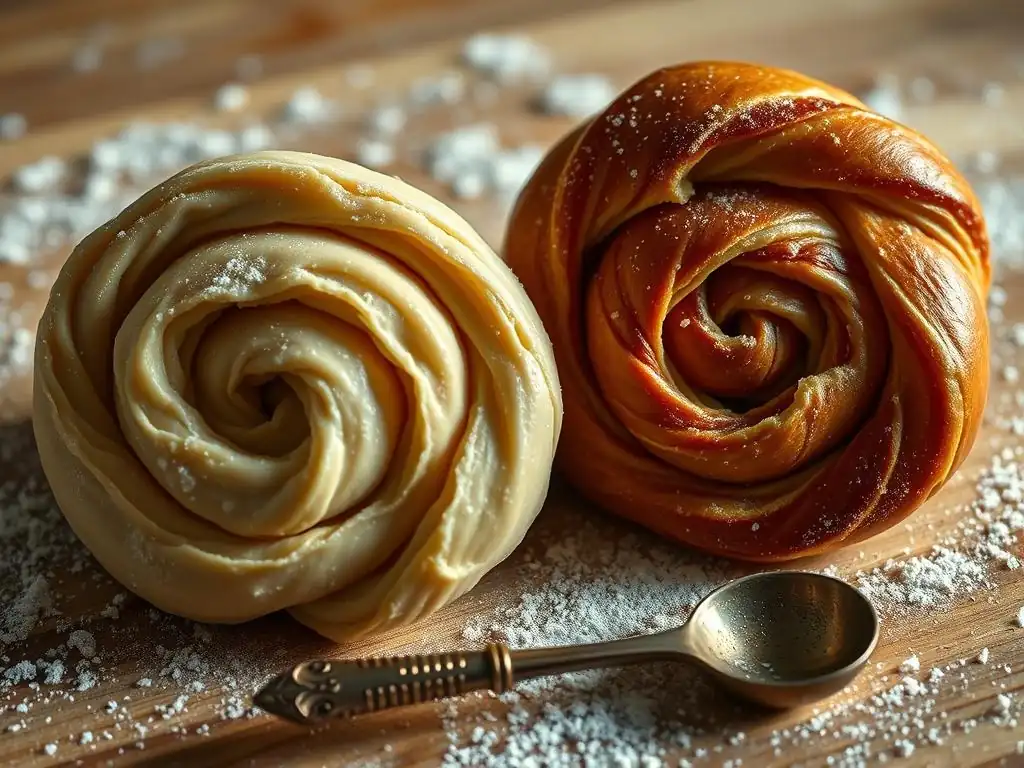
Using water as the primary or sole liquid in croissant dough can lead to a distinctly different result compared to using milk. Water-based doughs typically yield a crispier crust and a more open, airy crumb structure. This is because water allows for maximum gluten development without the interference of milk fats and proteins. A stronger gluten network provides a more robust structure capable of trapping steam more effectively during baking, leading to greater separation between the laminated layers and thus a more pronounced flakiness.
The absence of milk solids means the dough might be slightly less extensible initially, requiring careful handling during the first few folds. However, once the gluten is sufficiently developed and the dough is properly rested, it can be rolled very thinly, facilitating the creation of numerous, distinct layers. The resulting baked croissant will often have a shatteringly crisp exterior and a light, airy interior, appealing to those who prefer a less rich, more traditionally crisp pastry.
The simplicity of a water-based dough highlights the quality of the butter and the lamination technique itself. Achieving the desired crispness is directly linked to the hydration level provided by the water and the execution of the lamination process.
The Science Behind Water's Role in Gluten Development
Water is essential for gluten formation. When flour is mixed with water, the glutenin and gliadin proteins absorb the water and begin to bond, forming the viscoelastic gluten network. The more water available (up to a point where it becomes too slack), the more fully the gluten can hydrate and develop, given sufficient mixing or kneading. In a water-based croissant dough, there are fewer competing substances (like milk fats or sugars) interfering with this hydration and network formation process.
This unimpeded gluten development results in a stronger, more elastic dough. A strong elastic dough is crucial for lamination because it needs to withstand repeated rolling and stretching without tearing, while still having enough extensibility to spread thinly. The elasticity allows the dough layers to spring back slightly, creating tension against the butter layers, which helps in achieving separation during baking.
While milk adds richness, water optimizes the conditions for gluten development, which is foundational to the structure and flakiness of a croissant. Understanding how water interacts with flour is key to controlling the dough's texture and performance during lamination.
Water Temperature and Dough Consistency
The temperature of the water used in croissant dough significantly impacts the initial dough temperature and, consequently, the rate of yeast fermentation. For laminated doughs, controlling fermentation is critical. The dough needs to ferment slowly, usually in a cool environment, to allow flavors to develop without overproofing before lamination and proofing. Using cold water is common practice as it helps keep the dough temperature low, slowing yeast activity and preventing the dough from becoming too warm and sticky during mixing and the initial stages before chilling.
A colder dough is also firmer and easier to handle during the initial rolling and folding of the butter. If the water is too warm, the dough can become sticky quickly, making precise lamination difficult and potentially causing the butter to melt into the dough rather than staying in distinct layers.
While the precise temperature might vary depending on the ambient temperature and desired dough temperature after mixing (often targeting around 22-24°C or 72-75°F), using chilled or ice water is a common technique to ensure the dough remains manageable throughout the demanding lamination process. The temperature of the water, alongside the Croissant dough milk water ratio, is a variable that requires careful consideration for optimal dough consistency.
Finding the Ideal Milk-Water Ratio for Croissant Dough
Determining the Optimal Hydration Level
Finding the ideal Croissant dough milk water ratio is a key factor in achieving your desired pastry outcome. There isn't one single "correct" ratio or hydration level; it depends on several factors, including the type of flour used, ambient humidity, and the baker's preference for texture. Hydration is typically calculated as the total weight of liquid (milk + water) divided by the weight of the flour, expressed as a percentage.
For croissant dough, hydration levels commonly range from 50% to 60%. A 55% hydration, for example, means that for every 1000g of flour, you would use 550g of total liquid.
Within that total liquid amount, you then decide the Croissant dough milk water ratio. A 50/50 ratio means half the liquid weight comes from milk and half from water. A ratio heavily favoring milk (e.g., 80% milk, 20% water) will yield a richer, softer dough, while a ratio heavily favoring water (e.g., 20% milk, 80% water) will result in a crisper, more structured croissant.
Starting with a common ratio, like 50/50 milk and water at a moderate hydration level (say, 55%), is a good way to begin. Then, based on how the dough feels and handles during lamination, and the results after baking, you can adjust the ratio and total hydration in subsequent batches.
Adjusting Liquid Content for Flour Type and Humidity
The type of flour used significantly impacts how much liquid it can absorb. High-protein bread flour typically absorbs more liquid than lower-protein all-purpose flour. If a recipe calls for bread flour and you use all-purpose, you may need slightly less liquid to achieve the same dough consistency. Conversely, if using a very strong bread flour, you might need slightly more liquid. It's important to know your flour and observe the dough as you mix.
Ambient humidity also plays a role. In a humid environment, flour can absorb moisture from the air, meaning you might need slightly less liquid in your recipe. In a very dry environment, you might need a touch more. Experienced bakers often hold back a small amount of the liquid initially and add it gradually during mixing until the dough reaches the desired consistency – soft but not sticky, pliable but not slack. This ability to adjust the Croissant dough milk water ratio and total hydration on the fly comes with practice and understanding how the dough should feel.
The Importance of Accurate Measurements
Precise measurement of ingredients, especially liquids and flour, is absolutely crucial when working with laminated doughs like croissants. Unlike some rustic bread recipes where slight variations might be forgiving, the success of croissant lamination depends on the dough having a specific consistency and hydration level. Using a kitchen scale to weigh your flour, milk, and water is highly recommended over using volume measurements (cups), as volume measurements can be inaccurate due to variations in how ingredients are scooped or packed.
Even small deviations in the Croissant dough milk water ratio or total hydration can affect the dough's elasticity, extensibility, and handling during the critical rolling and folding steps. For instance, adding just 20g too much liquid to a recipe using 500g of flour can change the hydration significantly and make the dough noticeably stickier and harder to laminate. Accurate measurements ensure consistency batch after batch and are fundamental to troubleshooting if things don't go as planned. A digital kitchen scale is truly an indispensable tool for mastering croissant dough.
Comparing Croissant Dough: Milk vs. Water
Texture Comparison: Flakiness and Tenderness
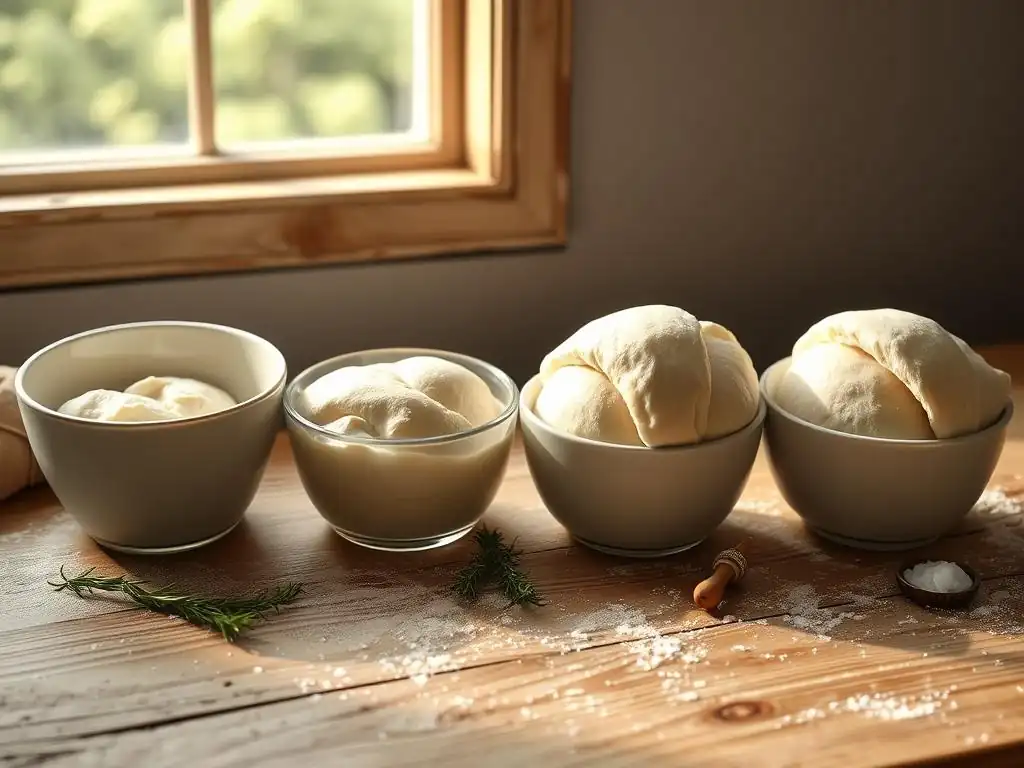
When comparing croissants made with different Croissant dough milk water ratios, the texture differences are often the most pronounced. Croissants made primarily with water tend to exhibit superior flakiness. The unhindered gluten development allows for distinct, crisp layers that separate beautifully when the pastry is broken open. The interior crumb is usually more open and airy, providing a delightful contrast to the crisp exterior.
On the other hand, croissants made primarily with milk are typically more tender. The fats and proteins in milk interfere slightly with gluten development, resulting in a softer crumb texture. While still flaky due to the lamination, the layers might be slightly less brittle than water-based versions. The interior crumb is often tighter and richer. Bakers choose their Croissant dough milk water ratio based on whether they prioritize maximum crispness and an open crumb (more water) or a richer, more tender interior (more milk).
Flavor Profile Comparison: Taste and Aroma
The liquid choice also impacts the flavor profile of the final croissant. Water is a neutral medium, allowing the flavors of the flour, butter, and fermentation to shine through cleanly. Croissants made with water often have a purer, perhaps more traditional, bread-like flavor profile, with the rich butter taking center stage.
Milk, however, contributes its own subtle sweetness and richness to the dough. The lactose that doesn't ferment adds a hint of sweetness, and the milk fats contribute to a more luxurious mouthfeel. The Maillard reaction, enhanced by milk sugars, also adds complex, slightly caramelized notes to the crust. Croissants made with a higher Croissant dough milk water ratio often taste richer and slightly sweeter, appealing to those who enjoy a more indulgent pastry. The aroma is also often richer and more buttery with milk-based doughs.
Visual Differences: Color and Rise
Visually, croissants made with different liquids can also show variations, primarily in crust color and potentially in overall rise. As discussed, the sugars in milk promote faster and deeper browning during baking through the Maillard reaction. A croissant made with a higher proportion of milk will typically have a more golden-brown or even reddish-brown crust compared to a water-based one, which might appear paler unless egg-washed.
Regarding rise, both doughs should rise significantly if properly laminated and proofed. However, a water-based dough with its stronger gluten network might sometimes achieve slightly more dramatic oven spring and layer separation, leading to a seemingly taller croissant. Conversely, a milk-based dough's tenderness might result in a slightly broader, softer rise. The final appearance is a result of the Croissant dough milk water ratio, the lamination technique, and the baking temperature and time.
Troubleshooting Croissant Dough Hydration
Dough Too Sticky: Causes and Solutions
A common issue when making croissant dough is ending up with a mixture that is too sticky to handle effectively for lamination. This is primarily caused by excessive hydration – too much liquid relative to the flour. Other contributing factors can include insufficient mixing (gluten hasn't fully developed to absorb the liquid), using a flour with lower protein or absorption capabilities than the recipe intended, or high ambient humidity.
If your dough is too sticky after initial mixing, you can try adding a small amount of flour, perhaps a tablespoon at a time, and mixing it in until the dough is manageable. Be cautious not to add too much, which can make the dough stiff. Alternatively, if the stickiness is only slight, a period of chilling can often help.
Cold dough is less sticky and easier to handle. Ensure you are using a scale for accurate measurements to prevent this issue in the first place. If you are using a specific Croissant dough milk water ratio from a recipe, double-check your measurements.
Dough Too Dry: Adding Moisture Effectively
Conversely, dough that is too dry will feel stiff, crumbly, and resistant to kneading or rolling. This is usually a result of insufficient hydration – not enough liquid for the amount of flour. It could also be due to using a flour that absorbs more liquid than expected or working in a very dry environment.
If your dough is too dry during mixing, you can gradually add more liquid (following your established Croissant dough milk water ratio or simply adding water if unsure) in very small increments, perhaps a teaspoon at a time. Mix thoroughly after each addition until the dough reaches the desired consistency – it should be soft and pliable, not stiff. Adding liquid after the gluten is partially developed can be tricky, so it's best to get the hydration right during the initial mix by weighing ingredients accurately and potentially holding back a small amount of liquid to add as needed.
Common Hydration Mistakes and How to Avoid Them
Several common mistakes can lead to hydration issues in croissant dough. One is inaccurate measurement, particularly relying on volume instead of weight for flour and liquids. Flour can be compacted differently in a cup, leading to significant variations in weight. Always use a kitchen scale. Another mistake is not considering the specific flour type being used; different flours have different absorption rates. Be prepared to slightly adjust the liquid based on your flour.
Ignoring ambient conditions is another pitfall. High humidity means flour has pre-absorbed some moisture, requiring less added liquid. Dry conditions might require a bit more. Finally, not checking the dough consistency during mixing and being afraid to make slight adjustments to the Croissant dough milk water ratio or total hydration can lead to issues down the line. Pay attention to how the dough feels – it should be soft and smooth after kneading, not overly sticky or stiff.
Expert Tips for Perfect Croissant Dough Hydration
Pro Tips for Using Milk in Croissant Dough
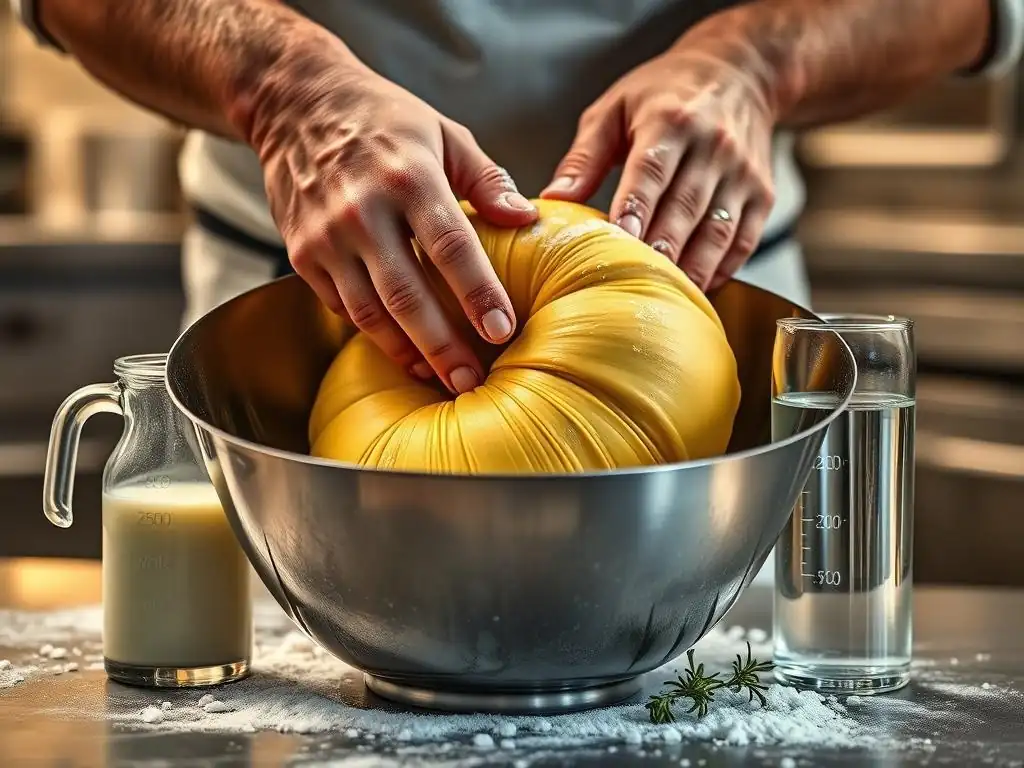
When using milk in your Croissant dough milk water ratio, consider using whole milk for the richest flavor and most tender crumb, although lower-fat milk can also be used. Scalding the milk and letting it cool before adding it to the dough is a technique sometimes used, although less common in modern recipes. This process can denature some proteins that might interfere with gluten, potentially leading to a slightly softer crumb, but its effect is often subtle in rich doughs.
Ensure the milk is cold when adding it to the dough, especially if you are aiming for a low dough temperature after mixing to control fermentation. The fats and sugars in milk can make the dough feel softer and more extensible, which is beneficial for rolling. However, be mindful that this dough can also be prone to sticking if not kept sufficiently chilled between folds. Always ensure your milk is fresh; off-flavors can negatively impact your final croissant.
Pro Tips for Using Water in Croissant Dough
If opting for a higher proportion of water in your Croissant dough milk water ratio, use cold or even ice water. This helps to keep the dough temperature low during mixing, which is crucial for controlling yeast activity and maintaining dough firmness for lamination. Cold water also gives the flour more time to fully hydrate, potentially leading to better gluten development.
A water-based dough can feel a bit firmer initially compared to a milk-based one. Don't be tempted to add excessive water to make it feel softer; this will compromise the structure needed for flakiness. Focus on proper mixing and resting periods to allow the gluten to develop and the dough to become pliable. Embrace the slightly firmer texture, as it's what contributes to the desired crispness and open crumb structure.
Achieving Consistent Results
Achieving consistent results with your Croissant dough milk water ratio and overall hydration requires a systematic approach.
- Always use a digital scale for all ingredients.
- Note the type of flour you are using and its protein content.
- Be aware of the ambient temperature and humidity in your kitchen.
- Keep a baking journal! Record your Croissant dough milk water ratio, total hydration, flour type, and how the dough felt and performed during lamination and baking. Note the final texture and flavor.
- Make small, incremental changes to your ratio or hydration in subsequent batches based on your notes. Don't change too many variables at once.
Consistency in technique, including mixing time, resting periods, chilling temperatures, and rolling pressure, is just as important as consistent hydration. By meticulously tracking your process and results, you will quickly learn how to adjust your Croissant dough milk water ratio to achieve the perfect croissant texture and flavor profile for your preference.
Recommended Croissant Dough Recipe: [Specific Ratio Example]
Step-by-Step Instructions for Success
Crafting the perfect croissant requires patience and precision, starting with the dough. A typical process involves several key stages:
- Mixing the Dough: Combine flour, sugar, salt, yeast, and your chosen liquid (based on your preferred Croissant dough milk water ratio and total hydration) in a stand mixer or by hand. Mix until a smooth, elastic dough forms. The exact mixing time depends on your method and desired gluten development.
- Bulk Fermentation & Chilling: Allow the dough to rest briefly at room temperature, then chill it thoroughly in the refrigerator for several hours, often overnight. This slows fermentation and firms the dough for lamination.
- Preparing the Butter Block: Shape cold butter into a flat, even rectangle or square. The butter must be pliable but still cold and firm.
- Enclosing the Butter: Roll the chilled dough into a rectangle large enough to enclose the butter block. Place the butter on the dough and fold the dough over to seal it completely.
- Lamination (Turns): This involves repeatedly rolling the dough and butter packet into a rectangle and folding it (typically into thirds or quarters). This process creates alternating layers of dough and butter. Chilling periods between turns (usually 30-60 minutes) are essential to keep the butter firm and the dough relaxed. A typical croissant dough requires 3 to 4 turns.
- Shaping: After the final turn and chilling, roll the dough to the desired thickness (often 3-4mm). Cut triangles and shape them into croissants.
- Proofing: Proof the shaped croissants in a warm, humid environment until they are light and puffy and the layers are visible (this can take 2-3 hours depending on temperature).
- Baking: Bake in a hot oven until deeply golden brown and crisp.
Each step is critical, and the success hinges significantly on the dough having the correct hydration and consistency established by the initial Croissant dough milk water ratio.
Precise Ingredients List
A precise ingredients list for croissant dough, aiming for a specific outcome based on a chosen Croissant dough milk water ratio, would typically include:
- Strong Bread Flour: [Weight in grams] - The foundation of the dough.
- Sugar: [Weight in grams] - Feeds the yeast and aids browning.
- Salt: [Weight in grams] - Enhances flavor and controls yeast activity.
- Instant Dry Yeast: [Weight in grams] - For leavening.
- Cold Milk: [Weight in grams] - Contributes richness and tenderness.
- Cold Water: [Weight in grams] - Contributes crispness and structure.
- Unsalted Butter: [Weight in grams] - For the lamination layers (this weight is usually 50-80% of the flour weight).
The sum of the milk and water weights determines the total liquid weight, and the Croissant dough milk water ratio is the proportion of these two liquids. For example, a common starting point might be 500g flour, 55g sugar, 10g salt, 7g yeast, 140g cold milk, and 140g cold water (total liquid 280g, resulting in 56% hydration with a 50/50 milk/water ratio), plus 300g cold butter. Adjusting the milk and water quantities while keeping the total liquid weight appropriate for the flour will alter the final texture and flavor profile.
Achieving Professional-Quality Results at Home
Achieving professional-quality croissants at home is entirely possible with attention to detail and practice. The key is to understand the role of each ingredient and technique, particularly the impact of your Croissant dough milk water ratio and hydration on the dough's behavior. Start with a reliable recipe and follow it precisely using a scale. Don't rush the chilling periods; they are essential for successful lamination. Work in a cool environment if possible, especially during rolling.
Observe your dough at every stage. Does it feel too sticky? Too stiff? Is the butter breaking through? These are signs that might indicate an issue with hydration or temperature control. By practicing and making small adjustments based on your observations and results, you will refine your technique and find the Croissant dough milk water ratio that consistently produces the beautiful, flaky, and delicious croissants you envision. Patience, precision, and a willingness to learn from each bake are your greatest assets.
Frequently Asked Questions
What is the main difference between using milk and water in croissant dough?
Using milk results in a softer, more tender croissant due to the fat and sugars. Water provides a crisper, flakier texture.
How does the liquid affect the proofing time of croissant dough?
Milk can slightly speed up proofing due to the lactose providing food for the yeast. Water might result in a slightly slower proofing time.
Can I substitute milk for water (or vice versa) in a croissant recipe without making other adjustments?
It's generally not recommended without considering other factors. Milk adds richness and sweetness, so you might want to reduce the sugar slightly. You may also need to adjust the hydration level.
What is the ideal milk or water temperature for activating the yeast in croissant dough?
The ideal temperature for both milk and water when activating yeast is usually between 105°F and 115°F (40°C and 46°C). This ensures optimal yeast activity without killing it.
Does the type of milk (e.g., whole milk, skim milk) significantly impact the final croissant?
Yes, the type of milk matters. Whole milk contributes more fat and flavor, resulting in a richer croissant. Skim milk will produce a lighter, less flavorful croissant.
Final Reflection: The Perfect Balance – Milk, Water, and the Soul of the Croissant
The seemingly simple question of milk versus water in croissant dough reveals a profound truth about baking: precision and intuition must dance together to achieve perfection. The ideal ratio, as explored throughout this article, isn't just about achieving the right texture; it's about unlocking the full potential of the flour, butter, and yeast, creating a pastry that transcends mere sustenance and becomes an experience.
The impact of this seemingly minor ingredient choice ripples far beyond the kitchen. It speaks to the artistry involved in baking, a craft where subtle variations can yield dramatically different results. The quest for the perfect croissant dough mirrors our own search for balance in life – finding the right blend of elements to achieve our goals. The difference between ordinary and extraordinary is that little extra.
This quote, though not specifically about baking, perfectly encapsulates the essence of our exploration into the milk-water ratio. The seemingly small adjustments we make can have a monumental impact on the final product.
Now, consider your own "dough." What are the ingredients in your life's recipe? What seemingly small adjustments can you make to achieve a more satisfying outcome? Perhaps it's finding the right balance between work and rest, creativity and discipline, or even the simple act of choosing the right ingredients for your next baking project. Take the lessons learned from the delicate dance of milk and water in croissant dough and apply them to your own life's recipe. The results might just surprise you.
Unlock Your Croissant's Potential: Master the Dough!
Thanks for taking the time to explore the world of perfect croissant dough with us! You've learned the secrets to achieving that flaky, buttery goodness – now it's time to put your new knowledge into action.
- Bake your dream croissants: Grab your ingredients and try the recipe today! Note the subtle differences between milk and water and see which creates your ideal texture.
- Share your baking journey: Post a picture of your croissants on social media and tag us – we’d love to see your creations!
- Discover more baking secrets: Explore our other articles on BakeWithEase.com for more tips and tricks on achieving baking perfection.
Ready to become a croissant master? What unexpected ingredient will you experiment with next?