
Fixing Uneven Baking in Your Viennoiseries: Hot Spots and More

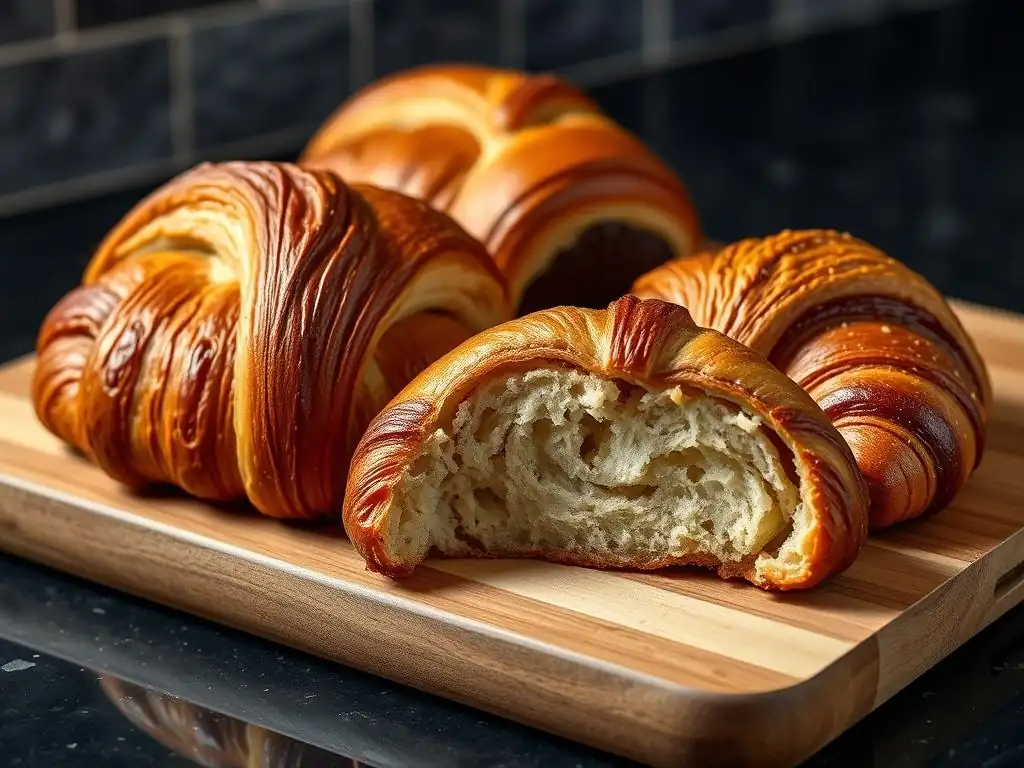
Welcome to BakeWithEase, your ultimate guide to baking brilliance! Are your croissants lopsided or your pain au chocolat a little too brown on one side? Dive into our article on uneven viennoiseries baking troubleshooting and discover the secrets to achieving perfectly golden, uniformly baked pastries. Unlock the techniques to banish hot spots and ensure every viennoiserie emerges from your oven with professional-level perfection. Curious how to finally get that even bake? Read on!
- Achieving Uniform Baking in Viennoiseries: Addressing Common Issues - BakeWithEase
- Understanding Uneven Viennoiseries Baking: An Introduction
- Troubleshooting Uneven Viennoiseries Baking: Oven-Related Issues
- Addressing Dough-Related Issues in Viennoiseries Baking
- Baking Sheet Strategies for Even Viennoiseries
- Mastering Baking Techniques for Uniform Results
- Specific Viennoiseries Baking Troubleshooting
- Advanced Tips for Perfect Viennoiseries Baking
- Final Checks: Ensuring Even Baking in Every Batch
-
Frequently Asked Questions
- How do I identify if I have hot spots in my oven that are causing uneven viennoiseries baking?
- What are some common causes of uneven baking in viennoiseries, besides hot spots?
- What adjustments can I make to my oven setup to minimize uneven baking in viennoiseries?
- How does dough temperature affect the evenness of baking in viennoiseries?
- What role does the type of baking sheet play in achieving evenly baked viennoiseries?
- Final Reflection: The Pursuit of Perfect Viennoiserie
- Unleash Your Inner Pâtissier: Perfect Viennoiserie Every Time!
Achieving Uniform Baking in Viennoiseries: Addressing Common Issues - BakeWithEase
Understanding Uneven Viennoiseries Baking: An Introduction
Uneven baking is a common frustration for many bakers attempting viennoiseries like croissants and pain au chocolat. You pull a tray from the oven, only to find some pastries beautifully golden and crisp, while others remain pale or are even slightly burnt on the edges. This inconsistency not only impacts the visual appeal but also the texture and flavor of your carefully crafted pastries. Mastering the art of viennoiseries requires attention to detail at every stage, and troubleshooting uneven baking is a critical step towards achieving that perfect, flaky result across your entire batch.
Addressing uneven viennoiseries baking troubleshooting involves looking at various factors, from the oven itself to the preparation of the dough and the techniques used during baking. It's a multi-faceted problem, but with a systematic approach, you can identify the culprits and implement strategies to ensure each pastry bakes uniformly. Think of it as fine-tuning your process – small adjustments can make a significant difference between a mixed batch and a tray of consistently gorgeous, golden-brown viennoiseries. This guide will walk you through common issues and practical solutions to help you achieve that coveted even bake every time.
Common Causes of Uneven Baking in Viennoiseries
Several factors contribute to pastries baking unevenly. One primary cause is inconsistent oven temperature, often due to hot spots or a thermostat that isn't calibrated correctly. A typical home oven might have temperature variations of 20-30°F (approximately 11-17°C) between different racks or even from the front to the back of a single shelf. This means pastries placed in hotter areas will cook faster than those in cooler zones, leading to significant differences in color and doneness within the same batch.
Beyond oven issues, the preparation of the viennoiserie dough itself plays a crucial role. Variations in dough thickness during rolling and shaping mean some pastries are denser or thinner in parts, affecting how heat penetrates and cooks the layers. Inconsistent lamination, where the butter layer isn't uniform, can also cause uneven baking; areas with thicker butter might take longer to cook, while areas with less butter could crisp up too quickly.
Finally, uneven proofing, where some pastries rise more than others, results in varying moisture levels and structures that respond differently to the oven's heat. For example, a pain au chocolat that is under-proofed might bake denser and paler than a perfectly proofed one on the same tray.
Identifying Uneven Baking in Croissants and Pain au Chocolat
Identifying uneven baking in viennoiseries like croissants and pain au chocolat is often visually apparent. The most obvious sign is color variation: some pastries will have a deep golden-brown crust, indicative of proper caramelization and Maillard reaction, while others on the same tray will appear pale or even slightly yellow. Conversely, you might see areas that are too dark or even burnt, particularly on edges or corners, contrasting sharply with lighter sections. This color difference directly correlates with how much heat different parts of the pastry received.
Another key indicator is textural inconsistency. A well-baked croissant should be crisp on the outside and airy with distinct layers inside. Unevenly baked pastries might have areas that are soft or doughy (underbaked) next to areas that are brittle or hard (overbaked).
You might notice some pastries have collapsed layers or dense spots, especially if proofing or lamination was inconsistent. For pain au chocolat, check the chocolate inside – in uneven baking, the chocolate in some pastries might be perfectly melted, while in others it could still be slightly firm due to insufficient heat penetration, or even burnt if exposed to excessive heat.
Identifying and Addressing Oven Hot Spots
Oven hot spots are areas within your oven that consistently run hotter than the surrounding space. These variations are incredibly common, especially in older or less expensive ovens, and they are a major contributor to uneven viennoiseries baking troubleshooting. A simple way to test for hot spots is the bread test: arrange slices of plain white bread on a baking sheet covering the entire rack.
Bake them at a moderate temperature (around 325°F or 160°C) for 10-15 minutes, or until they start to brown. The areas that brown fastest and darkest indicate your oven's hot spots. You might find the back corners are hotter, or perhaps the front near the door.
Once identified, addressing hot spots requires strategic adjustments rather than a direct fix for the oven itself (unless calibration is needed). If the back of your oven is significantly hotter, avoid placing pastries right against the back wall. If the front is cooler, you'll need to rotate your baking sheet halfway through the baking time to ensure the pastries originally at the front get adequate heat exposure.
For example, if your bread test showed the back right corner was 20°F hotter than the front left, you'd know to either avoid placing pastries there or be extra diligent about rotating the tray to compensate for this temperature differential. Understanding where your oven's hot spots are is the first crucial step in managing them effectively.
Calibrating Your Oven for Even Viennoiseries Baking
Even if your oven heats up, its internal thermostat might not be accurately reflecting the actual temperature inside. A miscalibrated oven can lead to baking at temperatures significantly higher or lower than intended, causing widespread issues, including uneven baking. A common scenario is an oven set to 375°F (190°C) actually fluctuating between 350°F (175°C) and 400°F (205°C) or consistently being off by 25-50°F (14-28°C). This discrepancy affects everything from the rate of rise during the initial heat surge to the speed of crust development.
To calibrate your oven, you first need a reliable oven thermometer placed in the center of the middle rack (more on thermometers below). Preheat your oven to a specific temperature, say 350°F (175°C), and let it stabilize for at least 20-30 minutes. Note the temperature displayed on your external thermometer. If it consistently reads differently from your oven's setting (e.g., it reads 325°F when the oven is set to 350°F), your oven is likely off.
Some modern ovens have a calibration setting in their menu that allows you to adjust the thermostat by a few degrees. Consult your oven's manual for specific instructions. If manual calibration isn't possible, you'll simply need to remember the offset and adjust your baking temperature accordingly – setting it to 400°F (205°C) if you want to bake at an actual 375°F (190°C) and your oven is consistently 25°F low.
Utilizing an Oven Thermometer for Accurate Temperature Control
A small, inexpensive oven thermometer is arguably the most valuable tool for anyone serious about baking, especially when trying to master delicate items like viennoiseries. Built-in oven thermostats can be notoriously inaccurate, sometimes off by as much as 50°F (28°C). Without knowing the true temperature inside your oven, you're essentially guessing, which makes consistent results and uneven viennoiseries baking troubleshooting significantly harder. An oven thermometer gives you real-time, accurate data about the environment your pastries are baking in. Place it on the middle rack and check it after the oven has preheated and stabilized for at least 20 minutes.
Understanding your oven's true temperature is crucial because baking viennoiseries relies on precise temperature control. The initial high heat helps create oven spring and separates the layers, while the subsequent temperature (often slightly lower) ensures the layers cook through without burning the exterior. If your oven is running 25°F (14°C) cooler than the dial indicates, your pastries might spread too much before the butter sets, resulting in a flatter shape and potentially dense spots.
Conversely, if it's too hot, the exterior might brown too quickly, leaving the interior underbaked. Using an oven thermometer allows you to adjust your oven's setting to hit the actual target temperature needed for optimal viennoiserie baking, providing a foundation for even cooking.
Ensuring Uniform Dough Thickness: Techniques and Tips
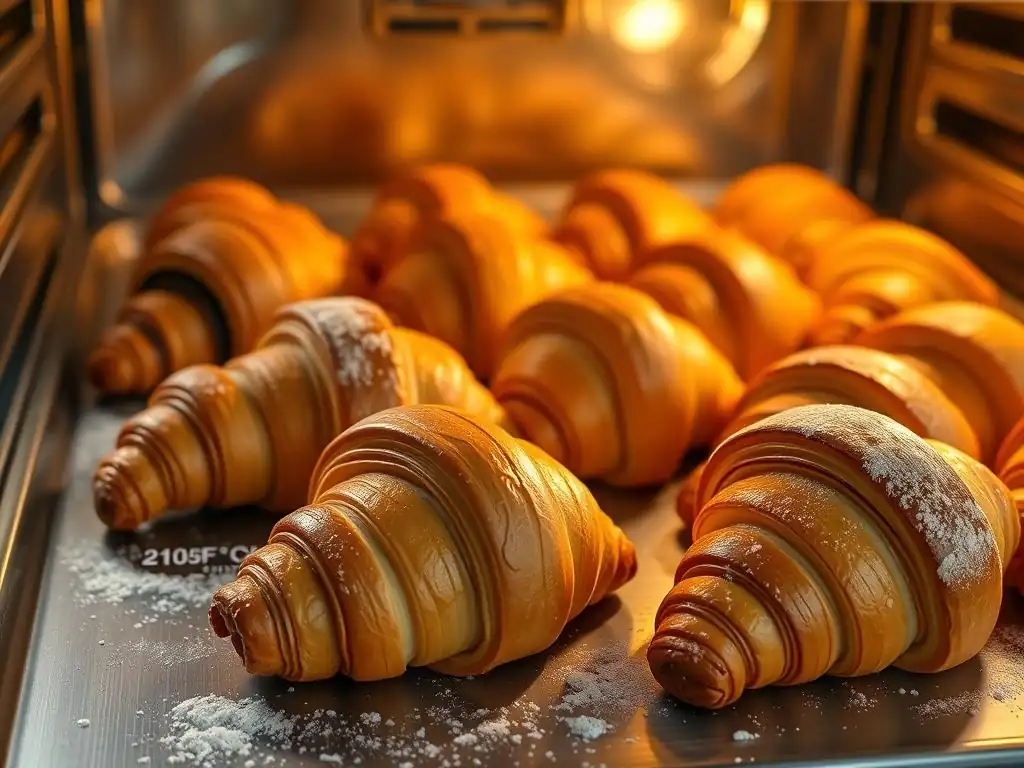
One of the most common dough-related causes of uneven baking in viennoiseries is inconsistent dough thickness during the final rolling and shaping stages. If one part of your dough sheet is 3mm thick while another is only 2mm, the thinner section will heat up and cook faster than the thicker one. This leads to visible differences in color and texture; the thinner parts might become overly crisp or even burnt, while the thicker parts remain pale and potentially underbaked. Achieving uniform thickness is paramount for consistent heat penetration.
To ensure uniform dough thickness, use a rolling pin with guides or adjustable rings if possible. These tools help maintain a consistent height across the entire sheet of dough. When rolling manually, frequently check the thickness using a ruler or even just your fingers across different sections of the dough.
Roll evenly from the center outwards, applying consistent pressure. For large sheets, like those needed for multiple croissants, divide the rolling process into sections, overlapping slightly to ensure smooth transitions. Aiming for a precise target thickness, like 2.5mm for many croissant recipes, and verifying it across the entire sheet before cutting is a critical step in preventing this type of unevenness.
Optimizing Proofing for Consistent Baking
Proofing is the final rise of the shaped viennoiseries before baking, and it's a stage where significant unevenness can occur. Proper proofing allows the yeast to produce gases, expanding the dough and creating the light, airy structure. If pastries are proofed unevenly – some rising significantly while others lag behind – they will bake differently. Under-proofed pastries will be denser and resist expansion in the oven, potentially resulting in a tougher texture and paler color. Over-proofed pastries might collapse slightly or lack the structure to rise properly in the oven, leading to flat, dense results in spots.
Consistent proofing requires a stable environment with controlled temperature and humidity. Aim for a proofing temperature typically between 75-80°F (24-27°C) with around 70-80% humidity. Using a proofing box, a slightly warm oven with the light on, or even your microwave (turned off, with a cup of hot water) can help maintain these conditions uniformly.
Ensure pastries are spaced evenly on the baking sheet to allow for proper air circulation around each one. Monitor the proofing progress visually – pastries are usually ready when they are visibly larger (often doubled in size) and jiggle slightly when the tray is gently shaken. If some pastries reach this stage faster than others, you may need to stagger their transfer to the oven or adjust the proofing environment.
Lamination Techniques for Even Baking
Lamination, the process of folding butter into dough to create alternating layers, is fundamental to viennoiseries. The quality and consistency of this lamination directly impact how evenly the pastries bake. If the butter layer is thicker in some parts of the dough block than others, or if the folding creates sections with disproportionate ratios of dough to butter, heat will transfer unevenly during baking. Sections with thick butter might melt slower, delaying the cooking of the surrounding dough, while areas with less butter might cook too quickly.
Achieving even lamination requires careful attention to detail. Ensure your butter block is pliable but still cool and firm, similar in consistency to the dough. Roll the dough and butter to uniform thickness before each fold. When folding, align the edges neatly and seal them well to prevent butter leakage.
Maintain a consistent temperature for the dough throughout the lamination process, keeping it cool but not so cold it cracks. For example, if performing three folds, aim for consistent rolling dimensions and fold placement each time. A well-laminated dough will show distinct, even layers when cut, which is a good indicator that it will bake uniformly, contributing positively to your uneven viennoiseries baking troubleshooting efforts.
Baking Sheet Strategies for Even Viennoiseries
Selecting the Right Baking Sheet Material
The material of your baking sheet significantly impacts how heat is absorbed and distributed, directly affecting the evenness of your viennoiseries' bottoms. Different materials conduct heat at different rates. Dark-colored or non-stick baking sheets tend to absorb more radiant heat and can cause the bottoms of pastries to brown much faster than the tops or edges. This can lead to pastries that are pale on top but potentially overcooked or even slightly burnt on the bottom, a classic sign of uneven baking.
Light-colored, heavy-gauge aluminum baking sheets are generally recommended for viennoiseries. Aluminum is an excellent heat conductor and distributes heat relatively evenly. The light color reflects radiant heat, preventing the bottoms from cooking too quickly. A heavy gauge prevents warping at high temperatures, which could otherwise cause pastries to slide or sit unevenly, further contributing to inconsistent baking. While dark sheets can be useful for some applications, for delicate, multi-layered pastries like croissants, opting for a standard, light aluminum sheet provides a more controlled and even heat transfer from the bottom.
Optimizing Baking Sheet Placement for Heat Distribution
Where you place the baking sheet within your oven can also dramatically influence how evenly your viennoiseries bake. Most ovens have heating elements at the top and bottom, and often a convection fan (if applicable) distributing air. Placing a baking sheet too close to either element or in a hot spot identified earlier will lead to uneven results. For instance, placing a sheet on the very bottom rack might result in excessively browned bottoms, while placing it too high could cause the tops to color too quickly before the interior is cooked.
For most ovens, the middle rack is the ideal position for baking viennoiseries. This placement allows the pastries to receive heat relatively evenly from both the top and bottom elements and benefits from convective air circulation (if using a fan) without being directly exposed to intense radiant heat from either source. If baking multiple sheets, avoid crowding the oven.
Baking two sheets side-by-side on the same rack can impede airflow and lead to uneven baking, especially for pastries in the center. Using two racks, positioned in the lower and upper thirds of the oven, and rotating them halfway through the bake is a common strategy to mitigate unevenness when baking larger batches.
Proper Use of Parchment Paper or Silicone Mats
Using parchment paper or a silicone baking mat (like Silpat) on your baking sheet is essential for preventing sticking and can also play a small role in modulating heat transfer. Parchment paper provides a non-stick surface and offers a slight insulating layer between the hot baking sheet and the delicate pastry bottom. This can help prevent the bottom from cooking too quickly, especially on dark or less-than-ideal baking sheets. Ensure the parchment paper lies flat and doesn't wrinkle excessively, as wrinkles can create uneven surfaces that affect the pastry's base.
Silicone baking mats offer excellent non-stick properties and provide a more significant insulating effect than parchment paper. This can be particularly helpful if you consistently find the bottoms of your viennoiseries browning too fast, even on a light-colored sheet. However, the increased insulation can sometimes lead to a slightly less crisp bottom crust compared to baking directly on parchment or a well-greased sheet.
Whichever you choose, ensure it covers the entire surface of the baking sheet evenly. The consistent, non-stick surface provided by both parchment and silicone mats helps prevent pastries from sticking and potentially tearing when removed, ensuring each pastry maintains its shape and structure for even baking.
Mastering Baking Techniques for Uniform Results
Rotating Baking Sheets for Even Color and Baking
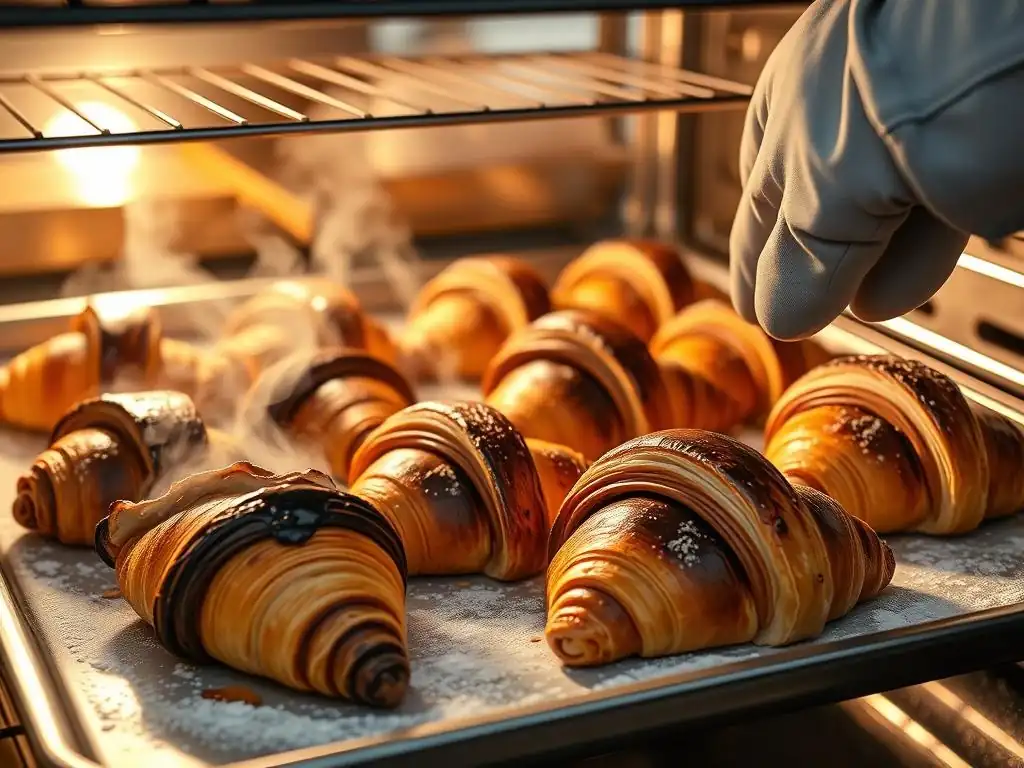
Even after addressing oven hot spots and calibrating your thermostat, subtle temperature variations within the oven can still lead to uneven baking. The simple technique of rotating your baking sheet halfway through the baking time is a highly effective way to counteract these minor inconsistencies. If the front of your oven is slightly cooler than the back, rotating the sheet 180 degrees ensures the pastries that were in the cooler zone are now exposed to the hotter zone, and vice-versa. This helps even out the rate of browning and cooking across the entire tray.
For example, if you're baking a batch of pain au chocolat for 20 minutes at 375°F (190°C), plan to open the oven at the 10-minute mark, quickly rotate the sheet, and close the door. Be swift to minimize heat loss. This technique is particularly useful when baking multiple pastries on a single large sheet or when using multiple racks.
If using two racks, you might not only rotate each sheet but also swap their positions (move the top sheet to the bottom rack and the bottom sheet to the top rack) to account for vertical temperature stratification in the oven. This proactive step significantly improves the chances of all your viennoiseries achieving that perfect, uniform golden-brown finish.
Adjusting Baking Time Based on Visual Cues
While recipes provide a general guideline for baking time (e.g., 18-22 minutes for croissants), the actual time needed can vary based on your specific oven, the size of your pastries, and how proofing went. Relying solely on a timer can lead to uneven results if some pastries are ready before others. Learning to read the visual cues of your viennoiseries is crucial for knowing when they are truly done and ensuring even baking. Look for a rich, uniform golden-brown color across the entire surface of the pastry, including the sides and bottom.
The desired color indicates that the Maillard reaction and caramelization have occurred, developing complex flavors and a crisp crust. Don't be afraid to gently lift a pastry with a spatula to check the color of the bottom. The layers should appear separated and flaky.
If you notice some pastries are browning faster than others on the same sheet, you might need to shield the faster-browning ones loosely with small pieces of aluminum foil for the last few minutes of baking. Conversely, if the entire batch is still pale after the recommended time, they likely need a few more minutes. Trust your eyes more than the clock for the final stages of baking.
Implementing Steam Injection for Uniform Crust Development
Steam injection is a technique commonly used in professional bakeries and some high-end home ovens, and it significantly contributes to even crust development and overall baking quality in viennoiseries. Introducing steam into the oven during the initial phase of baking keeps the surface of the dough moist and pliable. This prevents a hard crust from forming too quickly, allowing the pastry to expand fully during oven spring. The moist environment also promotes better heat transfer to the surface, contributing to a more even and golden-brown color across the entire pastry.
If your oven has a steam injection feature, follow the manufacturer's instructions, typically injecting steam for the first 5-10 minutes of baking. If your oven doesn't have this feature, you can create a makeshift steam environment. Place a metal tray or cast-iron pan on the bottom rack while the oven preheats. Just before putting your viennoiseries in, carefully pour about a cup of hot water into the hot pan (be cautious of the steam surge) and quickly close the oven door.
This creates a burst of steam. Alternatively, you can place a tray of ice cubes in the hot pan. The steam helps achieve that desirable thin, crisp, uniformly colored crust characteristic of perfectly baked viennoiseries, aiding in uneven viennoiseries baking troubleshooting.
Specific Viennoiseries Baking Troubleshooting
Troubleshooting Uneven Baking in Croissants
Croissants, with their delicate layers and distinctive shape, are particularly susceptible to uneven baking. Common issues include pale bottoms, overly dark tips, or one side being significantly more golden than the other. Often, this is due to a combination of oven hot spots and slight variations in how the croissants were shaped or proofed.
If the bottoms are consistently pale, consider if your baking sheet material is too insulating (e.g., a thick silicone mat on a very light sheet) or if the bottom heating element in your oven is weaker or obstructed. Using a light metal sheet with parchment paper usually provides a good balance.
If the tips or edges are burning while the body is still pale, this often points to a hot spot in that specific area of the oven or baking sheet. Rotating the tray is essential here. Also, ensure your croissants are spaced adequately on the sheet (at least 2-3 inches apart) to allow hot air to circulate freely around each one.
If proofing is inconsistent, some croissants will reach optimal expansion while others lag, leading to varied baking times and results on the same tray. Ensure your proofing environment is stable and uniform for the entire batch before they hit the oven.
Troubleshooting Uneven Baking in Pain au Chocolat
Pain au chocolat, similar to croissants but typically squarer or rectangular, faces similar uneven baking challenges. A frequent problem is the ends (where the chocolate is encased) baking faster and potentially burning, while the center remains less colored. This can happen if the ends are slightly thinner or if they receive more direct radiant heat from oven walls or elements. Another issue is the top browning significantly faster than the bottom, particularly if using a dark baking sheet or if the top heating element is dominant.
To address these issues in pain au chocolat, ensure the dough is rolled to a uniform thickness across the entire sheet before cutting and shaping. When placing them on the baking sheet, try to orient them consistently. If ends are burning, shielding them with a small piece of foil can help.
If the top-to-bottom browning is uneven, again, check your baking sheet material and consider using a light-colored one with parchment. Rotating the baking sheet halfway through is also crucial to compensate for oven hot spots and ensure the entire pastry, including the chocolate-filled ends, bakes through evenly to a beautiful golden brown.
Addressing Baking Issues in Kouign Amann
Kouign Amann, a rich pastry from Brittany with layers of dough, butter, and sugar, presents unique uneven baking challenges due to its high sugar content, which caramelizes intensely. The sugar can cause the bottom or edges to burn before the center is fully cooked and the sugar has properly caramelized throughout the layers. Unevenness often manifests as some parts being deeply caramelized and slightly burnt, while others are merely golden or even pale.
Baking Kouign Amann often requires specific conditions, typically in muffin tins or rings to help them hold their shape and contain the melting sugar. Ensure the tins are evenly spaced on the baking sheet and the sheet is placed on the middle rack. Lowering the baking temperature slightly compared to croissants (e.g., 350-360°F or 175-180°C) and increasing the baking time can help the heat penetrate more gently, allowing the sugar to caramelize without burning the exterior too quickly.
If the tops are browning too fast, loosely tenting the entire tray with foil can protect them while the rest of the pastry cooks. Monitoring closely and adjusting based on visual cues is vital; you want a deep amber caramelization, not black charring.
Advanced Tips for Perfect Viennoiseries Baking
Understanding the Maillard Reaction in Viennoiseries
The Maillard reaction is a complex chemical process that occurs when amino acids and reducing sugars in food are heated, typically above 300°F (150°C). It's responsible for the browning of the crust in viennoiseries and the development of hundreds of flavor compounds, contributing to the characteristic aroma and taste. Achieving a uniform golden-brown color across all your pastries means the Maillard reaction is occurring consistently on their surfaces. Uneven baking often indicates that certain parts of the pastry are reaching the optimal temperature for this reaction (and subsequent caramelization of sugars) faster or slower than others.
Factors influencing the Maillard reaction rate on the pastry surface include the actual oven temperature, the presence of steam (which delays crust formation initially), the surface moisture level of the pastry, and the amount of residual sugar on the surface (from egg wash or the dough itself). For instance, areas with more egg wash will brown faster.
Ensuring even proofing leads to consistent surface moisture, and accurate oven temperature control ensures the reaction happens uniformly across the batch. Understanding that the browning is not just color but a flavor-developing process reinforces the importance of even heat distribution for both aesthetics and taste in your viennoiseries.
Experimenting with Baking Temperatures and Fan Settings
Once you have a handle on your oven's true temperature, experimenting with slight adjustments to baking temperature and fan settings can help optimize for evenness. Many recipes suggest a relatively high temperature (like 400-425°F or 200-220°C) for the first few minutes to maximize oven spring, followed by a lower temperature (375-385°F or 190-195°C) to finish the bake.
If you find the outsides are browning too fast before the inside is cooked, slightly lowering the initial high temperature or shortening its duration can help. Conversely, if they are too pale, a slightly higher temperature or longer initial high-heat phase might be needed.
If your oven has a convection fan setting, using it can significantly improve evenness by circulating hot air, reducing hot spots and ensuring heat reaches all surfaces of the pastry. However, convection fans can also accelerate baking and drying, potentially leading to over-browning or a tougher crust if not managed. Often, reducing the temperature by 25°F (14°C) when using convection compared to conventional baking is recommended.
Experiment with baking a small batch using convection versus conventional heat to see which yields more even results in your specific oven. Pay attention to how the fan affects different areas of the oven.
Maintaining Consistent Oven Temperature Throughout Baking
Beyond initial calibration and setting the temperature, maintaining a consistent temperature throughout the entire baking period is crucial for even results. Ovens cycle on and off to maintain the set temperature, and these cycles can cause temperature swings. Opening the oven door unnecessarily, even briefly, causes a significant drop in temperature, which can interrupt the baking process and contribute to unevenness, especially if some pastries are more exposed to the temperature fluctuation than others.
Minimize opening the oven door. Rely on the oven light and visual inspection through the window as much as possible. If you must open the door to rotate the tray, do so quickly and efficiently.
Ensure your oven is fully preheated and has stabilized before putting the viennoiseries in – this often takes 20-30 minutes after the preheat indicator comes on. Using a baking stone or steel on a rack below your viennoiseries can help stabilize the oven temperature and provide more consistent bottom heat, further aiding in achieving that elusive even bake across your entire batch of beautiful viennoiseries.
Final Checks: Ensuring Even Baking in Every Batch
Visual Inspection: Identifying Problem Areas
Even with all the preventative measures, a final visual inspection as your viennoiseries finish baking is essential. Look critically at the entire batch on the tray. Are all the pastries a similar shade of golden brown? Are there specific areas on some pastries (like tips, edges, or centers) that are significantly lighter or darker than the rest? Are the layers visibly separated and flaky? This visual assessment is your primary tool for identifying if any unevenness has occurred despite your best efforts.
If you spot minor variations, you might be able to make last-minute adjustments, such as shielding overly dark areas with foil for the final minutes. More importantly, this inspection provides valuable feedback for your next baking session. Note which pastries were in which positions on the tray and rack, and how they baked. Did the ones in the back right corner consistently brown faster? This reinforces the need for more aggressive rotation or avoiding that specific spot. Detailed visual assessment helps refine your uneven viennoiseries baking troubleshooting strategy over time.
Internal Temperature: Checking for Doneness
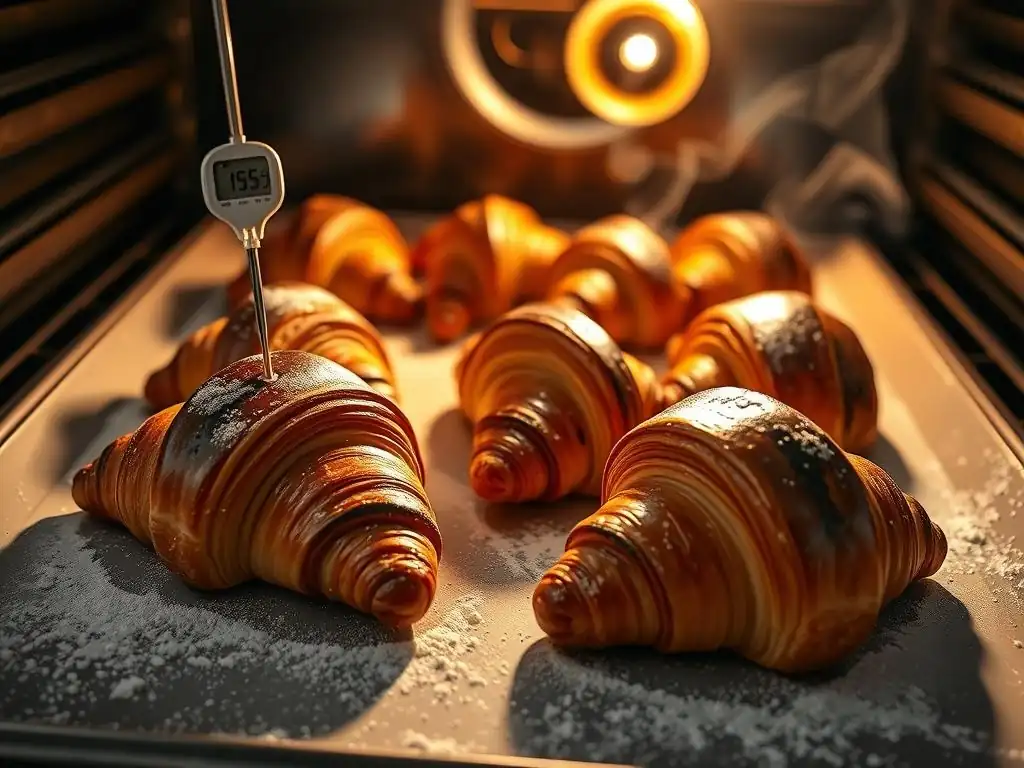
While visual cues are important for the crust, checking the internal temperature is the most accurate way to confirm that the interior of your viennoiseries is fully cooked, especially when troubleshooting uneven baking. An underbaked interior will be doughy and dense, even if the outside looks perfect. For most viennoiseries like croissants and pain au chocolat, a fully baked interior should reach an internal temperature of approximately 190-200°F (88-93°C).
Use an instant-read thermometer and carefully insert it into the center of one or two representative pastries from different spots on the baking sheet (perhaps one that looks perfectly done and one that looks slightly less so). Avoid inserting it through the layers from the side, as this won't give an accurate reading of the center's temperature.
If the internal temperature is below the target range, the pastries need more time in the oven, even if the exterior color is already good. If the outside is already perfect, you might need to lower the oven temperature slightly and bake for a few more minutes to allow the inside to catch up without burning the crust.
Cooling and Storage: Maintaining Crispness and Quality
Proper cooling and storage are the final steps to maintain the quality and crispness of your evenly baked viennoiseries. Hot viennoiseries continue to cook slightly as they cool, and steam trapped inside can make the layers soft and doughy. Transferring them from the hot baking sheet to a wire rack immediately after removing them from the oven allows air to circulate around all sides, facilitating even cooling and preventing the bottom from becoming soggy from residual heat and steam.
Cool viennoiseries completely on the wire rack before storing them. Storing warm pastries will trap moisture and ruin their crisp texture. Once fully cooled, they are best enjoyed fresh within a few hours. If storing for later, place them in a paper bag at room temperature for up to a day to help maintain some crispness. For longer storage, they can be frozen once completely cool. Proper cooling ensures that the even bake you worked so hard to achieve is preserved, resulting in delightful texture and flavor with every bite.
Frequently Asked Questions
How do I identify if I have hot spots in my oven that are causing uneven viennoiseries baking?
You can identify hot spots by observing if some viennoiseries bake faster and are darker than others in specific areas of the oven. Using an oven thermometer in different locations can also reveal temperature inconsistencies.
What are some common causes of uneven baking in viennoiseries, besides hot spots?
Besides hot spots, uneven baking can be caused by improper oven rack placement, inconsistent dough temperature, or poor air circulation due to overcrowding the baking sheet.
What adjustments can I make to my oven setup to minimize uneven baking in viennoiseries?
Rotating your baking sheet halfway through the baking process is crucial. You can also try using an oven stone or baking steel to distribute heat more evenly.
How does dough temperature affect the evenness of baking in viennoiseries?
Dough that is too warm will proof and bake too quickly, potentially leading to an uneven rise and bake. Maintaining a consistent and cool dough temperature is essential for even baking.
What role does the type of baking sheet play in achieving evenly baked viennoiseries?
Using light-colored, uncoated baking sheets is recommended as they reflect heat and prevent the bottom from burning too quickly. Avoid dark or non-stick sheets, which can cause excessive browning on the bottom.
Final Reflection: The Pursuit of Perfect Viennoiserie
The quest for flawlessly baked viennoiseries, free from dreaded hot spots and uneven browning, is more than just a baking challenge; it's a testament to the dedication and precision required in this delicate art. Understanding the nuances of oven temperature distribution, dough consistency, and baking techniques is crucial for achieving that coveted golden-brown crust and perfectly airy interior. This knowledge isn't just for professional bakers; it empowers home bakers to elevate their skills and consistently produce stunning results.
The journey towards mastering viennoiserie baking is a continuous learning process, mirroring the evolution of baking techniques throughout history. Each batch, each experiment, brings us closer to understanding the intricate interplay of ingredients and heat. The subtle shifts in color, the delicate aroma, and the satisfying texture—these are the rewards that keep us striving for perfection. As the renowned pastry chef, Michel Roux, once said: Baking is a science, but it's also an art. You need precision, but you also need passion.
This perfectly encapsulates the spirit of this pursuit.
Now, I invite you to reflect on your own baking experiences. Consider the challenges you've faced and the triumphs you've celebrated. What techniques have you found most effective in achieving even baking? More importantly, what have you learned about the process itself? Don't be afraid to experiment, to adjust, and to refine your methods. The path to mastering viennoiserie baking is a personal one, filled with both frustration and immense satisfaction. Embrace the journey, and may your next batch be your most perfect yet.
Unleash Your Inner Pâtissier: Perfect Viennoiserie Every Time!
Thanks for joining us on this baking adventure! We hope you gained valuable insights into conquering those pesky hot spots and achieving perfectly even viennoiserie. Now it's time to put your newfound knowledge to the test!
- Master the Art of Even Baking: Try applying the techniques discussed today to your next batch of croissants or pain au chocolat. Pay close attention to oven temperature and placement for optimal results. This is the key to success!
- Share Your Success (or Challenges!): Post a picture of your perfectly baked viennoiserie on social media and tag us! We love seeing your creations.
- Experiment with Different Baking Sheets: Consider trying a different type of baking sheet, such as a dark, non-stick sheet, to see if it improves even baking.
Ready to create your most exquisite viennoiserie yet? What unique challenge will you tackle in your next baking project?