
Salt's Role: Why Too Little or Too Much Harms Your Bread

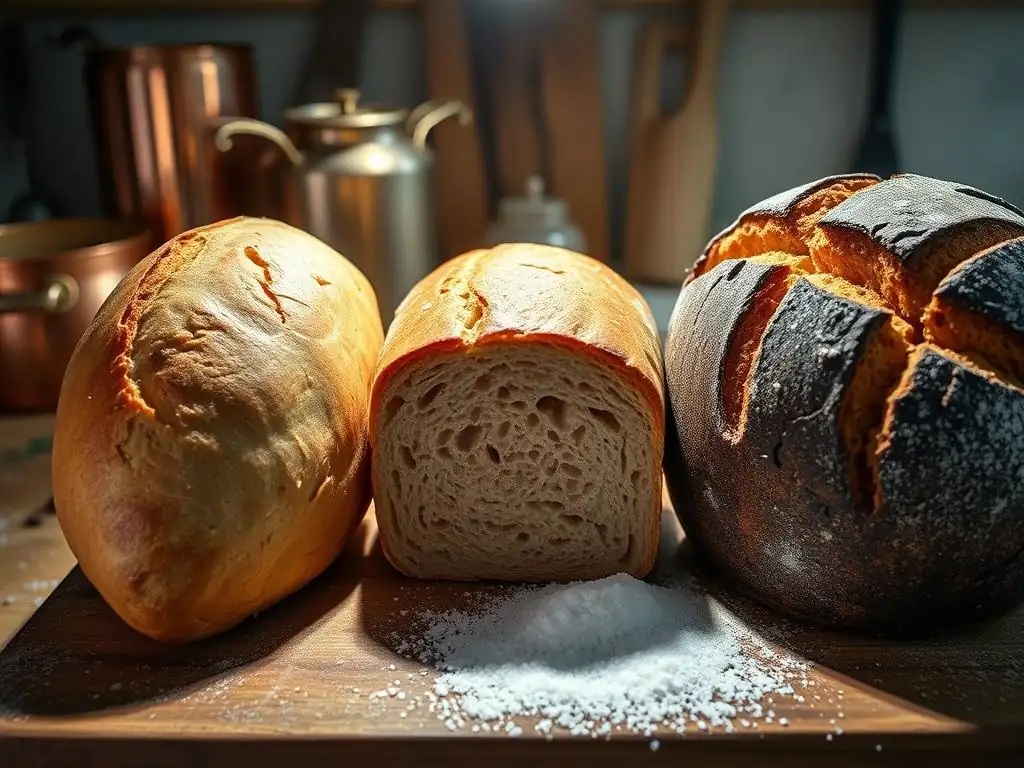
Welcome to BakeWithEase, your haven for baking brilliance! Ever wondered why your homemade bread tastes… off? It might just be the salt. This article dives deep into how even the smallest changes in salt impacts bread flavor, revealing the secret to achieving that perfect, bakery-worthy loaf. Discover the surprising science and easy adjustments that will elevate your baking from good to unforgettable. Ready to unlock the full potential of your bread?
- Salt's Role: Why Too Little or Too Much Harms Your Bread - BakeWithEase.com
- Understanding Salt's Impact on Bread: More Than Just Flavor
- The Consequences of Insufficient Salt in Bread Dough
- The Pitfalls of Excessive Salt in Bread Making
- Salt's Influence on Bread Flavor: A Deeper Dive
- Troubleshooting Bread Problems: Salt-Related Issues
- Achieving Baking Success: Mastering Salt in Bread
- Conclusion: The Crucial Role of Salt for Perfect Bread
-
Frequently Asked Questions
- What is the primary role of salt in bread baking?
- What happens if I don't add enough salt to my bread dough?
- Can I substitute different types of salt in bread baking?
- How does too much salt affect bread dough and the final product?
- Where can I find reliable recipes that consider the correct salt ratio for bread?
- Final Reflection: The Unsung Hero (and Villain) of Bread Baking
- Unleash Your Inner Baker: Perfect Bread, Every Time!
Salt's Role: Why Too Little or Too Much Harms Your Bread - BakeWithEase.com
Understanding Salt's Impact on Bread: More Than Just Flavor
Salt's Multifaceted Role in Bread Baking
Salt is often seen primarily as a flavor enhancer, but its importance in bread baking extends far beyond taste. It plays a critical role in controlling yeast activity, strengthening gluten structure, and even influencing the crust color and texture of the final loaf. Without the right amount of salt, the complex biochemical reactions that transform simple flour and water into delicious bread can go awry, demonstrating just how profoundly salt impacts bread flavor and structure.
Beyond its chemical interactions, salt contributes significantly to the overall sensory experience of bread. It doesn't just add a salty taste; it helps to balance and amplify the subtle sweetness from the fermented dough and the nutty, toasted notes developed during baking. Think of it as the unsung hero that brings all the other flavors into harmony, ensuring that the bread isn't just edible, but truly enjoyable.
The Delicate Balance: Achieving Perfect Salt Levels in Bread
Finding the perfect salt level in bread dough is a delicate balance. Too little salt, and your dough will be sticky, hard to handle, and the resulting bread will be bland and potentially shapeless. Too much salt, and you risk killing the yeast, inhibiting the rise, and producing a dense, overly salty loaf with a tough crust. The ideal salt percentage for most bread recipes falls within a narrow range, typically between 1.8% and 2.2% of the total flour weight.
This percentage-based approach is crucial for consistency, especially when scaling recipes. For example, if a recipe uses 500 grams of flour, you would aim for approximately 9 to 11 grams of salt. This precision ensures that regardless of the batch size, the salt impacts bread flavor and structure in the intended way, guaranteeing repeatable, successful results.
The Consequences of Insufficient Salt in Bread Dough
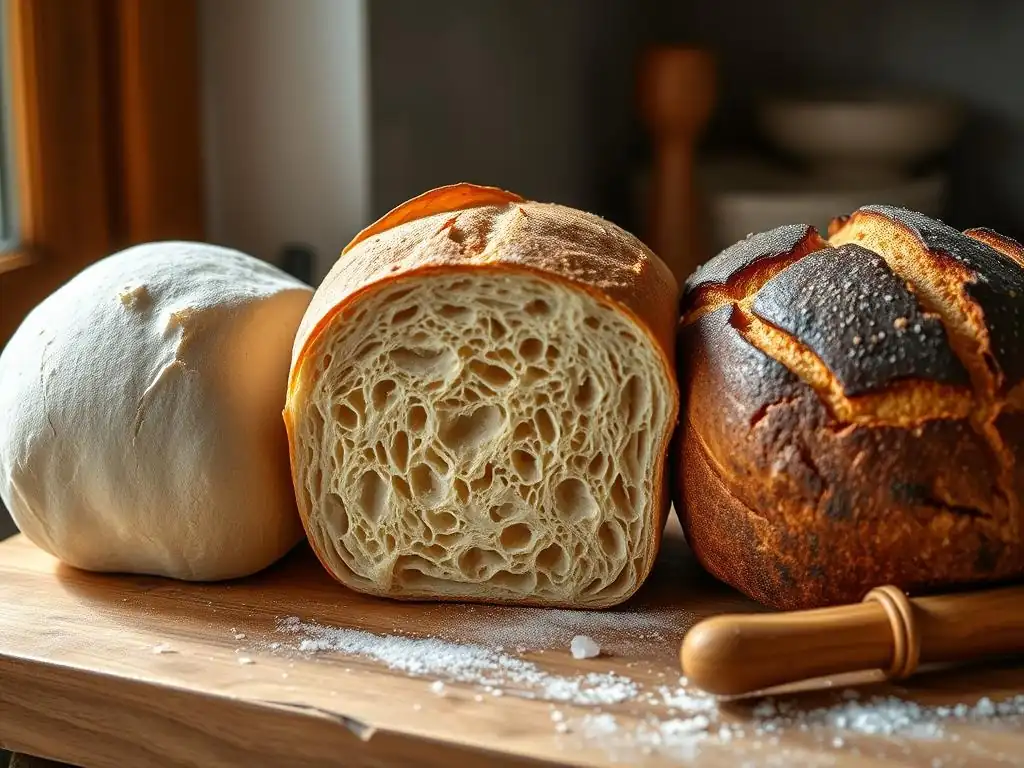
Under-Salted Dough: Weak Gluten Development
When dough lacks sufficient salt, its gluten structure suffers significantly. Salt helps to tighten the gluten network, providing strength and elasticity. Without enough salt, the gluten strands are weaker and less cohesive, making the dough slack, sticky, and difficult to knead or shape properly. This lack of structure means the dough struggles to hold its shape during proofing and baking.
A weak gluten network also impacts the bread's ability to trap the gases produced by yeast. Instead of forming a strong, airy crumb, the gas pockets tend to be uneven and may collapse, resulting in a dense or gummy texture. This structural deficiency is a primary reason why under-salted bread often feels heavy and lacks the desirable chewy texture.
The Impact of Low Salt on Bread's Rise and Texture
Insufficient salt allows yeast to ferment unchecked, leading to overly rapid proofing. While this might seem like a good thing, a too-fast rise can exhaust the yeast before the dough has developed sufficient structure. The dough might initially inflate significantly, but the weak gluten cannot sustain this expansion, often leading to collapse during the final proof or in the oven.
The resulting bread typically has a pale crust because salt also aids in the Maillard reaction, which contributes to browning. The texture is often uneven, with large, irregular holes or a uniform, dense crumb. The overall mouthfeel is often disappointing, lacking the pleasant chewiness and open structure characteristic of well-made bread.
Flavor Deficiencies: The Blandness of Salt-Free Bread
Perhaps the most immediately noticeable effect of insufficient salt is the lack of flavor. While the fermentation process develops some complex notes, salt is essential for enhancing and balancing these flavors. Without it, bread tastes flat, bland, and often overwhelmingly starchy or yeasty. The subtle sweetness from fermentation and the nutty flavors from the grain are muted.
Consider a simple white loaf baked without salt. It might have the basic texture of bread, but the taste is fundamentally incomplete. Salt amplifies the inherent flavors of the flour and the fermentation byproducts, making the bread taste richer and more satisfying. This demonstrates vividly how profoundly salt impacts bread flavor, transforming it from merely edible to truly delicious.
Sourdough Boule: Comparing Salted vs. Unsalted Dough Performance
Let's look at a practical example: baking two sourdough boules using the same starter, flour, and hydration, but with one dough containing the standard 2% salt (of flour weight) and the other having no salt. The unsalted dough will likely ferment much faster, perhaps doubling in size in half the time of the salted dough. However, it will be noticeably stickier and harder to handle, resisting proper shaping.
During baking, the unsalted boule will likely spread more, resulting in a flatter loaf. Its crust will be paler, and the characteristic dark blisters often found on sourdough will be less prominent. The crumb structure will be irregular, possibly gummy in places, and the flavor will lack the tangy depth and complexity that salt helps to unlock in sourdough fermentation. The salted boule, in contrast, will hold its shape, develop a beautiful crust, and have a well-structured, flavorful crumb, highlighting the critical role of salt.
The Pitfalls of Excessive Salt in Bread Making
Over-Salting: Inhibiting Yeast Activity
Just as too little salt can lead to uncontrolled fermentation, too much salt acts as a powerful inhibitor to yeast. Salt draws water out of yeast cells through osmosis, effectively dehydrating them and slowing down their metabolic processes. If the salt concentration is too high, it can kill the yeast entirely, preventing the dough from rising at all.
Even if the yeast survives, high salt levels significantly retard fermentation. The dough will rise very slowly, if at all, requiring much longer proofing times. This sluggish activity impacts the development of fermentation-derived flavors, resulting in a bread that might be overly salty but lacks the nuanced taste that proper fermentation provides.
The Effect of Too Much Salt on Gluten Structure
While salt strengthens gluten in moderation, excessive amounts can have a detrimental effect. High salt concentrations can make the gluten network too tight and rigid, reducing its elasticity and ability to expand. The dough becomes stiff and difficult to work with, lacking the supple stretchiness of properly salted dough.
This overly rigid structure hinders the dough's ability to trap gases effectively. The small amount of gas produced by inhibited yeast cannot expand the stiff gluten network sufficiently, leading to a dense, tight crumb. The bread feels heavy and lacks the desirable open, airy texture.
Dense and Dry Bread: The Result of Over-Salting
The combination of inhibited yeast activity and a rigid gluten structure inevitably leads to dense bread. The dough doesn't rise adequately, resulting in a loaf with significantly less volume than it should have. Furthermore, excessive salt can draw moisture out of the dough during baking, contributing to a dry texture.
The crust of over-salted bread can also be problematic. While salt aids browning, too much can lead to a crust that is excessively dark, thick, and hard, sometimes even brittle. The flavor, of course, is overwhelmingly salty, masking any other potential tastes from the flour or fermentation.
Brioche Loaf: Observing Dough Texture and Rise with Excessive Salt
Consider baking a rich brioche loaf, which typically contains eggs, milk, butter, and sugar in addition to flour and salt. If you accidentally double the amount of salt in your brioche recipe (e.g., using 4% salt instead of the standard 2%), the dough will feel noticeably stiffer and less extensible during kneading. It won't develop that characteristic smooth, elastic windowpane.
During proofing, the rise will be dramatically slower, possibly only increasing by 20-30% when it should have doubled. In the oven, the loaf will not achieve significant oven spring and will remain dense. The final brioche will be heavy, with a tight crumb, a potentially overly dark crust, and a dominant, unpleasant salty taste that overpowers the richness of the butter and eggs. This clearly illustrates how excessive salt impacts bread flavor and texture negatively.
Salt's Influence on Bread Flavor: A Deeper Dive
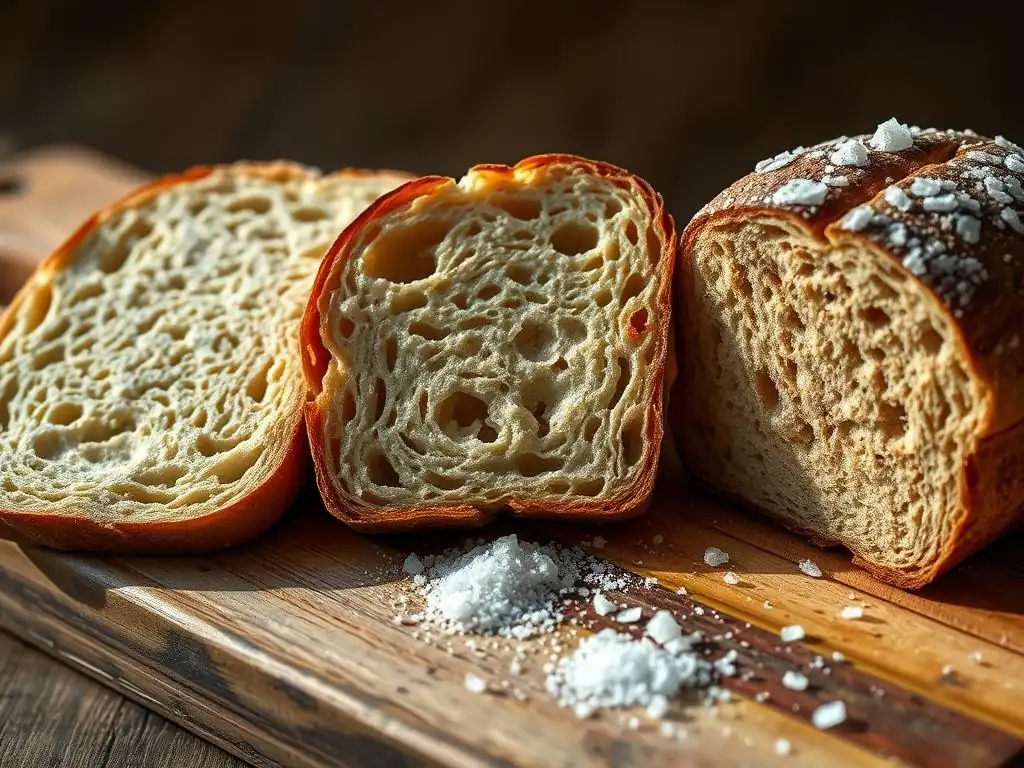
Enhancing Sweetness: Salt's Role in Balancing Flavors
It might seem counterintuitive, but salt plays a crucial role in enhancing the perception of sweetness in bread. During fermentation, enzymes in the flour break down starches into sugars. While some sugars are consumed by yeast, residual sugars contribute to the bread's inherent sweetness and aid in crust browning. Salt, in small amounts, doesn't just add salinity; it interacts with our taste receptors to make the subtle sweetness more pronounced.
Think of adding a pinch of salt to caramel or chocolate; it doesn't make them salty but makes their sweetness richer and more complex. In bread, salt performs a similar function, preventing the flavors from tasting flat. It provides a necessary counterpoint that elevates the natural sweetness derived from the flour and fermentation, proving how salt impacts bread flavor in surprising ways.
Bringing Out Complex Flavors: The Nuances Salt Adds
Beyond sweetness, salt is key to unlocking and highlighting the complex flavors developed through fermentation and baking. The long fermentation process, especially in sourdough or slow-fermented yeasted breads, produces a variety of organic acids, alcohols, and esters that contribute to the bread's aroma and taste profile. Salt acts as a catalyst, making these subtle, nuanced flavors more perceptible to our palate.
Without adequate salt, these complex notes—the tang of sourdough, the nutty notes of whole grains, the slight sweetness from malt—can be muted or lost entirely. Salt brings these elements to the forefront, creating a more layered and satisfying flavor experience. This is why achieving the right salt level is fundamental to truly delicious bread; it ensures the full spectrum of developed flavors is appreciated.
The Importance of Salt Type: Kosher Salt vs. Sea Salt in Bread
While all culinary salts are primarily sodium chloride, their crystal structure and the presence of trace minerals can subtly impact how salt impacts bread flavor and how it should be measured. Kosher salt, with its larger, irregular flakes, dissolves relatively quickly and is easy to pinch and measure by volume (though weight is always more accurate). It typically has a clean, pure salty taste.
Fine sea salt, often harvested from evaporated seawater, can contain trace minerals like magnesium and potassium, which can add subtle complexity to the flavor profile. Its fine crystals dissolve rapidly and pack more densely than kosher salt, meaning a tablespoon of fine sea salt weighs more than a tablespoon of kosher salt. When converting recipes, it's crucial to use weight measurements for salt to avoid over or under-salting, ensuring consistent results regardless of salt type.
Spotting salt-related issues in your bread requires careful observation. If your dough is excessively sticky and slack, rises too quickly, and the final loaf is pale, dense, and bland, insufficient salt is a strong possibility. Conversely, if your dough is stiff, rises very slowly or not at all, and the baked bread is dense, heavy, overly salty, and has a thick, dark crust, you likely used too much salt.
Other clues include an inability to achieve good oven spring (the final burst of rising in the oven) or a crumb structure that is either too tight and uniform (too much salt) or too open and irregular with large tunnels (too little salt). Paying attention to both the dough's behavior and the final bread's characteristics is key to diagnosing salt imbalances.
Correcting Salinity Imbalances in Bread Recipes
The best way to correct salinity imbalances is to measure salt by weight and adhere to the standard range of 1.8% to 2.2% of the flour weight for most recipes. If you suspect a recipe you're using consistently yields under or over-salted bread, calculate the salt percentage based on the provided weights.
If you find the percentage is outside the optimal range, adjust the salt weight for future batches. For example, if a recipe with 500g flour calls for only 5g salt (1%), increase it to 9-11g (1.8-2.2%). If it calls for 15g (3%), reduce it. It's generally difficult to correct salt levels once the dough is mixed, so accurate measurement upfront is paramount.
Measuring Salt by Weight vs. Volume: Achieving Accuracy
Measuring salt by weight is vastly more accurate and consistent than measuring by volume (teaspoons, tablespoons). The density of salt varies significantly depending on the type (fine vs. coarse, kosher vs. sea). For instance, a teaspoon of fine table salt weighs more than a teaspoon of flaky kosher salt. Relying on volume can easily lead to using 20-30% more or less salt than intended.
Using a digital kitchen scale to weigh your salt ensures you add the precise amount required by the recipe's percentage, regardless of the salt type. This is a fundamental step towards mastering how salt impacts bread flavor and achieving repeatable, successful baking results. Aim for grams or ounces for precision.
Achieving Baking Success: Mastering Salt in Bread

Best Practices for Salt Usage in Bread Making
To consistently achieve delicious bread, always measure your salt by weight using a reliable kitchen scale. Calculate the salt amount based on a percentage of your flour weight, aiming for 1.8% to 2.2% for most standard loaves. Add the salt early in the mixing process, typically with the flour, before adding water and yeast (or starter). This allows the salt to distribute evenly and begin its work on the gluten proteins.
Avoid adding salt directly on top of active yeast or starter before mixing, as high local concentrations can damage the yeast cells. Ensure the salt is fully dissolved and incorporated into the dough during kneading. Proper mixing ensures that the salt impacts bread flavor and structure uniformly throughout the loaf.
Adjusting Salt Levels for Different Bread Types
While the 1.8-2.2% range is a good starting point, some bread types benefit from slight adjustments. Rich, sweet doughs like brioche or challah, containing sugar, eggs, and butter, can sometimes handle a slightly higher salt percentage (closer to 2.2%) because the sweetness and richness can balance a bit more saltiness.
Lean doughs with minimal ingredients, like classic French baguettes or rustic country loaves, often shine with salt levels in the lower end of the range (1.8-2.0%), allowing the pure flavors of the flour and fermentation to come through without being overpowered. Experimenting within the optimal range based on the bread type can help you fine-tune how salt impacts bread flavor profiles.
Basic White Bread Recipe: Salt Percentage for Optimal Results
For a standard basic white bread recipe using 500 grams of all-purpose or bread flour, the optimal salt percentage is typically 1.8% to 2.0%. This translates to 9 to 10 grams of salt. Using this amount ensures proper gluten development, controlled yeast activity, a balanced rise, and a well-rounded flavor profile.
Let's say your recipe calls for:
- 500g All-Purpose Flour
- 350g Water
- 7g Instant Yeast
- 10g Salt
Here, the salt is 10g / 500g = 0.02, or 2% of the flour weight. This is perfectly within the optimal range and will result in a well-structured, flavorful loaf where the salt impacts bread flavor just right, enhancing it without being dominant.
Conclusion: The Crucial Role of Salt for Perfect Bread
Salt: The Unsung Hero of Bread Baking
Far from being a mere seasoning, salt is a fundamental ingredient in bread making with a profound influence on structure, texture, and flavor. It controls yeast, strengthens gluten, and balances taste, acting as an unsung hero that elevates simple ingredients into something extraordinary. Mastering the use of salt is a key step for any baker looking to improve their loaves.
Understanding how salt impacts bread flavor and structure, and consistently measuring it accurately by weight, are essential techniques. Whether you are troubleshooting a flat loaf or aiming for that perfect crust and crumb, paying attention to your salt usage will yield significant improvements in your baking results.
BakeWithEase: Your Guide to Salt Perfection in Bread
At BakeWithEase.com, we aim to demystify baking techniques, including the critical role of salt. We provide clear guidance on measuring ingredients accurately and understanding how each component, especially salt, contributes to the final bread. By focusing on these foundational elements, we help you avoid common pitfalls and bake with confidence.
Explore our recipes and troubleshooting guides to learn more about achieving the perfect balance of salt in your dough. With the right knowledge and practice, you'll consistently bake delicious, well-structured bread where the salt impacts bread flavor in the best possible way, contributing to a truly satisfying loaf every time.
Frequently Asked Questions
What is the primary role of salt in bread baking?
Salt isn't just for flavor; it controls yeast activity, strengthening the gluten structure and affecting the final texture of the bread.
What happens if I don't add enough salt to my bread dough?
Insufficient salt can lead to overly active yeast, resulting in a crumbly texture and a potentially flat and flavorless loaf.
Can I substitute different types of salt in bread baking?
While possible, different salts have varying sodium chloride concentrations and crystal sizes. Adjust amounts accordingly, favoring fine sea salt or table salt for consistent results.
How does too much salt affect bread dough and the final product?
Excessive salt inhibits yeast activity, resulting in a dense, tight crumb. The bread will also have an unpleasantly salty taste and a tough texture.
Where can I find reliable recipes that consider the correct salt ratio for bread?
BakeWithEase.com offers a wealth of tested recipes with precise measurements, including salt, ensuring optimal flavor and texture in your bread baking.
Final Reflection: The Unsung Hero (and Villain) of Bread Baking
The perfect loaf isn't just about flour and water; it's a delicate dance with salt, a crucial ingredient often overlooked. Getting the salt balance right is the difference between a bland, lifeless loaf and a masterpiece bursting with flavor and texture. This seemingly simple element holds the key to unlocking the full potential of your baking.
Salt's influence extends far beyond mere taste; it impacts the very structure and rise of the bread. It controls yeast activity, strengthens gluten development, and even enhances the browning process. Understanding its role is crucial for any baker, from novice to expert. As the renowned baker, Jim Lahey, once said, Salt is the unsung hero of bread baking. It's not just about flavor; it's about the entire process.
This quote perfectly encapsulates the multifaceted nature of salt's impact, highlighting its importance in every stage of bread making.
Now, consider your own baking journey. Have you ever experienced a loaf that fell flat or tasted disappointingly bland? Perhaps it was a matter of salt. Take this reflection as a call to action. Experiment with different salt quantities in your next batch, paying close attention to the subtle changes in taste and texture. By understanding the delicate balance of salt in your bread, you’ll not only improve your baking skills but also deepen your appreciation for this often-underestimated ingredient. Embrace the challenge, and discover the transformative power of salt in your own kitchen.
Unleash Your Inner Baker: Perfect Bread, Every Time!
Thanks for diving deep into the world of bread baking with us! You've now unlocked a key ingredient to consistent success: understanding salt's crucial role. Let's put this knowledge to work!
- Master the perfect salt ratio: Experiment with different salt levels in your next loaf, carefully noting the texture and taste differences. This is your chance to become a true salt-baking maestro!
- Share your baking triumphs (and challenges!): Post a photo of your latest creation on social media and tag us – let's celebrate our shared passion for perfect bread!
- Explore our other articles on advanced baking techniques. You'll find even more tips and tricks to elevate your baking game!
Ready to transform your bread baking? What unique salt blend will you try next?