
Crafting the Perfect French Baguette at Home (Simplified)

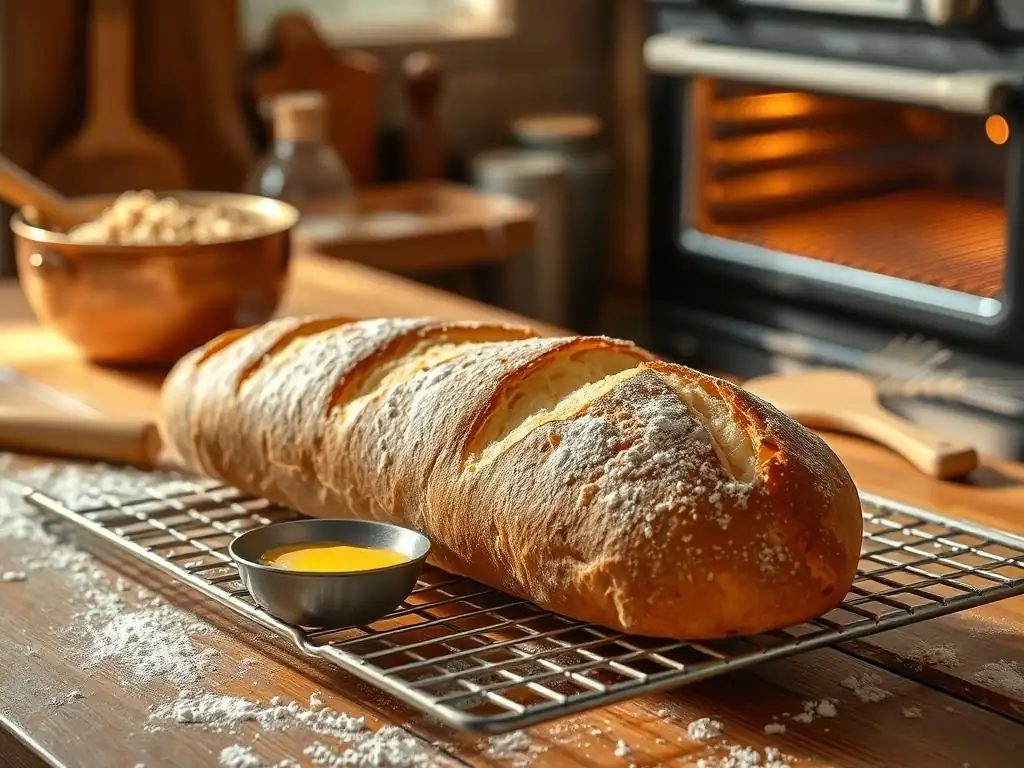
Welcome to BakeWithEase!
Are you ready to unlock the secrets to baking a truly authentic, crusty baguette in your own kitchen? Forget complicated techniques and elusive ingredients; we believe everyone deserves to experience the joy of fresh, homemade bread. This week, we're diving deep into an easy homemade French baguette recipe that will have you saying "Bonjour!" to bakery-quality bread in no time. Discover how to achieve that perfect golden crust and airy interior with our simplified, step-by-step guide, and prepare to impress your friends and family with this classic taste of France. What's the secret ingredient? Read on to find out!
- Introduction to Easy Homemade French Baguettes
- Easy Homemade French Baguette Recipe: Step-by-Step Guide
- Step 1: Preparing the Dough - Easy Baguette Dough Recipe
- Step 2: Shaping the Baguettes – Simplified Shaping Methods
- Step 3: Baking Your Homemade French Baguettes
- Step 4: Cooling and Enjoying Your Freshly Baked Baguette
- Troubleshooting Common Baguette Baking Problems
- Tips and Tricks for the Best Homemade Baguette
- Storing Your Homemade French Baguette for Freshness
- Conclusion: Mastering the Easy Homemade French Baguette Recipe
-
Frequently Asked Questions
- How long does it really take to make an easy homemade French baguette recipe from scratch?
- What are the key ingredients that make an easy homemade French baguette recipe truly authentic?
- My baguettes always turn out flat. What's the most common mistake I'm likely making with this easy homemade French baguette recipe?
- Can I substitute ingredients in this easy homemade French baguette recipe to make it gluten-free or vegan?
- How do I store my homemade French baguettes to keep them fresh for longer after using this easy homemade French baguette recipe?
- Final Reflection: The Humble Baguette, A Testament to Simplicity
- Unlock Your Inner Boulanger: Bake the Perfect Baguette Tonight!
Introduction to Easy Homemade French Baguettes
Making an easy homemade French baguette recipe might sound intimidating, conjuring images of expert bakers in bustling Parisian bakeries. However, the truth is that crafting these iconic loaves at home is absolutely within reach for bakers of all levels. This guide aims to demystify the process, providing a straightforward approach to achieving that signature crispy crust and airy interior right in your own kitchen. Forget the complexity often associated with French baking; we're focusing on simplicity and delicious results.
This article will walk you through each stage, from mixing a simple dough to baking your beautiful baguettes. We'll share tips and techniques designed to make the process manageable and enjoyable, ensuring that your first attempt at a homemade French baguette is a success. Get ready to fill your home with the irresistible aroma of freshly baked bread and enjoy the satisfaction of pulling warm, crusty baguettes from your oven.
Why Bake Your Own Baguette? The Joy of Homemade Bread
There's an unparalleled joy that comes from baking bread from scratch, and this is especially true for an easy homemade French baguette recipe. The aroma filling your kitchen as it bakes is simply divine, a sensory experience that store-bought bread can't replicate. Holding a warm baguette fresh from the oven, hearing the crackle of its crust, and tearing into its soft, airy interior is incredibly rewarding.
Beyond the sensory pleasure, baking your own baguettes gives you control over the ingredients, ensuring you're using quality flour and simple components without additives. It's also often more cost-effective in the long run. Plus, mastering an easy baguette recipe builds confidence in your baking skills and opens the door to exploring other bread-making adventures. It's a rewarding hobby that yields delicious, tangible results.
Understanding the Basics of a Classic French Baguette
A classic French baguette, the kind you might find in a traditional boulangerie, is characterized by a few key features: a thin, exceptionally crispy crust; a light, open, and irregular crumb (the interior structure); and a relatively mild flavor with a subtle tang from fermentation. It's typically made with just four main ingredients: flour, water, yeast, and salt.
The magic of a baguette lies not just in the ingredients, but in the process. High hydration levels (a high ratio of water to flour, often 70% or more), proper fermentation, gentle handling of the dough, and baking with steam are all crucial elements. While a truly "classic" baguette can be complex, an easy homemade French baguette recipe simplifies these techniques to make them accessible, focusing on achieving the essential characteristics without requiring years of practice.
Easy Homemade French Baguette Recipe: Step-by-Step Guide
Ready to bake? This easy homemade French baguette recipe is designed for simplicity without sacrificing quality. We'll guide you through each step, breaking down the process into manageable tasks. Follow along, and you'll be enjoying warm, crusty baguettes in no time.
The recipe yields approximately 2-3 medium-sized baguettes, perfect for a meal or to share (or not!). The total time from start to finish, including rises and baking, is typically around 3-4 hours, though much of this is passive waiting time while the dough ferments.
Ingredients for the Perfect Baguette (Simplified Recipe)
Keeping it simple is key for an easy homemade French baguette recipe. You only need a few basic items, but their quality matters.
- Flour: About 300-350 grams of bread flour (or strong white flour). Bread flour has a higher protein content (typically 12-14%) which helps develop gluten structure, crucial for that open crumb.
- Water: Approximately 220-250 grams of lukewarm water (around 30°C or 85°F). The exact amount can vary slightly based on your flour and environment, aiming for a dough that is hydrated but manageable. This gives us a hydration level of roughly 70-75%.
- Yeast: Around 1 teaspoon (3-4 grams) of instant dry yeast. Instant yeast is convenient as it can be mixed directly into the dry ingredients.
- Salt: About 6-7 grams of fine sea salt or table salt. Salt is essential for flavor, controlling fermentation, and strengthening the gluten network.
- Optional: A pinch of sugar (less than a teaspoon) can be added to help kickstart yeast activity, though it's not strictly traditional or necessary with instant yeast.
These simple ingredients, when combined correctly, form the foundation of a delicious easy baguette recipe. Using accurate measurements, especially for flour and water (preferably by weight), is highly recommended for consistent results.
Equipment Needed for Baking Baguettes at Home
You don't need a professional bakery setup to bake an easy homemade French baguette recipe. Most of the necessary equipment you likely already have or can easily acquire.
Here's a checklist of helpful tools:
- [ ] Large mixing bowl
- [ ] Kitchen scale (highly recommended for accuracy)
- [ ] Measuring cups and spoons (if not using a scale)
- [ ] Dough scraper or spatula
- [ ] Clean kitchen towels or plastic wrap
- [ ] Baking surface: A baking stone, baking steel, or heavy-duty baking sheet. A baking stone or steel is ideal for achieving a crispy bottom crust.
- [ ] Parchment paper (optional, but makes transfer easier)
- [ ] Lame or sharp razor blade (for scoring)
- [ ] Spray bottle (for creating steam)
- [ ] Oven mitts
While a dedicated baguette pan can help maintain shape, it's not essential for an easy baguette recipe. You can bake directly on a baking stone or sheet. Having a digital scale is perhaps the most impactful piece of equipment for consistent results in baking, especially with higher hydration doughs like baguettes.
Step 1: Preparing the Dough - Easy Baguette Dough Recipe
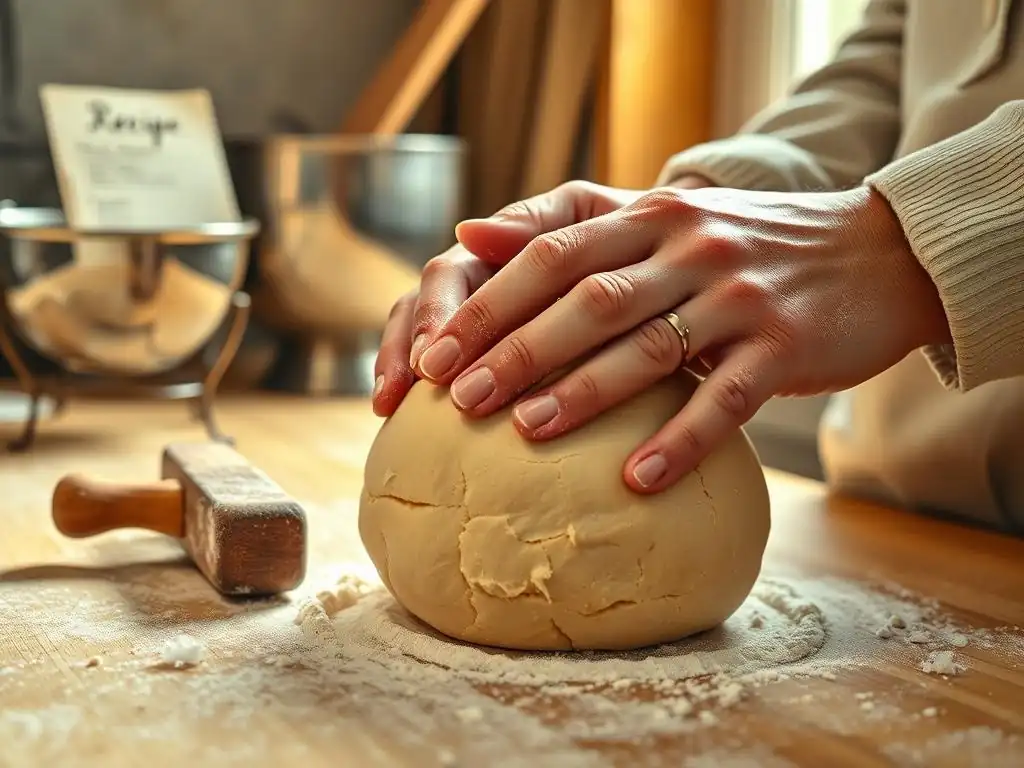
The first step in our easy homemade French baguette recipe is creating the dough. This simple process involves combining the ingredients, mixing, kneading, and allowing the dough to ferment and develop flavor.
We are aiming for a dough that is relatively wet and shaggy initially, which will become smoother and more elastic as gluten develops through mixing and resting. Don't be alarmed if the dough seems sticky at first; this higher hydration contributes to the open crumb structure later.
Mixing the Ingredients: A Simple Dough Mixing Technique
To start your easy baguette dough recipe, combine the dry ingredients in your large mixing bowl. Weigh out your flour (e.g., 350g) and add your instant yeast (e.g., 4g) and salt (e.g., 7g). Give them a quick whisk to distribute evenly.
Next, gradually add the lukewarm water (e.g., 245g, aiming for 70% hydration with 350g flour) to the dry ingredients. Use a wooden spoon, dough scraper, or your hands to mix everything together until no dry flour remains. The mixture will be shaggy and sticky. This autolyse-like resting period allows the flour to fully hydrate and gluten development to begin naturally, making kneading easier. Cover the bowl and let it rest for 15-20 minutes.
The Importance of Kneading: Achieving the Right Dough Texture
Kneading is crucial for developing gluten, the protein network that gives bread its structure and chewiness. For this easy homemade French baguette recipe, you don't need intensive kneading. After the initial rest, the dough should be slightly less shaggy.
Turn the dough out onto a lightly floured surface. Knead for about 5-10 minutes. You can use the stretch-and-fold method: grab a portion of the dough, stretch it upwards, and fold it back onto itself. Rotate the dough and repeat. Alternatively, use a stand mixer with a dough hook on low speed for 5-7 minutes until the dough is smooth and elastic. A properly kneaded dough should pass the windowpane test: you should be able to gently stretch a small piece very thin without tearing, allowing light to pass through like a windowpane.
First Rise: Bulk Fermentation for Flavor Development
Bulk fermentation is perhaps the most important stage for flavor development in your easy baguette recipe. During this period, the yeast produces gases that make the dough rise, and enzymes break down starches into sugars, enhancing taste.
Lightly oil your clean mixing bowl. Place the kneaded dough inside, turning it to coat with oil. Cover the bowl tightly with plastic wrap or a damp kitchen towel to prevent drying. Let the dough rise at room temperature (around 21-24°C or 70-75°F) for 1 to 1.5 hours, or until it has roughly doubled in size. You can also do a slower, colder fermentation in the refrigerator for 8-12 hours for a more complex flavor, though this adds time to the overall process.
Step 2: Shaping the Baguettes – Simplified Shaping Methods
Shaping is where your dough starts to look like the classic loaves from an easy homemade French baguette recipe. It requires a gentle touch to avoid deflating the airy structure built during the first rise.
We'll divide the dough, give it a short rest, and then perform the final shaping. Don't worry about achieving perfect uniformity on your first try; focus on developing the technique.
Dividing the Dough: Creating Even Portions
After the bulk fermentation, the dough should be puffy and airy. Gently turn the dough out onto a lightly floured or unfloured surface (depending on how sticky your dough is – a little stickiness is okay). Avoid punching down the dough aggressively; you want to preserve the trapped gases.
Use a dough scraper or knife to divide the dough into the desired number of portions for your baguettes. If using 350g of flour and aiming for 3 baguettes, each portion would be approximately 115-120 grams. Try to make the portions as equal in weight as possible for even baking. This step is quick to minimize deflation.
Pre-Shaping: Forming Rough Baguette Shapes
Pre-shaping helps to develop tension in the dough and makes the final shaping easier. For baguettes, the typical pre-shape is a rough log or cylinder.
Take one portion of dough. Gently pat it into a rough rectangle. Then, starting from one of the longer sides, fold the dough about two-thirds of the way up and gently press down. Fold the remaining side over the top, like folding a letter. Seal the seam by gently pressing with the heel of your hand.
Roll the dough lightly under your palms to create a short, somewhat taut log. Repeat with the remaining portions. Cover the pre-shaped logs with a clean towel and let them rest for 15-20 minutes. This resting period, called the bench rest, allows the gluten to relax, making the final shaping much more manageable.
Final Shaping: Achieving the Classic Baguette Form
Now for the final shape of your easy baguette recipe. This requires a bit more tension to create that characteristic long, thin loaf.
Take one pre-shaped log. Gently flatten it into a rectangle again, roughly the length you want your baguette to be. Fold the top edge down to the center and press firmly to seal. Fold the dough in half lengthwise, bringing the top edge down to meet the bottom edge.
Firmly seal the seam along the bottom edge using the heel of your hand or the side of your pinky finger. Roll the shaped dough gently back and forth on a clean, unfloured surface (the slight friction helps build tension) to lengthen it into a cylinder of your desired length (often 12-16 inches for home ovens). Aim for even thickness.
Second Rise: Proofing the Baguettes for Oven Spring
The second rise, or proofing, allows the shaped baguettes to lighten up before baking, which is essential for achieving good oven spring. Proper proofing is key to a successful easy homemade French baguette recipe.
Place the shaped baguettes onto a floured surface or, ideally, a baker's couche (a piece of linen canvas) heavily floured with rice flour (which is less likely to stick). If you don't have a couche, you can use a baking sheet lined with parchment paper, creating pleats in the paper between the baguettes to support their shape. Cover the baguettes loosely with a clean kitchen towel or plastic wrap to prevent them from drying out.
Let them proof at room temperature for 30-60 minutes. The dough should look visibly puffy and feel light when gently poked (it should spring back slowly, leaving a slight indentation). Be careful not to overproof, which can lead to flat baguettes.
Step 3: Baking Your Homemade French Baguettes
Baking is the exciting climax of making an easy homemade French baguette recipe. High heat and steam are crucial for developing that signature crispy crust and achieving maximum oven spring.
Get your oven ready while the baguettes are proofing. This step requires coordination to transfer the delicate loaves to the hot oven.
Preparing the Oven: Temperature and Baking Stone/Sheet
Preheat your oven to a high temperature, typically between 230°C and 240°C (450°F to 475°F). It's crucial to preheat for at least 30-45 minutes, or even up to an hour, especially if using a baking stone or steel. This ensures the stone/steel is fully heated through, providing a strong burst of heat from below, which contributes significantly to oven spring and crust development in your easy baguette recipe.
If using a baking stone or steel, place it on the middle rack before preheating. If using a baking sheet, you can place it in the oven during the last 10-15 minutes of preheating. Ensure your oven is thoroughly heated before proceeding to the next step.
Scoring the Baguettes: Creating Beautiful Cuts
Scoring (making cuts on the surface of the dough) just before baking serves multiple purposes in your easy homemade French baguette recipe. It allows the dough to expand in a controlled manner during oven spring, prevents the crust from cracking haphazardly, and creates those beautiful, characteristic "ears" on the baguette.
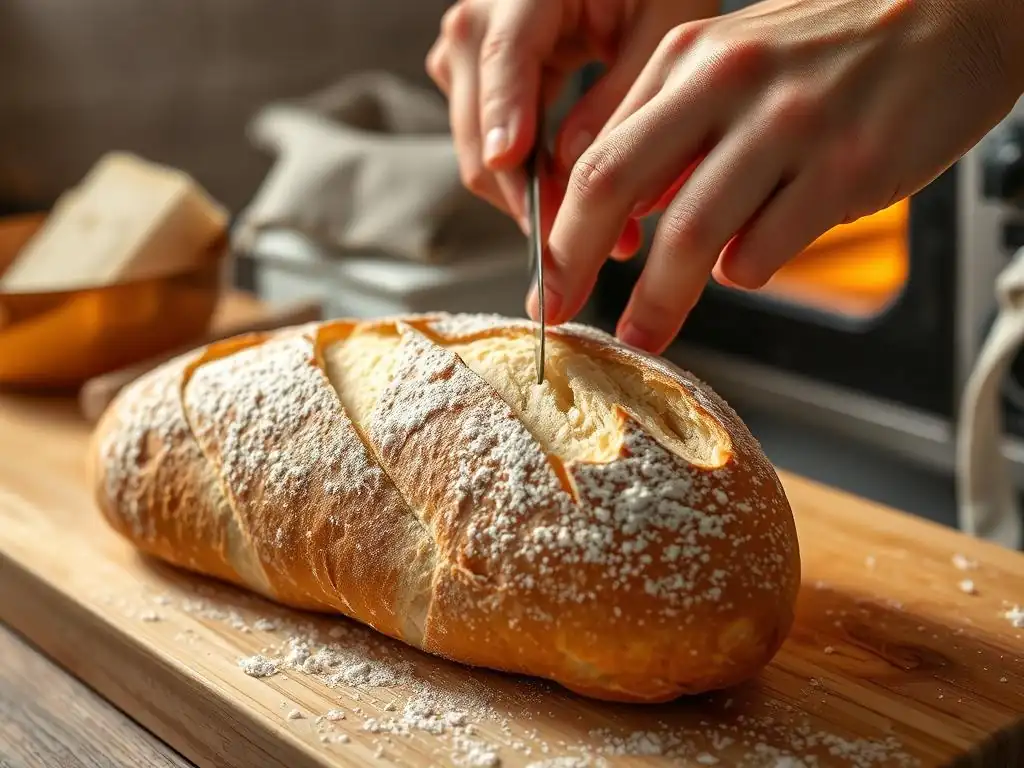
Using a very sharp lame or razor blade held at a shallow angle (about 20-30 degrees) to the surface of the dough, make 3-5 overlapping cuts along the top of each baguette. The cuts should be about 1/2 inch deep and run almost the length of the loaf. Work quickly and confidently to avoid dragging the blade or deflating the dough. Practice on a piece of scrap dough if you're new to scoring.
Baking Time and Temperature: Achieving a Golden Crust
Carefully transfer the scored baguettes to the preheated baking stone or sheet. If using parchment paper, you can slide the paper directly onto the hot surface. If using a couche, gently roll the baguettes off the couche onto the hot surface.
Bake at the high temperature (230-240°C or 450-475°F) for approximately 20-25 minutes. The exact time will vary depending on your oven. The baguettes are done when they are deeply golden brown all over and sound hollow when tapped on the bottom. A digital thermometer inserted into the center should read around 93-99°C (200-210°F).
Creating Steam: Essential for a Crispy Crust
Steam is absolutely critical for achieving that wonderfully thin, crispy crust characteristic of a homemade French baguette. The steam keeps the surface of the dough moist in the initial stages of baking, allowing the loaf to expand fully before the crust sets. Once the crust sets, the steam helps create a thinner, cracklier texture.
There are several ways to create steam:
- Ice Cubes: Quickly place a tray of ice cubes (about 1-2 cups) on a hot pan (like a cast iron skillet or broiler pan) placed on the rack below your baking stone/sheet just as you put the baguettes in. Close the oven door immediately.
- Hot Water: Pour about a cup of hot water into a hot pan placed on the rack below.
- Spray Bottle: Generously spray the walls of the oven with water using a spray bottle, taking care to avoid the lightbulb or glass door. Repeat this process 2-3 times within the first 5-10 minutes of baking.
Be cautious when creating steam, as hot steam can cause burns. After about 10-15 minutes of baking, open the oven door briefly to let the steam escape; this allows the crust to fully crisp up.
Step 4: Cooling and Enjoying Your Freshly Baked Baguette
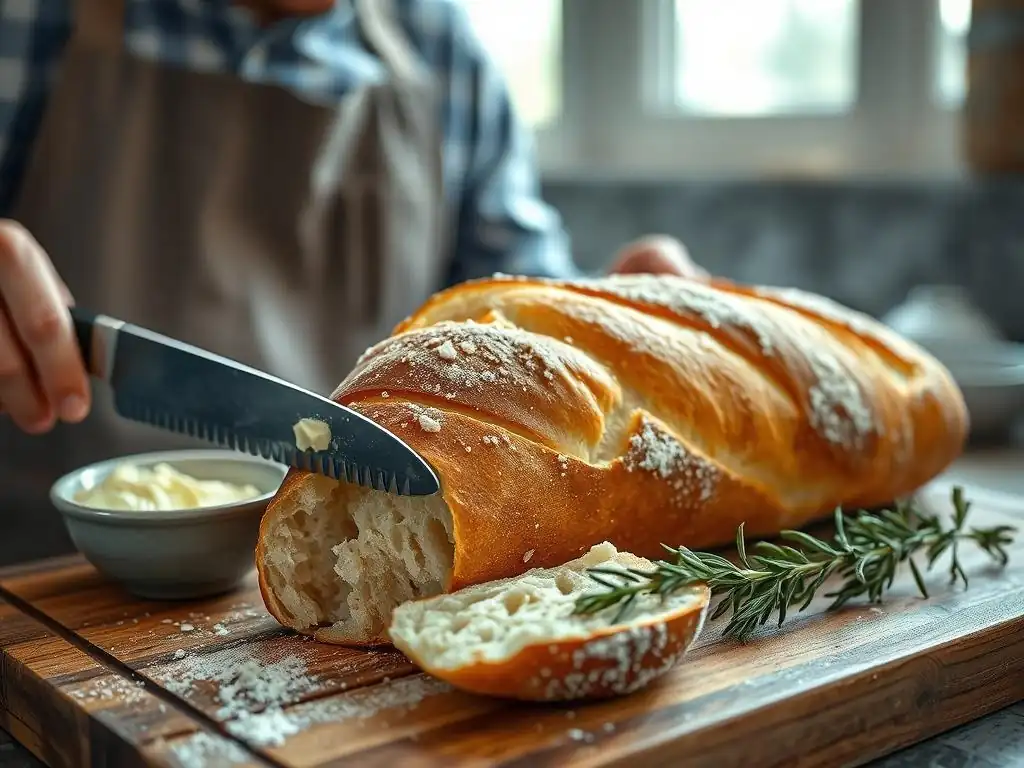
You've done it! Your easy homemade French baguette recipe has resulted in beautiful, golden loaves. But resist the urge to slice into them immediately! Proper cooling is just as important as baking.
This final step ensures the interior structure sets correctly and the crust remains crisp.
Cooling Process: Preventing a Soggy Crust
As your baguettes cool, residual heat continues to cook the interior, and moisture from the crumb evaporates. If the baguettes cool on a flat surface, this moisture can condense, leading to a soggy bottom crust.
To prevent this, transfer the baked baguettes to a wire cooling rack as soon as they come out of the oven. Allow them to cool completely, or at least until they are just warm to the touch. This typically takes about 30-60 minutes. Cooling on a rack allows air to circulate around the entire loaf, ensuring the crust stays crisp and the interior texture is perfect. Patience here is key to enjoying the full potential of your easy baguette recipe.
Serving Suggestions: Enjoying Your Homemade Baguette
Once cool, your homemade French baguette is ready to be enjoyed! The simplest way is often the best: tear off a piece and eat it as is, savoring the crispy crust and tender crumb.
Here are some classic serving suggestions:
- Alongside a meal: Perfect for soaking up sauces or accompanying soups and stews.
- With butter: A classic pairing.
- For sandwiches or crostini: Slice and top with your favorite ingredients.
- Bruschetta: Grill or toast slices and top with tomatoes, garlic, and basil.
- With cheese and charcuterie: An essential part of a cheese board.
There's nothing quite like the taste and texture of a freshly baked easy homemade French baguette recipe enjoyed simple and warm.
Troubleshooting Common Baguette Baking Problems
Even with an easy homemade French baguette recipe, you might encounter challenges. Don't get discouraged! Baking is a learning process, and understanding common issues helps you improve.
Here are a few typical problems and their potential causes and solutions.
Dense Baguettes: Causes and Solutions
A dense interior, lacking that desirable open crumb, is a common issue. Several factors can contribute to this:
- Insufficient Kneading: The gluten network wasn't developed enough to trap the gases produced by the yeast. Solution: Knead for the recommended time, perform the windowpane test, or try adding a few stretch-and-folds during the first rise.
- Under-Proofing: The dough didn't rise enough during the first or second fermentation. Solution: Allow adequate time for rising, ensuring the dough doubles in size during bulk fermentation and becomes visibly puffy during proofing. Check the poke test.
- Over-Proofing: The dough rose too much and then collapsed slightly, losing its structure. Solution: Pay close attention to the proofing time and visual cues. Dough that springs back too quickly or not at all when poked is likely over/under-proofed.
- Too Low Hydration: The dough was too stiff. Solution: Ensure you are measuring ingredients accurately, preferably by weight, and using enough water (aiming for at least 70% hydration for an easy baguette recipe).
Flat Baguettes: Achieving Proper Oven Spring
Flat baguettes often indicate a lack of oven spring – the final burst of rising that happens in the hot oven.
- Under-Proofing: As mentioned, if the dough hasn't developed enough gas, it won't rise well in the oven. Solution: Ensure proper proofing times and conditions.
- Over-Proofing: Dough that has over-proofed can lose its structural integrity and collapse rather than spring. Solution: Monitor proofing carefully.
- Insufficient Oven Temperature: The oven wasn't hot enough, or the baking surface wasn't preheated properly. Solution: Ensure your oven is fully preheated to 230-240°C (450-475°F) and that your baking stone/steel has been preheating for a long time (45-60 min).
- Lack of Steam: Steam is essential for allowing the crust to remain pliable during oven spring. Solution: Ensure you are creating enough steam at the beginning of the bake.
- Poor Shaping/Scoring: If the dough wasn't shaped with enough tension or scored correctly, it might not expand properly. Solution: Practice shaping techniques and ensure your scoring blade is sharp and cuts are deep enough and at the correct angle.
Pale Crust: Getting a Golden-Brown Color
A pale crust lacks flavor and crispiness.
- Insufficient Baking Time: The baguettes weren't baked long enough. Solution: Bake until the crust is deeply golden brown and the internal temperature reaches 93-99°C (200-210°F).
- Oven Temperature Too Low: The oven wasn't hot enough to properly caramelize the crust sugars. Solution: Verify your oven temperature with an oven thermometer and ensure it's preheated to the correct temperature (230-240°C or 450-475°F).
- Lack of Steam (early in bake): While steam is crucial initially, too much steam throughout the entire bake can prevent the crust from drying and crisping. Solution: Ensure you vent the steam after the first 10-15 minutes of baking.
Tips and Tricks for the Best Homemade Baguette
Elevate your easy homemade French baguette recipe with these helpful tips. Small adjustments can make a big difference in the final result.
Experimentation is part of the fun of baking bread!
Using High-Quality Flour for Superior Results
The quality of your flour significantly impacts the outcome of your easy baguette recipe. Using bread flour with a protein content of 12-14% provides the necessary structure for that characteristic open crumb.
While all-purpose flour can work, it typically has lower protein (around 10-11.5%) and won't develop as strong a gluten network, potentially resulting in a denser crumb. Look for reputable brands of bread flour. Some bakers prefer using a small percentage (e.g., 10-15%) of whole wheat or rye flour for added flavor, but for a classic easy homemade French baguette, sticking primarily to bread flour is recommended.
Mastering the Art of Scoring
Effective scoring is not just for aesthetics; it directly affects how your baguette bakes. A sharp blade is paramount – a dull blade will drag and tear the dough, deflating it.
Hold the lame or razor blade at a very shallow angle, almost parallel to the surface of the dough (around 20-30 degrees). This angle helps create the "ear" as the dough expands. Make swift, confident, overlapping cuts. For a typical baguette, 3-5 overlapping cuts are common. Practice your scoring technique on dough scraps or even rolled-up towels to get a feel for the movement before scoring your proofed loaves for your easy baguette recipe.
Experimenting with Different Flour Types
Once you've mastered the basic easy homemade French baguette recipe using bread flour, consider experimenting. Substituting a small percentage (e.g., 5-10%) of whole wheat flour can add a nutty depth of flavor.
Using a portion of T55 or T65 French flour, if you can find it, will bring you closer to the traditional French bakery experience, as these flours have specific mineral content and protein levels ideal for baguettes. However, excellent results are achievable with standard bread flour, making this an easy baguette recipe accessible to most home bakers. Note that substituting too much non-bread flour will change the hydration needs and likely the final texture.
Storing Your Homemade French Baguette for Freshness
A freshly baked easy homemade French baguette is best enjoyed within a few hours of cooling. However, if you have leftovers or bake ahead, proper storage is key to maintaining its quality.
The main challenge is preserving the crispy crust while keeping the interior from drying out.
Proper Storage Techniques to Maintain Crust Quality
Storing a baguette can be tricky because you want to protect the crust. Plastic bags trap moisture and will quickly turn the crust soft and rubbery.
- Room Temperature (Short-Term): For enjoyment within 12-24 hours, store the baguette uncovered on the counter. The crust will firm up slightly, but it's the best way to keep it relatively crisp. Alternatively, wrap it loosely in a paper bag.
- Room Temperature (Up to 2 Days): Wrap the cooled baguette tightly in aluminum foil. This will soften the crust but keep the interior from drying out. You can revive the crust by reheating the baguette in a hot oven (200°C/400°F) for 5-10 minutes before serving.
Avoid storing baguettes in the refrigerator, as this accelerates staling.
Freezing Baguettes for Later Enjoyment
Baking a batch of easy homemade French baguette recipe loaves and freezing some is a great way to have fresh bread on demand.
Allow the baguettes to cool completely. Wrap each baguette tightly in plastic wrap, then wrap again in aluminum foil or place in a freezer-safe bag. Label with the date. Baguettes can be frozen for up to 1-2 months. To reheat, remove from freezer, unwrap, and place directly in a preheated oven (200°C/400°F) for 15-20 minutes, or until heated through and the crust is crisp again. This method works surprisingly well at reviving the texture of your easy baguette recipe.
Conclusion: Mastering the Easy Homemade French Baguette Recipe
You've navigated the steps of making an easy homemade French baguette recipe, from mixing simple ingredients to achieving that golden, crispy crust and airy interior. While baking bread is a skill that improves with practice, this simplified approach demonstrates that you don't need to be a professional to produce delicious results at home.
Each baguette you bake will teach you something new about your ingredients, your kitchen environment, and your technique. Don't worry if your first few loaves aren't perfect; the process is rewarding, and the results, even imperfect ones, are almost always tasty.
Enjoy the Process of Baking Your Own Bread!
Baking a homemade French baguette is more than just following a recipe; it's about engaging with a traditional craft. There's a meditative quality to working with dough, feeling it transform under your hands. The anticipation as the loaves bake, the incredible aroma, and the simple pleasure of eating bread you made yourself are deeply satisfying.
Embrace the journey of mastering this easy baguette recipe. Share your successes (and even your learning experiences!) with friends and family. Soon, your easy homemade French baguette recipe might become a regular part of your baking routine, bringing the taste of a French boulangerie into your own home. Happy baking!
Frequently Asked Questions
How long does it really take to make an easy homemade French baguette recipe from scratch?
While the recipe is simplified, the total time commitment is still around 3-4 hours due to proofing. However, the active time spent working is significantly less.
What are the key ingredients that make an easy homemade French baguette recipe truly authentic?
The essentials are flour, water, yeast, and salt. The type of flour is crucial, using bread flour for optimal gluten development.
My baguettes always turn out flat. What's the most common mistake I'm likely making with this easy homemade French baguette recipe?
Likely, your dough isn't proofing long enough, or you're not scoring the baguettes properly before baking. This allows for proper expansion in the oven.
Can I substitute ingredients in this easy homemade French baguette recipe to make it gluten-free or vegan?
While possible, achieving the classic baguette texture with substitutions can be challenging. Specialized gluten-free or vegan baguette recipes are recommended for best results.
How do I store my homemade French baguettes to keep them fresh for longer after using this easy homemade French baguette recipe?
Store cooled baguettes in a paper bag at room temperature. To refresh a day-old baguette, lightly dampen it and bake for a few minutes.
Final Reflection: The Humble Baguette, A Testament to Simplicity
The pursuit of the perfect French baguette, once a culinary Everest, is now surprisingly accessible. This article has demonstrated that crafting this iconic loaf at home doesn't require years of apprenticeship or specialized equipment. The seemingly complex process can be simplified, yielding delicious results even for novice bakers.
The enduring appeal of the baguette transcends mere sustenance; it's a symbol of French culture, a daily ritual, a simple pleasure elevated to an art form. Bread is the staff of life,
a proverb often repeated, truly captures the essence of this humble yet profound food. Its presence on tables worldwide, from Parisian bistros to home kitchens, speaks volumes about its cultural significance and enduring power to connect us through shared experience. The act of making it, from mixing the dough to the satisfying crusty crackle, becomes a meditative process, a connection to a rich culinary heritage.
Now, armed with a simplified approach, I invite you to embark on your own baguette journey. Don't be intimidated by the seemingly intricate process; embrace the challenge, savor the aroma of baking bread, and relish the satisfaction of creating something beautiful and delicious with your own hands. The perfect baguette awaits – and the journey to bake it is just as rewarding as the final product.
Unlock Your Inner Boulanger: Bake the Perfect Baguette Tonight!
Thanks for joining us on this journey to perfect baguette baking! We hope you gained valuable insights and newfound confidence in tackling this classic bread. Ready to take the next step?
- Bake your own baguette tonight! Use the simplified recipe from the article as a starting point and adapt it to your taste. Let us know how it turns out!
- Share your baking journey! Post a picture of your creation on social media and tag us—we'd love to see your results!
- Explore more bread recipes on BakeWithEase. Discover how to create other delicious loaves, and share your favorite baking tips with our community!
What unique ingredient will you add to your next baguette to make it truly special?