
The Sound of Success: What a Perfectly Baked Croissant Sounds Like


Welcome to BakeWithEase, your haven for all things baking! Ever wondered what exactly separates a good croissant from a truly exceptional one? Beyond the golden hue and flaky layers, there's a secret revealed in the sound it makes. Dive into our guide, "The Sound of Success: What a Perfectly Baked Croissant Sounds Like," and discover the surprising auditory cue that signals baking perfection. Are you ready to unlock the secrets to perfectly baked croissant sound advice and elevate your baking game?
- Introduction: The Auditory Art of Croissant Perfection
- Understanding the Ideal Croissant Sound Profile
- Deciphering Croissant Sounds: A Baker's Guide
- Achieving the Perfect Croissant Crackle: Step-by-Step
- Baking for Sound: Temperature and Time Considerations
- Troubleshooting Croissant Sounds: Common Issues and Solutions
- Advanced Techniques for Enhanced Croissant Sound
- Perfectly Baked Croissant Sound Advice: Summarizing the Key Takeaways
-
Frequently Asked Questions
- What is the ideal sound a perfectly baked croissant should make?
- Why is the sound of a croissant important in determining its quality?
- What factors contribute to achieving the desired sound in a croissant?
- What does a "dull" sound indicate about a croissant's baking process?
- Can I improve the sound of a slightly underbaked croissant?
- Final Reflection: The Symphony of a Perfect Croissant
- Unlock the Secrets of the Perfect Croissant Crunch!
Introduction: The Auditory Art of Croissant Perfection
Beyond Taste and Texture: Why Croissant Sound Matters
While the golden-brown exterior and buttery aroma are the first things that greet you, the sound a croissant makes is a crucial, often overlooked, indicator of its quality. A truly perfectly baked croissant doesn't just look and smell amazing; it sounds incredible. This auditory cue provides critical information about the internal structure, the flakiness of the layers, and the overall crispness achieved during baking. Listening to your croissant can reveal secrets about its crumb and crust that are harder to discern solely by sight or touch.
The distinctive sounds—a delicate shatter, a crisp crackle—are direct results of successful lamination and proper baking. Imagine picking up a warm croissant and hearing that satisfying crunch as you break into it; that sound signifies hundreds of paper-thin layers of dough and butter that have expanded and separated beautifully. It speaks volumes about the baker's skill and the care taken at every stage, from mixing the dough to the final bake. Paying attention to these sounds is part of the comprehensive art of croissant making, adding an extra dimension to evaluating your baking success.
BakeWithEase: Your Guide to Auditory Croissant Mastery
At BakeWithEase, we understand that mastering croissants involves more than just following a recipe; it requires understanding the science and art behind each step. We aim to provide perfectly baked croissant sound advice, guiding you to not only produce visually stunning pastries but ones that audibly confirm their perfection. Our resources break down the complex process into manageable steps, helping you develop the intuition needed to recognize when each stage is just right, including learning to listen to your dough and your finished bake.
We delve into the details, explaining how specific techniques, like chilling the dough for optimal periods or proofing at the correct temperature (often around 75-80°F or 24-27°C), contribute directly to the final texture and the sounds it will produce. Our guides offer practical tips on everything from creating butter blocks for lamination with a specific fat content (typically 82% or higher) to achieving that ideal oven spring. By following our advice, you'll gain the confidence to not just bake a croissant, but to bake one that sings the song of success.
Understanding the Ideal Croissant Sound Profile
The "Crackle": A Sign of Flaky Layers
The quintessential sound of a perfectly baked croissant is the "crackle" or "shatter" you hear when you gently press or break the crust. This sound is the direct result of successful lamination—the process of folding butter into dough multiple times to create numerous thin layers. During baking, the water in the butter turns to steam, forcing these layers apart and creating tiny air pockets between them. A strong, crisp crackle indicates that these layers have separated well and the crust has achieved optimal crispness without being hard or tough.
Think of it like breaking a delicate sheet of glass (in the best way!). The more defined the crackle, the more layers you've likely created and separated, which for traditional croissants can be upwards of 50-100 layers depending on the folding technique used (e.g., a triple fold followed by a double fold creates 27x2=54 layers, or a series of triple folds can yield hundreds). A dull or soft sound, conversely, might suggest insufficient lamination, inadequate proofing, or underbaking, preventing those beautiful layers from achieving their signature crispness.
Identifying the "Hollow" Sound: Indicating Proper Air Pockets
Beyond the external crackle, a perfectly baked croissant should also feel and sound relatively light and somewhat "hollow" when tapped lightly on the bottom or side. This hollow sound is an indicator of a well-developed internal structure with significant air pockets. It suggests that the yeast was active during proofing, producing enough gas to expand the dough, and that this expansion was maintained during baking, creating that desirable open, airy crumb structure inside.
This internal hollowness is a direct contrast to the dense, bready interior of a poorly made croissant. It means the dough proofed sufficiently (often doubling or tripling in size) and baked through completely, allowing the steam to escape and leave behind those wonderful voids. A dense, heavy feel and a dull thudding sound when tapped usually point to under-proofing, insufficient yeast activity, or potentially underbaking, resulting in a doughy, less appealing texture.
The Absence of "Soggy" Sounds: Avoiding Underbaked Croissants
Just as important as the presence of the crackle and hollow sounds is the absence of any "soggy" or wet-sounding cues. A soggy sound, or a complete lack of the expected crispness, is a clear warning sign of an underbaked croissant. This often happens when the internal temperature hasn't reached high enough (typically around 190-200°F or 88-93°C) to fully set the dough and evaporate excess moisture.
Underbaking leaves the interior dense and potentially gummy, and the crust soft and lacking structure. While the exterior might look golden, a soft, silent crust that yields easily to pressure suggests the butter may have melted out rather than created steam, or that the baking time was simply too short.
Avoiding this requires careful attention to oven temperature and baking duration, sometimes even requiring an extra few minutes at a slightly lower temperature to ensure the interior is fully cooked without burning the exterior. This perfectly baked croissant sound advice is critical for achieving that ideal contrast between a crisp exterior and a light interior.
Deciphering Croissant Sounds: A Baker's Guide
Visual Cues vs. Auditory Cues: Which is More Reliable?
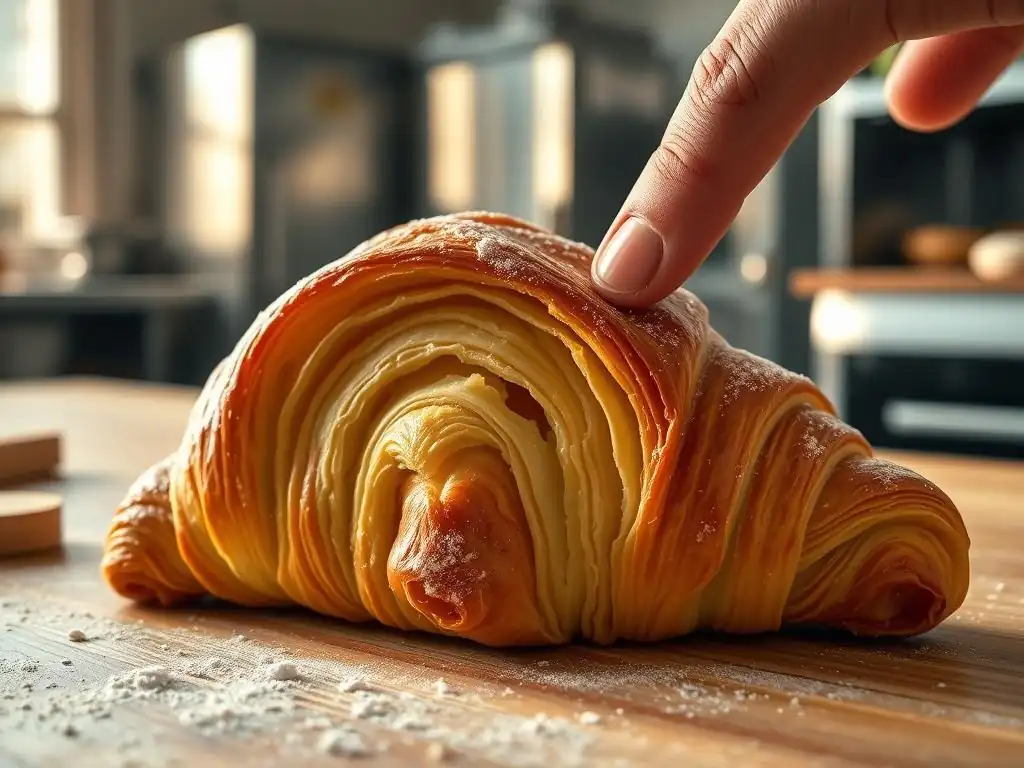
While visual cues like golden color, puffed shape, and visible layering are essential indicators of a good croissant, auditory cues can sometimes be more reliable, especially for assessing the internal state. A croissant can look perfectly golden on the outside but be underbaked and doughy inside – a common pitfall for novice bakers. The sound, however, provides a direct report on the crispness of the crust and the airiness of the interior structure, which visual cues alone cannot always confirm.
For instance, a croissant that looks beautifully browned might feel soft and produce a dull sound, indicating it was baked too quickly at a high temperature, resulting in a colored but not truly crisp crust and a potentially undercooked interior. Conversely, a croissant that sings with a clear crackle and feels light and hollow confirms that the layers separated and the interior is well-baked and airy, regardless of minor variations in external color. Learning to trust your ears alongside your eyes provides a more complete assessment of your baking success.
Training Your Ear: Recognizing the Subtle Nuances of Croissant Baking
Training your ear to recognize the ideal perfectly baked croissant sound takes practice, much like any other baking skill. Begin by consciously listening when you handle croissants – both those you bake and high-quality ones from a reputable bakery. Pay attention to the sounds they make when tapped, gently squeezed, or broken open. Is the crackle sharp and distinct, or soft and muffled? Does it feel light and sound hollow, or dense and dull?
Keep a mental note (or even a written one!) of the sounds produced by croissants you know are successful, and compare them to those that didn't turn out as well. You'll start to correlate specific sounds with specific outcomes – a strong crackle with successful lamination, a hollow tap with good proofing, and a lack of soggy sounds with proper baking time. Over time, you'll develop an intuitive understanding of what a perfectly baked croissant should sound like, helping you diagnose issues and refine your technique based on this unique feedback.
The Role of Ingredients in Croissant Sound: Butter, Flour, and Yeast
The quality and type of ingredients play a significant role in the final sound of your croissant. High-quality butter with a high fat content (around 82% or more) is crucial because it contains less water. Less water means more steam is generated during baking, which is essential for pushing apart those delicate dough layers and creating the crispness that results in the signature crackle. Using butter with lower fat content can lead to more moisture in the dough, potentially resulting in a softer crust and a less distinct sound.
The type of flour also matters. A bread flour with a moderate to high protein content (around 11-13%) provides the necessary gluten structure to create strong, elastic dough layers that can withstand the lamination process and trap the steam during baking. Using a lower protein flour might result in weaker layers that don't separate as effectively, impacting the final sound.
Finally, active and healthy yeast is vital for proper proofing; insufficient yeast activity leads to poor rise and dense crumb, which will manifest as a lack of the desirable hollow sound. Thus, understanding the interaction of butter, flour, and yeast is part of receiving good perfectly baked croissant sound advice.
Achieving the Perfect Croissant Crackle: Step-by-Step
Dough Preparation: Setting the Stage for Sound Success
The journey to a perfectly baked croissant sound begins with meticulous dough preparation. This includes using cold ingredients, especially water and flour, and mixing just until the dough comes together, avoiding overdevelopment of gluten at this initial stage. A typical recipe might use a ratio of about 100% flour, 50-60% cold water or milk, 10-15% sugar, 1-2% salt, and 1-2% instant yeast. The goal is a relatively lean, slightly firm dough that is easy to handle and will develop strength during the subsequent folding steps, not during the initial mix.
After mixing, the dough usually undergoes a bulk fermentation and then a significant chilling period, often overnight (10-12 hours) in the refrigerator. This chilling is non-negotiable. It allows the gluten to relax, making the dough pliable for lamination, and, crucially, hardens the butter block to a similar consistency as the dough. This ensures that during rolling and folding, the butter sheets remain intact and create distinct layers, rather than melting into the dough, which would prevent the steam separation needed for that satisfying crackle.
Lamination Technique: Creating the Layers that Crackle
Lamination is the heart of the croissant, and executing it correctly is paramount for achieving the desired sound. This process involves enclosing a cold butter block within the dough and then repeatedly rolling and folding the dough (typically two or three times) with rest periods in between to create hundreds of alternating layers of dough and butter. The key here is to keep both the dough and butter cold and firm throughout the process, usually requiring chilling periods of 30-60 minutes between each fold.
Rolling the dough evenly to a consistent thickness before each fold ensures that the layers are uniform. Skipping chilling steps or working with butter that is too soft will result in the butter merging with the dough, collapsing the layers. A standard lamination might involve three "single" folds (like folding a letter into thirds) or a combination of "single" and "double" folds. Each fold exponentially increases the layer count (a single fold multiplies layers by 3, a double fold by 4), ultimately determining the potential for crispness and the resulting crackle.
Proofing Process: Ensuring Adequate Air Pockets for the "Hollow" Sound
Proper proofing is the stage where the yeast gets to work, producing carbon dioxide gas that expands the dough and creates the air pockets essential for that light, hollow interior. Croissants require a relatively warm and humid environment for proofing, typically around 75-80°F (24-27°C) with 70-80% humidity. The proofing time can vary significantly, often taking 1.5 to 2.5 hours, depending on the temperature and yeast activity. The croissants should nearly double in size and appear puffy and jiggly, indicating sufficient gas production.
Under-proofing will result in a dense, heavy croissant with small, tight air pockets and a lack of the desired hollow sound. The dough won't have expanded enough to create that airy structure. Over-proofing, on the other hand, can lead to collapsed layers during baking and a loss of structure, also negatively impacting the sound and texture. Recognizing when your croissants are perfectly proofed—often described as looking "alive" and feeling light—is a critical skill honed through experience. This stage is just as important as lamination for achieving the perfect croissant sound.
Baking for Sound: Temperature and Time Considerations
Oven Temperature: The Key to a Crispy Exterior
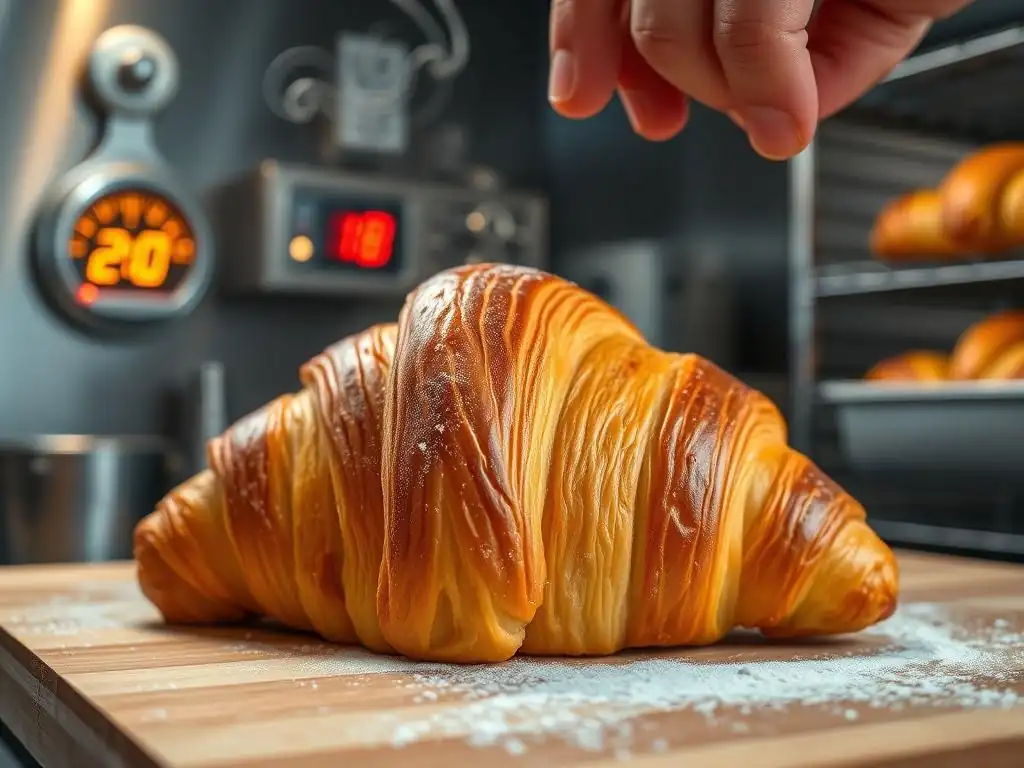
Baking temperature is critical for achieving the perfect balance of a crisp exterior and a light, airy interior, which translates directly to the ideal perfectly baked croissant sound profile. Croissants are typically baked at a relatively high initial temperature, often starting around 400-425°F (200-220°C) for the first 10-15 minutes. This initial burst of heat encourages rapid oven spring – the final expansion of the dough – and helps the layers separate dramatically as the butter melts and steams.
After this initial high-heat phase, the temperature is usually reduced to around 375-400°F (190-200°C) for the remainder of the baking time. This allows the interior to cook through completely without the exterior burning. Baking at too low a temperature from the start can cause the butter to melt and leak out before the layers set, resulting in greasy, flat croissants with poor structure and a lack of crackle. Too high a temperature throughout can brown the exterior too quickly while leaving the interior raw or doughy.
Baking Time: Avoiding Underbaking and Soggy Sounds
The total baking time for a standard-sized croissant typically ranges from 18 to 25 minutes, but this can vary based on size, oven calibration, and desired level of browning. The goal is to bake long enough to ensure the interior reaches a safe and cooked temperature (around 190-200°F or 88-93°C) and that the crust is fully set and crisp. Pulling them out too early is the primary cause of soggy croissants and the absence of that desirable sound.
When checking for doneness, look for a deep golden-brown color across the entire surface, including the undersides and between the folds. A truly baked croissant will feel light for its size. If you're unsure, gently tap the bottom; it should sound hollow. If it feels heavy or sounds dense, it likely needs more time. Don't be afraid to bake them until they are quite dark golden; this color indicates the Maillard reaction has occurred sufficiently to develop deep flavor and a truly crisp crust necessary for that signature crackle.
Cooling Down: Preserving the Croissant's Signature Sound
Once out of the oven, croissants need to cool properly on a wire rack. While it's tempting to dive right in, allowing them to cool for at least 15-20 minutes is crucial. During this time, residual heat continues to cook the interior slightly, and moisture evaporates, further setting the structure and crisping the crust. Cutting into a hot croissant can compress the delicate internal structure and trap steam, potentially making the interior slightly gummy and softening the crust.
Cooling on a wire rack allows air circulation on all sides, preventing condensation from forming on the bottom, which could lead to a soggy base. This final cooling step is essential for the textures to stabilize and for the crust to achieve its ultimate crispness. It's during this cooling period that the layers become truly brittle, ready to produce that beautiful shatter when you finally break into your perfectly baked creation.
Troubleshooting Croissant Sounds: Common Issues and Solutions
Soggy Bottom: Causes and Corrective Measures
A soggy bottom is a frustrating issue, often resulting in a croissant that lacks the desired lightness and sounds dull when tapped underneath. This can be caused by several factors: insufficient baking time, oven temperature being too low, overcrowding the baking sheet (which inhibits air circulation), or not cooling the croissants on a wire rack. If the bottom rack of your oven is significantly cooler, placing your baking sheet there might also contribute to this problem.
To correct a soggy bottom, ensure your oven is properly preheated and calibrated. Bake for the full recommended time, or even slightly longer, until the bottoms are deeply golden brown. Avoid placing too many croissants on one sheet; give them space. Always cool baked croissants on a wire rack immediately after removing them from the oven to allow air to circulate and steam to dissipate from the bottom. Sometimes, using a baking stone or steel can also help provide more consistent bottom heat.
Lack of Crackle: Addressing Dough Handling Issues
If your croissant lacks that signature crackle and feels soft and yielding, it's likely related to issues during dough preparation or lamination. The primary culprits are usually butter leakage during lamination (due to warm butter or dough, or insufficient chilling), insufficient chilling between folds, or not rolling the dough thin and evenly enough. These issues prevent the creation and separation of distinct butter and dough layers.
Review your technique for lamination. Ensure your butter block is cold and pliable, not hard or soft. The dough should be cold but not stiff. Chill adequately between folds – if the dough or butter feels soft, put it back in the fridge. Make sure you are rolling evenly, applying gentle, consistent pressure. Sometimes, proofing for too long or at too high a temperature can also cause the delicate layers to collapse before baking, impacting the final crispness.
Uneven Sound: Ensuring Consistent Baking
An uneven sound, where one part of the croissant is crisp and crackly while another is softer or denser, often points to inconsistent baking. This could be due to uneven heat distribution in your oven, placing croissants too close together on the baking sheet, or inconsistent proofing. If your oven has hot spots, some croissants or parts of croissants may bake faster than others.
To ensure consistent baking and even sound, rotate your baking sheet halfway through the baking time. This helps all sides of the croissants receive equal heat exposure. Make sure croissants are spaced adequately apart on the sheet to allow hot air to circulate freely around each one. Finally, visually inspect your proofed croissants before baking; if some have proofed more than others, try to ensure consistency in subsequent batches by controlling proofing temperature and time more precisely. Consistent technique throughout leads to consistent results, including the uniform perfectly baked croissant sound you're after.
Advanced Techniques for Enhanced Croissant Sound
Utilizing a Baking Stone: Maximizing Heat Distribution
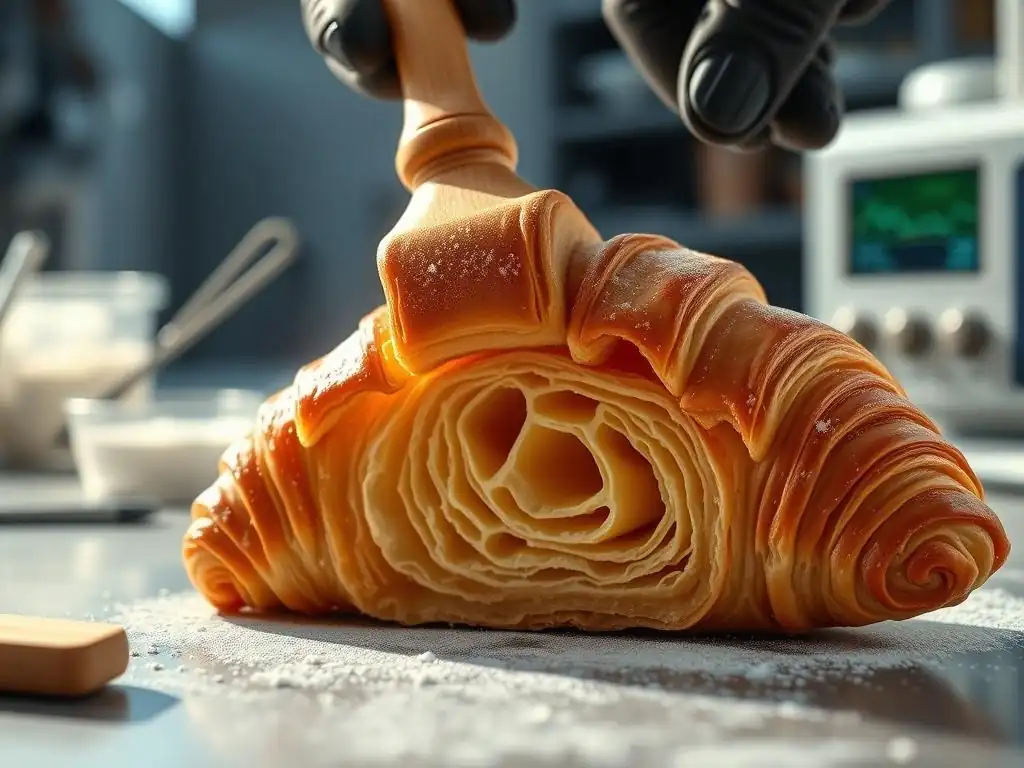
Using a baking stone or steel can significantly enhance the crispness of your croissant crust, contributing to a more pronounced crackle and a better perfectly baked croissant sound. Place the stone or steel on the middle rack of your oven and allow it to preheat thoroughly with the oven, usually for at least 30-60 minutes. The stone absorbs and radiates heat evenly, providing a consistent high temperature from below.
When you place your cold baking sheet of proofed croissants directly onto the hot stone, it delivers a strong, immediate heat transfer to the bottom of the pastries. This rapid heat helps set the base and encourages vigorous oven spring, contributing to better layer separation and a crispier bottom crust. This method can be particularly helpful if you struggle with soggy bottoms or lack of crispness.
Applying an Egg Wash: Promoting a Golden and Crispy Crust
A simple egg wash applied before baking not only gives croissants that beautiful, classic golden-brown sheen but also contributes to a crispier crust and enhances the perfectly baked croissant sound. A typical egg wash is made by whisking one egg with a tablespoon or two of milk or water. Apply a thin, even layer using a pastry brush, taking care not to let it pool between the layers, which could fuse them together.
The protein in the egg wash helps the crust brown more effectively through the Maillard reaction, while the fat and moisture contribute to a richer color and a slightly harder, more brittle crust upon cooling. This results in a more satisfying shatter when you break into the croissant. Apply the wash gently to avoid deflating your carefully proofed pastries.
Experimenting with Flour Types: Influencing Sound and Texture
While standard bread flour is commonly recommended for its gluten strength, experimenting with different flour types can subtly influence the final texture and sound of your croissants. Using a blend of bread flour and a small percentage of pastry or all-purpose flour might slightly reduce gluten development, potentially resulting in a more tender crumb, though you need enough strength for lamination. Conversely, using a very high-gluten flour might create a chewier texture.
Some bakers even experiment with heritage grains or specific European flours known for their particular gluten structure or starch content. While the primary factors for sound are lamination and baking, the nuances of flour can affect how the layers expand and crisp. For example, a flour with higher starch content might contribute to a slightly crisper, more brittle crust. Understanding how different flours behave is part of refining your technique and receiving comprehensive perfectly baked croissant sound advice.
Perfectly Baked Croissant Sound Advice: Summarizing the Key Takeaways
Listening for Success: A Reminder of the Ideal Sound Profile
Remember, the sound of a perfectly baked croissant is a symphony of crispness and airiness. Listen for that distinct, delicate crackle when you gently press or break the crust – a clear sign of well-separated, flaky layers achieved through expert lamination. Pay attention to the light, somewhat hollow sound when you tap the bottom or side, indicating a well-proofed, airy interior structure. Crucially, notice the absence of any soft, soggy sounds, which signal underbaking. These auditory cues provide invaluable feedback beyond what you can see or feel.
This perfectly baked croissant sound advice reminds us that baking is a multi-sensory experience. Training your ear adds another layer of understanding and helps you diagnose potential issues in your process. From ingredient selection to final cooling, every step influences the final structure and, consequently, the sound.
Continuous Practice: Honing Your Croissant Baking Skills
Mastering the art of croissant baking, including recognizing the perfect sound, comes with practice. Don't be discouraged if your first attempts don't produce that ideal crackle or hollow sound. Each batch is a learning opportunity. Pay close attention to how variations in your technique – slight adjustments in chilling times, proofing temperature, or baking duration – affect the final outcome and the sounds your croissants make.
Keep notes, experiment, and refine your process based on both visual results and auditory feedback. The more you bake, the better you'll become at anticipating how your dough will behave and how your finished croissants should sound. Seek out perfectly baked croissant sound advice from experienced bakers and reliable resources like BakeWithEase to guide your journey.
Once you've achieved that perfect crackle and hollow sound, share your success! At BakeWithEase, we love hearing about your baking triumphs. While we can't hear your croissants through a screen, describing the sounds you achieved – the crisp shatter, the light tap – adds a wonderful dimension to sharing your results with the baking community.
Use the perfectly baked croissant sound advice you've gained here to evaluate your own bakes and articulate what makes them successful. Describe the sounds in your baking notes or when sharing photos online. Let the sound of your perfectly baked croissants be a testament to your dedication and skill, and inspire others on their own baking journey. Happy baking and happy listening!
Frequently Asked Questions
What is the ideal sound a perfectly baked croissant should make?
A perfectly baked croissant should make a crisp, flaky, and almost shattering sound when gently squeezed or broken. This indicates a well-developed internal structure and proper baking.
Why is the sound of a croissant important in determining its quality?
The sound is a direct result of the internal layers of butter and dough creating air pockets during baking. A good sound signifies that these layers have properly separated and are perfectly crisp.
What factors contribute to achieving the desired sound in a croissant?
Key factors include using high-quality butter, properly laminating the dough (creating distinct layers), and baking at the correct temperature and time.
What does a "dull" sound indicate about a croissant's baking process?
A dull or soft sound usually means the croissant is undercooked, lacks proper lamination, or has absorbed too much moisture. This indicates the butter hasn't fully melted and created distinct layers.
Can I improve the sound of a slightly underbaked croissant?
Yes, you can often improve it by briefly returning the croissant to the oven at a slightly lower temperature. This helps to crisp the exterior without burning it, potentially improving the overall sound and texture.
Final Reflection: The Symphony of a Perfect Croissant
The pursuit of the perfectly baked croissant transcends mere culinary skill; it's a quest for sensory perfection, a testament to the power of mindful attention to detail. The subtle nuances discussed – from the gentle crackle of the exterior to the airy sigh of the interior – are not just sounds, but indicators of a process mastered, a recipe honored, and a dedication to excellence realized. This pursuit resonates deeply in our increasingly fast-paced world, reminding us of the beauty found in meticulous craftsmanship and the rewards of patient dedication.
The journey to understanding the "sound" of a perfect croissant has been a deeply personal one, highlighting the interconnectedness of sensory experience and emotional satisfaction. The simple act of listening, truly listening, to the subtle sounds during baking reveals a depth of information often overlooked. It's a reminder that true mastery lies not just in the technical aspects, but in the intuitive understanding that comes from paying close attention to every detail. The best things in life are not things, but experiences,
and the experience of creating, and consuming, a perfectly baked croissant is a powerful example of this truth.
Now, consider your own pursuits. What is the "sound" of your success? What subtle cues, often overlooked, signal that you are on the right path, achieving your goals with grace and precision? Take a moment to reflect on your own processes, to listen attentively to the subtle sounds of your work, and to appreciate the symphony of achievement that unfolds when dedication meets passion. Let the croissant be a reminder: true success is often found not in the grand gestures, but in the quiet mastery of the details.
Unlock the Secrets of the Perfect Croissant Crunch!
Thanks for joining us on this delicious journey into the world of croissant baking! We hope you’ve gained a new appreciation for the subtle sounds that indicate baking perfection. Now it's time to put your newfound knowledge to the test.
- Listen intently: The next time you bake croissants, pay close attention to the sounds they make throughout the process. Notice the subtle shifts and how they indicate changes in texture and doneness. This is your key to consistent success!
- Share your audio experience: Record a short audio clip of your croissants baking (if you're feeling adventurous!) and share it on social media – let's build a community of croissant connoisseurs! Use #BakeWithEaseCroissants to connect.
- Experiment with different flours and butters: Try varying your ingredients slightly and listen closely to see if the sounds change. This could unlock the secret to your perfect croissant.
Ready to create your own symphony of perfectly baked croissants? What unique sound will your perfect croissant make?