
Egg White Secrets: How to Get Maximum Volume and Lift for Your Meringue

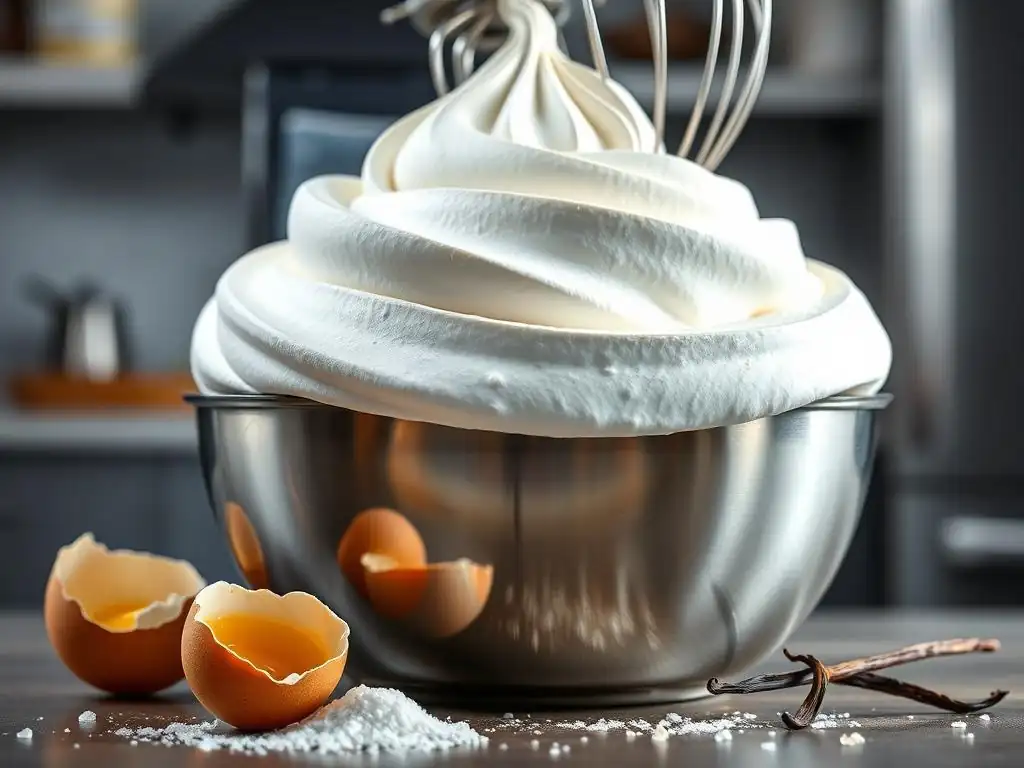
Welcome to BakeWithEase, your trusted guide to baking brilliance! Ever wondered how to achieve that perfect, sky-high meringue? Unlock the secrets to achieving maximum volume and lift in your meringues with our expert tips and techniques. Discover the egg white secrets that will transform your baking and leave you with flawless, airy creations. Ready to elevate your baking game? Let's dive in!
- Introduction to Meringue Mastery: Achieving Perfect Volume
- Key Ingredients for Maximum Meringue Volume and Lift
- Essential Equipment for Achieving Perfect Meringue Volume Tips
- Step-by-Step Guide: Maximizing Meringue Volume
- Troubleshooting Common Meringue Volume Problems
- Baking Meringue: Tips for Maintaining Volume and Preventing Cracking
- Advanced Meringue Techniques for Enhanced Volume and Lift
- Meringue Recipes to Showcase Your Perfect Volume
- Conclusion: Mastering Meringue Volume for Baking Excellence
-
Frequently Asked Questions
- What is the most important factor in achieving perfect meringue volume?
- Why is using room temperature egg whites recommended for meringue?
- What type of bowl is best for whipping meringue?
- How does the addition of an acid, like cream of tartar, affect meringue?
- What speed should I use when whipping meringue, and for how long?
- Final Reflection: The Airy Heights of the Perfect Meringue
- Unleash Your Inner Meringue Master!
Introduction to Meringue Mastery: Achieving Perfect Volume
Creating light, airy meringue is a fundamental skill in baking, opening the door to countless delicate desserts. The secret to achieving that signature cloud-like texture lies in maximizing the volume and lift of your whipped egg whites. It's not just about making them white and fluffy; it's about building a stable structure that can hold its shape, whether baked into crisp cookies, piled high on a lemon pie, or folded into a delicate mousse. Mastering the techniques for perfect meringue volume tips is crucial for consistent success in these recipes.
Understanding the nuances of egg white whipping is key to elevating your baking. From selecting the right ingredients to employing precise techniques, every step influences the final outcome. This guide will walk you through the science, the tools, and the methods needed to achieve the highest possible volume and the most stable lift in your meringue, ensuring your creations are as impressive in texture as they are in flavor.
Understanding the Science Behind Meringue Volume
At its core, meringue is simply egg white protein whipped to trap air. Egg whites are primarily water (around 90%) and protein (about 10%), mainly albumen. When you whip egg whites, the mechanical action denatures these proteins, causing them to unfold. As they unfold, they rearrange themselves around the air bubbles being incorporated by the whisk, forming a network. This network is what holds the air, creating volume.
The more efficiently you can denature the proteins and incorporate air bubbles, the greater the potential volume. Factors like temperature, the presence of fat, and the speed of whipping all influence how well this protein network forms and stabilizes. Achieving maximum volume requires creating a strong, flexible protein structure capable of holding a significant amount of trapped air, leading to that desirable light and airy texture.
Why Meringue Volume Matters for Baking Success
The volume of your meringue directly impacts the texture and appearance of the final baked good. High-volume meringue is essential for light and ethereal desserts like soufflés, where the trapped air provides the lift that makes them rise dramatically. In pavlovas, significant volume is needed to create that impressive, crisp shell with a soft, marshmallowy interior.
For meringue cookies or pie toppings, achieving great meringue lift ensures a delicate bite rather than a dense, chewy result. A well-executed meringue can increase its initial volume by six to eight times or even more. Without sufficient volume and stability, your meringue-based desserts can fall flat, shrink excessively during baking, or lack the desired lightness, highlighting why mastering perfect meringue volume tips is so important.
Key Ingredients for Maximum Meringue Volume and Lift
The quality and type of ingredients you use play a significant role in the success of your meringue. While egg whites are the star, sugar and acidic additives are crucial supporting players that contribute to both volume and stability. Choosing the right ingredients and using them correctly is the first step towards achieving excellent meringue lift.
Understanding how each ingredient interacts with the egg whites will empower you to make informed decisions and troubleshoot potential issues. From the freshness of your eggs to the type of sugar you incorporate, paying attention to these details can make a noticeable difference in the final volume and structure of your meringue.
The Importance of Fresh Eggs for Meringue
Fresh eggs are generally preferred for making meringue because their albumen (egg white) is thicker and more viscous than that of older eggs. This thicker albumen contains a tighter protein structure that is better able to hold air bubbles when whipped. While older eggs can still be whipped, their runnier albumen may not trap air as effectively, potentially resulting in less initial volume and a less stable structure that is more prone to weeping or collapsing.
You can often tell the difference by cracking an egg onto a flat surface. A very fresh egg's white will stand up tightly around the yolk, while an older egg's white will spread out much more thinly. Using fresh, room-temperature egg whites is one of the simplest yet most effective perfect meringue volume tips. Room temperature egg whites whip faster and achieve greater volume than cold ones, as the proteins are more relaxed and can unfold more easily.
Best Types of Sugar for Optimal Meringue Structure
Granulated sugar is the most common sugar used in meringue, but the size of the crystals matters. Fine granulated sugar or superfine sugar (also known as caster sugar) is often recommended because its smaller crystals dissolve more quickly into the egg whites. This faster dissolution is important because undissolved sugar crystals can weigh down the meringue, cause it to weep, and create a grainy texture.
Sugar plays a dual role: it sweetens the meringue and, more importantly for volume, it stabilizes the protein foam. As sugar dissolves, it forms a syrup that coats the protein network, strengthening it and preventing the trapped air bubbles from collapsing. The ratio of sugar to egg white is also critical; while ratios vary depending on the type of meringue (French, Swiss, Italian), using too little sugar can result in an unstable, fragile foam, while too much can prevent proper whipping. A common starting point for French meringue is a 1:1 ratio of sugar to egg white by weight.
Acid Additives: Cream of Tartar and Lemon Juice for Meringue Stability
Acidic ingredients like cream of tartar or lemon juice are frequently added to egg whites before whipping, and they are powerful perfect meringue volume tips. These acids help to further stabilize the protein structure by preventing the proteins from clumping together too tightly. This allows the protein network to stretch and expand more, trapping more air and creating a stronger, more stable foam that is less likely to collapse.
A small amount goes a long way – typically about 1/8 teaspoon of cream of tartar or 1/4 teaspoon of lemon juice per large egg white is sufficient. These additives are particularly helpful when making French meringue, which is less stable than Swiss or Italian meringue due to the way the sugar is incorporated. The acid ensures the protein bonds remain flexible, allowing for maximum expansion and a more resilient structure during whipping and baking.
Essential Equipment for Achieving Perfect Meringue Volume Tips
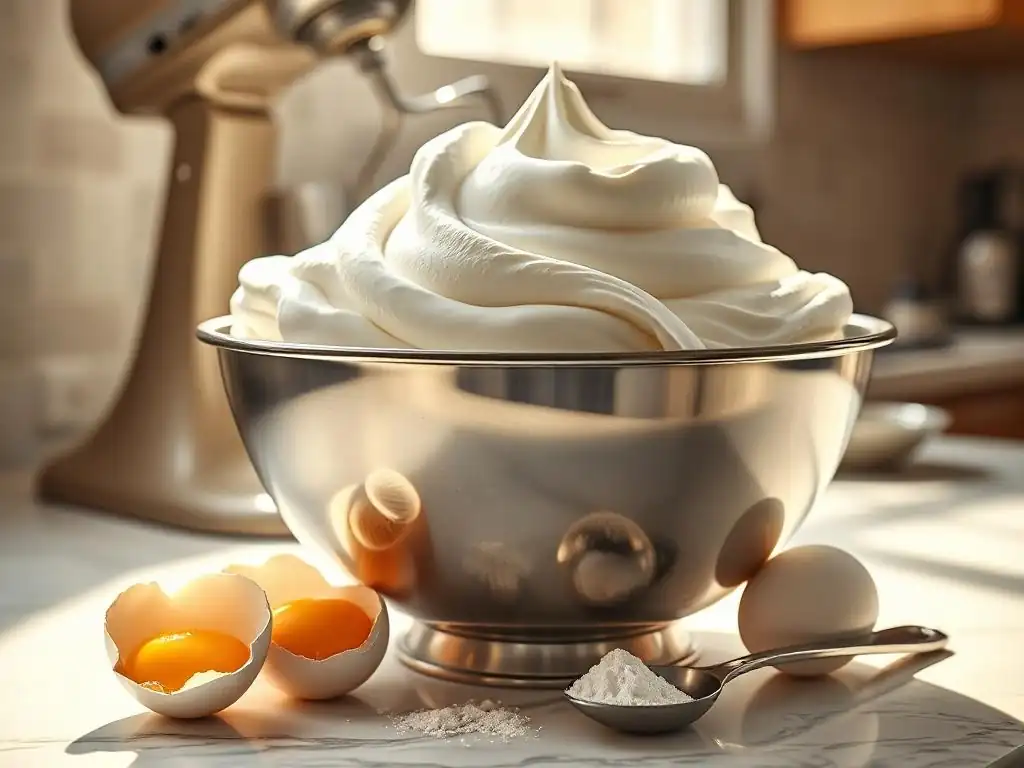
Having the right tools is just as important as using the right ingredients when aiming for maximum meringue volume. The vessel you whip in and the type of whisk you use significantly impact the air incorporation and the stability of the foam. Even seemingly minor details, like the cleanliness of your equipment, can make or break your meringue.
Investing in or selecting the appropriate equipment for meringue making can save you frustration and lead to consistently better results. These perfect meringue volume tips regarding equipment ensure you have the best possible environment for egg whites to transform into a voluminous, stable foam.
The Right Bowl: Copper, Glass, or Stainless Steel?
The material of your mixing bowl can influence meringue volume. Historically, copper bowls were favored because the copper ions react with the egg white proteins, creating a more stable foam that is less likely to over-whip. While copper bowls do offer a slight advantage in stability, they are not essential for great meringue.
Glass and stainless steel bowls are perfectly suitable, provided they are spotlessly clean and free of any grease or residue. Even a tiny trace of fat – from residual oil, butter, or egg yolk – can prevent egg whites from whipping properly, drastically reducing volume and stability. Stainless steel is durable and non-reactive, while glass allows you to easily see the whipping progress.
Avoid plastic bowls, as they can harbor grease residue even after washing. For optimal results, wash your bowl thoroughly with hot, soapy water, rinse completely, and dry it thoroughly with a clean cloth or paper towel before starting.
Choosing the Best Whisk: Stand Mixer vs. Hand Mixer
The whisk is the primary tool for incorporating air into egg whites. Both stand mixers and hand mixers can achieve excellent meringue volume, but they offer different advantages. A stand mixer with a balloon whisk attachment is ideal for larger batches and provides consistent, hands-free whipping, allowing you to monitor the stages precisely. The powerful motor and large whisk incorporate air quickly and efficiently.
A hand mixer is suitable for smaller batches and offers more control over the speed and movement, allowing you to scrape down the sides of the bowl easily. The key is to use a whisk attachment with enough wires to effectively aerate the egg whites. Whether using a stand or hand mixer, start at a low speed to break up the egg whites, then gradually increase the speed to medium-high or high to incorporate air and build volume. Avoid whipping at the highest speed for the entire duration, as this can create large, unstable bubbles.
Temperature Control: Oven Considerations for Meringue Success
While not directly related to the whipping volume, oven temperature is critical for maintaining volume and achieving the desired texture when baking meringue. Meringues are typically baked at very low temperatures (often between 200°F and 250°F or 90°C and 120°C) for an extended period. This process isn't true baking in the traditional sense but rather a slow drying process that hardens the protein structure without browning it too quickly.
Too high a temperature will cause the meringue to expand too rapidly and then crack or collapse as the proteins set unevenly. It can also lead to excessive browning. The low temperature allows the moisture to evaporate slowly, stabilizing the foam and resulting in a crisp shell. Some perfect meringue volume tips for baking include leaving the meringue in the oven after turning it off to cool down gradually, which further helps prevent shrinkage and cracking.
Step-by-Step Guide: Maximizing Meringue Volume
Achieving perfect meringue volume requires more than just whipping egg whites; it's a process with distinct stages, each building upon the last. Following a precise step-by-step method ensures you incorporate the maximum amount of air while building a stable structure that will hold its shape.
From the initial separation of egg whites to the final incorporation of sugar and flavorings, paying close attention to the details at each stage is essential for achieving that impressive lift. These perfect meringue volume tips guide you through the process for optimal results.
Preparing Your Egg Whites: Separating Techniques
The first crucial step is separating the egg whites from the yolks. Even a tiny amount of egg yolk, which contains fat, can prevent egg whites from whipping properly. The cleanest way to separate is often using the "hand method": crack the egg into your clean hand held over a bowl, letting the white slip through your fingers into the bowl while the yolk remains in your palm.
Alternatively, you can use the shell method, carefully passing the yolk back and forth between the two shell halves while letting the white fall into a bowl below. Always separate one egg at a time into a small satellite bowl before adding it to your main mixing bowl. This way, if you accidentally break a yolk, you only contaminate one egg white, not the entire batch. Ensure your eggs are at room temperature (ideally 68-72°F or 20-22°C) before separating, as they separate more cleanly and whip better.
The Crucial Step: Ensuring No Yolk Contamination
As mentioned, yolk contamination is the number one enemy of high-volume meringue. Yolk contains a significant amount of fat, and fat coats the protein molecules in the egg white, preventing them from unfolding and bonding to trap air. Even a speck can significantly reduce the volume and stability of your meringue.
After separating, visually inspect the egg whites in your satellite bowl before adding them to the main bowl. If you see any trace of yolk, discard that egg white and use a clean bowl for the next separation. Similarly, ensure your mixing bowl and whisk are completely free of grease or oil residue. Washing with hot, soapy water and drying thoroughly is essential. This vigilance is a non-negotiable perfect meringue volume tip.
Whipping Egg Whites: The Stages of Meringue Formation
Whipping egg whites is a process that progresses through several visual stages, each indicating the amount of air incorporated and the development of the protein structure. Starting at a low speed helps break up the egg whites, then gradually increasing to medium or medium-high allows for controlled air incorporation and the formation of small, stable bubbles.
-
Stage 1: Foamy Egg Whites
This is the initial stage. As you begin whipping, the egg whites will look frothy and opaque, resembling soap suds. Large, visible bubbles are present. At this point, you've incorporated some air, but the protein structure is just beginning to form. This stage is relatively unstable.
-
Stage 2: Soft Peaks
Continue whipping, and the foam will become whiter, denser, and the bubbles will be smaller. When you lift the whisk, peaks will form, but they will curl over and droop. This stage indicates a developing protein network that can hold some shape, but it's not yet strong enough for maximum volume or stability, especially once sugar is added.
-
Stage 3: Stiff, Glossy Peaks - The Key to Maximum Volume
With continued whipping, the foam becomes very white, opaque, and glossy. When you lift the whisk, the peaks will stand straight up without drooping. The meringue will feel firm and smooth. This is the stage where maximum air has been incorporated and the protein structure is strong and stable. This is the ideal consistency for most meringues where high volume is desired. Be careful not to over-whip past this point, as the meringue can become dry, grainy, and start to curdle.
Incorporating Sugar: Achieving Stability and Shine
Once the egg whites have reached the soft peak stage (or foamy stage for Swiss/Italian meringue), you begin incorporating the sugar. For French meringue, sugar is added gradually while continuing to whip. Add the sugar one or two tablespoons at a time, allowing each addition to dissolve into the meringue before adding the next. This slow addition is crucial.
Adding sugar too quickly can deflate the foam and result in a grainy texture because the sugar doesn't have time to dissolve properly. As the sugar dissolves, it bonds with the water in the egg whites and coats the protein network, stabilizing it and creating that beautiful glossy sheen characteristic of well-made meringue. Continue whipping after all the sugar is added until stiff, glossy peaks form and you can't feel any sugar crystals when rubbing a small amount of meringue between your fingers. This is a key step in achieving perfect meringue volume tips for stability.
Adding Flavorings: Extracts and Zests Without Compromising Volume
Flavorings like vanilla extract, almond extract, or citrus zest are typically added towards the end of the whipping process, once the sugar has been fully incorporated and stiff peaks have formed. It's best to add extracts drop by drop and whip briefly to combine.
Adding liquid flavorings too early or adding too much can weigh down the protein foam and reduce volume. Similarly, incorporating solid additions like nuts or chocolate chips should be done gently by hand with a spatula after the meringue is fully whipped, using a folding motion to minimize deflation. The goal is to add flavor without disrupting the delicate air structure you've worked hard to build.
Troubleshooting Common Meringue Volume Problems
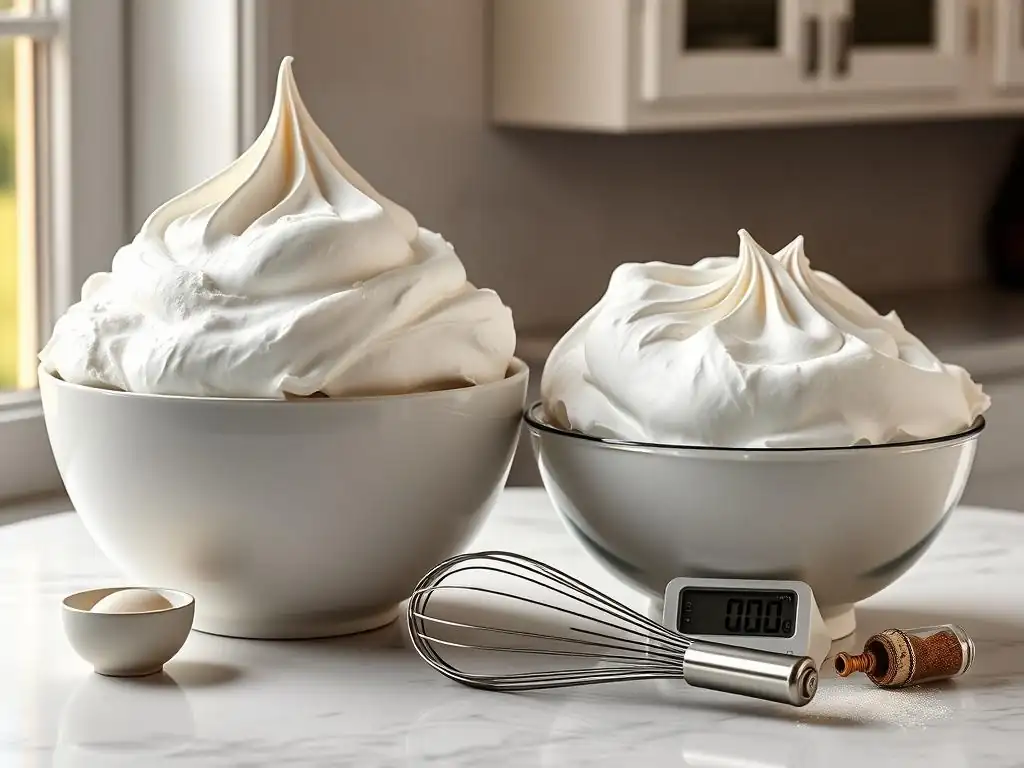
Even with careful technique, meringue can sometimes be temperamental. Knowing how to identify common issues and attempt to fix them can save your batch and improve your understanding of the process. From over-whipping to collapsing, there are typical pitfalls that bakers encounter.
Understanding the causes behind these problems is the first step towards preventing them in the future. These perfect meringue volume tips for troubleshooting will help you rescue a struggling meringue or learn from mistakes.
Over-whipped Meringue: Rescue Techniques
Over-whipping occurs when you whip the egg whites past the stiff peak stage. The protein network tightens too much, squeezing out the water. The meringue will look curdled, grainy, and lose its glossy appearance. It will also be dry and difficult to work with.
Unfortunately, over-whipped meringue is difficult to fully rescue. However, you can sometimes improve its texture slightly. Try adding one fresh, room-temperature egg white to the over-whipped meringue and gently whisking it in by hand or on the lowest mixer speed until it becomes somewhat smoother and more cohesive. It won't regain its maximum potential volume, but it might become usable for some applications like baking into cookies, though it may still be less stable and prone to cracking.
Under-whipped Meringue: How to Recover
Under-whipped meringue hasn't had enough air incorporated and the protein structure isn't fully developed or stabilized by the sugar. It will look soft, perhaps slightly runny, and lack the firm, glossy appearance of stiff peaks. If you try to use it, it will likely collapse during baking or folding.
The good news is that under-whipped meringue is easy to fix! Simply continue whipping it. Increase the mixer speed slightly if necessary and whip until it reaches the desired stiff, glossy peak stage. Keep a close eye on it to avoid over-whipping this time. This is one of the simplest perfect meringue volume tips – just keep whipping!
Meringue Collapsing: Identifying and Preventing Causes
Meringue can collapse during or after whipping, or even during baking. Common causes include:
- Fat Contamination: The most frequent culprit. Even a trace of yolk or grease on equipment prevents the protein network from forming properly. Ensure everything is spotless.
- Under-whipping: If peaks aren't stiff and stable before using or baking, the structure isn't strong enough to hold. Whip to the correct stage.
- Adding Sugar Too Fast: Dumping in a large amount of sugar at once can deflate the foam. Add it gradually, allowing it to dissolve.
- Humidity: High humidity can make meringue sticky and prone to weeping or collapsing, especially French meringue. Try baking on a dry day if possible.
- Over-mixing Flavorings: Adding too much liquid extract can break down the foam. Add carefully and briefly mix.
Preventing collapse relies on meticulous technique: clean equipment, careful separation, proper whipping to stiff peaks, gradual sugar addition, and gentle handling.
Baking Meringue: Tips for Maintaining Volume and Preventing Cracking
Baking meringue isn't like baking a cake; it's primarily a drying process. The goal is to set the protein structure and evaporate moisture without causing the meringue to brown excessively or collapse. Achieving a crisp, stable result requires patience and precise temperature control.
Maintaining the hard-earned volume during the baking process is key to the final look and texture of your meringue creation. These perfect meringue volume tips for the oven ensure your meringue stays tall and beautiful.
Temperature and Time: Finding the Sweet Spot
Meringues are typically baked at very low temperatures for a long time. A common range is 200°F to 250°F (90°C to 120°C). The exact temperature and time will depend on the size and thickness of your meringue pieces. Small meringue cookies might bake for 1-2 hours, while a large pavlova shell could take 2-3 hours or even longer.
The low heat allows the meringue to dry out and firm up slowly. Too high a temperature causes the sugar to caramelize (leading to browning) and can cause the trapped air to expand too quickly, resulting in cracks or a collapsed center. Experimenting within the low-temperature range based on your oven and the specific recipe is often necessary to find the sweet spot for perfect meringue volume tips and texture.
Cooling Techniques: Preventing Meringue Shrinkage
How you cool meringue is almost as important as how you bake it. Rapid changes in temperature can cause the meringue to contract too quickly, leading to shrinkage and cracking. The best method is to leave the meringue in the oven after turning it off.
Prop the oven door open slightly (using a wooden spoon, for example) to allow the temperature to decrease very gradually. Let the meringue cool completely inside the oven, which can take several hours. This slow cooling process allows the structure to set fully and minimizes the stress caused by temperature fluctuations, helping to maintain maximum volume and prevent those frustrating cracks.
Storing Meringue: Maintaining Crispness and Volume
Meringue is highly susceptible to moisture. Once baked and cooled, it should be stored immediately in an airtight container at room temperature. Exposure to humidity in the air will cause the meringue to absorb moisture, becoming soft, chewy, and potentially sticky.
Do not store meringue in the refrigerator, as the humid environment will ruin its texture. Properly stored meringue cookies can remain crisp for several days. Larger meringue shells or toppings should ideally be used the same day they are baked, or stored carefully if made slightly in advance, to preserve their perfect meringue volume and crispness.
Advanced Meringue Techniques for Enhanced Volume and Lift
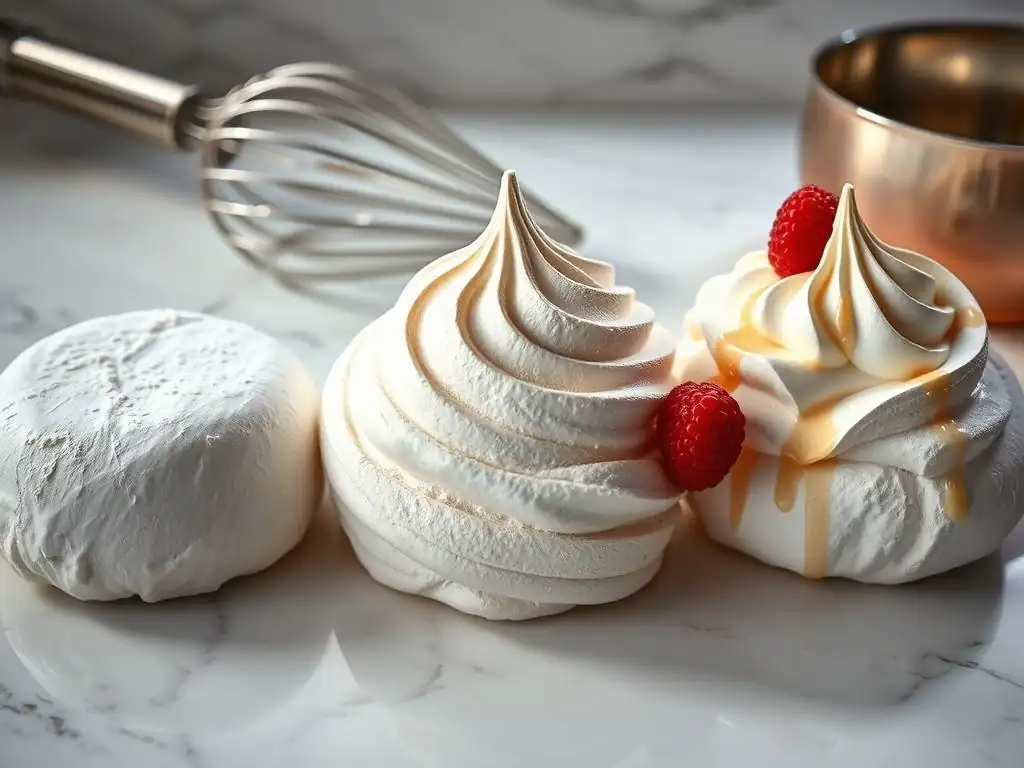
While French meringue is the simplest method, other techniques like Swiss and Italian meringue offer greater stability and often result in a denser, more marshmallowy texture while still achieving significant volume. These methods involve heating the egg whites and sugar, which partially cooks the proteins, creating a more robust and stable foam.
Exploring these advanced techniques provides alternative ways to achieve excellent meringue lift and stability, particularly useful for applications where the meringue isn't baked for a long time or needs to be very stable for piping or folding into other mixtures.
Italian Meringue: The Hot Sugar Method for Stability
Italian meringue is considered the most stable type. It is made by whipping egg whites to soft peaks, then gradually pouring a stream of hot sugar syrup (heated to 240°F or 115°C, the soft-ball stage) into the whipping egg whites while continuing to whisk. The hot syrup cooks the egg whites as it's incorporated, creating a very strong and stable foam.
This method results in a dense, glossy meringue that holds its shape exceptionally well. It's perfect for frosting cakes, topping pies (which can then be torched instead of baked), or folding into mousses and buttercreams. While it requires handling hot sugar, the stability achieved is unparalleled among meringue types, making it a go-to for impressive perfect meringue volume tips in professional settings.
Swiss Meringue: A Gentle Approach to Maximum Volume
Swiss meringue involves gently heating the egg whites and sugar together over a double boiler (or bain-marie) while whisking until the sugar is dissolved and the mixture reaches about 130-140°F (55-60°C). The mixture is then transferred to a mixer and whipped until cool and stiff, glossy peaks form.
Heating the egg whites denatures the proteins more gently than the hot syrup method of Italian meringue, resulting in a smooth, stable, and glossy meringue. It's more stable than French meringue but less so than Italian. Swiss meringue is excellent for piping decorations, making meringue buttercream, or as a base for mousses, offering great meringue lift and a fine texture.
French Meringue: The Classic Method for Volume and Texture
French meringue is the simplest and most common type, made by whipping raw egg whites and gradually adding granulated or superfine sugar. While potentially less stable than Swiss or Italian meringue, it achieves the lightest, airiest texture and the most dramatic initial volume increase during whipping.
This is the meringue typically used for baked meringue cookies, pavlova shells, or folded into batters for soufflés. Because the egg whites are raw, this type is best used in recipes where it will be baked. Mastering the techniques for French meringue, particularly careful separation, gradual sugar addition, and whipping to stiff peaks, are fundamental perfect meringue volume tips for many classic desserts.
Meringue Recipes to Showcase Your Perfect Volume
Now that you've mastered the techniques for achieving maximum volume and lift, it's time to put your skills to the test! Meringue is a versatile component used in a wide variety of desserts, each highlighting its unique qualities when properly made.
These recipe examples demonstrate how high-volume meringue contributes to the success of different classic dishes, allowing you to showcase your perfect meringue volume tips.
Meringue cookies are perhaps the most straightforward way to appreciate the texture created by high-volume meringue. Made from just egg whites, sugar, and a touch of acid and flavoring, they rely entirely on the volume and stability achieved during whipping and the slow drying process in the oven.
Piping stiff, glossy meringue onto a baking sheet and drying them at a low temperature transforms the airy foam into crisp, melt-in-your-mouth delights. Successfully baking meringue cookies without them cracking or collapsing is a true test of your perfect meringue volume tips.
Meringue Topping for Pies: Achieving a Golden Brown Finish
A classic lemon meringue pie or baked Alaska showcases meringue as a topping. Here, the meringue is piped or spread over a filling and often briefly baked at a higher temperature or torched to achieve a beautiful golden-brown finish on the peaks while remaining soft underneath.
Achieving good volume is essential for a visually appealing, tall topping that holds its shape. The stability gained from proper whipping and sugar incorporation ensures the peaks stand up proudly before browning. These perfect meringue volume tips result in a stunning and delicious topping.
Pavlova Perfection: Creating a Show-Stopping Dessert with Maximum Volume
The Pavlova is a dessert built entirely around meringue volume. A large meringue shell, crisp on the outside and soft and marshmallowy within, serves as the base for whipped cream and fruit. Achieving a tall, stable shell with a substantial interior requires significant meringue lift and careful baking.
The process involves whipping egg whites to very stiff peaks, incorporating sugar gradually, shaping the meringue, and then baking/drying it at a low temperature for an extended period. Mastering the Pavlova means mastering perfect meringue volume tips on a grand scale.
Conclusion: Mastering Meringue Volume for Baking Excellence
Achieving perfect meringue volume and lift is a skill that transforms simple egg whites and sugar into ethereal, versatile components for countless desserts. It requires understanding the science behind protein aeration, using the right ingredients and equipment, employing precise whipping techniques, and carefully managing the baking process.
By focusing on key perfect meringue volume tips – ensuring cleanliness, using fresh, room-temperature eggs, separating carefully, whipping to stiff peaks, adding sugar gradually, and baking slowly – you can consistently create stable, high-volume meringue. Whether you're making classic cookies, a towering pie topping, or a show-stopping Pavlova, mastering meringue volume is a valuable step towards greater baking excellence. Keep practicing, pay attention to the details, and enjoy the light, airy results!
Frequently Asked Questions
What is the most important factor in achieving perfect meringue volume?
The most important factor is ensuring your egg whites are completely free of any yolk or fat. Even a tiny amount can inhibit the whipping process and prevent proper volume.
Why is using room temperature egg whites recommended for meringue?
Room temperature egg whites whip up to a larger volume than cold ones. This is because they have lower surface tension, allowing them to incorporate more air more easily.
What type of bowl is best for whipping meringue?
A clean, dry stainless steel or glass bowl is ideal. Plastic bowls can retain grease, which can hinder the meringue's ability to achieve maximum volume.
How does the addition of an acid, like cream of tartar, affect meringue?
An acid helps to stabilize the egg whites, resulting in a stronger and more stable meringue. It also helps to prevent over-whipping.
What speed should I use when whipping meringue, and for how long?
Start on low speed to break up the egg whites, then gradually increase to medium-high speed. Whip until stiff, glossy peaks form, being careful not to over-whip as this can cause the meringue to collapse.
Final Reflection: The Airy Heights of the Perfect Meringue
The pursuit of the perfect meringue—that cloud-like peak of airy sweetness—is more than just a culinary quest; it's a testament to the power of precision and understanding. The techniques explored in this article, from the careful selection of eggs to the nuanced control of temperature and whipping, are not merely recipes, but pathways to mastering a delicate balance of science and artistry. This mastery translates to more than just visually stunning desserts; it represents a deeper understanding of the fundamental principles of food science and the transformative power of careful technique.
The journey to the perfect meringue, for me, has been a lesson in patience and attention to detail. It's a reminder that even the simplest ingredients can yield extraordinary results when handled with care and understanding. The art of cooking is the art of making something delicious out of nothing.
This quote, while not specifically about meringues, perfectly encapsulates the feeling of accomplishment that comes with achieving that perfect, glossy peak. The impact of this seemingly simple dessert extends beyond the plate; it's a symbol of transformation, taking humble egg whites and transforming them into something truly magical.
Now, I invite you to take what you've learned and embark on your own meringue journey. Don't be afraid to experiment, to tweak the techniques, and to discover your own unique approach. The path to the perfect meringue is a personal one, filled with both triumphs and the occasional slightly deflated peak. But remember, each attempt, each lesson learned, brings you closer to mastering this delicate art and experiencing the joy of creating something truly beautiful and delicious. So, grab your whisk, and let the airy adventure begin!
Unleash Your Inner Meringue Master!
Thanks for diving into the world of fluffy, perfect meringues! We hope you learned some valuable tips and tricks to achieve the airy heights you've always dreamed of. Now it's time to put your newfound knowledge into action.
- Whip up your dream meringue: Grab those egg whites and try out your favorite new technique from the article. Challenge yourself to create the tallest, most impressive meringue you’ve ever made!
- Share your meringue masterpiece: Post a picture of your creation on social media and tag us – we'd love to see your baking success!
- Explore other baking secrets: Dive deeper into our website and discover even more amazing recipes and tips to elevate your baking game.
Ready to create meringue magic? What unique flavor will you add to your next perfect meringue?