
Mastering the Classic Puff Pastry Lamination Technique

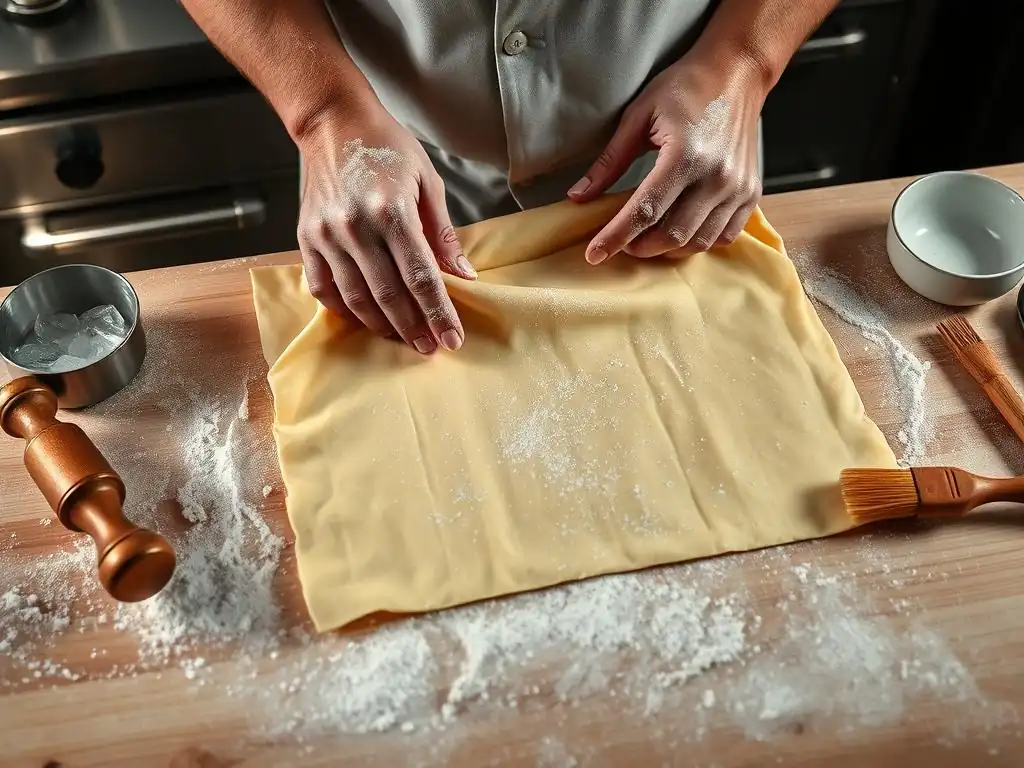
Welcome to BakeWithEase, your guide to unlocking baking brilliance! Ever wondered how to achieve that exquisitely flaky, sky-high rise in your pastries? This week, we're diving deep into perfecting the puff pastry lamination technique. Prepare to unravel the secrets behind those delicate layers and discover how even you can create bakery-worthy masterpieces. Are you ready to elevate your baking game?
- Mastering Puff Pastry Lamination: A Baker's Guide
- Introduction to Lamination: Achieving Flaky, Layered Perfection
- Understanding the Science of Puff Pastry
- Essential Ingredients for Optimal Lamination
-
Step-by-Step Guide to Puff Pastry Lamination
- Preparing the Détrempe: Mixing and Kneading the Base Dough
- Shaping the Butter Block (Beurrage): Achieving a Consistent Shape and Size
- The First Single Turn: Enclosing the Butter and Creating Initial Layers
- The Second and Third Single Turns: Developing Layer Count and Structure
- Resting the Dough: Allowing Gluten Relaxation and Butter Firming
- The Fourth and Fifth Single Turns: Refining Layering and Achieving Desired Flakiness
- Marking Turns for Consistency: Using Finger Dents to Track Progress
- Troubleshooting Common Lamination Issues
- Tips and Tricks for Successful Puff Pastry
- Baking Laminated Puff Pastry for Optimal Results
- Puff Pastry Lamination: Advanced Techniques and Applications
- Conclusion: Mastering Puff Pastry for Culinary Creativity
-
Frequently Asked Questions
- What is lamination in the context of puff pastry?
- Why is temperature control so important when laminating puff pastry?
- What are some common mistakes to avoid when laminating puff pastry?
- How many folds are typically required for a well- laminated puff pastry?
- What can I do if my butter starts to melt during the lamination process?
- Final Reflection: The Enduring Allure of Perfectly Layered Pastry
- Unlock Your Inner Pastry Chef: Master Puff Pastry Today!
Mastering Puff Pastry Lamination: A Baker's Guide
Introduction to Lamination: Achieving Flaky, Layered Perfection
Puff pastry, or pâte feuilletée as it's known in French, is a marvel of baking – incredibly light, airy, and shatteringly crisp. Its signature texture comes from a unique process called lamination. This isn't just mixing ingredients; it's a meticulous technique of repeatedly folding and rolling dough with layers of butter, creating thousands of alternating thin sheets of dough and fat.
The magic happens in a hot oven. As the pastry bakes, the butter melts, and the water content within the butter (typically around 16-18%) turns instantly into steam. This steam is trapped between the layers of dough, forcing them to expand upwards, creating the characteristic rise and delicate flakes. Mastering this lamination technique is key to unlocking the full potential of puff pastry.
Why Lamination is Essential for Quality Puff Pastry
Lamination is the sole reason puff pastry achieves its remarkable rise and flaky structure. Without the distinct layers of butter acting as barriers between the dough sheets, the steam generated during baking would simply escape, resulting in a flat, dense, and bread-like product rather than the desired light and airy pastry. It's the precise layering, achieved through careful folding and rolling, that allows the steam to perform its lifting action, separating the dough into countless delicate leaves.
Consider the desired outcome: puff pastry can rise up to eight times its original height when baked correctly. This dramatic expansion is a direct result of the steam pushing apart the thin, numerous layers created during lamination. Each fold increases the layer count exponentially; for example, performing six single turns theoretically yields over a thousand alternating layers of dough and butter. This intricate structure is what produces that signature crispness and melt-in-your-mouth flakiness that defines high-quality puff pastry.
The Baker's Almanac Guide to Successful Puff Pastry
Perfecting puff pastry lamination technique hinges on a few core principles: using the right ingredients, maintaining strict temperature control, executing precise folding techniques, and allowing adequate rest periods. It's a process that demands patience and attention to detail, but the results are incredibly rewarding. Think of it as building a delicate, edible structure, layer by painstaking layer.
Consistency is paramount throughout the entire process. From shaping the initial butter block to rolling the dough to an even thickness before each fold, uniformity ensures that the final pastry bakes evenly and achieves a consistent rise and texture. Many bakers mark their dough with finger dents – one dent for the first turn, two for the second, and so on – to keep accurate track of their progress towards the required number of turns, often six single turns or three double turns, depending on the recipe and desired outcome.
Understanding the Science of Puff Pastry
Achieving perfect puff pastry isn't just about following steps; it's about understanding the science behind the lamination process. The interaction between butter, flour (specifically gluten), and temperature is fundamental to creating those sought-after layers.
Butter's Role in Layer Formation and Expansion
Butter is arguably the most critical ingredient in puff pastry lamination. When kept cold and solid, it can be rolled into incredibly thin sheets between layers of dough. During baking, as the oven temperature rises rapidly, the butter melts, and its water content flashes into steam. This steam is then trapped by the surrounding dough layers, forcing them apart and causing the pastry to puff dramatically.
The fat content of the butter also plays a significant role. High-fat butter, like European-style butter which typically contains 82% fat compared to the standard American 80%, is preferred. The higher fat percentage means less water and a higher melting point (though this is slight). Critically, the fat creates a more complete barrier between the dough layers, preventing them from sticking together and allowing for maximum separation and lift when the steam expands.
Gluten's Impact on Dough Elasticity and Structure
Gluten, formed when the proteins in flour (glutenin and gliadin) are hydrated and developed through mixing and kneading, provides the dough with its necessary structure and elasticity. This elasticity is what allows the dough to be rolled out repeatedly into thin sheets without tearing, which is essential for the lamination process. The gluten network holds the shape of the layers as the steam expands during baking.
However, too much gluten development can be detrimental. An overly strong or tight gluten network makes the dough tough and elastic, causing it to resist rolling and spring back excessively. This can lead to uneven layers and shrinkage during both the lamination process and baking. Resting the dough between turns allows the gluten strands to relax, making the dough pliable and easier to handle, a key step in perfecting puff pastry lamination technique.
Temperature Control: Maintaining Butter Solidification
Maintaining a cold temperature throughout the lamination process is non-negotiable. The butter must remain solid and distinct from the dough layers. If the butter warms up too much, it softens, incorporates into the dough, and loses its ability to create separate layers during rolling and act as a steam barrier during baking. The result is a greasy, dense pastry.
The ideal temperature for both the dough and your working environment is crucial. The dough should be kept chilled, typically between 4°C and 10°C (39°F and 50°F), and returned to the refrigerator between each turn. Working quickly in a cool kitchen (ideally below 20°C or 68°F) helps prevent the butter from softening prematurely. If the dough feels warm or the butter seems too soft at any point, an immediate rest in the refrigerator is necessary to solidify the butter and relax the dough.
Essential Ingredients for Optimal Lamination
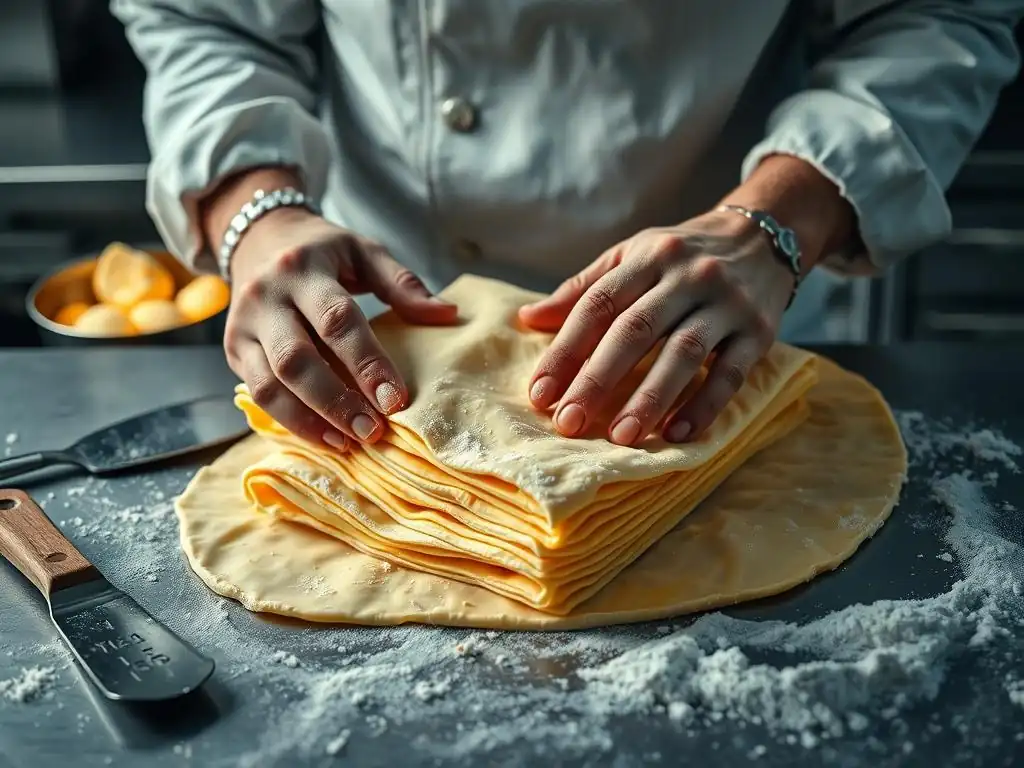
While the technique is key, the quality and type of ingredients used significantly impact the success of puff pastry lamination. Choosing the right components sets the stage for achieving those perfect, flaky layers.
Flour Selection: Choosing Flour with Appropriate Protein Content
The type of flour you use directly influences the dough's strength and elasticity, which are critical factors in lamination. A medium-protein flour, such as all-purpose flour with a protein content typically ranging from 10% to 12%, is generally recommended for puff pastry. This provides enough gluten for the dough to be elastic and strong enough to withstand repeated rolling without tearing, yet not so much that it becomes tough or overly resistant to handling.
Using a flour with too low protein (like cake flour, often 8-10%) can result in a dough that tears easily during rolling, making lamination difficult or impossible. Conversely, flour with very high protein (like bread flour, 12-14%+) can create a dough with excessive elasticity and strength, leading to significant shrinkage and difficulty in rolling thin, even layers. Finding the right balance in protein content is vital for a pliable yet structured dough base for perfecting puff pastry lamination technique.
Butter: High-Fat European-Style Butter for Flavor and Texture
The butter is the heart of puff pastry's flakiness and flavor. Using a high-quality, high-fat butter, often referred to as European-style butter, is highly recommended. These butters typically contain around 82% butterfat, compared to the 80% found in many standard American butters. The slightly higher fat content means less water, which results in clearer layer separation during baking and contributes to a richer flavor and tender texture.
Beyond fat content, the consistency of the butter is paramount during the lamination process. The butter block (beurrage) needs to be cold but pliable – firm enough to hold its shape and be rolled into thin sheets, but not so hard that it cracks and breaks apart within the dough. Achieving the right butter consistency, often by gently warming it slightly from refrigerator temperature or beating it, is a crucial step to ensure smooth, even layers throughout the dough.
Water: Cold Water for Dough Hydration and Temperature Control
Water is essential for hydrating the flour and enabling gluten development, which provides the dough's structure. However, the temperature of the water is critical for puff pastry. Using cold water helps to keep the initial dough temperature low, which is vital for preventing the butter from softening too early in the process and for controlling the rate of gluten development, preventing the dough from becoming too tough from the start.
The amount of water used also affects the dough's consistency. The goal is a dough (détrempe) that is firm but not dry, and pliable enough to be rolled easily. Too much water can make the dough sticky and difficult to handle, while too little results in a crumbly dough that won't form a cohesive network for lamination. The cold water also contributes to the steam that lifts the layers during baking, making its role multifaceted in perfecting puff pastry lamination technique.
Salt: Enhancing Flavor and Controlling Gluten Development
Salt is included in puff pastry dough for more than just flavor, although its contribution to balancing the richness of the butter is significant. Salt also plays a structural role by tightening the gluten network in the dough. This strengthening effect makes the dough more elastic and easier to handle and roll out thinly without tearing, which is necessary for creating the numerous layers.
However, like gluten development, the amount of salt needs to be balanced. Too much salt can make the gluten network too tight, resulting in a tough dough that is difficult to roll and prone to shrinkage. Typically, salt is used at about 1.5% to 2% of the flour weight. Its presence helps create a more manageable dough consistency throughout the demanding process of repeated rolling and folding required for successful lamination.
Step-by-Step Guide to Puff Pastry Lamination
Mastering puff pastry lamination technique involves a precise sequence of steps, each building upon the last to create the thousands of delicate layers that define this classic pastry. Patience and attention to detail are key at every stage.
Preparing the Détrempe: Mixing and Kneading the Base Dough
The first step is creating the détrempe, the base dough for your puff pastry. This typically involves combining flour, salt, cold water, and sometimes a small amount of butter or other fat. The key here is minimal mixing – just enough to bring the ingredients together into a cohesive, relatively firm dough. Avoid over-kneading, as this develops too much gluten too early, which will make the dough tough and difficult to roll later. The goal is a smooth but not highly elastic dough.
Once mixed, the détrempe needs to rest. Wrap the dough tightly in plastic wrap and refrigerate it for at least 30 minutes, but ideally for 1-2 hours. This resting period allows the gluten network, which was slightly developed during mixing, to relax. It also gives the flour time to fully hydrate with the water. A well-rested détrempe will be much more pliable and less resistant to rolling when you begin the lamination process.
Shaping the Butter Block (Beurrage): Achieving a Consistent Shape and Size
Simultaneously with resting the détrempe, prepare the butter block, known as the beurrage. The butter should be cold but pliable – not hard and brittle straight from the fridge. You can achieve this by gently beating it with a rolling pin or briefly mixing it. Shape the butter into a consistent rectangle or square, typically about half the surface area of your rolled-out détrempe. Rolling it between two sheets of parchment paper is an easy way to achieve a uniform thickness and shape.
The consistency and shape of the beurrage are crucial for even layer distribution. If the butter is too hard, it will break into pieces during rolling; if too soft, it will ooze out. It should be firm enough to maintain its shape but pliable enough to roll smoothly with the dough. An evenly sized block ensures that the butter is spread uniformly across the dough sheet, leading to consistent layers and even puffing during baking, essential for perfecting puff pastry lamination technique.
The First Single Turn: Enclosing the Butter and Creating Initial Layers
Once the détrempe is rested and the beurrage is shaped, you perform the first turn. Roll the détrempe into a rectangle roughly twice the size of your butter block. Place the butter block on one half of the dough rectangle. Fold the other half of the dough over the butter, completely enclosing it. Pinch the edges firmly together to seal the butter inside the dough package. This creates the initial layers – typically two layers of dough sandwiching one layer of butter.
This step is critical as it sets up the foundation for all subsequent layers. Ensuring the butter is fully enclosed and the seams are well-sealed prevents the butter from escaping during later rolling steps. The dough and butter should ideally be at a similar temperature and consistency so they roll together smoothly without the butter breaking or squishing out unevenly.
The Second and Third Single Turns: Developing Layer Count and Structure
After the first turn and a necessary rest period in the refrigerator (usually 30-60 minutes), you perform the second turn. Remove the dough, place it seam-side down on a lightly floured surface, and rotate it 90 degrees so the seam is facing you. Roll the dough out into a long, even rectangle, about three times as long as it is wide. Brush off any excess flour. Fold one-third of the dough up towards the center, and then fold the remaining third down over the top, like folding a letter. This completes one 'single turn'.
Repeat this process for the third single turn, again following it with a rest period in the refrigerator. Each single turn triples the number of layers from the previous step. After the first enclosure, you have a few layers. After the first single turn, you have roughly 3 times that amount. After the second single turn, you have 3 times the layers from the first single turn, and after the third, 3 times the layers from the second. This rapid multiplication of layers is how the intricate structure of puff pastry is built.
Resting the Dough: Allowing Gluten Relaxation and Butter Firming
Resting the dough in the refrigerator between each turn is not optional; it's a fundamental requirement for successful lamination. Each time you roll and fold the dough, you develop the gluten network, making the dough more elastic and resistant. Rolling also generates friction, which can warm the dough and soften the butter.
The rest period, typically 30 to 60 minutes (or longer, even overnight), serves two crucial purposes: it allows the gluten strands to relax, making the dough pliable and easy to roll for the next turn without shrinking or tearing, and it allows the butter layers to firm up again. If the butter is too soft when you attempt to roll, it will squeeze out or blend into the dough rather than staying in distinct layers. Adequate chilling ensures the butter maintains its integrity between the dough sheets, which is vital for perfecting puff pastry lamination technique.
The Fourth and Fifth Single Turns: Refining Layering and Achieving Desired Flakiness
Continuing the lamination process, perform the fourth and fifth single turns, each interspersed with a necessary rest period in the refrigerator. By this stage, you are significantly increasing the number of layers. Starting with an initial few layers and performing five single turns results in a massive number of very thin layers – theoretically over 1000 distinct layers of dough and butter.
These later turns are where the truly fine layering is developed, leading to the ultimate flakiness of the baked pastry. The dough should become progressively easier to roll evenly as the layers increase, provided it is adequately rested and kept cold. The precision in rolling and folding during these final turns refines the structure, ensuring uniform puffing and a delicate, crisp texture in the finished product. Most classic puff pastry recipes call for a total of six single turns or the equivalent in double turns.
Marking Turns for Consistency: Using Finger Dents to Track Progress
Keeping track of the number of turns completed is essential for consistency and achieving the desired layer count. A simple yet effective method used by bakers is to gently press finger dents into the corner or edge of the dough after each turn and before resting it. For single turns, you might make one dent after the first turn, two after the second, and so on.
This visual reminder prevents confusion, especially when working with multiple batches or if the process is interrupted. Forgetting a turn means fewer layers and less puff; doing too many can make the layers too thin and prone to tearing or fusing. Using finger dents ensures you complete the correct number of turns required by your recipe, a small detail that contributes significantly to perfecting puff pastry lamination technique.
Troubleshooting Common Lamination Issues
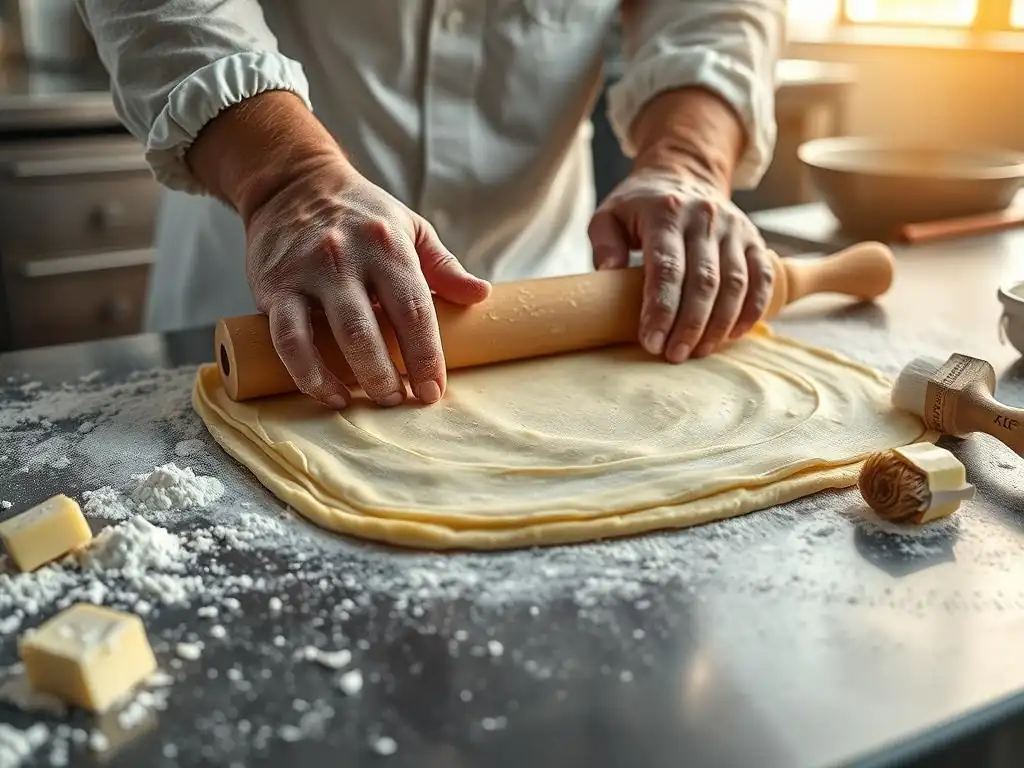
Even experienced bakers encounter challenges when working with puff pastry. Understanding common problems and their solutions is part of the journey to perfecting puff pastry lamination technique.
Butter Leaking: Preventing Butter Softening and Seam Failures
One of the most frustrating issues is butter leaking out from the dough during rolling. This typically happens when the butter has become too soft and warm, causing it to ooze out from the edges, or if the seams weren't properly sealed after folding. Warm butter loses its structure and its ability to create distinct layers, compromising the final flakiness.
To prevent butter leaking, strict temperature control is key. Ensure both the dough and butter are kept cold (ideally 4-10°C/39-50°F) throughout the process, resting the dough in the refrigerator as needed. Work quickly and efficiently to minimize the time the dough is at room temperature. Crucially, make sure to firmly pinch and seal the edges of the dough after enclosing the butter and after each subsequent fold (turn) to create a secure package that keeps the butter contained during rolling.
Tough Dough: Avoiding Overmixing and Gluten Overdevelopment
Tough, elastic dough that resists rolling is a common sign of excessive gluten development. This can result from overmixing the initial détrempe, insufficient resting periods between turns, or attempting to force the rolling process when the dough is still too tense. Tough dough is difficult to work with and can lead to uneven layers and a chewy, rather than flaky, final texture.
To avoid tough dough, mix the détrempe minimally, just until the ingredients are combined. Ensure you allow adequate resting time (30-60 minutes minimum) in the refrigerator between each turn. This allows the gluten network to relax, making the dough pliable. If the dough feels very resistant or springs back significantly while you're rolling, stop, cover it, and let it rest for another 15-30 minutes before continuing. Using a medium-protein flour also helps manage gluten development.
Uneven Layers: Ensuring Consistent Rolling Pressure and Dough Thickness
Uneven layers manifest as areas of the baked pastry that puff more or less than others, resulting in a lopsided or inconsistent texture. This is usually caused by rolling the dough to an uneven thickness during the lamination process – some parts being thicker than others. When baked, the thinner sections may overcook or not puff as much, while thicker sections may not cook through properly.
Achieving consistent rolling pressure is vital for preventing uneven layers. Roll the dough evenly across the entire surface, applying steady, uniform pressure with your rolling pin. Lift and rotate the dough frequently (e.g., after every few passes with the rolling pin) to help maintain an even shape and thickness and prevent sticking. Pay attention to the edges and corners, ensuring they are rolled out to the same thickness as the center. Starting with an evenly shaped butter block also contributes to uniform distribution.
Dough Shrinkage: Relaxing Dough Properly and Preventing Over-handling
Dough shrinkage, where the dough pulls back after being rolled or cut, is another symptom of a tense gluten network. Like tough dough, it's often a result of insufficient resting, overworking, or excessive gluten development. This tension causes the dough to retract when the force of rolling or cutting is removed.
The primary solution for dough shrinkage is sufficient rest. Ensure the dough is adequately chilled and rested between each turn to allow the gluten to relax. Before the final rolling and cutting, give the dough a generous rest (at least an hour, preferably longer) to ensure it is completely relaxed. Handle the dough gently during rolling; avoid stretching or pulling it forcefully. If it resists or shrinks back while rolling, stop and let it rest again until it becomes pliable.
Tips and Tricks for Successful Puff Pastry
Beyond the fundamental steps, several tips and tricks can significantly improve your chances of success when perfecting puff pastry lamination technique, making the process smoother and the results more consistent.
Maintaining a Cold Environment: Refrigerating Dough and Work Surface
Keeping everything cold is the golden rule of puff pastry. The dough and butter must be kept chilled (4-10°C/39-50°F) at all times when not actively being rolled. This means resting the dough in the refrigerator between each turn for the recommended time. Working in a cool kitchen environment, ideally below 20°C (68°F), also helps prevent the butter from softening too quickly while you are rolling.
Consider chilling your tools as well. You can place your rolling pin in the refrigerator or freezer for a while before you start. Some bakers even chill their work surface if possible or place ice packs near their workspace (not touching the dough) to help maintain a low ambient temperature around the dough as they work. Working quickly and confidently also minimizes the dough's exposure to warmer temperatures.
Using a Marble Pastry Board: Keeping Butter Cool and Preventing Sticking
A marble pastry board is an excellent tool for puff pastry lamination. Marble naturally stays cooler than most other kitchen countertop materials like wood or laminate. This inherent coolness helps to keep the butter layers within the dough from warming up and melting as you roll, which is crucial for maintaining distinct layers and preventing leaks.
While marble is cool, you will still need to use a light dusting of flour on the surface and your rolling pin to prevent the dough from sticking. The smooth, non-porous surface of marble also makes it easier to roll the dough smoothly and evenly compared to surfaces with grain or texture that the dough might catch on. Its weight and stability are also beneficial for the physical process of rolling out stiff, cold dough.
Properly Sealing Edges: Preventing Butter Escape and Layer Separation
Ensuring the edges are properly sealed at key points is critical for preventing butter from leaking out during rolling and baking. After placing the butter block on the détrempe for the first turn, carefully pinch the edges of the dough together to completely encase the butter. This creates a secure package.
Similarly, after each subsequent fold (single or double turn), press the edges gently but firmly together to seal the layers. Poorly sealed edges can act as escape routes for the melted butter during baking, leading to reduced lift and potentially fused layers. Taking the time to properly seal the edges after each fold ensures that the steam generated during baking is trapped, effectively lifting and separating the layers evenly.
Utilizing a Dough Sheeter for Uniformity: Streamlining the Rolling Process
For those serious about making large quantities of puff pastry consistently, or in a professional setting, a dough sheeter can be an invaluable tool. A dough sheeter is a machine with adjustable rollers that allows you to roll dough to a precise, uniform thickness across its entire width. This eliminates the potential for variations in thickness that can occur with hand-rolling.
Using a dough sheeter significantly streamlines the most physically demanding and consistency-critical part of perfecting puff pastry lamination technique. It ensures that each layer is rolled to the exact same thickness every time, leading to incredibly uniform layers and predictable, even puffing during baking. While an investment, it guarantees a level of precision that is difficult to achieve consistently by hand, especially with large batches.
Baking Laminated Puff Pastry for Optimal Results
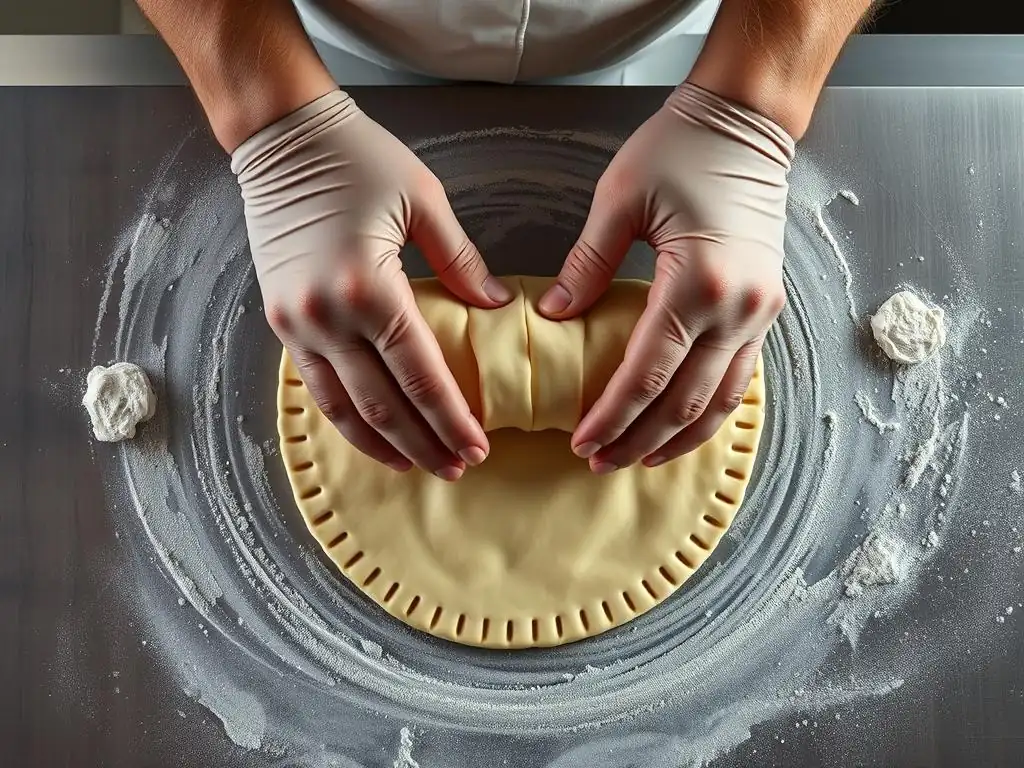
The lamination process creates the potential for incredible flakiness, but successful baking is what unlocks it. Proper oven temperature and technique are just as crucial as the rolling and folding itself.
Preheating the Oven: Achieving High Heat for Rapid Puffing
Getting the oven temperature right is paramount for achieving maximum puff. Puff pastry requires a high initial temperature to cause the butter to melt quickly and the water within it to convert instantly into steam. This rapid steam expansion is what forces the thousands of delicate dough layers apart, creating the characteristic rise. A common starting temperature is quite high, often between 200°C and 220°C (400°F and 425°F).
It's not enough for the oven to just reach the set temperature; it needs to be thoroughly preheated. This means allowing the oven to preheat for at least 20-30 minutes after it indicates it has reached the target temperature, ensuring the walls and racks are also hot. Placing puff pastry in an underheated oven will cause the butter to melt and leak out slowly before the steam can lift the layers, resulting in a flat, greasy, and disappointing pastry.
Baking Temperatures and Times: Adjusting for Pastry Size and Filling
Baking puff pastry often involves starting at a high temperature for initial puff, then reducing the heat to allow the layers to cook through and crisp up without burning the exterior. A typical approach is to bake at 200-220°C (400-425°F) for the first 10-15 minutes to maximize lift, then drop the temperature to 180-190°C (350-375°F) to finish baking until golden brown and cooked through.
The total baking time and temperature adjustments depend heavily on the size and thickness of the pastry item and whether it contains a filling. Small items like cheese straws or palmiers might only take 12-18 minutes. Larger items such as vol-au-vent shells or a substantial tart crust could require 25-40 minutes or even longer. Filled pastries need careful monitoring to ensure the filling is cooked and the pastry is done without becoming too dark. The pastry should sound hollow when tapped lightly on the bottom.
Avoiding Soggy Bottoms: Using Perforated Baking Sheets and Ensuring Proper Air Circulation
A common baking issue is a soggy bottom crust, where the underside of the pastry remains damp and unappetizingly soft. This occurs when moisture (either from the dough, butter, or a filling) gets trapped underneath the pastry during baking, preventing the bottom layers from crisping up properly.
To combat soggy bottoms, ensure good air circulation around the base of the pastry. Using perforated baking sheets (sheets with small holes) is highly effective, as they allow hot air to circulate directly underneath the pastry, promoting even cooking and crisping of the bottom layers. Placing the baking sheet on a lower oven rack or directly on a preheated baking stone or steel can also help direct heat more effectively to the bottom of the pastry, ensuring a crisp base. For items with very wet fillings, par-baking the pastry shell first might be necessary.
Using Baking Stones or Steel: Promoting Even Bottom Crust Development
Utilizing a baking stone or baking steel is an excellent way to ensure a perfectly crisp bottom crust on your puff pastry. These dense surfaces absorb and retain a significant amount of heat from the oven. When you place your baking sheet directly onto a preheated stone or steel, it provides a burst of intense, even heat transfer to the bottom of the pastry.
To use this technique, place the baking stone or steel in your oven while it preheats and allow it to heat up fully (typically 30-60 minutes depending on the oven and stone/steel). Then, carefully slide your baking sheet with the prepared puff pastry directly onto the hot surface. This concentrated heat from below helps the bottom layers of the pastry cook quickly and evenly, preventing sogginess and contributing to a beautifully crisp and golden base, complementing the flaky top layers achieved by perfecting puff pastry lamination technique.
Puff Pastry Lamination: Advanced Techniques and Applications
Once you've mastered the classic puff pastry lamination technique, you can explore variations and a wide range of delicious applications, both sweet and savory.
Variations on the Classic Technique: Reverse Puff Pastry (Pâte Feuilletée Inversée)
While the classic method involves enclosing a butter block within a détrempe, an advanced variation is reverse puff pastry, or pâte feuilletée inversée. In this technique, a mixture of flour and butter (sometimes called a beurre manié or simply the butter block) is rolled out, and then the détrempe is enclosed within it. The lamination turns are then performed as usual.
Proponents of the reverse method claim it results in an even flakier, more tender pastry with less tendency to shrink. Because the butter is on the outside, it helps keep the dough pliable and prevents it from drying out during rolling. However, it can be slightly more challenging to handle initially due to the large amount of butter on the exterior, requiring careful temperature control to keep the butter firm enough to roll without melting.
Sweet and Savory Applications: Croissants, Vol-au-vents, and More
The lamination technique isn't limited to just puff pastry; it's the foundation for many other classic pastries. Croissants, for example, use a yeasted dough that is then laminated with butter, similar to puff pastry. This creates a pastry that is both flaky from the lamination and slightly soft and bread-like in the interior due to the yeast.
Beyond croissants, laminated dough is incredibly versatile. Classic savory applications include vol-au-vents (hollow puff pastry cases perfect for creamy fillings), sausage rolls, and crusts for dishes like beef Wellington or pâté en croûte. Sweet treats abound, from simple palmiers (elephant ears) rolled in sugar, to delicate mille-feuille (Napoleon) layered with cream, to fruit turnovers and tart shells. Perfecting puff pastry lamination technique opens up a vast world of culinary possibilities.
Regional Variations: Exploring Different Doughs and Fillings
While French pâte feuilletée is the most widely recognized laminated dough, variations exist in different culinary traditions, sometimes achieving similar layered textures through slightly different methods. Rough puff pastry, for instance, involves cutting cold butter into the dough rather than enclosing a solid block, requiring fewer turns and yielding a slightly less uniform but still flaky result, often used for tarts or toppings.
Other cultures achieve layered effects differently. Austrian strudel dough, while not laminated with butter layers, is stretched incredibly thin, and multiple layers are created by rolling it up with a filling, resulting in a crisp, flaky texture. Greek phyllo dough consists of numerous paper-thin sheets layered with butter or oil; these sheets are made by stretching or machine-rolling dough to extreme thinness, a different process than folding butter into dough but also aiming for a multi-layered crispness in dishes like baklava or spanakopita. These examples highlight the diverse ways bakers worldwide pursue layered pastry perfection.
Conclusion: Mastering Puff Pastry for Culinary Creativity
Mastering puff pastry lamination technique is undoubtedly one of the more challenging but ultimately rewarding skills in baking. It requires patience, precision, and an understanding of how butter, flour, and temperature interact. Each fold, each rest, and each moment of temperature control contributes to the thousands of delicate layers that create puff pastry's unique texture.
While the process demands attention to detail, the results are unparalleled: a pastry that is incredibly light, airy, and shatteringly crisp. The ability to create perfect puff pastry opens the door to a vast array of sweet and savory applications, from simple turnovers to elaborate vol-au-vents and classic French desserts. Embrace the challenge, learn from each attempt, and enjoy the delicious journey of perfecting this classic lamination technique.
Frequently Asked Questions
What is lamination in the context of puff pastry?
Lamination is the process of creating layers of butter and dough within puff pastry. This results in the characteristic flaky texture when baked.
Why is temperature control so important when laminating puff pastry?
Maintaining a cold temperature is crucial because it prevents the butter from melting and absorbing into the dough. This ensures distinct layers and proper puffing during baking.
What are some common mistakes to avoid when laminating puff pastry?
Overworking the dough, not keeping the butter cold enough, and uneven rolling can all lead to a tough and less flaky puff pastry. Patience is key!
How many folds are typically required for a well- laminated puff pastry?
Generally, 4-6 folds, either single or double, are sufficient to create hundreds of distinct layers of butter and dough. More folds don't always equal a better result.
What can I do if my butter starts to melt during the lamination process?
Immediately stop, refrigerate the dough for at least 30 minutes to allow the butter to solidify, and then continue with the lamination process. A cold workspace is also helpful.
Final Reflection: The Enduring Allure of Perfectly Layered Pastry
The pursuit of the perfect puff pastry, with its delicate layers and melt-in-your-mouth texture, remains a testament to the enduring power of culinary precision. Mastering the lamination technique isn't just about creating a beautiful pastry; it's about understanding the fundamental principles of gluten development, fat distribution, and the transformative power of heat. This knowledge transcends the simple act of baking and opens doors to a world of creative possibilities.
The impact of this seemingly simple technique extends far beyond the kitchen. The patience, precision, and attention to detail required mirror the dedication needed in many aspects of life. The rhythmic folding and rolling, the anticipation of the oven's magic, it's a meditative process. The art of making good pastry is to be found in the precision of the process, not in the speed.
This quote, though not directly about puff pastry, perfectly encapsulates the essence of mastering this technique and its broader implications. The beauty of the final product is a direct reflection of the care and attention invested in the process.
Consider the lessons learned here. The meticulous folding, the careful chilling – these are not just steps in a recipe, but metaphors for achieving any ambitious goal. You, too, can achieve extraordinary results with dedication and attention to detail. So, the next time you face a challenging task, remember the patience and precision required to create a perfect puff pastry. Embrace the process, savor the journey, and revel in the exquisite reward of your own hard work and dedication. Now, go forth and create something truly magnificent!
Unlock Your Inner Pastry Chef: Master Puff Pastry Today!
Thanks for taking the time to explore the art of puff pastry lamination with us! We hope you gained valuable insights and feel more confident tackling this classic technique. Now it's time to put your newfound knowledge into action.
- Attempt a simple recipe: Start with a basic recipe like palmiers or cheese straws. This is the best way to build confidence and practice your newly acquired skills.
- Share your creations: Show off your beautiful, flaky pastries on social media using #BakeWithEasePuffPastry – let's inspire each other!
- Explore advanced techniques: Once you've mastered the basics, try experimenting with different fillings and shapes. The possibilities are endless!
Ready to transform ordinary ingredients into extraordinary pastries? What delicious puff pastry treat will you bake first?