
Cracked Cake Tops: Causes and Simple Solutions

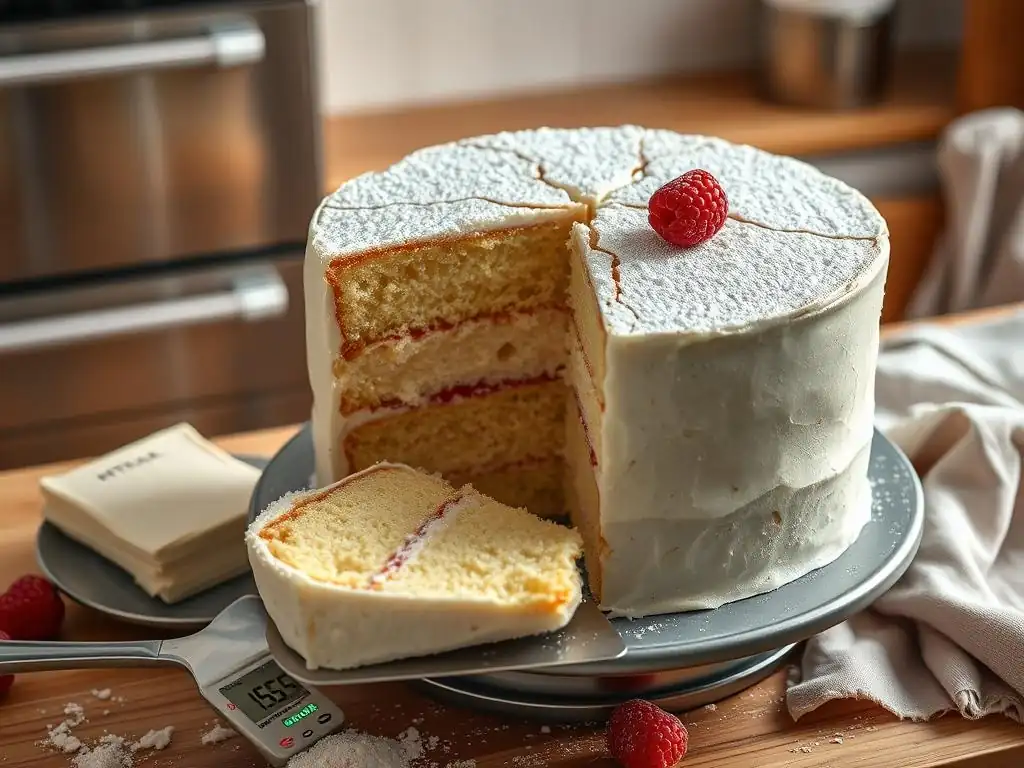
Welcome to BakeWithEase, your friendly guide to baking brilliance! Ever wondered why your cake tops crack, seemingly defying your best efforts? Fear not, fellow baker! This article dives deep into the mystery of cracked cake tops fix easy, revealing the surprisingly simple causes and providing actionable solutions to achieve that picture-perfect finish. Prepare to unlock the secrets to smoother, more beautiful cakes with our expert tips and hacks. Intrigued? Let's get baking!
Oven Temperature Troubles: High Heat and Rapid Expansion
One of the most frequent culprits behind those frustrating cracked cake tops is an oven that's running too hot, or simply setting the temperature too high for the specific recipe. When the oven heat is excessive, the outside of the cake bakes and sets much faster than the inside. This rapid setting forms a crust prematurely.
As the inside of the cake continues to bake and rise, it pushes against this already-set crust. Since the crust isn't flexible, it eventually gives way under the pressure, resulting in those familiar fissures and cracks on the surface. It's a bit like trying to inflate a balloon inside a rigid box – something has to break!
This phenomenon is particularly common with richer cakes, larger cakes, or those baked in deeper pans, as the center takes longer to heat through and expand. For instance, baking a dense pound cake at 375°F (190°C) when it calls for 325°F (160°C) almost guarantees a cracked top. The outer edges will solidify quickly, while the slow-to-heat center pushes upwards, creating significant stress on the surface. Finding an easy cracked cake tops fix often starts with understanding how your oven's heat affects the batter's structure as it bakes.
Solution: Calibrating Your Oven for Accurate Baking Temperatures
Many home ovens are not perfectly calibrated, meaning the temperature displayed on the dial or screen isn't the actual temperature inside. Variations of 25°F (about 15°C) or more are quite common. This inaccuracy can be a major factor in achieving an easy cracked cake tops fix. To check your oven's accuracy, place an oven thermometer on the center rack and preheat the oven to a standard baking temperature, like 350°F (175°C). Leave it for at least 20-30 minutes to stabilize, then check the thermometer reading. Do this a few times to get an average.
Knowing the true temperature allows you to make adjustments. If your oven consistently runs 25°F hot when set to 350°F, you know to set it to 325°F (160°C) when a recipe calls for 350°F. This simple step of using an oven thermometer and adjusting accordingly is a surprisingly effective and easy cracked cake tops fix that directly addresses a root cause.
Solution: Lowering the Oven Temperature for Even Baking
If you suspect your oven temperature is too high, or even if it's accurate but the recipe seems prone to cracking, lowering the temperature slightly can make a significant difference. A general guideline is to reduce the temperature by about 25°F (15°C). For example, if a recipe calls for baking at 350°F (175°C), try baking at 325°F (160°C) instead. This lower, gentler heat allows the cake to rise more slowly and evenly, giving the center more time to catch up with the edges before the crust sets.
Keep in mind that lowering the temperature will likely increase the baking time. If a cake typically bakes in 30-35 minutes at 350°F, it might take 40-45 minutes or longer at 325°F. Always start checking for doneness a bit earlier than the original recipe time, using the toothpick test. This adjustment is another straightforward and easy cracked cake tops fix that promotes a more uniform bake and reduces stress on the developing crust.
- What are the most common causes of cracked cake tops?
- How can I prevent my cake top from cracking in the first place?
- Is a cracked cake top always a sign that I've done something wrong?
- Can I fix a cracked cake top after it's already baked?
- Does the type of cake recipe affect how likely it is to crack?
Frequently Asked Questions
What are the most common causes of cracked cake tops?
The most common causes are too high of an oven temperature, overmixing the batter, or using too much flour. These factors can lead to rapid expansion and cracking.
How can I prevent my cake top from cracking in the first place?
Lowering the oven temperature by a few degrees, gently folding in the dry ingredients, and accurately measuring ingredients, especially flour, are key. Additionally, avoid overbaking the cake.
Is a cracked cake top always a sign that I've done something wrong?
Not necessarily! Sometimes, a slight crack is unavoidable, especially with certain cake types. However, excessive cracking usually indicates an issue with the baking process.
Can I fix a cracked cake top after it's already baked?
Yes, you can! You can level the cake and use frosting to cover the cracks. Alternatively, you can create a filling that will fill the cracks and add moisture to the cake.
Does the type of cake recipe affect how likely it is to crack?
Yes, it does. Recipes with a higher proportion of sugar or leavening agents (like baking powder) tend to be more prone to cracking. Dense cakes are less susceptible to cracking than lighter, airier cakes.
Final Reflection: The Sweet Science of a Perfect Cake Top
The seemingly simple act of baking a cake reveals a surprising depth of scientific principles, and a cracked top remains a common frustration for even experienced bakers. Understanding the "why" behind cracked cake tops empowers us to achieve consistently beautiful and delicious results, transforming baking from a potential source of disappointment into a rewarding and predictable process.
The pursuit of the perfect cake top transcends mere aesthetics; it speaks to our desire for mastery and control in the kitchen. It's a reflection of our dedication to creating something beautiful and shareable, a testament to the joy found in both the process and the product. Baking is at once child's play and adult joy. And love, of course.
– Alma Flor Ada. This quote perfectly encapsulates the emotional connection we have with baking, and the frustration a cracked cake can bring. The knowledge gained from understanding the causes of cracked tops allows us to reclaim that joy and avoid unnecessary setbacks.
Now, consider your own baking experiences. Have you ever been disheartened by a cracked cake? Remember that feeling? This article provided you with the tools to prevent that disappointment in the future. Take this knowledge, experiment with the solutions presented, and embrace the journey of perfecting your cake-baking skills. Each successful bake, each perfectly smooth top, will be a testament to your growing expertise and a delicious reward for your efforts. Don't let a cracked top define your baking journey; let it be a stepping stone to even greater success.
Rescue Your Cracked Cakes!
Thanks for taking the time to learn about those pesky cracked cake tops! We hope you now feel equipped to bake flawlessly. Ready to put your newfound knowledge into practice?
- Bake your best cake yet: Try out one of the solutions we discussed – perhaps a lower oven temperature or a water bath? We bet you'll see a difference!
- Share your baking triumph (or learning experience!): Snap a photo of your perfectly smooth (or deliciously imperfect!) cake and share it on social media! Use #BakeWithEase to join our community.
- Explore our cake recipe collection: Discover new recipes and techniques to elevate your baking skills even further! We have tons of ideas to try.
Ready to conquer cracked cake tops once and for all? What's your go-to tip for preventing cracked cakes?