
The Role of Salt in Controlling Fermentation and Dough Strength

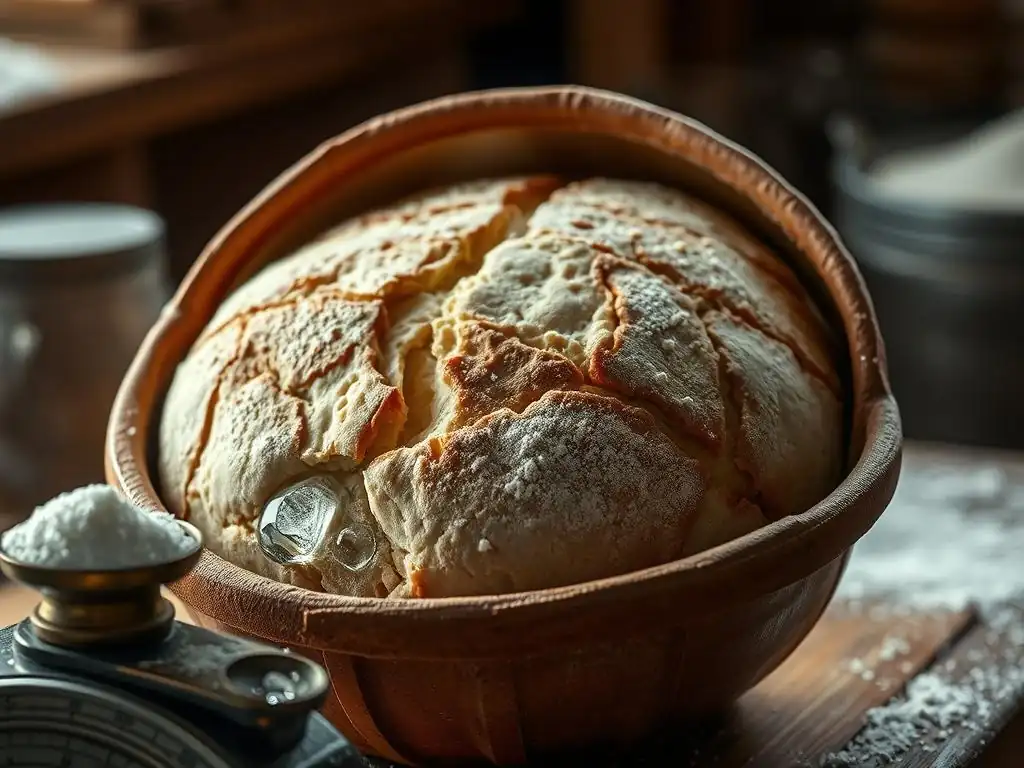
Welcome to BakeWithEase, your trusted guide to the wonderful world of baking! Ever wondered how such a simple ingredient could have such a profound impact? Get ready to unravel the secrets of salt and its crucial role in controlling sourdough fermentation strength. Discover how this seemingly humble component can be the key to achieving perfectly balanced flavors and textures in your next sourdough masterpiece. Intrigued? Let's dive in and unlock the power of salt!
- Introduction: Salt's Crucial Role in Sourdough Baking
- Understanding Fermentation and its Impact on Dough
- Salt's Impact on Sourdough Fermentation: A Deep Dive
- Salt and Dough Strength: Building Gluten Structure
- The Science Behind Salt's Effect on Sourdough
- Troubleshooting: What Happens When Salt is Too Low or Too High?
- Practical Applications: Using Salt to Control Your Sourdough
- Salt Varieties and Their Effects on Sourdough
- Advanced Techniques: Salt, Hydration, and Temperature
- Summary: Mastering Sourdough with Salt as a Key Ingredient
- Frequently Asked Questions
- Final Reflection: The Unsung Power of Salt in Baking
- Unlock Your Baking Potential: Master Salt's Secrets!
Introduction: Salt's Crucial Role in Sourdough Baking
Salt is a fundamental ingredient in bread baking, often listed right after flour and water. While its primary role in our minds might be flavor enhancement, salt plays an equally vital, albeit less obvious, part in the complex process of sourdough fermentation and the development of dough structure. It's not just about making your bread taste good; it's about making the dough behave correctly.
In sourdough, where live cultures of wild yeast and lactic acid bacteria drive the leavening, controlling their activity is key to a successful bake. This is where salt steps in, acting as a powerful moderator. Understanding how salt interacts with both the microbial life and the gluten network in your dough is essential for any sourdough baker aiming for consistent, high-quality results.
Understanding Fermentation and its Impact on Dough
What is Fermentation and How Does it Affect Dough Strength?
Fermentation in sourdough is the metabolic process carried out by the wild yeasts and lactic acid bacteria present in the starter. These microorganisms consume sugars in the flour, producing carbon dioxide gas, alcohol, and a variety of organic acids, primarily lactic and acetic acids. The carbon dioxide gas is what causes the dough to rise, creating the airy structure we desire in bread.
As the dough ferments, the gluten network develops and strengthens. This network, formed by the proteins glutenin and gliadin when hydrated and worked, acts like a balloon, trapping the CO2 gas produced by the microbes. The acids produced during fermentation also contribute to strengthening the gluten by slightly lowering the dough's pH, making the protein network more stable and elastic, thus building dough strength capable of holding the gas.
The Importance of Controlled Fermentation in Sourdough
Controlled fermentation is paramount in sourdough baking. It ensures adequate gas production for proper rise, allows for the development of complex flavors from the microbial activity and enzymatic breakdown of flour components, and builds sufficient dough strength to support the final loaf structure. Uncontrolled fermentation, often too fast or too slow, can lead to numerous issues.
If fermentation is too rapid (often due to high temperatures or insufficient control), the dough can over-proof quickly, leading to a collapsed structure, dense crumb, and overly sour flavor. Conversely, if it's too slow, the dough may not rise sufficiently, resulting in a dense loaf with underdeveloped flavor. Achieving the right balance is a delicate dance, and salt is a key partner in guiding the pace.
Salt's Impact on Sourdough Fermentation: A Deep Dive
How Salt Regulates Yeast Activity During Fermentation
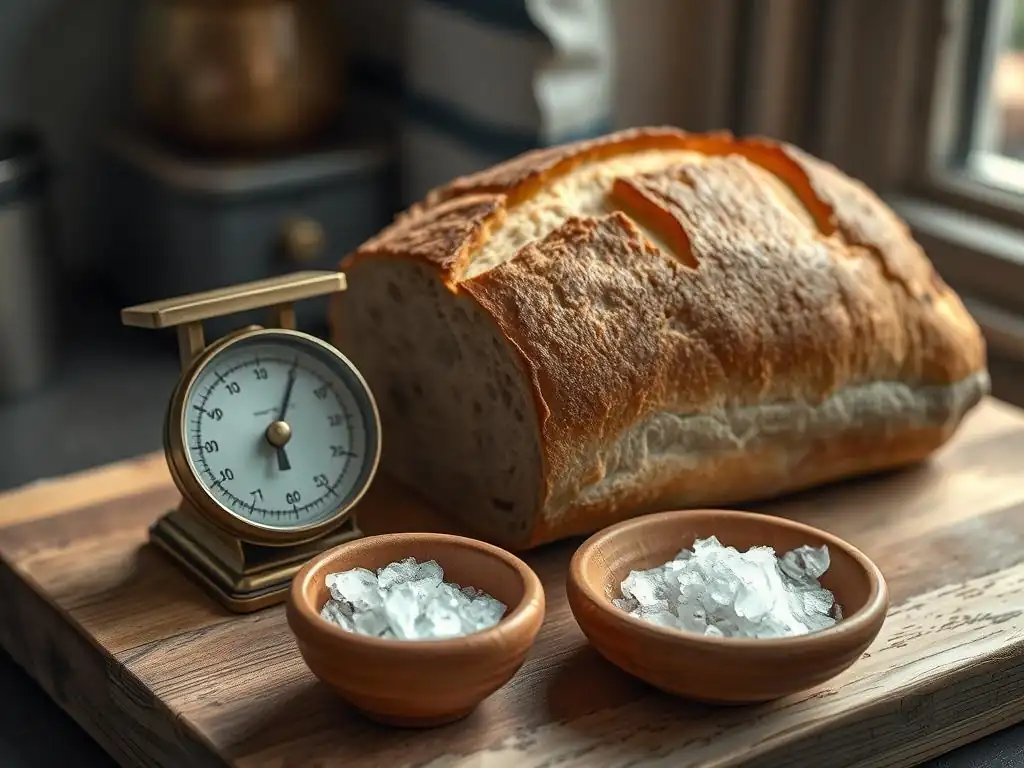
Salt directly influences the activity of the wild yeasts and bacteria in your sourdough starter through a process called osmosis. When salt is present in the dough, it creates a higher solute concentration outside the microbial cells than inside. This causes water to be drawn out of the cells, slowing down their metabolic processes, including the conversion of sugars into gas and acids.
At typical baking concentrations (around 1.8% to 2.2% of flour weight), salt doesn't kill the microbes but acts as a significant moderator. For example, adding 2% salt to a dough can slow down the bulk fermentation time by as much as 20-30% compared to an unsalted dough at the same temperature. This slower pace allows for more controlled development of flavor and structure over a longer period.
Salt's Influence on Enzyme Activity in Sourdough
Beyond its effect on microbes, salt also influences the activity of enzymes present in the flour, such as amylase. Amylase breaks down complex starches into simpler sugars, which are then consumed by the yeast and bacteria. While this enzyme activity is necessary, excessive breakdown can lead to a dough that is overly sticky and lacks structure, particularly in longer fermentation processes.
Salt helps to moderate the rate at which these enzymes work. By slightly inhibiting their activity, salt ensures that the starch breakdown occurs at a more controlled pace. This helps maintain better dough consistency throughout fermentation, preventing the dough from becoming too gummy or slack and contributing to the overall ability of salt to control sourdough fermentation strength.
The Relationship Between Salt Concentration and Fermentation Speed
The relationship between salt concentration and fermentation speed is inversely proportional: higher salt concentration leads to slower fermentation, and lower concentration leads to faster fermentation. This is primarily due to the osmotic effect on the microorganisms. A dough with 1% salt will ferment considerably faster than a dough with 2% salt under identical conditions.
Bakers leverage this relationship to manage their fermentation timeline. If working in a warm environment where fermentation is naturally rapid, a slightly higher salt percentage (e.g., 2.2%) can help keep the process in check. Conversely, in a cooler environment or with a less active starter, a standard 2% or slightly lower (e.g., 1.8%) might be preferred to ensure adequate rise within a reasonable timeframe. This highlights how Salt controls sourdough fermentation strength by modulating the gas production rate.
Salt and Dough Strength: Building Gluten Structure
Salt's Role in Strengthening Gluten Bonds
Salt plays a crucial role in the physical structure of the dough, specifically in developing and strengthening the gluten network. Gluten is formed when the proteins glutenin and gliadin in flour are hydrated and mixed. Salt (sodium chloride, NaCl) dissociates into Na+ and Cl- ions when dissolved in the dough's water. These ions interact with the charged protein chains.
By neutralizing some of the charges on the gluten proteins, salt allows the proteins to get closer to each other. This proximity facilitates the formation of stronger protein-protein bonds, including disulfide bonds, which are critical for a robust gluten network. The result is a dough that is more cohesive, less sticky, and easier to handle.
How Salt Affects Dough Elasticity and Extensibility
A well-developed gluten network, enhanced by the presence of salt, gives dough two key properties: elasticity and extensibility. Elasticity is the dough's ability to spring back after being stretched, while extensibility is its capacity to be stretched without tearing. Salt contributes to making the dough more elastic and slightly less extensible than unsalted dough.
This balance is vital for trapping the carbon dioxide gas produced during fermentation. An overly extensible dough might stretch thin and tear, allowing gas to escape. An elastic dough, bolstered by salt, resists this over-stretching and snaps back, effectively containing the gas within the network, leading to a lighter, airier crumb structure and better oven spring. This is a direct way salt contributes to dough strength.
Optimal Salt Levels for Enhanced Dough Development
Finding the optimal salt level is key to balancing fermentation control and gluten development. For most bread doughs, including sourdough, the sweet spot for salt is typically between 1.8% and 2.2% based on the weight of the flour (baker's percentage). This range provides sufficient osmotic pressure to regulate microbial activity without completely inhibiting it, while also maximizing gluten development.
Below this range, the dough can be excessively sticky, difficult to handle, and fermentation may proceed too rapidly, leading to poor structure and flavor. Above this range, fermentation can be severely inhibited, resulting in a dense loaf, and the salt flavor can become overpowering. Sticking within this optimal window is crucial for harnessing how Salt controls sourdough fermentation strength effectively.
The Science Behind Salt's Effect on Sourdough
Osmotic Pressure and its Connection to Salt in Sourdough
Osmotic pressure is a fundamental concept explaining how salt impacts microbial activity. It's the pressure required to prevent the inward flow of water across a semipermeable membrane. In the context of sourdough, the cell membranes of yeast and bacteria act as these membranes. When salt is dissolved in the dough's water, it increases the concentration of solutes outside the microbial cells.
Water naturally moves from an area of lower solute concentration to an area of higher solute concentration to try and equalize the balance. Thus, water is drawn out of the microbial cells into the surrounding dough matrix. This dehydration stresses the cells and slows down their metabolic rate, including the production of gas and acids, thereby controlling fermentation speed.
Salt's Interaction with Gluten Proteins Explained
The interaction between salt and gluten proteins is largely ionic. Gluten is made of glutenin and gliadin proteins, which contain amino acids with positively and negatively charged side chains. In the presence of water, these proteins hydrate and begin to form a network. Salt (NaCl) dissociates into Na+ and Cl- ions.
These ions are attracted to the charged regions on the gluten proteins, effectively shielding or neutralizing some of these charges. This screening effect reduces the repulsion between protein molecules, allowing them to get closer together and form more numerous and stronger cross-links, including disulfide bonds. This results in a tighter, more organized, and stronger gluten structure.
Chemical Reactions Influenced by Salt During Sourdough Fermentation
While osmosis and protein interaction are the primary mechanisms, salt can also subtly influence other chemical reactions. It affects enzyme activity, as mentioned, by potentially altering their conformation or the ionic environment they operate in. Salt can also have a minor impact on the dough's pH.
The presence of salt can slightly buffer changes in pH during fermentation. Although the organic acids produced by lactic acid bacteria are the main drivers of pH reduction, salt's ionic nature can play a small role in stabilizing the environment. These subtle chemical influences contribute to the overall complex interplay that determines the final characteristics of the sourdough.
Troubleshooting: What Happens When Salt is Too Low or Too High?
Consequences of Insufficient Salt in Sourdough
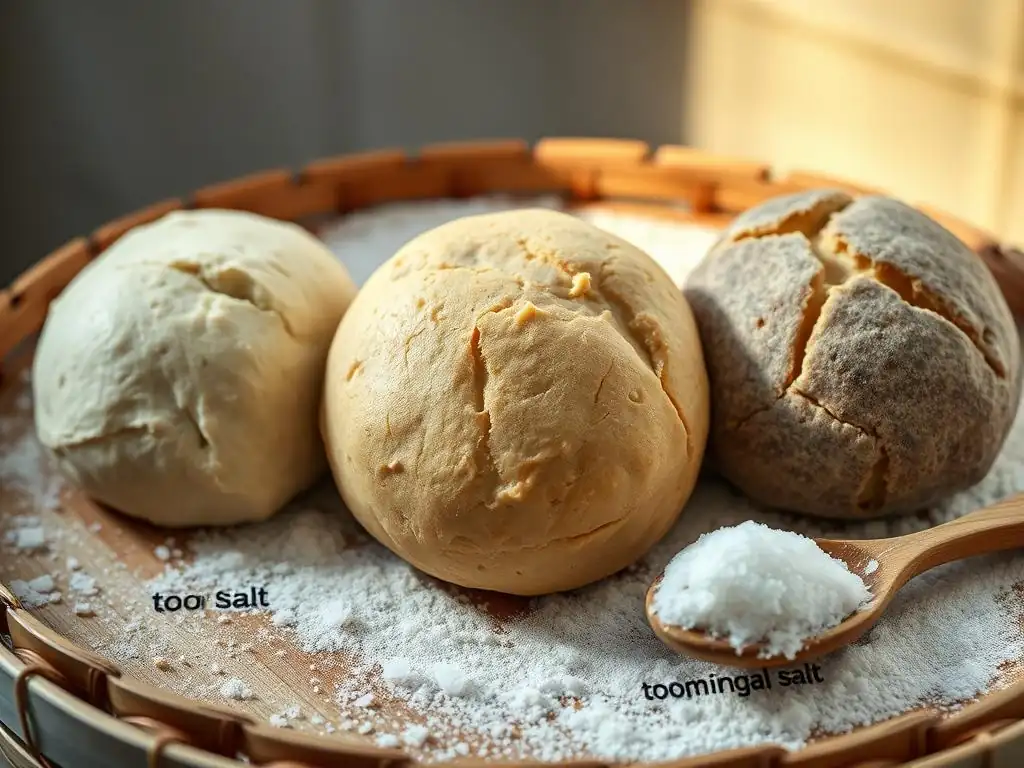
Using insufficient salt in your sourdough can lead to several problems. Without enough salt to regulate microbial activity, fermentation can proceed too quickly and uncontrollably. This increases the risk of over-proofing, where the dough rises rapidly but then collapses because the gluten network isn't strong enough to hold the excessive gas or has been weakened by excessive enzymatic action.
A lack of salt also significantly compromises dough strength. The gluten network won't develop as effectively, resulting in a dough that is sticky, slack, and difficult to handle and shape. The final loaf will likely have poor structure, limited oven spring, a dense or irregular crumb, a pale crust (as salt aids in crust browning), and a noticeably bland flavor. For example, a dough with only 1% salt might feel much stickier and less cohesive than one with 2% salt.
Problems Associated with Excessive Salt in Sourdough
Conversely, using too much salt can be equally detrimental. High salt concentrations create a very strong osmotic pressure, which can severely inhibit the activity of yeast and bacteria. This leads to significantly slower fermentation, potentially resulting in an under-proofed dough that doesn't rise sufficiently.
Excess salt also makes the dough very stiff and tight, reducing both its elasticity and extensibility. It becomes difficult to stretch and shape without tearing. The final bread will likely have a dense crumb, poor volume, and a harsh, overly salty flavor. For instance, a dough made with 3% or 4% salt might hardly rise at all, producing a very flat, tough loaf.
Adjusting Salt Levels for Optimal Sourdough Results
Finding the optimal salt level for your specific baking environment and starter activity is part of the sourdough journey. While the 1.8% to 2.2% range is a great starting point, slight adjustments might be beneficial. If your kitchen is very warm, a level closer to 2.2% might help slow things down. If it's cold or your starter is sluggish, a level closer to 1.8% might encourage a bit more activity, provided dough strength isn't compromised.
It's crucial to make these adjustments gradually and observe the dough's behavior. Pay attention to fermentation speed, dough handling characteristics, and the final loaf structure and flavor. Consistent measurement of salt using a digital scale is non-negotiable to ensure reproducibility and understand the impact of any adjustments.
Practical Applications: Using Salt to Control Your Sourdough
Determining the Right Amount of Salt for Your Recipe
Determining the correct amount of salt involves using baker's percentages, which express each ingredient's weight as a percentage of the flour weight. Most sourdough recipes call for salt in the range of 1.8% to 2.2% of the total flour weight. To calculate the exact amount, multiply the total weight of flour in your recipe by the desired salt percentage (as a decimal).
For example, if your recipe uses 500 grams of flour and you want a 2% salt concentration, you would calculate 500g * 0.02 = 10 grams of salt. Using a digital scale to weigh your salt accurately is crucial, as volume measurements (like teaspoons) can vary significantly depending on the type and grain size of the salt, leading to inconsistent results.
Techniques for Incorporating Salt Effectively into Dough
Properly incorporating salt ensures its effects on fermentation and gluten development are uniform throughout the dough. The most common method is to add the salt after the initial mixing phase, often after an "autolyse" period (where flour and water rest together). This allows the flour to hydrate fully before the salt begins its work on the gluten.
Some bakers dissolve the salt in a small amount of water before adding it, which helps ensure even distribution. Others sprinkle it evenly over the dough surface before folding or kneading. The key is to mix it in thoroughly until no salt granules are visible and the dough feels uniformly affected. Avoid adding salt directly onto the starter if incorporating them separately, as high localized concentration can harm the microbes.
Salt as a Tool for Manipulating Fermentation Time and Dough Texture
Understanding how Salt controls sourdough fermentation strength allows bakers to use it as a deliberate tool. Need your bulk fermentation to last a bit longer at room temperature because you have errands to run? Slightly increasing the salt percentage (e.g., from 2% to 2.2%) can help slow down the microbial activity.
Conversely, if you find your fermentation is consistently too slow in a cool kitchen, slightly decreasing the salt (e.g., from 2% to 1.8%) might speed it up, provided your dough still develops sufficient strength. Similarly, salt impacts texture; higher salt can lead to a tighter crumb, while slightly lower salt might result in a more open crumb, though care must be taken not to compromise structure. Experimentation within the recommended range is key.
Salt Varieties and Their Effects on Sourdough
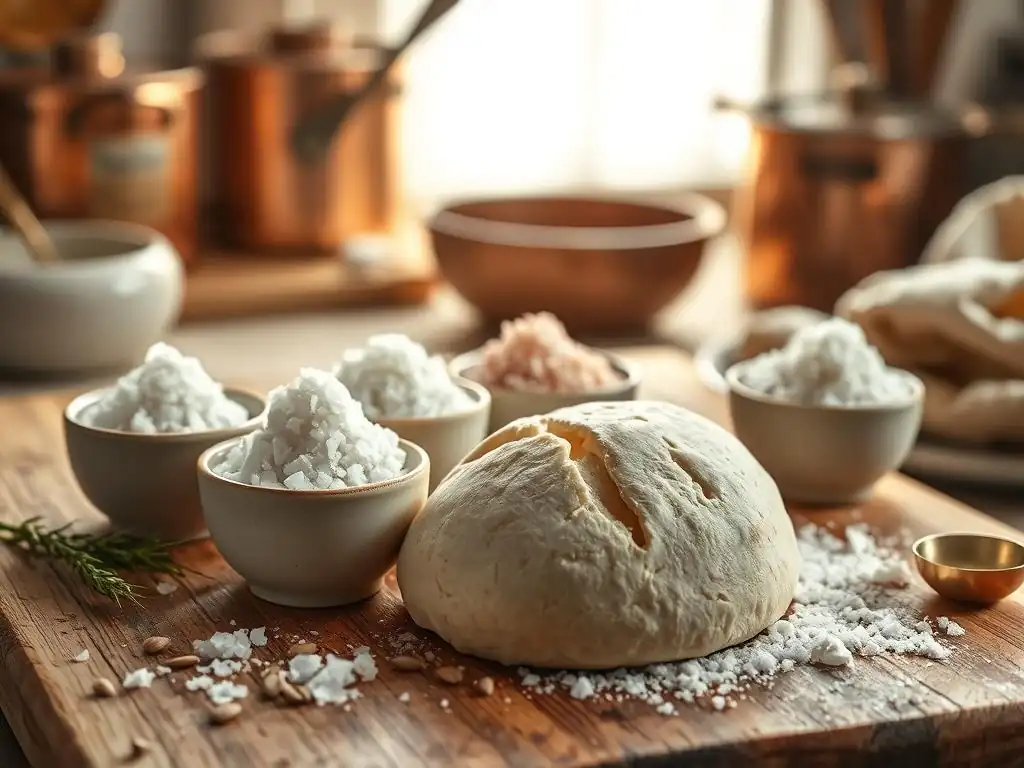
Table Salt vs. Sea Salt vs. Kosher Salt: Which is Best?
When it comes to sourdough, the type of salt can have minor differences in effect, primarily related to crystal size and additives. Table salt is typically fine-grained and often contains anti-caking agents and iodine. Kosher salt has larger, flaky crystals and usually contains no additives. Sea salt comes in various grain sizes and may contain trace minerals but is usually additive-free.
For consistent baking, many bakers prefer non-iodized salt like kosher or sea salt. Iodine can potentially affect yeast activity, although its impact at typical baking concentrations is often debated and minimal. Anti-caking agents can also subtly interfere. Kosher salt's larger flakes mean a volume measurement (like a teaspoon) will contain less salt by weight than fine table salt, making weighing essential for accuracy regardless of type.
Mineral Content in Salt and its Impact on Fermentation
While the primary component of all culinary salt is sodium chloride (NaCl), sea salts and some rock salts contain trace minerals like magnesium, calcium, and potassium, depending on their source and processing. These minerals are sometimes suggested to impact fermentation or flavor.
In reality, at the standard 1.8-2.2% salt concentration used in bread, the effect of these trace minerals on microbial activity or gluten development is generally considered negligible compared to the dominant effects of sodium chloride itself. The osmotic pressure exerted by NaCl and its interaction with gluten proteins are the overwhelming factors. Focus should remain on the NaCl content and accurate weighing.
Choosing the Right Salt for Your Baking Needs
For most sourdough bakers, the best salt is a pure, non-iodized salt that they can weigh accurately and consistently. Fine sea salt or kosher salt are popular choices due to their purity and lack of additives. The consistent shape and size of fine sea salt or the flaky nature of kosher salt can be easier to work with than irregular rock salts.
Ultimately, the choice often comes down to personal preference and what is readily available. What matters most is consistently using the same type of salt and, critically, weighing it precisely for every batch. This ensures that the crucial functions of salt – controlling fermentation and strengthening dough – are reliably achieved batch after batch.
Advanced Techniques: Salt, Hydration, and Temperature
How Salt Interacts with Hydration Levels in Sourdough
Salt's impact is particularly noticeable in high-hydration sourdoughs (doughs with 75%+ water relative to flour). In these wetter doughs, the gluten network needs all the help it can get to build structure and trap gas. Salt's ability to strengthen gluten bonds is crucial for making these slack doughs manageable, giving them the necessary tension and elasticity.
In lower hydration doughs (e.g., 60-65% hydration), the flour absorbs less water, resulting in a stiffer dough where the gluten develops more easily through mechanical mixing alone. While salt still contributes to strength and fermentation control, its role in structuring the dough might appear less dramatic compared to very wet doughs. The effective concentration of salt within the water phase is technically higher in lower hydration doughs, which can slightly amplify its effects on fermentation.
The Influence of Temperature on Salt's Effectiveness
Temperature is the primary driver of fermentation speed. Wild yeast and bacteria are much more active in warmer temperatures (e.g., 75-80°F or 24-27°C) than in cooler ones (e.g., 65-70°F or 18-21°C). Salt's role in controlling this activity works in conjunction with temperature.
At warmer temperatures, where microbes are rapidly producing gas and acid, salt's inhibitory effect is essential to prevent the dough from fermenting too quickly and over-proofing before structure can fully develop. In colder temperatures, where microbial activity is already slow, salt's effect is still present but less critical for preventing runaway fermentation. Understanding this interplay is key to managing your sourdough process across different seasons or environments.
Fine-Tuning Salt Levels Based on Environmental Factors
Experienced bakers sometimes adjust salt levels slightly based on their environment and desired outcome. In hot, humid climates, a slightly higher salt percentage (e.g., 2.2%) can provide extra insurance against rapid fermentation. Conversely, in very cold kitchens or when deliberately trying to accelerate a slow starter, a reduction to 1.8% might be considered, provided the baker is prepared to manage a potentially stickier, weaker dough.
These adjustments are advanced techniques and should be made incrementally, perhaps by just 0.1% or 0.2% at a time, with careful observation. Relying on standard percentages (1.8-2.2%) is recommended for consistency until you fully understand how your starter, flour, and environment interact. Remember that Salt controls sourdough fermentation strength, and small changes can have noticeable effects.
Summary: Mastering Sourdough with Salt as a Key Ingredient
Key Takeaways: Salt's Multifaceted Role in Sourdough Baking
Salt is far more than just a flavor enhancer in sourdough bread. It is a critical ingredient that performs several vital functions, primarily controlling the rate of fermentation and building the strength of the dough's gluten network. Through osmosis, salt regulates the activity of wild yeast and lactic acid bacteria, preventing fermentation from happening too quickly.
Simultaneously, salt strengthens the gluten structure by facilitating stronger protein bonds, making the dough more elastic and less sticky. This improved structure is essential for trapping the gas produced during fermentation, leading to better volume and a more desirable crumb texture. Salt also contributes to a better crust color and, of course, enhances the overall flavor profile by balancing the acidity produced by fermentation.
Tips for Achieving Consistent Results with Salt
To consistently achieve great sourdough results, treat salt with the importance it deserves. Always weigh your salt using a digital scale, adhering closely to the percentages provided in recipes (typically 1.8% to 2.2% of flour weight). Avoid using volume measurements, as they are inaccurate for salt.
Use a consistent type of pure, non-iodized salt, such as kosher or fine sea salt. Ensure the salt is evenly incorporated into the dough during mixing. By understanding and respecting the crucial role salt plays – how Salt controls sourdough fermentation strength, flavor, and texture – you gain a powerful tool for mastering your sourdough baking process and producing delicious, well-structured loaves every time.
Frequently Asked Questions
What role does salt play in sourdough fermentation?
Salt is crucial for slowing down and controlling sourdough fermentation. It inhibits the activity of undesirable bacteria while still allowing the yeast to function, contributing to a more balanced flavor profile.
How does salt affect the strength of sourdough dough?
Salt strengthens the gluten network in sourdough, making the dough more elastic and easier to handle. This improved dough strength leads to a better rise and crumb structure.
What happens if I add too much salt to my sourdough?
Too much salt can significantly retard fermentation, leading to a dense, under-risen loaf. It can also negatively affect the flavor, making the bread overly salty.
What happens if I don't add enough salt to my sourdough?
Insufficient salt can result in over-fermentation, a sticky dough that's difficult to work with, and a loaf with a weak structure. The flavor may also be unpleasantly sour.
When should I add salt to my sourdough dough?
While some bakers add salt at the beginning, it's often best to add it after the autolyse (resting period). This allows the flour to fully hydrate before the salt begins to impact the gluten development.
Final Reflection: The Unsung Power of Salt in Baking
The delicate balance between fermentation and dough strength, a cornerstone of successful baking, hinges on the often-overlooked role of salt. Its impact extends far beyond simple seasoning; it's a crucial regulator, influencing the very character and quality of our bread. Understanding this intricate relationship is not merely academic; it's the key to unlocking consistent, delicious results every time we bake.
The influence of salt on sourdough fermentation is a fascinating study in the interplay between science and art. It's a subtle dance, where precise measurements can dramatically alter the final product. The control salt offers over yeast activity and gluten development is a testament to the power of seemingly simple ingredients. As the renowned baker, Chad Robertson, once said, Salt is the unsung hero of bread baking. It’s not just about flavor; it’s about structure, texture, and time.
This quote perfectly encapsulates the depth of salt's influence, highlighting its multifaceted role beyond mere taste.
Now, consider your own baking journey. Have you ever experienced unpredictable fermentation, a dough that's too sticky or too weak? Perhaps a closer look at your salt measurements is in order. I encourage you to experiment, to meticulously observe the effects of varying salt quantities on your sourdough starters and doughs. By understanding the science behind this crucial ingredient, you'll not only elevate your baking skills but also deepen your appreciation for the intricate processes that transform simple flour and water into the nourishing and delicious bread we all cherish.
Unlock Your Baking Potential: Master Salt's Secrets!
Thanks for diving deep into the world of salt and its surprising role in baking! You've now gained valuable insights into controlling fermentation and achieving perfect dough strength. Ready to put this knowledge into practice?
- Experiment with Salt Ratios: Try varying the salt percentage in your next bread recipe—even a small adjustment can make a big difference in flavor and texture. Note the results! This is the key to mastering your technique.
- Share Your Salt Story: Tell us about your baking experience with different salt levels! Share your successes (and even your mishaps!) in the comments below. Let's learn from each other.
- Explore Advanced Techniques: Delve into the nuances of different salt types—sea salt, kosher salt, table salt—and their impact on your baking.
What surprising results have you discovered when experimenting with salt in your baking?