
From Creaming to Folding: Techniques to Introduce Air Without Deflation

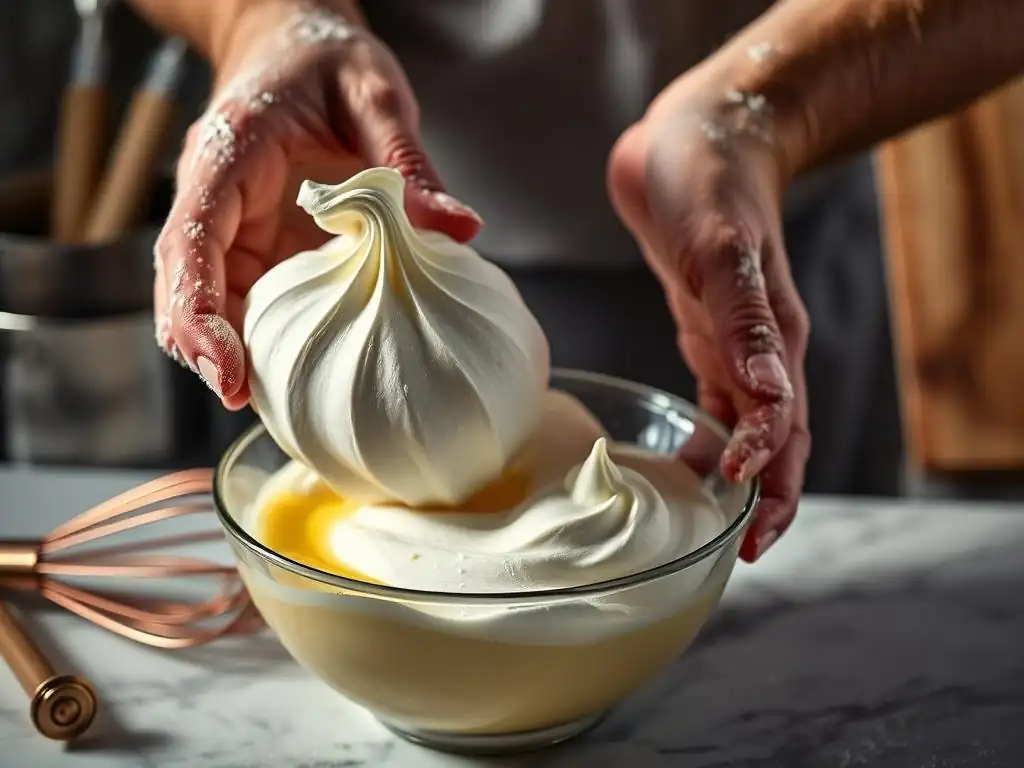
Welcome to BakeWithEase, your kitchen companion for unlocking baking brilliance! Are you ready to elevate your cakes and pastries to new heights? Ever wondered how to achieve that ethereal lightness without sacrificing structure? Dive into our guide on creaming and folding techniques and discover the secrets to introducing air without deflation, transforming your baking from good to unforgettable. Curious to know more? Let's get started!
- Mastering Air Incorporation for Baking Success: A Guide to Creaming and Folding
- Introduction: The Role of Air in Achieving Desired Baking Textures
-
Creaming Method: Achieving Lightness and Volume in Cakes and Cookies
- Understanding Creaming: Combining Fat and Sugar for Aeration
- Step-by-Step Guide to Perfect Creaming: Tips for Optimal Air Incorporation
- Common Creaming Mistakes and How to Avoid Them: Over-Creaming and Under-Creaming
- Adapting Creaming for Different Recipes: Considerations for Cakes, Cookies, and More
- Folding Technique: Gently Incorporating Ingredients to Preserve Air
- Comparing Creaming and Folding: Choosing the Right Technique for Your Recipe
- Other Air-Incorporation Techniques in Baking
- Tips and Tricks to Prevent Deflation in Baking
- Advanced Techniques for Maximizing Air Incorporation
- Troubleshooting Air Incorporation Problems in Baking
- Conclusion: Elevating Your Baking Through Mastery of Air Incorporation
-
Frequently Asked Questions
- What is the purpose of creaming in baking?
- How does folding differ from stirring in baking?
- Why is it important to avoid deflation when incorporating air?
- What are some common mistakes people make when using creaming and folding techniques?
- Where can I find examples of recipes that use creaming and folding techniques?
- Final Reflection: The Lightness of Air, the Weight of Tradition
- Unlock Your Baking Potential: Master Airy Textures Today!
Mastering Air Incorporation for Baking Success: A Guide to Creaming and Folding
Introduction: The Role of Air in Achieving Desired Baking Textures
Why Air Incorporation is Essential for Light and Tender Baked Goods
Air is not just an empty space in your baked goods; it's a critical structural component and a primary leavening agent. When you introduce air into batters and doughs, you create tiny pockets that expand when heated in the oven. This expansion is what gives cakes their fluffy crumb, cookies their delicate chew, and breads their airy structure. Without sufficient air, baked goods would be dense, heavy, and unappetizing. The techniques you use to incorporate this air directly influence the final texture, volume, and even mouthfeel of your creations. Mastering these skills is fundamental to achieving baking success.
Consider a classic butter cake. Its signature tender crumb relies heavily on the air incorporated during the creaming process. This trapped air provides lift, working in conjunction with chemical leaveners like baking powder. Similarly, the ethereal lightness of a chocolate soufflé comes almost entirely from the air whipped into egg whites and gently folded into the base. Understanding how to effectively introduce and retain air is the difference between a leaden loaf and a light, airy masterpiece. It's a foundational skill for any baker looking to elevate their results.
Balancing Air Incorporation with Structural Integrity to Prevent Collapse
While incorporating air is crucial for lightness, it's equally important to build a structure that can support this air during baking. A common pitfall is achieving excellent air incorporation only to have the baked good collapse as it cools. This often happens when the internal structure (like gluten development in bread or protein coagulation in cakes) isn't strong enough to hold the expanded air pockets. Over-reliance on air without adequate structural support leads to deflation.
Achieving this balance involves understanding the role of ingredients like flour, eggs, and fats, and how different techniques affect them. For instance, developing just the right amount of gluten in certain doughs provides elasticity to stretch around air bubbles, while gentle handling of batters prevents the rupture of these delicate pockets. Temperature also plays a vital role; rapid cooling can cause steam to condense, leading to collapse. By focusing on both air incorporation and structural support through careful technique and ingredient handling, you ensure your baked goods rise beautifully and maintain their form.
Understanding Creaming: Combining Fat and Sugar for Aeration
The creaming method is a foundational technique in baking, particularly for cakes, cookies, and some quick breads. It involves vigorously beating softened fat, typically butter, with sugar. As the sugar crystals are beaten into the butter, they cut through the fat, creating tiny air pockets. Simultaneously, the mixture becomes lighter in color and volume as air is trapped within the fat matrix. This process relies on the sugar crystals acting as tiny knives to create space for air, and the fat's ability to hold onto that air.
This initial aeration provides significant lift during baking. As the fat melts in the oven, the trapped air expands, contributing to the rise. The sugar also helps tenderize the final product and promotes browning. The effectiveness of creaming is highly dependent on the temperature of the butter and the duration and speed of mixing. Butter that is too cold won't cream properly, and butter that is too warm won't hold the air. Achieving the right consistency is key to maximizing the air incorporated through this creaming folding techniques baking air process.
Step-by-Step Guide to Perfect Creaming: Tips for Optimal Air Incorporation
Perfecting the creaming method involves a few key steps to ensure maximum air incorporation for light and airy results.
- Start with Softened Butter: Your butter should be pliable, leaving a slight indentation when pressed, but not melted or greasy. Aim for around 65-70°F (18-21°C). Using butter that is too cold or too warm is a common pitfall.
- Combine Butter and Sugar: Place the softened butter and granulated sugar in a mixing bowl.
- Beat on Medium-High Speed: Using an electric mixer (stand or hand-held) fitted with the paddle attachment, beat the mixture. Start on low speed to combine, then increase to medium-high.
- Scrape Down the Bowl: Stop the mixer frequently (every 1-2 minutes) to scrape down the sides and bottom of the bowl with a spatula. This ensures all ingredients are evenly incorporated and prevents uncreamed butter/sugar from sitting on the edges.
- Cream Until Light and Fluffy: Continue beating for 5-10 minutes, or until the mixture has significantly lightened in color (often pale yellow) and has become visibly fluffy and increased in volume. You should no longer hear the sugar crystals scraping against the bowl as distinctly. This extended beating time is crucial for trapping maximum air.
Task List for Creaming:

- [x] Ensure butter is properly softened (65-70°F / 18-21°C).
- [x] Combine softened butter and sugar in mixing bowl.
- [x] Beat on medium-high speed.
- [x] Scrape down the bowl frequently.
- [x] Cream until mixture is light, fluffy, and pale yellow (approx. 5-10 mins).
Achieving that light, fluffy texture is the goal of the creaming process, setting the stage for a tender crumb in your baked goods. The duration required varies depending on the quantity of ingredients and the power of your mixer, but visually assessing the mixture's color and texture is the best indicator.
Common Creaming Mistakes and How to Avoid Them: Over-Creaming and Under-Creaming
While seemingly simple, the creaming method has potential pitfalls. Two common mistakes are under-creaming and over-creaming. Under-creaming occurs when the butter and sugar are not beaten long enough. The mixture will still look dense and yellowish, and you might still hear a significant amount of sugar crystal noise. This means insufficient air has been incorporated, resulting in a denser, heavier final product that may not rise properly. To avoid this, ensure you beat for the recommended time (typically 5-10 minutes) and look for the visual cues of lightness and pale color. Don't rush this step; it's vital for aeration.
Over-creaming, on the other hand, is less common but can also be detrimental. While you want to incorporate air, beating for an excessive amount of time, especially after eggs have been added, can sometimes lead to a coarse texture or issues with structure. More critically, over-mixing after flour is added (which is part of the subsequent steps in many recipes) can develop too much gluten, resulting in a tough product.
Focus on achieving the 'light and fluffy' stage before adding eggs and dry ingredients. Once dry ingredients are introduced, mixing should be minimal, relying on the air already incorporated during creaming.
The creaming method is versatile but requires slight adaptations depending on the desired outcome for different baked goods. For light, airy cakes, you want to maximize air incorporation during the creaming stage, beating until the mixture is very light, fluffy, and pale. This substantial initial aeration provides the primary lift. The ratio of sugar to fat can also influence the texture; a higher sugar ratio can help create more air pockets initially.
For cookies, the creaming process might be slightly less intense or shorter than for a cake batter. While air is still important for tenderness and some spread, excessive creaming can sometimes lead to cookies spreading too much in the oven. Many cookie recipes call for creaming until just combined and slightly lightened, rather than the full 10 minutes often recommended for cakes. Understanding the specific requirements of the recipe and how the level of creaming impacts the final texture (e.g., chewier vs. crispier cookies) is key to successful baking using these core creaming folding techniques baking air.
Folding Technique: Gently Incorporating Ingredients to Preserve Air
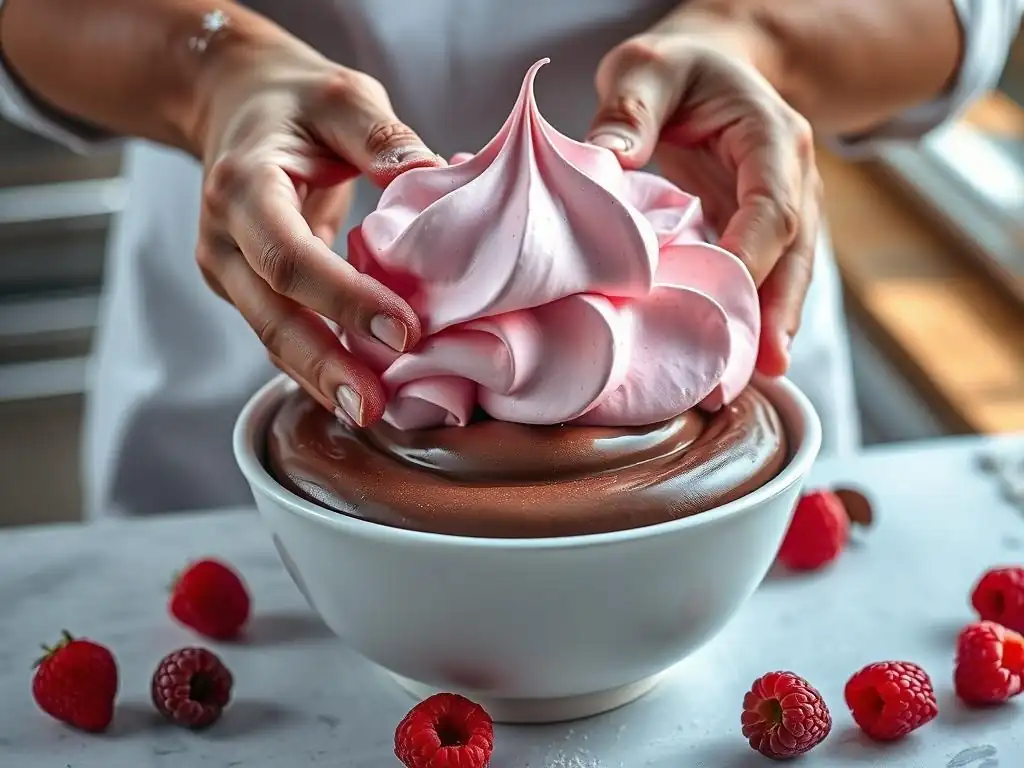
Understanding Folding: A Delicate Technique for Light Batters
Folding is a gentle mixing technique used to combine delicate ingredients, such as whipped egg whites or whipped cream, into a heavier base mixture (like a cake batter or custard) without deflating the air that has been incorporated into the lighter component. Unlike stirring or beating, which involves vigorous movement, folding uses a specific motion with a spatula or large spoon to lift and combine. The goal is to distribute the ingredients evenly while minimizing the loss of precious air bubbles.
This technique is essential for recipes where the primary leavening comes from mechanically incorporated air, such as soufflés, meringues, mousse, and angel food cake. The lightness of these desserts relies entirely on the volume created by whipping. Aggressive mixing would quickly collapse the foam structure, resulting in a dense, heavy product. Folding is about respect for the air you've worked hard to incorporate, treating the mixture with care to preserve its volume.
How to Fold Ingredients Properly: Maintaining Volume and Preventing Deflation
Mastering the folding technique requires a light touch and a specific motion. Here's how it's typically done:
- Start with a Portion: Add about one-third of the lighter mixture (e.g., whipped egg whites) to the heavier base mixture. This initial addition helps lighten the base, making it easier to incorporate the remaining delicate ingredient.
- Cut and Fold Motion: Using a large rubber spatula, slice vertically down through the center of the mixture, then scoop the spatula towards you along the bottom of the bowl, bringing the mixture from the bottom up and over the top.
- Rotate the Bowl: Rotate the bowl slightly with your other hand as you continue the cutting and folding motion. This ensures even incorporation throughout the bowl.
- Repeat Gently: Continue this process, adding the remaining lighter mixture in two more additions, folding gently each time until just combined. The goal is to see no streaks of the lighter ingredient remaining.
- Avoid Overmixing: Stop folding as soon as the mixture is homogenous. Over-folding will deflate the mixture.
Task List for Folding:

- [x] Add 1/3 of the lighter mixture to the base.
- [x] Use a spatula to cut down, scoop up, and fold over.
- [x] Rotate the bowl while folding.
- [x] Add remaining mixture in portions, repeating folding.
- [x] Stop folding once just combined.
The key is to be efficient and gentle. Don't stir in circles; use the specific cut-and-fold motion. This technique is crucial for recipes where air is the primary leavening, differentiating light, airy textures from dense ones.
The Importance of a Light Touch: Minimizing Agitation During Folding
The success of folding hinges entirely on the lightness of your touch. Every time you move the spatula through the mixture, you risk collapsing the delicate air bubbles. Vigorous stirring or beating would rapidly break down the protein structure supporting the foam (like the meringue or whipped cream), causing it to lose volume dramatically. Think of the air bubbles as fragile balloons you are trying not to pop.
Using a large, flexible rubber or silicone spatula is ideal because it allows you to efficiently scrape the sides and bottom of the bowl with minimal strokes. The motion should be deliberate and smooth, not jerky or aggressive. The goal is to achieve a homogenous mixture with the fewest possible strokes. The mixture will thin slightly as the ingredients combine, but it should retain significant volume. If the mixture looks significantly flatter than when you started, you've likely been too rough. A light touch is paramount when utilizing folding techniques baking air into sensitive batters.
Folding in Delicate Ingredients: Berries, Meringue, and Whipped Cream
Folding isn't just for incorporating foams; it's also the preferred method for adding delicate ingredients like fresh berries, chocolate chips, or nuts into a batter or dough without crushing them or deflating the mixture. When adding solid ingredients, the process is similar: add the ingredients to the batter and use the same cut-and-fold motion with a spatula. The goal is to distribute them evenly without overworking the batter or mashing the additions.
When folding in lighter, air-filled components like meringue (whipped egg whites with sugar) or whipped cream, the delicacy is even more critical. For example, when making a chocolate mousse, you fold whipped cream into a chocolate base. The air in the whipped cream gives the mousse its light texture. Over-folding would result in a dense, heavy dessert.
Similarly, in recipes like angel food cake or soufflés, whipped egg whites provide almost all the lift. The folding process must gently marry the egg whites with the other ingredients while preserving their volume. This requires patience and a keen eye to stop as soon as no streaks of the lighter ingredient remain.
Comparing Creaming and Folding: Choosing the Right Technique for Your Recipe
Creaming vs. Folding: A Comparative Analysis of Effects on Texture
Creaming and folding are both fundamental techniques for incorporating air into baked goods, but they achieve it differently and result in distinct textures. Creaming builds structure and incorporates air primarily into a fat-sugar matrix. This trapped air, along with the fat, contributes to a tender, somewhat dense but light crumb structure, typical of butter cakes and many cookies. The process is relatively vigorous, using mechanical action to create and trap air within a stable fat base. The resulting batter is often thicker and more opaque.
Folding, conversely, is about preserving air that has already been incorporated, usually into a foam (like whipped egg whites or cream). It's a gentle method designed to combine ingredients without collapsing delicate structures. The texture achieved through folding is typically much lighter, airier, and sometimes more delicate or ethereal than that achieved through creaming. Think of the difference between a rich pound cake (creaming) and a cloud-like soufflé (folding). Understanding this fundamental difference is key to selecting the appropriate creaming folding techniques baking air into your specific recipe.
Selecting the Appropriate Technique Based on Desired Outcome and Recipe Structure
Choosing between creaming and folding (or using both, as some recipes do) depends entirely on the desired final texture and the structure of the recipe. If your recipe starts with softened butter and sugar as the base, and you're aiming for a tender, slightly rich crumb with good volume, the creaming method is likely the primary technique for aeration. This is common in traditional butter cakes, cupcakes, and many cookie recipes.
If your recipe relies on whipped eggs (whites or whole) or whipped cream for its primary lift and lightness, then folding will be the crucial technique for combining these aerated components with other ingredients. Recipes like soufflés, mousses, chiffon cakes (which often use both methods), and angel food cakes fall into this category.
The structure of these recipes dictates a gentler approach to preserve the air bubbles created by whipping. Sometimes, a recipe might use creaming for the base batter and then fold in whipped egg whites for extra lift and tenderness, combining the benefits of both creaming folding techniques baking air.
Many classic baked goods owe their texture to the creaming method. Standard butter cakes, such as vanilla or chocolate layer cakes, rely heavily on creaming butter and sugar to incorporate air and create a tender crumb. A typical pound cake, for example, might call for creaming butter and sugar for 8-10 minutes until very light and fluffy, contributing significantly to its structure and rise alongside eggs and a small amount of leavening. This process builds a stable matrix that supports the cake's structure.
Butter cookies and shortbread are other prime examples. While they may not rise dramatically, creaming the butter and sugar incorporates enough air to prevent them from being excessively dense and gives them a desirable crisp-tender texture. Shortbread, with its high butter content and minimal leavening, relies almost exclusively on the air incorporated during the creaming process for its slightly open texture. The creaming method is fundamental to achieving the characteristic richness and delicate crumbliness in these types of treats, showcasing its importance among various creaming folding techniques baking air.
Recipes That Benefit from Folding: Soufflés, Mousses, and Angel Food Cake
Recipes where extreme lightness and airiness are the primary goals almost always employ the folding technique. Soufflés, both sweet and savory, are the quintessential example. Their dramatic rise and airy interior are created by whipping egg whites to stiff peaks and gently folding them into a flavored base. The air trapped in the meringue expands in the oven, causing the soufflé to puff up.
Mousses, particularly those made with whipped cream or egg whites, also depend on folding. Whether it's a chocolate mousse where whipped cream is folded into a ganache or a fruit mousse where whipped cream is folded into a purée, the folding technique preserves the air that gives the dessert its characteristic light, airy texture. Angel food cake, made solely from egg whites, sugar, and flour, is another classic example. The volume comes entirely from the whipped egg whites, and folding is used to incorporate the dry ingredients without deflating the foam, resulting in its incredibly light and spongy texture.
Other Air-Incorporation Techniques in Baking
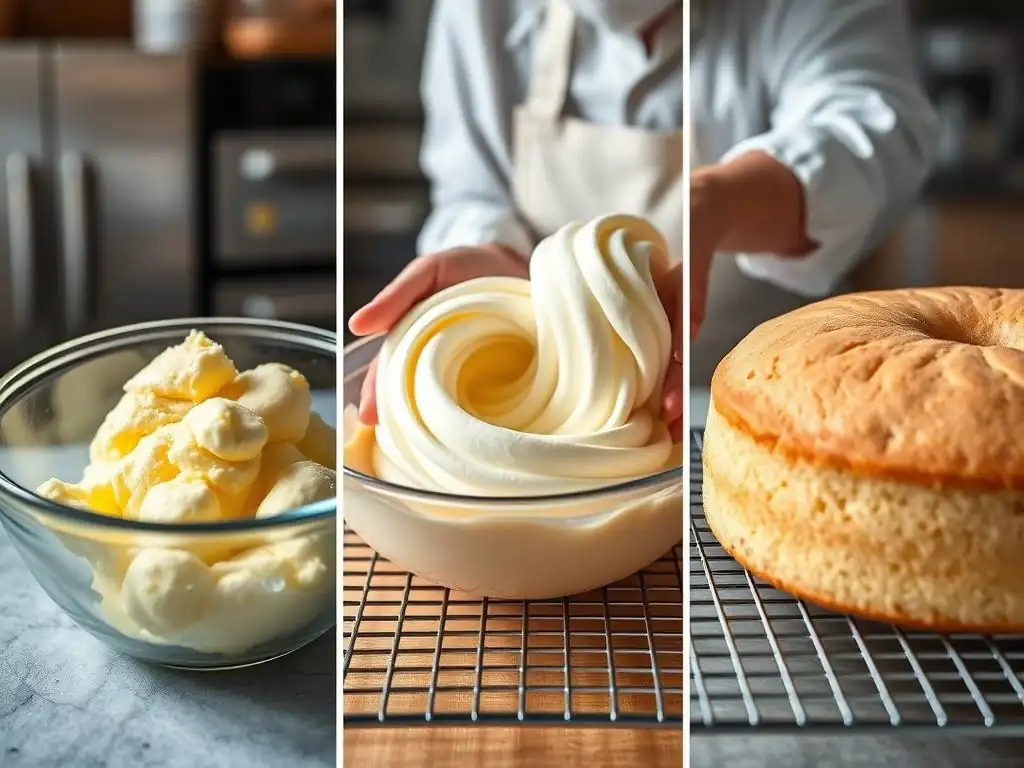
Whipping Egg Whites: Creating Stable Foams for Volume and Structure
Whipping egg whites is one of the most powerful ways to incorporate a significant amount of air into a mixture, forming a stable foam that can provide substantial lift and structure. As egg whites are beaten, the protein molecules (primarily albumin) unfold and rearrange, trapping air bubbles within a network. The stability of this foam increases as you continue whipping, progressing from soft peaks (where the tip curls over) to stiff peaks (where the tip stands straight up).
Adding sugar gradually during whipping (as in meringue) helps stabilize the foam further, creating a glossy, resilient structure less prone to collapse. Cream of tartar or an acidic ingredient can also help stabilize the proteins. This technique is the foundation for meringues, soufflés, angel food cake, and contributes lightness to chiffon cakes and some mousses. The volume of egg whites can increase by 6 to 8 times when whipped to stiff peaks, demonstrating the massive amount of air they can hold, a key element alongside creaming folding techniques baking air.
Sifting Dry Ingredients: Improving Airflow and Preventing Lumps
Sifting dry ingredients like flour, cocoa powder, and powdered sugar serves multiple purposes, one of which is aeration. While it doesn't incorporate as much air as creaming or whipping, sifting helps to loosen the particles, allowing air to flow through them more easily. This slight aeration contributes to a lighter texture in the final product.
More significantly, sifting breaks up any lumps in the dry ingredients, ensuring they disperse evenly throughout the batter or dough. This prevents pockets of concentrated flour or leavener, leading to a more uniform texture and rise. While some modern flours are pre-sifted, a quick whisking can achieve similar aeration and lump removal. However, for recipes where precision and lightness are paramount, sifting remains a recommended step to ensure ingredients are evenly distributed and slightly aerated.
The Importance of Temperature: How Ingredient Temperature Affects Air Retention
Ingredient temperature plays a crucial role in how effectively air is incorporated and retained in baking. As mentioned, softened butter (around 65-70°F) is essential for optimal creaming; if it's too cold, it won't cream properly, and if it's too warm, it won't hold the air. Similarly, room temperature eggs (around 70°F) incorporate more easily into creamed mixtures, creating a more stable emulsion and preventing the mixture from curdling, which can negatively impact air retention.
For techniques involving whipping, like egg whites or cream, temperature also matters. Chilled heavy cream (straight from the refrigerator at around 40°F/4°C) whips up fastest and holds its shape best. Room temperature egg whites whip to a larger volume, but cold egg whites are easier to separate and whip more slowly, allowing for better control over foam structure. Understanding and controlling ingredient temperatures is a silent but significant factor in maximizing air incorporation and stability across various creaming folding techniques baking air.
Tips and Tricks to Prevent Deflation in Baking
Maintaining Consistent Oven Temperature: Ensuring Stable Expansion
A stable and consistent oven temperature is paramount to preventing deflation. Once a batter or dough enters a hot oven, the trapped air and steam expand, causing the baked good to rise. As it bakes, the structure (proteins from eggs and flour, starch gelatinization) sets, solidifying the shape. If the oven temperature fluctuates significantly or drops, the structure may not set properly before the expanding gases cool and contract, leading to collapse.
Preheating your oven thoroughly to the correct temperature is essential. Using an oven thermometer is highly recommended, as oven thermostats can be inaccurate, sometimes by as much as 25-50°F (15-30°C). Avoid opening the oven door unnecessarily during the critical rising phase (usually the first two-thirds of the baking time), as this causes a significant temperature drop. Consistent heat ensures the structure sets firmly, supporting the incorporated air and preventing deflation, complementing the effort put into creaming folding techniques baking air.
Avoiding Overmixing: Preventing Gluten Development and Air Loss
Overmixing is a common cause of dense, tough baked goods and can lead to deflation, particularly after dry ingredients are added. Flour contains proteins that, when mixed with liquid, develop gluten. While some gluten development is necessary for structure in bread, excessive gluten development in cakes and muffins creates a tough texture and can actually pop the delicate air bubbles incorporated during creaming or whipping.
Once flour is added to a batter, mixing should be minimal – just until the dry ingredients are combined and no streaks of flour remain. Overmixing at this stage not only develops tough gluten but also works the air out of the batter. This is why recipes often instruct you to mix until just combined. Gentle handling after mixing, during transfer to the pan, is also important to avoid losing air. Being mindful of mixing duration after flour addition is crucial for maintaining the lightness achieved through initial aeration techniques.
Gentle Handling of Batters: Minimizing Air Escape During Transfer and Shaping
Even after successfully incorporating air through creaming or folding, careful handling of the batter or dough before baking is critical to retaining that volume. Pouring or scooping batter too vigorously into pans can cause air bubbles to collapse. Think of a soufflé batter; it's gently spooned into ramekins to preserve its lightness.
When transferring cake batter, pour it smoothly into the prepared pan. Avoid tapping the pan excessively on the counter, which can pop large air bubbles but also consolidate the batter too much, potentially losing overall volume. For cookie doughs made with the creaming method, shaping should also be done with a relatively light touch. Minimizing agitation from the mixing bowl to the oven ensures that the air you worked so hard to incorporate remains trapped, ready to expand and provide lift during baking.
The Role of Gluten: Balancing Gluten Development with Air Incorporation
Gluten, the protein network formed when flour is mixed with liquid, plays a dual role in baking. In breads, controlled gluten development is essential to create an elastic structure that can trap and hold large pockets of carbon dioxide produced by yeast, resulting in an open, chewy crumb. However, in tender baked goods like cakes and muffins, excessive gluten is undesirable as it leads to toughness.
In cakes and batters where creaming and folding are primary aeration methods, the goal is usually minimal gluten development. Using cake flour, which is lower in protein, can help. Fat and sugar also inhibit gluten formation. The key is to develop just enough structure from the protein in the flour and eggs to support the air incorporated, without developing so much gluten that it makes the product tough or causes the structure to collapse due to rigidity. Understanding this balance is part of mastering techniques that involve creaming folding techniques baking air.
Advanced Techniques for Maximizing Air Incorporation
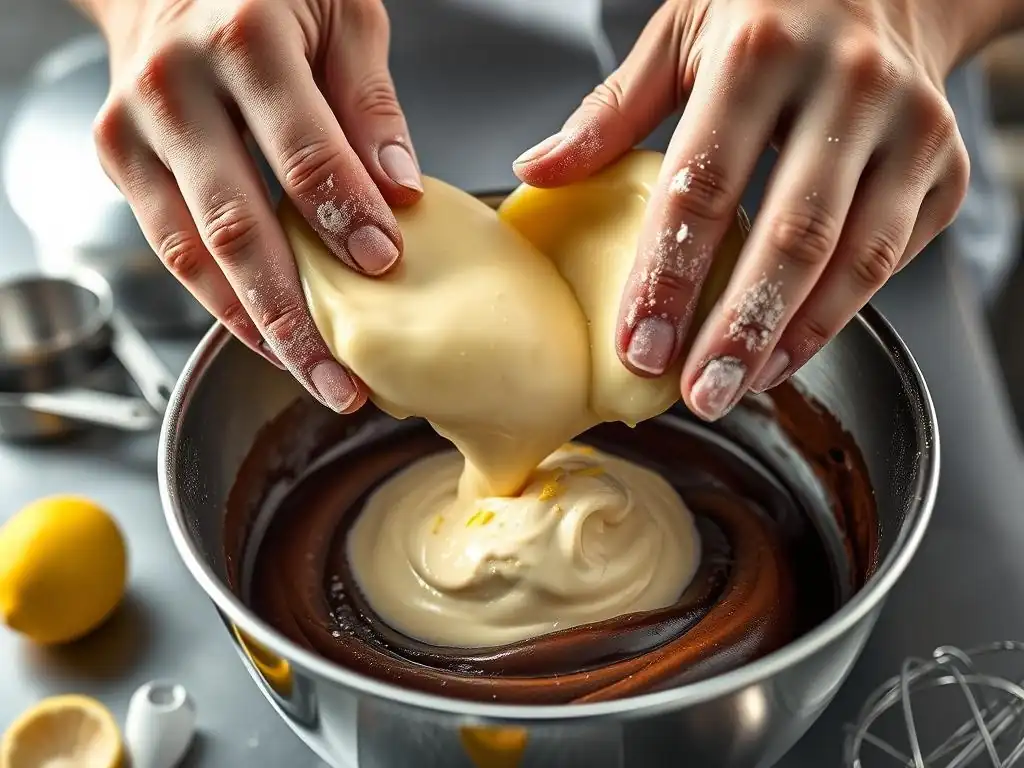
Utilizing Chemical Leaveners: Baking Powder and Baking Soda for Enhanced Lift
While mechanical aeration from techniques like creaming and folding is fundamental, chemical leaveners like baking powder and baking soda work in tandem to provide enhanced lift. Baking powder is a complete leavener, containing both an acid and a base that react in the presence of liquid and heat to produce carbon dioxide gas. Baking soda is a base and requires an acidic ingredient (like buttermilk, yogurt, or molasses) to react and produce gas.
These chemical reactions create additional gas bubbles within the batter or dough, supplementing the air incorporated mechanically. The expanding gases push against the structure formed by the setting proteins and starches, causing the baked good to rise higher and achieve a lighter texture. Using chemical leaveners correctly, in the right balance with other ingredients and mechanical aeration, is key to achieving optimal volume and texture, adding another layer to understanding creaming folding techniques baking air.
The Sponge Method: Creating a Pre-Ferment for Enhanced Flavor and Texture
The sponge method is a technique often used in yeast baking where a portion of the flour, water, and yeast is mixed and allowed to ferment for a period before being combined with the remaining ingredients. This pre-ferment, or "sponge," becomes very active, developing flavor compounds and creating numerous small gas bubbles through yeast activity.
When the sponge is later incorporated into the final dough, these pre-existing gas bubbles act as nucleation sites for further gas production during the final proof and baking. This method not only enhances the flavor of the bread but also contributes to a more open, airy crumb structure compared to straight-dough methods. While different from creaming and folding, it's another powerful way to build air into a baked good's structure.
Italian Meringue: Creating a Stable and Glossy Meringue for Desserts
Italian meringue is a highly stable meringue made by slowly pouring hot sugar syrup (heated to the soft-ball stage, around 240°F/115°C) into whipping egg whites. The hot syrup cooks the egg whites as they whip, creating a glossy, very stable foam that is less prone to weeping or collapsing than French meringue (raw egg whites whipped with sugar).
This stability makes Italian meringue ideal for applications where the meringue isn't baked, such as frosting cakes (like lemon meringue pie topping) or lightening mousses and buttercreams. The process incorporates a significant amount of air, and the cooked sugar syrup creates a strong, stable matrix around the air bubbles. This stable foam is then often gently folded into other components, demonstrating a technique where significant air is first incorporated (whipping egg whites with hot sugar) and then carefully preserved (folding).
Reverse Creaming Method: Creating a Tender Crumb in Cakes
The reverse creaming method is an alternative approach to mixing cake batters that often results in a particularly tender crumb. Instead of creaming butter and sugar first, this method involves coating the dry ingredients (flour, sugar, leaveners, salt) with softened butter before adding the liquids and eggs.
The fat coats the flour particles, inhibiting gluten development from the outset. While some air is incorporated as the butter is blended into the dry ingredients, this method relies less on the initial aeration from the butter-sugar creaming step. Instead, lift is primarily achieved through the chemical leaveners and the air incorporated when liquids and eggs are added and mixed minimally. The resulting cake has a fine, even crumb and a very tender texture because gluten development is minimized. It's a valuable technique for specific cake types where tenderness is prioritized over maximum volume from initial creaming.
Troubleshooting Air Incorporation Problems in Baking
Flat Cakes: Identifying Causes of Deflation and Implementing Solutions
Flat cakes are a common disappointment and can stem from various issues related to air incorporation and structure. Possible causes include:
- Insufficient Aeration: Not creaming butter and sugar long enough, under-whipping egg whites, or using ingredients that are too cold.
- Overmixing: Developing too much gluten after adding flour, which can collapse the structure.
- Incorrect Leavening: Using expired baking powder/soda, incorrect amounts, or improper activation (e.g., not enough acid for baking soda).
- Oven Issues: Oven temperature too low, inconsistent heat, or opening the oven door too early.
- Improper Ingredient Ratios: Too much sugar or fat can weaken the structure.
- Gentle Handling: Transferring batter too roughly to the pan.
To solve flat cakes, review your technique for creaming or whipping, ensure ingredients are at the correct temperature, check your leaveners' freshness, use an oven thermometer to verify temperature, and handle your batter gently. For instance, if your butter-sugar mixture wasn't pale and fluffy after 5-10 minutes, extend the creaming time next time. If you saw vigorous bubbles when adding liquid to your batter but the cake still fell, the issue might be oven temperature or overmixing after the flour stage.
Dense Textures: Addressing Insufficient Air Incorporation and Improving Techniques
A dense texture is a direct result of insufficient air incorporation or the loss of incorporated air before or during baking. If your cakes are consistently dense, revisit the fundamental techniques of creaming and folding.
- For Creamed Goods: Are you starting with properly softened butter? Are you creaming the butter and sugar for the full duration recommended (often 5-10 minutes) until it's truly light and fluffy? Are your eggs at room temperature and added gradually?
- For Folded Goods: Are your egg whites or cream whipped to the correct peaks (soft, medium, or stiff as required)? Are you using the gentle cut-and-fold motion? Are you stopping as soon as the ingredients are just combined?
Also, consider the temperature of your ingredients and oven. Cold ingredients can hinder aeration. An oven that is too cool won't provide the rapid heat needed for the initial expansion of trapped air and gases. Practice the specific movements for creaming folding techniques baking air and focus on the visual cues – the pale, fluffy texture of creamed mixture or the airy, voluminous nature of a properly folded batter.
Uneven Rise: Troubleshooting Uneven Distribution of Air and Leavening Agents
An uneven rise can manifest as a domed cake with cracked edges, a cake that is higher on one side, or a loaf with a lopsided peak. This usually indicates uneven distribution of air, leavening agents, or heat.
Ensure you are mixing your ingredients thoroughly but without overmixing. When creaming, scrape down the bowl frequently to ensure the butter and sugar are evenly aerated. When adding dry ingredients, mix just until combined, ensuring no pockets of dry flour or leavening agents remain. For recipes using folding, make sure the lighter component is evenly folded throughout the base batter with no streaks. Uneven batter consistency means uneven leavening action. Oven hot spots can also cause uneven rising; rotating your pan halfway through baking can help mitigate this if you suspect your oven has temperature variations.
Collapsed Soufflés: Diagnosing and Preventing Soufflé Deflation
Collapsed soufflés are perhaps the most dramatic example of air incorporation failure. Soufflés rely almost entirely on the air in whipped egg whites (meringue) for their rise. Collapse usually happens because:
- Meringue wasn't Stable: Egg whites weren't whipped to stiff peaks, or the meringue wasn't properly stabilized with sugar or acid.
- Meringue was Deflated During Folding: The meringue was mixed too roughly into the base, losing too much air.
- Base Mixture was Too Heavy or Greasy: A heavy base can weigh down the delicate meringue, or grease can inhibit the egg whites from whipping properly or destabilize the foam.
- Oven Temperature was Too Low or Fluctuated: Insufficient heat means the structure doesn't set before the air cools. Opening the oven door too early is a major culprit.
- Over-baking or Under-baking: Under-baked soufflés haven't had their structure set, while over-baked ones can dry out and collapse.
To prevent soufflé collapse, ensure your meringue is whipped correctly, fold it gently and efficiently, use a clean, grease-free bowl for whipping whites, maintain a consistent, hot oven temperature, and resist the urge to open the oven door until the soufflé is nearly done and looks set around the edges. Mastering the gentle folding technique is paramount here.
Conclusion: Elevating Your Baking Through Mastery of Air Incorporation
Recap of Key Techniques: A Summary of Creaming, Folding, and Other Methods
Incorporating air is a cornerstone of successful baking, influencing everything from volume and texture to tenderness and mouthfeel. We've explored fundamental mechanical aeration methods: the creaming method, which vigorously beats fat and sugar to trap air for tender cakes and cookies, and the folding technique, a gentle process used to preserve the air in delicate foams like whipped egg whites and cream for light soufflés and mousses.
Beyond these, we touched upon other vital techniques, including whipping egg whites to create stable foams, sifting dry ingredients for slight aeration and lump removal, and understanding how ingredient temperature impacts air retention. These diverse creaming folding techniques baking air each play a specific role in building the desired structure and lightness in a wide array of baked goods.
Continuous Improvement: Experimentation and Refinement for Baking Excellence
Baking is both a science and an art, and mastering air incorporation comes with practice and observation. Don't be discouraged if your first attempts at creaming don't yield a perfectly fluffy mixture or if your first soufflé deflates. Pay attention to the visual cues: the color and texture of creamed butter and sugar, the volume and consistency of whipped egg whites, and the way a batter feels as you fold it.
Experiment with slight variations, perhaps creaming for an extra minute or practicing your folding motion with a simple whipped cream. Note how these changes affect the final outcome. Refining your technique through repeated application and mindful observation is the path to baking excellence. Each recipe is an opportunity to hone your skills in these essential creaming folding techniques baking air.
Further Resources: Expanding Your Baking Knowledge and Skillset
To continue your journey in mastering air incorporation and other baking techniques, explore reliable baking cookbooks, reputable online baking resources (like BakeWithEase.com! ), and consider taking baking classes. Understanding the science behind why these techniques work will deepen your intuition and allow you to troubleshoot more effectively.
Look for detailed guides on specific recipes that heavily rely on these methods, such as angel food cake, chiffon cake, or various types of cookies. Reading different perspectives and watching demonstrations can provide valuable insights. By continuously learning and practicing, you'll gain confidence and skill, transforming your baking from simply following instructions to truly understanding and manipulating ingredients and techniques to achieve your desired results. Happy baking!
Frequently Asked Questions
What is the purpose of creaming in baking?
Creaming is a baking technique where fat (usually butter) and sugar are beaten together to incorporate air into the mixture, creating a light and fluffy texture. This is crucial for cakes and cookies.
How does folding differ from stirring in baking?
Folding is a gentle mixing technique used to incorporate light or delicate ingredients (like whipped egg whites) without deflating them. It preserves the air that has already been added.
Why is it important to avoid deflation when incorporating air?
Deflation eliminates the air that gives baked goods their light and airy texture. Keeping the air is essential for achieving the desired rise and crumb.
What are some common mistakes people make when using creaming and folding techniques?
Over-creaming can lead to a dense texture, while over-folding can deflate the mixture, resulting in a flat or tough baked good. Understanding when air is incorporated is key.
Where can I find examples of recipes that use creaming and folding techniques?
BakeWithEase.com offers a variety of recipes demonstrating these techniques, covering pastries, cakes, and more. Look for recipes that specifically mention creaming and folding for optimal results.
Final Reflection: The Lightness of Air, the Weight of Tradition
Mastering creaming and folding techniques isn't just about achieving a perfect rise; it's about understanding the fundamental dance between air and ingredients, a dance that dictates the very texture and soul of our baked goods. The delicate balance between incorporating air and avoiding deflation is a cornerstone of successful baking, a skill that elevates a simple recipe into a culinary masterpiece. This knowledge, once the exclusive domain of experienced bakers, is now readily accessible, empowering a new generation to create lighter, fluffier, and more delightful treats.
The impact of these techniques extends far beyond the kitchen; they represent a connection to a rich culinary history, passed down through generations of bakers. These aren't just methods; they're stories whispered through whisks and bowls, a testament to the enduring power of tradition. Baking is a labor of love, a process of transformation where simple ingredients become something extraordinary.
This quote perfectly encapsulates the feeling of accomplishment that comes with mastering creaming and folding, a feeling that transcends the mere act of baking and touches upon the artistry of food creation.
Now, it's your turn. Take what you've learned here – the precision of creaming, the gentle grace of folding – and apply it to your own baking adventures. Don't be afraid to experiment, to push boundaries, and to discover the unique magic that unfolds when you truly understand the relationship between air and your ingredients. The lightness of your creations will be a testament to your newfound mastery, a delicious reward for your dedication and a testament to the enduring power of culinary tradition.
Unlock Your Baking Potential: Master Airy Textures Today!
Thanks for taking the time to explore the secrets of incorporating air into your baking! We hope you’ve gained valuable insights into creating light and fluffy textures. Ready to put your new knowledge into practice?
- Try out a new recipe: Challenge yourself with a delicate cake or soufflé, focusing on the creaming and folding techniques you just learned. Note how these techniques affect the final result!
- Share your baking triumphs (or challenges!): We'd love to see your creations – post photos on social media and tag us! Let's build a supportive baking community.
- Explore our other baking guides: Dive deeper into mastering different baking techniques – from yeast-leavened bread to perfect pie crusts!
What’s your favorite technique for incorporating air into your baking, and what are you planning to bake next?