
The Perfect Egg Wash for Shiny, Golden Croissants

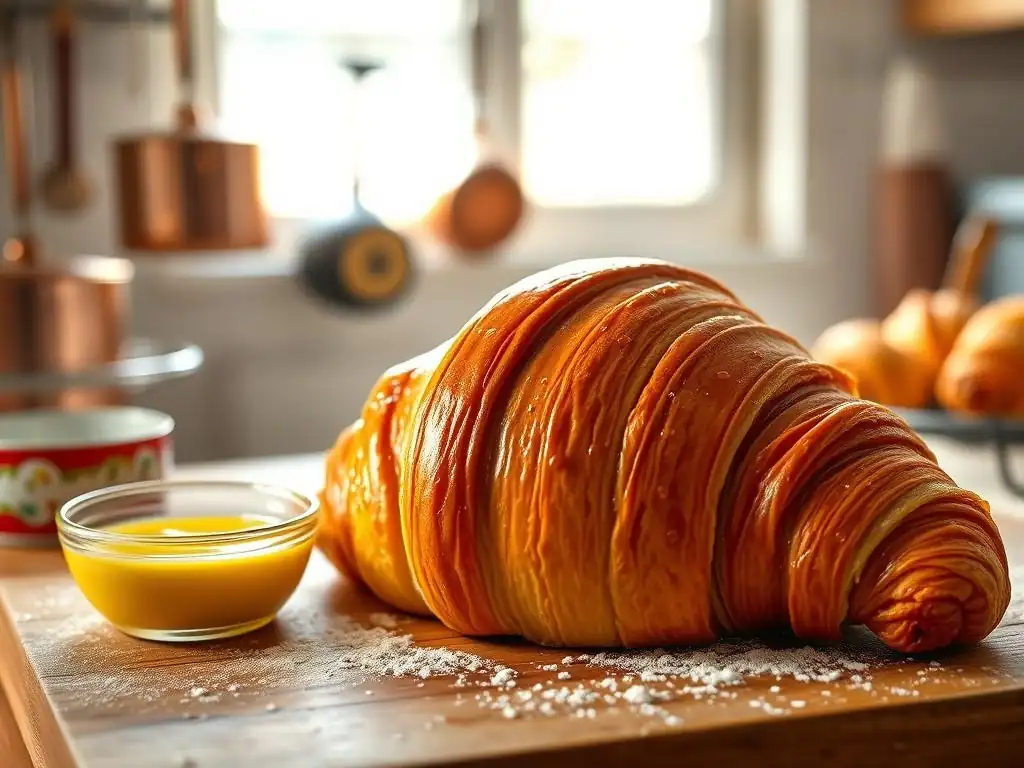
Welcome to BakeWithEase, your trusted guide to baking bliss! Ever wondered how to achieve that perfectly shiny, golden crust on your croissants, the kind that makes everyone swoon? Discover the secrets behind the ideal croissant egg wash – it's more than just eggs! Dive in and unlock expert tips and techniques that will elevate your baking from good to gorgeous. What's the secret ingredient for that irresistible sheen? Let's find out!
- Achieving Golden-Brown Perfection: Mastering the Egg Wash for Croissants
- The Importance of Egg Wash for Croissants
- Crafting the Ideal Egg Wash Recipe
- Applying Egg Wash for Optimal Results
- Troubleshooting Common Egg Wash Problems
- Elevating Your Croissant Baking
- Storing and Utilizing Leftover Egg Wash
- Conclusion: Mastering the Key to Beautiful Croissants
- Frequently Asked Questions
- Final Reflection: The Golden Ratio of Baking and the Pursuit of Perfection
- Unleash Your Inner Baker: Get Baking!
Achieving Golden-Brown Perfection: Mastering the Egg Wash for Croissants
The Importance of Egg Wash for Croissants
Enhancing Color, Shine, and Crust Development
An egg wash is far more than just a simple coating; it's a critical element in achieving the signature look of a perfectly baked croissant. When applied correctly, a well-made egg wash imparts a beautiful golden color to the pastry surface. This isn't just aesthetic; the proteins and fats in the egg react with the heat of the oven through the Maillard reaction, creating those desirable brown tones and adding depth to the final color.
The sugars present in the egg (or added to the wash) also caramelize, contributing to a richer hue and a touch of sweetness on the crust. This process is essential for developing that coveted shiny golden croissant egg wash finish that signals a professional-quality bake.
Beyond color, the egg wash creates a wonderfully glossy sheen on the baked croissant. The egg proteins form a smooth, continuous film as they cook, which reflects light and gives the pastry a polished appearance. This shiny golden effect is a hallmark of classic French patisserie.
Furthermore, the egg wash contributes to the development of a crisp, delicate crust. As the water content in the wash evaporates rapidly in the hot oven, it helps set the outer layer of the pastry, providing a satisfying crispness that complements the flaky interior. Without an egg wash, croissants would often bake to a dull, pale finish lacking both visual appeal and optimal crust texture.
How Egg Wash Affects Croissant Texture and Appearance
The composition of the egg wash directly influences the final texture and overall appearance of your baked croissants. A wash primarily consisting of egg yolk, for instance, will lead to a deeper, richer golden color and a more pronounced shine due to its higher fat content.
Conversely, using a whole egg diluted with water or milk can result in a slightly less intense color but still provides a good shine and helps achieve a lovely golden brown crust. The liquid component (water or milk) also impacts the outcome; water promotes maximum shine by creating a thin, glassy layer, while milk yields a softer, more matte finish and encourages more even browning.
Applying the egg wash also plays a significant role in the pastry's structure. A thick, uneven application can hinder the layers from rising fully in the oven, potentially resulting in a less airy, compressed interior. Streaks or pools of egg wash can bake unevenly, leading to patches of overly dark or light areas on the surface, detracting from the uniform shiny golden appearance we aim for.
The goal is a thin, even layer that sets quickly, allowing the pastry's layers to expand while providing that perfect golden color and crisp exterior. Achieving this balance is key to a beautiful and texturally satisfying croissant.
Crafting the Ideal Egg Wash Recipe
Basic Egg Wash: Ingredients and Proportions
The foundation of most effective egg washes for pastries like croissants is a simple combination of egg and a liquid. A standard ratio that works well for achieving a shiny golden croissant egg wash is one large whole egg mixed with about 1 to 2 tablespoons of liquid. This liquid can be water, milk, or cream, each yielding slightly different results. For a very shiny finish, water is often preferred as it evaporates cleanly, leaving behind a glossy protein film. For a softer, more golden-brown hue, milk or cream adds fat and sugar, promoting richer caramelization.
To prepare the basic wash, crack a fresh large egg into a small bowl. Add your chosen liquid (start with 1.5 tablespoons for a good balance). Whisk the mixture thoroughly until the egg is completely broken down and the liquid is fully incorporated, with no streaks of yolk or white visible.
Passing the mixture through a fine-mesh sieve is an optional but highly recommended step to remove any bits of chalaza or unmixed egg white, ensuring a perfectly smooth wash free of imperfections that could cause streaks during baking. This smooth base is crucial for that uniform, shiny golden finish.
Exploring Variations for Enhanced Results
Beyond the basic egg and liquid, bakers often experiment with additions to fine-tune the color, shine, and even flavor of their croissant egg wash. A common variation involves using only the egg yolk, often mixed with a smaller amount of liquid (like 1 yolk to 1 tablespoon of milk or cream). This produces an exceptionally rich, deep golden color and a high-gloss finish due to the yolk's higher fat content and pigments.
Another approach is using only egg white, sometimes mixed with water; this results in a very thin, clear glaze that provides shine but little color, often used in specific pastry applications or sometimes as a base layer before a yolk wash.
Milk vs. Water: Impact on Color and Shine
The choice between milk and water as the diluting agent in your egg wash significantly impacts the final look of your shiny golden croissants. Using water generally results in a more pronounced, almost glassy shine. This is because water evaporates completely in the oven, leaving behind a thin, clear layer of cooked egg protein that reflects light effectively. It's excellent for maximizing glossiness and achieving that distinct reflective surface often seen on bakery croissants. For instance, using 1 whole egg with 2 tablespoons of water is a popular choice for a high-shine finish.
On the other hand, incorporating milk (whole milk is common) or cream into the egg wash tends to produce a softer, more muted shine and a richer, more even golden-brown color. The fats and sugars in dairy products contribute to the Maillard reaction and caramelization at the surface, leading to a deeper hue. While it might not have the mirror-like reflection of a water wash, a milk-based wash often provides a beautiful, warm golden finish. For example, a mix of 1 whole egg with 1.5 tablespoons of whole milk will give a lovely color and a pleasant sheen.
Sugar or Salt: Effects on Browning and Crispness
Adding a pinch of sugar or salt to your egg wash can subtly alter the outcome. A tiny amount of sugar (just a pinch, perhaps 1/4 teaspoon per egg) can enhance surface caramelization, leading to a slightly darker, richer golden-brown color and a touch more sweetness on the crust. Be cautious not to add too much, as excessive sugar can cause the surface to brown too quickly or even burn before the interior is fully baked. This is often used when aiming for a very deep golden hue.
Salt, while less common in sweet pastry washes, can also be added in a very small amount (a literal pinch). Some bakers believe a tiny bit of salt can help the egg proteins set more firmly, potentially contributing to a slightly crisper crust. It doesn't dramatically alter the color like sugar does, but it can subtly influence the texture of the baked surface. Ultimately, the basic egg and liquid wash is sufficient, but these small additions offer ways to fine-tune your shiny golden croissant egg wash results.
Applying Egg Wash for Optimal Results
Preparing Croissants for Even Coating
Proper preparation of your proofed croissants before applying the egg wash is crucial for achieving an even, beautiful finish. The croissants should be fully proofed but still cool enough to handle without deflating – typically proofed at room temperature for several hours or overnight in the refrigerator followed by a shorter time at room temperature until visibly puffy and jiggly. Ensure the surface of the dough is dry; any condensation can prevent the egg wash from adhering properly and lead to streaks. If proofed in a humid environment, gently pat them dry with a soft brush or cloth.
The temperature of the croissants is also important. Applying egg wash to very cold dough can cause the wash to thicken and become difficult to spread evenly. Conversely, applying it to overly warm, fragile dough risks deflating the delicate layers. Aim for croissants that are cool to the touch but pliable. Arrange them on your baking sheet with sufficient space between them – about 2-3 inches – to allow for expansion during baking and prevent them from sticking together, which would ruin the perfect shiny golden croissant egg wash on the sides.
Choosing the Right Brush for Application
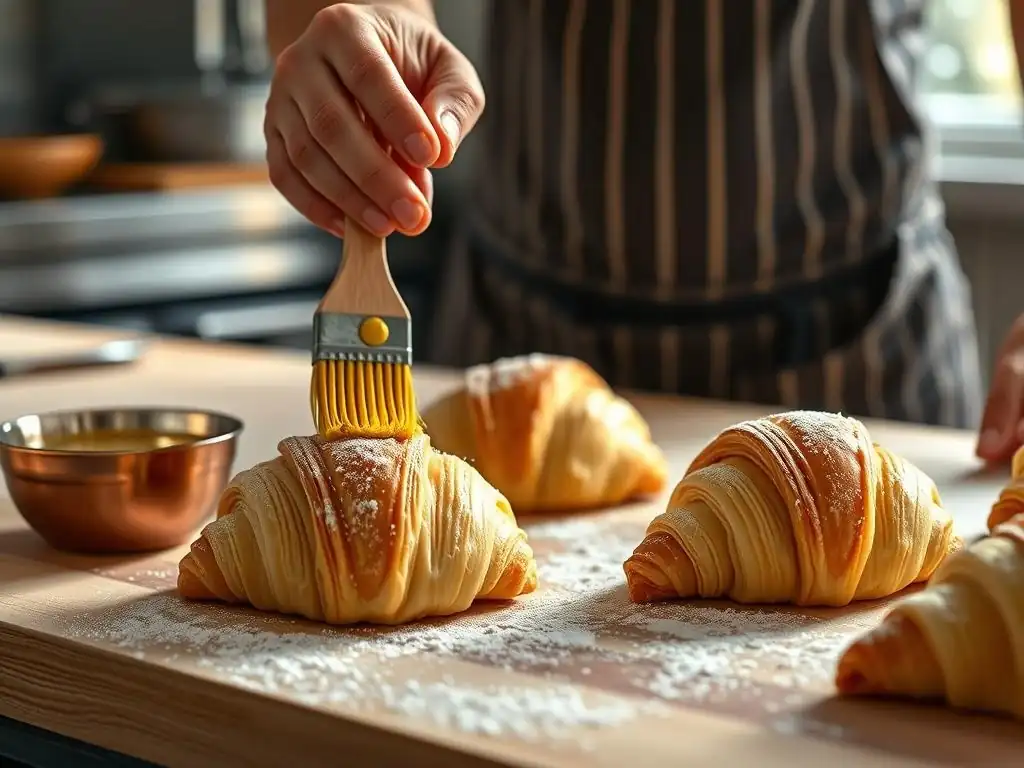
The type of brush you use significantly impacts how smoothly and evenly the egg wash is applied, directly affecting the final appearance of your shiny golden croissants. A soft-bristled pastry brush is generally considered the best tool for this task. Natural bristles are often preferred as they hold liquid well and distribute it smoothly without leaving prominent brush marks. Look for a brush with dense, flexible bristles that are about 1-1.5 inches wide; this size is manageable for covering the curved surface of a croissant.
Silicone brushes can also be used, and they are easier to clean. However, some silicone brushes can leave slight streaky lines due to their less dense or stiffer bristles compared to natural ones. If using a silicone brush, choose one with very fine, flexible bristles and use a gentle dabbing or very light sweeping motion. Whichever brush you choose, ensure it is clean and dry before use. A damp brush can dilute the egg wash, and residual oils or debris can interfere with a smooth, shiny finish.
Techniques for a Smooth, Uniform Finish
Applying the egg wash with a light, even hand is key to avoiding common issues like pooling or streaking. Dip your chosen brush into the sieved egg wash, then tap the excess liquid gently against the side of the bowl. You want just enough wash on the brush to coat the surface without dripping.
Apply the wash using gentle, long strokes that follow the curve of the croissant, or use a light dabbing motion. Avoid pressing down hard, as this can flatten the delicate layers of the dough. Cover the entire visible surface, including the sides, ensuring a complete coat for an even shiny golden color.
Pay particular attention to the seams and crevices; too much wash can pool here, leading to dark spots, while too little will result in pale patches. Work efficiently but carefully. It's better to apply two thin, even coats than one thick, gloopy one. The aim is a thin, continuous film over the entire surface. This diligent application technique is fundamental to achieving that coveted, uniform shiny golden croissant egg wash result.
Single vs. Double Coating: When to Apply Multiple Layers
The number of egg wash layers you apply directly affects the depth of color and shine on your baked croissants. A single, carefully applied coat is often sufficient to achieve a beautiful golden brown color and a pleasant sheen. This is a good standard practice and is relatively quick. Ensure the single coat is truly uniform, covering every part of the surface for consistent color development.
However, for a deeper, richer golden hue and a more intense, high-gloss shine, a double coating is highly recommended. Apply the first thin, even coat as described above. Allow this first layer to dry slightly – just a few minutes at room temperature until the surface appears slightly less wet but not completely dry.
Then, apply a second equally thin and even coat. This second layer builds upon the first, intensifying the color and shine significantly, resulting in a truly striking shiny golden croissant egg wash finish. Double coating is often preferred for achieving that classic, deep golden bakery look.
Drying Time and its Influence on the Final Product
Allowing the egg wash to dry slightly before baking is a step that is often overlooked but is crucial for achieving a smooth, streak-free, shiny golden finish. After applying the wash (especially if doing a double coat), let the croissants sit at room temperature for about 5-10 minutes. This allows the initial moisture in the wash to evaporate slightly and the egg proteins to begin setting on the surface of the dough.
This brief drying period helps prevent the egg wash from running or pooling as the croissants expand rapidly in the hot oven. It also contributes to a more uniform distribution of color and shine across the surface. Skipping this step can result in a streaky or patchy appearance, even if the application technique was good. A properly dried wash ensures that the shiny golden croissant egg wash bakes into a beautiful, even crust.
Troubleshooting Common Egg Wash Problems
Preventing Pooling and Streaking
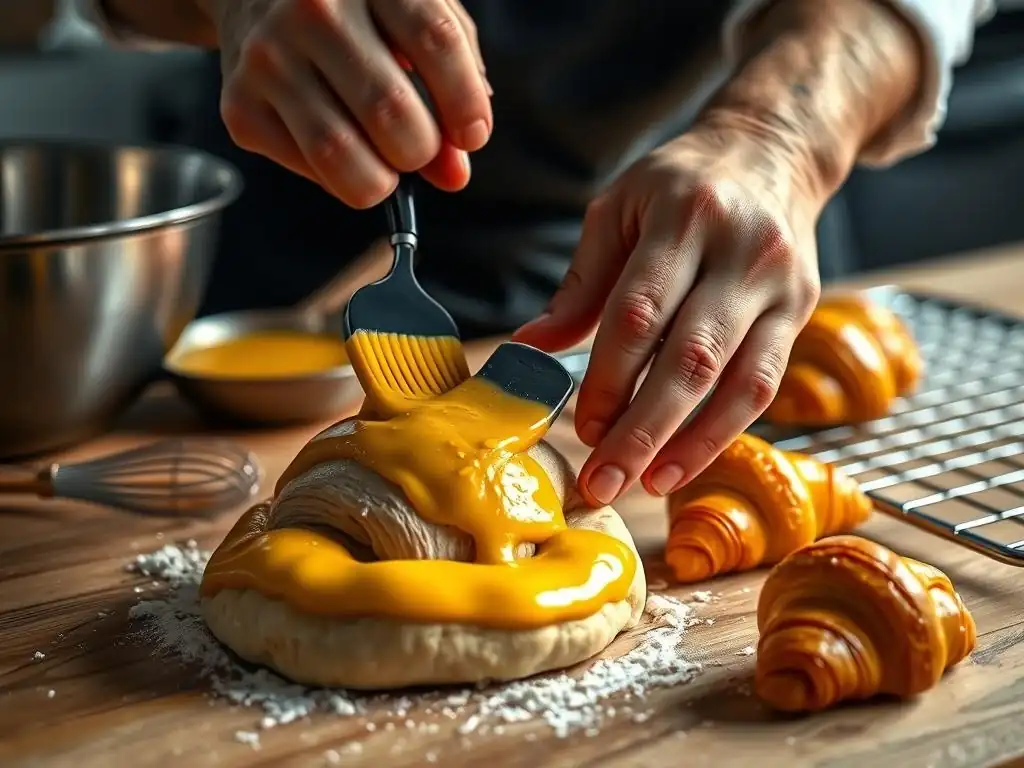
Pooling and streaking are common frustrations when applying egg wash, ruining the potential for a perfect shiny golden croissant. Pooling usually occurs in the crevices or at the base where the dough meets the baking sheet, often due to applying too much wash or using a brush overloaded with liquid. To prevent this, always tap off excess wash from your brush before applying.
Use light, even strokes, and avoid letting the brush linger too long in one spot, especially in seams. If you see a pool forming, gently wick it away with the tip of a clean, dry brush or the corner of a paper towel.
Streaking happens when the wash isn't applied uniformly or when the brush isn't clean or soft enough. Ensure your egg wash is well-mixed and sieved if possible. Use a soft-bristled brush and apply with consistent, gentle strokes. Avoid going back over areas that have already started to dry, as this can pull the partially set wash and create streaks. Applying two thin coats with a slight drying time in between is often more effective for a uniform shiny golden result than one thick coat.
Addressing Uneven Coloration After Baking
Uneven coloration after baking, where some parts of the croissant are much darker or lighter than others, can be caused by several factors, including application issues and oven inconsistencies. If the issue is patchy application of the egg wash, review the techniques discussed above (even coating, avoiding streaks and pools). Ensure you cover the entire surface of the croissant, including the sides.
Oven hot spots are another major culprit. Most home ovens have temperature variations. Rotating your baking sheet halfway through the baking time (e.g., after 10-12 minutes for croissants that bake for 20-25 minutes) can help ensure all croissants brown evenly. If you consistently get uneven color despite perfect application, consider using an oven thermometer to check your oven's actual temperature and identify potential hot spots, adjusting placement or rotation accordingly to achieve that beautiful, uniform shiny golden croissant egg wash.
Achieving a Deep, Rich Golden-Brown Hue
To get that desirable deep, rich golden-brown color on your croissants, several factors contribute. First, the egg wash itself: using a wash with a higher proportion of yolk or incorporating milk/cream instead of just water will promote deeper color development compared to a wash with more white or only water. A double coating also significantly enhances the depth of color compared to a single coat.
Beyond the wash, baking temperature and time are critical. Baking at the correct temperature (often around 375-400°F or 190-200°C for croissants) for the right duration allows the egg wash to caramelize and the pastry to brown properly. Over-proofing can sometimes lead to paler results, while correctly proofed dough browns beautifully. Ensuring your oven temperature is accurate is vital; an oven that runs cool will result in pale croissants, while one that runs hot might burn them before they achieve the desired deep shiny golden color.
Elevating Your Croissant Baking
Factors Affecting Croissant Color Beyond Egg Wash [e.g., Oven Calibration, Proofing]
While a perfect shiny golden croissant egg wash is paramount, other aspects of the baking process significantly influence the final color of your croissants. Oven temperature and calibration are perhaps the most critical. If your oven temperature is too low, the Maillard reaction and caramelization of the egg wash won't occur effectively, resulting in pale pastries regardless of the wash used. An oven running just 25°F (about 15°C) cooler than the recipe specifies can make a noticeable difference in browning. Using an oven thermometer is highly recommended to verify your oven's accuracy and adjust the dial accordingly.
Proofing also plays a role. Correctly proofed croissants (puffy, jiggly, but not collapsed) have the right balance of moisture and structure to bake evenly and develop good color. Over-proofed dough can sometimes lead to a slightly paler crust because the structure is weaker, and the surface might dry out unevenly. Conversely, under-proofed croissants might not expand fully, affecting how the surface area is presented to the heat. The type of flour used and even the sugar content in the dough recipe itself can also influence overall browning.
Experimenting with Flavor Infusions [e.g., Lemon Zest]
While not traditional, you can subtly infuse flavor into your croissant crust via the egg wash for a unique twist. A small amount of finely grated citrus zest, such as lemon or orange, can be whisked into the egg wash. The oils in the zest will adhere to the surface, releasing a delicate aroma and flavor as the croissant bakes. For instance, adding the zest of half a lemon to a wash made from 1 egg and 1.5 tablespoons of milk can add a bright, subtle note that complements the buttery richness of the croissant.
Other possibilities include a pinch of very fine spice like cinnamon or cardamom, especially if making a sweet variation of the croissant dough. You could also add a tiny amount of vanilla extract (use sparingly as too much liquid can dilute the wash).
When experimenting, ensure any additions are very finely ground or grated and mixed thoroughly to prevent clumping, which could cause uneven color or texture. Start with small amounts, like 1/4 teaspoon of zest or spice per egg, to avoid overwhelming the delicate croissant flavor while still achieving a shiny golden croissant egg wash with a hint of something extra.
Storing and Utilizing Leftover Egg Wash
Safe Storage Guidelines
It's common to have a small amount of egg wash leftover, especially if you're only baking a small batch of croissants. Since egg wash contains raw egg, it's important to store it safely. Place any leftover egg wash in a clean, airtight container immediately after use. Label the container with the date.
Store the container in the coldest part of your refrigerator, typically the back of the bottom shelf. According to food safety guidelines, raw egg mixtures like egg wash should be used within 24 to 48 hours when stored properly in the refrigerator at or below 40°F (4°C). Do not leave egg wash sitting at room temperature for more than two hours. If you won't use the leftover wash within this timeframe, it's best to discard it to avoid the risk of bacterial growth.
Creative Applications in Other Recipes [e.g., Savory Pastries]
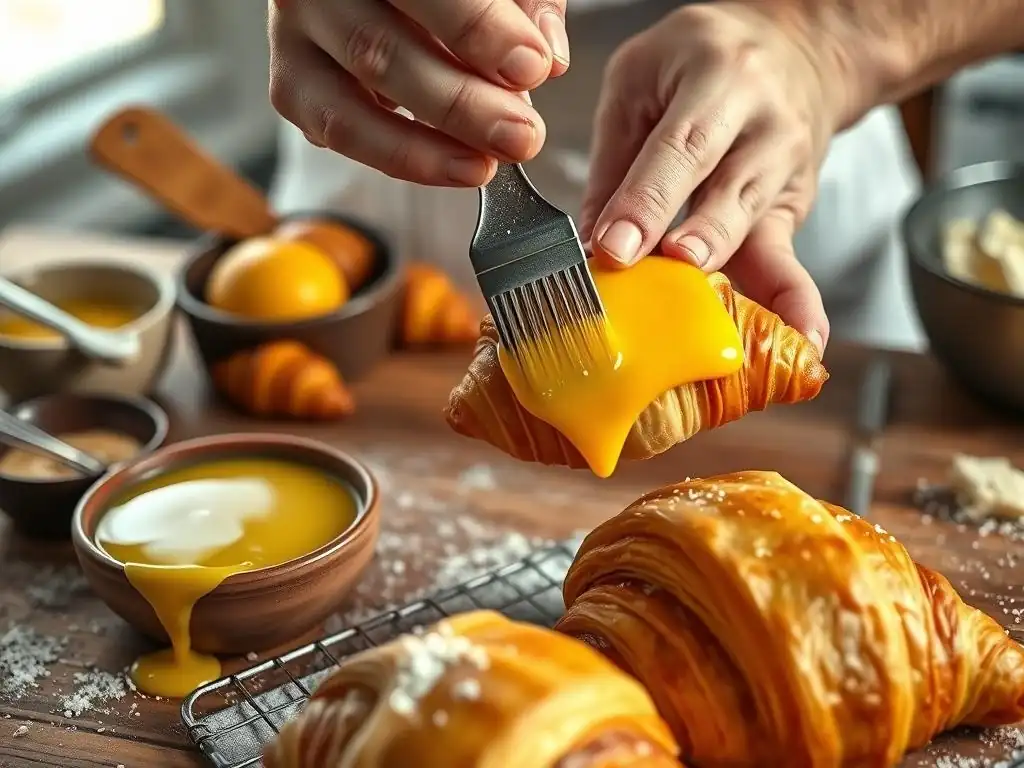
Leftover egg wash is incredibly versatile and can be used to add shine and color to a variety of other baked goods, not just croissants. It's perfect for giving a professional finish to other pastries like puff pastry tarts, turnovers, or palmiers. For example, brush leftover shiny golden croissant egg wash onto the tops of apple turnovers before baking for a beautiful glaze.
It's also excellent for savory applications. Brush it over the tops of savory hand pies, empanadas, or sausage rolls to give them a lovely golden brown crust. You can even use it to help sesame seeds or poppy seeds adhere to the tops of bread rolls or burger buns before baking. Another use is as a "glue" for sealing pastry edges, like when making ravioli or sealing the top crust onto a pie. Just remember to use it within the safe storage window mentioned above.
Conclusion: Mastering the Key to Beautiful Croissants
Frequently Asked Questions
What is the best egg wash for achieving that shiny, golden croissant look?
The best egg wash typically involves a combination of egg yolk and heavy cream or milk. This combination provides both color and shine.
Why is egg wash important for croissants?
Egg wash serves multiple crucial purposes. It adds color and shine, helps seal the dough, and promotes even browning during baking.
How do I prevent my egg wash from making my croissants too dark?
To prevent excessive browning, avoid using too much sugar in your egg wash. Also, be sure to apply a thin and even layer of egg wash just before baking.
Can I use just egg whites for egg wash?
While you can use egg whites, they primarily add a crisp texture but less color. Using egg yolk provides the desired rich, golden hue.
When is the best time to apply the egg wash to my croissants?
Apply the egg wash right before baking. Applying it too early can dry out the wash and prevent the desired shine, while applying it too late can affect the dough's rise.
Final Reflection: The Golden Ratio of Baking and the Pursuit of Perfection
The quest for the perfect croissant egg wash isn't merely about achieving a glossy sheen; it's a reflection of our dedication to culinary artistry and the pursuit of excellence in even the smallest details. A seemingly simple technique, the egg wash, profoundly impacts the final product, transforming a humble pastry into a golden masterpiece. The subtle nuances of temperature, egg-to-milk ratio, and even the type of brush used, all contribute to the final, breathtaking result. This pursuit of perfection resonates far beyond the kitchen.
The impact of this seemingly small detail extends beyond the individual croissant. It speaks to a broader cultural appreciation for craftsmanship and attention to detail. The desire for that perfect golden hue reflects a deeper human need for beauty and satisfaction in the things we create and consume. The details are not the details. They make the design.
- Charles Eames. This quote perfectly encapsulates the importance of mastering the seemingly insignificant elements in achieving true excellence.
Now, consider your own pursuits. What seemingly small details in your life, your work, or your passions, could benefit from the same level of meticulous attention? I encourage you to apply the spirit of this egg wash exploration to your own endeavors. Embrace the process, experiment with variations, and don't be afraid to strive for that perfect golden ratio, whatever form it may take in your life. The journey towards mastery is often more rewarding than the destination itself, and the resulting brilliance will be all the more satisfying.
Unleash Your Inner Baker: Get Baking!
Thanks for joining us on this croissant journey! You've now unlocked the secret to achieving that perfect, glossy finish. Ready to put your new skills to the test?
- Bake a batch of croissants using our egg wash technique! Let us know how they turn out—we'd love to see your creations!
- Share your baking journey on social media using #BakeWithEaseCroissants and tag us!
- Explore our other baking tips and recipes on BakeWithEase.com to expand your culinary skills.
What unique twist will you add to your next batch of croissants? Let's hear your ideas in the comments!