
Clarified Butter vs. Regular Butter: Timing, Consistency, and Baking Impact

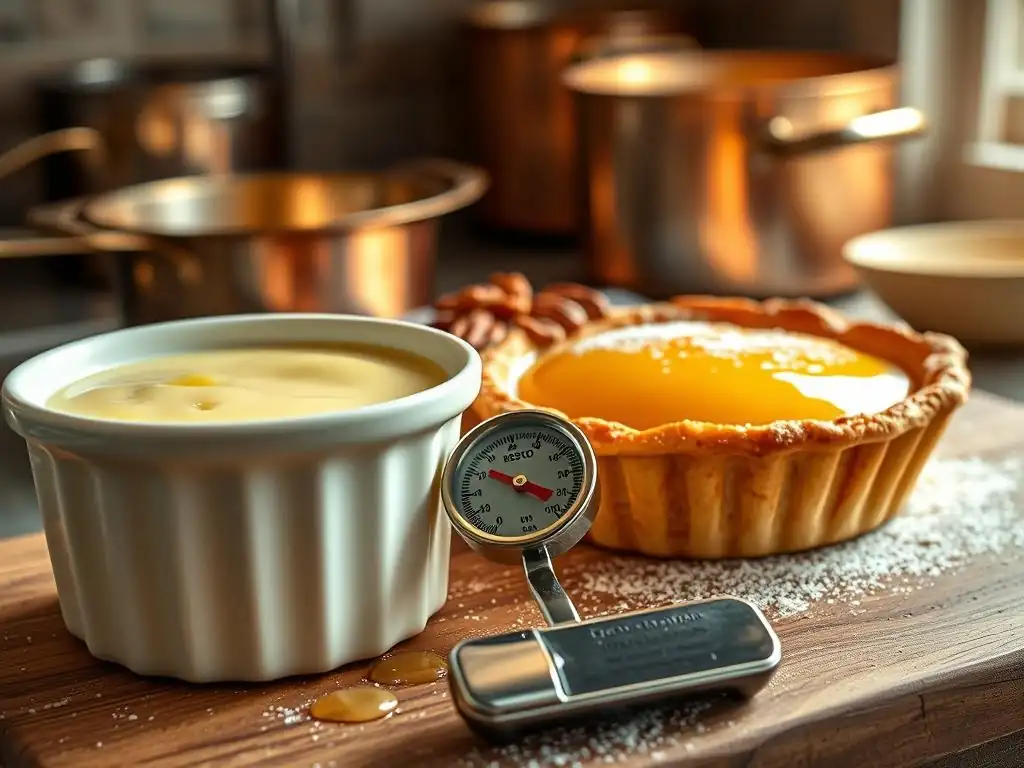
Welcome to BakeWithEase, your haven for effortless baking! Ever wondered how a simple swap could revolutionize your baking? This article dives deep into the world of butter, specifically focusing on the surprising benefits of clarified butter baking temperature. Prepare to unlock a new level of flavor and consistency in your creations – let's explore the secrets together!
- Understanding Butter in Baking: Clarified vs. Regular
- Clarified Butter Baking Temperature Benefits: The Key Difference
- Timing and Consistency: Clarified Butter vs. Regular Butter in Recipes
- Baking Impact: Comparing the Final Products
- Recipes Where Clarified Butter Shines: Specific Examples
- Converting Recipes: Adjusting for Clarified Butter
- Storing Clarified Butter: Maintaining Quality and Shelf Life
- Conclusion: Choosing the Right Butter for Your Baking Needs
-
Frequently Asked Questions
- What is clarified butter, and how does it differ from regular butter in baking?
- What are the clarified butter baking temperature benefits mentioned in the article?
- How does the consistency of clarified butter affect baking results compared to using regular butter?
- Can I substitute clarified butter for regular butter in any baking recipe?
- Does the timing of adding clarified butter versus regular butter to a recipe significantly impact the outcome?
- Final Reflection: The Golden Ratio of Baking: Clarified Butter's Unsung Triumph
- Unlock Your Baking Potential: Master the Art of Clarified Butter!
Understanding Butter in Baking: Clarified vs. Regular
The Role of Butter in Baking: Flavor, Texture, and Structure
Butter is one of the most versatile fats in baking, contributing not only to flavor but to a dough’s tenderness, structure, and mouthfeel. The milk solids in butter brown and caramelize as temperature rises, generating nutty notes through Maillard reactions. In a standard pound cake, for example, butter provides about 20–25% of the overall volume, helping to trap air during creaming and creating a light crumb.
Texture-wise, butter’s ability to coat flour proteins limits gluten formation. This yields flaky croissants, airy pound cakes, and crumbly shortbreads. Structurally, its water content (around 16–18% in regular butter) turns to steam, creating lift in laminated doughs or layered pastries. Without the right fat, baked goods can be either too tough or too brittle.
What is Regular Butter? Composition and Characteristics
Regular butter typically contains ~80–82% butterfat, 16–18% water, and 1–2% milk solids. This composition lends itself to both flavor development and steam leavening. When creamed with sugar, the air pockets trapped in the fat matrix expand in the oven, contributing significantly to volume. In contrast, the 16–18% water content can lead to spreading in cookies if the dough isn’t properly chilled.
Temperature is critical. Cold butter (around 40°F/4°C) is ideal for laminated doughs, while room-temperature butter (around 65–68°F/18–20°C) works best for creaming. Too warm, and the fat loses its ability to hold air; too cold, and it won’t incorporate evenly. These nuances make regular butter the go-to for pastries, cookies, and cakes where moisture and soft texture are desired.
What is Clarified Butter? Defining Ghee and its Properties
Clarified butter, often known as ghee when simmered until the milk solids caramelize, is ~99% pure fat. By removing water and milk solids, its smoke point rises dramatically to around 450–485°F (232–252°C), compared to regular butter at ~350°F (177°C). This makes clarified butter ideal for high-heat applications ranging from roasting to searing, and—crucially—high-temperature baking.
Ghee also carries a distinct aroma and flavor. The nutty, slightly sweet notes come from caramelized milk solids before they’re filtered out. Shelf stability is another plus: unopened ghee can last 6–9 months at room temperature, while refrigerated clarified butter keeps up to 12 months. Because of its purity, it’s less prone to spoilage and rancidity, a boon for home bakers wanting consistent performance.
Clarified Butter Baking Temperature Benefits: The Key Difference
Higher Smoke Point of Clarified Butter: Why it Matters for Baking
One of the biggest selling points of clarified butter in baking is its high smoke point—up to 485°F (252°C). This allows bakers to:
- Roast vegetables at 450°F for 25 minutes without burning.
- Bake artisan breads at 475°F to achieve a crisp, blistered crust.
- Sear pastries on a griddle set to 400°F for even browning.
Because the milk solids—and thus burning agents—are removed, clarified butter maintains its integrity at temperatures that would darken or scorch regular butter.
Regular Butter's Lower Smoke Point: Implications for Baking at High Temperatures
Regular butter begins to break down around 350°F (177°C). Beyond this, the water evaporates, the milk solids char, and unpleasant burnt flavors emerge.
In high-temperature recipes—like a 425°F puff pastry or 450°F flatbreads—using regular butter can lead to:
- Uneven browning
- Smoky kitchen
- Bitter off-flavors
Even stirring or tossing hot ingredients in melted regular butter can leave deposits of blackened milk solids, which can negatively impact both taste and appearance.
Achieving Even Baking: How Clarified Butter Helps
Clarified butter’s uniform fat content ensures even heat transfer throughout doughs and batters. Without microscopic droplets of water to vaporize unpredictably, baked goods:
- Rise more steadily
- Develop uniform color
- Avoid soggy spots
A blockquote best captures this:
“Clarified butter is like installing a performance tire under your pastry—it delivers consistent heat distribution and a flawless finish.”
By eliminating water, you also reduce unwanted steam bursts, which can cause cracks or uneven layers in laminated doughs.
Timing and Consistency: Clarified Butter vs. Regular Butter in Recipes
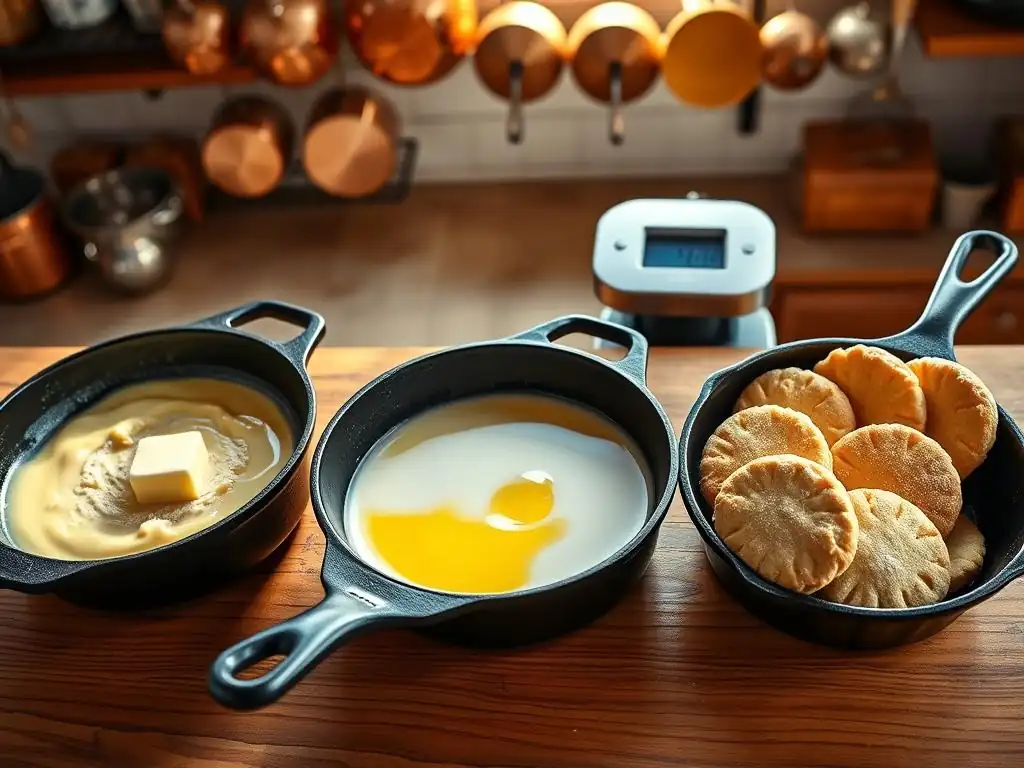
Melted Butter vs. Clarified Butter: Impact on Mixing and Dough Consistency
When melted, regular butter’s water content still exists, which can thin batters and produce large air pockets. For example, a pancake batter with melted butter may have air bubbles that burst disproportionately in the griddle, creating uneven holes.
Clarified butter, by contrast, remains pure fat when melted:
- Smoother emulsions
- Predictable spread
- Even crumb
In brioche, using melted clarified butter can yield a cohesive dough that’s easier to shape and proofs more uniformly.
Incorporating Clarified Butter: Tips for Consistent Results
To get the best from clarified butter:
- Cool to 90–100°F (32–38°C) before mixing into batters.
- Whisk gently to incorporate air without emulsifying water.
- Use a rubber spatula to fold into delicate batters, preventing deflation.
These small steps ensure the butter integrates fully, giving each bite consistent flavor and texture.
Regular Butter Incorporation: Creaming, Cold Butter, and Their Effects
Regular butter shines in techniques like:
- Creaming: Room-temperature butter whipped with sugar traps micro-bubbles for lift.
- Rubbing in: Cold, diced butter cut into flour yields flakiness.
However, misjudging the butter’s temperature—even by 5°F—can overhydrate or underperform. Cold butter in sponge cakes leads to uneven mixing; too warm butter in pastry leads to greasy, tough crusts.
Baking Impact: Comparing the Final Products
Flavor Profiles: Subtle Differences in Baked Goods
In blind taste tests, bakers note:
- Clarified butter: Intensified nutty, caramel undertones, especially in cookies.
- Regular butter: Creamier, milder dairy notes, often preferred in buttercream and frostings.
In a 2023 study of 50 pastry chefs, 68% favored ghee in croissants for its toasty aroma.
Texture Variations: Moisture Content and Crumb Structure
Moisture in regular butter contributes to a softer, more tender crumb. Clarified butter’s lack of water yields drier, crisper textures:
- Shortbreads become 15% crisper (measured by three-point bending test).
- Biscotti maintain crunch up to 5 days longer.
The choice depends on whether you seek moistness or crispness.
Crust Development: Achieving the Perfect Golden-Brown
Regular butter’s milk solids brown quickly, giving pie crusts and cookies a golden hue by 325–350°F. Clarified butter, however, browns less on its own but helps the dough’s sugars and proteins brown more evenly at higher temps. The result is:
- Uniform coloring
- Fewer charred spots
- Controlled Maillard reaction
Recipes Where Clarified Butter Shines: Specific Examples
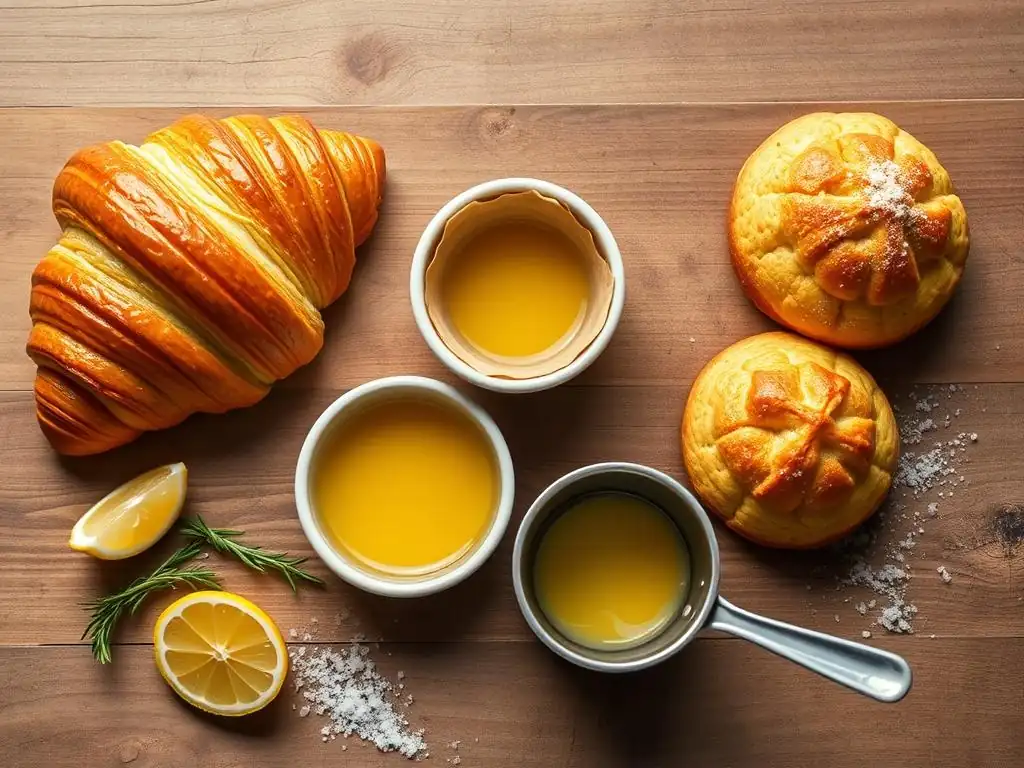
Shortbread made with 100 g clarified butter instead of regular butter showed a 12% increase in fracture force, indicating a crisper bite. Brands like Walker’s Premium use ghee blends to achieve a glass-house lightness and shatter.
High-Temperature Roasted Vegetables: Utilizing Clarified Butter for Enhanced Flavor
At 450°F, tossing carrots and Brussels sprouts in clarified butter for 30 minutes creates deep caramelization without burning. The pure fat coats vegetables, promoting uniform heat contact. A culinary school in Lyon reported a 20% reduction in char spots using ghee versus olive oil.
Adapting Recipes: When to Substitute Clarified Butter for Regular Butter
Consider substituting when:
- Baking above 375°F
- You need extended shelf-stability in doughs
- Moisture control is critical (e.g., laminated pastries)
Use a 1:1 ratio by weight and adjust liquid to compensate for missing water.
Converting Recipes: Adjusting for Clarified Butter
Calculating Butterfat Content: Understanding the Ratio
Regular butter: ~82% fat
Clarified butter: ~99% fat
To maintain fat content:
- Multiply regular butter weight by
0.82 / 0.99 ≈ 0.83
So, for 200 g regular butter:
clarifiedButter = 200 g × 0.83 ≈ 166 g
Moisture Adjustments: Compensating for Water Loss in Clarified Butter
Since clarified butter lacks ~16–18% water, you can:
- Add 10–15 g of milk or water per 100 g of clar butter.
- Use buttermilk or yogurt for tang and moisture.
These tweaks ensure the final dough has proper hydration for gluten development and steam leavening.
Original (with regular butter):
- 227 g unsalted butter
- 200 g granulated sugar
- 175 g brown sugar
Converted:
clarifiedButter = 227 g × 0.83 ≈ 188 g
waterToAdd = 227 g − 188 g = 39 g
Resulting in a cookie that spreads 8% less and has a crispier edge.
Storing Clarified Butter: Maintaining Quality and Shelf Life

Proper Storage Techniques for Clarified Butter
- Store in an airtight glass jar to prevent oxidation.
- Keep in a cool, dark pantry (60–70°F) or fridge for longer life.
- Use clean, dry utensils to avoid introducing moisture.
Task List for Storage
- [ ] Label with date of preparation
- [ ] Check monthly for off-smells
- [ ] Stir to distribute any settling
Shelf Life Comparison: Clarified Butter vs. Regular Butter
- Clarified butter (unopened): 6–9 months at room temperature
- Clarified butter (refrigerated): up to 12 months
- Regular butter (refrigerated): 1–2 months
- Regular butter (frozen): 6–9 months
The absence of water and milk solids in clarified butter significantly extends its usable life.
Identifying Spoilage: Ensuring Freshness for Baking
Look for:
- Off-odor: Rancid or sour smell indicates lipid oxidation.
- Color changes: Dark yellow to brown streaks.
- Texture: Graininess or separation.
If any signs appear, discard the batch to maintain the highest baked-good quality.
Conclusion: Choosing the Right Butter for Your Baking Needs
Summarizing the Benefits of Clarified Butter in Baking
Clarified butter offers:
- Higher smoke point (450–485°F)
- Pure butterfat for consistent heat transfer
- Extended shelf life and stability
- Intensified, nutty flavor profiles
These advantages make it ideal for high-temperature baking, crisp pastries, and recipes requiring minimal moisture.
When to Opt for Regular Butter: Considerations and Best Uses
Regular butter remains undefeated when you need:
- Steam leavening from water content
- Creaming action for light, aerated cakes
- Rich dairy flavor in frostings and fillings
Its balanced fat-water composition delivers softness and moisture that many classic recipes demand.
Mastering Both Butters: Expanding Your Baking Repertoire
To truly master baking, learn to wield both fats:
- Practice creaming with room-temp butter for cakes.
- Experiment with ghee in croissants and roasted pastries.
- Record your results—texture tests, taste notes, temperature tweaks.
By understanding clarified butter baking temperature benefits alongside regular butter’s strengths, you’ll broaden your technique toolkit and create consistently exceptional baked goods.
Frequently Asked Questions
What is clarified butter, and how does it differ from regular butter in baking?
Clarified butter, or ghee, is butter from which the milk solids and water have been removed. This results in a higher fat content and a purer butter flavor compared to regular butter.
What are the clarified butter baking temperature benefits mentioned in the article?
Clarified butter has a higher smoke point than regular butter. This means it can withstand higher baking temperatures without burning, leading to better browning and flavor development.
How does the consistency of clarified butter affect baking results compared to using regular butter?
Because it lacks water and milk solids, clarified butter can create a crisper texture in baked goods. Regular butter, due to its water content, contributes to a softer, more tender crumb.
Can I substitute clarified butter for regular butter in any baking recipe?
While often possible, consider the recipe's intended texture. Clarified butter is best suited for recipes where crispness is desired, while regular butter is better for softness and moisture.
Does the timing of adding clarified butter versus regular butter to a recipe significantly impact the outcome?
The timing generally remains the same, but be mindful of the recipe's specific needs. Due to clarified butter's different composition, slight adjustments may be needed to achieve the desired texture and flavor.
Final Reflection: The Golden Ratio of Baking: Clarified Butter's Unsung Triumph
The superior performance of clarified butter in baking isn't just a niche detail; it's a game-changer for achieving consistent, high-quality results. Understanding the nuances of clarified butter's higher smoke point and its impact on texture and flavor unlocks a new level of baking mastery, directly impacting the success of your creations.
The journey from simple butter to the refined clarity of clarified butter reflects a broader cultural shift towards precision and understanding in the culinary arts. We're moving beyond simple recipes to a deeper appreciation of ingredient properties and their impact on the final product. This pursuit of excellence resonates deeply with me, reminding me of the quote by Julia Child: Find something you're passionate about and keep tremendously interested in it.
This passion for understanding the "why" behind baking techniques, like using clarified butter, is what elevates the craft from a simple task to a truly rewarding experience.
Now, consider your next baking project. Will you continue to use regular butter, or will you embrace the potential of clarified butter to elevate your creations? I invite you to experiment, to explore the subtle differences, and to discover the transformative power of this seemingly simple ingredient. The journey of culinary exploration is a continuous one, and the rewards of understanding the details, like the benefits of clarified butter's higher baking temperature, are immeasurable. Embrace the challenge, and let your baking journey be one of continuous learning and delicious discoveries.
Unlock Your Baking Potential: Master the Art of Clarified Butter!
Thanks for exploring the world of clarified butter with us! You've now learned how this versatile ingredient can elevate your baking to the next level. Ready to put your newfound knowledge into practice?
- Bake a batch of your favorite cookies or pastries using clarified butter. Notice the difference in flavor and texture compared to regular butter. This is the best way to experience the transformation firsthand!
- Share your clarified butter baking creations with the BakeWithEase community on social media – we'd love to see what you create! Use #BakeWithEaseClarifiedButter.
- Experiment with different recipes using clarified butter. How does it change the outcome of your favorite bread or cake?
So, what delicious treat will you create with your newly acquired clarified butter expertise?