
Conquering Sticky Situations: Measuring Peanut Butter, Nut Butters, and Ghee

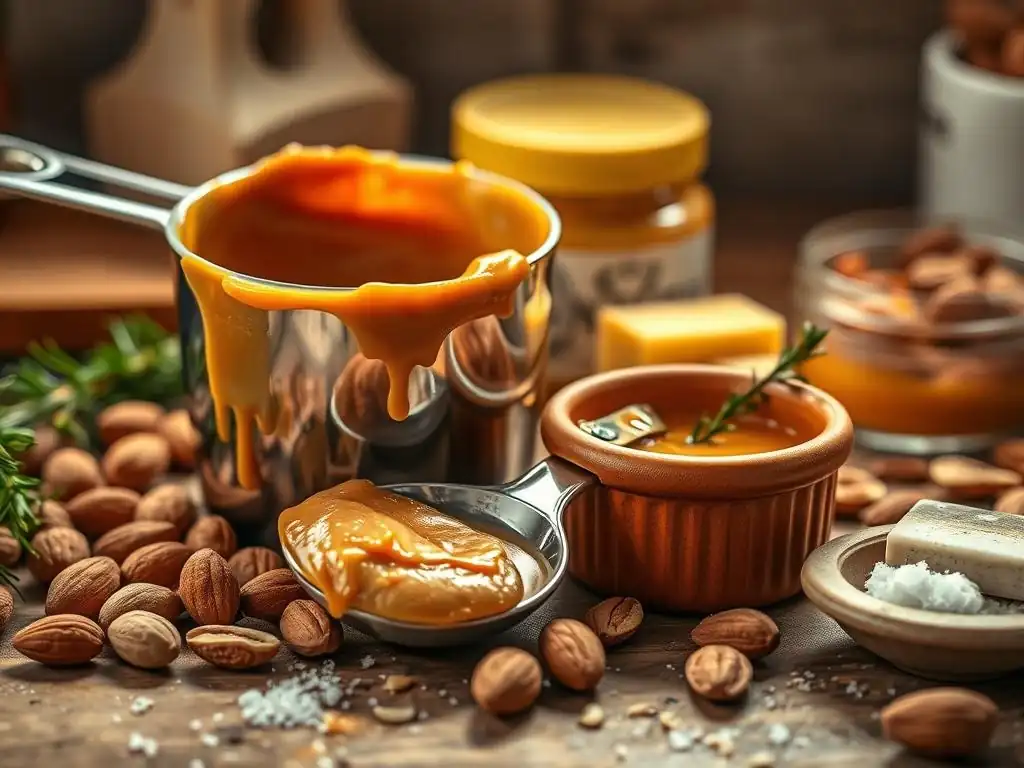
Welcome to BakeWithEase, your culinary companion for all things baking! Ever wrestled with that sticky, stubborn jar of peanut butter, desperately trying to get an accurate measurement? Conquering Sticky Situations: Measuring Peanut Butter, Nut Butters, and Ghee dives deep into practical solutions and ingenious hacks. Discover our foolproof Peanut butter measuring tips guide and unlock the secrets to perfect portions every time. Ready to say goodbye to sticky spills and hello to baking bliss? Let's get started!
- Mastering Sticky Ingredients: Accurate Measurement for Baking Success
- Introduction: Achieving Baking Precision with Challenging Ingredients
- The Importance of Accurate Measurement in Baking
- Measuring Peanut Butter: Techniques for Accuracy
- Measuring Other Nut Butters: Adapting Techniques
- Measuring Ghee: Tips for Accuracy with Clarified Butter
- Measurement Methods: A Detailed Comparison
- Cleaning Measuring Tools Effectively
- Troubleshooting Common Measurement Errors
- Recipe Adjustments Based on Measurement Methods
- Conclusion: Achieving Consistent Baking Results
-
Frequently Asked Questions
- What are the biggest challenges when measuring peanut butter, and how can I overcome them?
- Why is accurate measurement important when baking with peanut butter?
- What are some alternative measuring methods for peanut butter besides using a measuring cup?
- How does the temperature of peanut butter affect its measurability?
- What are some specific tips for measuring other nut butters and ghee, based on the same principles?
- Final Reflection: The Unexpected Wisdom of a Sticky Situation
- Unlock Your Baking Potential: Master the Art of Sticky Measures!
Mastering Sticky Ingredients: Accurate Measurement for Baking Success
Introduction: Achieving Baking Precision with Challenging Ingredients
Baking is often described as a science, and like any science, precision is paramount. While measuring flour or sugar might seem straightforward, tackling sticky ingredients like peanut butter, various nut butters, and ghee presents a unique set of challenges. These dense, adhesive substances don't flow easily, making accurate volume measurement tricky and prone to errors that can significantly impact your final baked goods. Mastering the art of measuring these specific ingredients is a crucial step for any baker aiming for consistent, professional-quality results.
This guide delves into the best practices for accurately measuring these notoriously sticky components. We'll explore why they behave differently, the tools that offer the most reliable results, and techniques to minimize frustration and mess. Whether you're whipping up peanut butter cookies, a rich nut butter bread, or a flaky pastry using ghee, applying these precise measurement strategies will help you conquer those sticky situations and unlock the full potential of your recipes.
The Importance of Accurate Measurement in Baking
Baking relies on specific ratios of ingredients interacting chemically and physically during the baking process. Unlike cooking, where you can often adjust seasonings or textures on the fly, baking requires ingredients to be measured with a high degree of accuracy. Even small deviations in the amount of a key ingredient can throw off the delicate balance of a recipe, leading to unexpected and often disappointing outcomes.
Understanding the critical role of precise measurement is the foundation of successful baking. It ensures that your ingredients combine in the intended proportions, allowing the chemistry of baking – such as leavening agents reacting, fats melting, and proteins developing – to occur correctly. This attention to detail is especially important when dealing with ingredients like peanut butter, nut butters, and ghee, where their unique properties can easily lead to measurement inaccuracies if not handled properly.
Impact on Texture, Flavor, and Consistency
The amount of fat and sugar in a recipe, often contributed significantly by ingredients like peanut butter or ghee, directly influences texture, flavor, and overall consistency. For instance, in a standard cookie recipe requiring 1 cup of peanut butter (approximately 250-260g), accidentally adding an extra 30-40g due to improper measurement can result in cookies that spread too much, become excessively greasy, or have an overwhelmingly strong flavor. Conversely, measuring too little, perhaps only 200g instead of 250g, might yield cookies that are dry, crumbly, and lack the desired richness and chewiness.
Consider a pie crust made with ghee. If you measure even 10-15% less ghee than specified, the dough might not have enough fat to create flaky layers, resulting in a tough or hard crust. Flavor is also directly tied to quantity; the distinct taste of almond butter in a cake, for example, can be muted or overpowering depending on whether the correct amount was incorporated. Accurate measurement ensures that the intended balance of flavors and the desired textural outcome are achieved consistently batch after batch.
Challenges Posed by Sticky Ingredients
Sticky ingredients like peanut butter, almond butter, cashew butter, and ghee present unique challenges due to their viscosity and tendency to cling to measuring tools. When using volume measures (cups and spoons), it's difficult to get a clean scoop and an accurate level surface. Air pockets can easily get trapped within the dense mass, or the ingredient can be packed down too tightly, leading to significant volume discrepancies. A standard 1/2 cup measure of peanut butter, for instance, could vary in weight by as much as 10-15% depending on how it's scooped and leveled.
Furthermore, the temperature of these ingredients can affect their consistency and, consequently, their volume when measured. Refrigerated peanut butter is firmer and harder to scoop than room-temperature peanut butter. Melted ghee behaves entirely differently from solid ghee. These variations make volume measurement unreliable for sticky substances, highlighting the need for more precise methods if you want consistent results in your baking. This is where a good "Peanut butter measuring tips guide" becomes essential.
Measuring Peanut Butter: Techniques for Accuracy
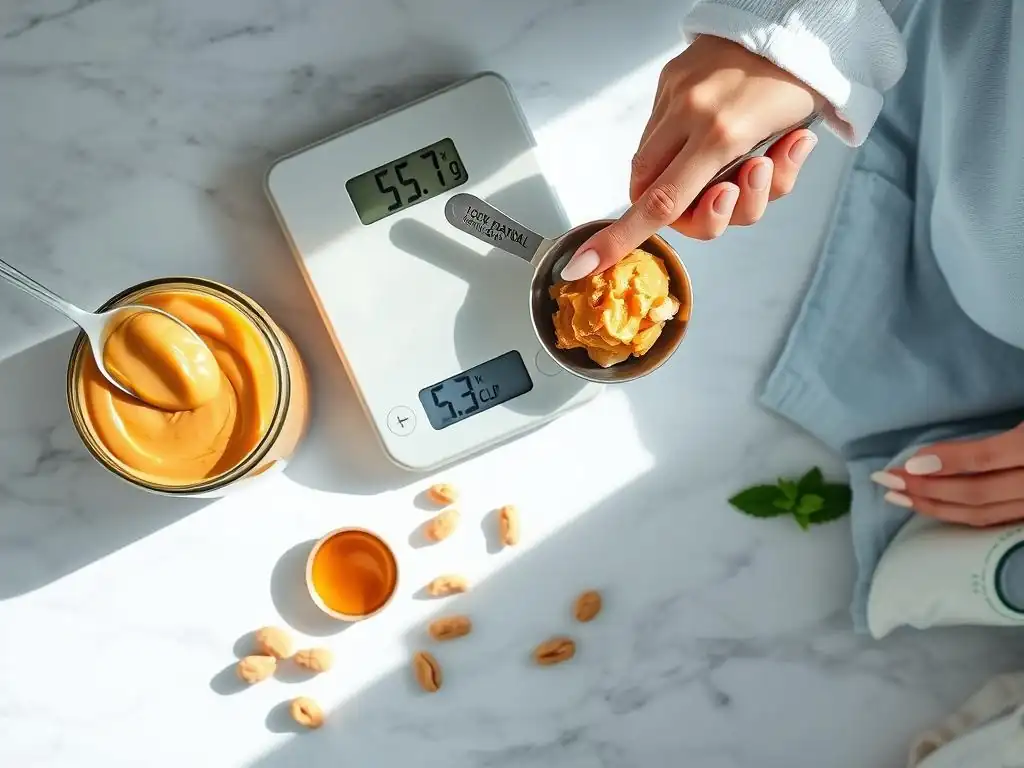
Peanut butter is a staple in many baked goods, from classic cookies to rich brownies. Its unique texture and tendency to stick make precise measurement crucial for predictable outcomes. While many recipes still list peanut butter in volume measurements (cups and spoons), understanding the nuances of this ingredient and employing the right techniques can significantly improve your accuracy.
The most reliable way to measure peanut butter is by weight using a kitchen scale. However, if a recipe only provides volume measurements, specific techniques must be used to minimize error. Simply scooping it like flour will not work. Proper methods involve packing the peanut butter firmly into the measuring cup and then leveling it off, or using displacement methods, though weight remains the gold standard for consistency, especially when dealing with different types of peanut butter.
Understanding Peanut Butter's Variability
Not all peanut butter is created equal, and its composition significantly impacts how it measures. Natural peanut butter, which often separates into oil and solids, has a different density and consistency than conventional peanut butter that contains added stabilizers and sugars. Measuring natural peanut butter requires thoroughly stirring the oil back into the solids before scooping. Failure to do so means you'll measure mostly oil at the top and mostly solids at the bottom, leading to an incorrect fat-to-solid ratio in your recipe.
Even within the same type, factors like temperature affect consistency. Refrigerated peanut butter is much firmer and harder to scoop and pack than room-temperature peanut butter. This variability underscores why a "Peanut butter measuring tips guide" often emphasizes the benefits of weight measurement, as 100 grams of peanut butter is always 100 grams, regardless of whether it's natural, conventional, smooth, crunchy, cold, or at room temperature. Relying solely on volume measurements without accounting for these variations is a common source of baking errors.
Recommended Tools for Measuring Peanut Butter
For accurate measurement of peanut butter, particularly sticky varieties, certain tools are more effective than others. While standard dry measuring cups are commonly used, they present challenges. For improved accuracy with volume, consider using measuring cups with a non-stick surface or those designed with straight sides and a flat rim for easier leveling. However, the most recommended tool for ultimate precision is a digital kitchen scale.
A kitchen scale eliminates the variability inherent in volume measurement of sticky substances. It measures ingredients by weight (grams or ounces), providing an exact quantity that isn't affected by how tightly the ingredient is packed or its specific density variations. For example, if a recipe calls for 250g of peanut butter, weighing it on a scale ensures you have precisely 250g every time, removing the guesswork and inconsistency associated with trying to fill a 1-cup measure accurately.
Using Measuring Cups Effectively
If you must use measuring cups for peanut butter, employ the "pack and level" method. Start by stirring the peanut butter if it's natural or separated. Then, use a spoon or spatula to firmly pack the peanut butter into the measuring cup, pressing it down to eliminate air pockets. Overfill the cup slightly. Once packed, use a straight edge, like the back of a knife or an offset spatula, to level off the excess, scraping it flush with the rim of the cup.
While this method is better than just scooping loosely, it's still subject to human error in how consistently you pack. The amount of pressure applied can significantly affect the final volume and weight. For instance, loosely packing might result in a cup weighing 240g, while firmly packing could push it closer to 270g for the same volume measure. This variability is why using a kitchen scale is the preferred method in a comprehensive "Peanut butter measuring tips guide."
Benefits of Using a Kitchen Scale
Using a kitchen scale is arguably the most impactful change you can make for accurate baking, especially with sticky ingredients like peanut butter. Simply place your mixing bowl or container on the scale, tare it (set it to zero), and add the peanut butter until the desired weight is reached. This eliminates the issues of packing, air pockets, and residue left in the cup.
The precision offered by a scale is invaluable. Recipes developed using weight measurements are inherently more consistent. For example, many professional bakers use weight because they know that 200 grams of peanut butter will behave the same way every time, regardless of its type or temperature, unlike a volume measure like 3/4 cup, which could vary significantly. Investing in a reliable digital kitchen scale is a foundational step towards achieving consistent and reliable baking results.
Measuring Other Nut Butters: Adapting Techniques
While peanut butter is common, many recipes call for other nut butters like almond butter, cashew butter, or even seed butters like sunflower seed butter. These ingredients share many characteristics with peanut butter, including their stickiness and potential for oil separation, meaning the core principles for accurate measurement remain similar. However, there can be subtle differences in density and texture that require minor adaptations.
Applying the techniques learned for peanut butter measurement, particularly the emphasis on weight, is crucial when working with these alternatives. Understanding their specific properties will help you choose the best method and ensure you are incorporating the correct amount into your baked goods. Just like with peanut butter, achieving precision here is key to recipe success.
Almond Butter: Specific Considerations
Almond butter, especially natural varieties, often separates more readily than some types of peanut butter, with a significant layer of oil forming at the top. Before measuring, it is absolutely essential to stir natural almond butter thoroughly until the oil is fully incorporated back into the solids. Failure to do this will result in measuring mostly oil or mostly paste, drastically altering the fat content and consistency of your recipe.
Almond butter can also vary in texture – some are very smooth and pourable after stirring, while others are quite thick. While the pack-and-level method can be used with volume cups, the variability in consistency makes weight measurement even more appealing for almond butter. Weighing ensures you get the correct proportion of fat and solids every time, regardless of the initial separation or overall thickness.
Cashew Butter and Sunflower Seed Butter: Key Differences
Cashew butter tends to be creamier and less prone to significant oil separation than natural peanut or almond butter, although separation can still occur. Its smoother texture might make it slightly easier to scoop and level in a volume cup compared to thicker nut butters. However, it is still sticky and dense, meaning volume measurements are still less accurate than weight.
Sunflower seed butter can have a slightly different density and can also separate. Some varieties are quite thick. The stickiness factor remains high for both cashew and sunflower seed butter. Therefore, the most reliable "Peanut butter measuring tips guide" principles, such as using a kitchen scale, apply equally well to these nut and seed butters to ensure consistent baking outcomes.
Adjusting for Density Variations
Different nut and seed butters have slightly different densities. For example, a cup of almond butter might weigh slightly more or less than a cup of peanut butter, even when packed using the same technique. These variations, though seemingly small (perhaps a difference of 5-10g per cup), can accumulate and affect recipes where the nut butter is a primary ingredient.
This is another strong argument for using weight measurements. If a recipe is written with volume measures but you prefer to use weight, it's helpful to look up approximate weight-to-volume conversions for the specific nut butter you are using, but be aware these are still approximations based on average density. Ideally, recipes should provide weight measurements for sticky ingredients like nut butters to eliminate these density-based inaccuracies altogether.
Measuring Ghee: Tips for Accuracy with Clarified Butter
Ghee, or clarified butter, is another ingredient that requires careful measurement due to its unique properties. It's essentially butter that has been simmered to remove water and milk solids, leaving behind pure butterfat. Ghee is solid at room temperature but melts readily when heated, and its consistency changes significantly with temperature, posing distinct measurement challenges.
Whether a recipe calls for solid or melted ghee, using the correct technique is vital for accurate results. Like nut butters, ghee's stickiness and density make volume measurements less reliable than weight, especially when transitioning between its solid and liquid states.
Ghee's Unique Characteristics
Ghee is 100% fat, giving it a different density and melting point compared to regular butter (which contains around 80-82% fat plus water and milk solids). At typical room temperature (around 70°F or 21°C), ghee is usually solid or semi-solid, similar in consistency to firm butter. However, it has a higher smoke point than butter, making it excellent for high-heat cooking, and it imparts a rich, slightly nutty flavor to baked goods.
Its solid-to-liquid transition temperature means its volume changes significantly upon melting. A volume measure of solid ghee will weigh more than the same volume measure of melted ghee because the solid form is denser when packed. This is a critical point to consider when a recipe specifies a particular state (solid or melted) for the ghee, and it underscores why weight measurement is the most reliable method.
Measuring Melted vs. Solid Ghee
Recipes will often specify whether to use solid or melted ghee. If measuring by volume:
- Solid Ghee: Treat it much like solid butter or shortening. If it's too hard, let it soften slightly at room temperature. Pack it firmly into the dry measuring cup using a spatula to eliminate air pockets, then level off the excess.
- Melted Ghee: Melt the ghee gently over low heat or in a microwave until fully liquid. Allow it to cool slightly so it doesn't warp your measuring cup, then pour it into a liquid measuring cup set on a flat surface. Read the measurement at eye level.
However, remember that a cup of solid ghee will weigh approximately 205g, while a cup of melted ghee weighs less, around 190g. If a recipe calls for 1 cup of melted ghee by volume, but you accidentally measure 1 cup of solid ghee and then melt it, you will have used about 15g more ghee than intended, impacting the fat content and potentially the texture of your bake. Using a scale to measure the required weight (e.g., 205g for 1 cup solid, or 190g for 1 cup melted) eliminates this potential error.
Avoiding Air Pockets
When measuring solid or semi-solid ghee by volume, just like with peanut butter, it's crucial to avoid trapping air pockets. Scoop the ghee into the dry measuring cup in smaller amounts, pressing it down firmly with the back of a spoon or a spatula as you go. Continue adding and packing until the cup is overfilled, then level it off with a straight edge.
Failure to pack the ghee properly means you'll have significant air pockets within the measurement, resulting in less actual ghee by weight than a properly packed cup. This leads to an inaccurate measurement and a recipe that may not turn out as expected. While careful packing helps volume measurement, weighing is the only sure way to know you have the exact amount of ghee needed for consistent results.
Measurement Methods: A Detailed Comparison
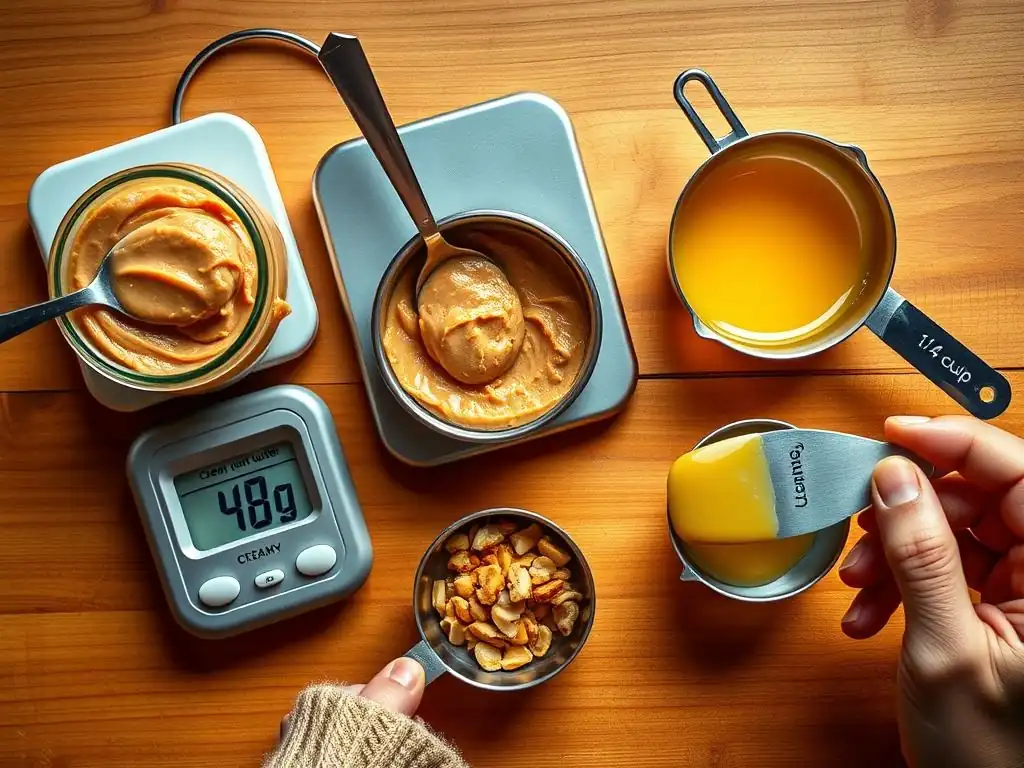
When dealing with sticky ingredients like peanut butter, nut butters, and ghee, the choice of measurement method significantly impacts accuracy. The two primary methods are volume measurement (using cups and spoons) and weight measurement (using a kitchen scale). While volume is traditional for many home recipes, weight offers a level of precision that is superior, particularly for these challenging ingredients.
Comparing the advantages and disadvantages of each method highlights why bakers serious about consistency increasingly turn to kitchen scales. Understanding these differences is key to choosing the best approach for your recipe and achieving reliable outcomes every time you bake.
Spoon and Level Method: Advantages and Disadvantages
The spoon and level method is standard for dry ingredients like flour and sugar: gently spoon the ingredient into the measuring cup and level off the excess. However, this method is not suitable for sticky ingredients like peanut butter or ghee because they don't spoon loosely. Instead, the "pack and level" method is used for volume measurement of these substances.
- Advantages (of Pack & Level for sticky ingredients): It's the standard technique if a recipe only provides volume. It helps eliminate large air pockets compared to just scooping.
- Disadvantages: It's highly prone to inconsistency based on how firmly the ingredient is packed. It's messy, leaving residue on tools. It doesn't account for variations in density or consistency (like natural vs. conventional peanut butter). The amount of ingredient left clinging to the cup after emptying can also vary, slightly reducing the amount that actually makes it into the mix. This inherent variability makes it the less accurate method in a "Peanut butter measuring tips guide."
Using a Kitchen Scale: The Most Accurate Approach
Measuring by weight using a kitchen scale is widely considered the gold standard for accuracy in baking, especially for sticky, dense, or temperature-sensitive ingredients.
- Advantages:
- Precision: 100 grams is always 100 grams, regardless of the ingredient's density, consistency, or how it's scooped. This eliminates variability from packing or air pockets.
- Consistency: Recipes measured by weight are far more reproducible. If you weigh your ingredients, you're much more likely to get the same result every time you make a recipe.
- Less Mess: You can often measure directly into your mixing bowl, reducing the number of dirty dishes compared to using multiple measuring cups and spoons.
- Adaptability: Works perfectly for solid, semi-solid, or melted states of ingredients like ghee.
- Disadvantages:
- Requires a recipe that provides weight measurements (or reliable conversions).
- Requires purchasing a kitchen scale if you don't already own one.
For a "Peanut butter measuring tips guide" focused on accuracy, recommending a kitchen scale is paramount.
Tips for Minimizing Stickiness
Working with sticky ingredients inevitably leads to some residue on your measuring tools. However, a few simple tips can help minimize the mess and ensure you transfer as much of the measured ingredient as possible into your mix.
- Lightly Oil the Measuring Cup/Spoon: Before scooping, lightly coat the inside of your dry measuring cup or spoon with a neutral cooking spray or a tiny amount of oil. The sticky ingredient will slide out much more easily.
- Use Warm Tools (Carefully): For very firm ingredients like cold ghee or peanut butter, slightly warming the measuring tool (e.g., rinsing a metal spoon under warm water and drying it quickly) can help the ingredient release more easily. Be cautious not to melt solid ingredients unless intended.
- Scrape Thoroughly: Use a rubber spatula to scrape every last bit of the measured ingredient out of the cup or spoon and into your mixing bowl. This ensures you are adding the full measured amount to your recipe.
These tips, while helpful for volume measurement, also make cleaning easier regardless of the method used.
Cleaning Measuring Tools Effectively
After conquering those sticky measurements, the next hurdle is cleaning your tools. Peanut butter, nut butters, and ghee can leave a tenacious residue that requires specific cleaning approaches to ensure your tools are ready for the next baking adventure and properly maintained.
Proper cleaning not only makes your tools hygienic but also prolongs their lifespan and ensures their accuracy isn't compromised by leftover gunk. Different materials and types of tools require slightly different cleaning methods.
Best Practices for Cups and Spoons
For measuring cups and spoons used with sticky ingredients:
- Immediate Rinse: The best practice is to rinse the tools immediately after use with hot water. This helps loosen and remove a significant amount of the sticky residue before it has a chance to set.
- Scrape and Wipe: Use a rubber spatula or even a paper towel to scrape out as much residue as possible before washing.
- Hot, Soapy Water: Wash thoroughly with hot water and dish soap. Use a sponge or brush to scrub away any remaining film.
- Soaking: If residue is stubborn, a short soak in hot, soapy water can help loosen it before scrubbing.
- Dishwasher (if applicable): Many metal or plastic measuring cups and spoons are dishwasher safe, which can be effective, but a pre-rinse is still recommended for very sticky messes.
Following these steps will ensure your volume measures are clean and ready for their next use, whether it's for sticky or dry ingredients.
Maintaining Your Kitchen Scale
A digital kitchen scale requires different cleaning care than measuring cups. Never immerse a digital scale in water, as this can damage the electronic components.
- Immediate Wipe: As soon as you finish weighing a sticky ingredient, carefully wipe down the scale platform and any spills on the body with a damp cloth.
- Mild Soap: For sticky residue, use a cloth dampened with warm, soapy water, then wipe again with a clean, damp cloth to remove soap residue.
- Dry Thoroughly: Always dry the scale completely with a soft, dry cloth after cleaning.
- Avoid Abrasives: Do not use abrasive cleaners or scrubbers that could scratch the scale platform or body.
- Check Manual: Always refer to the manufacturer's instructions for specific cleaning and care recommendations for your model.
Proper maintenance ensures your scale remains accurate and functional, serving as your reliable partner for all your "Peanut butter measuring tips guide" applications and other baking needs.
Troubleshooting Common Measurement Errors
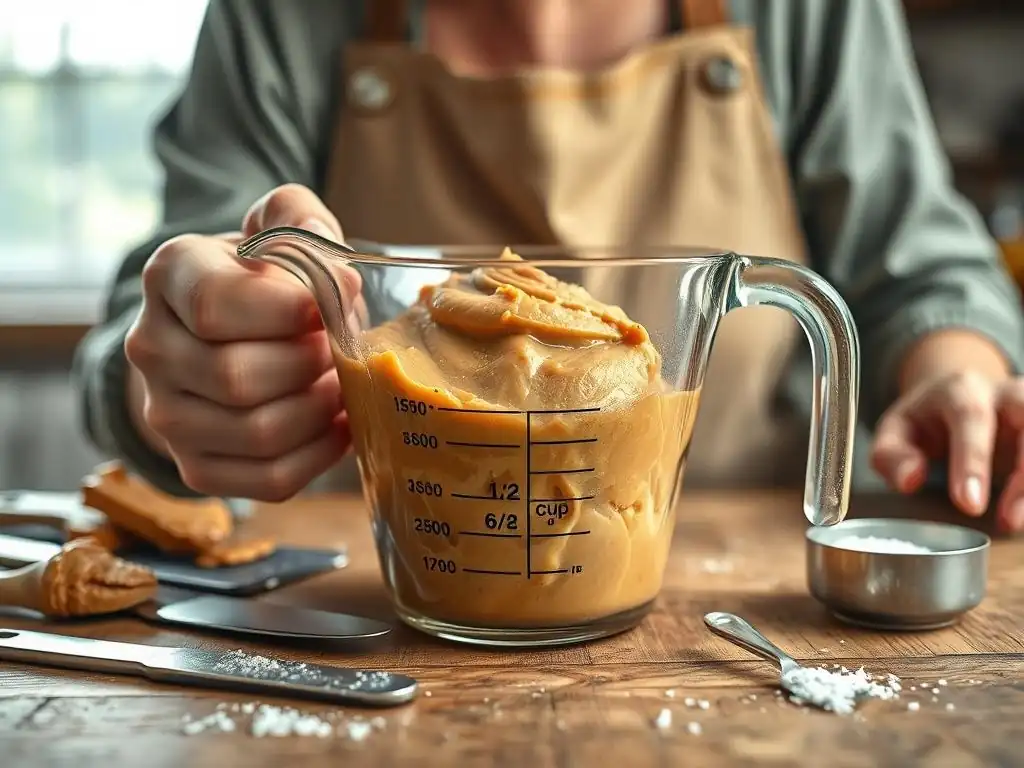
Even with the best tools and techniques, errors can sometimes occur when measuring sticky ingredients. Recognizing common mistakes and knowing how to address them is part of becoming a more skilled and confident baker.
Identifying that an error might have happened early on can save a recipe from failure. Understanding how different measurement inaccuracies impact the final product helps you troubleshoot and potentially adjust future batches or even the current one if possible.
Identifying and Addressing Inaccurate Measurements
How do you know if you've measured inaccurately? Sometimes it's obvious – the measuring cup wasn't full, or there was a huge air pocket. Other times, it's more subtle. If using volume, compare the weight of your measured ingredient to a reliable conversion chart (keeping in mind these are averages). For example, if your "cup" of peanut butter weighs only 220g instead of the expected 250-260g, you know you've measured too little.
If you catch an error before mixing, you can add or remove the necessary amount. If you realize the error after mixing, it's harder to fix precisely. For example, adding more peanut butter to a mixed cookie dough might not fully incorporate properly. In such cases, note the likely error and observe its impact on the final baked good. This experience helps you improve your technique for the next time.
Adjusting Recipes for Measurement Discrepancies
Ideally, use weight measurements to avoid discrepancies altogether. However, if a recipe only provides volume and you suspect past failures were due to measurement inaccuracies with sticky ingredients, you can try adjusting.
If your cookies consistently turn out too dry when using 1 cup of peanut butter, you might have been under-measuring. Try packing more firmly or, better yet, measure 250g of peanut butter by weight instead of 1 cup by volume in the future. Conversely, if they are too greasy, you might have been over-packing.
Aim for a slightly lighter pack or measure a slightly lower weight (e.g., 240g) on your next attempt, or stick to 250g if using a scale, as this is a common conversion for 1 cup. Consistent use of a scale is the best way to identify if the recipe's volume conversion is the issue, rather than your measuring technique.
Recipe Adjustments Based on Measurement Methods
Understanding how measurement methods influence the final product can even lead to intentionally adapting recipes. If you've found a beloved family recipe that uses volume measurements for sticky ingredients but yields inconsistent results, converting it to weight measurements can bring reliability.
This involves carefully measuring the required volume amount using the pack-and-level method while simultaneously weighing it. Note the weight, and use that weight for future batches. For example, if your recipe calls for 1/2 cup of solid ghee, measure it carefully by packing and leveling, then weigh that amount. If it weighs 100g, future batches can simply use 100g of solid ghee by weight, ensuring consistency.
Impact on Final Product
The impact of using volume vs. weight for sticky ingredients is most evident in the texture and spread of baked goods, particularly those with high fat content like cookies, brownies, and certain types of breads or cakes. Inconsistent volume measurement of peanut butter can lead to cookies that are sometimes flat and greasy, and other times thick and dry from the same recipe.
Similarly, inconsistent measurement of ghee can affect the flakiness of pastries or the richness and moisture of cakes. By switching to weight measurement for these challenging ingredients, you introduce a level of control that minimizes variability and allows you to achieve the desired outcome consistently. This is a core principle often highlighted in advanced "Peanut butter measuring tips guide" resources.
Adapting Recipes for Consistent Results
To adapt recipes for consistency, especially when they feature sticky ingredients measured by volume:
- Choose Your Standard: Decide whether you will use the original volume method or convert to weight. For reliability, weight is recommended.
- Perform a Conversion Measurement: The first time you make the recipe using weight, measure the required volume of the sticky ingredient as accurately as possible using the standard volume technique (pack and level for peanut butter/ghee). Then, weigh that amount on your kitchen scale.
- Record the Weight: Note down the weight you obtained next to the volume measurement in your recipe. For example: "1 cup Peanut Butter (approx. 255g)".
- Use Weight in Future Batches: For all subsequent times you make that recipe, use the recorded weight instead of the volume measurement for the sticky ingredient.
This process effectively creates your own weight-based version of the recipe, calibrated to the original volume call but providing the consistency benefits of weight measurement. It's a practical application of a good "Peanut butter measuring tips guide" philosophy for improving existing recipes.
Conclusion: Achieving Consistent Baking Results
Mastering the measurement of sticky ingredients like peanut butter, nut butters, and ghee is a significant step towards achieving consistent and reliable results in your baking. These ingredients, with their unique textures and tendencies to cling to tools, are prime candidates for measurement errors when relying solely on volume.
While techniques like packing and leveling can improve volume accuracy, the undeniable truth is that measuring by weight using a kitchen scale is the most precise and consistent method available. It eliminates the variables associated with density, temperature, and packing, ensuring that you add the exact amount of ingredient intended by the recipe developer.
By implementing a comprehensive "Peanut butter measuring tips guide" approach that prioritizes weight, you minimize guesswork, reduce the likelihood of baking failures, and gain the confidence to tackle even the most challenging recipes. Embrace the scale, practice smart handling and cleaning of your tools, and enjoy the consistent, delicious results that accurate measurement brings to your baking journey.
Frequently Asked Questions
What are the biggest challenges when measuring peanut butter, and how can I overcome them?
The main challenges are its stickiness and tendency to cling to measuring cups. Overcome this by using cooking spray or lining the cup with plastic wrap for easy removal.
Why is accurate measurement important when baking with peanut butter?
Accurate measurements are crucial because peanut butter's fat and moisture content significantly impacts the texture and consistency of your baked goods. Inaccurate measurements can lead to a dry or oily final product.
What are some alternative measuring methods for peanut butter besides using a measuring cup?
You can use a kitchen scale for the most accurate measurement by weight. Alternatively, try the displacement method with water, measuring the difference in water level after adding the peanut butter.
How does the temperature of peanut butter affect its measurability?
Cold peanut butter is typically firmer and easier to scoop consistently, while room temperature peanut butter is softer and stickier, making accurate measurement more difficult. Consider chilling it briefly before measuring.
What are some specific tips for measuring other nut butters and ghee, based on the same principles?
The same principles apply! Use cooking spray or plastic wrap for any sticky substance. For ghee, melt it slightly to ensure an accurate liquid measurement if the recipe calls for it.
Final Reflection: The Unexpected Wisdom of a Sticky Situation
The seemingly simple act of measuring peanut butter, or any viscous substance for that matter, reveals a surprising depth of culinary precision and problem-solving. Mastering this seemingly trivial task unlocks a world of consistent baking and cooking success, impacting everything from perfectly textured cookies to flawlessly smooth sauces. It's a microcosm of the larger challenges we face, where attention to detail and a willingness to adapt are key to achieving our goals.
The journey of measuring peanut butter, as explored in this guide, is more than just a culinary exercise; it's a reflection of our approach to life's challenges. We often encounter "sticky situations" – metaphorical obstacles that require careful consideration and creative solutions. The techniques discussed here – from the use of specific measuring tools to the application of unconventional methods – translate directly to problem-solving in other areas of life. The greatest obstacle to action is not lack of knowledge, but lack of will.
This quote highlights the importance of perseverance, a quality essential in both conquering sticky peanut butter and navigating life's complexities.
So, the next time you find yourself wrestling with a jar of peanut butter, remember the lessons learned within these pages. Don't just measure; observe, adapt, and conquer. Apply this same mindful approach to the challenges you face, embracing the opportunity to learn and grow from every sticky situation. Let the precision of measuring peanut butter inspire you to approach life's complexities with the same careful attention and creative problem-solving skills. You might be surprised at what you achieve.
Unlock Your Baking Potential: Master the Art of Sticky Measures!
Thanks for taking the time to explore the world of precise sticky ingredient measurements with us! We hope you now feel more confident tackling those tricky peanut butters, nut butters, and ghee in your baking adventures.
Ready to put your new skills to the test?
- Bake a batch of your favorite cookies or brownies, focusing on accurate sticky ingredient measurements. Notice the difference!
- Share your baking triumph (or even your sticky struggles!) on social media using #BakeWithEaseStickySuccess. Let's learn from each other!
- Consider exploring different nut butters and their impact on texture – try a recipe with almond butter instead of peanut butter!
What delicious sticky creation will you conquer next?